

Every student-teacher in India’s National Council for Teacher Education (NCTE)-recognised programmes must now help five to eight non-literate adults become certified literate under ULLAS – Nav Bharat Saaksharta Karyakram, with their academic credits tied to those learners passing the national literacy test. The Ministry of Education’s guidelines were launched in New Delhi on 28 October 2026.
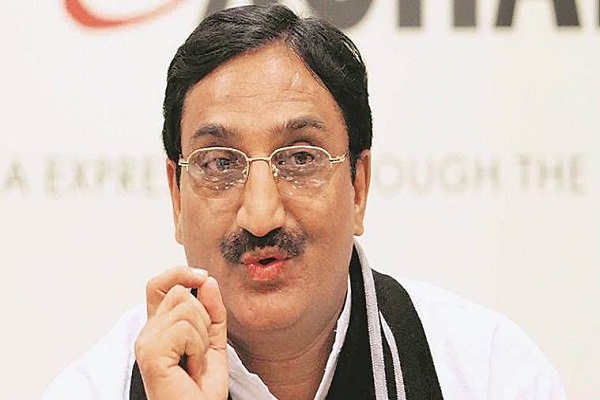
Minister of State for Education Jayant Chaudhary released the ‘Guidelines for Teacher Education Institutions (TEIs) under ULLAS – Nav Bharat Saaksharta Karyakram’ at the national felicitation of the Viksit Bharat Buildathon 2025 winners. Reports on the 32-page document, published between 31 October and 2 November, set out how the mandate will work on the ground.


What the ULLAS guidelines ask of student-teachers
The mandate covers student-teachers enrolled in the Integrated Teacher Education Programme (ITEP), B.Ed, D.El.Ed, B.P.Ed, M.Ed and M.P.Ed. Each will register as a Volunteer Teacher (VT) under ULLAS, the Centre’s adult literacy programme for non-literate people aged 15 and above, launched in 2022 and credited in states such as Uttarakhand’s full literacy push.
- Two-year courses: at least five learners made literate.
- Three-year courses: at least six learners.
- Four-year courses: at least eight learners.
Credits, or equivalent grades or marks, will be awarded only after the assigned learners appear in the Foundational Literacy and Numeracy Assessment Test (FLNAT) and are certified literate under ULLAS, the guidelines state. FLNAT is held twice a year, and certificates are issued by the National Institute of Open Schooling (NIOS). There is no monetary incentive; the academic credit is the reward.
How the ULLAS app and portal fit in
The programme runs on a blend of face-to-face teaching and digital tools. Student-teachers will sign up as volunteers on the ULLAS mobile app with help from their teacher educators, then identify and register learners, plan schedules, prepare lessons and track progress through regular assessments.
Institutions can pick learners in two ways: institutional tagging, where state authorities allocate learners to a teacher education institution, and individual tagging, where student-teachers find non-literate adults themselves and register them on the ULLAS portal. Student-teachers must also keep learner profiles, assessment records, progress reports and geo-tagged photographs of their sessions.
Beyond reading, writing and arithmetic, they are expected to teach critical life skills, including digital and financial literacy, using multilingual and context-sensitive methods. The move sits alongside other changes in teacher preparation, such as NCTE’s expert panels on ITEP graduates’ eligibility for CTET and STET.
Who runs it inside colleges
Heads of teacher education institutions will be in overall charge and must appoint nodal officers to coordinate with state and district authorities. NCTE is expected to give regulatory and academic direction by building ULLAS into teacher education programmes, including the credit linkage.
Where there are not enough non-literate learners nearby, student-teachers may be given alternative tasks, such as helping newly literate adults join NIOS’s open basic education programme, strengthening community learning centres or doing research-based fieldwork.
Why it matters for teacher education
India has 15,509 recognised teacher education institutions with 17,84,326 approved seats, according to figures cited by the Hindustan Times. Even a fraction of that pool working as volunteers would add significant capacity to a programme that aims to reach 5 crore learners by 2027. It also gives trainee teachers early, assessed experience of teaching adults, much like other digital-first efforts such as Himachal Pradesh’s Teacher App for AI-ready teachers.
The guidelines do not yet name the academic batch or start date from which the mandate applies, and earlier 2023 directions had set a higher target of eight to ten learners a year. How NCTE writes the credit rules will decide how the scheme works in practice.
Key takeaways
- Student-teachers in NCTE-recognised courses must make five to eight adults literate under ULLAS, depending on course length.
- Credits come only after learners clear FLNAT and are certified literate; there is no payment.
- Registration, learner tagging and progress tracking run on the ULLAS app and portal.
FAQ
Which courses are covered by the ULLAS mandate?
All NCTE-recognised programmes, including ITEP, B.Ed, D.El.Ed, B.P.Ed, M.Ed and M.P.Ed.
When do student-teachers get their credits?
Only after the learners assigned to them appear in FLNAT and are certified literate under ULLAS.
Source: Ministry of Education release on PIB, 28 October 2026.
Featured image: Minister of State for Education Jayant Chaudhary speaking in New Delhi on 28 October 2026. Photo: PIB.