




Artificial Intelligence, once considered a future technology, has made its mark on the world. It already impacts our working styles, education, communication, and decision-making processes. AI is revolutionizing almost every field, including medicine, financial services, media, manufacturing, and education. As repetitive tasks are now being performed by automated systems, the skills demanded of future workers are evolving as well.
Technical knowledge and the ability to operate technology will no longer be enough for success. In addition to learning about new technologies, students should be able to cultivate human abilities, which cannot be done by technological systems. Here comes the importance of universities.
It is not enough for the future working environment to require skills related to the use of technologies like AI. Universities should prepare students to be critical thinkers, communicators, problem solvers, and empathic collaborators. Human traits such as creativity, emotional intelligence, leadership, flexibility, and ethics can hardly ever be mastered by machines. They create information, but they cannot imitate human thought and empathy. Universities therefore need to rethink traditional education models and focus on building well-rounded individuals rather than only producing degree holders.
Encouraging Critical Thinking and Creativity
In the AI age, there is no doubt that the critical skill set that universities ought to promote is critical thinking. Current students can easily acquire information via digital devices and even AI-assisted technology. The ability to think critically, however, remains a human capability.
Universities thus ought to promote inquiry-based learning in place of memorizing facts and figures. Class discussion, research, analysis of real-world case scenarios, among others, can help develop the skill of thinking critically. Moreover, students will be able to analyze information and make sound decisions when needed. It will be increasingly valued by future employers in the coming years.
Nevertheless, in spite of the development of such technologies as AI, creativity will remain one of the most important qualities in the future labour market. AI is capable of working with large amounts of data as well as producing content; however, human imagination and thirst for new discoveries will contribute to the innovations in various spheres. Therefore, universities have to provide their students with an opportunity to test their imagination and explore innovative ways of developing their skills.
Students should learn that failure is an integral component of innovation, because many successful inventions and products were created due to experiments and perseverance. Thus, universities have to encourage their students to be creative and take risks, which implies conducting innovative workshops and design-thinking classes.
Human Connections Will Remain Important
No matter how technologically advanced our world becomes, human connections will always play an essential role. In order to be considered competent specialists, employees need not only to perform their duties, but also be able to interact with other members of teams and respect cultural differences of various ethnic groups. Today more and more companies prefer to hire those professionals who have skills necessary for effective collaboration with other people.
Similarly, good communication skills are equally crucial. While students might be highly skilled technically, their inability to articulate their thoughts properly could limit their influence. Communication skills should be included as a requirement within all subject matter in universities via speeches, discussions, collaboration projects, and industry exposure sessions.
Given that artificial intelligence will soon enter industries such as medicine, finance, academia, and government, it is becoming increasingly crucial to ensure that students know about ethical considerations relating to technology. Such topics include issues regarding privacy, misinformation, biases, and accountability among other concerns.
Also Read: The Role of AI in Education
Universities Must Prepare Students for Lifelong Learning
The current technological landscape is evolving at an incredibly fast pace. Future professions might not even be known at this moment in time. Thus, universities need to prepare students who are flexible and able to continue learning in order to adapt.
Education has expanded beyond books and exams. Universities now need to foster a conducive environment for holistic development where practical experience, innovation, and learning become the norm. Exposure to industry, internships, multidisciplinary learning, and working with organisations are all ways to achieve that goal.
The faculty plays another vital role in this process. Educators now have not only to teach students, but mentor them in building their self-confidence, perspectives, and purposes.
The advent of AI technology should not make people believe that this technology poses any sort of danger for the realization of human potential. On the contrary, the coming of AI should stimulate higher educational institutions to devote themselves even more actively to the improvement of human qualities. Whereas machines are getting cleverer, it is precisely empathy, wisdom, creativity that will matter.
In conclusion, it should be said that the primary aim of education is not only making people employable, but developing well-educated and humane individuals.
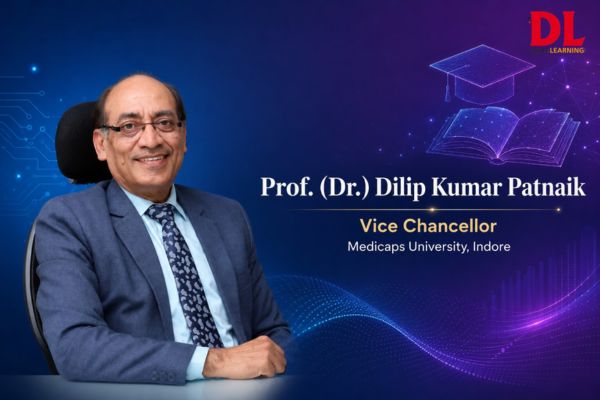
Views expressed by Prof. (Dr.) Dilip Kumar Patnaik, Vice Chancellor, Medicaps University, Indore