Home Blog Page 1171

Central Delhi Falls under the SFDs for a low retention rate in schools

Central Delhi has been included in the list of 419 special focus districts (SFDs) for 2012-13 under the Sarva Shiksha Abhiyan (SSA). Last year the number was 389.

The Ministry of  Human Resource Development describes these 419 districts as being “characterised by marginalisation and backwardness and yet to be on a par with other districts” on school education parameters.

Central Delhi  has been included in the SFDs for a low retention rate in schools — below 60 per cent.

The government gives special attention to these educationally backward districts, which are identified on indicators of infrastructure deficit, a high concentration of the Scheduled Castes and the Scheduled Tribes, minority population, out-of-school children and high gender gap. Funds for these districts are sanctioned on priority for different interventions including opening new schools, teacher recruitment and construction work.


Building Smart classroom with Smart Assessment

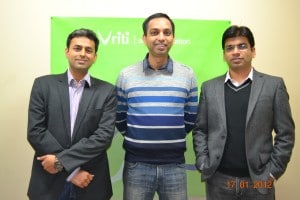
Founded by Alumni of IIT Bombay and Delhi in 2006, Vriti is an assessment driven smart education company, backed by Intel Capital and JAFCO Asia. Swapnil Shrivastav, Founder and Chief Executive Officer, Pankaj Vermani, Co-founder and Chief Strategy Officer and Yogesh Seth, Co-Founder and VP, Products talk to Pragya Gupta about how Vriti is intending to make education smart in India…

Please tell us about Vriti?

Vriti has created the world’s first smart education platform that provides a unique market for content providers and students to create/sell & find/buy educational courses respectively. The exchange is powered by patent pending Accelerate recommendation engine which gives a “smart” consumption experience to students. The engine combines test analytics data, student profile and peer community feedback for guiding students to follow an optimal course plan and discover the right content.

You are talking about Smart education. What is smart education and how Vriti makes it smart?
“Smart Education” is a methodology for personalised and adaptive course delivery as per a scheduled plan. It is devoted towards maximising the learning of the students through regular benchmarking with historical and current assessment patterns.

Vriti’s proprietary patent-pending Accelerate recommendation engine helps students plan their study schedule around the course of their choice. Engine constantly assess their performances and based on their current / historical performance data, the algorithm dynamically guides students towards the primary focus areas of improvement and even recommends relevant content in study from. Thus the adaptive algorithm becomes a sort of personal tutor for the student, and it guides him through the entire course plan better than any human intervention would. Prior to consumption, the engine also helps student discover the right content for his/ her calibre by gauging his/her performance against standardised bench marks.

What are the Smart Courses and how does Vriti take them to the market?

Vriti develops ‘smart courses’, which are plan driven programmes with content and testing/assessment modules. The Course plan guides the students throughout the duration of the course via Vriti’s patent-pending adaptive and personalised Accelerate recommendation engine. Vriti courses can be content rich learning modules delivered via pure offline means with online assessments supplements or a combination of digital content bundled with assessments. Pure testing and assessment suites are also available for students who wish to only benchmark themselves against peers and identify their key improvement areas.

The courses delivered through ‘Vriti Smarts’ have been developed by some of the best academicians in the industry for various categories.

We distribute them via business-to-business white labelled systems in schools, coaching houses, institutions, and universities. The courses are created in sync with some of the best authors and biggest brands in the education space and use the power of over a 200 million assessments generated across various exam categories by Vriti’s Education Network.

Our Course Distributors include direct to consumer channels like our website or B2B partners like schools, government universities, publication houses, Vriti Franchisees and coaching Institutes.

With over 200 million questions analysed, more than 920 partners, more than 825,000 questions loaded in the platform, 1 million above discussions, over 1.5 million registered, 3+ million page-views a month (on edu-communities) & students across 121 cities, Vriti’s platform is one of the largest education marketplaces in the world.

Vriti has recently won Deliotte Technology Fast50 Technology 2011 and Red Herring Asia 2011 Awards. Please throw some light on that?

October 2011, we bagged two prestigious awards “Deliotte Technology Fast50 Technology 2011” and “Red Herring Asia 2011”. Vriti has made it to Deloitte Fast 50 for the second consecutive year. Prestigious Awards like these are an endorsement of Vriti’s consistent ongoing efforts to leverage technology for improving quality of education at a very affordable price. Strong fundamentals and consistent focus on value proposition for end student have been the key reasons for the phenomenal and disruptive growth that Vriti has shown over the years.

The Company’s vision for building a Virtual Smart Tutoring for students is finally becoming a reality. We continue to be committed to our cause of taking technology driven education to the last mile. We plan to expand our footprint globally in the coming quarters.

What challenges do you see in the Indian Education Landscape?

How to create recurring revenue opportunity with content is a major challenge. Offering quality education products at a low price point to a wide audience in current Indian infrastructure is also a sizable problem to solve. We are in process of developing the modalities for creating large scale quality content and using mass technology to spread it around.


Maharashtra state board of education adopts COBSE syllabus for PCMB

The Maharashtra State Board of Secondary and Higher Secondary Education has upgraded the syllabus for Physics, Chemistry, Mathematics and Biology according to the core syllabus prepared by the Council of Boards of School Education in India (COBSE) reported Times of India. The idea is to prepare junior college students for competitive examinations.

The upgraded syllabus for standard XII will be implemented from 2012-13 academic year for students of science faculty. The board has begun printing the textbooks as per the upgraded syllabus.

IGNOU VC inaugurates new academic building for officials

Prof M Aslam, Vice Chancellor of the Indira Gandhi National Open University (IGNOU) opened for use by schools of studies a new academic building of 6000 square meters to accommodate 11 schools of the university. The building, comprising of ground, first and second floor has been constructed in association with RITES Ltd. as project management and architectural consultancy to the university.

The Vice Chancellor handed over the space allotment letters to the Directors of seven Schools to shift in the new building. Seven schools are School of Gender and Development Studies (SOGDS), School of Journalism and New Media Studies (SOJNMS), School of Translation Studies and Training (SOTST), School of Foreign Languages (SOFL), School of Vocational Education and Training (SOVET), School of Extension and Development Studies (SOEDS) and School of Performing and Visual Arts (SOPVA).

Along with the space for 11 schools, the building has the provision for 14 class rooms, two committee rooms and six storage rooms with a cafeteria.

According to the Chief Project Officer (CPO) of the university, Sudheer Reddy, the building has been completed in time and is well equipped with all the facilities needed for effective functioning of the Schools.

Grievance Redressal Mechanism for Students in Higher Education Introduced

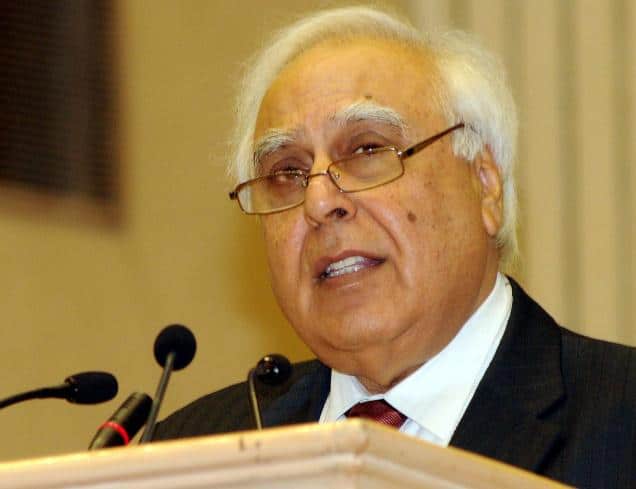
Kapil Sibal, Union Minister for Human Resource Development has announced that there would now be Grievance Redressal mechanisms in higher educational institutions. UGC, AICTE and NCTE would be requiring all Central Educational Institutions, institutions deemed to be universities, technical and management institutions under AICTE and teacher education institutions under NCTE to establish a Grievance Redressal Mechanism for Students and applicants for admission before the commencement of the admission this academic year. Every institution would be required to constitute an Ombudsman; person with judicial or legal experience to be appointed from a panel suggested by the affiliating university for technical and management institutions, by the Central Government for deemed universities and by the regulator for non-degree granting institutions. The concerned regulators would issue the detailed instructions to the educational institutions shortly.

There are several grievances that arise relating to students and applicants for admission in higher educational institutions. These grievances require prompt redressal in order to provide timely succor to aggrieved students and applicants. The Parliamentary Standing Committee, while examining the Bill to prohibit and punish unfair practices, had recommended that pro-active steps be taken to constitute Grievance Redressal mechanisms in higher education institution.

Applicants for admission and students can apply to the Ombudsman for redressal of grievances and the Ombudsman shall deliver his/her order within one month. Although the order would not be binding on the institution, the regulator would rely on the frequency of non-observance to decide on continued recognition to such institutions.

The Ombudsman shall have the jurisdiction to hear grievances concerning denial of admission, non-observance of declared merit in admission, non-observance of applicable regulations for reservation, with-holding of documents and non refund of fees in case of withdrawal of admission, discrimination and other such matters concerning students in pursuit of studies in the institution. In case of matters concerning weaker sections such as SCs/STs/OBCs or minorities, the Ombudsman can co-opt a person of eminence from the area coming from the weaker section to assist him/her in arriving at a decision.

Healthcare Leaders’ Forum :: March 14, 2012 :: Assocham, New Delhi

Indian healthcare industry is gearing up for a phenomenal growth.

With a projected combined annual growth rate of 16% and an estimated market size of USD 75 billion by 2012, healthcare sector is expected to contribute as much as 8.5% of national GDP and employ more than 9 million people over the next couple of years.

Much to the delight, growth is evident in all sectors of the healthcare industry and almost across all geographic regions of the country.

While there are few who are already ahead of the curve and etched substantial success in the industry, a number of new entrants have ventured in the recent past, striving to make their mark with innovative ideas, services and business models.

A key element of this emerging healthcare success story is ‘creation of sustainable leadership’ through sharing of experiences among entrepreneurs, investors, managers and practitioners of healthcare.

To meet this critical need and create a pulsating platform for CXOs of healthcare industry to connect with each other, eHEALTH magazine is organizing the second edition of the Healthcare Leaders’ Forum in New Delhi.

KPMG and NIIT Imperia Launch Tax Training Programs for Corporate

KPMG in collaboration with NIIT Imperia has announced the launch of three  new Taxation Programs- Certificate Program in Tax Regulations, Advanced Program in Tax Regulations and Diploma in Tax Regulations, primarily designed to meet the growing training needs of finance, accounting, taxation professionals and other stakeholders.

The programs will be offered in 30 NIIT Imperia centers spread across 21 major cities of the country.Admissions to the programs are open, and the batches will start in the first week of February, 2012. G. Raghavan, Chief Executive, Career Building Solutions, NIIT Ltd. “We are pleased to extend our offerings to now include three new programs on tax regulations by KPMG. These programs will provide an ideal platform to accounts and finance professionals who wish to gain unique insight in the field of taxation and move to the next levels in their career.”

KPMG’s senior professionals will use NIIT’s innovative Synchronous Learning Technology to deliver training on these Taxation Programs. The Tax diploma programs are designed to bridge the gap between theory and practice and to prepare the industry in advance for the proposed regulations of DTC and GST.

Speaking on the occasion, Uday Ved, Head of Tax, KPMG in India said, “With India standing on the threshold of major tax reforms, there is an increased demand for knowledgeable and well-versed tax experts. KPMG in collaboration with NIIT Imperia aims to cater to this demand by helping create a pool of professionals who would be equipped to deal with legislative and practical aspects of taxation and also be prepared for the new tax regimes.”

The Best Practices and the Next Practices in Education:January 2012

EDITORIAL   
Exploring new frontiers in education

CONTENTS
A Skilled India 
Prof S S Mantha Chairman, AICTE

On Way to Achieving Success
Dr Ajoy Kumar Ray, VC,  Bengal Engineering and Science University

Our Children Need a Giant Leap 
Revathi Srinivasan, Director & Principal, Smt Sulochanadevi Singhania School

Miles Ahead
Sandeep Sharma, Joint CEO, SCOPE

Education is a Recession free Industry
Manjual Shroff, Pro ViceChairperson—DPS, Ahmedabad

Supporting theLearners
Vandana Lulla, Director, Podar International School, Mumbai

The Classroom of the Future
Kartikay Saini,Chairman, Scottish High International School

Technology Challenges and Digital Insights
Sreenarayanan P C, Director,Podar  nternational School,Mumbai

Where Are WeGoing Next?
Dilip Meha, Principal,Olive Green International School, Ahmedabad

Reforming the Educational Sector 
Dr Akshai   aggarwal,VC, GTU

Creating InnovativeModels in Education
R P Gupta, Secretary, PrimaryEducation, Government ofGujarat

All is not well inEducation
Prof Sudhir K Jain, Director, IIT Gandhinagar

Fostering Creativity
Prof Paritosh K Banik,DG, PDPU

The Concept of 21st Century Skills
Prof Sridhar Iyer, IIT Bombay

The Backbone for Empowerment in Education
Prof Z H Khan, Jamia Millia Islamia

Effective Digital Education
G R Sivakumar,Principal, DPS,Surat

The Side-effects of Digital Learning
Dr Hasmukh Adhia, Principal Secretary, Education, Government of Gujarat

Taking Education Online
Professor M J  Xavier,Director, IIM Ranchi

Bringing Connectivity to Education
Dr Prafulla  Agnihotri,Director, IIM Tiruchirappalli

Integrating Curriculum with the Web
Dr Bhavesh Patel, Director,Ahmedabad University

Expanding Role of ICT in Education 
Manoj Aggarwal, SPD, SSA,Gujarat

Examinations through ICT
Dr Veera Gupta, Secretary, CBSE

Assessing our Students
Ceaser Disilva, Principal, SGVP International School,Ahmedabad

Assessing Students Through ICT 
Brinda Ghosh, Principal, JG International School

Kumari Selja Inaugurates Leadership Training Programme for Museum Professionals

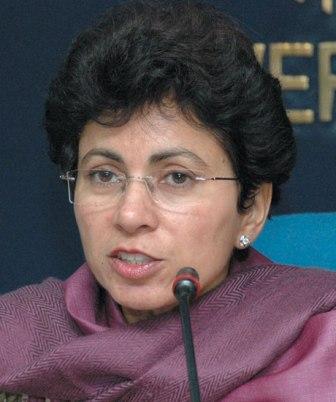
The Culture and Housing and Urban Poverty Alleviation Minister Kumari Selja has inaugurated Leadership Training Programme for in-house Museums Professionals. There are over a thousand museums in India, both large and small. Over 90 percent of these are funded and maintained by the Central and State Governments and few renowned museums have also been set up through private efforts. The Archaeological Survey of India itself manages 44 site museums located near important historical sites, some of them in the remotest parts of the country like Dholavira and Lothal in Gujarat and others at well-known World Heritage Sites such as Agra.
The Leadership Training Programme has been organised by the Ministry of Culture in collaboration with the British Museum. The programme is especially designed for Indian museum professionals. The programme will include intensive training sessions on duration, museum education, design and display, scientific storage, conservation and preservation, museum marketing, outreach and collection management.

The Minister said that she is happy to note that 20 professionals from 12 national level museums will be participating in the Leadership Training Programme. She trusts that the programme will generate Museum leaders who will further train museum professionals all across the country to create a rich web of world class museums in India. “More importantly, I hope this will help shape each and every museum to be people centric institutions and not remain centres of eclectic study and scholastic pursuits.”

The Minister further added that training and capacity building are an intrinsic part of the development of Human resources of any organization. Improvement in the functioning of museums is a felt need today. Her Ministry has made efforts to organise suitable trainings for our museum professionals to open up their imagination and improve the working so that we are able to replicate the best practices being followed by international museums.

This Leadership Training Programme has been developed in collaboration with the British Museum, a world leader in its field with a strong history of providing tailor-made training for curators and museum professionals across the world. The British Museum has used its experience to develop the first programme of its kind, focusing specifically on developing the leaders of tomorrow.

Taking Education Online

When we have a fully online system of learning, students will be able to access educational content without having to come to classroom


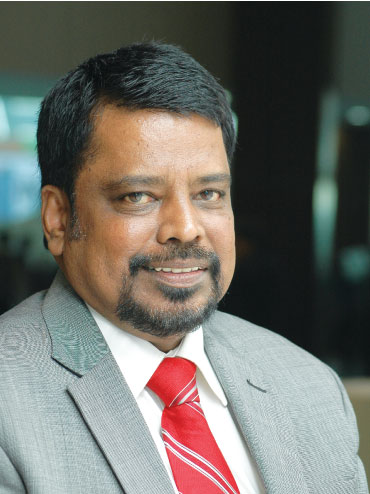
By Prof M J Xavier, Director, IIM Ranchi | www.iimranchi.ac.in

In places like Ranchi, the connectivity related infrastructure that you find in the top metros is not there. But even the smaller towns do not want to be left behind. That is why Ranchi has taken up distance learning in a big way. I am of the opinion that the classroom mode of teaching has now become obsolete. A blended method of teaching is a better alternative. Perhaps a modern Gurukula method where there is 24×7 teaching is a better option.

The social media has to be integrated with e-learning methodologies, so that the educationists can reach out to larger numbers of students. It is possible to have a system where students who cannot come to the class will be able to attend lectures while sitting in their hostel. We are expecting seamless connectivity between the college and the hostel through NKN (National Knowledge Network). Once NKN is in place, the teacher does not even have to come to the classroom. Perhaps even the students do not have to come. The teacher can deliver his lecture from anywhere, his office, his home, even from another city or abroad.

However, the problem with this system is that it does not create an opportunity for a personal interaction between the students and the teachers. Students can not just raise their hand in the middle of the lecture and hope to put a question to their teacher. It might be possible for a moderator, or a group of moderators, sitting somewhere in the NKN chain, to offer a kind of call centre facility. When students have doubts they can call up the call centre number and place their question. But the question might not be answered directly by the teacher; it might be some other expert who would do the answering.

Students attending from hostel, study centre and other remote locations will be provided with iPad kind of device that will be configured for receiving classes. Even when students are based in remote locations, bio-metric attendance systems and cameras can be used to capture their image to prove that he or she has actually attended the lecture. With the launch of 3G services all sorts of possibilities have opened up.

LATEST NEWS