



Home Blog Page 1172

Assessing Students Through ICT

Assessment is a process of interpreting evidence on basis of which the teachers can decide where the learners stand in their learning

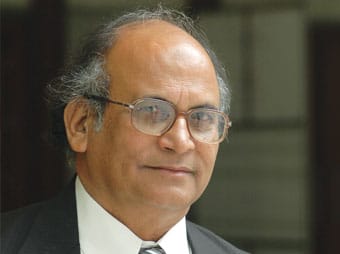
By Brinda Ghosh, Principal,
JG International School |www.jgcampusindia.com

If we think of our children as plants, then we can say that a summative assessment of the plants is simply the process of measuring them. The measurements might be interesting to compare and analyse, but by themselves they cannot affect the growth of the plants. Formative assessment on the other hand is the gardening equivalent of feeding and watering the plants, and it is something that directly affects their growth.

Assessment for Learning (AFL)
Much of what teachers and learners do in the classroom can be described as assessment, which seeks to find out where learners are with their learning, if they are lacking, then the way has to found to bridge the gap. So the first goal should be to discover how much the learners know. Summative tests are generally conducted at the end of the year. These are useful in providing overview of how the students are faring as compared to each other. The results can also be compared from a year-to-year basis.

AFL focuses on learning rather than on teaching and it includes all learners in a culture of high expectations. It makes every learner special by making learning worthwhile and enjoyable. It also enriches the learning experience. AFL is about teacher and learner recognising where learners are now, where they want to go and how to bridge the gap.

Role of ICTModern ICT tools can also be helpful in enhancing the scope of education. As the iconic futurist Alvin Toffler has said, “The illiterate of the 21st century will not be those who cannot read and write, but those who cannot learn, unlearn and re-learn.” Digital education makes is easier for people to gain new knowledge. But even as we provide education to students today, we have very little knowledge of what the students will require twenty years from now.

Therefore the question that needs to be addressed is – what do our students need to learn today to be prepared for tomorrow? There has to be a shift from industrial mode of schooling to one that focuses on equipping students for knowledge economy. Our students must have the ability to seek, synthesise and critically think about the over-expanding volume of information that is now available in the world.

Assessing our Students

The traditional system of examination based assessments is not enough for us to accurately judge the ability of the students

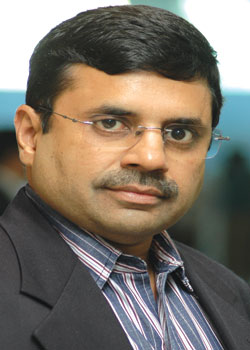
By Ceaser Disilva, Principal, SGVP International School, Ahmedabad | www.sgvp.org

Few questions that can help in making effective assessment strategy
• Does testing help our students?
• Are students being measured correctly?
• Is the info biased?
• Is the test reliable?
• How are the scores interpreted?

Even though we are aware of the fact that convention practices do more harm than good we keep treading on the same beaten path. The real purpose of assessment is yet to be realised. We take assessment as a tool to judge the learning outcome and no attention is paid to judging a student’s ability. Our education system is so well organised that from kindergarten itself, we teach students how to tackle examinations and get good grades. As a result most students get trained in exam-skills rather than in real learning.

There always are a few students who are unable to fit into the system. Perhaps the education being doled out is too mechanical for them. We call these students “special.” We have faced such problems many times. There are many students in our schools who fail to perform. An analysing of their answer sheets shows that most of them are weak in basic skills. We placed these students in the SNC (Special Needs Students) category and we designed a special curriculum for them. We removed certain topics of the syllabus that they found difficult to comprehend and added topics that they were interested in.

Of course, we kept the parents of these students informed. Initially some teachers were apprehensive about the project. They felt that we were discriminating against some children. But the benefits of the project started showing up in less than six months. The children in the SNC category came to the level of general students.

Examinations through ICT

There is a need to evolve ICT based methodologies to resolve the myriad logistical challenges in the process of examinations

By Dr Veera Gupta, Secretary, Central Board of Secondary Education | www.cbse.nic.in

While conducting exams we face problems that are purely logistical in nature. There are so many paradigms that are constantly evolving in the examination process that we have to keep coming up with new strategies. For instance, while conducting some major exams, we have to hire numbers of trucks for delivering the question paper to hundreds of examination centres.

We take all kinds of security measures during the distribution process, yet issues of leakage of papers often crop up. The collection of examination papers, and having them corrected lead to problems of their own. Storing the papers is also a big challenge.

ICT is a great help
Last year CBSE tried the online system of examination for which four thousand students had opted. This year CBSE has provided the option of online examination to around one lakh students. When we use online test, many of the logistical challenges get automatically resolved to a large extent.

The issue of secure distribution of question paper gets eased when we have online exams. Chances of question paper leakage also get minimised. Currently the process of online marking has been launched as a pilot project. We are developing a system where the answer papers can get scanned and be examined by two to three examiners.

If answer sheets are stored online the process of retrieval becomes much easier. Currently, we hire big buildings to keep examination copies, but with ICT our level of infrastructure requirement will come down to manageable levels.

The issue of the evaluation methods being used has often been subjected to lot of criticism. So far we are using paper and pencil test methods, in which only knowledge based questions can be asked. It is very difficult to ask applied questions using paper and pencil methods. With the help of ICT the evaluation system will be transformed, and applied and skill based questions can also be taken care of.

Then there is the last important aspect that is certification. Examinations must lead to students being awarded a certification, which is a logistical exercise of large magnitude. There have been instances of forgery in the past. So CBSE is trying to develop an academic depository of certificates in which CDSL and NSDL may become the vendors.

Expanding Role of ICT in Education

Gujarat is making effective use of ICT based technologies to provide education to children all over the state. 

By Manoj Aggarwal, State Project Director, Sarva Shiksha Abhiyaan | www.gujarat-education.gov.in

More than 80 percent of Gujarat’s six crore population is literate. The state has about 78 lakh children in the age group of 6-14 years. As far as number of districts is concerns, there are 26 districts, 224 blocks, 19,776 villages and number of total schools is more than 40,000. Gross enrolment ratio is increasing and it is now close to 100 percent.

The gender gap in the state has narrowed as far as enrolment is concerned. Similarly, dropout rate for class 1-5 is now close to 2 percent; for class 1 to 7, it is around 8 percent. For more effective implementation of RTE, the Sarva Shikha Abhiyan (SSA) system in Gujarat is focusing on the PPP method of development. We are eager to tap into the expertise of the private sector. We are also taking the help of non-government organisations (NGO) for various needs.

Cutting edge ICT tools are being used to provide better primary education through the SSA. Currently Gujarat is using Geographic Information System (GIS) for school’s mapping. GIS mapping is helpful in providing neighbourhood school details to children in far flung areas. Systems like Migration Monitoring System are also being used to map the movement of children whose parents are always on the move. Broadcast of the study lessons through BISAG is also an important initiative.

ICT is also being used in various Quality Monitoring Systems and the Enrolment systems. The recruitment of teachers is being done online. High speed Internet connectivity to large number of schools has also been provided. Out of around 33,000 Governments schools, computer shall be provided to 22,000 upper primary schools. We will be using computer aided teaching learning which is interactive user friendly to improve the quality of education provided to children.

As quality check is a focus area. Every year, we organise a quality check programme known as Gunotsav. In this year’s Gunotsav, the Gujarat Chief Minister, various ministers, many IAS, IPS officers, and other senior officers visited various school for three days and conducted a survey of the school system. ICT technology is also being used for taking the attendance of teachers as well as students through biometrics.

Integrating Curriculum with the Web

The online space offers remarkable opportunities for developing new ways by which students and teachers can interact with each other

By Dr Bhavesh Patel, Director, B. K. Majumdar Institute of Business Administration, Ahmedabad University | www.bkmiba.edu.in

In the beginning many of us tended to be somewhat reluctant about bringing new digital technology into the education space, but this was primarily because of the opinion that a technological methodology of delivery might lead to lack of personal interactions between students and teachers. But the realisation soon took root that the digital medium offers several new opportunities for online and offline interactions. Instead of being connected in the campus only, students and teachers can interact at all levels.

Now it is a necessity to have digital mediums integrated with entire curriculum. We cannot do without making educational material available through online mediums. So what we are basically having is a hybrid model of both online and offline methods. In higher education, we need to give more preference to online tools. This is because higher education students can have other commitments. Their interests can be better served if they have round the clock access to their lectures and other course material.

Online collaborations in education open up a vista of new opportunities. Imagine the prospect of students from Japan, China and USA logging in for the same course while being situated in their own respective countries. 97.6 percent of all the educational institutions in USA offer online degree programmes. Such programmes are also available in many European universities. Perhaps we can think of these learning programmes as being mobile, but not in the same sense that the cell phone or the tablet devices are mobile. They are mobile in the sense that the teacher is mobile, the content is mobile, the learner is mobile and the devices that are used to engage with the content are also mobile.

For best results, the content has to be delivered in an easy to access contextual manner. There must be room for collaboration, feedback and reflection in the system. When there is online assessment, the process has to be transparent so that there is no scope for cheating. The number of Internet users is on the rise in India. Of course, the Internet penetration in the country is still considerably small as compared to what we have in other parts of the world, but there is a lot we can do to facilitate online learning.

Bringing Connectivity to Education

India is blessed with enormous technological talent; it is time for us to take advantage of this talent for bringing connectivity and efficiency in education

Dr. Prafulla Agnihotri, Director, IIM Tiruchirappalli | www.iimtrichy.ac.in

As These days it has become quite common for teachers to teach on VSAT. As far as I can remember I started using VSAT as a teaching tool in 2000-2001. This is an excellent tool, but it has some limitations. It is difficult to connect through VSAT when it is cloudy, stormy or when there is lightening. In such climatic conditions students and the faculty are unable to connect to each other.

These days many new technologies have emerged that are not impacted by the vagaries of weather. For instance, there is the cloud space, which continues to evolve at a really fast pace. The need of the hour is to adopt these technologies for bettering the quality of education that is being offered in our institutions. The IIM Tiruchirappalli has its eyes set on many of these new technologies.

I believe in continuous education. There are so many students who aspire to be an MBA, either from the IIM or from any other institute, but they are unable to quit their existing job and attend classes on a regular basis. Perhaps the new connectivity systems can be deployed to make it possible for such students to fulfil their ambitions.

The system of connectivity needs to be strengthened further so that the students living in most far-flung areas are able to reach out to us and take benefit of the knowledge and certifications that we offer. The basic purpose of education will not be fulfilled until education can reach out to the masses. The IIM is ready to perform this task of reaching out, and that is why we are adopting latest technologies.

We are being making collaborative efforts with TCS and few other companies to find out how we can explore this medium of new technologies. The system should be reasonably low cost and provide seamless and efficient connectivity between faculty, institute administration, students, corporates, masses and basically the entire set of stakeholders who are involved in the process of education.

It is indeed true that it might not be possible to find a technology that is perfect. There are bound to be demerits in every system, howsoever well planned and technologically advanced it maybe. But we have to focus on the best of what is already available.

The Side-effects of Digital Learning

There is no denying that technology has made today’s generation smarter, but it might also have made them somewhat selfish

By Dr Hasmukh Adhia, Principal Secretary, Education, Government of Gujarat | www.gujarat-education.gov.in

There is a reason for us to feel worried about the future of our students, our professors and our entire education system. All of us are in favour of enhancing our education system with digital technology, but we also need to be aware of the fact that this technology comes with some side effects. The benefits are many. If implemented intelligently, technology can reduce the cost of education and make it possible for all sections of society to have access to high-quality educational services. But how are we going to deal with the side effects?

Education in cloud
It is possible that by the year 2020, no student would have to go to school or college. The entire curriculum might be available on the cloud, which students might be able to access from the comfort of their home or even the playground. We expect broadband connectivity to become widely available by 2020. Earlier we had been thinking that a vast digital library of all the lectures will get developed, but now library is the not the point. Just about every bit of knowledge that we have developed could become available in the cloud.

It is possible for us to imagine that the students will stop going to schools and colleges. The professors will be redundant. Why should the students go in for learning from a teacher who is a strict disciplinarian, when they can learn at their leisure from the cloud? We can imagine how boring life will become without the interactions that happen in school and college space. The student could lose all sense of discipline. He might start waking up at noon, and then tell his father that he has all sorts of things to do on the Internet.

Instead of using a curriculum developed by professional educationists, the students might start reading on basis of their own whims and fancies, “aaj main ye padh lunga , kal vo kar lunga.” If this sort of a scenario comes true, it will be a tough challenge for us. The important point is what will we do with all the professors who have already been recruited. Many of them might become redundant when the students start relying on the Internet.

Effective Digital Education

If used effectively, digital education can be used to transform students into independent individuals

By G R Sivakumar, Principal, Delhi Public School, Surat, Gujarat | www.dpssurat.net

As a school teacher, my prediction for the future is that the school children in our country in the next 10 years are not going to carry heavy bags. Instead, they will carry a piece of paper or glass. They will take down notes on their digital devices. Perhaps they might also take audio recording of lectures or even video. Information will be available everywhere, so they will be constantly logged on to their email accounts.

National Knowledge Network (NKN) has started pushing in the direction of digitisation of education. We wish the Government had started from the bottom in order to build a stronger foundation. NKN should have been introduced at the primary school or secondary school levels, because that is where the foundation of the education is laid down for a child. Unfortunately, our primary education has a vacuum and this void cannot be bridged, unless we make efforts towards strengthening the foundation of the formative years of a child.

The three pillars of education are: pedagogy, psychology, technology. We are living in an era of digital renaissance. Some of the technology available to us today is engrossing. Our children are born in this era. We need to allow them to play with all kinds of technology applications. Some of the applications have transcended the level of interactivity. What are the best ways by which we can use technology to enhance pedagogical eloquence? The technology that is available to us today is a great tool. It can be a powerful aid to enable joyful learning to the students.

Now we have a scenario where vast numbers of books have been digitised. But we still need to focus on creating even more interesting and engaging content for our students. The world is evolving at a fast pace, so the nature of our educational content cannot remain static. The educational content also needs to keep evolving.

The Backbone for Empowerment in Education

The objective of new developments in digital space is to make education available to every section of the society 

By Prof Zahid H Khan, FTK—Centre for Information Technology, Jamia Millia Islamia, New Delhi |www.jmi.ac.in

The National Knowledge Network (NKN) is a state-of-the-art multi-gigabit network for providing high speed connectivity to the institutions in the country. Presently NKN connects 510 educational institutions across India. The purpose of such knowledge network goes to the core of the country’s quest for building quality institutions with requisite research facilities and creating a pool of highly trained professionals. The NKN will enable scientists, researchers and students from different backgrounds and diverse geographies to work closely for advancing human development in critical and emerging areas.

Under NKN, approximately, 22000 colleges and 600 Indian universities are to be connected. While the universities will be connected with 1 Gbps capacity, the colleges will have 10 Mbps connectivity. The various applications under NKN are Countrywide Classroom; Collaborative Research; Grid Computing; Virtual Library; Sharing of Computing Resources, and e-Governance.

ICT initiatives in education
National Mission on Education through ICT (NMEICT) is an initiative of the Ministry of Human Resource Development (MHRD), Government of India that proposes to spend ` 4,600 crore on building the ICT infrastructure for higher education institutions. Out of the total budget, Rs. 2,000 crore is to be spent on e-Content development based on the syllabi designed by University Grants Commission (UGC).

There is a provision introduced by the ministry that any college and university can start or submit a project. The Ministry gives ` 7 lacs for a course of 40 hours that can be floated by any university and college. The beauty of this initiative is that none of the projects get rejected. The projects are accepted with few modifications. All the content is made available at the official portal – Sakshat. The contents are available free of cost in the wiki model. The university and college teachers have been assigned to create content.

National Programme of Technology Enhanced Learning (NPTEL) has been started by the Indian Institute of Technology (IITs) to make the content (audio, video, etc) available to the students in the higher education space. The objective has been to make education accessible to everyone one.

The Concept of 21st Century Skills

In order to fully equip our students for the future, the key thing that the educationists require is quality content

By Prof Sridhar Iyer, Dept of Computer Science and Engineering, IIT Bombay | www.it.iitb.ac.in

On the Wikipedia page, we can find the complete prescription of 21st century skills as provided by the international body called UNESCO. The key thing is the concept of 4Cs – Critical thinking, Communication, Collaboration and Creativity. Unless our students have imbibed these 4Cs, they will find it hard to get ahead in life. What we want to do is to figure out a mechanism to inculcate all these 4Cs into the curriculum.

Rather than waiting till they reach the higher education level, students must start imbibing the 4Cs at an early stage, when they are at Grade 1. So we are attempting to look at what is being taught in computer science in the schools across the country. We found that most of the time, the textbooks available in the market are completely skill based.

The inOPEN way
A bunch of us sat down and wrote books, which are now being offered to schools through called ‘inOPEN,’ a company that we founded. The best thing is that most of the books are free to download from our website. In the last two years, the website has had about 10000 visits from over 100 countries.

So how do we achieve these 4Cs? This is something that you can find in our books. Often we have classes that are compartmentalised, so students are not able to take what they have learned in one class and go forward. What needs to be done is that the students must be allowed to keep revisiting the same theme in greater and greater detail as they move into higher classes. Then there is the aspect of thematic integration, which can come from localisation of the content so that students are able to relate to what they are being taught.

Finally there is the pedagogic strategy of what we call guided discovery. This is a system of tutoring, where instead of just standing in front of class and teaching, the teacher plays the role of facilitator. Traditionally it is the students, who put questions to the teacher, but in guided discovery system, it is the teacher who does the questioning and the students try to find the answers by their own means. So the process of education becomes a sort of dialogue between the facilitator and the student.

LATEST NEWS