Home Blog Page 1193

Next Generation of MimioStudioTM Software and DYMO|Mimio Hindi Website


NEWEST VERSION OF INTEGRATED SOFTWARE CONNECTS ENTIRE CLASSROOM WITH ENHANCED TOOLS AND PERSONALISATION

DYMO/Mimio has launched the MimioStudioTM 8.0.1 software, the newest generation of the software, which enables greater connectivity and flexibility to classrooms. The

MimioClassroomTM product suite is a fully integrated suite of interactive teaching technologies that transforms any dry-erase board into a fully-interactive whiteboard, eliminating unnecessary installation costs and providing teachers with an intuitive classroom tool.

MimioStudio8.0.1 is an update to the already popular MimioStudio 8.0 software that powers the MimioClassroom product suite and offers an expanded toolset that provides more flexibility for teachers to develop engaging interactive lessons for students of all grade and skill levels.

This is a truly universal solution, being compatible with Windows, Macintosh and Linux operating systems and now available in 31 languages. This means MimioStudio 8.0.1 will be used in classrooms all over the world – from India to Bulgaria.

“MimioStudio 8.0.1 software improves upon our award-winning MimioStudio 7 software, which was recently named a winner in the prestigious CODiE award for excellence in software development,” said Nitin Joshi, India Sales Manager for DYMO/Mimio.

“Our software engineering team spent countless man hours collecting feedback from teachers around the world to refine and enhance the MimioStudio software. We are pleased to offer teachers tools that let them produce even more creative interactive lessons for use with MimioClassroom products.”

MimioStudio 8.0.1 software seamlessly integrates with the MimioClassroom suite and can be used with the MimioTeachTM interactive system, which converts any dry erase board into a fully-interactive whiteboard. It can also be used with any combination of elements from the product suite like MimioVoteTM assessment system, MimioViewTM document camera, MimioPadTM wireless tablet and MimioCaptureTM ink recording system, which facilitate teachers to create interactive lessons with easy-to-use technology.

New MimioStudio 8.0.1 software enhancements include:

  • Expanded MimioVote question customisation, which adds greater functionality to creating and conducting tests
  • Brush pen stylised writing that processes Asian calligraphy and stylised writing
  • Enhanced drawing tools that transform freehand shapes into perfect shapes, which can be filled, resized and re-coloured
  • Students and teachers can use the new screen clipping option to draw around any image and paste it into lessons
  • A customizable colour palette and colour picker tool that allows teachers to create and save their own personal set of colours for reuse
  • Optimised toolbar and keyboard shortcuts

Visit mimio.dymo.com to download for FREE right now and get the latest news about DYMO/Mimio at our Hindi website!

For more information on DYMO/Mimio ITT, please call Nitin Joshi on +91-120-2488809 or email at

mimioinquiry@mimio.com or visit mimio.dymo.com/C7e

©2011 DYMO, a Newell Rubbermaid company

“Higher Education Needs Scalable Solutions Like Cloud Computing”

In conversation with Sarath Sura – Managing Director and Vijay Pasupulati, Executive Vice President, Winzest, Pragya Gupta talks on how eLearning in engineering domain has been expanding its wings with their plans and strategy for Indian market

How do you see engineering education and management education evolving in India? How does Internet driven learning act as a pedagogic tool to enhance the learner’s motivation, knowledge assimilation and retention?

Sarath Sura: Engineering and Management Education has seen a tremendous amount of growth since the opening up of the Indian economy in the early 90s. However, this mushrooming growth is bringing about a decline in the quality of education. This is very apparent especially in the large number of engineering colleges where they are facing many challenges including lack of adequate number of qualified faculty, lack of infrastructure and limited financial resources. This is leading to low employability among students where only 25 percent of the engineering graduates are employable as per the NASSCOM-McKinsey report. As demand for quality graduates will continue to grow significantly, the higher education system is also bound to grow rapidly. However, this future growth in capacity should come with innovative solutions where quality of education should not suffer.

We foresee internet driven teaching-learning solutions playing a key role in the future of higher education. The reasons for their success would be their reach, efficiency, scalability and affordability. These solutions will also bring in a learner centric approach where the focus would be on enhancing learning outcomes. For example, a class of 60 engineering students would have a heterogeneous learning ability. The teaching pace in the classroom could be too fast for a weaker student and too slow for a smarter student. A teacher cannot alter the teaching pace in the classroom to ad
dress the needs for each student. In such a case, a digital learning solution can address the learning needs in a self-paced, non-threatening and convenient environment.

Tell us about the genesis of the company in the e-learning domain?

Vijay Pasupulati: Winzest is a start-up company and like all start-ups we were looking to identify a market need and an appropriate solution to address that need. Also the solution needs to be differentiated, sustainable and scalable. In this process we identified the need for a solution that helps arrest the declining quality of higher education while supporting the required growth for capacity building. India has the largest school-going population in the world. This coupled with the objective to increase Gross Enrolment Ratio (GER) in higher education is putting immense pressure to augment capacity in higher education. However, the challenge is to ensure quality with this growth. In this context we needed a solution that brings together academic depth, sound instructional design and good technology. This was the genesis of our e-learning product LearningWare. We also believe that only through Internet-driven e-learning solutions this need can be effectively addressed in a scalable and affordable way.

LearningWare is the first product from Winzest in the higher education space and it provides a holistic solution to enhance the teaching-learning process in the engineering education system. Through LearningWare, users get access to high quality learning content mapped to their specific university curricula. The content is hosted over the cloud servers and delivered over a virtual learning environment. This ensures that the college doesn’t have to invest in servers. The interactive and graphical nature of the content ensures a powerful learning experience for the learner or student. The content offered in LearningWare can be accessed by the student or the faculty anywhere and the product is continuously improved based on the feedback received from the users.

What is the diverse range of solutions being offered by Winzest in education sector?

Sarath Sura: In Winzest our focus is to offer solutions in the post-secondary education space. Towards this we have launched LearningWare in June 2011 that targets the engineering education segment. We are also in the process of launching more comprehensive university solutions with enhanced assessment tools, upgraded reporting and a collaborative environment. We would soon extend our LearningWareoffering to other areas of higher education including Management and Pharmacy.

What is your outreach strategy for ‘LearningWare’?

Vijay Pasupulati: The key beneficiaries of LearningWare are the stakeholders in the engineering education ecosystem including students, faculty and college management. As LearningWare is an innovative concept, we initially focus on colleges and universities that are considered “early adopters” of such innovative solutions. These colleges are typically progressive in nature and open to adopting innovative solutions.

LearningWare being an online product, we intend to use internet as the driving force behind our outreach programs. This includes leveraging the social media and online marketing campaigns. We are also exploring possibilities of leveraging the strengths of the other outreach channels. In addition we also focus on harnessing the strength of our sales force which constantly engages with institutions in promoting our concept of e-learning.

Adoption of cloud computing in higher education in India is ever increasing. How can cloud change the teaching-learning process?

Sarath Sura: Higher education needs scalable solutions like those provided by cloud computing. Cloud based solutions are centralised in nature and delivered over the internet to the users. Cloud based solutions like LearningWare can significantly help in enhancing the teaching-learning process as they help share best practices across users, provide constantly updated content and provide an environment where knowledge and teaching-learning tools are available on-demand. Cloud solutions are designed for scale and shared across a large pool of users. This in turn leverage economies of scale and ensure affordable solutions to the users.

Technology has been playing and instrumental role in new age assessment systems but what about recommendations and guidance for students?

Vijay Pasupulati: Most technology-enabled learning management systems offer good assessment tools. However, we believe assessment systems should also provide instant feedback, learning analysis and recommendation for future learning actions. These are the differentiating factors we are building into LearningWare‘s assessment engine. For example, we provide instant feedback on assessments which include why a question is right or wrong with relevant explanation. We also provide analysis on students learning patterns and abilities.

The primary challenge in adoption of technology in education may be the faculty mindset. While some faculty is open to adopting new technologies, most faculty have a resistance to such change 


What are your views on the extent of ICT integration in higher education across India?

Sarath Sura: ICT integration is still very limited in most of thehigher education institutions, especially those that are located in rural areas. Even in institutions where ICT was available, there was some inhibition for faculty to use it. Lack of good internet connectivity is another challenge faced by many institutions. However, we believe ICT integration will rapidly improve over the next few years due to increased awareness, better infrastructure and availability of relevant ICT tools. Government of India has initiated several programs to encourage ICT usage in education. The most effective government programs have been those that help build primary infrastructure, provide supporting regulatory framework and fund technology-enabled solutions.

What are the key challenges in adoption of technologies in education?

Vijay Pasupulati: The primary challenge in adoption of technology in education is the faculty mindset. While some faculty may be open to adopting new technologies, most faculty have a resistance to such change. They perceive technology driven solutions as an intrusion in their turf instead of seeing them as enablers to enhance the existing systems. In addition, infrastructure remains a challenge with institutions. The future of technology in education will be driven by the internet and availability of good bandwidth will be important.

Bridging the Divide Inspiration & arguments for integrating arts & science teaching

The case study presents a sample project for middle school students, through which their critical thinking as well as creative thinking will be developed simultaneously. In carrying out the project the students will be compelled to think logically and laterally – both at the same time. They will make their own discoveries through open ended experiments and they will apply their discoveries in a crafts workshop to create working models or pieces of installation art. The sample project is based on Archimedes Principle and can be adapted for classes VI, VII or VIII

By Subha Das Mollick, Secretary, Bichitra Pathshala
editorial@elets.in

Science, in conjunction with mathematics, is considered to be intellectually most challenging and therefore pedagogically most demanding. When NCERT first began developing text books, their prime focus was on science books – books that would generate a true understanding of the principles of science and challenge the critical thinking of the student. A science student is expected to have a logical bend of mind and a heightened analytical ability along with willingness to put in hours of hard work.

On the other hand, art education comes low down in the priority list in an academic curriculum. In most cases, there is no curriculum for the arts – that is, the fine arts and the performing arts. In some progressive schools, special slots are created in the academic calendar for art programmes, but art is not considered to be an essential component in a child’s education. There are no seminars or conferences on how best to teach art or the contribution of art in a child’s mental make up. Art classes are taken as classes for relaxation – breathing spaces in an otherwise watertight time table.

Can we conceive something different from this existing scenario? Can the hands on experimentations in science begin in lower classes? Can the excitement of discovery be brought back into the learning of science? A unique workshop called Initiating Responses tried to address some of these questions.

A workshop with one foot in science and the other in arts

To spark off creative thinking among the participants, a film called “How Things Work” was screened. The film was a breathtaking depiction of a trajectory of chain reactions – a tire rolled because a sack hit it, the table upturned because the tire hit it, the water fell because the table upturned, the reaction started because the water fell, the fire was lit because a reaction was sparked off and on and on and on.

The children worked in five groups. In each group two young artists guided the activities of the children. Every project conceived and executed at this workshop was an exploration of a set of scientific principles towards an aesthetic end. There was a playful subversion at work in every project, which the participants developed in right earnest. The participants were not under pressure to create something useful or to prove a foregone conclusion all over again. They did not know what would emerge at the end of five days. The five groups worked on five different ideas. One group devised a TV that ran by the power of a bicycle, another group made installation art with shimmering curtains that slowly turned in the convection currents rising from the flames, a third group made rockets in their project, ‘Finding Out God’ and yet another group made bizarre musical instruments that gave out cacophonic noise. On the evening of the fifth day, the works of the children were exhibited in an open studio. The children performed, sang and shouted to entice the visitors into their activity.

Role of film clippings

Appropriately selected film clippings can work wonders in opening the minds of the children. At a workshop on simple machines taken by this author, a clipping from Home Alone was shown to drive home the point that we become inventive when driven against the wall. After this, the children were asked to shortlist some problems in their daily life and find solutions to these problems using simple machines. The children came up with drawings of very interesting perfectly workable contraptions.

Executing the integration: A proposed project

Recommended template for integrating arts and science in middle school curriculum

Interested schools can select two topics from the existing science curriculum – one for each semester, to experiment with the integration of arts and science. One such chosen topic may be ‘Archimedes Principle.’ ‘Archimedes Principle’ offers diverse possibilities of conducting easy to do and safe experiments with simple household objects, throwaway material and junk. The experiments can be designed for different levels of students from class VI to class VIII.

Plans for carrying out an exciting project on ‘Archimedes Principle’

Session 1: Triggering curiosity and imagination

A sure shot way of triggering excitement on the topic is to show an appropriate movie clipping and generate a discussion. A movie clipping that can work very well to introduce Archimedes Principle, is the animation film.

Once the basic concept is mooted in the minds of the students and their curiosity is aroused, one can come down to doing some quantitative tests and establish the principle on the firm ground of observation and experimentation.

The fundamental experiment to demonstrate Archimedes Principle is by measuring the volume of overflowing water when different objects are floated in a jar filled upto the brim. One has to devise a simple mechanism to collect the overflowing water neatly into a beaker, without spilling any water. Through this demonstration the children will find that the volume of water displaced by all floating objects is exactly equal to their weight. This will help the children to arrive at ‘Archimedes Principle.’ They can further verify the principle by taking regular solids like cubes or cuboids or spheres and cylinders made of metals and measuring their loss of weight when fully immersed (using a spring balance). The loss of weight will turn out to be exactly equal to the volumes of the solids.

Appropriately selected film clippings can work wonders in opening the minds of the children


Session 2: Trying out hands on

Next day, the children may be taken to a workshop where they will perform freewheeling experiments on Archimedes Principle and come up with their own findings. Objects like small plastic caps, small metallic caps, nails and pins, pieces of thermocol and cork, aluminium foils, tubs of water, pipes and droppers, simple balances, paper to make paper boats, boxes of plasticine etc can be given to them so that they can conduct their own experiments and arrive at their own conclusions.

Open ended experiments based on the same principle

For a class of 30 students, six corners may be created in the craft room. Each corner will be given a name and will have one set of objects. Each corner will be made equally colourful and attractive. In each corner a set of questions will be kept to guide the thinking and activities of the students. The question may even be embedded in a story displayed in some of the corners. This will give a direction to the students’ exploration and guide them towards making accurate scientific observations.

Students will realize the basic values of good science – the need for accurate observations, of developing a rigorous method and the importance of replicability of experiments


Learning the methods of science

At least two students in each group will be asked to note down the observations meticulously. A class like this should be at least two periods long. The second period may be spent in sharing the discoveries of the six groups. Each group will give a presentation cum demonstration of their findings and the method they followed in arriving at their finding. The teachers – both the science teacher and the craft teacher will listen carefully to the presentations and ask specific questions.

Through this exercise the students will realize the basic values of good science – the need for accurate observations, of developing a rigorous method and the importance of replicability of experiments to arrive at the same results every time. Thus, instead of making all the students mechanically do a pre given experiment with known results, each group is encouraged to devise its own experiment and arrive at its own result.

Keeping meticulous records

All the experiments and their results will be recorded with the accompaniment of colourful drawings, graphics, photographs taken with simple digital cameras and archived. One member in each group may be asked to do the photo documentation. He/she should keep a photographic record of every step of the group?s experiment. However, at least a week has to be given for writing the record. In the subsequent years, the experiments conducted may be slightly different, yielding a different set of results.

Session 3: Probing deeper

Drawings of these experiments can be drawn on the board and the students can be asked to guess the results by applying their already acquired knowledge. Some of the thought experiments may be designed with the Archimedes sphere, some may be designed with melting ice and some others may be designed with ships and boats. If time permits, one may do some thought experiments and calculations with hot air balloons and gas balloons too. This will bring them back to the discussion on UP that they had in session 1.

Session 4: The real fun begins now

In the second craft class, the students may once again work in groups and design floating sculpture using throwaway objects like empty plastic bottles, glass bottles, wires and rods, pipes, plastic bags, aluminium foils and anything they can lay their hands on. Each group’s sculpture should be unique. The groups may not finish the sculpture in one double period, they may take upto three periods to finish and embellish their respective sculpture

Session 5: An open invitation to all

All the hard work, brainstorming, failures and ultimate successes will be eventually displayed in a grand exhibition in the final session of the project. Every sculpture will be given a name and the names of the group members will be displayed beside every masterpiece. Each masterpiece will be a testimony of how objects of everyday use can be used to create works of art.

Author

Subha Daas Mallick

Subha Das Mollick is presently the Secretary of Bichitra Pathshala-an organisation that promotes the use of movies and media as pedagogical tools

NEWS – HIGHER EDUCATION

TOEFL Test Score equivalencies for visas in Australia

Following an approval by the Chris Bowen MP, Minister for Immigration and Citizenship of the TOEFL test for student visas in May 2011, the Minister has now accepted the test score equivalencies identified by ETS research for the TOEFL test when compared to International English Language Testing System (IELT) scores.The new score equivalencies will likely come into effect on November 5, 2011.

“We are delighted that the Minister has agreed to the equivalency scores recommended by Educational Testing Service (ETS) for the TOEFL test as an alternative English language test for student visa purposes,” says David Hunt, Vice President and Chief Operating Officer of ETS’s Global Division.

“ETS recognizes the importance for both the Australian government and test takers in establishing reliable equivalencies between TOEFL scores and the IELTS academic scores currently in use for student visa regulations. ETS undertook transparent research with objective, data-based results to provide the Department of Immigration and Citizenship (DIAC) with the most comprehensive and up-to-date information available on the equivalencies between the two tests,” Hunt explains.


QAI tie up with IBM Career Education

QAI, a consulting and workforce development organization has announced that it is working with IBM’s Career Education to help create skilled workforce in Software Testing.
The co-designed programs by QAI and IBM Career Education will be offered on campus across India, as a blended learning program supported by world class courseware and internationally certified faculty members. The co-branded Certificate and Diploma Programs in Software Testing are aimed at offering a cost-effective skill-building program to students that aligns with industry needs and also encourages adoption by academia. Both Diploma and Certificate courses will be offered, accompanied by real world projects.

For students, this collaboration presents an opportunity to gain from the tacit knowledge and experience of the best industry practitioners and helps them acquire industry ready skills that will enhance their job prospects and give them the edge in their career.

Over the years, there has been a widening demand-supply gap for the appropriately skilled, ready to deploy workforce in India. The Indian market itself requires 35,000 testers approximately to bridge the gap which is projected to increase to almost 1, 65,000 in the year 2013.


IGNOU, Intel conduct session on usage of ICT in Education

In a bid to create awareness, share ideas and experiences on the use of ICT in Education amongst key policy and government officials, academia and research industry, IGNOU’s Distance Education Programme- Sarva Shiksha Abhiyan (DEP-SSA) and Intel Corporation and civil society stakeholders organized a consultative session.
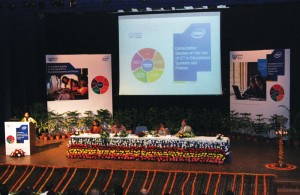
While inaugurating a consultative session on the use of ICT in Educational systems and policies at the campus in the capital, Prof. V. N. Rajasekharan Pillai, VC, Indira Gandhi National Open University (IGNOU) said, “We all have considered, formulated and implemented national and organizational policies, strategies and action plans relating to ICTs. There are priority issues faced by every one of us in becoming knowledge societies which focus on information and technology. But due to the dynamic environment, the challenges are becoming more acute and intense. This workshop shall explore such opportunities and priorities for deriving optimum benefits from ICTs as developmental tools in education.”

“Given the rapid pace at which the world is changing there is a need for our education systems to empower the next generation of learners to become productive and capable citizens of tomorrow. We are glad to be partnering with IGNOU and other key stakeholders from the central and state governments as well as Academia on this path of Education Transformation,” said Ashutosh Chadha, Director- Corporate Affairs Group, Intel South Asia during the session.


AICTE to implement NVEQF for technical education

Ministry of Human Resource Development has announced National Vocational Education Qualification Framework (NVEQF) programme for polytechnic and engineering colleges to transform Indian workforce to become knowledgeable, skilled and adaptable to the demands of new labor market.

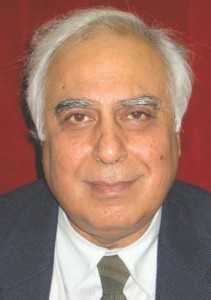
Kapil Sibal, Minister of Human Resource development said , “ I am pleased to note that AICTE is planning to implement the NVEQF at the post-secondary level through the medium of Polytechnics and engineering colleges and has prepared curriculum content in a variety of skills with industry participation.”

The unique part of the vocational framework is that it will be integrated with mainstream education and thus provide students multi-level entry and exit options to enable them to seek employment after class XII. Any student under NVEQF can be sure that the institution is government authorised and nationally accredited and that the degree and other qualifications are genuine, said AICTE chairman S S Mantha.

The framework would link schools, vocational and university education qualifications into one national system. National Skill Development Council is in the process of launching the ‘national occupational standards’ supporting NVEQF.


Shiv Nadar University launched at Greater Noida

The Shiv Nadar Foundation has announced the launch of the Shiv Nadar University (SNU) at Dadri, Greater Noida in the National Capital Region. The Shiv Nadar University announced the launch of the School of Social Sciences & Humanities for the academic session 2012-13 and also the launch of its first Research Centre in Mathematics & Information Technology. The Research Centre will function as a centre for research collaboration with leading global institutions through the application of Mathematics and Information Technology. The University plans to launch the School of Business, the School of Communication and the School of Education in the near future. The University also announced the appointment of Dr M Gopal as Director of the School of Engineering and Dr Shubhashis Gangopadhyay as Director of the School of Social Sciences & Humanities.

Texas Instruments, CORE Education join hands for STEMpower

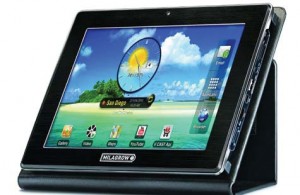
With the launch of Texas Instruments (TI) Education Technology business in India, TI and CORE Education and Technologies Ltd (CORE) has announced that they are joining forces to bring a new way of teaching and learning math and science to middle and secondary schools throughout India. The joint effort combines TI’s education technology solution with CORE’s content, teacher education and support to form one integrated solution called STEMpower. Through STEMpower, TI and CORE will address teaching, learning and assessment needs in the classroom, in the lab, and in the real world.


Ceeco launches ELearn’s Intelliclass eLearning Suite

With a vast experience in innovative technology solutions, ELearn offers a revolutionary concept combining the best ICT training tools, Smart School K-12 content and assessments. ELearn’s Intelliclass -an unmatched e-learning suite provides comprehensive top of the line hardware and software ICT solution for next generation classrooms.

Intelliclass offers implementation of technology-enabled classrooms equipped with the best infrastructure including Digi-Annotate (a portable interactive device), 88 inches Projection Board, High Resolution WXGA Projector, Dual Core PC, UPS and a compact and powerful eduVOX Audio System.

The high definition Smart School 3D and mapped content delivers in depth explanation of the latest CBSE Curriculum. The beautifully designed and thoughtfully constructed Intelliclass k-12 content, reviewed by education industry experts will definitely improve the student’s concentration in the class and help them learn the fun way. With the latest e-learning technology the focus is on a holistic and balanced education. Intelliclass e-learning solutions not only offer excellent academics but also include a range of extra-curricular activities thus encouraging the students to realise their full potential. The curriculum is regularly updated with a huge array of practice exercises, comprehensive quizzes and creative modules.


A Solution Whose Time has Come

e-Teaching can be applied, not just to paediatric cardiology and radiology as has been successfully done in India, but to all branches of medical specialists in India

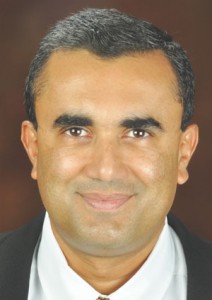
By Dr Arjun Kalyanpur, Chief Radiologist and CEO of Teleradiology Solutions

Although the number of medical colleges in the country has been increasing steadily and currently stands at 260, unfortunately there is an acute shortage of teaching manpower in the existing medical colleges. This shortage is in the region of 20–25 percent in most departments and as high as 33 percent in some departments, based on data published in the National Medical Journal of India. The shortages are particularly acute at the postgraduate level. Hence, while medical school training in India is phenomenal and world renowned in quality, speciality and super speciality training in India has been the purview of a limited number of institutions in India.

The problems in the field of super speciality training in India are several. The number of trainers i.e. specialists interested in teaching is limited in number. Even if the trainers would like to focus on training, the amount of energy and time needed for clinical work makes content creation/class delivery a challenge. The quality is variable and different institutions have different protocols/approaches to patient care so there is no standard content necessarily taught across the country.

Solutions

The use of technology in speciality training is an innovative solution. The use of ‘e’ in training for specialists has been attempted via teaching websites and distribution of DVD’s/CD’s. However these are non-interactive i.e. there is no direct interaction between the student and teacher and thus, although available, they do not have a desired impact.

An ideal e-learning platform would allow student teacher interaction. Such a platform should be easy to use since many doctors are limited in their technologic capabilities. It should work on inexpensive bandwidth which is easily available. It should be web based so that the teacher and student can log in from anywhere anytime.

Such a platform should have the ability to demonstrate a power point presentation as well as a drawing board. It should be recordable so classes can be replayed. It should be interactive such as a question and answer (Q and A) session can complete the class.

Virtual medical training

Since May 2010, a not for profit trust ‘Heart strings, a People4people initiative’ run by Dr Sunita Maheshwari, a pediatric cardiologist in Bangalore, partnered with Cisco Systems to pilot live interactive e-teaching in Pediatric Cardiology. From May 2010 to September 2011, 125 simultaneous e-classes have been conducted by faculty across India and abroad, using this technology, in Pediatric Cardiology for postgraduates in Bangalore, Kolkata, Chennai, Delhi and Nigeria.

Similarly in radiology, Teleradiology Solutions has used the e-teaching method to disseminate teaching in radiology to postgraduates in India as well as to practicising radiologists. Dr Dharmaprakash and Dr Sridhar have been coordinating daily training sessions which are beamed to radiologists in Delhi, Hyderabad and Mumbai using the Cisco e-teaching platform. Additionally, a series of e-lectures by distinguished international faculty in radiology have been delivered from locations such as Phoenix, AZ, Birmingham, AL, Ann Arbor, MI, Philadelphia, PA and Jerusalem, Israel, which have been viewed in real time by radiologists and postgraduates at locations throughout India.

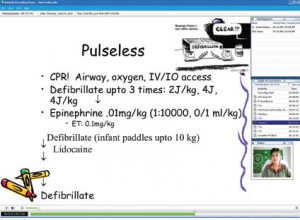
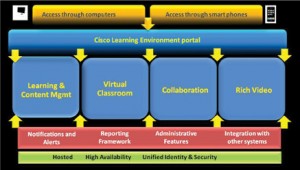
The Cisco Remote Education Center platform is completely internet based with no special equipment or software required. It enables highly interactive, online classroom learning with live audio, video, white board and presentations. Instructors need only a computer with Internet, webcam and an optional digital notepad. Remote class rooms need a computer with internet, webcam, microphone, speakers and an optional projector. Instructors can easily create content, manage and schedule courses.

The advantages of virtual live e-teaching in medicine are several. One trainer can teach multiple students in multiple geographic locations at the same time, obviating the issue of teacher shortage. The best teachers from around the world can participate in teaching increasing the quality of education for each individual student. The same content can be disseminated to all the students undergoing specialist training so that there is a national consensus on diagnostic and management approach among all trainees/centers.The e-classes can be recorded and replayed so they can be viewed repeatedly by the same group or new trainees through the internet. The question and answer sessions are fully interactive and similar to a normal classroom. Additionally, no significant up-front cost is involved as the system is fully Internet based. There is no hardware or servers or software to install and maintain.

We believe that e-teaching is an innovative solution that can be applied, not just to Pediatric Cardiology and Radiology as has been successfully done in India, but to all branches of specialist and superspecialist medical training in India and this part of the world.


Dr Arjun Kalyanpur

Chief Radiologist and CEO of Teleradiology Solutions,
Bangalore; and Board Advisor to Telerad Tech


NEWS- K 12

Serra Pre-school eyes Pan-India operations

Serra International Pre-school has entered into a joint venture with EtonHouse International Education Group of Singapore to launch a chain of international pre-schools across India.
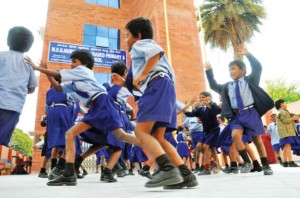
The Singapore-based group is well-established in Asia with 52 schools and pre-schools across Singapore, China, Indonesia, Malaysia, Korea, Vietnam, Japan and India with students from 54 different nationalities.

“We decided to invest Rs 100 crore for setting up 100 franchised international pre-schools by next year and 1000 franchised international pre-schools in the next seven years across India. Our aim is to revolutionise the early childhood education in the country by providing world-class curriculum,” Serra International Pre-Schools Chairman, Arun Arora said.

“For the next year, we want to focus our expansion plans across Pune, Mumbai, and Gujarat in the west, Chennai, Bangalore, Hyderabad, Secunderabad in the South Delhi/NCR and Punjab in the north, These, we believe are some of the key markets that value high quality international pre-school education and would enthusiastically welcome an offering such as ours,” said Mr. Arora.

Pre-school education market is set to reach USD 1 billion mark by 2012 against USD 750 million at present. “The Indian pre-school market is set to become the largest in the world. In India, the pre-school segment is currently worth USD 750 million and is expected to reach USD 1 billion by 2012,” Serra International Pre-Schools Chairman, Arun Arora.


Haryana to implement RTE Act from Nov 11

The Haryana government is going to implement the Right to Education Act (RTE) in state-run schools from November 11. The RTE Act will be implemented to ensure free and compulsory education to all children in the age group of 6-14.

The government will implement the RTE Act in all state- run schools from November 11, coinciding with the birth anniversary of India first Education Minister Maulana Abul Kalam Azad.

As per the Act, any cost that prevents a child from accessing school will be borne by the state which shall have the responsibility of enrolling the kid as well as ensuring attendance and completion of eight years of schooling.


GEMS Education partners with UNESCO

GEMS Education has announced partnership with The United Nations Educational, Scientific and Cultural Organization (UNESCO) to undertake world’s largest leadership training programme, wherein 10,000 school principals will be trained globally.

The first phase of the programme will involve India, Kenya and Ghana. Over a period of four years 10,000 school principals will be trained in these countries. In India, 3500 principals will be trained under the ‘Leadership Programme’.

In developing countries like India, there is very little or negligible training programme for school principals, which in many ways has hampered the effective delivery of education. Therefore, there is an urgent need of leadership training for principals that will help them improve their skills in school management and, thus, enabling them to innovate and offer much more effective and efficient learning at all level of education – benefitting thousands of teachers and millions of students.

GEMS Education will undertake this leadership training programme through its not-for-profit organization – The Varkey GEMS Foundation, which is established to improve access to education for 10 million underprivileged children worldwide. This initiative is part of the Varkey GEMS Foundation’s commitment to action the ‘10,000 Principals Leadership Programme’, announced by former President of United States of America Bill Clinton at the Clinton Global Initiative annual meeting in New York, USA, on September 22, 2011. Bill Clinton is the honorary Chair of the Varkey GEMS Foundation.


CM to distribute laptops in Assam

Tarun Gogoi, Chief Minister, Assam has announced computers and laptops for school students. Computers would be given to those students who secure 50 per cent marks in school board examinations from next year.

While addressing the Anundoram Barooah Award 2011 he said that government has all along given thrust to education because this alone can solve problems of illiteracy, poverty and unemployment.


Kalinga Institute inks MoU with Intel Technology

The Kalinga Institute of Social Sciences (KISS) and Intel Technology India Private Limited have signed a MoU for promotion of literacy among tribal youth and out-of-school children, sustainable development practices among teachers and innovation among students.

The MoU intends to promote literacy among tribal youth and out-of-school children through the Intel Learn Programme with a hands-on approach to ICT learning for under-served children in the age group 8-16.


Zee Learn to set up Mount Ltera Zee Schools

Zee Learn Ltd’s K-12 vertical is targeting 400-500 schools across the country in 5-7 years under the Mount Litera Zee School banner. The schools will be set up largely through the franchisee route while a considerable number will be management contracts and owned and operated institutions.

There are currently 42 operational schools with another 70 in the pipeline. Next year Zee Learn will add 24 schools followed by 35 more the year after. Sumeet Mehta, CEO, Zee Learn stated that in terms of signing the projects, we should cross 100 schools by next month. The plan is to add 30-40 schools every year under franchise system.


Tree House Education & Accessories Ltd inducts in BSE Small Cap Index

Tree House Education and Accessories Limited, a company providing pre-school and K-12 educational services in India is now included in the BSE Small Cap Index post the latest quarterly review.
As of October 13, 2011, the scrip closed the day at Rs. 176.5 on the BSE. The scrip has posted a consistent increase over the Issue Price of Rs. 129 per share for retail investors and Rs. 135 per share for HNIs/ Institutional investors. From Friday, August 26, 2011; the equity shares of Tree House Education & Accessories Limited were listed and admitted to dealings on the Exchange in the list of ‘B’ Group of Securities.

Tree House Education & Accessories Ltd (THEAL) is the self-operated preschool education provider in India. The Company currently has 230 pre-schools of which 155 pre-schools are self-operated. The Company also provides school management service to 12 K-12 schools. The company currently employs approximately 835 teachers in its pre-schools.


Kapil Sibal calls for sustained drive for awareness on RTE

“There is a need for a sustained campaign to create awareness in every school, among those who need to be brought into school and among those who implement the Right to Education Act as to the various provisions of this Act,” stated by Shri Kapil Sibal, Union Minister for Human Resource Development at a meeting of State Education Ministers on the subject of community mobilization and public awareness for Right to Education (RTE). Shri Sibal expressed confidence that he would get support from the State Governments in this effort. Shri Sibal underlined that the Central and the State Government have to work together so that RTE does not falter.

Sibal outlined some of the work undertaken in the RTE in the country. Stating that 20 States have notified rules, he pointed out that in states which have not done, so it is the children who are suffering. He has also said that the teachers’ eligibility test has been undertaken and eight years academic cycle has been brought in by the states. But he emphasised on the continuing need for the Government and the civil society to carry the message that education is a right to all people. The community mobilization and public awareness programme for RTE will commence from 11th November wherein a national event will be held in Nuh in Mewat in Haryana on 11th November. Similarly, events are expected to be held in every state and district of the country on that day.


Is RPL a Myth in India?

Is RPL a Myth in India?

Workers with few, or no formal qualifications are most vulnerable in securing decent employment. By formally recognising workers’ skills, Recognition of Prior Learning is seen as a means of creating a level playing field in order for them to gain opportunities for further learning and to improve career prospects

By Mamta Srivastava & S S Jena

The Recognition of Prior Learning (RPL) provides individuals with an opportunity to validate skills and competencies, which have not been formally recognised. The importance of recognising skills, including prior learning and previous experience, irrespective of the countries where they were acquired and whether acquired formally or informally, is also highlighted by the ILO’s Recommendation (No. 195) on Human Resources Development: Education, Training and Lifelong Learning.

Open and Distance Learning  need to address issues on how to standardise competencies within the broad framework of RPL for placing a comprehensive educational system

The role of RPL as a means of facilitating participation in formal education and training is often highlighted. However, in India no documented studies have examined the practice of RPL in the workplace, or otherwise, despite its potential contribution as a means of enhancing employability, labour mobility and career prospects.

The need for giving emphasis on skill development, especially for the less educated, poor and out of school youth has been highlighted in various fora. The skill level and educational attainment of the work force determines the productivity, income levels as well as the adaptability of the working class in changing environment. Large percentage of population in India is living below poverty line. One of the important causes is lower percentage of skilled persons in the workforce.

Those workers who acquired skills predominantly on the job or through other activities are often disadvantaged in gaining access to formal education and training, or in securing employment which adequately reflects their skills and experience. Workers with few, or no, formal qualifications are most vulnerable in securing decent employment due to absence of opportunity both vertically and horizontally.

By formally recognising their skills, RPL is seen as a means of creating a level playing field in order for them to gain opportunities for further learning and to improve career prospects. Recognition of skills can contribute much to the self-esteem and motivation of workers. For the growing enterprises, a better recognition of workers skills is a way to overcome skills shortages and match skills demand with supply. It can also provide an opportunity to improve the overall skill level and work performance of an industry.
In India, skill development at present is taking place mostly in the informal way, i.e. persons acquire skill at the work-place when they help their parents, relatives and employers etc. and such skills get transferred from one generation to another.

However, as been observed often, such persons do not have a formal certificate and thus earn lower wages and are exploited mostly by their employers. They have come through informal system due to socio-economic circumstances of the family and the compulsions of earning a livelihood rather than attending a formal course. While their productivity is low, their contribution to the national GDP cannot be ignored.

It is in this context that there is a growing demand to create a system of certification, which not only recognises their skills but also provides education and training in a mode that suits their economic compulsions. It will not only benefit the workforce to earn a decent living but also contribute to the national economy by better productivity of this workforce.

What Open and Distance Learning should do?

The ODL need to address issues on how to standardise the competencies within the broad framework of RPL for placing a comprehensive educational system, a clearly defined qualifications framework linked to occupational standards, and a sufficient resource capacity to administer the system and ensure quality. For this, the system needs to draw emphasis on several aspects.

These include an established framework of credit, qualifications and/or occupational standards and awareness among employers, practitioners and candidates.  Autonomy for providers to develop their own system according to target group, needs and resources are also to be looked into.

Rigorous assessment processes to ensure quality and clear, jargon-free information to the learner is also required. Sufficient resources and investment in the skills of practitioners and assessors will be required to administer the system. There is a need for recognition of, and investment in, skills needed by applicants to access an RPL process.

The major concern in the context is the absence of a well laid down Vocational Qualification Framework in India and how the competencies and the skills be graded. The question of equivalency also needs to be addressed. Awareness among employers is another issue, which needs to be addressed consistently.

The Challenges

As has been observed, majority of the workforce are in unorganised sectors in India and those are the workforce that possess skills required for a particular job. Hence, there is a huge challenge in identifying where skills exist, communicating to potential candidates, and administering the process, is immense, including low levels of literacy and numeracy among potential candidates. Also, RPL is expensive (as mentioned in documents of other countries), yet should be less expensive than training. In developed countries, RPL has tended to incur costs for learners. Cost could be reduced by streamlining processes, using online support, and workshops for candidates.

There have to be clear indications of who is required to pay for what, and when. A nominal charge may help adult learners value the process. In many countries, outcomes are linked to occupational standards rather than curricular structures, leading to a lack of connectivity with further education and a mindset that a certificate of recognition is an end rather than a means to further development. Developing a critical linkage between the practitioners and the trainers in the context of the RPL is required. Record keeping and its updation is the real challenge for the certification. Establishing relationship with the skills and requirement in certification in a graded system and establishing the relationships between RPL, and regular assessment process, within a broad, flexible framework for assessment are the other areas of concern.

Qualifications are regulated because the public – learners, employers and others who use qualifications – want qualifications that are appropriate, of high quality, valued and respected by others in the community and understood by those who take them and use them. Can RPL fit into this framework of traditionally defining the qualification framework needs to be seen in the context.

Virtual Instrument to Enhance Computer Networking Course

February-2011

Today’s test environment is more challenging than ever as pressure on increasing quality and meeting time-to-market continue to increase. Therefore, a sound foundation in computer networking is critical for success in many kinds of computer-based work and universities must produce graduates with solid foundation in computers and their applications. One way to achieve this is through interactive learning and teaching through the use of software packages like LabVIEW (Virtual Instruments) and Java/Visual Basic (Object Oriented Programming). This will also allow the student to have greater interaction with the subject matter and improve his/her skills in the use of number of applied engineering software packages.

By Nikunja K Swain and Raghu Korrapati

The students’ over reliance upon formulas and routine use of technique in problem solving too often lead to poor performance in advanced courses and a high attrition rate in the engineering, technology, and science programmes. The students’ lack of comprehension of mathematical concepts results in wastage of time during laboratory experiments, misinterpretations of lab data and underachievement in standardised science and engineering tests that stress the fundamentals. This problem can be effectively addressed by improving the student’s conceptual understanding and comprehension of the topics covered in introductory science and technology courses. One way to achieve this is through interactive learning and teaching and upgrading the existing laboratories with modern equipment. This will require increased funding and resources. But in recent years there is a decrease in resource allocation making it increasingly difficult to modernise the laboratories to provide adequate levels of laboratory and course work and universities are under pressure to look for alternative cost effective methods. One way to achieve this is through interactive learning and teaching through the use of software packages like LabVIEW (Virtual Instruments) and Java/Visual Basic (Object Oriented Programming).

LabVIEW and Java/Visual Basic are currently used in a number of engineering schools and industries for simulation and analysis. By introducing virtual instrumentation (LabVIEW) and object oriented programming (Java/Visual Basic) to the existing laboratory facilities and course(s) the students can be well trained with the latest design techniques and computer aided instrumentation, design and process control used throughout industry. This will also allow the students greater interaction with the subject matter and improve his/her skills in the use of number of applied engineering software packages.

LabVIEW is based on graphical programming and easy to use. It is an interactive problem-solving environment, where the students can analyse, visualise, and document real-world science and engineering problems. LabVIEW programmes are called Virtual Instruments (VI), and is different from text-based programming languages(such as Fortran, C++, Java and Visual Basic) in that LabVIEW uses a graphical programming languages, known as the G programming language, to create programmes relying on graphics symbols to describe programming actions. LabVIEW also provides an extensive library of virtual instruments and functions to help in programming. It also contains application specific libraries for data acquisition, GPIB and serial instrument control, data analysis, and file input/output with conventional programme debugging tools that can be used to set breakpoints, single-step through the programme, and animate the execution so that the flow of data can be observed.

LabVIEW has the potential of revolutionising engineering education. It is a graphical programming environment and is based on the concept of data flow programming. Data flow programming concept is different from the sequential nature of traditional programming languages, and it cuts down the design and development time of an application.  It is widely accepted by industry, academia, and research laboratories around the world as a standard for data acquisition and instrument control software.  Since LabVIEW is based on graphical programming, users can build VIs using software objects. With proper hardware  these  virtual  instruments  can  be  used  for  remote  data  acquisition,  analysis, design and distributed control.  The built-in library of LabVIEW has number of VIs that can be used to design and develop any system. LabVIEW can be used to address the needs of various courses in engineering, technology and science curriculum.

At South Carolina State University (SCSU), the PC and VI based system concept is used to design and develop a laboratory called Computer Based Virtual Engineering Laboratory (CBVEL). The CBVEL consists of IBM compatible computers with appropriate software and hardware from National Instruments (NI), Simulation software such as C++, Visual Basic, Java, PSPICE, etc., and is connected to School of Engineering Technology and Sciences (SETS) network and existing equipment. Virtual Instrument (VI) and Object Oriented Programming modules for different courses and research areas are currently developed and used to teach various courses. Examples of some of these VIs are Circuit Analysis, Electronics, Communications, Digital Signal processing, Networking, and Digital Filters.


The built-in library of LabVIEW has number of VIs that can be used to design and develop any system. LabVIEW can be used to address the needs of various courses in engineering, technology and science curriculum


Virtual laboratory or Virtual Instruments (VI) is software driven and does not require dedicated facility. It does not require instruments and there is no need for laboratory technicians. Problems of varying degree and complexity can be easily modeled and simulated using virtual instruments/laboratory concept.

Also, Virtual laboratory is cost effective and flexible. It is suitable for addressing student and faculty needs at a distance and as a result, more and more institutions are adding virtual laboratories to their curriculum.

Number System Conversion VI

The students of Information Technology (IT) deal with different computer application areas and frequently encounter binary, octal, and hexadecimal numbers. At times they have to convert a number in one system into another which requires not just the understanding of the principles behind number system conversions nut also, interactive modules to practice different conversions. A number of principles exist behind number system conversion and the interactive module using LabVIEW.

Outcomes of Using VI

The LabVIEW VI and Visual Basic modules, used by the authors under different situations, are user friendly and performed satisfactorily under various input conditions. It helped the students to understand items relating to IP Addressing in more detail. It also introduced the students to programme development using Visual Basic and Virtual Instruments. Therefore, it is believed that this introduction to Visual Basic and Virtual Instrument will help the students to design modules for other courses. These modules can be used in conjunction with other teaching aids to enhance student learning of Networking and the Internet.

The use of technology has been instrumental for student and faculty success. It has helped the faculty in instruction and has helped in students’ understanding of concepts. The use of face-book, twitter and others has helped in peer based learning and social networks. It has enhanced the quality of engineers and revitalised education as whole and engineering education in particular. Academia needs inputs from industry for effective design of curriculum and laboratory. Academia also needs help from industry for student internships and student placement. Industrial Advisory Councils (IAC) are becoming part and parcel of every academic and accreditation bodies are making it a requirement to have IAC inputs in formulating programme objectives and outcomes.

Note: This work was funded in part by a grant from Bellcore.

Prioritising Initiatives for the Eleventh Plan :: Action Points

May-2007

The government of India feels the country was still a long way from realising the goal of every child completing eight years of good quality education. Human Resource Development Minister Arjun Singh made this admission while convening the two-day conference of state education ministers, to discuss the human resource targets for the Eleventh Five Year Plan. The Minister also admitted that the surveys of the attainment levels of schoolchildren do not give much cause for satisfaction.

The Conference of State Education Ministers was organised at New Delhi on 10 and 11 April, 2007, by the Ministry of Human Resources Development that was attended by Education Ministers of 19 of the 28 States. Senior officers of the Education Departments represented the other States and Union Territories. The two Ministers of State in the HRD Ministry, M A A Fatmi and D. Purandeswari, and Bhalchandra Mungekar, Member (Education), Planning Commission, also participated in the Conference. The conference deliberated on issues concerning the entire gamut of education such as elementary, secondary, higher and technical education, to jointly take stock and to plan ahead, so that maximum possible progress can be achieved during the Eleventh Plan in the education sector, in terms of access, equity, quality and efficiency.

The minister also hoped that during the Eleventh Plan, the gross enrollment ratio for higher and technical education would go up from the existing figure of 10 percent of the total population of school-going children to at least 15 percent by the end of the plan period.

The discussions revolved round all the vital aspects of education in India. What should we now do to accomplish the goal of Universal Elementary Education (UEE) by the end of the Eleventh Plan? How do we improve achievement levels of children in elementary and secondary schools, especially state funded ones? What action is being taken by states to meet their enhanced share under SSA in the Eleventh Plan? What steps should be taken to increase the Gross Enrollment Ratio for higher and technical education from the present about 10% to at least 15% by the end of the Eleventh Plan? Despite increased outlays, we are still quite far from the goal of spending 6% of GDP on education, which has been reiterated in the Approach paper to the Eleventh Plan. How best can this responsibility be equitably shared between the Centre and the states? How to improve quality of higher education, especially in state-funded colleges and universities? How to  maximise use of ICT, including EDUSAT to widen access and improve quality of education at various stages? The discussion also included many other aspects like minority education and vocational education in the country.

Points of consensus emerged

Constructive discussion on the major issues raised by the Central and various State Governments, resulted in some broad consensus based action points.

The HRD Ministry and State Education Departments will work intensively with other concerned authorities and departments at the Central and State levels, so as to increase public expenditure on education to the level of 6% of GDP, by the end of the XI Plan.

States noted the need to quickly enter into tripartite MoU with ISRO and MHRD for proper utilisation of EDUSAT. All states which are yet to execute these MoUs,agreed to do so in the next two months.


A consensus emerged to continue the implementation of the SSA programme with vigour and commitment, and with the fullest attention to equity issues; improvement of learning outcomes of students; implementing focused programmes for improving language and mathematics basic levels in early primary grades and tracking student as well as teacher attendance at elementary levels.

The conference endorsed the view that the issue of the Centre-State funding pattern in the SSA to be continued on a 90:10 ratio for the NE States and on a 75:25 ratio for other States be examined appropriately by the Government of India.

The Government of India will re-formulate the parameters of the Mid  Day Meal Programme such that the entire upper primary stage is covered by the end of the XI Plan.

With the Universalisation of Elementary Education nearing completion, the imperative of a Scheme for Universalisation of Secondary Education to be implemented in a mission mode was appreciated by all. It was, however, recognised that the contours of the Scheme would only be finalised once the 11th Plan exercise was completed. Pending this, all State Governments and Union Territories were requested to set up a Task Force so as to identify gaps in the secondary education sector, particularly in terms of access and infrastructure.

At least one State University in each State which does not at present have any Central University may be funded to the level of a Central University, through the UGC.

State Governments will also encourage all their universities and colleges to go in for accreditation by NAAC, and in regard to technical education courses by NBA. It was agreed that technical education institutions applying for accreditation to the  NBA should not be expected to bear any costs in this regard, except for the prescribed accreditation fees, and that all expenses connected with the inspection visit of the NBA team should be borne by the NBA / AICTE.

Efforts will be made to network all institutions of higher and technical education so that collaborative research and shared experiences strengthen our tertiary education.

State Governments will also advise their universities to adopt / adapt UGC-approved curricula and to switch over to semester and credit systems, within two years.

States agreed to encourage their universities / colleges and technical education institutions to become members of INFLIBNET (Information for Library Network) and INDEST (Indian National Digital Library for Engg. Sciences and Technology) consortia, respectively, so that they gain access to e-Journals and other online academic resources through the centralised subscription process of these consortia.

States may also urgently consider setting up State Councils of Higher Education. According to available information, only Andhra Pradesh, Uttar Pradesh, West Bengal and Tamil Nadu have done this so far.

States whose intake capacity in technical education courses per lakh population is significantly less than the national average, agreed to initiate necessary programmes in the XI Plan so as to come up to the level of the national average.

States agreed to make efforts to set up, by the end of the XI Plan, a polytechnic in each of those Districts which do not have a polytechnic at present, but are large enough to sustain one. The Ministry will work towards providing financial assistance of non-recurring nature for this purpose.

States noted the need to quickly enter into tripartite MoU with ISRO and MHRD for proper utilization of EDUSAT. All states which are yet to execute these MoUs, agreed to do so in the next two months. States which have already executed the MoUs agreed to intensify efforts for providing infrastructural and administrative facilities for installation and maintenance of Satellite Interactive Terminals  (SITs) and Receive Only Terminals.

States welcomed the establishment of the “SAKSHAT” Education Portal by the Ministry, and agreed to host it on State-level servers as well, and also to develop and post on this portal, learning modules in their respective languages.

Haryana to implement RTE Act from Nov 11

The Haryana government is going to implement the Right to Education Act (RTE) in state-run schools from November 11. The RTE Act will be implemented to ensure free and compulsory education to all children in the age group of 6-14.

The government will implement the RTE Act in all state- run schools from November 11, coinciding with the birth anniversary of India first Education Minister Maulana Abul Kalam Azad.

As per the Act, any cost that prevents a child from accessing school will be borne by the state which shall have the responsibility of enrolling the kid as well as ensuring attendance and completion of eight years of schooling.

LATEST NEWS