Home Blog Page 1278

Saluting Education Leaders

Over a period of six growing years, digitalLEARNING has brought to its readers various spices and essence of education in the environment of ICT. It has celebrated, acknowledged and applauded the technologies that have been inducted; introspected upon; deliberated and questioned in terms of relevance, quality and accessibility; implemented; reviewed; and discarded or accepted in our daily educational living. We have presented to you issues related to diversity and definite aspects of the field covering dimensions of all educational sectors such as government policies, K12 (school education), higher education, vocational training and skill development, open and distance learning, corporate planning and executions, and civil societies’ participation. We have catered to issues including B Schools, open universities, interactive whiteboards, collaborations (Public Private Partnerships), news updates, events, Right to Education and schooling, upgradation of skill development and vocational training and resource guide, to name a few.

The magazine issues have covered, so far, the phenomenal changes, initiatives, achievements. landmarks and engagements that have supported the developmental issues. Amongst the above, we searched for the experts in the field to disseminate the best practices to the readers. It is known that everybody has an opinion, a manner of thinking, experience and way of executing operations. But only those are valued that have already or have the potential of providing value to the society at large. These are the specialists from the areas of K12, higher education, open and distance learning and vocational education. They facilitate capacity building in various areas and deployment knowledge at a large scale. With the above backdrop, we bring to you the 6th Anniversary issue of digitalLEARNING Magazine in salute to the leaders who have revolutionised the field of education and technology, integrating the both to form the new age knowledge system which is seeking extension and inclusiveness globally. We hereby, acknowledge all the commendable effort that these leaders, from different walks of life have made for introducing and building a culture of ICT facilitated education amongst the naïve, the youth, the professionals and the experts. As a platform we welcome all the leaders and experts from different fields to come and join us in this initiative of discovering what we had, what we have and what we can inspire for in the future; simultaneously, examining the mistakes of the past, the feedbacks of the present and the motivation gained for the future .

New Education Act in Sri Lanka by Mid-2011 : Dr G B Gunawardena, National Education Commission, Sri Lanka, Sri Lanka

Dr G B Gunawardena, Vice Chairman, National Education Commission, Sri Lanka talks to Dr Rajeshree Dutta Kumar and Juanita Kakoty about the formulation of the New Education Reforms Act in Sri Lanka and the major concerns to improve the education system in the country

Where does Sri Lanka stand in terms of its education scenario
vis-à-vis standards in South Asia or the globe?

Amongst the South Asian countries, Sri Lanka has done well in the education sector. Since 1948, several education reforms have been undertaken, like free education from kindergarten to the university level. Already, our country has achieved 98% enrollment at the primary level and 90% participation at the secondary level. Now, a new framework has been introduced in the Parliament. By the mid of this year, it is expected that the new Education Act will come about in Sri Lanka ensuring education for all by 2015 in the country. With appropriate measures and by implementing adequate mechanisms to include the marginalised children, we shall be able to achieve 100% education by 2015.

Is there scope for Open and Distance Learning (ODL) in the new Education Act?

We do not require open schooling for school going children at the moment because we foresee compulsory education for children in the age group of 5-16 years. Post basic compulsory education, we have both the formal and non-formal mode of education. The National Institute of Education has opened an open schooling unit to look after the education of those who do not go for higher studies and join work.

Could you elaborate on the aspect of teacher training in Sri Lanka?

Different modes have been followed for professional development of teachers in the country since the 1960s. We have had three strategies for training a teacher – (a) two years institutional training with certificates in teaching; (b) three years diploma programme by colleges on education; and (c) the distance mode programme. In the distance mode of teacher training, the contents and modules are provided to the teachers, who are called upon to attend seminars and classes during weekends. This is a blended programme. We follow constructivism, hereby, making teachers apply their own knowledge and capabilities relevant to their teaching situations by making using of the modules. At one stage, when the three strategies were studied by Harvard University in the 1980s, the distance mode teachers were seen to be doing better than the institutional and diploma teachers.

How do you perceive technology interventions in the field of education?

This is a concern. Our attempt is not to allow technology to dehumanise the process. Human values are the essence of education. Our attempt is to humanise technology. Technology use is limited because human development processes cannot take place solely through it. Technology does have a crucial role in delivering education and education processes Machines can never replace teachers.

“By middle of next year, it is expected, that, a new Education Act will come about in Sri Lanka ensuring education for all by 2015 in the country. Sri Lanka has achieved 98% enrollment at the primary level and 90% participation at the secondary level”

What does the Act aspire to serve? What is your vision for the new Act?

Our aim is to reach out to the marginalised in the immediate future. We want our Act to be pro-poor. Children from underprivileged and disadvantaged groups and areas like migrant population, plantation areas, children with disability, girlchild in rural areas, etc. can be included and integrated into the formal education sector. Our aim is to make education accessible, available and acceptable to every child. We need to ensure that social values are promoted, and not consumerism. We believe that the market should not overshadow social values.

How India and Sri Lanka can learn from each other?

When the Right to Education Bill was introduced in the Lok Sabha in India, we made a detailed study of that Bill to help us formulate our own Act. Thus, there  is much scope for both countries to learn from the experiences of each other.

Skills, Vocations and IT@Future : Sharda Prasad, Ministry of Labour and Employment, Government of India, India

In a detailed conversation, Sharda Prasad, Director General, Directorate General Employment and Training (DGET), Ministry of Labour and Employment, Government of India, shares with Dr Rajeshree Dutta Kumar and Yukti Pahwa the concerns in the field of skill development and employability in India

What are the highlights of the skill development initiatives, in the year 2010?

The 11th Five Year Plan (FYP) started in 2007-08. And at that time we had a very ambitious plan of modernisation of ITIs, skill development initiative of training large number of boys and girls in modular skills, working with PPP model so that industry is involved in training of the potential workers, and so on. However, if we consider the total capacity or level in the country then we find that it is much less than what we should have planned. Entry into the labour force per annum, according to NSSO data, was about 12.8 million and the training capacity at the moment is about 4 million per annum. Now in order to make initiatives meaningful we must have a capacity of atleast 12.8 million.

The prime minister has given us a mandate to skill about 500 million people by 2022 which will imply providing skills to 40 million people per annum.

We have been carefully about the same, keeping in mind all the requirements including infrastructure, the trainers the involvement of the corporate and some of the systemic issues such as how to ensure that those who are trained have quality standards. We issue a national certificate which is valid throughout the country and provides a sense of empowerment to the trainees. If they do not work in one industry, they can work in another industry and this national certificate is to facilitate their mobility.

What are your future plans for the field?

At the moment, the DGET is involved in designing course curriculum, setting up of standards, assessment and certification, but, itself has limited capacity. At the moment DGET is providing skills to two million people. Now if we need to change this to 40 million, we need comparative structures, without which the complete training is not possible, along with proper competencies. We have planned to meet the given target by setting up 1500 more ITIs and 50,000 Skill Development Centres (SDCs) under PPP model. Additionally, we plan to have 15 Advanced Training Institutes (ATIs) which basically train the trainers, also under the PPP module. We have also planned for 12 regional training institutes for women in order to encourage and mainstream their skills. Human resource development is very crucial for growth of the country, because it is ultimately the quality of the human resource that finally determines the growth of the country.

How do you plan to facilitate skill development in schools or will it be restricted to higher education sector only?

Ministry of Labour aims to skill the youth, including drop-outs from schools and colleges. They, therefore, form our target group. Furthermore, to elaborate the National Qualification Framework provides a mechanism and pathways to move from academic education to vocational training to a career and backwards. There is vertical mobility. For instance, a plumber can move vertically by becoming a master plumber that is equivalent to junior engineer, or senior engineer or even a Ph.D. Second is the horizontal mobility. After plumbing, if the person wants to do nursing or pursue higher studies, we have the provision to facilitate it. National Qualification Framework supports the latter, so that you can move up in the same discipline and also horizontally by providing equivalence. We are preparing a comprehensive National Qualification Framework, in consonance with different Indian ministries.

Are we trying to meet demands of globalisation along with localisation?
When we talk about quality, what we talk about is national benchmarking. For the same we have engaged Quality Council of India (QCI) to provide us with accreditation of institutions. This is being done to confirm the quality standards of the institutions reach a subsequent stage of national standards and at the subsequent stage all these institutions are to achieve internal standard certification known as the ‘ISO 17024 certification’. This is an international benchmark for the training. With this certification it is then clear that the trained person or an institution will be  able to deliver atleast a certain described quality of work. The 43 assessing bodies that we have under our system are being trained by QCI and they are being upgraded to ISO 17024 standards, so that the certification provided by these  institutions are not only valid in the country but anywhere in the world.  There is a huge potential in our
country with large number of youth who are democratic dividend but they need to be trained so that they can help us support the internal industrial demands and also the global demands. In fact most of the population in the countries across the developed world have  aged or is aging. And therefore, yes future might see our youth providing for both local and global demands.

What is your outlook for 12th FYP?
To my mind, 12th plan might not be very different from 11th FYP. However, the main two challenges in front of us are – the quantity and the quality. There are certain gaps for instance assessment is done in a limited number. 1000 ITIs have to be accredited per annum, but, if we have to provide accreditation to 10,000 ITIs, we do not have the manpower to do the same. We need to upgrade our structure and involve the private sector in a more structured manner so that they can provide their expertise and multiply our capability by multi-folds. We need up-scaling of the already existing institutions and creation of more institutions. The certification process has to improve to cater to larger numbers. The key to success is how close you can bring the industry to the whole effort as industry is to use the finally trained manpower. We are to constitute sector skill councils and work with the private players.  We also need to use various technology laden methods such as providing with relevant e-content, web based curriculum, larger number of trainers, and so on. It is only with use of ICT that we can attain larger numbers at a faster rate and cost effective manner. Kindly mention any global partnerships that you hold. This is the age of collaboration and networking. We have different types of partnerships with different parts of the globe. There are many international collaborations we hold such as Indo- German, Indo- Australian and Indo-UK  Joint Commission. Partnerships are important not from the point of finances since government takes care of it, but what is more important is the technical  co-operation and technical know-how that we gain from the partnership. We also share our know-how with many African countries. We are helping Afghanistan  and many other countries as much as we can.

ICT, Capacity Building and Globalisation@Higher Education : Dr Rajeev Shorey, NIIT University, India

Dr Rajeev Shorey, President, NIIT University, talks to Yukti Pahwa about the better conceptualisation of knowledge and concepts amongst students with use of Information and Communication Technology (ICT)

What is your opinion on digitisation of education?

We are living in an age where technology has touched every aspect of our lives including how we access information, the way we communicate with each other, and how we carry out research and development. Hence, it is hardly surprising that digitisation of education is increasingly gaining importance in India. Ready availability of multimedia, computers and Internet has opened up several interesting teaching-learning possibilities hitherto considered very difficult. As a result the importance of IT-enabled education has increased many folds.

“we aim to shape talents to fulfil the need of tomorrow’s knowledge economy. The university has been established as a ‘centre for excellence’ with a mission to develop a new breed of professionals who have deeper industry linkages”

Use of IT in education has enabled students to understand the concepts better and apply them in practical life. Driven by globalisation and pressures to teach and train knowledgeable, skilled and competitive professionals, universities today face a huge challenge to increase access to higher education and improve the quality of higher education. I strongly feel that Information and Communication Technology (ICT) will play a key role in making higher education accessible, effective and efficient.
 
What should be done for capacity building in higher education? Are there any measures that NIIT University has taken to support the same?

The problem in education is both of quality and quantity. In higher education, our gross enrolment ratio is only 11% as compared to 40% in developed countries. We also need to rapidly improve on the quality front as well. Studies show that not even one out of four graduates is employable.

Some initiatives have been taken by the government in this regard. In its XIth Five Year Plan, the government has increased its spend five times compared to the Xth plan. Reforms should be done keeping ‘inclusivity’ in mind. Liberalising the education field in terms of ease of entry, exit and operations for new players is important. Privatising the badly run, underfinanced universities is another way.
NIIT University, a new model in higher education, is an example of how industry and academia can work together.

How does technology help in imparting quality education?

Since inception, NIIT has innovatively used technology to offer quality education. Amongst its various other initiatives, NIIT offers synchronous lear-ning based Executive Management progra-mmes from India’s top B schools through NIIT Imperia. It is an effective tool to bring together the faculty and students, otherwise separated by significant distances, using cutting-edge technology. Through the new high-tech environment, students can experience learning almost in the same way as they would if they were in a normal classroom, querying their instructor and answering questions, thus making quality management education accessible to students across India.

Do you think the assessment systems in universities today need to be revised?

India needs to build an educational ecosystem starting in schools to encourage understanding rather than memorising. Critical and analytical thinking abilities of students need to be developed to enable them to take strategic decisions later in life.

Unfortunately, in India not too much emphasis is laid on what is understood; there is always a pressure to remember things. Hence there is a tendency to learn by rote that, I feel, destroys true learning.

Please highlight the opportunities and challenges that NIIT University faces in making Indian education in synchrony with global standards.

Internationally, there is a lot of emphasis on practical training in higher education.  Most colleges and universities have established affiliations with employers and researchers in different fields of study, thereby creating an avenue for students to obtain hands-on and invaluable experience even while they are studying. International universities of repute also focus on the global aspects of each subject, thereby preparing students with a worldwide view of their field.

At NIIT university, we aim to shape talents to fulfil the need of tomorrow’s knowledge economy. The university has been established as a ‘centre for excellence’ with a mission to develop a new breed of professionals who have deeper industry linkages, a research mindset, whose education is seamlessly multi-faceted and enabled by the latest technology.

With an emphasis on building careers, deep connect with industry is the hallmark of NIIT University. The curriculum is directly aligned to the needs of industry. Six months, or a full semester, is devoted to industry practice for undergraduates or an internship for post graduates to ensure rich hands-on experience in the workplace. The connect is also reflected through industry sponsored research and offering senior leadership in industry a visiting or adjunct faculty position at the University. 

What, according to you, were the highlights in the higher education in 2010 and what is your expectation for the coming year?

Passage of Innovation University Bill was a significant development in higher education last year. The legislations seeks to set up 14 innovation universities across the country under public funding, besides allowing promoters to establish such universities. There was also emphasis on the need to make the existing institutions attain world class standards in teaching, research and innovation.

For the immediate future, the country needs to focus on quality rather than quantity. This is exactly the path that we are following at NIIT university. There is a dire need in the country to attract good and dedicated research scholars to institutions of higher learning. There is a severe shortage of strong faculty members and this can only be resolved by ensuring that our bright and innovative young minds pursue a career in research.

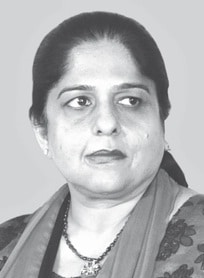
Linking Education, Learning and Development : Dr Anjlee Prakash, Learning Links Foundation, India

In conversation with Dr Anjlee Prakash, CEO, Learning Links Foundation, Yukti Pahwa, discovers about the flagship initiatives of the foundation for sustainable development, innovative education and strengthening the capacity building of professionals

What are the initiatives that Learning Links has taken in 2010? Kindly elaborate about the future initiatives.
2010 was a very exciting year for us. Learning  LinksFoundation launched 2 new initiatives namely the Center for Education of Sustainable Development and the Institute for Professional Development and Innovative Education. The Center for Education of Sustainable Development is working in three broad directions including citizenship education, environmental awareness and promotion of the entrepreneurial skill in students and youth. We hope to create a more inclusive society, aware of its responsibility towards the neighborhood, the community and the environment. We strongly feel that for India to succeed,
its youth must be responsible citizens in all spheres (community, environment and financial) to further students commitment for active citizenship and governance by developing and understanding on the importance of citizen participation. The Institute for Professional Development and Innovative Education has been developed to provide complete capacity building opportunities for professionals working in the education sector. Our content and curricula caters to school leaders, education stakeholders, teachers and student teachers. With our partners, the Foundation continued to support the enhancement of Math and Science learning using  21st Century methods and saw results of its programs in

“The Center for Education of Sustainable Development is working in three broad directions – citizenship education, environmental awareness and promotion of the entrepreneurial skill in students and youth”

the form of reduced absenteeism, increased enrollment and better grades amongst government schools. We launched a new partnership with Texas Instruments (TI) to launch an integrated classroom solution using TI devices with a specific requirement to improve mathematics and science learning by increasing opportunities for experiential learning. In an effort to provide creative use of technology to teachers, the foundation launched a successful partnership with Adobe to provide training to Government School teachers. The teachers responded with creativity, enthusiasm and have been using innovative techniques to engage with students.

The government is formulating plans around the issue of National Qualification Framework. What is your opinion about the same?

It is estimated that the projected top ten in demand jobs in 2010 did not exist in 2004, illustrating that work life as we know it is transforming at ever increasing
39 million students in India pass out from class 12, of which only one million get an opportunity to be empowered through vocational education. The framework may play a part in facilitating and shortening the process of access to the acquisition of qualifications by creating the basis for a precise description of learning requirements, learning level and learning provision and for making them reciprocal reference points

How is Learning Links Foundation unique or different from other
institutions in the same field?

Other than the competence dimensions, Learning Links places itself uniquely in a couple of areas which positions it distinctly. Firstly, its ability to provide effective solutions across education and development domains – including assessing needs, developing solution, building capacity, creating content, documenting impact, etc. Our services provide training, research, content curriculum, assessment, etc. Second, itsability to scale rapidly across geographies and to apply global programmes our local expertise, which are again process driven and quality conscious. Thirdly, our ability to develop programmes and provide services that aid and support the goals of all stakeholders involved. Our partners and our beneficiaries are equally important to us, hence our focus is on not only providing a solution, but ensuring it’s the best possible and most complete solution for all stakeholders concerned. We also pick right education transformation goals bringing clear synergies and better operation support to local regions.

What do you opine about the future of the education in context of ICT.

There is a massive demand for education in India and the demand is expected to grow strongly over the next decade. India has the world’s largest population in the age group of 0-24 years. This large pool will represent a large demand for
K-12 and higher education. The numbers of junior basic schools are higher in the country and there is a strong need to set up higher secondary schools as well as colleges with a focus on IT education. Government has advanced to a great extent in terms of promoting ICT in education, however, still more than 50% of the market is untapped which shows an opportunity for other stakeholders. In respect to the country’s population and number of student, trained teachers ratio is low which emphasises the need of training institutes. With economic growth and enhanced technology a lot more can be done in times to come to develop the structure of the Indian education sector. As I see it, the demand –supply gap will result in some very interesting ICT based innovations and solutions. Broadband deployment, advances in telephony, and advances in technology platforms will set the stage for interesting opportunities.The challenge will lie on how well the education sector responds to the possibilities, opportunities and solutions available.

Education Must Align with Industry Needs : Prof Dinesh Singh, University of Delhi, India

Prof Dinesh Singh, Vice Chancellor, University of Delhi in conversation with Dr Rajeshree Dutta Kumar, Yukti Pahwa and Sheena Joseph on the latest issues in field of higher education

What are the challenges and opportunities in the field of higher education?

The biggest challenge that we face is the need to ensure that India remains steady and keeps moving ahead in the education sector. The momentum should be augmented and if you look at it from this point of view, it is imperative for each and every university to be a part of this march towards quality and excellence. A university must think carefully about how it can anticipate the needs of the nation and contribute to it. Therefore, the university must also examine its own activities and compare it with what it is supposed to be doing. There has to be an alignment between what students learn and the actual requirements of the real world.

In 2010, the Project has successfully deployed ICT based learning system in Standard (Std) 8 in the State, besides the regular IT education from standard 5th to 10th. This system would be further expanded to Std 9 in 2011 and to Std 10 in the subsequent year.

Unitary focus on lecture methods will not be sufficient.  For instance, mathematics graduates today either end up teaching in schools or in colleges, although there can be enormous opportunities for them in the industry, provided they are trained in it. This explains the reason why the Indian Space Research Organisation opened its own university. Higher education institutes need to supply students who are more industry oriented.

What is your expectation from the government with regard to the 12th Five Year Plan (FYP)?

The government has been very good to us, especially, during the past few years and they have been very considerate towards our university, even while assigning funds to us.

I have every reason to believe that the situation will continue to be the same. I do not have any extraordinary concerns on that front. The government has always been consulting the university, the Planning Commission, Ministry Human Resource Development and all concerned stakeholders for policy making. It has always been a two way process. We expect positive measures being taken for the university in the coming years.

What is your opinion about privatisation of higher education?

So long as the needs of the nation are fulfilled, changes are always welcome. If certain measures are detrimental to the needs of the nation and society, then there is a need to rethink these strategies.

I don’t think that privatisation will create a monopoly in education. Positive outcomes can also emerge out of private initiatives in education. Harvard is a private university but that doesn’t make it a profit making enterprise.

Additionally, it should also be understood that those who cannot afford should not be denied education either. There has to be a balance in that front. Education should not become a business and it cannot run solely on profit motives.

Talks are on for making a unified regulatory body on higher education and for the establishment of the National Council of Higher Education and Research. What is your opinion about the same?

Not having multiplicity of authorities is a positive element. Therefore at the conceptual level it is a good initiative. It allows you to cast out the old structures and recreate new ones and usher in changes at highest level. I think it will do good for the education sector.

What is your opinion about the semester system?

I remember, as student, I used to feel that having examinations at the end of the year was torturous. I preferred having assessment tests at shorter intervals so that the end-of-year study load would be reduced. Even today, students prefer to have semester system and the least you can do is to be considerate towards students’ opinion.

Some believe that the system woul hamper involvement of students in extra curricular activities such as sports but so is not the case, as is evident from the semester systems operating in universities across the world. This system is a well tried out and tested method in universities of US and UK, and it has been adequately demonstrated there that students can very actively participate in co-curricular activities along with their academic pursuit.

We have already established this system in the department of science and will be rolling-it out for social sciences and humanities shortly by July 2011.

What do you think about mainstreaming vocational and skills education?

It is a tragedy that we just pay lip service to the teachings of Mahatma Gandhi. He would never expect one to learn without experimenting and doing things by themselves. Gandhiji wrote extensively on education, based on what he had learnt from his experiences and experiments. We burden our children today by pushing them into the maddening race of scores and subjects. Gandhiji has advocated that school students should spend a few hours of learning in a natural environment so that whatever was done with your hands is easily retained with children. We have forgotten this principal and what we need to do is to encourage action into the learning process.

There is a pressing need that we produce a knowledge force which can cater to needs of the industry. We want to encourage this business of internship for students. We also want people, from industry, to set up some interactive platform. ICT can help take this further.

What is your opinion about bringing about pedagogical changes?

The education pedagogy must positively change in order to ensure that students grasp and understand lessons, rather than blindly learning textbook content. Classrooms should have more interaction between the student and the teacher and monotonous lecture methods should end.

What is your vision for the future?

Our vision has always been to provide for the needs of the nation, and we have been successful to a large extent in this. Future will only see more and more initiatives in furthering this cause.

Satellite Connectivity Can Multiply Education Outreach : Dr. Krishnaswamy Kasturirangan, Indian Space Research Organisation (ISRO), India

How has ISRO contributed to the education initiatives in India?

ISRO’s role for promoting education has largely been in terms of using satellite connectivity to multiply the number of places where teaching can be spread. ISRO, over the past 2-3 decades, has started with Satellite Instructional Television Experiment (SITE). The Centre for Mass Communication has extensively studied satellite outreach and from there on satellite transponders are used and connectivity has been one of the key elements of outreach for programmes in education. There are also aspects like higher education, teachers’ training and probationer’s training, which ISRO has tried to address through the experience of using satellite transponders and developing programme.

ISRO has also promoted the development of softwares. Now various institutions have taken the responsibility of developing software for various aspects of education, which can then be transmitted. The effectiveness of these softwares in local languages has still to be established. They also have to be relevant in terms of enriching knowledge, or even curriculum based education.

Providing satellite connectivity in this context is essential so that you can multiply the outreach effect and transform single classroom – located in one location – into multiple virtual classrooms across the country. EDUSAT is a very useful satellite in terms of its capacity to provide educational programmes to different parts of the country. It has national and local transmissions which have been effectively demonstrated. For example, Vishveshwarya Technical University under ISRO has a very good faculty presence and lessons in  physics, chemistry and mathematics are transmitted to 100 locations within the state. This level of education can never be achieved by local teachers or locally held classes. Another important element is to create a cadre of teachers who are well informed and trained.

EDUSAT is now being phased out and ISRO may have to take these steps further and anlayse how these concepts can be carried forward in terms of providing space connectivity for education. The question now is of scaling up operations and providing a sustainable service and also making sure that there is, at the level of human resource development, a very strong scientific group to develop necessary software for educational purposes.

Vocational and skills development have gained a lot of ground recently. What are your views in this field?

Vocational training centres need to identify requirements of the industry and churn out students who are more industry ready. The science and technology department can contribute towards skill development through the development of useful curriculum for locally relevant training needs.  Public private partnerships can play an important role in this respect. Corporate bodies can adopt an ITI and contribute to the capacity building of that ITI to meet the requirements of a particular industry or cluster of industries. The government can contribute by providing land and infrastructure at subsidised rates, appointing teachers and keeping a dynamic curriculum. There are a host of possibilities for training in fields like agriculture and food processing. In this day and age, there is a tremendous requirement for skilled labourforce and it has now become a major national mission. That is why there is a national skill centre, which the Prime Minister has instituted, to ensure that it is addressed across diverse spectrum of activities.

As far as the question of space is concerned, training of trainers is one of the major requirements because when you talk of creating  millions of skilled workers, there is an obvious need for training of trainers as well. The emphasis should be on using ISRO’s connected ICT systems for training. To some extent one can also create virtual classrooms where you can produce programmes which can be taught.

“Science and technology has to play an important role in developing some of the research based solutions which are locally relevant”

The Space Application Centre has  25-26 centres for capacity building in space research. We can provide support locally through remote sensing and related programmes and provide solutions to the states in areas like land use and land applications, environment, forest management, and water exploration. In each one of them today remote sensing centres can provide solutions locally. 

How has the government supported research initiatives in promoting, supporting or encouraging local or indigenous research and development? How do you see industry linkages in this respect?

Much of today’s scientific and research support programmes have come from the Government of India and hardly 25% comes through industrial support. The government then becomes a major financial source for R&D in the country. In the 11th Five Year Plan there has been an allocation of nearly INR 72-74,000 crores from the government’s side. The government is willing to go even further for meeting research requirements of the country in areas like defence. In order to analyse how this percolates down to grassroots, there is a need to address the mechanisms of institutional framework between various states in the country. The performance of State Science and Technology Councils have not been up to the mark and there is a need to correct this situation by bringing in central agencies to help these state technology councils. Secondly, we have to rework the strength of the science and technology councils by creating better infrastructure and hiring more scientists.

A cadre of scientists has to be created who can have a focused approach to problems. If we take the example of the Northeast,  there are activities like floriculture, horticulture and food processing, or biotechnology related applications. These are the areas in which science and technology solutions for development of the state can be used.

Science and technology has to play an important role in developing some of the solutions which are locally relevant and also take advantage of central agencies like DFC and CSIR and try to make use of their enormous capabilities to find solutions for their requirements locally and at state level. Currently these mechanisms have not reached a level where we can say that we are making an impact on state development. One of the key elements of our programme in the 12th Five Year Plan is to create mechanisms which can enable this to be carried forward.

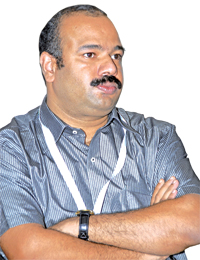
IT Education @Kerala : K Anvar Sadath, Govt of Kerala, India

In conversation with Shri K Anvar Sadath, Executive Director, IT @ School Project, Govt of Kerala, Yukti Pahwa, finds about the progress of the project in state, the only state with 100% literacy rate, and the future prospects the project has to offer for the coming year of 2011

Kindly highlight the state specific initiatives in the K12 segment across Kerela in the year 2010?

IT@School Project has been in forefront of implementation of an ICT enabled educational system in Kerala, ever since the Project commenced in 2001. As a result of its numerous ICT initiatives over a decade long period, it is in 2010 that the complete shift from IT education to ICT enabled learning is happening in the State. The year 2010 has witnessed some key initiatives of the Project that has changed the whole scenario of ICT based learning. This year the project received ‘Honorable Mention’ in the prestigious ‘Sto-ckholm Challenge Award’. Some of them includeSome of them include – the School Wiki portal which was launched to promote collaborative content development among students, apart from being a comprehensive database of schools in the state. The Model ICT School programme was rolled out in order to encourage school authorities to enhance their infrastructure facilities thereby upgrading their institution to be a model in ICT enabled learning. A total of 140 schools (one from every constituency in the state) was selected as Model ICT School wherein Smart Classrooms which were equipped with electricity and broadband connectivity facilitatning smooth ICT based learning as well as a state of art Computer lab with.most modern multimedia equipments was set up. Third is the ‘Student School IT Co-ordinators (SSITC)’. In 2010, over 28,000 Student School IT Coordinators were trained by the  Project, which enabled them to even train their classmates in addition to   handling most of the hardware related issues in their schools. Forth is the enhancement of ViCTERS into a complete educational medium. It is the flagship programme of IT@School Project. Today the channel is aired for 17 hours a day and is packed with local, national and international contents which include contents prepared by students, teachers, various educational institutions and  even by NFDC, Deutsche Welle, BBC etc. Fifth is the Resource DVD with 8GB  capacity was developed by the Project especially for the benefit of teachers. Finally, an unique educational reality show titled Haritha Vidyalayam – first of its kind in the country, which focuses primarily in promoting the best practices followed in Government Schools as well as Government Aided schools in areas suchas academic, scholastic, collaborative content generation, unique projects, achievements in terms of infrastructure, ICT enabled education and Social indulgence. The web portal www.harithavidyalayam. org gives a real-time update on the programme, scores and even includes the videos, photos and  other relevant information on each school. What will be the focus of your State in the year 2011? In 2010, the Project has successfully deployed ICT based learning system in Standard (Std) 8 in the State, besides the regular IT education from standard 5th to 10th. This system would be further expanded to Std 9 in 2011 and to Std 10 in the subsequent year. The deployment of free software based school management system, in line with the UID Project of Government of India, would also be an area of focus of the Project in year 2011. This would invariably comprise of a comprehensive database of all students in the State

“In 2010, the Project has successfully dep loyed ICT based learning syste m in St andard (St d) 8 in the St ate , besides the regular IT educati on from standard 5th to 10th. This syste m would be further expanded to St d 9 in 2011 and to St d 10 in the subsequent year”

and this would also be linked with the Education Departments’ Plan Welfare
schemes. IT@School Project has successfully deployed several e-governance
initiatives within the department. In terms of Capacity Building, the Project would aim at re-inforcing the teaching community with newer ICT technologies and the same would be extended to the SSITC (Student network) populace.

What is your plan to bridge the digital divide in your state?

IT@School is envisaged as a model for mastering the ICT approach through a three pronged approach. It spans the entire continuum of IT education that extends from IT Instruction at one end (teaching software hardware, and programming) to IT enabled education (where all the education delivery is done based on IT with multiple touch point sranging from class room technologies to instructional design and delivery) at the other end, in a phased manner. There were numerous challenges in the past for the Project to meet its goal and there are many more ahead in its path to success. Ensuring enough ICT hardware in all schools in the state is a daunting challenge, which the Project has taken up in a phased approach. Keeping the teaching community updated in emerging trends in ICT skills is yet another challenge. Strengthening of interactive mode of learning, strengthening of online media such as  School Wiki and ViCTERS etc would be challenges the Project would be facing in near future,

What is your opinion about Public Private Partnership (PPP)?

From our experience, we have learnt that PPP would be less effective in termsof content development, ICT content being part of the State Curriculum. Forthe same reason, these contents need to be developed internally by the subjectteachers themselves. Public private partnership could be undertaken in terms of infrastructure deployment in schools and allied activities. The gap which the Project might experience in terms of technical expertise in this domain could be overcome through public private partnerships.

Where do you see your State in the next three years in terms of educational initiatives, especially in context of ICT?
In terms of new initiatives, the Project oversees new technology not as an isolated entity but as part of the overall teaching and learning process which would eventually help in setting up a complete digitally equipped state. The new ICT based learning system which has kicked off in Std 8 would be expanded to other secondary and higher secondary levels. The next three years would be crucial to the Project, when it would aims at extending the ICT based system to other classes. Every school needs to be equipped with Smart Classrooms, apart from having all teachers fully equipped in ICT. The Project would also look at expanding its SITC and SSITC network further to the extent of making every school self-sufficient in ICT learning. New areas of Satellite based learning using EDUSAT and ViCTERS would also be looked at.

Development through Technology : Sir John Daniel, Commonwealth Of Learning (COL), India

Sir John Daniel, President and CEO, Commonwealth Of Learning (COL), in conversation with Dr Rajeshree Dutta Kumar, Juanita Kakoty and Yukti Pahwa shares COL’s vision and the concerted efforts towards creating a technology enabled society

What is the vision of Commonwealth of Learning (COL)?

COL is the only inter-governmental organisation in the world that is devoted solely to the use of technology for learning. We at COL focus on learning for development in developing countries. We focus not only on the appropriate use of technology, but what we achieve with technology. What I find interesting is that 5-10 years ago, we assumed that the developing countries will follow the same trajectory as the developed world. The definition of ICT application is even changing across developing countries. For instance, COL has some very successful programmes where mobile phones are being used for developmental purposes.

There was a meeting of 6000 women farmers, involved in goat-rearing in Tamil Nadu, recently. The women bought the mobile phones and the company gave them a free SIM card to talk to people within their group. Everyday short audio lessons are sent to them on their mobile phones related to their livelihood. This has come-out as an extremely powerful medium. With mobiles, they can afford to listen to the lessons. Our vision at COL is to take advantage of technology in order to make it really effective. There is no point using technology if it is not available or if people are not ready for its application.

So, in different places COL uses different technologies to provide the best to the people. Also, we have great faith in mass media as effective tools. Our office in India is pushing the drive of using community radio as a powerful community enriched tool for various activities such as learning, health and other development issues.

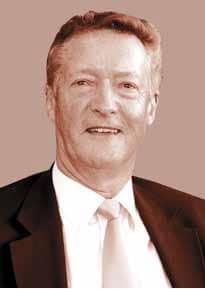
“Six countries that are CO L’sbiggest financial contributors include India, Nigeria, UK, New Zealand, South Africa, and Canada”

What is the governance of COL?

We have a Board of Governors, with 30 members. Six countries that are COL’s biggest financial contributors include India, Nigeria, UK, New Zealand, South Africa, and Canada. There is one member representative from each Commonwealth region. I, as the President of COL, am the ex-officio member. We have a chairman and followed by the representative, the Secretary General of the Commonwealth.

What are the other initiatives happening at COL?

COL works mainly in two areas – formal and informal education. We are trying to improve and expand formal education, basically higher education, secondary education, and teacher education in the small states. Our nonformal
education programme is aimed at health and livelihoods. We have skill development programmes for people in the informal economy, who cannot go to schools or colleges but need skills to take them forward. Successful examples are the ‘Learning for Farming Program’ in Tamil Nadu, the ‘Community Radio for Health Program’ in Africa and the Pacific, etc. We are also working in the area of e-Learning. The Virtual University for small states of the Commonwealth
is interesting because ten years ago, the small states that comprise two-third of
the Commonwealth membership went ‘dotcom frenzy’ with the coming of Internet. these countries realised that they are too small in terms of technology, people, etc. to go ahead all by themselves. So they decided to join hands. Ten years later, progress is beginning to show. Experts from these countries often get together and develop e-Learning

“biggest financial contributors include India, Nigeria, UK, New Zealand, South Africa, and Canada”
courses in the areas of particular interest  like fisheries, life skills, disaster management, teacher education, and port
management. What results from these workshops is the framework of a course available as an open education resource that can be used and adapted in all small states, as well as, in other countries across the globe. So, this is something where COL has really made a difference by training people and making countries better equipped for e-Learning in the areas of national importance. This Virtual University is not a new institution competing with others. It is a facilitated collaborative network whereby they work together. The most recent example is the coming together of 19 countries in Maldives in March 2010 to develop a course for sustainable agriculture in small States, with focus on specific requirements of each country. In open schooling, the world’s biggest challenge is to get the 400 million children between the ages of 12-17 years into some kind of secondary schooling. In most countries that is not going to happen by building secondary schools, if there are no resources and teachers.
COL is very strongly promoting the open schooling concept. We are doing a lot of know-how transfer between India and other countries because India has a lot of expertise in this area. We do not develop the technology. We provide training in how to use this technology. For example, amazingly, the National Institute of Open Schooling (NIOS) has 300,000 new students a year, especially from disadvantaged sections. Already half of them are registering online. In a case like this, we need not develop technology. We train the teachers, the facilitators, and the people in the system, because many come to the Open and Distance Learning (ODL) system from traditional systems. Another interesting programme in field of teacher education is TESSA – Teacher Education in Sub Saharan Africa. It includes 12 African universities, the British Open University, and various international bodies like COL. TESSA has produced hundreds of open education resources for teacher education in Arabic, English, Swahili and French. They are special because they focus on in-service training and training based on classroom reality. We emphasise on quality to make ODL better.

How do you think would India, with its growing population, respond to the human resource shortages?

In India, the market will take care of it. But then again, India is far too statefocused. Skill development in India is not going to reach the level it should until and unless the private sector comes in, with constructive monitoring by the State. Governments perhaps should stop acting as the main providers of education, and assume the role of facilitators.


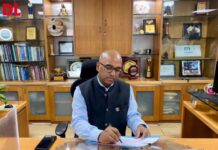
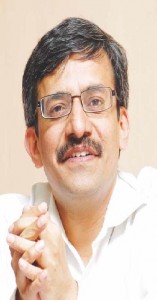
Regulating K12 Education Centrally : Vineet Joshi, Central Board of Secondary Education (CBSE), India


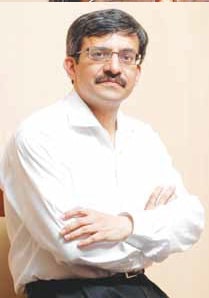
Vineet Joshi, Chairman, Central Board of Secondary Education (CBSE) in conversation with Dr Ravi Gupta, Sheena Joseph and Yukti Pahwa, talks about the vision and role of CBSE as an institution. He shares with the team his outlook on ICT inclusion in schools and implementation of Continuous and Comprehensive Evaluation
The objective of school programmes should be to help children realise that there is science everywhere

Regulating K12 Education Centrally :
What is the main role of CBSE?
CBSE is not an administrative body, which grooms the schools. Our role is to issue guidelines that inform the clientele (schools affiliated to CBSE) about the good

practices available in the field. The idea of circulating the circulars to the schools is to make them aware of the possibilities that exist. In the times to come, if schools desire, we will come up with guidelines on how to process the available mechanisms optimally. The focus of CBSE over years has shifted from being just an examination body to an academic body.

What is CBSE’s vision with respect to implementation of ICT at schools?
Firstly, there is an issue of the numbers. If we need to reach out to a large numberof schools, it is imperative to use ICT. Secondly, ICT can help a teacher
go beyond monotony and better time management. Additionally, what National
Council for Educational Research and Training (NCERT) has prescribed,in terms of ICT, should be integrated in classrooms. We encourage self-realisation amongst schools.
Can you elaborate on Continuous and Comprehensive Evaluation (CCE) and the role that ICT holds for implementation of CCE?
Teacher is the nodal point of implementing CCE. At the same time CCE is meant for the students. We are working towards realising benefits for both. For teachers, we are working on the supply side of knowledge. We are coming up  with content on formative assessments. Summative assessments take place only at the end of the term, while the CCE is continuous in nature, done at regular intervals of time, with purpose of diagnosing problem areas and suggesting remedial actions for the same. This is the basis of CCE. We are also going to start with training on the formative assessments, in the coming year. On the demand side, we are sensitising the parents, as to what they should be expecting inside the classroom. We are working for both the sides – equipping teachers and principals on one hand, and parents on another; so that  everybody can appreciate the system and demand it. As far as ICT goes, its  integration with CCE is important. One of the immediate uses of ICT is the help it provides in processing of records and records-keeping for the teachers. It also facilitates good learning environment  inside the classroom.
With a country where the usual ratio in a class is one teacher to 50-60 students, do you think CCE implementation is viable?
Firstly, under the right to education act every school till standard eight is suppose to have teacher to student ratio of 1:30. Its actual implementation in classrooms might take time, but, the ratio has to come into place across all the schools as it is one of the mandates prescribed under the act. Secondly, the schools will have to come out with innovative ideas on addressing the issue of large number of students, in respective classrooms. ICT usage is supportive of CCE implementation. It is not meant to be a burden for teachers but otherwise.
CCE entails evaluation and explanation of the evaluation done. It is very important for teachers to explain the reason why a child scores an eight on ten or a nine on ten, and why certain marks were lost.

One of the immediate uses of ICT is the help it provides in recordskeeping for the teachers. It also facilitates good learning environment inside the classroom


How does CBSE work for maintaining
evaluation standards?
Formative assessment done earlier didn’t carry any weightage or make a difference to students’ final grades. It was only meant for feedback.Secondly, summative assessments were done by the schools. The board’s intervention ensures that a minimum standard, which is to be maintained by students who pass out of this system, is to beachieved; and it ensures that the teachers prepare and teach the required syllabus to the students without escaping or missing any topic. The idea is to encourage teachers to develop skills for carrying out such assessments independently. Formative system will take some time but for summative assessments, board is already giving its support to the schools by preparing papers or considering the papers that schools prepare and send to us for approval. This ensures that existing standards are atleast maintained.
Is ICT application encouraged internally at CBSE?
We have integrated ICT as much as we could within our own system. For instance, the process of acquiring affiliation with us has been made possible online. Right from the first step of getting applications to the final submission,
everything is to be done digitally. Our officers are equipped to use computers.
Earlier, we would get 500-600 application requests for affiliation but now because of making the process digitally equipped, the number of application requests reached a high number of 3000 in the year 2010. Earlier processing of the same would take a year but now it takes only six months, while maintaining transparency. We mostly use online mode for communicating to the applicants and this has also helped in minimising various errors.
How is CBSE catering to its students if compared with the global situation?
In India we might not be the largest board, but if you compare CBSE with any international board, we cater to quite significant number of student population. Total number of schools we cater to is 11,441 (till November 2010). In terms of number of students, across Xth and XIIth class, we cater to nine lakh and seven lakh respectively, multiplied by five to give a rough estimate.

LATEST NEWS