Access to education has been an issue which has been largely talked about, although equitable access and success in developmental efforts still have a long way to go. The proceedings of PCF6 are governed by several themes which form the basis of discussions and deliberations. The PCF6 platform provides a common ground for discussing contemporary themes including social justice, education and empowerment. The use of technology and open and distance learning have been seen as key elements in promoting social justice. The sub-themes of PCF6 have been recommended to draw the attention of stakeholders to take forward the agenda in a more pragmatic and unbiased parameters so as to empower the millions of distance learners with many limitations to pursue their learning with confidence to achieve their goals
By Sheena Joseph
Social Justice
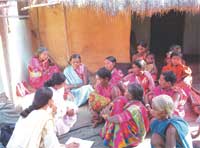 A nations growth process should necessarily reflects all inclusive growth and this requires that all social groups have identical access to the services rendered by the state and equal prospects for growing through financial and social mobility. It is also essential to make sure that there is no prejudice against any section of the society. Social justice becomes imperative in this context.
|
Theme Leaders
Common Wealth of Learning (COL) Social Justice
Prof Asha S Kanwar
Dr K Balasubramanian
Trudivan Wyk
IGNOU Social Justice
Dr Malati Mathur
Dr Shubhangi Vaidya
Prof K Elumalai
|
|
Sub Themes
-
Access to Justice: Life, Liberty & Livelihood
-
Scaling up Quality Education for All
-
Education & Employment of Persons with Disabilities
-
Assistive and Affordable Technologies
|
Access to education typically stands for a prospect to get access for a variety of courses and programmes that can lead to degree or authentic certification of a degree. In areas of non-formal education it May signify creation of consciousness among the members on a large scale in matters pertaining to livelihood, physical wellbeing, officially permitted rights, which includes basic human rights and partaking in various spheres of a self-governing society that lays emphasis on inclusive development and advancement.
Nevertheless, time and again it can be observed that access to education for a large number of population residing below the poverty line is still a distant dream. Several mechanisms which might have been instituted by the state are also full of inadequacies and shortcomings. These could include weak policies, poor implementation, corruption and fragile governance structure. As a result, even the existing structures fail to adequately deliver key educational targets for its citizens.
The final outcome of this kind of a society is that the certificate conferred to the youth is hardly of any worth and in spite of having invested in education, relevant job opportunities tend to be out of reach for them. Open and distance learning can play a crucial role in addressing numerous aspects of social justice and empowerment.
In several nations, there have been certain social groups and minorities who have historically been at disadvantageous and vulnerable situations. There are also certain additional groups which May have been discriminated against and which suffer from handicaps. This group May include persons with disabilities, the elderly, street children, vagabonds and victims of substance misuse. The World Day for Social Justice observed every year draws international attention towards efforts being made to wipe out poverty and endorse community welfare, egalitarianism and access to equal employment opportunities.
Open and distance learning has provided several avenues for the scaling up of education. It has opened up opportunities to teeming millions in India and the developing world. Technology has further accelerated the process. Newer innovations have helped expand the cause further. ODL has given a new life to education for children and youth in the hinterlands. It has enabled children and adults alike to reach out to the many who crave for education.
Community Development
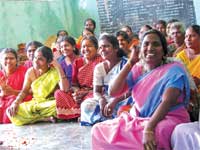 Traditionally, higher education institutes have assumed a societal role of creating, preserving and extending knowledge to the society. Students have been trained to assume greater social responsibilities and inculcate values of a civic society. However, gradually with globalisation it has also been observed that universities are becoming ivory towers which are out of sync with the realities of modern living.
|
Theme Leaders
COL Community Development
Sir John Daniel
Ian Pringle
IGNOU Social Justice
Prof T U Fulzele
Prof Annu J Thomas
Dr Jaswant Sokhi
|
|
Sub Themes
-
Community based Learning and Outreach
-
Open Education Resources: Models to Choose, Adopt and Adapt
-
Innovative Pathways to Knowledge Society
|
Although the significance of research and innovation of fresh knowledge cannot be underestimated, finding of novel information and application of it in specific situations of research require specialization. With the increasing demand for democratisation of education in all stages, universities cannot manage to continue as islands of excellence. The necessity of a linkage between the universities and the communities has become all the more relevant with issues such as global warming, industrial pollution, violence and climate change cropping up.
Numerous education programmes have put the community as a vital contributor in determining issues of magnitude and quality. Democracy requires that a positive role be taken up by people, rather than imposing a top-down approach, where the 'target audience' is an essential part of planning and execution. Education is one of the quarters that, by definition, has to take on a democratic ethos in its functioning. Strategy documents are replete with references to 'community participation', which becomes the most essential form of sharing information and building consciousness. Much more powerful forms include participation in decision-making regarding school and teacher administration, and the performance and content of education. Community involvement is observed to make schools and teachers more responsible, thus leading to a more competent school system. Advocates of community involvement also argue that it assists in the course of making schools more receptive to local situations, and allows the use of community-level information, creativity and enterprise. Numerous programmes at the community level have emphasized on participation of the community in matters relating to primary education and community affairs.
Several research studies on the impact of community based education programmes have shown that a wider number of students have been brought into the education process, including the disabled, the marginalized and has increased teacher accountability.
Studies have also emphasized that community involvement have led to addressing issues relating to the management of para-teachers, who are observed to be a better substitute to the poorly performing government school teachers. Para-teachers who are managed by the community are additionally answerable to them and are more open to training and are competent in matters relating to the children's education, in comparison to regular teachers.
Another approach is where the people's involvement has also been explored in creation of course and pedagogy, connecting the child's societal, intellectual and ecological contexts with the teaching-learning process, thereby making education more relevant and interesting.
Traditionally, syllabus formulation has been a procedure of instituting and executing minimum standards across distinct groups. The teaching methods that are adopted have a huge bearing on the relevance of the course content, and therefore it becomes all the more essential to tailor the curriculum to suit to local requirements.
The stipulation in this background is that no neighborhood community is self-sustained; it forms an integral element of the larger society, a community that differentiates according to the social order and gender. On the flip side, these can inevitably lead to creation of a curriculum that reinforces these patterns. Accepting local curriculum May also exacerbate inter-regional differences, resulting in rifts in the quality of education alongside socio-economic or cultural lines. Secondly, disputes also relate to the capacity of the parents and the society in promoting participation, so as not to exclude any social group. Thus, the emphasis should be on the necessity of maintaining an equilibrium so that children are able to accomplish certain fundamental learning and skill standards, with the basic conviction that the state is eventually accountable for education, even as the society May involve themselves in that process.
Skills Development
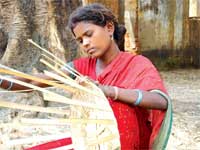 Open and distance learning has provided several avenues for the scaling up of education. It has opened up opportunities to teeming millions in India and the developing world. ODL has given a new life to education for children and youth in the hinterlands
For any population to benefit from the fruits of a growing economy, they necessarily have to be vocationally skilled to partake in the economic process. Much more needs to be done in the developing countries to create employment opportunities for the large number of population and to equip them to meet the labour market requirements. Skill development plays a crucial role in national development and advancement of economic growth. Several efforts have been made in the developing countries to initiate skills which are relevant to employability.
|
Theme Leaders
COL Skill Development
Alison Mead Richardson
John Lesperance
Angela Kwan
Guilherme Vaz
IGNOU Skill Development
Dr Vijayasekhara Reddy
Dr Babu P Remesh
Venkata Subrahmanyam Vampugani
G Mythili
|
|
Sub Themes
- Skills Development for National Development
- Global Development Discourses; North-South Dialogues
- Regional Cooperation: Who can benefit from whom?
|
One of the important elements in the creation of the skilled personnel is the vocational education and training system. In several countries, however, the system itself has not appropriately responded to the demands of the labour market.
A critical issue is to deliberate on the necessary reforms and interventions that are required to advance the effectiveness of the system. Change from a traditional to modern economy mandates the creation of a new generation of educated and skilled workforce. Its aggressive edge will be established by the people's capacity to generate, distribute, and utilize knowledge effectively. On the one hand developing nations have to face the potential opportunities accompanying the rapidly transforming realities and on the other hand it has to deal with the flaws of its established customs and structures A growing economy needs to expand its workers' base to include knowledge workers and knowledge technologists who are adaptable and logical and can be the key elements driving innovation and development.
To attain this objective, a flexible education system is required that will expend primary education which lays the foundation for learning; secondary and tertiary education that helps to develop integral capabilities and key technical skills; and additionally prepares the individual for lifelong learning. The education system must be accustomed to the new-fangled global environment by inculcating creativity and improving the quality of education and training at each and every level.
Nations that have had speedy increase in learning achievement, as well as continued economic growth, have improved education drastically to suit changing requirements. In a globalized economy, a large group of skilled workers are essential for drawing foreign direct investment. Developing skilled workers augments the effectiveness and flexibility of the labour market and decreases bottlenecks. Skilled workers are efficiently and easily accommodated into the economy, and their job mobility is enhanced. It is critical to devote in quality secondary and tertiary education and in vocational education and training (VET) if the economy is to expand and stay viable in world markets.
Demographic strains and monetary restrictions have often played an important role in the lack of proper dissemination of vocational training. Many developing countries are faced with situations where a great deal of the economy and population are still engaged in traditional activities and systems. Even though there has been a major movement away from traditional farming activities, it has still left the majority of the work force toiling in the informal sector, that too at low levels of productivity. Access to education and vocational training for this group is essential and will form the final stage of their completion of formal education. An effective school to work evolution for these adolescent populace can be achieved by superior quality secondary and tertiary education and training, and will advance their employment prospects and earnings.
Formal Education
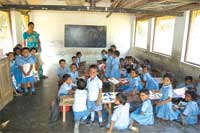 It is critical to devote in quality secondary and tertiary education and in vocational education and training (VET) if the economy is to expand and stay viable in world markets. Skilled workers are efficiently and easily accommodated into the economy, and their job mobility is enhanced
Modern days challenges in global education and sustainability require urgent attention. Education in the current century is in want of thoughtful innovations because our civilization is increasingly becoming multifaceted, integrated, mobile and driven by knowledge. In this background, it is critical to support a vital and constant discourse on the purposes of education, what people learn, why and how.
The intention of education is and should be to empower individuals, and give them skills, information and values that can enable them to lead a fulfilled life. It should be the key stone in promoting peace, better understanding and give impetus to sustainable society.
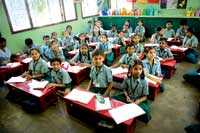 If we notice that students are not learning, then the education systems have not been put properly in place. Knowledge is wealth, and lack of it keeps people bound in poverty. Quality cannot be delivered unless teachers are trained in relevant opportunities and ideas
All of us share a planet where we are interdependent on each other for diverse needs. Therefore, it becomes an accepted collective consciousness to actively take care and look out for fellow human beings. From this standpoint, education is about private and shared enhancement and the endorsement of societal justice. It concerns smashing down communal and cultural barricades and bequeathing every person with the knowledge, reverence and self-assurance to be occupied in their families, societies and countries as conscientious citizens. Education is a pursuit and an investment of a life span and therefore there has to be a coordinated effort for a movement in universal global education for all.
|
Theme Leaders
COL Formal Education
Dr A Umar
Frances J Ferreira
Dr Willie Clarke-Okah
IGNOU Formal Education
Dr R Sudarsan
Prof M K Salooja
Dr Hema Pant
P V Suresh
|
|
Sub Themes
- Revamping Teacher Education
- Open Schooling
- Technologies for Scaling up ODL programmes
- Quality Issues
|
Innovative education is the need of the hour. This will hold true for several reasons. The first is that the right to education is yet to be a reality for millions of people around the world in spite of the remarkable strides made in this century. With political resolve and innovation, there is a momentous chance to enroll all children in school.
The primary indicator of an innovation's value is the degree to which it opens the doors of education to the the most susceptible and marginalized.
It is common knowledge that segregation has numerous aspects. Children May not be attending schools because their families make less than one dollar a day. They might be trapped in distressful circumstances of conflict that wipe out their whole social network and surroundings. They May also be kept out purely because their gender, or that they articulate in a minority language, belong to a religious minority, an aboriginal group, or live with a disability. Education cannot stand such intolerance





 “Tutor Vista started with providing tutoring services to students in the US. K Ganesh established the company after observing the immense potential of outsourcing tutoring service to students in the US, since most parents there could not afford personalised tutoring for their children. Today, the online tutoring firm and school management venture TutorVista Global is raising Series D funding to the tune of $50 million from existing investors as well as global funds.
  A section of DRS Group, Edify Education plans to have pan-India presence through launch of 50 franchised Edify Schools, 250 Franchised Edify Kids pre-schools, and 10 company owned International schools by 2015, confirmed a company official. An investment of INR 500 crore is being considered for investment in this expansion plan of its network of schools to around 300 across India. It has combined the best teaching techniques and practices CBSE and other global orientations to provide 'international' education at an inexpensive fee. These schools will run on the 3-C philosophy-character, competence and content. The assessment technique in these schools will target to evaluate child's ability to conceptualise, process information and apply the same in a creative manner.
 Venera Technologies, a service provider of digital multimedia solutions and Hughes, a global provider of broadband satellite networks announced a partnership that is to facilitate Venera to offer its Virtual Classroom platform IeraTM for delivering online education using VSAT and Internet in Tier B and C cities through HughesNet Fusion centers in the country. Hughes's usage of IeraTM will enable aspirants from small towns in India to get an access to professional education from premium institutes without migrating to big cities, as a viable education solution.
 In order to disseminate comprehensive knowledge of financial markets to its members, the Institute of Chartered Accountants of India (ICAI) recently signed a Memorandum of Understanding (MoU) with United Stock Exchange (USE). Inclusive of the partnership is an understanding that members of ICAI will be educated by the USE through seminars, panel discussions and workshops on financial markets and corporate governance. ICAI would provide institutional support and facilitate interactions with its members wherein USE would impart relevant knowledge. The MoU has been signed for a term of 3 years and would be renewed subsequently on mutual consent. USE was launched recently with record volumes and has been the market leader since launch. The Institute of Chartered Accountants of India, functioning under the aegis of Ministry of Corporate Affairs, is a statutory body established under the Chartered Accountants Act, 1949 for the regulation of the profession of Chartered Accountants in India.
 Manipal K 12 Education announced the launch of India's first digital learning solution for engineering colleges. Recently, launched India's first digital learning solution for engineering colleges, that targets to empower faculty with learning aids and objects and help them create the technology leaders of tomorrow. After establishing leadership in the K-12 segment with its digital learning solutions: DigiClass and DigitALly, that won many customers and awards. Manipal K-12 Education has extended its offerings to the engineering colleges segment. The solution entails rich digital content, a content repository, enhancement and delivery framework and hardware elements such as servers, multimedia computers, interactive projectors, UPS equipment etc. that are installed in the classroom.
 10 million professional entrance exams, 130 million semester exams and 50 million Government/PSU recruitment exams: these are the number of exams that candidates appear for, in our country. Almost all of these exams are conducted in a traditional paper-pencil mode and the exam process relies solely on the signature of the candidate as a proof of identity, post facto. With the intense competition to get the right seat, the appropriate marks and the plum Government post, this process of authentication remains by far the weakest link of the paper-pencil exam process, providing an opportunity for thousands of impersonations to happen routinely. In the last year alone, a quick search on news articles of impersonation has thrown up over 125 cases that have been highlighted by the national media alone. The current process of authentication in the traditional paper-pencil mode today is to match the facial features of the candidate with the photograph on the hall (admission) ticket, and to match the signature of the candidate that is on the hall-ticket with the one that the candidate signs on the attendance sheet. While there are several drawbacks of the photograph verification (old photos, smudged prints, etc.), this photo verification process by the invigilator is not recorded anywhere at all and hence the signature becomes the sole artifact of authentication once the examination is conducted.
 Over 10 hectre land and a four classroom block with offices and an ICT centre for its distance learning programme has been given by the Techiman Municipal Assembly to the authorities of the University of Education, Winneba, at Ghana. This brings to three, in addition to those at Bechem and Attebubu, the number of study centres in the Brong-Ahafo Region. The Techiman Municipal Chief Executive, Alex Kofi Kyeremeh, described that for a number of years the skills and competencies of the people, especially, the teachers, have been improved without leaving the classrooms through the said facility, which brought higher education closer to them. The Vice-Chancellor of the University of Education, Winneba, Prof Akwasi Asabere-Ameyaw, mentioned the move was an opportunity for the University to locate closer to its clients.
 Ashmount Primary school in north London has outsourced mathematics teaching to India. Shortage of mathematics teachers in British schools has for some time presented an opportunity to Indians to teach the subject. Many of them have even immigrated to Britain to teach mathematics. A British firm, Bright Spark Education Company (BSEC), is facilitating the online mathematics classes by teachers thousands of miles away in Ludhiana. Lessons are booked 24 hours in advance; and at a stipulated students log on and converse with their tutor over the Internet. The lessons, designed for children between seven and 16, cost
 Welham Boys School, a CBSE affiliated school, was established in 1937. It combines the best of traditions with a modern approach to learning. In a congenial environment boys are encouraged to nurture the qualities of the head, heart and hand. A strong pastoral system ensures that each child grows up with a sense of ownership and a feeling of belonging
 The School has well set up Science Laboratories, a Design technology lab, a language lab and three Computer Laboratories with the latest computers. The Learning Resource Centre (LRC) houses a spacious library, a well equipped audiovisual room, activity rooms and an exhibition gallery to provide an atmosphere conducive to the boys to reflect on, and seek answers to the many questions that puzzle them. A conscious effort is made to encourage students to learn through research and reference by way of regular audiovisual presentations produced by the students themselves on academic and related issues. The School is equipped with a state-of-the-art IT department; most classrooms are outfitted with networking facilities. There is provision for sending emails from hostels as well. An effective firewall keeps out undesirable influences.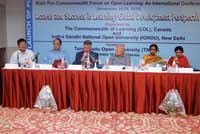
 The Commonwealth of Learning’s biennial Pan-Commonwealth Forum on Open Learning has grown to become the leading international conference on learning and development. It is co-hosted with partners in different regions of the Commonwealth
 It took place from 29 July 2002 to 2 August 2002, at International Convention Centre (ICC), Durban, in the Kwa Zulu-Natal Province of South Africa. The event was themed as ‘Open Learning: Transforming Education for Development’. The second forum was to further examine the broad range of applications within the theme of open and distance learning. It showcased what is achievable with vision, concern for the learner, effective learning and learning facilitation and utilising and increasing appropriate use of technology.











Success & Access in Learning
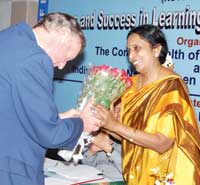
Excerpts from the speech by Sir John Daniel at the launch ceremony of the 6th Pan-Commonwealth Forum on Open Learning, Chennai, India, on 10th October, 2009
President and CEO,
The Commonwealth of Learning (COL)
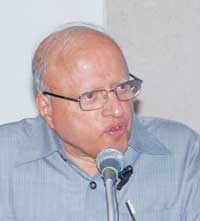
“It is a pleasure to be back in Chennai and to announce the launch of preparations for the 6th Pan-Commonwealth Forum on Open Learning in the presence of the Chair of our Honorary Academic Advisory Committee, Professor M S Swaminathan.
As the number implies this will be the sixth in a series of increasingly impactful pan-Commonwealth forums on open learning. We are most grateful to IGNOU, the world’s largest open university with a full range of academic programmes, for agreeing to partner with us. We hope that PCF6 will showcase IGNOU to the world and not only IGNOU, but Indian expertise and experience in distance education more widely.
No country has made a bigger commitment to the use of technology of open and distance learning in education than India. In higher education, as well as IGNOU, you have a dozen state open universities, represented here by the Vice-Chancellor of the Tamil Nadu Open University The title we have chosen for PCF6 is Access and Success in Learning: Global Development Perspectives. We want to stress the importance of successful learning. We know now that with technology we can take learning to scale. We also know from examples that it is possible to take learning to scale with high quality. What we must do is achieve quality at scale consis- tently in the most cost-effective manner. That is where the global exchange of experience is invaluable. The programme of PCF6, which will be developed under the able leadership of Dr Ramanujam, will aim for an integrated blend of themes and sessions, some originating in COL’s own programme of work, some in the papers submitted for presentation.
This blend should not be diffi cult to achieve because COL’s programme of work for 2009-2012 was developed in the light of Commonwealth needs, contemporary trends, and government priorities – all in a perspective of global development… …Access to success in learning does
not only mean formal education. Global development depends on the informal and self-directed learning of billions of people. Skills development is the bridge between the formal and the non-formal. Technical and vocational education in institutions is fi ne, but we also need more informal learning that leads directly to improved livelihoods…. …Open Educational Resources are sure to be a lively topic of debate. These are just some of the themes that will generate passionate discussions at PCF6. Over theyears the PCFs have gained a reputation as the most interesting and vital conferences addressing the intersection of development, learning and technology. I am sure that the 6th Pan-Commonwealth Forumon Open Learning will take that reputation to even greater heights and it is a pleasure to be here to announce it in India today and to announce the selection of the logo for PCF6 after a competition that attracted 120 entries. It is very appropriate that the winner is an MBA student of IGNOU…”