INAUGURAL SESSION
 eASiA 2009: Deliberations, Dialogues, Debates and Knowledge Sharing in ICT4D..
eASiA is the annual International Information and Communication Technologies for Development (ICT4D) event with the objective of reinforcing technology and knowledge-centric growth and needs of Asia vis-à-vis globe, through capitalisation of market economy and boosting human development. The eASiA 2009, with a thrust on ‘Opportunities for Digital Asia’, provided the right opportunity for all stakeholders in the ICT arena to come loser and share a level-playing ground through active conferencing and networking. Ushering in a new wave of technology in development, the eASiA 2009 Conference and xhibition witnessed a three days of active conferencing and exhibition with ground breaking iscussions on various issues of ICT4D, new and emerging technology in strengthening the arious developmental models for a progressive society, standards and measures, various strategic policy frameworks, the pressing issues in the region and need for a richness of nablers. e-Asia 2009 was held between December 2 and December 4 2009, at Bandaranaike emorial International Conference Hall, in the Sri Lankan capital, Colombo. The event brought together all the stakeholders including thought leaders, industry players, policy makers, ommunity of Practices spurred by their necessity, common purpose, enthusiasm and ollaboration. The event marked a need for a grand vision to manage the changes in the education progress level, changes in the technology developments, and changes in the urrounding environment where technology needed to be integrated. The three-day onference as coorganised by joint efforts of Centre for Science Development and Media Studies (CSDMS), Elets Technomedia, Information and Communication Technology Agency (ICTA), ri Lanka and Presidential Secretariat, Government of Sri Lanka. Centre for Science, development and
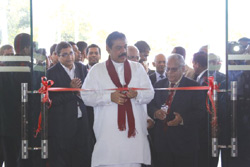
 Media Studies (CSDMS), a leading Asian non-governmental institution engaged in advocacy, research and community building in e-Government, ICT for Development and knowledge management issues through capacity building and media initiatives. Elets technomedia is a media and events company mandated to provide effective information on different media and ICT tools and their stake in solving social problems through premiere print publications, online portals and premier events like seminars, conferences and summits. Information and Communication Technology Agency (ICTA) of Sri Lanka,which is the single apex body involvedin ICT policy and direction for the nation.Wholly owned by the Government ofSri Lanka, ICTA is the implementingorganisation of the e-Sri Lanka Initiative.The vision of ICTA is to harness ICTas a lever for economic and socialadvancement by taking the dividends ofICT to every village, to every citizen, toevery business and to re-engineer theway government thinks and works. The -organisations worked together to enable all the stakeholders to come together for briefing all about the opportunities available presently in field of Information and Communication technology. With five seminal and parallel tracks including eGov, Digital Learning, eHealth, Telecentre Forum and Emerging e- Technologies, the three-day conference cum exhibition was attended by more than 3,000 delegates from 30 countries across globe, including a 300-strong group of IT professionals from he host country, Sri Lanka. The eASiA 2009 exhibition witnessed more than 30,000 footfalls across all the three days. First day of the conference saw a grand inaugural ceremony onsisting of launch by the Honourable President of Sri Lanka, HE Mahinda Rajapaksa. The ceremony was followed by lenary sessions consisting of eminent experts, commenting on importance and advancements of Information and Communication Technology (ICT) in fields of Learning, Governance, Health and Telecentre Forum, in addition o Emerging e-Technologies. These people consisted of Suren Amarasekara, CEO Mobitel, Sri Lanka; Jaewon Kim, Deputy General Manager, Samsung Networks Inc.; Ng Fook Seng, SVP Security Business Asia, Gemalto; Par Botes, CTO APAC & Japan, EMC; Dr. Mohammad Shakouri, VP, WiMAX Forum; Dr. Xuan Zengpei, Director ICT & DRR Division UNESCAP; Dr. Sanjiva Weerawarana, Founder, Chairman & CEO, WSO2 Inc., Founder, Director & Chief Scientist, Lanka Software Foundation; Florencio Cebellos, telecentre.org, International Development Research Centre, Canada; Bash Badawi, Government Industry Technology Strategist, Public Sector, Microsoft APAC; Kevin North, Business Development Executive, IBM Global Technology Services AP Public Sector Business; Dr. Jyrki Pulkkinen, CEO GeSCI, Ireland; HE Prof. J.B. Dissanayaka, Ambassador for Sri Lanka in Thailand, Cambodia and Laos PDR; and Md. Abdul Karim, Honourable Principal Secretary to the Prime Minister, Prime Minister’s Office, People’s Republic of Bangladesh. Delivering the keynote address at e- ASiA 2009, post grand inauguration, the President of Sri Lanka, Mahinda Rajapaksa averred that Sri Lanka is moving ahead in ICT literacy with national IT literacy crossing the level of 30 % in comparison to 4% in 2004 and assured that the Government was committed to ensure that it goes up to 60% by 2012. Rajapaksa said: ICT is the future driving force of economies. It is the tool and the enabler that will push the boundaries of socio-economic development in countries such as Sri Lanka. It is with this aim thatSri Lanka has given priority to ICT, and mainstreamed ICT in all its development activities. It is in this regard that Sri Lanka firmly pushes ahead with pioneering initiatives such as e-Sri Lanka. He nderlined that these efforts have resulted in numerous achievements and successes in the field of ICT in Sri Lanka, given the fact that country’s percentage ranking in the Network Readiness Index has moved up from 72 to 53 in a span of three years. Voicing his concern over he impact of Internet on young population of the country, he cautioned, “Our children must be protected from the dangers in the cyber space at any cost. Our culture also should not e harmed due to any advances in ICT. I am therefore appealing to all the Asian leaders to take precautions in this regard.” He laid emphasis on the unmistakable need to urgently equip the people, especially the youth, with proficiency in the English language on the one side and to provide them with access to computers and internet facilities, through the rapid development of use of information technology, on the other. He shared with the distinguished delegates that the government has successfully implemented a unique network of ‘Telecentres’ known as the Nenasalas with over 600 centres He reiterated that ICT should be used as “ instruments of ural empowerment; as powerful tools that could make each village in he country a meaningful part of the global village.” He also said that the present Government recognises that “ICT is the only tool that will cross or break geographical barriers, social barriers and reach out to the rural, disadvantaged and vulnerable communities.” Dr. MP Narayanan, President, CSDMS thanked the Honourable President, for gracing the occasion with his presence and the eminent dignitaries for their gracious participation; while expressing hope that the three day conference would prove to be enriching and enlightening experience for all participants. He said, “A conference of this nature gives us further opportunities to share our experiences and harmonise our efforts for the future. Such interactions will positively contribute to the progress of the entire Asian region. There has never been this much commitment and focus for ICT led development.” The day one ended with a Gala Night Celebration.
THE DIGITAL LE ARNING ASIA 2009 SESS IONS: PERSPECTIVES ON ICT ENABLE D LE ARNING..
Following the grand inauguration by the Honourable President of Sri Lanka, Mahinda Rajapaksa, the successive two days saw five parallel track conferences, each having nine thought provoking sessions, in the domains of digitallEARNING, eHealth, eGov, Emerging e-Technologies and Asian Telecentre Forum. The digitalLEARNING track was spread over a period of two days with a huge turnout and sought to bring together experts and stakeholders from education sector working together towards making optimum use of ICT for profiting the associated beneficiaries..
SESS ION I
The digitalLEARNING Asia was declared open on December 3, 2009 with its first session on he theme ‘Challenges: Planning, Managing, Standards and Quality in e-Learning’. The session was chaired by Ms. Ashish Garg, the Asian Regional Coordinator for Global e Schools & ommunities Initiative. The keynote speaker for the session Prof. Robert Ramberg, Stockholm niversity, Sweden spoke on ‘Deterring Plagiarism: Assuming a pedagogical Approach.’ He entered his talk around the need for addressing the issue of plagiarism encouraging students o know and understand what is expected to them. He emphasised on the need to design assessments and reliable means to discover cases of plagiarism. Mathias Hatakka, from Örebro University, Sweden spoke on ‘A Model for a Learning Object Repository Metadata Set.’ He poke about the metadata model that is based on need analysis for University of Colombo, chool of Computing (UCSC). He highlighted on the need to have a metadata designed to ptimise re-usability, searchability and user-friendliness for content stored in a learning object epository. Dr. Ravi K Mahajan, University School of Open Learning, Panjab University, India, poke on ‘Students’ Perception or Teachers’ Profile: What restrains eLearning?’ He based his alk n highlighting the issues that restrain the growth of eLearning. His presentation mainly ocused on two empirical studies: a) mapping students’ perception on their `preferred mode of tudy’ with special reference to e-Learning; and b) Teachers’ profile with special reference to auge their potential in harnessing ICT components. Thushani A. Weerasinghe, Stockholm University, Sweden spoke on ‘Guidelines to Design Successful Online Learning Environments.’ e emphasised that design of an Online Learning Environment (OLE) can nfluence the success of the programme it would deliver. Therefore, it is important to design it ith appropriate methodology. He highlighted the three major design guidelines to design OLE sfor learner satisfaction and learning effectiveness – a) structure and organised learning ontent; b) present content with multimedia; and c) designed teacher student interactions
SESS ION II
The session ‘e-Learning in Classroom: Process, Pedagogy, and the Opportunities’ was chaired by Dr. Latha Pillai, Pro-Vice Chancellor, Indira Gandhi National Open University, India. This ession included Col. K J Singh Kang, Director, Designmate, speaking on ‘Innovating through ontent’; Manish Sharma, Vice President Marketing, APAC, Ncomputing, presenting on ‘Innovating through technology’; and S. Rajeev, Vice President, Strategic Alliance, Everonn, resenting on ‘Innovating through Connectivity and Content’. While each of the industry eaders in the session spoke about the specific features of their respective products, they also emphasised on the need for a National vision on ICT and education with an articulated role of he eLearning industry.
SESS ION III
The session on ‘Opportunities: Moving forward in e-Learning’ was chaired Dr. Jyrki ulkkinen, EO, Global e Schools & Communities Initiative (GeSCI), Dublin, Ireland. The eynote address was given by Prof. Jeff Haywood, University of Edinburgh, United Kingdom, n Scanning the Horizon of Digital Learning: Options for the Future’. He shared that last 20 ears have brought enormous technological opportunities and challenges to all levels of education. He then briefly reviewed the progress in digital learning and stressed that the arious technologies available should be adopted more importantly their pedagogical potential. drian Hall, Okapi Consultancy Ltd, United Kingdom made his presentation on ‘New echnological Applications to Enhance Teaching and Learning.’ He talked about the work undertaken within the UK education system to embrace the usage of ICT teaching and learning to engage and motivate students through the use of a range of new technological ools and applications. Isuru Wimalasundera, Informatics Institute of Technology, Sri Lanka, alked bout ‘MATHVIS’, which is a researched and developed software application that is apable of uplifting the educational background of visually impaired children. Damitha andaruwan, University of Colombo School of Computing, Sri Lanka, spoke on ‘A Ship imulation System for Maritime Education’. He shared with the audience his views on the development of a simulation system for maritime education which simulates six degrees of freedomship motions under different conditions.
SESS ION IV
The session ‘e-Learning in Higher Education and Professional Development’ was chaired by Dr. Ravi Gupta, Executive Director, Centre for Science, Development and Media Studies CSDMS) and Dr. Rajeshree Dutta Kumar, CSDMS. The Keynote address for the session was iven by Dr Gihan Wickramanayake, University of Colombo School of Computing, Sri Lanka on Effectiveness of Online learning in Sri Lanka’ with emphasis on the use of commercial and nstitutionally developed Learning Management Systems (LMS), that produce virtual earning environments for the students. However, these environments are exploited mostly through eacher centric study centres. Trisha Dowerah Baruah, Krishna Kanta Handique State Open niversity, India spoke on ‘Effectiveness of ICT in Enhancing the Learner Support Services in Open and Distance learning.’ She shared a regional case study of Assam on the use of ICT in providing learner support services in Indira Gandhi Open University (IGNOU), the premier pen university of India. K. M. G. B. Nishakumari, University of Edinburgh, United Kingdom resented on ‘Effective Strategies to Motivate Students in Online Discussion Fora. The highlight of her presentation was that the lack of student motivation to actively participate in online courses affected all types of online learning. She called for a need to identify and use ifferent learning strategies in activities to promote motivation for student engagement. T.C.
Sandanayake, University of Moratuwa, Sri Lanka spoke on ‘Emotional Reactions of Undergraduate in Digital Learning Environment.’ She analysed the learner’s emotional condition during the introductory session of online learning into the course study by sharing the results of an empirical study conducted by her. The highlight of her presentation was to show that learner motivation factor would enhance the seamless integration of digital content in to the conventional face to face session.





 New-age classrooms