Home Blog Page 1374

2010: Education Reforms in Waiting

With this issue, the digital LEARNING magazine is completing 50 issues. This is a unique feat. With this, we have become perhaps the first magazine in entire Asia, Middle East and Africa to have completed 5 years of uninterrupted print magazine publication on ICT in Education. We would like to thank all the people who have supported us: our authors, advertisers, governments, private sector, academia and civil society, and last but not the least, our readers, who have provided us their unstinted encouragement and support.

The Education scenario in India was the focus of attention of everyone in last year. With the arrival of Kapil Sibal as the Minister of HRD in the Government of India, fresh winds of change have been felt. Liberalisation of higher education for the foreign universities, changes in norms for opening new colleges and institutions, relook at the functioning of CBSE etc have been some of the important agenda items for the new minister. On another front, the Ministry of Labour and Employment has been spearheading the skill development initiative which has become an issue of national importance thanks to the massive population growth and the danger of having large scale unemployment in the country.

The education sector in India remained more or less unscathed by the global economic downturn of 2009. The private sector investment in education at levels continued to increase. Although there are legal hurdles in India on private investment in education, still the investment in happening through circuitous routes and government needs to allow private sector investment in this major area of society to let it grow with more speed.

The government is significantly increasing its investment in the education sector. That is the good news. The bad news is that without proper human resource practices, proper monitoring and evaluation, most of the money is going down the drain. In many government schools across the country the number of officially employed teachers is more than the number of students enrolled there. In an interview in the magazine in this issue the World Bank expert on education perhaps rightly says that teachers in government schools should only be employed on contract.

On the other hand, there are several entrepreneurs all around the country who are running schools on  their own, without any support from the government. The whole licensing system for schools needs major reform as it has become a hindrance to the growth of private sector initiative in the education.

Similar issues are faced in Higher Education where according to a statement of the government in Lok Sabha last year over 2.64 lakh students, who have gone abroad for studies, are spending approximately $5.5 billion (about Rs 27,000 crore) every year. This is an absolute shame and there is an urgent need for creating an ecosystem for private sector entry into the higher education. Just imagine the infrastructure and employment boost that will get created if all this money is spent here in India.

Everyone is looking at 2010 for the big ticket reforms in education from the government. Will the Manmohan Singh

Revolutionising School Education in India

      Revolutionising School Education in India

The mission and vision of the 21st century education agenda…

Education has to be for all and that too quality education with more and more be seen heading for higher education the issues voiced in the sessions of 11th National Conference on 21st century education and Grading Framework and Class xth Exams organised by Independent Schools Federation  of India, an association of Central Board  of Secondary Education and Council for  the Indian School Certificate Examination Affiliated Schools in cooperation with S. Chand Harcourt (India) Pvt. Ltd (an association of S. Chand & Houghton Mifflin Harcourt, USA) on 13th December 2009 at Ashoka Hotel New Delhi.  The major issues discussed in the conference were the grading system, the issue of 10th Class exams being
made optional, the provisions and the issues of implementation of the Right to Education Act 2009 and discussion on structures on establishing independence at different level of the education system. The objective of the conference focused upon the matters like implications of the various recommendations for schools, the role of Boards with regards of teachers training and the role of schools to implement recommendations as well. n the occasion, Destination Success Solution from S Chand Harcourt was also launched by Shri Kapil Sibal, Union Minister for Human Resource Development, Government of India. The session was inaugurated by Himanshu Gupta, Joint Managing Director, S. Chand Publishing Group. S. Chand has launched a joint venture with Houghton Mifflin Harcourt of USA being the World’s number one K-12 school publishing. The outcome of this partnership is S Chand Harcourt (India) Pvt. Ltd. which is why first time in India they have got interactive content, map of the C.B.S.E curriculum, integrated teacher training and hardware tools. This 250 years of joint experience also for the first time in India the goal of bringing technology in education. It is our privilege to launch definition success, interactive classroom with interactive content of  oday. Shri Sibal was the chief guest of the conference. Vineet Joshi, Chairman, CBSE had also chaired the sessions. Besides the luminaries and dignitaries, principals of schools from across India attended conference, participated in the sessions and contributed their ideas in the issues. In India, currently about 220 million children go to schools everyday. Out 0 f 0that 220 million children only 26 million that is 12.4 per cent reach class XIIth and the rest of 87.6 per cent of the total could 0not make possible which counts around 194 million in number. We assume that 0the goal for development for us is that India should achieve a Gross Enrolment 00Ratio (GER) of above 40  0er cent. In UK t e GER is 43 per cent and in US it is 63 per cent. So the big challenge that0 00India faces is how to increase the GER from 12 per cent to 40 per cent. Even if we achieve the target of GER of 30 per cent by 2020 only 76 million children will go beyond class XII. Government is really looking forward to increasing the access 0 o education to the people of India at all levels. A proper implementation of the Right to Education Act is also one of the challenges in front of the Government. Reforms at the level of quality in education, increasing the horizon of a teacher’s role, encouraging creativity in the thoughts of the child so that real learning can take place should be emphasised on the need of bringing a change from the learning through rote0 memory to qualitative learning. 0Shri Sibal also presented awards to the principals and Directors of several institutions for their distinguished services 0in the field of education. The sessions also emphasised on  meeting the aims and objectives of the new education system by devising more parameters to broaden the scope of education in India and make the system more effective. According to H.S Hanspal, Member, National Minority Commission, without the help of privatisation Government of India cannot provide education to the masses but there is a need to place the right proposal before the government with the right recommendations. Further to that, Dr Anoop Swaroop Vice Chancellor, Shobhit University
added that the most important issue is the access to education and to improve that access to masses the government has to involve the private sector invariably. The goal of the Prime Minister is to open 1500 universities by 2020 to cover all the gaps in the higher education but at the same time the schools will also have
to contribute at their own level to reach out to the masses. At the background of these issues is the National Youth Policy and the National Education Policy were also discussed in brief. A lot was also spoken about the grading system– the achievements and the pitfalls. But to inculcate values in the education system, grading system has to introduced.  D.V Sharma, Secretary, Council of Boards for School Education (C.B.S.E) in India spoke on how C.B.S.E as a central institution is playing a vital role in bringing about a positive change in the examination system being a crucial element of the educational structure of the country. C.B.S.E is trying to come up with a module in which learning does not happen through examination rather it
becomes a comprehensive, continuous and a motivational process for the students. It is high time now that the teachers are also involved actively in the new teaching-learning process to meet the expectations of current educational demands. For this the Board is going to conduct inservice training programmes so that learning becomes an integral part of the teaching  process. It is also important to adopt to the methods of Information and Communication Technologies (ICT) in the latest tools into education and that should be probably the rightest choice, commented Amit Gupta, CEO, S. Chand Group in his presentation in one of the sessions. According to Vineet Joshi Chairman,  Central Board of Secondary Education (CBSE), the board along with Management Development Institute, Gurgaon had organised for a research report based on the feedback from the students, guardians, school authorities, principals and thousands of individuals at all levels across the country to arrive at the conclusion about the issue on the 10th Class exams being made optional or not. The report says that the students undergo examination stress and principals of schools are worried about the image of the schools. There is too much weightage that is given on the Xth examination  ecause of which  the teachers are forced to adopt unfair means and ineffective pedagogy. There is also enormous amount of pressure on the teachers to complete the syllabus. But it is also required to look at the positive aspect of the class Xth examination which motivates the students to perform better that gives him an understanding of the amount of stress which is needed to move forward in life further. But the report has also clearly mention that the stress
should not be so much that students and teachers lose interest in studies. Mr. Joshi highlighted some of the key features of the new scheme of Xth examination that the Board has planned to adopt. It includes evaluation to be done in the schools with the implementation of the formative assessment thoroughly. Through these reforms the Board aims to make today’s
examination system as a great social equaliser, confirmed Mr. Josh

My Journey

Madan Padaki,
Co-Founder & CEO, MeritTrac Services Pvt.Ltd

My Diary: 5th July 2000
“ Woke up to a bright sunny morning – which is quite unusual in this season. Quite disoriented – the fact that I have quit my “job” yesterday and started-off on my own to do something in testing, is yet to sink in. “Unemployed” is the word that keeps buzzing in my head – even though I know that I am
stepping into a new life where I am creating my “own employment”. This sounds both exciting & scary at the same time… I get ready and lock myself up in my bedroom – a makeshift office with my old battered computer. I call up Murli & Mohan(my would-be co-founders) trying to figure out what I should be doing – now that I am full-time into this. The things on the agenda are – to pick a name for this venture, put a full fledged business plan in place, run after some prospects trying to generate some business and also try to raise some money to get the venture going. Seems like quite a lot of things to do … Lunch at home (Ah! the small pleasures of being on your own…) and the bed looks pretty inviting for an afternoon siesta. I fight off this urge and get to work on the business plan. I call up some contacts at Wipro & IBM and bingo! – I have got my first meeting with the Head-Recruitment of IBM!
Not a bad first day – managed to get some semblance of a start-up…I hit the sack with a prayer on my lips… God: help us !” These are the actual excerpts from my diary on the day I started out on this dream called MertTrac. Even now, from a detached perspective, the only sense I get out of this posting is hope, belief and a sense of adventure: pre-requisites for any entrepreneurial venture. And given this start, let me share my story and some experiences of balancing dreams and reality! I stumbled onto the idea of providing assessments & testing services quite by accident; the thought was triggered by a comment from a friend who was running a financial software products company – and he had got this request from an IT
company to develop a question bank management software. The need from this company was that they were recruiting large number of software engineers and wanted to test all applicants – and hence the requirement of a question bank management software. This set me thinking that such companies would probably require assistance in the entire process of testing – right from developing scientifically validated tests to administering these tests in a secure environment across the country. This thought was also backed by the fact that knowledge services economy was slated to grow exponentially – and the core asset of any knowledge-led economy is quality of manpower. Therefore a service to measure “quality” of
manpower objectively will be very valuable. And so was born the idea of an assessments-only company! A belief in the idea is essential but it has to be backed by cold and solid math. The most important part of starting off on your own is in developing a business plan for your brainchild. Simply put, it is the ability to make money out of your idea and the way of doing it. Every future step will depend on a business philosophy and a way of doing business- “why
will someone pay you for this service/product?” will be the most important question that you need to convince yourself on. All other things like create/outsource, delivery mechanisms, costs, etc. are the next set of relevant questions that need to be answered. We shut ourselves in a room for 3 days to build our first draft of the business plan and I still have that sheet with me- I am amazed at how true the model that we envisioned has played out. After building the business plan, the feeling was that we will get funding immediately and we can subsequently quit our jobs to start off full-time. I still remember the day when I realized how wrong we were! We had gone to meet with a Venture Capitalist (VC’s) office with our business plan He only asked us one question: “how many of you are in it full time?” When we told him that none of us are, he was furious – “how dare we try to convince him to invest when none of us  are convinced enough to quit our jobs??” I resigned from my job the next day to start off full-time on MeritTrac! Next is the grueling hard work that one needs to put in to get the start-up off the ground – and it is linked again to your belief and hope. Getting your first client and realizing the first rupee of sale is a realization of yourself as a person. There are tough markets & easy markets, but the most difficult ones are pioneering markets – like when MeritTrac was started. In the first few months of starting MeritTrac, we managed to get an angel investor to invest into MeritTrac – but the 9/11 event changed everything! The nascent IT/BPO industry stopped hiring, the stock markets crashed, our investor went bust
and we almost had to shut down! It is only the sheer support of all our employees who stopped taking salaries for several months, that MeritTrac survived through this rough patch. After surviving 2002, things started improving rapidly. Between 2002 – 2005, our revenues  rew 12.5 times and we started thinking about the future. We re-casted our business plan and started looking for investors to raise around US$ 4 million. Given our unique positioning in India and the prospects, we attracted significant interest from various investors. In October 2005, we raised US$ 3.8 million from HSBC Private Equity. In 2007, we started looking at diversifying into the educational assessment sector and we brought on board Manipal Education Group as Strategic investors into MeritTrac. While there are quite a few stories about “vulture capitalists”, we have been very fortunate to have extremely supportive
and positive investors all through our journey! As an entrepreneurial entity, we have been tested in every possible way; running out of cash, economic downturns, losing a large client, very tough/demanding customers and making tough calls on people. But we have looked at every problem as an opportunity and tried to search for the silver lining in every dark cloud.
In my journey over the last 10 years as an entrepreneur, I have been through three stages of evolution; phase one of “I’ll do it” – where you take up every task upon yourself and execute it, phase two of “ I’ll get it done” – where you direct and rely on your team to deliver, and phase three of “ It’ll happen” – where there are robust organizational systems and processes to make sure that client promises are delivered. Today, MeritTrac has delivered over 9 million exams till date – both in a paper-pencil mode and online mode. With 300+ full-time employees, we are headquartered in Bangalore and have a presence in 16 cities in India, including a network
of company-owned testing centres. With our own test research & test development teams, we have created a battery of 300+ validated tests spanning areas like communication skills, general abilities, domain and behavioural skills. Our test delivery teams have delivered tests in over 250+ cities in the country – with the distinction of having delivered 1 million
exams in a period of 10 days across 175+ cities. MeritTrac has created India’s largest test center network of 50,000 terminals with Authorised Pariksha Centres being activated in 185 cities in India. In the Education sector, we have worked with several prestigious institutions like Gujarat Tehnological University,  JIPMER, IIIT-Bangalore, Manipal University & Sikkim Manipal University. Some of its clients in the Government/PSU include Govt. of Orissa, Govt. of Gujarat and over 12 large Public Sector Units. HP, Microsoft, Accenture, Cognizant,
Wipro, ICICI Bank, Titan, Axis Bank, Jindal Steel and over 100+ organisations use our assessments for pre-recruitment & employee assessments. We are also the exclusive assessment partner to NASSCOM for its NAC-Tech certification Program and an accredited Assessment body for the Modular Employable Skills (MES) program by DGET, Ministry of Labour & Employment. We have been an acknowledged leader and pioneer in the field of testing and has been bestowed several awards & recognitions like the eIndia ICT Award & Manthan South Asia Award for the online Gujarat Common Entrance Test (GCET)
project and NASSCOM IT Innovation Award 2007 We are also a full-member of Association of Test Publishers (ATP), US which is one of the prestigious associations of test publishing companies – the first company from India to be admitted to this association. In all, the road to entrepreneurship is one of sweat, toil and occasionally tears but it is also a path of supreme satisfaction. Setting up your own enterprise and running it successfully is a thrill few have experienced and a league inhabited by people like Bill Gates, Dhirubhai Ambani, Narayana Murthy and other legends. And I am proud and privileged to be treading on such a path in a small, but significant way!

erajasthan report: Voicing Regional Concerns of Stakeholders in ICT

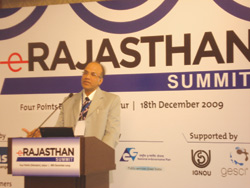
Centre for Science, Development and Media Studies (CSDMS) along with Department of IT, Ministry of Communication and IT, Government of India, National e-Governance Plan (NeGP), Government of India, as Co-organisers, launched the e-Rajasthan Summit, in association with UN Solution Exchange, Global e-Schools and Communities Initiative (GeSCI) and Indira Gandhi National Open University (IGNOU) as supporting partners.

The spotlight was put on Rajasthan initiatives and efforts in bringing about a digitally inclusive society. It highlighted the role of ICTs playing the harbinger of a silent revolution in obscure towns and villages, of acknowledging the efforts and addressing the challenges, and of bringing all stakeholders with common concerns into one platform, the eRajasthan platform.

The one-day eRajasthan Summit aimed at active knowledge sharing, showcasing of existing e-Education, eHealth, eAgriculture, Telecentre, eGovernance and Municipal IT initiatives in the state, deliberated on the way forward, and sought to provide a platform to exchange ideas and promote capacity building.

 After the welcome note, Dr Ravi Gupta, Executive Director, CSDMS and Convener, eRajasthan 2009, provided an overview of the efforts of CSDMS in bringing ICTs closer to the masses. He reiterated that the efforts of CSDMS have consistently been focused on making ICTs more valuable and have delved deeper into finding out ways and means on how ICTs can have an enriching and socially relevant role in society. After having established its reach in the major metros through eINDIA, CSDMS has now proposed to go local through the eRajasthan Summit.

In his inaugural address, Shri Vipin Chandra Sharma, Principal Secretary, Technical Education, Government of Rajasthan, spoke about the value and importance of ICTs in all spheres of development and governance.  Economic development, he said, is propelled by the incorporation of technology and advancements and has contributed tremendously towards creating citizen friendly services. The National Rural Employment Guarantee Act and several other schemes have promoted social security and livelihood for the rural poor.  Land records computerization project in Rajasthan has been a commendable effort that has been implemented at the grass roots. It has proved to be a boon for the villager, citizen, and government revenue officials. Thus the State of Rajasthan has and will be using the tremendous ICT potential to move ahead in the development agenda.

Dr Sanjay Tyagi, Centre Head and Additional Director, STPI, Jaipur, emphasised on the potential of smaller cities like Jaipur to use and exploit the ICT potential to transform the State of Rajasthan into a development hub. According to him, Rajasthan needs to recognize its strengths and weaknesses and act on it to address key concerns. Rajasthan has tremendous potential in eGovernance and other domains. It is for the state government to be willing to exploit these potential and achieve new heights for the state.

Dr S N Ambedkar, Regional Director, Indira Gandhi National Open University Regional Centre, Rajasthan, stated that the state has a literacy rate of only 60%. Some of the reasons for the same include: Rajasthan's population density of 165/ km2 which is half that of the national average of 313/ km2; Climate conditions and lack of transport infrastructure; and girls from traditional families with cultural restrictions who are not allowed to go to college in another city/town. One of the ways to meet the needs of the people, especially women in the state of Rajasthan is distance education delivered through ICT.

Ashish Garg, Asia Regional Coordinator, Global e-Schools and Communities Initiative (GeSCI) highlighted the role of GeSCI in providing equitable access to knowledge, and the ability and capacity to create and share knowledge for society's overall development.  GeSCI's work has been guided by the principle of knowledge building and sharing

Effective Regulatory Framework in Higher Education – The Need of the Hour

The roles of the Regulatory bodies need to be reviewed in order for them to act as  true facilitators, and enablers. The current process of forming regulation and policy is a one-way communication from the government to the educator providers. Instead regulations and policy should be made in consultation and participation of all key stakeholders.

Except for funding sources and the variation of funds available, the differences between public and private universities are marginal, and those too artificial. The real distinction that needs to be looked towards is that between a good and a bad university or institution. There are clear examples that In fact, in countries around the world such as the United States, for-profit and non-for-profit institutions of higher learning exist side by side with each other in harmony. For profit institutions need not sacrifice quality and ethics, with good governance and transparency, many of them have grown and maintain standards of accreditation, and produce excellent graduates. The public universities are becoming ever more promiscuous in their pursuit of income. In America, ‘public university’ is fast becoming a figure of speech. At a university of Virginia, the share of the operating budget coming from the state declined from about 28% in 1985 to 8% in 2004-5.

the Regulations
The role of regulatory bodies should be to ensure fair-play, transparency and accountability. It should be non-intrusive and Institution-friendly. Around the world there has been a change in the way to approach  regulation, moving from an intrusive line by line prescribed rules, to a larger framework, which allows great room for innovation. At entry level If there is adequate infrastructure and faculty for the institution to be able to deliver on its stated value proposition and are there processes in place that would ensure proper governance and keep a check on misuse and fraud.
We have seen that the current frameworks in education are not working, and are not able to provide the kind, the quality, and the quantity our country needs to continue its growth and
rise. With proper checks and balances and accountability we have a thriving sector that can  become the envy of the world. Why we are still mired in the thought process today, that as if anybody desirous of setting up an educational institution, is necessarily moribund without vision and need to be regulated to ensure that nothing wrong takes place. Rather there
should be a system of incentivisation and consequences – incentives for those who do well, and consequences for those who do not act in the best interests of their students. As in any industry or sector, if an organisation wishes to be successful and be there for the long run, it needs to
ensure that its customers are satisfied,  and it is able to delivery on its promisedvalue proposition.  Therefore, a regulatory framework is  needed. the focus area All autonomous institutions providing degree and postgraduate diploma courses should come under base regulation. Affiliated colleges should be left to the concerned university to ensure minimum standards and quality. Institutions engaged in training and development and providing non-degree courses should be exempt. If the system is to be fair it must be applicable and
acceptable to all institutions within the

Education is not the filling of the bucket , but the light ing of a fire ” – William Butler Ye ats . 
country, leaving no room for “special cases.” Instead of one monolithic body doing regulation, accreditation as well as financing it should be divided into four separate functions with  applicableorganisations. Base Regulation: A macro level nonintrusive common regulation set that would ensure That applicable disclosures and information are made to consumers of education in order to make informeddecisions, That a basic hurdle in terms of capital requirements is escrowed in  order to proof ability to execute. Accreditation Agencies: A number of independent,  autonomous, accreditation agencies that with the participation of all stakeholders are able to  aintain quality and different levels i.e. minimum accreditation base to be compulsory with higher levels voluntary. There can be multiple accreditation agencies with adequate  epresentation of all stakeholders to ensure competition between them and do justice to large numbers of institutions. Accreditation agencies would check the process and the outcomes to   he objectives of that particular institution, and not to accredited a programme per se. Professional courses would come under the accrediting agencies purvey as well. But accreditation by the professional councils should be voluntary. Full disclosure of the status of  these courses should be made. Funding and grant agencies: These would be established and encouraged at levels, and would be either public or private. For example, in the case of public, they could be agencies established at the state and local level, and in the private sphere they  ould be sponsored  by commercial banks or philanthropic foundations. They would either provide  funds and grants to institutions based on pre-established criteria  or to students in the form of scholarships, fee subsidies and loans. a) Each agency would  develop its own criteria and norms for giving out funding and grants, based on the recommendations of its constituents (public, private or both) and the source of its funds. b)Public agencies would be setup for different purposes, for example, the  government could  setup a education development bank along the lines of NABARD, or an agency setup to govern state directed funding to all public  institutions. c)Regardless of being private or public, agencies should be able to choose which institutions and students get the benefit of funds. For  example, a public research funding agency should be able to award  grants to private institutions based on the merits of the proposals. Independent Test Providers: There should be the flexibility for multiple test providers to emerge, with a view that the entrance testing does not require extensive coaching and does not interfere with the school education of students.
These test providers could be both public and private, and institutions should be free to choose which test providers they accept. Institutions will arrive at a common set of accepted tests for each level, and test providers would be forced to maintain the quality and standards
of their tests in order to preserve their reputation with the institutions. The Hard Questions
12.5% of the population between the ages of eighteen to twenty-three opts or has access to higher education. The investment by the government, Rs. 40,000 crores can only support  2.5% of  this population, which means the 10%  funds education without public funds, and the rest, i.e. 87.5% have no access. Where are the funds, the infrastructure and the institutions going to come from to education the 87.5%? Now, imagine the sheer number of institutions that need to be setup, and sheer numbers of people that need to be employed, to bring basic higher education to these ignored citizens of our country. Naturally, some of these issues come from a lack of primary and secondary education, but even then it would require several times
the institutions we have today to prepare for our country’s tomorrow. The government clearly does not have the funds or the resources to be able to pay for this vast expansion,
and under the current framework, with huge hurdles and obstacles, and little incentive,  private players are also unlikely  o come in large enough numbers to fill the gap. The supply and demand problem is not dissimilar to a few decades ago, where access to basic telecommunications and transport was abysmal. Just as vast amounts of capital was requiredto truly deliver on the promises of an  industrialised modern nation, similarly to  fund the education needs of our nature  capital must be raised from every possible source. To  ake an example, for-profit accredited education institutions in the United States are allowed to  ist on the stock exchange and raise money from the public to provide quality customer driven education. Hence there is a need for an alternative model especially to have  calability.  The solution can only come in a complete reform of the regulatory framework that governs the education system in our country, and a rapid and urgent move away from the  icense and quota raj attitude and practices not have hobbled the sector. We owe it to the  uture generations of our nation, and we owe to ourselves, without education our country will not  ave the foundation to reach the  aspirations of its citizens. And of course, when it comes to  egulation, “If in doubt  regulate less and not more.”

eRajasthan Awards

3639

The total number of online voting received for eRajasthan Award Nominations

The eRajasthan Awards was an integral part of the eRajasthan Summit instituted with the primary aim of felicitating and acknowledging regional initiatives in the use of ICT for Development. The eRajasthan awards have been instrumental in promoting the most innovative initiatives in the domain of ICTs for Development and to spread awareness about the role of ICTs in addressing social concerns.Details of the Award winners have been elaborated as below.

Digital Learning ICT
Enabled School of the Year

Jury Award

Project: Computer Aided Teaching Implementer: Mahaveer Public School, Jaipur, Rajasthan

The School's Computer Aided Teaching Software is installed in 40 classrooms right from class I till XII. The programme focuses on providing subject specific capsules of 4-5 minutes duration on various topics, which can very well be accommodated in a 40 minutes teaching period. The programme includes a 29″ colour TV and a computer in every classrooms. The textbook study is well integrated with audio-visual aids.

Digital Learning ICT Enabled School of the Year
Public Choice
Award

Total Votes – 325
Seedling Public School – 115 votes

Project: Technologically Savvy Model of Education
Implementer: Seedling Public School, Jaipur, Rajasthan
Website:
www.seedlingschools.com

Seedling Public School has adopted a Technologically Savvy Model Of Education to include the BhartiyaVidya Solution as a Teaching Aid which uses audio visual aids to support teaching in class. This software is implemented through two JIL Labs. This software helps the teachers to present the complicated and theoretical solutions of a subject in a much simpler and easy manner by presenting them in audio/visual format.

Digital learning ICT Enabled University of the Year

Jury Award and Public Choice Award

Project: Edu Nxt
Implementer: Sikkim Manipal University- Directorate of Distance Education
Website:
www.smude.edu.in

The primary objective behind EduNxt, in Rajasthan, was to provide Sikkim Manipal University DE students with a plethora of resources not possible in the existing physical mode so they learn through collaboration. This is particularly useful in Rajasthan that it has only 20 universities and is not able to cater to all prospective students. In such a scenario technology is the right solution to deliver quality education. 
 
Digital learningCivil Society Initiative of the Year
Jury Choice Award

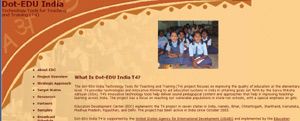
Project: Technology Tools for Teaching and Training Project
Implementer: Education Development Center (EDC)
Website:
www.idd.edc.org/t4india

As part of its Technology Tools for Teaching and Training (T4) project, EDC implements interventions aimed at improving teaching and learning in government schools in eight states in India. In Rajasthan, the T4 project launched its partnership with the Rajasthan Council of Elementary Education (RCEE) with the first of three Hindi-based IRI series

Holistic Approach Towards Online Education : Atul Sabnis, LearningMate

Atul Sabnis
Director, Strategic Initiatives, LearningMate

LearningMate aims to provide instant and seamless knowledge to people at any time, anywhere. Could you elaborate on the same?

In the last six years, LearningMate has made real and tangible solutions in education and benefitted hundreds of thousands of learners around the world. Online is often confused with digitising content. At LearningMate, an online experience comprises digital and interactive content, including means of informal learning as well as learning within a community that is geographically dispersed, yet learning together. All this is guided by our philosophy to provide a useful and a pedagogically relevant experience.

What do you opine about the ICT application in field of education?

In the Indian context, appropriate use of ICT in education overcomes quite a few challenges that Indian education faces, like the lack of physical infrastructure, scarcity of quality instructors and their ability to reach out to a larger audience.

At times, it is unfortunate that educational institutes look at options available in the market and need to choose the closest fit, rather than look for a perfect fit. We believe this approach limits the solution to the capacity of what is available in the market. The situation is further compounded by the lack of comprehensive solutions or options readily available in the market.

How are your products different from other similar products in the market?

LearningMate is a full-solution provider of education solutions with a key focus on online education. Solutions that LearningMate delivers are at the intersection of content, technology and services. This allows us to have a holistic view towards education problems.

At eIndia 2009, LearningMate launched Learning eXchange – our product that accumulates all our experience and expertise in a single platform. Our thoughts behind building Learning eXchange were three-fold: application, access, and affordability. The application covers all learning and teaching processes for an educational institution, the access ensures that institutes have access to world-class content from providers around the world (the eXchange), and affordability ensures that you can have your institute online within two weeks, without incurring any capital expenditure!

LearningMate works towards creating effective learning products. How can these resources enhance teaching and learning amongst teachers and students?

A textbook is a passive form of learning and has limitations due to its static format. LearningMate works to solve these issues around a textbook and allow for increased interaction for the students, better activity tracking for the teachers and allows for distributed and collaborative communication between students and teachers alike. Another way to look at this is to consider all the activities that occur in a physical classroom, make them available online and build in the tools to enhance student as well as teacher performance. Examples would include multiple assessments, instant results, remediation content for learners, archival, and performance MIS (for students and teachers).

LearningMate has gained significant experience in working with popular VLE products around the world. Our focus primarily is to extend the functionality of such systems for customer requirements. In the process, LearningMate has developed various frameworks that work with such off-the-shelf VLE products like LearningMate ACE (Assessment & Content Engine) and specialised assessment modules like adaptive, algorithmic and diagnostic testing. Further, we have used instructional design paradigms to enable easy authoring of content for such VLE products.

Can you share with us your opinion about Public Private Partnerships in education?

LearningMate is completely open for Public Private Partnerships; we are working in a similar situation outside of India to develop online products for special education needs. Public Private Partnerships are very useful to get the best of resources and technology in a sector that needs rapid growth.

LearningMate will continue building on its existing strategy to get affordable state-of-the-art products out into the market. Since the last six-months, we have focussed on bring the best-in-class solutions to the Indian market through (a) comprehensive online learning and collaboration platforms like Learning eXchange and (b) partnerships with leading content providers from around the world. Our key focus will continue to be flexibility, customisation and affordability. Good solutions don’t necessarily have to be expensive, neither do they need to take years to implement.

Providing Seamless Access to Sustainable and Learner-Centric Education : Prof V N Rajasekharan Pillai, IGNOU, India

Prof V N Rajasekharan Pillai
Vice Chancellor, Indira Gandhi National Open University

How has the journey been so far since you joined the University? What were the challenges that you faced and the steps that you took to overcome the same?

When I joined the University, the number of students enrolled was around 1.2 million. The University has grown tremendously over the last 20 years. Expanding the services for students was one of the major concerns for the administration. Even though we had increased the number of services and programmes, the infrastructural facilities necessary for efficient student support services had been lacking.

One of the causes of concern was to ensure that the study material was dispatched to students on time. Therefore, decentralizing the distribution of study material through regional offices had to be done in order to make the system more efficient. This ensured that there was less number of delays and loss.

 Another challenge was that of providing access to opportunities for quality higher education. According to the recommendations of the National Knowledge Commission, Open Educational Resources and Open Access should be used as a means for radically increasing the widespread availability of high quality educational resources. Therefore, e-Gyan Kosh has been launched by IGNOU as a repository of learning resources.  It includes digitized and uploaded storage of over 95% of IGNOU’s self instructional print material.

Providing connectivity and technological support to all the study centres, including Internet connectivity, has been our initiatives towards strengthening the technological infrastructure.

IGNOU is now conducting examinations regularly in January and June and has arrangements for decentralized assessment and evaluation. We have expanded the number of evaluators and have included experienced teachers from across universities. We have tried to complete the evaluative work in two months and declare the results subsequently, thereby ensuring that the students get their exam results on time.

Another major issue was the submission of assignments. During the time that I joined, there was a decision to stop the process of submission of assignments. However, I have revived the process since assignments form an integral part of the student learning process.

 How do you see Open and Distance Learning as capturing the aspirations and needs of the rural  population and otherwise? How important is it to use ICTs for the ODL system?

The ODL system has proved to be beneficial not just for rural population alone, but also for those in the urban areas, the migrant population, the underprivileged, and those living in difficult terrains. Similarly, there are tremendous possibilities of satellite based education to resolve the problem of reaching out to those living in difficult terrains. Therefore, we are strengthening the capabilities of satellite based education.

Satellite based communication is going to play a significant role in distance education in India. It is particularly effective in reaching out to diverse populations spread over vast geographical dimensions. By making use of ICTs, it can be used in a variety of ways both for online and offline provision of resources. Besides providing conventional telecast of educational programmes and the live telecast of programmes with two way interaction, satellites can be used for carrying a rich mix of multi-media material and provide access to large databases, at very low costs.

There has been a concerted effort of strengthening the use of ICTs for ODL. With this objective in mind, the Advanced Centre for Informatics and Learning has been set up. The Centre aims at using ICTs for teacher education, skill development and development of subject based ICT pedagogy. Efforts are being made to decipher ways and means of improving the teaching learning process based on subject based ICT pedagogy.

For the first time in 2007, IGNOU started the Research and Teaching Assistantship (RTA) Scheme. Around 200 full time research scholars are working in the University under the programme. Several research studies  under the able guidance of University teachers have been brought out till date. The overall objective is to train more and more students in research and to develop subject based pedagogy. This will have a significant impact not only in the field of ODL but also in other areas of education.


Our endeavour has been to provide better learner services to the deprived and disadvantaged, particularly to those in accessible regions.

The Government came up with the budget with a clear emphasis on Higher Education, allotting a promising amount. What is your take on this? What are the key issues, according to you, which remain unaddressed as far as Higher Education is concerned?

The main objective of the 11th Plan (2007-2012) is expansion of enrollment in higher education with emphasis on inclusiveness, equality and relevant education. The 11th Plan has set a target of increasing the enrollment ratio from the current 11% to 15% by 2012. Gross Enrollment Ratio in higher education has to increase substantially by about 84 lakh students over a period of five years. It is estimated that ODL system will account for about 30% of the overall enrollment by the end of the 11th Plan period.

With the aim of addressing issues of access and equity in higher education, IGNOU has adopted the ‘Convergence Scheme’. This scheme creates convergence of Open and Distance Learning and Conventional Systems. It takes into account the need to interface with the conventional system, use innovative technologies and optimize the access to physical facilities, intellectual and knowledge resources in institutions to achieve its goals.

While IGNOU has over 2000 Learner Support Centres, the Scheme on Convergence has helped in creating synergies with well endowed colleges. This has resulted in qualified faculty and state of the art infrastructure  being made available to students, in addition to providing additional mentoring on a flexi time basis.

Lately, IGNOU has been aggressively getting into various collaborative initiatives. Under your leadership, IGNOU has been very successfully established and positioned itself as a very strong entity in the arena of higher education. Could you tell our readers about these new partnerships?

As an Open University,  we have to make use of the open, flexible and innovative practices in education. Many educational practices which caters to learner requirements have to be assimilated into the system. As an Open University, we do not  create the entire physical structure for classrooms. Therefore, collaborations with other universities and higher education institutes are important. Even the content for the system has been developed through effective and long standing collaborations with teachers from conventional systems.

Thus, collaborations are very essential for starting new programmes and sustaining existing programmes. It is also an economically viable model where the existing infrastructure have been used by the educational system for the benefit of the student community. We are also trying to optimally utilise the available services by roping in part time services of teachers, educators, content developers, examiners, and academicians across the country and abroad.

Another collaboration of great significance is the Gyan Deep initiative of IGNOU meant to educationally empower the soldiers of the Indian army through grant of degrees- a step aimed at providing the jawans with a second career option. It is based on the US system of community colleges in defence cantonments, and will benefit a majority of 1.2 million soldiers of the army. The programme was launched on 4th September, 2009, after IGNOU signed a Memorandum of Understanding with the Army Chief General Deepak Kapoor.

It is heard that IGNOU is going beyond the distance education set up, and plans to establish mainstream face-to-face courses. What are the possible reasons behind this move?

The IGNOU Act very clearly states that the Open University will not only offer a variety of programmes but assume a leadership role in promoting a distance education system in the country.

Open University System means opening the learning process by making the educational facilities available to every individual with minimal restrictions. It facilitates optimal utlisation of the infrastructural and intellectual facilities available, wherever they are, for providing knowledge and skills to maximum people with minimum restrictions. An Open University is an institution which has to be open to ideas, open to people, open to places and open to strategies for providing education.

IGNOU has combined its pioneering role in distance learning by extending the concept of ‘open education’ to include flexible, face-to-face programmes, making use of state-of-the-art facilities on-campus as well as on other campuses.

An Open University not just relies on the distance education mode,  but also makes use of open and flexible system of education.

INGOU has been offering face-to-face courses/programmes partly or fully for the last several years. All the  Engineering and Technology programmes, which have their practical and project works, and also have a minimum of 20% face-to-face component, have been offered on campus. B.Sc and vocational programmes are done by direct teaching in recognised academic institutions or industrial establishments. The IGNOU campus infrastructure is well equipped with digital studios and libraries etc. and therefore, selected number of Post Graduate students are being offered these programmes in the campus. These are proposed to be model study centres.

In addition, IGNOU has several full time regular programmes with the requisite rules, regulations, ordinances, and examination manual, taught by qualified teachers in other institutions with excellent facilities.

Where do you see IGNOU five years down the line?

In the next few years, we seek to enter into a major academic expansion plan by adding 10 new schools. This effort will be in line with the University’s commitment to adapting and upgrading the resources to contemporary requirements of the student community. 
We have recently been involved in the National Skills Mission particularly in generating employment in tune with the various schemes of the Central Government and State Government. The aim is to provide flexible knowledge and skill opportunities for the unemployed youth of India so as to meaningfully equip them with skills and opportunities. The scheme of Associate Degree Programmes through Community Colleges being offered by IGNOU will aims at developing skills for self employability of the marginalized and under privileged sections of the society.

Recruit Teachers Only on Contract Basis : Sam Carlson, The World Bank

Sam Carlson
Lead Education Specialist,
The World Bank

Integrating Information and Communication Technologies (ICT) into education has long been initiatives undertaken by World Bank,

What has been the success so farand what is awaiting in future?
It is generally believed that ICT scan empower teachers and learners, promote change and foster the development of ‘21st century skills, but data to support these beliefs are still limited. Proponents argue  that ICTs can and will transform teaching and learning processes from being highly  teacherdominated to student-centered, and that this transformation will result in increased learning gains for students. ICTs are seen to be less effective (or ineffective) when the goals for  their use are not clear. While such a statement would appear to be self-evident, the specific goals for ICT use in education are often, in practice, only very broadly or rather loosely defined. The positive impact of ICTs is more likely when linked to changes in teachers’ pedagogy, which in turn requires focused, iterative teacher professional  development to realise changes in classroom practices. The uses of ICTs for simulations and modeling in  cience and math have been shown to be effective, as have word processing and communication  software (e-mail) in the development of student language and communication skills. It may be  hat more useful analyses of the impact of ICT that emerge when the methods used to measure  chievement and outcomes are more closely related to the learning activities and processes promoted by the use of ICTs. Most users feel that using ICTs make them more effective and  elf-directed learners. In addition, there appears to be general consensus that both teachers and students feel ICT use greatly contributes to student motivation for learning. Placing computers in classrooms  enables integration with core curricular subjects and greater use of ICTs for ‘higher order’ skills than placing computers in separate computer  aboratories. This can be facilitated by use of portable laptops and ‘computer labs on wheels’  hich can move from classroom to classroom as needed. For me, getting the technology INTO  he classroom is critical to get beyond simple ICT literacy skills and should be the objective for  he future.

India in the next millennium?
My vision of education in India by 2150 is one where ALL children complete Class 12  nd develop the intellectual curiosity, skills, habits and knowledge needed to  ucceed  n the global economy. Students who want to continue on to higher education  can, while those who want to enter the labour market will be able to because they will have the knowledge and skills to be productive. This vision also includes more active participation of parents in the functioning of public schools such that political pressure and public debate are focused on how to improve public schools and student learning outcomes, rather than on what are the rules for admission into private nursery schools, which seems to be the case today.

What has been the strategy of World Bank in drafting formulations and framing policies? Which are the states that are currently under your projects?
In India the World Bank supports the Government of India’s efforts to improve elementary, secondary, technical and  vocational education. WE work mainly at the national level in support of centrally sponsored schemes such as Sarva Shiksha Abhiyan (SSA) and the recently launched Rashtriya Madhyamik Shiksha Abhiyan (RMSA). We also support 400 Industrial Training Institutes across almost all 35 States and UTs, and another 150- odd technical/engineering colleges spread around the country. So in that sense ALL States are benefitting from the World Bank’s support. We do, however, provide some additional targeted support to a few States, such as Bihar and Karnataka, through capacity-building grants, and do some cutting-edge operational research in other States such as Andhra Pradesh, Uttar Pradesh and Madhya Pradesh. This work is primarily  designed to generate lessons which can be applied at the national level.

In education, what is the share of percentage focused only on South Asian region including India and the response so far?
India is the World Bank’s single largest recipient of support for education,which is entirely appropriate given India’s size, education sector needs and the government’s commitment to mobilising domestic resources to invest in education. Our financing is offered on concessional terms, meaning at 0% interest, with 35 years to repay and 10 years of grace during which no repayment is required. In terms of existing portfolio of projects, we have provided USD 1.1 billion for Sarva Shiksha Abhiyan and are currently preparing additional financing of USD 750 million to support SSA through 2012. Our Vocational Training Improvement Project includes financing of USD 280 million and our recently negotiated Second Technical/Engineering Education Quality Improvement Project will provide another
USD 300 million. We are also preparing our support for Rashtriya Madhyamik Shiksha Abhiyan (secondary education) for USD 600 million. Taken together, this represents about one-third of the Bank’s total active education portfolio of USD 8.8 billion in 2009

Your comments on the Government’s initiatives in the area of education and implementing ICT in education in India.
If I had to summarise my impressions, I would say there remains too much focus on putting computers in laboratories for teachers and students to develop ICT iteracy skills, and not enough focus on getting ICTs into the classroom so that they can enhance productivity and support teacher and student learning across all subjects. While a lot of teacher training has been offered, often through innovative public-private partnership models, not enough genuine teacher professional development has been provided to help teachers skillfully integrate ICTs into their classrooms. I believe this may change with the revised centrally sponsored scheme ICT@Schools and the adoption of the new Policy for ICT and Education.

Your thoughts on Public Private Partnership in education sector in India and the recent developments related to?
I am quite enthusiastic about the POTENTIAL of public private partnerships (PPP) to improve educational opportunities and learning outcomes for students who traditionally have attended only government schools. This potential lies in the ability of public authorities to craft PPP contracts to align private sector incentives with public policy objectives. For example, the Grant-in-Aid scheme through which government finances the costs of aided private schools is a form of PPP. Unfortunately, this does not include any incentives for private aided schools to improve educational outcomes. Personally, I am much more in favour of PPPs where the public financing follows the student not the teacher. Hopefully, we will see the implementation of the RTE Act pave the way in this direction.

Technological Innovations to Address Needs of Growing Economies : Stephen A. Dukker, Ncomputing

Stephen A. Dukker
Chairman and CEO, NComputing

What has been the primary philosophy of NComputing in India?

NComputing technology is about reducing and economising on cost. We have worked towards bringing down the purchase cost and operating cost by 75%; the electricity cost by 90% and thereby reinventing the computer. In essence, we understand technology and and have found out that the full potential of  computers have not been used.

The NComputing solution is based on a simple fact: today’s PCs are so powerful that the vast majority of applications only use a small fraction of the computer’s capacity.

Could you elaborate more on NComputing’s  V space technology?

 V space is the software which can be used by any Linux or windows PC to large servers.  I would first like to  emphasise that 75% of our intellectual property is V space. There are three parts to the NComputing solution: first is the vSpace software, which allows standard Linux and Windows PCs to be shared by multiple simultaneous users. With vSpace, each person runs their own applications, just as if they had their own PC. Software and updates can be found in our Software Download Center (must be a registered user to access).

 Second is the UXP communications protocol. UXP is the method by which the desktop images and audio are sent to the access device and how the keyboard and mouse data is sent back to the PC. UXP is highly efficient, and excels at multimedia and audio/video synchronization.

 Third are the access devices. They are inexpensive, small, low-power, reliable, durable boxes. On one side they plug into the users’ peripherals (such as the keyboard, monitor and mouse). On the other side, they connect via cables to the shared PC.

Could you explain the benefits of the desktop virtualisation technology?

The NComputing devices only use 1 watt of electricity, so the entire 10-seat computing lab uses 90% less electricity compared to an all-PC lab. Most virtualization technologies are expensive to acquire, implement, and maintain. NComputing is different because we help save money from day one. Our desktop virtualization technology allows up to 30 users to simultaneously use a single computer

LATEST NEWS