



M. A. Kaleelur Rahuman and Gihan Wikramanayake
 Ministry of Education has introduced One Laptop per Child (OLPC) in selected primary schools around Sri Lanka. School teachers who are going to cater the teaching learning activities has to adapt to technological changes and use appropriate pedagogy to guide the children. Content developers who are also trained teachers have developed localized interactive learning material based on the curriculum for primary level formal education. The implementation of the OLPC pilot project conceptualizes the change in needs, building a new learning environment. The changes focus on the pedagogy in childhood education related to ICT enabled teaching learning environment. The aim of this initial research is to explore the technology involvement in formal curriculum and the possibilities of future informal learning comprising childhood creativity and innovation in primary education.
Arrival and the use of Information and Communication Technology have been re-engineering almost all the fields of human life from basic needs like contacting a friend living abroad to fundamental needs like education, health and governance. It is not only a technological evolution but also a social revolution that forces the different age group of human, to discover new habits, new morals and formulate new life systems, so that to adapt with global change in human culture and life style. Our education system also has to be geared to meet this concept and has to be aligned with this new technology. Hence, the innovative utilization of ICT for education is becoming most indispensable need since the knowledge is the backbone that is changing the culture and the whole civilization time to time towards better quality of life of the people.
OLPC
One Laptop per Child (OLPC) (http://laptop.org/en/), an amazing especially designed educational tool for childhood learning. The introduction and implementation of this tool is expected to revolutionize the childhood education in the country and will introduce change to the pedagogical approach in primary education systems (Alexander, 2001). This will further impact on the teaching and learning methodologies. Figure 1 shows a picture of an OLPC, taken from
http://en.wikipedia.org/wiki/OLPC_XO-1
OLPC helps the children to learn by exploring, creating and sharing knowledge and skills.
OLPC (http://en.wikipedia.org/wiki/One_Laptop_per_Child) is introduced exclusively to create educational opportunities for remote rural children who are struggling with the access to skilled teachers, proper guidance for learning, ICT awareness, electricity and Internet infrastructure and who are unable to afford new updated education system. OLPC was originated from MIT media labs by Prof. Nicholas Negroponte, the founder and chairman of the OLPC non-profit association
(http://laptop.org/en/utility/people/nicholas-negroponte.html).
Stakeholders
Primary stakeholders in the pilot project are Ministry of Education as the owner, OLPC Lanka Foundation as the OLPC providers, University of Colombo School of Computing for knowledge partner (including server/ operating system installations, localization and training) and the Open Source Community for content development. This project is funded by the World Bank. Teachers who were trained on teaching learning activities and to handle the OLPC and the set of teachers who developed the contents for OLPC based on formal curriculum are also important stakeholders.
OLPC around the world
According to the OLPC principals, the learning tool projects have been implemented in several developing countries like Sri Lanka, Afghanistan, India and Uruguay. Each project has a different specialty as detailed below.
1350 OLPC units in Sri Lanka
OLPC Lanka Foundation is currently working with the Ministry of Education and the World Bank in deploying 1000 OLPC and private sector funding to import another 350 units that additionally. Schools in the whole nine provinces of Sri Lanka is considered for piloting in primary pilots which t is closely monitored by both MoE and World Bank officials
(http://wiki.laptop.org/go/OLPC_Sri_Lanka).
olpc outside sri lanka
In Afghanistan
OLPC is powered with “pedal power generator” in Afghanistan, the PAIWASTOON team that perform the technical implementation designed a new pedal powered machine that can power the XO as you pedal and use it at the same time. Even small kids (3rd/4th grade) can power it. As the laptop charges as you use it no additional battery is needed
(http://www.olpcnews.com/countries/afghanistan/updates_
from_olpc_afghanistan_1.html).
In India
 India is a very large multicultural country with many interest groups with various culture and language. OLPC project in India not only revolutionize the way they teach children but also scale up the whole system of sharing between the diverse set of communities. The pilot project deployment in a rural village at Khairat where OLPCs have been deployed and every child carries one home. The project has expanded to several other parts of the country have shown very promising results
(http://wiki.laptop.org/go/OLPC_India).
Readiness, adaption and application of OLPC in Sri Lanka
The Ministry of Education together with its major stakeholders implements the OLPC pilot project in selected schools in Sri Lanka. Readiness and adaption among stakeholders in the implementation process is concerned with three major pedagogical elements such as teacher training, content development and localization. Trained teachers are directly involved in assisting students is to create an environment to adapt to the technology and understand the theory behind. Content development is enabling a new environment to learn the subjects and do learning activities using the tool and the localization facilitate the students and teachers to fulfill their teaching learning activities on their own language.
Content Development – A Leapfrog Innovation
Developing contents for primary school children based on formal education curriculum is leapfrog and an innovating idea of the country while the whole world is using OLPC – for informal learning concept. Committed teachers are selected and trained by subject matter experts to develop contents adapting to limitations and features of the OLPC. This was time consumed commitment that resulted in an excellent output – the contents for all grade one to five curriculum.
Teacher Training
The selected teachers who are currently involving with the students are trained to adapt with sophisticated features of the tool that facilitate for informal leaning (Livingstone, 2001) like collaborative learning, peer learning coincide with “learn while play” concepts. Through fulltime training workshops teachers were given a considerable amount of knowledge on the concept and hands on skills of using OLPC.
Localisation
 The operating system interfaces, in-built activities and content were originally bundled with the machine in English language. Localization process localized the operating environment and all the contents into the two official languages Sinhala and Tamil, so that the students and teachers fulfill their teaching learning activities in their own language and utilize the tool effectively. It overcomes the language barrier in education and support to master the soft skills and knowledge in the mother language of the user.
Changes in Pedagogy
This is a new and challenging experience for the educational promoters and stakeholders in primary education system in Sri Lanka. Changing existing pedagogy or planting new pedagogy among existing teachers with traditional mind set, is not an easy task. Clear and appropriate strategies and pedagogies have to be drawn including the broad ideas and suggestions of the teachers population is a must for successful pedagogy changes.
Pedagogy Changes
The OLPC usage in education will definitely increase the literacy rate among school children. It will add some values for their culture and morality such as sharing resources and shared learning. It will increase the friendship and further understanding between students, while it will slightly reduce the hobbies and physical activities (games) since the tool consume considerable time. It will enhance the informal learning by increased collaboration and communication via the tool during school hours and thereafter. It will raise the habit of self learning or learner centric learning by the use of Internet and searching and by the attraction to the tool.
New awareness and knowledge would be created so that to accept and adapt to this tool in school education. From parents, principals to educational departments and policy makers should be made aware and to be taught overall concept and benefit of the tool. The tool has to be used correctly and carefully and have to be handed over to the other learner in a good working condition. While the learner using the tool at home there should be an ethic to be followed so that the tool will not be used for private purpose and others such as family members.
New Environments
As in the case of a typical computer lab, there is no need for dedicated buildings and use of electricity. These OLPCs forms a portable virtual environment that could be set up in the classroom. Machine to machine or machine to server communication can take place in a wireless environment. However there is a need to charge the individual OLPCs and to host the server as well as to manage and maintain them.
Childhood Innovation & Creativity
Even though the literacy rate seems to be high, the higher values of childhood creativity and innovative thinking of kids is lacking in developing countries like Sri Lanka. Creativity and innovation is an extreme need for an education system of this era. This educational tool, once the project is implemented well, will help not only the students, but also the involved teachers to compete with the people who are in the forward line in the innovation and creativity in primary education.
Possibilities of Informal Learning
Even though Informal learning is considered as learner centric adult learning, the habit of learning things informally using the features of the tool will create new informal learning environments.
Effect on Economic & Social Values
Usage of this new tool will create the avenue for accessing world class learning resources and as a result of this will make the students to compete with global parallel learners in similar learning domains.
Rapid advances in technology were observed by some teachers as negative aspects. It gives easy access to western ideas and can have a negative impact on local cultures. Some teachers find it hard to adjust to the technological changes and continuously enhance their knowledge. They see these developments take most of their free time. Some children get addicted to tools and could give less importance for their formal learning activities.
Conclusion
This paper emphasized the readiness and adaption of the stakeholders on the implementation of the educational tool, conceptualizes the change in needs, building a new environment, redesigning the pedagogy in childhood education in ICT enabled teaching learning environment in Sri Lanka.

 MeritTrac, India’s largest Testing company unveiled its next-generation service offering, ‘Pariksha’ for delivering high-stakes, large-scale exams across the country in a secure environment. Continuing on its journey of innovation after winning the NASSCOM Innovation Award in 2008, MeritTrac has unveiled Pariksha as a service offering built on an innovative technology platform that comprehensively covers the entire spectrum of examination delivery processes, supported by a huge network of 50,000 testing terminals in 185 cities across India. This offering is backed by stringent ISO 9001:2008 quality standards that MeritTrac has recently got certified. Addressing the media Madan Padaki, Co-Founder and CEO, MeritTrac, said, ‘Pariksha will usher in a new era for high-stakes, large-scale examination delivery – both for the Education sector and the Government/PSU exams. Security, Accuracy, Fairness and Access are key parameters for any exam process and our Pariksha suite of offerings is leveraging technology, increased reach and quality processes to deliver large-scale exams that are 100% secure, 100% accurate and better candidate-experience. As a pre-cursor to a national roll-out, MeritTrac had partnered with Gujarat Technological University, Government of Gujarat, to conduct the Gujarat Common Entrance Test (GCET 2009) online in July this year. Over a period of 4 days, 23,000 candidates successfully appeared for this online test which was conducted in 37 centers across 11 cities in Gujarat, deployed over a network of 2100 terminals. “This entire project was a great success – it dispelled a lot of myths associated with large-scale public examinations and paved the way for launching Pariksha on a nation-wide scale.” Padaki commented. Incidentally, the GCET 2009 project won the jury award for the Best e-enabled University project at the e-India Awards in September 2009.’
 Admissions to India’s first and only MBA in Media & Entertainment (ME) and MBA in Advertising & Marketing Communications (AMC) are now open for the January 2010 batch. Manipal University, the pioneering force in higher education in India, offers MBA (ME) in association with Whistling Woods International. The programmes are offered from the Manipal University Bangalore Campus. This first year of the MBA (ME) would be conducted at MU Bangalore Campus covering all General Management Subjects and Media Case Studies. The second year of the Program will consists of one (1) year of internship/industrial training at WWIL premises located at Film City. This will include actual production and post production techniques, the process of film making, understanding TV, Radio and other sectors of the entertainment industry, hands-on exposure at the WWIL and Film City campus in Mumbai. WWIL, on behalf of MU shall also provide to the Students with industry interface and internship with Media companies.
 Axiom Education Private Limited, an education innovations enterprise, recently announced the transformation of its company name to Mexus Education Private Limited. Mexus Education under its flagship brand- IKEN delivers innovative and interactive learning tools. Iken provides interesting features as such as Iken Books, Iken joy, Iken Library and Iken Pro. Commenting on the development, Saurabh Saxena, Director, Mexus Education, said, ‘The conversion is undertaken keeping in mind our strategic business plans. As innovators, we aim to bring new and exciting products and services in the education industry. With our new identity and distinctive strategy, we intend to extend our reach not only in the domestic markets but across the globe.’ With immediate effect, all business transactions will be carried out under the name Mexus Education. There has however been no change in the company’s management or ownership. Besides, the company is in a process of launching over 200 ‘never-seen-before’ innovative products and several institutional offerings that will completely change the way education is perceived.
 SAP India and NIIT, the leading Global Talent Development Corporation and Asia’s largest IT trainer, entered into a strategic alliance to offer training to future SAP consultants in world-leading business software, Enterprise Resource Planning and related applications provided by SAP. Both organizations believe in enhancing India’s talent base to help Indian enterprises transform and become more competitive at home and abroad. Under this alliance, NIIT will offer SAP training programs in both Instructor-led and Online modes to working professionals, post graduates and graduates as well as students in colleges. On the anvil are SAP Academy Programs, Standard Short Duration Programs and New Dimension Product Training. The training programs will cover all facets of a business – Planning, Finance, Materials, Sales, Marketing, Manufacturing and Human Resources. NIIT would leverage its reach and basket of products and services to build them around the SAP training program that trains and nurtures well-rounded SAP professionals. In the next phase, these courses will also be offered in other countries in the region such as China, Vietnam and Thailand.
 After reviewing and discovering that the implementation of the Act will involve a hefty amount of INR 1.74 lakh crore, the Ministry of Human Resource Development has asked the proposed National Education Finance Corporation (NEFC) to fund school education and has asked the government / local bodies to increase enrolment and develop infrastructure. According to the previous directive, NEFC was to finance only higher education. However, it is only after the HRD minister Kapil Sibal’s orders that funding of Right to Education and school education in general was also included as the mandate for NEFC. INR 32,000 – INR 36,000 crore is the anticipated annual cost of school education, including the civil works, teachers’ salary, child entitlements and teacher training programmes.
 With the increase in probability of getting a seat in the prestigious Indian Institutes of Management (IIMs), there is a reason to for increased hope for all the students appearing for the Common Admission Test (CAT) 2009, as there now stands a brighter chance. With new four new IIMs coming up across the nation, CAT this year will offer 560 extra IIM seats to the aspiring management candidates. The Ministry of Human Resource Development (MHRD) sources reported that the CAT committee was asked to include these additional seats from this year. Presently, India has seven IIMs across different states. Now the cabinet has cleared to set four more in the country in August. The additions to the IIM family are to include Tiruchirappalli (Tamil Nadu), Ranchi (Jharkhand), Raipur (Chhattisgarh) and Rohtak (Haryana). The admission limit of all the new IIMs is set to be 140 seats, which is objected by the directors of some of the existing IIMs, claiming it to be on a higher side for a new institute to manage.
 Nagercoil is to see new lawyers and doctors, as the Regional Director of Indira Gandhi National Open University (IGNOU), B. Sukumar has announced the introduction of a degree course in law and plans to include Bachelor of Medicine and Bachelor of Surgery (M.B.B.S) as one of the academic programmes. For administrative reasons Kanyakumari district has now come under Thiruvananthapuram and, therefore, the candidates should re-send their application forms to the regional office at Chekkalamukku in Thiruvananthapuram. With more than 5000 registered students, this region includes 43 study centres. With the aim of the region to enroll 2000 students annually, the target is to encourage students to pursue higher education. With the Kanyakumari district also included in the Thiruvananthapuram region, new courses of study will soon be offered to the students in various colleges.
 IGNOU and American Association of Community Colleges (AACC) on the campus started dialogues through presentations to evaluate strengths of American model of Community Colleges (CCs) under the aegis of US-India Educational Foundation (USIEF). A two-member team of AACC, headed by Dr. Judith Irwin, Director of International Programmes and Services of the AACC, discussed a slew of novel ideas in the areas of social development through Community Colleges. Of 700 applicants from all parts of the country IGNOU followed a rigorous process of assessment and standardization and registered 50 Community Colleges in July 2009. Vice Chancellor Professor VN Rajasekharan Pillai said over 12,000 students from these colleges will take their first semester examinations in December 2009.
 Formerly known as the Delhi College of Engineering (DCE), the Delhi Technological University (DTU), recently completed its hundred days of being accorded the university status. It is now all set to root its foundation in its future endeavors. The National Network of Education (NNE), DTU Vice Chancellor Prof. P.B. Sharma discloses some of its immediate agendas, announcing the beginning of new programs including dual degree programs and integrated Master’s programs in areas of relevance to our country in Medical Engineering, Aerospace Engineering, Bio-informatics, Clean Energy and Environment Technology, New and Smart Materials and Nano-Technology. The Vice Chancellor of the university explained that DTU’s board of management has already given its nod to construct a multi-storey academic block; a teaching block housing ICT enabled lecture theatres and additional hostel facilities for both boys and girls. A finishing school in partnership with the industry and alumni to further boost employability of their graduates is also in the wish list of the VC.
 Chancellor Karan Singh of eco-friendly NIIT University (NU), formally inaugurated its green campus at Neemrana, spread over 100 acres on the foothills of the Aravali range. The NU officials claim that 95% of the water is recycled and harvested and there is no use of air conditioners in the two academic and hostel blocks. The university is planning to start with programmes such as B.Tech. in computer science and engineering, ICT and biotechnology, while its M.Tech. programmes are to include computer science and engineering, ICT, bioinformatics and educational technology. Its Ph.D. programmes include computer science and engineering, ICT, educational technology and bioinformatics and biotechnology.
 A special crash programme is being implemented by the Education Ministry, Sri Lanka, to develop Information Technology in government schools. Education Minister Sunil Premjayanth told that implementation is being done with special effort of training at least 75 % of the teachers in computer technology or literacy. Minister mentioned that Teacher Training Institute has been converted to a full fledged ICT training college to train 220 IT teachers, annually. Two years back, a survey was conducted by authorities, through which it was noted that only 25 % of teachers in government schools were computer literate. The Minister told that training provided to teachers since has achieved considerable results.
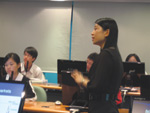 Four universities, including the Media Development Authority (MDA), SIM University (UniSIM), the University of Hong Kong and NTUC's SEED Institute, are collaborating with the Singapore Centre for Chinese Language to improve Chinese teaching standards. The objective of the collaborations is to support upgradation of teaching skills amongst Chinese teachers. The partnership with SEED Institute, Singapore's largest training institute for early childhood education, will offer pre-school mandarin teachers a part-time Chinese degree programme in the same area.
 To support quality improvements at universities the United Kingdom's Prime Ministers Initiative was established. A fund of 1.2 million has been made available to higher education institutions around the world, including those in Indonesia, to develop international partnerships over the next two years. Indonesian students like other in world desire and dream of Higher. However, despite the demand there are no Indonesian educational institutions listed in the top 200 Times Higher Education Supplement (THE) 'best universities in the world.' The ratings of countries' global competitiveness based on the quality higher education available in The Global Competitiveness Report 2009-10, ranks Indonesia at 54th position among the listed133 countries. This represents being placed below Singapore (ranked third), Malaysia (24th, China (29th , Thailand (36th) and India (49th).
  Japanese embassy at Manila reported about six high school students from different parts of the Philippines, who have left for the two-week 'Visit-Japan Program' from November 15 to December 1. Georgina Palmario, the supervisor of the students, leads this group of 13- to 15-year-olds, who left for an opportunity to understand Japanese culture through home-stay and other exchange activities with students of the Kamigo Junior High School. Dana Sofia T. Ferma of Faith Christian High School, Patricia Marie S. Regalado of Colegio San Agustin (Makati), Lora Megumi Z. Santiago of Makati Science High School, Gabriel A. Monteza of Don Bosco Technical Institute-Makati, Paul John T. Ngoyahon of Infant Jesus Montessori School, and Allen Alexander V. Villanueva of Colegio San Agustin-Laguna, were included in this group of six. The visit is under the Japan-East Asia Network of Exchange for Students and Youths-Asia Japan Alumni Association (Jenesys-Asja) Jr. Program.
 With efforts of Amazing America 2009, 17 US universities were brought together to create an event that educated and informed the Sri Lankan students, parents and other institutes about the American education system, entrance opportunities, visas, scholarship programmes, student life and much more. Conducted annually the event was conducted for the second successful time in Sri Lanka. The event was held in Colombo at Cinnamon Lake on November 6 and 7 and at Queens Hotel in Kandy on November 9. In Colombo, the opening ceremony was graced by Her Excellency, the US Ambassador to Sri Lanka, Patricia Butenis and Secretary to the President, Lalith Weeratunga. The opening ceremony in Kandy was graced by Minister Keheliya Rambukwella. The event was sponsored by American College of Higher Education, Sri Lanka. The directive of American Alumni Association is encouragement of educational opportunities between Sri Lanka and the US, with the primary purpose of promoting fellowship, achievements, appreciation of American culture and values and ultimately to build a mutual understanding between the people of the two countries.
 The role and the use of the Information and Communication Technology (ICT) in Learners Support Services in Open and Distance Learning (ODL) is a proven fact now. The distance education system responded positively and quickly to the revolution in ICT. It is because of three reasons – the need to reduce the cost of imparting education, to introduce need based educational programmes to a large number of people and to reduce time required for sanctioning new programmes by adopting new flexible nature of administration.
  One of the main objectives of this research was to bring forth, with the use of technology, a learning environment that is new and exciting to visually impaired students. Howell and Porter (2003) highlight that technology has paved its way to greater heights in the modern era in facilitating visually impaired. Taking the opportunity of the technological revolution and latest teaching and learning pedagogies using technology, the team researched to identify the needs of visually impaired students. The literature revealed information about available software tools and resources for the visually impaired. JAWS, Text Aloud, MAGIC, and Zoom text were some of the software tools that were identified.
 The Institute of Lifelong Learning, (ILLL) University of Delhi is the brainchild of the Honourable Vice-Chancellor, Professor Deepak Pental and is the hub of e-learning. It is an initiative towards the e-transformation of the University. The idea is to make Delhi University state of the art so that it is abreast with the international standards of education and is able to scale them higher.
 Mukesh Sharma
 The Ministry of Labour and Employment, GoI, has the mandate to protect and safeguard the interests of workers through enactment and enforcement of labour laws and programmes relating to welfare of the workers.
 450 course modules have already been developed and these modules are based on gainful employment skills, which are to cover 41 sectors.
 Pankaj Rai