

Prof BL Sharma has been appointed as the new VC of Rajasthan University. He was previously the Vice Chancellor for Gujarat's Bhavnagar University. He was appointed by acting Rajasthan Governor Shivraj Patil. Prof Sharma is to hold this position for three years. Prof Sharma, 55, who was earlier head of Human Rights Law Department in Law Faculty of Saurashtra University, Rajkot, has been the Bhavnagar University Vice-Chancellor since July last year. With a teaching experience spanning 27 years, he has been associated with several committees of the University Grants Commission.
Technology could play a pivotal role in good governance says Nandan Nilekeni
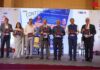
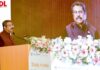
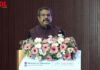
Speaking at a symposium on Sustainable Transformation: Our New India's Pan IIT 2010, Dinesh Trivedi, Minister of State for Health and Family Welfare, emphasised the need for India to develop on all parameters and not just stark GDP figures. Happiness and welfare of all are important and especially for those below the poverty line. We need he said, to break the divide between the Haves and have-nots. Technology is good but should benefit all. In fact it is the responsibility of those technologically proficient to pass on the benefits to the rest of society. In keeping with his mood His Holiness Sri Sri Ravi Shanker, appealed to all Indians to use their energies, healthy body and mind for the benefit of all. Giving an example of an effort in the self same direction, Nandan Nilekeni Chairman of Unique Identification Authority of India (UIDAI) reiterated that technology, the UID No. could transform society at large. India, he held, has 120 million migrants today with numbers on the rise everyday. These sections' need to reap the benefits of social sector welfare schemes, but are often denied on account 'identification' documents. The issue currently is not that there is inadequate allocation of funds but one of delivery. The benefits have not reached the deserving. This despite the substantial increase in social welfare schemes in the last 10 years. All Indians deserve the fruits of good governance.
The pilot project, he informed has already been implemented in many areas of Karnataka. The allotment of the UID No. would empower the Indian citizen to operate from any part of the country. It would be single source enabler which would empower them for social security/welfare requirements. In its initial phase of 14 months close to 6 lakh+ people have already been covered. Set up along with the Government of India, currently the financials stand at 40 Crores. In keeping with the overall theme of the Conference, that of transforming through Technology, Nilekeni enlightened all that UID technology (Project Aadhar) would empower the common man and assist the Government in better governance. Efforts he also stated are on to network banks and other financial institutions into the UID system. Speaking on the role of the Government in not being able to lead India towards a truly transforming path, Shailesh Gandhi, Central Information Commissioner squarely stated that the though the will may be there, the structure and policies are not designed to deliver. He gave HR policies and practices as an example. What India requires today, India includes both the people at large and the Government, is to work together for a change, talent being plenty. For India to transform every Indian must feel he has stake in the Government.
Another important facet of the hurdles to transformation was vociferously brought out by Arvind Kejriwal, RTI Activist. In response to Pradeep Gupta, Chairman and Managing Director's, remark that corruption in India is no longer retail but is wholesale, Kejriwal agreed but at same time gave important positive suggestions. The Commonwealth Games exposed the shocking scale and arrogance of corruption. Media has already played its role and the citizens now need to voice their concerns and demand a single investigative agency with the power to act against all, politicians and bureaucrats' included. The current set up is bizarre. The CVC for example has 32 people to investigate 1500 departments. The closing session on 'Building a sustainable future: The Green Society' saw global leaders speaking on the way forward to build a green global society that could further sustain the transformational growth. Montek Singh Ahluwalia, Deputy Commissioner of the Planning Commission, said, 'There has to be a global agreement on the issue of climate change and only cumulative efforts could meet the green objectives. India's National Action Plan for Climate Change is taking necessary steps in liaison with the global community and drafting a way forward to reduce carbon emissions in India.'
Educational Bill gets Green Signal at Rajya Sabha
The landmark bill for providing free and compulsory education to children aged 6-14 years was tagged with a warning of 'disastrous consequences' if it was not passed. On Monday, however, the Rajya Sabha gave the measure its unanimous approval, but only 56 members were present at the time of voting. Kapil Sibal, Human Resource Development Minister explained that the bill was form of a great opportunity that we need to grasp otherwise the consequences of missing it can be disastrous, while winding up the five-hour debate on The Right of Children to Free and Compulsory Education Bill.
The debate on the bill threw up the unlikely scenario in which it attracted support from across spectrum but with member after member, even from the treasury benches, finding what they termed glaring lacunae in the measure but knowing fully well that their suggestions would not be considered by the government but would only be a matter of record. The bill had been introduced in December 2008 by Sibal's predecessor Arjun Singh, who was dropped after Prime Minister Manmohan Singh recast the government after the United Progressive Alliance's resounding victory in the April-May general elections. The bill, which now goes to the Lok Sabha for consideration and approval before it is sent to the president for assent, will go down in parliamentary history for more reasons than one. Apart from the railway and general budgets for fiscal 2009-10, the bill is the first legislation to be passed, and that too unanimously in the UPA's second coming. This apart, this is the first time since December 2008 that the treasury and opposition benches have been united. The last time around, they had come together to pass a bill to create a National Investigation Agency (NIA) and a bill to amend the Unlawful Activities (Prevention) Act.
WORLD
Libyan pupils ‘to have laptops’
The government of Libya is reported to have agreed to provide its 1.2m school children with a cheap durable laptop computer by June 2008. According to One Laptop per Child sources, the laptops offer Internet access and are powered by a wind-up crank. They cost USD100 and manufacturing begins next year.
Audio Haptics for visually
impaired information technology Audio Haptics, the project seeks to improve the inclusion of workers or trainees who are blind or visually impaired in vocational training programmes using visual materials, by delivering these in a non visual format, which is touch and sound. The project in European Union will design, produce and test pilot learning materials, as well as create an online training programme for teachers. By the innovative methodology, accessibility to visual graphics for the visually impaired can be improved. This project is about making learning materials that are visual by nature accessible to those who are partially sighted or blind. e-ISOTIS (Information Society pen To ImpairmentS), the non-profit making organisation founded in December 002, working with People with Disabilities, Elderly, their spouses as well as embers of the ICT (Information Communication Technology) community, orldwide, is the dissemination leader of this project.
TechnoFuture introduces Educators’ ICT Training
A “Train-the-Trainers” programme for teachers of primary and secondary schools, as well as lecturers of Colleges of Education has commenced in six geopolitical zones of Nigeria. The modular-based programme, known as TechnoTeacher is being promoted by an company TechnoFuture Nigeria, in collaboration with the Education Trust Fund (ETF). It would teach educators ow to optimise their skills using the computer and other Information and Communication Technology (ICT) tools to maximise the learning experience. TechnoFuture was introduced in Canada in 1993 initially to teach learners from the age of four to 18 as a unique combination of technology and business skills, using theme-based projects.
Nigerian higher education has less than 5% ICT applications
With less than 5% application of Information Communications Technology (ICT) in Nigerian institutions, according to published studies on institutional echnology application, most of these institutions have little or no nfrastructure for cyber centers, computer-equipped classrooms or high–speed internet and do not even have the fund to implement such infrastructure on their own. Available statistics shows there are more than 181 institutions of higher learning in Nigeria but a sizeable number of these institutions have enrollments of more than 20,000 students, with computer ratio at 200 students to 1 computer, or worse for most state universities. These institutions lack the expertise on faculty to provide students with practical hands-on training in ICT, either for basic computer skills, or for more advanced capabilities.
Science GCSE with online exams
British school pupils can now take a General Certificate of Secondary Education (GCSE – the name of a set of British qualifications, taken by secondary school students) entirely online – including doing the coursework and exams electronically. The new environmental and landbased science course is said to be the first totally non-paper GCSE. It is being offered by the OCR (Oxford, Cambridge and RSA {Royal Society of Arts}) exam board and is aimed at those considering careers such as horticulture, farming, waste management and conservation. OCR said candidates would sit computerbased tests under normal controlled examination conditions and submit their coursework electronically – so they could incorporate video, photographs, presentations and written reports
News Corporate
InfoSource Learning and CyberLearning partner to help
increase digital literacy globally InfoSource Learning, the United States based developer and solution provider in the education, corporate, and government training markets announced a strategic partnership with CyberLearning, a non-profit project of the National Education Foundation, aimed at providing effective and affordable digital education, globally. Two CyberLearning rojects that are set to launch this year will help increase digital literacy in India and in Mauritius, the island nation, between India and Africa in the Indian Ocean. InfoSource supports these projects by supplying its award-winning Digital Literacy courseware library and Learning Management System for this effort. CyberLearning will utilise InfoSource’s Digital Literacy online courseware, CD ROMs, and books to train at least one person in every village.
Hewitt Associates for curricula changes in Indian educational institutions
Hewitt Associates, a global consulting firm for the outsourcing industry, will provide a road map to the State Governments in India for creating educational institutions that would match the requirement of the industry. The company will propose changes in the curriculum of educational institutes, for which it is in talks with 10 State Governments, including Rajasthan, Chandigarh, Punjab, Gujarat, Tamil Nadu and Sikkim amongst others. It will also analyse the hallenges that individual States face in the context of human resources for the BPO sector. At present, it is focusing on making college level graduates more employable.
Microsoft in partnership in Gujarat
Microsoft India and the Government of Gujarat have signed a Memorandum of Understanding (MoU) aimed at providing University students and faculty in the state easier access to Information Technology. This agreement will allow students in Gujarat develop skills on nextgeneration Microsoft tools and technologies, including .NET, thereby improving their career prospects. Under the partnership, Microsoft will provide training to students in the pre-final or final year of the Bachelor of Engineering (Computer Science and IT stream) and MCA programs, leveraging the BISAG (Bhaskaracharya Institute for Space Applicatons and Geoinformatics) SATCOM (satellite ommunications) facility. The faculty in these institutions will also, thereby, get an opportunity to collaborate with experts from across the world, besides getting access to Microsoft s premium technology events.
VTU ties-up with Liqwid
Krystal for online learning E-learning solutions provider Liqwid Krystal and Visvesvaraya Technological University (VTU), announced a collaboration, to offer gyanX, an online learning platform for employable skills to all students of VTU. According to the agreement, Liqwid Krystal will provide IT and soft skills to the students through a select catalog of online courseware, books and other content. Empowering students to learn interactively is one of the visible elements of this learning platform. PRODUCTS HP encourages e-learning with tailor-made notebooks
HP has provided Al Mawakeb with over 320 HP Compaq nc6320 notebooks with the latest Intel Duo Core that have tailor-made features helping to optimise the utility of the notebooks and enhancing the use of multimedia technologies in the learning process, improving the student skills on the subject matter. The new notebooks are also supported by a wireless network through HP servers to allow a stable and reliable solution to provide a full IT infrastructure for the students. The notebooks are designed for durability and performance fitted with an antiscratch, spill proof keyboard and come with HP Mobile HDD protection and biometric fingerprint sensors to protect the student’s information.
Oracle integrates two educational programmes
Enterprise software company, Oracle has announced it will combine its two information technology education programmes – the Oracle Academy and the Oracle Academic Initiative – to offer a comprehensive course called the Oracle Academy. The new programme would benefit educators and students by giving them broader choice and increased flexibility in curricula and educational offerings.
INDIA
Laptop for students pursuing
higher education Indian students pursuing higher education may soon be provided with laptops going by the recommendations of the Oversight Committee. The Committee headed by former Karnataka Chief Minister Veerappa Moily, which went into the issue of preparing a roadmap for the implementation of 27 per cent reservation for OBCs in higher educationalinstitutions, has also suggested that teachers too should have laptops. The Committee in its final report submitted to the PMO said, every student and every teacher should be given such a device on an ownership basis and the process should be facilitated by bank loans. The report said the grand plan for technology deployment on campuses was aimed at preparing and providing them essentially digital infrastructure ready to be used by a “plugged in, digital savvy-generation” called “net-Gen”.
IIT among world’s 100 best
universities According to the rankings compiled by the Times Higher ducation Supplement, India’s premier science and technology education center Indian Institute of Technology (IIT) is ranked No.57 in the global list. American and British universities comprised nearly half of the top 100 universities in the world. United States led the way with 33 universities in the top 100, while Britain ranked second with 15. China and India, the world’s two most populous countries, had two apiece, along with Singapore, New Zealand and Belgium. Harvard University in Massachusetts topped the poll, with Cambridge and Oxford in England coming second and third.
Akshara maps Indian schools
Karnataka Learning Partnership (KLP), an Akshara Foundation and Sarva Shiksha Abhiyaan initiative, has launched a Google-powered GIS map of Indian city Bangalore covering 1400 Government schools. The GIS mapping gives a complete picture of the literacy status among the children between second to seventh standard students. It was found that out of 1,83,000 students, 46 per cent of the students were unable to read fluently. The entire information captured in the GIS map is available on the website arnatakalearningpartnership.org. The map gives details of number of students, teachers in each school, the statistics and charts on the percentage of students who can read and who cannot read.
Students in India can now get
to work with robots With the support of a major initiative by the European Union, Indian institutions can now aim at taking their levels of learning and experimentation to higher levels, besides furthering their research in robotic and systems engineering. The International Virtual Laboratory in echatronics is a project that is getting nearly 500,00 Euros from the EU under the uropean Union – India Cross Cultural Programme (EICCP). At present, their Indian links are with the Chennai-based Anna University and the Madurai-based Thiagarajar College of Engineering. The main objective of the project is to jointly develop an International ‘Virtual’ Mechatronics laboratory, pecialising in robotics and telematics, with facilities physically present in India and Europe but virtually available to students at each university. This virtual laboratory can be used for teleeduca ion and research.
IIT to provide satellite-based
education to engineering colleges The faculty of Indian Institute of Technology, Kanpur, would provide education via satellite to various technical and engineering institutes in Uttar Pradesh. The project has got the green signal from the state government and a team of professors from IIT and Harcort Butler Technical Institute (HBTI), kanpur, are busy giving final shape to it. The faculty members will deliver lectures and answer queries of students sitting even at far-flung areas using video-conferencing technology. 15 ngineering institutions of the state will be taken up in the first phase of the project out of which 10 colleges will be from the private sector and the emaining government run institutions.
Translation industry has vast potential in India
The translation industry has the potential to generate more than 500,000 jobs in India, and necessary recommendations would be made to exploit the potential, says Knowledge Commission Chairman Sam Pitroda. Pitroda said the entire education system in India needed a complete overhauling – right from governmentrun schools to institutions of higher education – since education was becoming a privilege for the few who could afford it. He added that the
A unique educational project for students
Many of these children will be seeing something outside their villages and small towns for the first time. The Chinnara Suvarna Karnataka Darshana, a free educational tour programme under the universal primary education project,Sarvashiksha Abhiyan will help 11,750 children from Scheduled Castes and Schools in boats, brick kilns Education was never so innovative: schools in fishing boats, mobile schools in brick kilns; programmes like Meena campaign, Ujasbhani and Diwali camp for girl’s education, special teachers for children with disabilities. These and many more innovations made by four-year-old Sarva Shiksha Abhiyan to achieve universalisation of elementary ducation have been documented by IIMAhmedabad. The 91-page document highlights best practices and innovations done by Andhra Pradesh, Delhi, Gujarat, Haryana, Karnataka, Kerala, Madhya Pradesh, Maharashtra, Orissa, Tamil Nadu, UP, Uttaranchal and West Bengal. The study has found that the SSA has met with considerable success quantitatively if not qualitatively. While quality remains an area of concern, the SSA has been able to bridge the enrolment, retention and achievement gaps between the sexes and among social groups.
According to the IIM-A study titled ‘Shiksha Sangam: Innovations under the SSA,’ the out-of-school population had come down from 28.5 per cent of the six-to-14 year age group in 2001 to 6.94 per cent by the end of 2005. Dropout rates at the primary level stands at about 12 per cent and 190 of the 400 districts were showing a declining trend in 2005-2006. Scheduled Tribes, this year. Many will be girls. The tour programme has been on since 2004-05, and close to 457 batches including 23,000 children have already enjoyed the travel experience. The children are given a diary to note down their impressions and there are competitive events too during the tours with prizes to be won. Community radio license at last opens up for NGOs The Community radio opening up will allow NGOs to apply for licenses without a license fee and to carry five minutes of advertising per hour of broadcasting. First, non-governmental organisations with a record of at least three years of community service will be permitted to apply for licenses, and these will be given free of cost. It will still be an enormously centralised process. Having decided to open up radio frequencies to the NGO sector enabling provisions are also being worked out. The frequencies that have been identified to begin will be 90.4, 90.8 and 91.2 MHZ, or thereabouts.
ASIA
Wireless Internet set to launch
in remote Viet Na Viet Nam’s first-ever trial WiMAX (Wo ld Interoperability icrowave Access) equipment will be fully installed in the northern mountainous province of Lao Cai to bring wireless Internet to previously offline areas soon. Users will include schools, health care centres, the Post Office, an internet cafe, a farm family, a hotel, a business project, and selected Lao Cai public and commune service locations. WiMAX is a new advanced wireless broadband technology that can provide high quality wireless broadband Internet to rural areas in radii between 2 to 10 kilometres per base station. The pilot project is being implemented by Intel in cooperation with the Viet Nam Datacommunications company (VDC), the US Agency for International Development (USAID) and the Lao Cai People’s Committee leadership.
Regional centre helps develop
distance education in Viet Nam The Regional Open Learning Centre under the Organisation of Southeast Asian Ministers for Education is willing to provide professional expertise, consultancy and personnel training to Viet Nam for developing its distance education system. Since 2003, the centre had implemented many programmes to assist the Ha Noi Open University. These programmes focused on personnel training, providing curriculums and school materials, and applying information technology in distance education. In recent years, Viet Nam has invested in developing open and distance ducation. The Government assigned the Ministry of Education and Training to implement a US$100 million project on distance education with the participation of the Ha Noi Open University. The university, with around 300 officials and lecturers, had so far trained around 45,000 students in different majors through distance education. ‘Internet-ready Access Centres’ in schools in Malaysia Internet-ready Access Centres costing more than RM70mil in total are being set up in 1,500 schools around Malaysia. Access Centres would be similar in concept to cybercafes, although its usage would focus on learning and to allow students to work on their
Bringing impact to rural education in Malaysia
The Education Ministry in Malaysia being aware of the education divide between the schools in the rural areas and towns is now embarking on high impact projects to bridge the divide. The ministry is giving priority to improve ducation outside towns under the Ninth Malaysia Plan (9MP) in a comprehensive manner from preschool to higher education. Under the 9MP, the ministry is hoping to supply higher voltage generator cap ble of supplying 30-35KVa and also the solar power equipment and set up mini dam to ensure the implementation of ICT initiatives. Plan is also to assist in implementing the pre-school education in rural areas by setting up 2,400 preschool classes complete with computer facilities that could benefit 61,000 children in the 5-6 years age group. Apart from that, the ministry would also enhance the rehabilitation classes in rural areas with the setting up of 5,000 classes to enhance the 3M capabilities, namely read, write and count. The ministry is also idening the vocational subjects in 480 schools in the rural areas to help the students who are not keen in the academic subjects. Through the high impact projects, the number of students who need rehabilitation that can be reduced from 7.7 percent to less than 5 percent and the need for the Tuition Voucher Scheme (SBT) can be reduced from 100 percent to 80 percent after the 9MP. The dropout rates in rural schools could be reduced from 1.2 percent to less than 1.0 percent at the primary level and from 16.7 percent to less than 1.0 percent at the secondary level. assignments. It is different from the existing computer labs, which are used to teach certain subjects.Under the first phase, 1,500 schools would be provided with 15,000 personal computers and 1,500 printers as well as the necessary furniture and infrastructure. Another 12,900 computers would be provided to 1,290 schools next year. With the Access Centres, the ratio of computers to students in schools would be decreased allowing students to be more exposed to information and communication technologies (ICT). To date 84 primary and secondary schools in the rural areas of Sabah and Johor have been equipped with Access Centres. Free info-enrichment in Bengali Wikipedia The project for Bangla nline based ncyclopaedia has taken off recently. But its entries have been expanding with almost binary pace. Bengali Wikipedia in March 2006 to 0,000 as of now. 20/ 5 active voluntary editors areinvolved in editing Bengali Wikipedia on a regular basis. About 220-250 million Bangla speaking people are supposed to read Bangla encyclopaedia more than English. Info bank of the seventh largest language is poor in many ways. So there is an actual expectation of Bangla info bank. Non-formal schooling boosts access to basic education in Nepal Children who were out of school in 15 districts of Nepal now have the opportunity to learn how to read and write, thanks to the ICEF-supported Out-of-School Programme (OSP). Designed to provide basic education through a non-formal approach, the new strategy has helped approximately 15,700 children complete a 10-month course.
The After BPO, it is the turn of ESO now For thousands of teachers here,
tuitions have become dollar spinner, thanks to the growing demand for online tutorials from USA, K and Europe. According to an online tutorial site, nearly 100,000 teachers from India and Pakistan were expected to set up their own Internet businesses during September-October, the time when the new academic session begins in merica, to teach students there. Though the main demand is from USA, newer markets of Netherlands and Europe too are fast opening up for Indian teachers. Low cost of tuitions and very good teaching skills of Indian teachers is what attracts American students and parents to them. The online tutorial interaction uses both voice and data. Exercises are done on electronic otebooks, which are available at both ends. A number of online sites have come up where teachers can register, stating their expertise in a particular subject. The sites sub-contract work from SES (Supplemental Education Services) in the US. Schools unable to improve student performance are falling back on tuitions for help. There are over 75 such tuition centres across the US. Called SES providers, they charge students up to $40 an hour to take classes. Wire the work to India over broadband links and it can be done for half the cost. programme’s main aim is to fulfill children’s rights to basic education, especially for girls and low-caste children. In 2005, nearly 40 per cent of OSP graduates – more than half of them girls – made the successful transition into primary schools. Singapore institutes to take in more Indian students Singapore Education is looking at hosting an international student population of 1,50,000 by 2015, up from the current level of 70,000-plus. India is one of its key source markets along with Indonesia, Vietnam, Malaysia and China. The number of Indian students pursuing their education in Singapore has seen a 21% growth in 2005 over 2004. Students from India tend to go in for their MBAs as well as courses in engineering, IT, sciences and business. There’s also an emerging interest in hospitality and design. Japan Agency gives computers to 12 high schools in Philippines The Department of Trade and Industry (DTI) Sultan Kudarat Provincial Office, a lead agency asked by the Philippines vernment in promoting Information Communication Technology (ICT), had secured a grant from the Japan International Cooperating Agency (JICA) under the Non-Project Grant Assistance Program. The grant shall fund projects for the promotion of ICT in the province. The program also aimed to make ICT access available to all students of selected public high schools in the province under the project “Personal Computers for Public Schools” Project – Phase 3 (PCPS -3). New Web 2.0 Chinese distance learning site launched Onsales Global Services Inc. launched China-8.com, a distance learning website that is based on emerging Web 2 technologies. The site uses Asynchronous JavaScript and XML (Ajax) to deliver a new way for students of Chinese and China enthusiasts vising China for travel or business to study Chinese, communicate, and share their knowledge of Mandarin and of China. China-8.com aims to cater to the Chinese learning and community needs of the estimated 30 million people currently studying Chinese around the world with tools that encourage the learning process not hinder it. China-8.com’s lessons are based on the Hanyu Shuiping Koushi (HSK) curriculum – China’s international Chinese proficiency test currently being promoted by Confucius Institutes around the world, but with a difference. China- 8.com tracks students’ progress, giving them a snapshot of how they are progressing with the language.
Environment Model for Adaptive e-Learning
The development of Internet and Network enables people to access and get information easier and faster. There are a lot of devices provided for manipulating information, such as desktop, laptop, Pocket PC, and mobile phone. Each device plays a different role depending on individual needs. Mobile phone is a personalised device, which can be easily used anywhere to communicate with others, but cannot handle a high speed and large size of data, while laptop with a bigger size and high performance, can apply for a high speed and high quality content. Learning, the process of transferring information from one to others has a long history. E-learning is a type of distance learning where learning content and data are sent through the Internet. With the combination between learning and device, one can say we come closer to achieve learning anywhere and anytime. Adaptive e-learning tries to analyse system to match with individual needs. It collects learner history, behaviour, etc to construct learner model and make the system automatically adapt to support user’s need. There is, however, another approach that does not concentrate on learner model. It tries to realise the important issue based on digital divide. In Thailand, there is very big gap between students in urban and rural in accessing Internet, and computer performance. Based on these infrastructures, one issue becomes important which is how to develop and analyse the appropriate
Adaptive learning is considered as a learner-centered model. There are a lot of approaches that try to adapt the system based on earner history, behavior, activity and so on. However, very few researches concentrate on different environment, for example, speed of Internet, and connecting devices. The article mainly considers on the adaptive system based on the environment of each learner. The research designs the system to automatically detect the environment for each learner and transfer the suitable content for his/her environment. It introduces a process on choosing type and format of data for e-Learning system according to the environment.
content for each learner’s environment, which ultimately forms the “adaptive environment model”. A system has been designed in this research to utomatically detect the environment for each learner and transfer the suitable content for his/ her environment. A process has been introduced on choosing type and format of data for e-Learning system according to the student’s environment.
System Architecture
n order to automatically detect the environment for each learner and transfer the suitable content for their environments, it is necessary to design the rchitecture by considering both client and server side. In the client side, an appropriate LMS will be installed and executed based on device. There are two main modules, which are necessary to exist in LMS, Information Requesting Module and Information Executing Module. Information Requesting Module will receive a request for information from a user and send to server. nformation Executing Module will apply the information received from server and execute it to user. It is normally a part of LMS. In the server side, there are three main modules, Environment Detecting Module, Infor-mation Selecting Module and Information Transferring Module. Environment Detecting Module detects environment for each user. Based on the nvironment information, Information Selecting Module will analyse and select the most appropriate content in the server which matched with the needs of user. Finally the content will be transferred to client in Information ransferring Module. The article concentrates mainly on Adaptive Environment Module, which is the module that assists the server to send the appropriate information based on the environment. Adaptive Environment Module The process on detecting environment is explained here. The server starts with detecting connec-tion speed. The speed is detected by calculating average time per a prepared data. A data is sent and the starting time and finishing time for calculating speed connection is chec-ked there by. This method will enable the server to detect the speed based on the average size of content. After that, server detects the user’s opera-ting system and web browser. Finally, it detects the supported file types. The existing command is applied in PHP for detecting operating system, web browser and supported file types. The server classify content into three groups, text-only, picture-and-text, and full-multimedia. The server detects user environment and match with the three types of content based on environment information. The server applies the following criteria for selecting content. 1) Regarding the onnection speed, Internet connection could be in many ways such as dial-up modem, broadband, Wi-Fi, satellite and cell phone via GPRS and EDGE etc. Range of the connection speed is wide. The rate is up to connection type ranged from 6Kbit/s-maximum speed of dial-up modem connection to 160-Gbit/s highest eed broadband. If a server detects low connection speed, below 60 bit/second, text-only will be assigned for the users. If a server detects medium connection speed, at 61-200 Kbits/second, picture-and-text will be assigned for the users. If a server detects high
connection speed, more than 200 Kbits / second, full-multimedia connect will be assigned for the users. 2) Regarding the device, if a server detects mobile phone device, picture-and-text will be assigned for the users. Otherwise, fullmultimedia connect will be assigned for the users. 3) Regarding the web browser, Mozilla and Firefox cannot fully support JavaScript, some tags type, such as DHTML, while Internet explore can support this. Moreover the supported plug-in for each web browser is ifferent. After the server knows the environment, the server selects appropriate learning content from information stored in an XML file. In XML file, learning contents are represented in tag format. Each part of the content refer to three learning bject for each user group. The system choose ppropriate learning object according to the detected learning environment and then send the learning object to the user.
Learning through out life A Look into Non-Formal Education practices in Asia
Countries have interpreted nonformal education in various ways. For some, it meant every educational programme provided by the Ministry of Education apart rom the schools and colleges, while others defined nonformal education as chooling like programmes provided by nongovernmental agencies. Various other countries have interpreted it as educational and training activities of different Ministries like Women’s Affairs, Health, Labour and Employment, Youth and Sports and Culture etc. Others again included within non-formal education, individualised learning programmes for different and specific learning groups. Some took it to mean every educational activity apart from schools and colleges, including radio and television programmes, the print media. In fact, it is very close to what some people define as ‘experiential learning’; and with the boons of information and communication technologies, now it is very close to total lifetime learning. Practices – varied in nature andscope In countries like Bangladesh and ndia, which still have to go a longway to ensure basic education for all children, the natural choice has been to adopt innovative methods, in most cases through ICTs to reach out-ofschool youth and adults. Both these countries have chosen to illustrate the ICT innovations through initiatives of non-government organiations. On the other hand, countries like Malaysia, which has made tremendous progress in recent years in terms of providing basic education for all, has chosen to focus on extending the benefits of information technology through continuing education programmes.
Lifelong or continuing education through nonformal means is becoming increasingly important in mobilising human resources in Malaysia, especially the youth. Approximately 1.2 million Malaysians currently have little or no access to ICTs. As one among the many fighters of the cause, Worldview Foundation conceived of the sm@sy (short for Smart Masyarakat meaning Smart Community) project in 1999 as a means of bringing nformation technology to rural Malaysia, as a powerful tool for communities to develop the new skill sets and knowledge they need to sustain themselves. sm@sy developed multimedia content in two languages, Malay and English, dealing with a wide range of topics specific to the residents of Kampung Raja Musa, which helped the residents, both computer illiterate and the illiterates as well to navigate offline and for free and to become a smart community. Penang e-learning community, ICT LitPro are some of the other such attempts made in the direction of making Malaysian communities smart with learning just in time. Non-formal educational programmes in Philippines are conducted by both public and private sector organizations. Within the government, the rimary agency is the Department of Education, Culture and Sports. The Bureau of Non formal Education runs a livelihood skills project in collaboration with SEAMEO-INNOTECH (South East Asian Ministers of Education- Regional Centre for Educational Innovation and Technology), which is called the evelopment of a Learning system for the Improvement of Life. This ommunity based education intervention seeks to improve the quality of life and develop skills needed locally within the community. In a rapidly changing country scenario, colleges and universities cater to such community demands and respond to their education requirements through a distance education movement. The University of Philippines has established the UPOU (University of Philippines Open University), an institutional arm that mbodies the philosophy of open learning. The UPOU operates within the system of a conventional university and remains linked to the academic programmes of the UP. UPOU reaches out through the distance and open learning modes to people who are not able to participate in classroom style education. The draft ICT Master Plan for 2005- 2008 of Office of the Non-Formal Education ommission (ONFEC) in Thailand focuses on areas like facilitating lifelong learning f Thai people through ICT, improving the quality of ICT services both for administration and for lifelong learning, providing ICT nfrastructures for local learning centers and ICT personnel development. FEC aims to develop various electronic learning materials, improve the quality of distance education, set up a courseware center, promote e-learning, develop e-books and set up e-libraries. Center for Education Technology (CET) under ONFEC runs Educational Television Station (ETV); similarly some distance education and e-learning programmes are also provided at this level. The responsibility that the Department of Non-Formal Education has undertaken is to organise non-formal education programmes for adults who have missed the opportunity for formal schooling or have dropped out. The programmes offered are Literacy Campaign project, functional literacy courses, Hill Areas education, and continuing education. In an innovative new experiment to bring ICTs to rural Thai villagers, the Population and Community
Development Association (PDA) of Thailand has established a Community Based Integrated Rural Development (CBIRD) Centre for factory workers and students working or living in the neighbourhood. Field staff of the CBIRD Centre use the Internet connections provided by the project to research farmers’ problems and print out solutions for discussion with the farmers during their field visits. Furthermore, two schools nearby have established their own computer labs using grants partly received due to training schools’ teachers had undertaken at the Lighthouse Project on ICTs and the Internet. In Indonesia , the UNITeS (United Nations Information Technology Services) supported by UNESCO has integrating local Radio with the Internet through Multipurpose Community Telecentres has converged local radio and informatics via community telecentres in rural areas. The project focuses on strengthening civic education, dialog and transparency aimed at rooting asound democratic basis and good governance in rural Indonesian communities. Through dailyinteractive radio programmes theinformation available on the Internetis explored and visualised to alllisteners and the methods ofaccessing civic and other informationis illustrated. Combing this activitywith a community-radio/Internet cafe where individual studies can be carried out with guidance offered by trained staff, the access to ICT services is strongly improved. Even though India has made major strides over recent decades, script in computers and also to train rural youths in computer applications. A project ASHA -2005 was launched with the intention of reaching the most backward villages of Nagrota Surian block and help the villagers by imparting education and training in health, social welfare and environment. The world of corporate too encourages such attempts of restoring knowledge economy through innovations of ICTs by creating educational programmes which primarily focus on building educational infrastructure, mentoring, school dropout prevention, reading and literacy, scholarships, businesseducation partnerships and other local needs. Microsoft is working to bring the benefits of technology and education to one quarter of a billion people by2010 through its Unlimited Potentialprogramme that works with nonprofitsaround the world. It has
teamed with the Beijing Xicheng District Library toassist rural migrant workers, working with the Hong Kong Federation ofYouth Groups (HKFYG) to launch“Cyber SPOTS” to provide computerskills training to underprivileged youth, implementing the programme in four Indian states: Punjab, MadhyaPradesh, Uttar Pradesh, and Haryanato deliver ICT skills training curriculum for women and girls. It also works with someother countries like Korea, Sri Lanka and Philippines.Others like Coca-Cola and Intel tooare seen quite active in taking the goal forward. By 2005, Coca-Cola hadincreasing by six-fold the number of children enrolled in primary schooling, probably a larger number of older youth received little or no schooling at all. India seeks to improve the basic skills, literacy and entry vocational skills of out-of-school youth and young adults in poor communities in several India states through non-formal programmes like Bridges to the Future Initiative (BFI). BFI includes three components development of ICT-based software tools to improve basic education, literacy, and entry level vocational education for teacher training; creation of community learning and technology centres (CLTCs) for social and economic information resources(e.g. health, agriculture, HIV/AIDS prevention, etc.) and lifelong learning; and implementation of advanced ICTsupported services to disadvantaged regions.The programme of rural awareness started by a non-government social organisation, the Science Awareness Trust (SAT), is also a huge success in the remote villages of Nagrota Surian block in Kangra district of Himachal.The organisation planned to educatethe illiterate adults by using Devnagri Information and communication technology (ICT) is now so pervasive, and so powerful, that major changes in learning simply must follow. The effective employment of new technology in education requires a rethink about methods, one that particularly applies in the context of the radical goals associated with the lifelong learning agenda. The main rationale of this agenda is to draw in to new learning opportunities people who have not previously benefited fully, or at all, from education or training. Also, in the most ambitious way, to reposition education and training so that they will no longer be undertaken at a particular stage of life, providing a single platform of knowledge and skill which will last for a whole career, or for a lifetime. Rather, this learning has to become a synonym for sustainability of the knowledge economy: for a world where knowledge and skills are continuous, and where people build their own knowledge and skill profiles from an instantly accessible menu of learning delivered just in time.