



Home Blog Page 382

PM Modi approves setting up Ladakh Central University

PM Modi

In a major development, Prime Minister Narendra Modi approved setting up of Ladakh Central University. It is the first central varsity in the newly created Union Territory. The newly created university will offer degrees in all courses including liberal arts and basic sciences. The approval from PM Modi comes just a fortnight ahead of the first anniversary of the parliamentary enactment that led to the creation of Ladakh as a union territory.

HRD Ministry will now bring in a formal proposal to set up the central university soon. PM Modi’s approval comes amid the rising concerns about over 10,000 Ladakhi students having to travel to distant places to away from home for higher education.

Ladakh got its first Univerity i.e. University of Ladakh – only in December 2019 through an enactment of legislation by the state assembly. The university has been setup as a cluster university by combining all the resources of existing colleges of Ladakh.

Also read: PM Modi: Working to have one medical institution in every district

The review meeting was attended by Union home minister Amit Shah, External Affaris Minister S Jaishankar, National Security Advisor Ajit Doval and all top officials from their respective departments. During the meeting, all the steps taken by the central government for the betterment of Union Territories of Ladakh and Jammu and Kashmir were discussion. The meeting also saw outlining of the priorities for the Centre over the next few months to improve the lives of people in these regions.

Post covid: Schools must take action to curb virus

Sumanth Narayan

The school should have complete information and the facts about COVID-19 which will help diminish the students, parents, teachers and other faculty members fear, anxiety around the disease says Sumanth Narayan, Vice Chairman- Shanthinikethana Group of Institutions, Chairman – Adelie International Preschools in a conversation with Elets News Network (ENN).

At the outset, we hope that you and your family are safe and healthy. The entire world is passing through extremely difficult situations owing to havoc created by CoronaVirus infection which is declared as a pandemic by the World Health Organisation. The situation in our country has also compelled our Central Government to invoke the provisions of the Disaster Management Act to declare a state of lockdown in the entire country.

Further, declaration of lockdown by the Government, though considered to be an inevitable measure to contain the spread of infections, has affected people across all walks of life, in ways that were beyond reasonable comprehension. The field of education and academics has also been severely affected. The Education institutions, teachers, non-teaching staff, and more importantly, the students, have suffered irreparable losses in their own ways.

Also read: COVID-19 Lockdown: Course of Rajasthan Polytechnic Colleges on YouTube with 4000 e-Lectures

The institution is not immune to the situation either, and we have also been severely impacted. As you are aware, running an education institution that believes in imparting quality education is challenging.

The students are also compelled to face an unprecedented situation. The threat of losing an academic year is looming large. Further, considering the age factor, if the young and restless minds get disoriented, it would be difficult to bring them back to a balanced lifestyle which includes adequate concentration on academics.

The school should have complete information and the facts about Covid 19 which will help diminish the fear, anxiety, stress , emotion around the disease among students, parents, teachers and other faculties.

Note that SOP documentation is much more involved than a simple procedural document measures to protect school from Novel coronavirus.

1. Back To School Arrangement Precautionary Measures In Schools Thermal scanning of temperature – students (2 intervals), teachers, staff, parents & other visitors.

  • Face Shield
  • Mouth Mask
  • Small Handy Sanitizer
  • Visitor management system.
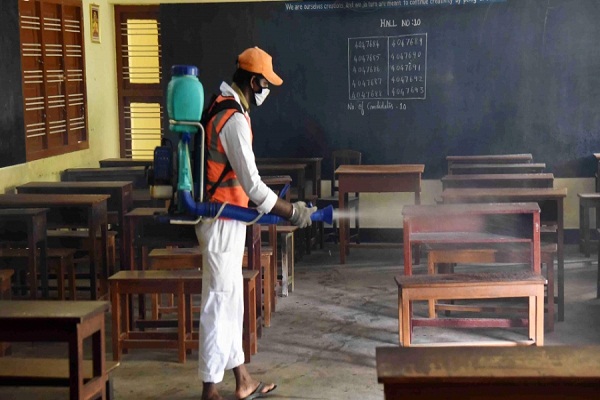
  • Fogging & Spraying (2 Times In Day )
  • Social distance measures to be abided in the campus

2. Leave Of Absence of Both Students & Staff

3. Stay Home Notice And Approved Absence (Aa)

4. Medical Counsellor Responsibilities: Shall provide counselling to healthcare counseling; psychology

5. Emergency ready reckoner

Technology now allows students to connect anytime, anywhere, to teachers /school in the world, from any device. This COVID is dramatically changing new collaborations of learning .

“Ultimately, the greatest lesson that COVID-19 can teach humanity is that we are all in this together.”- Kiran MazumdarShaw.

Mahindra Group launches multi-disciplinary Mahindra University

Mahindra Group

To provide quality education to Higher Education students, the Mahindra Group headed by Anand Mahindra has launched its Mahindra University virtually in Hyderabad, Telangana.

Mahindra University management board said that the 130-acre, multi-disciplinary campus in Hyderabad will offer undergraduate, postgraduate and doctorate (PhD) courses. Mahindra University includes the Ecole Centrale School of Engineering that was set up in 2014.

As a part of the immediate roadmap, the University will launch the School of Management (2021-22), School of Law (2021-22), Indira Mahindra School of Education (2021-22), School of Media & Liberal Arts (2022-23) and School of Design (2023-24).

Also read: Mahindra forays into higher education, first batch next month

An estimated 4,000 Students and over 300 faculty members will be in place across the various schools at Mahindra University over the next five years.

Vineet Nayyar, Board of Management, Mahindra University said the aim is to get at least 40 percent women and 20-25 percent people from neglected regions of the country, including North-East India to be part of the educational institution.

Mahindra University is part of the Mahindra Educational Institutions (MEI), a not-for-profit subsidiary of Tech Mahindra.

Anand Mahindra, Chairman, Mahindra Group and Chancellor, Mahindra University said, “We are getting into a new adventure in the higher education sector by setting up a 21st-century university. Over the next three years, you will see us adding a lot more schools.”

Mahindra added, “We want multidisciplinary education to be the approach. I would love to see a mathematician in the university who is also a musician or an engineer who loves poetry.”

HRD Ministry creates panel to develop India as educational hub

HRD Ministry

In a major development, HRD Ministry has formed an elite panel headed by UGC Chairman DP Singh, which will recommend ways to develop India into a global education hub. The key agenda of the panel is to look into the matter and recommend ways to ensure that more students study in India, instead of looking for academic avenues overseas.

The committee has also been tasked to provide a process for smooth transition for students returning from abroad due to COVID-19 situation. Another important task that has been assigned to this committee is to recommend a mechanism to increase the intake in well-performing universities.

As per the information shared by the HRD Ministry, the committee has been provided time of 15 days to submit their report.

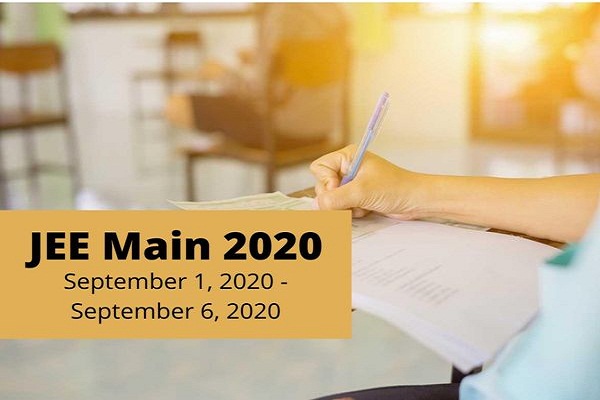
Also read: HRD Minister: JEE Main 2020 eligibility criteria reduced for NITs and CFTIs

The committee was setup at a meeting via video conferencing. The meeting was chaired by Union HRD Minister Ramesh Pokhriyal Nishank and was attended by Minister of State, HRD Sanjay Dhotre; Secretary, Higher Education, Amit Khare; Chairman, UGC, DP Singh; Chairman, AICTE, Anil Sahasrabudhe; Joint Secretary (ICC), Neeta Prasad and Secretary General, AIU, Pankaj Mittal also participated in the meeting.

The Minister said that owing to the circumstances that are rising due to COVID-19 pandemic, many students who were planning to go abroad for their higher education has shelved their plans. On similar lines, many students are also returning from abroad after colleges and classes were suspended there. HRD Ministry and concerned higher education authorities need to make the necessary arrangements and plans to accommodate them.

Hersh Shah, CEO, India Affiliate of Institute of Risk Management (UK) calls to embrace the online learning

Hersh Shah

1. How IRM is different from other institutes?

IRM is a leading professional body headquartered in the UK with a 30-year presence across 143 countries. IRM provides globally recognised qualifications in Enterprise Risk Management that can be pursued alongside graduation, post-graduation or a job. The qualifications are from Level 1 to Level 5 with designations at each stage after Level 2.

IRM is different from a regular Financial Risk Management or an Insurance Risk program. At IRM, the focus is on Enterprise Risk Management, which is a more expansive concept that encompasses numerous aspects of risk in an organisation.

Risk is inherent in everything we do, and hence our students and faculty members across the globe in 143 countries come from diverse backgrounds such as leadership, risk heads, family businesses, and consulting, and from across sectors including health, insurance, energy, pharmaceuticals, financial services, and retail. IRM has published research papers in conjunction with Cambridge University – Judge Business School and also works with Warwick University for an additional Digital Risk Management Qualification. IRM Global is also part of the World Economic Forum’s Global Risk Report which is released annually.

Also read: Online learning is the key to success in lockdown

With 360 exam centers in India and the option of taking the exam online because of the current pandemic, students can kickstart their professional career with Level 1 to 5 qualifications that provide an ideal pathway to becoming a Chief Risk Officer in any sector.

2. What are risks involved to shift everything online?

Ans- Every risk presents an opportunity. Online learning has shown us just how effectively education can be delivered via technology and the internet within the convenience of a home. The sheer reach of e-learning is just beginning to unveil itself and we must embrace it. However, there are some obvious risks and shortcomings that come with shifting everything online.

While online learning gives students the opportunity to connect with experts from across the globe, depending on the subject, online classes can occasionally fall short of providing a learning experience at par with physical classes. For example, in science subjects, conducting practicals and experiments online becomes a challenge due to the non-availability of the requisite material and lab infrastructure at students’ homes. Shifting to online learning also entails serious cybersecurity risks.

Educational institutions being hacked is a very real risk – two schools in San Francisco’s Bay Area were targets of cybersecurity breaches in May, in both cases, students’ privacy was severely compromised with hackers gaining access to tonnes of personal data. There have also been instances of online classes being hacked. Another hurdle that teachers might face is the ability to assess the impact of lessons on students. Teaching has always been characterised by interpersonal communication in a classroom setup where teachers can interact with students and be physically present with them to gauge their responses. But with classes now having moved to a virtual space, teachers may find it challenging to assess how much students have absorbed.

Too much screen time can also have a negative impact on health – this is true for both students and teachers. Another serious concern is that of data leakage – students circulating screenshots and videos of presentations and online lectures without permission is a very real problem that does not have a solution as of now.

3. What are your plans to penetrate Tier II and III cities in India?

Ans- IRM’s qualifications are available across India. Students from any Indian city can enroll for the exams, attend the free study support sessions, prepare using the study materials and appear for the examination at any of the 360 exam centers or online. Organisations who are looking to build qualified risk teams have been recruiting IRM-qualified professionals all through this pandemic because there is a real need for risk management during such a tumultuous economic climate.

4. How the pandemic has changed the dynamics of education?

Ans-The Covid-19 pandemic has unleashed the full potential of online learning via international collaborations. Students can connect with experts from all over the world, a benefit that may not have been as widely available before the pandemic. Technology has enabled rapid access and reach, and it has facilitated connections between students and academicians from far-flung corners of the globe. It has also led us to relook at our need for large campuses and question the allocation of excess investment in university campus infrastructure.

5. Online degrees are still not recognized in India; Do you think the government should include it?

Ans-The Ministry of Human Resource Development and education regulators in India are already taking very ambitious steps to revamp the education sector and this includes recognizing online degrees. We need to wait till this step is formally executed.

6. How have ed-tech firms impacted the education sector?

Ans- Ed-tech firms have been a complete game-changer; they have revolutionized traditional teaching methods with the help of innovative technology, thereby redefining the concept of classroom learning. Universities and colleges can definitely take advantage of ed-tech firms by partnering with them and utilising their already existing education infrastructure.

Ed-tech firms also offer the opportunity for people to gain additional skills outside of their job or academic curriculum. With the current economic climate characterised by job cuts and redundancies, upskilling and reskilling are essential to stay relevant in the job market. However, online certifications do run the risk of being a dime a dozen and individuals must make a careful selection. Today, there are hundreds of universities and institutions offering certifications in data science and computer technology, this often lowers the value of the degree, hence, carefully choosing the right course from a reputed university is essential.

Having said this, online courses remain an excellent way to cultivate interests and build careers. Many students have studied basic risk management online and then gone on to enroll at IRM for professional qualifications. Online courses also offer much-needed advantages to students and aspiring professionals in tier 2 and tier 3 cities, where they often do not have access to premium universities and educational institutions.

Post covid MDN edify education making room for ‘Safe Spaces’ in schools

Dr Gaurav Muradia

This focus on nurturing emotional connections, as well as protecting mental health is also reflected in the considerations and accommodations built into our strategies for blended learning, says Dr Gaurav Muradia, Director, MDN Edify Education Pvt. Ltd. & DRS International School, Hyderabad in a conversation with Elets News Network (ENN).

Even as our inboxes and newsfeeds are filled every day with apocalyptic projections reimagining how the post-lockdown school setting will be like, here at MDN Edify Education Pvt. Ltd., we have embraced the complexities and challenges this crisis poses as a unique pedagogical opportunity to revisit the true essence of learning and teaching.

Without doubt, at the heart of cognition and learning, as the theorist Piaget noted, is our ability to adapt by assimilating and accommodating our mental frameworks to new scenarios and contexts so that we constantly refine and build on our understanding of the world. Seen this way, the COVID-19 pandemic, and its ramifications for schools, is a learning assignment- albeit one, whose kind and scale we have never seen before.

Also read: New normal for schools post Covid – 19

This learning assignment calls for accelerated professional development for educators and school leaders alike. There is an urgent need to tap into the socio-emotional power that learning holds. Learning and teaching can be the glue that holds together communities through this difficult time, by modelling resilience and providing young learners with the emotional and intellectual tools they need to navigate uncertainty, adapt to change of an unprecedented scale, and thrive using new modes of exploration and learning that the ‘new normal’ calls for.

MDN Edify Education is currently offering a host of initiatives to support our rapidly expanding network schools across India in safeguarding the health of their learning communities as they plan their exit from the lockdown. The launch of a dedicated ‘Manual of Prevention and Protection Procedures’, spanning domains such as the sensitization of stakeholders, considerations for transportation, management of common spaces and high-contact surfaces and amenities, the conduction of meetings as well as the in’s and out’s of classroom reorganization was one of the first steps taken in this direction. This collection of well-thought-out Standard Operating Procedures not only inform our school leaders in planning for a smooth transition in terms of logistics and administrative planning, but also provides sound guidance on monitoring the mental health & well-being of students in the months to come. From offering insights into creating safe spaces for discussing health anxiety and related concerns, to the development of tools to help learners recognize the symptoms of stress and manage them with the aid of healthy coping mechanisms and even an array of self-care techniques- the manual emphasizes the need to address all dimensions of well-being- not just the ones that concern physical health.

This focus on nurturing emotional connections, as well as protecting mental health is also reflected in the considerations and accommodations built into our strategies for blended learning and continuity planning for academics. As schools iron out the kinks in staggered schedules, designated drop-off points, contactless marking and alternate-day teaching, it is also vital to look beyond the structures and matrixes of schedules to consider providing time for students with teachers and peers for reflection, sharing and rapport-building. While social distancing is here to stay, we can be savvy and foresighted in planning for meaningful interaction and collaboration that respects the boundaries of individual space and even carefully planned seating charts.

The bottom-line is that safeguards and prevention procedures are essential and vital, but we must keep the myriad needs of our learners in mind as we cross off our checklists, and wield our thermal scanners. Let’s make sure there are friendly faces to greet our students at the end of every disinfection tunnel and hope that, like all learning assignments, this too brings us some unforgettable lessons!

Post covid in school safety measures and precautions

Geetika sethi

The necessity to evolve and adapt to changes wherein virtual classrooms and online learning has become a new normal says Geetika sethi, Director-Principal, The British School in a conversation with Elets News Network (ENN).

School education is one of the core sectors that will be drastically impacted by the outbreak of Covid -19. Thus, the necessity to evolve and adapt to changes wherein virtual classrooms and online learning has become a new normal. Towards this end I am happy to inform you that The British School Panchkula adapted with a fast pace and crystallised an innovative mode of imparting online education to its valued students by aggressive use of various digital tools/platforms available via Zoom App , Google forms, Teacher connect etc. I really appreciate the positivity displayed by the students and teachers of our school in adapting to the changed tutoring methodology to include online teaching, online practice programs/reviews and posting of relevant videos and media content.

We all are eagerly looking forward to go back to normal classes at school premises on lifting of lockdown by the Government in near future. We fully appreciate the anxiety of parents with respect to safety of their wards once the students will again start attending the school. Herein I will like to assure all parents/guardians that post Government clearance your ward will be in safe hands at the British School wherein due attention and care will be taken in enforcing preventive/ precautionary measures such as:

Also read: Santhosh Ram Chary: COVID-19 can make e-learning go viral

• Screening of students, teachers and other staff at entry points. No sick person will be permitted to attend the school.

• Strict adherence to social distancing norms.

• Enforcing regular washing of hands with soap and water and use of Alcohol based hand sanitizers.

• Periodic disinfection of school premises.

• Maintenance of high standard of hygiene and sanitation in school premises.

• Institution of regular cleaning and decontamination procedure

I also assure you that due procedures will be instituted for catering uninterrupted tutoring of students who are not able to attend school owing to sickness or any other unavoidable reason. For ensuring their quality education following measures will be taken:

• Assigning teachers to conduct daily online curriculum and weekly follow up of students

• Practice and review of subjects covered by online means

Any student, teacher or staff member who has availed leave on account of health issues will only be allowed to rejoin school on production medical fitness certificate from registered medical practitioner.

Safety of students during transit will also be ensured by way of adherence to under mentioned measures:

• Regular medical screening of school van drivers and support staff.

• Disinfection and sanitation of vehicles twice a day.

• Enforcing well spaced sitting arrangement in school vans and wearing of face masks by everyone

• Rescheduling pickup and drop of students travelling by school vans for obviating congestion

• Body temperature screening of students before pickup

I assure The British School will not leave any stone unturned in providing best possible educational and emotional support to the students. Special sessions by experts to uplift the morale and confidence of teachers and staff have also been planned for. The British School management is looking at the challenge in hand with a positive and optimistic approach and we are committed to come out with flying colours. We all need to stay focused, firm and patient to sail through these trying Covid times with optimism.

Measures school will take posts Covid-19

Jyoti Arora

The school will have staggered arrivals and departures and the students and other members will undergo thermal screening before boarding the bus and hands free sanitizers will be placed for hygiene, says Jyoti Arora, Principal, Mount Abu Public School in a conversation with Elets News Network (ENN).

The guidelines are not clear about re-opening of schools, how Mount Abu is getting ready for it (SOP)?

Looking at the present challenges due to COVID-19 the school has prepared its SOP so that the physical opening of school does not face any problem in the process of imparting education.

The school will have a task force team especially constituted to ensure proper safety and hygiene and will have training of staff for survival skills. Zones will be demarcated as Red, Orange and Green and only that sports will be taken wherein appropriate distance can be maintained among the players In order to avoid commotion ,the school will have staggered arrivals and departures and the students and other members will undergo thermal screening before boarding the bus and hands free sanitizers will be placed for hygiene.The washrooms will be having contact less taps with foot tapping valves.

Mount Abu is one of the decorated schools in the country; what are the plans to continue its legacy?

Mount Abu School believes in imparting quality education the learners to make them capable enough to carry forward the legacy of the school with pride. So the school keeps on emphasizing on the aspect of experiential learning thus making the children learn the concepts so as to keep them in sync with the real happenings of the world. The school keeps imbibing the values among the children so that they carry forward the legacy and make a world with better place with best of humane with real human values.

Also read: Home schooling in Covid-19 times: Dr. Sangeeta Srivastava

A mental stress can be witnessed with the students due to lockdown, how Mount Abu is dealing with it?

Since the times are very challenging so the school took the notice of the circumstances and started getting connected with the students online through different session aimed at motivating them to remain calm and composed and use their energies in a positive way. To maintain the flow of the school routine ,the schools keeps celebrating the events virtually so that the students remain engaged and stay connected.Since it is now NEW NORMAL way of education so we have trained the staff in all the aspects wherein they stay connected with the students all the day.

How virtual classes are different and are they beneficial for students in longer run?

Yes, I would say that this COVID 19 has brought a huge transformation in the education sector .What we never even thought has become the trend .Online classes are surely beneficial for the students .They are able to have flexibility of time and are able to explore more as compared to teaching in the four walls of the classroom .On line classes have opened the doors for better research and have taught the time management skills to a large extent.

Online classes are not the solutions as there is an uncertainty of re-opening of schools, how schools can deal with it.

Online classes are happily welcomed by the students and parents as they know that this is the best medium of staying connected and continuing the learning process .I understand that there is a lot of uncertainty but online classes are the best ways of imparting education as learning should never be hindered by any obstacles.

School education in India post Covid era

School education in India

Using technology as a learning medium will definitely prove to be more effective than the traditional method of using books and charts for illustrational purposes. Detailed report by Pankaj Samantray of Elets News Network.

F rom last three months, there is an uncertainly looming over the education sector across the globe. The schools in India are closed from mid-March. Before COVID-19 disrupted lives and forced children to open laptops and learn from home, the first day of schoolwas the start of a life-determining journey for many.

From kindergarten to year 12, classrooms are run by teachers who deliver lessons that start and end with a bell.

They set tests, watch over examinations, and give marks that delight, disappoint, or even surprise parents.

This one-size-fits-all approach to education has been in place for a couple of hundred years. The response to the coronavirus has demonstrated how technology can help transform how we teach and learn. But the push for change started long before the pandemic struck, and it will go on long after the threat subsides.

Also read: Punjab govt cancels class 10th exams over COVID19

For years, policymakers have been exploring new transformative approaches to K-12 education that go far beyond just online lessons at home.

As lockdowns ease and schools will start to re-open after few days, it’s as good a time as any to take stock and look at the likely future of education.

Children who will start school will grow up to be future leaders a digital-first world that will demand new skills and new ways of thinking.

To succeed in life and at work, they will need all the social, emotional, and academic support they can get via rich and flexible learning experiences that will differ vastly from the schooldays of their parents.

Education’s age-old three Rs – Reading, Writing, and Arithmetic – are being joined by a fourth: Rethink.

New data-based technologies are opening up ways to transform practices, structures, and even cultures in schools.

Personalized learning is a holistic approach that must do more than only focus on academic progress.

It will also help teachers stay on top of, and adjust to, factors that affect social and emotional well-being. Teachers will be able to ensure students feel inspired, safe, valued, and able to learn in ways previously not possible.

New learning tools will also be able to adjust to the needs of individual students – without instructions or intervention from their teachers.

It would be like one of those virtual ten teachers turning up the brightness of a screen without bothering to tell the teacher. The smarter the technology gets, the more the teacher is supported and empowered.

In India, traditional teaching practices are still not changed at many remote and underprivileged places where having a school itself is like a luxury. Classrooms with minimum facilities and premises with basic hygiene are like a challenge faced by the school authorities every year. At these circumstances, affording a technology friendly learning environment is like a mammoth task. E-Boards, smart classes and digital teaching equipment like AV screens or projectors look like a long lost dream for such children. The Indian government does provide grants every year for such schools. Yet getting technology into the scene will take a good amount of time.

The schools in the cities, on the other hand, are now emerging into better than the best institutions with the rise of techno-friendly learning platforms coming into existence. Blackboards are replaced by projectors and post-school tutoring has been replaced by learning apps that are extremely user-friendly and gives an in-depth knowledge about a topic via various perspectives and theories. Learning is no more a straight path. It is not a royal highway with many deviations leading to the success destination.

There are certain pros and cons of technology usage in schools:

Pros:

-Using technology as a learning medium will definitely prove to be more effective than the traditional method of using books and charts for illustrational purposes. The colourful visuals tend to stay in their minds for longer than the printed, stagnant material in the books

– It is evident that in today’s world, there is hardly any job or a career that does not require any usage of technical jargon or technological stuff. A kid who can operate a PC easily today could perform better during his days of becoming a Software Engineer, or a child who grows up looking at better educational AV visuals turns out to be a great dreamer

-Technology gives wings for their imagination and prepares them for an obvious tomorrow which includes the compulsion of using smart gadgets.

Virtual classroom

-Inclination towards technology could prove a costeffective way of learning. Spending less over books and updating the technological application will for sure go lite over the parents’ pockets. Each year parents spend a good amount of money over the books which are perishable and difficult to carry

Con:

-Affordability of stuff can pinch the pockets of those parents for whom affording quality education for their children itself is a challenge. The below poverty income group crowd, who can barely afford books admission, can only see technology aided learning as an impossible dream.

-Technology brings in a lot of health hazards with it. Each day doctors are recording many of their patients struggling with vision and concentration-related problems which come as an unpleasant gift for loving these gadgets more than required.

-Usage of tablets for studies or for fun can prove very dangerous if not used for a recommended duration.

The young eyes and brains are under constant risk which is a serious concern for parents.

-Tools like auto-correct and spell-check are spoiling the skills of the children to a certain extent. The prominence given to handwritten scripts/assignments is gradually diminishing with the birth of the online submitting provision.

-Virtual classrooms have given a back seat to a good parent-teacher relationship. Things are for sure becoming easy but at the same time it has decreased that zest for listening to a nice lecture from a scholarly teacher who explains a concept of germination the way it has to be and doesn’t just show videos at YouTube or any learning apps as a part of conceptual learning.

In India, the Ministry of Human Resource Development is formulating safety guidelines to be followed whenever classroom learning is resumed. This will also prepare school systems to face such pandemics in the future more efficiently and without prolonged disruption, as well as move towards building a strong public education system in the country. COVID-19 did teach us how schooling is not equivalent to merely learning, but encompasses a social space, a social process, to learn to live, think and act for one’s self and the collective good. In this ‘new normal’, changed behaviour of people and changed centralised norms and guidelines could lead to a situation where forms of governance and participation may change. Virtualisation of teaching may impact the social relation between peers, teachers and school and community on the whole. The social class gap between the teachers and students may widen after the school reopens post-lockdown.

New normal for schools post Covid – 19

Dr. Sandeepa Sood

We understand that online teaching methodology cannot replace the traditional way of teaching and the students miss that immensely, says Dr. Sandeepa Sood, Principal of Saffron Public School in a conversation with Elets News Network (ENN).

Being the Principal of Saffron Public School I have already started working on the re-opening process of the school by creating a professional blueprint on the massive changes being made in the school.

I am regularly going to the school and working towards revamping the whole structure keeping social distancing and the security and hygiene of the students and staff as a priority. Since the lockdown has started, the teachers of Saffron Public school are diligently taking online classes for their students and helping them with syllabus completion, assessments, assignments and doubtclearing sessions. I and my teachers are in regular contact with the parents, motivating them to coach their children and also taking constant feedback from them regarding the online classes.

More than the academics, I have worked immensely hard towards the upkeep of the mental health of students. We have promoted the conduction of psychometric tests, counselling sessions and one-to one- coaching for many students as per their needs and requirements.

Also read: Higher Education in the times of COVID-19

We understand that online teaching methodology cannot replace the traditional way of teaching and the students miss that immensely. They miss the interaction with their teachers and want to start coming to school like before. Despite the fact, that all efforts have been made to provide excellent and technologically updated education to all students, but just the feeling of coming to school, meeting friends, sitting in a class and studying is badly missed by all.

We don’t have any idea for how long the pandemic will continue and by when can we see the happy and beautiful faces of our students back in school. But we are preparing for the same. The safety and hygiene of my students and staff is my first priority and we are all making every possible effort to provide the same to them when the schools re-open. We have organised and reset the classrooms keeping social distancing in mind. The tables have been allocated at a distance as prescribed by the physical distancing norms. We will be increasing the number of sections to accommodate all our students of one class in different rooms. The entire school will be properly sanitised, and we will conduct all classes including recreational, yoga and other academic based classes while the students is sitting on that one desk only. They will not be allowed to share meals and a stringent check will be made on the meal breaks, washroom breaks and other activities of all students.

All precautionary measures will be taken to protect the children and to make sure they keep away from each other and maintain social distancing. Even the transport system including buses will be properly sanitised before we star with the pick and drop of our students. We will also give an option to the parents to look after and into the transport system, if manageable.

Additional measures will be taken to boost the immunity of the children and to work on their mental and physical health. The school will be introducing additional yoga classes and rigorous counselling and mentoring sessions with the concerned faculty to deal with any kind of anxiety or depression that the student may face.

LATEST NEWS