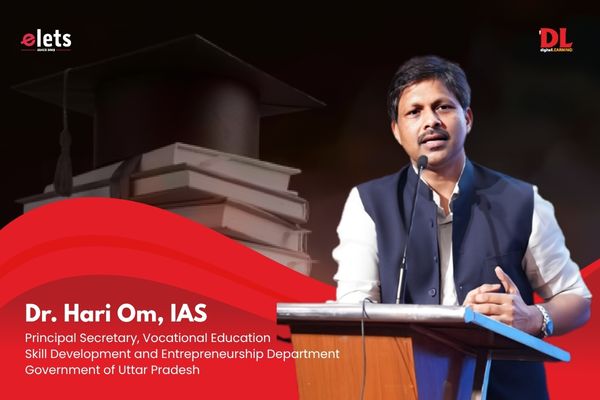
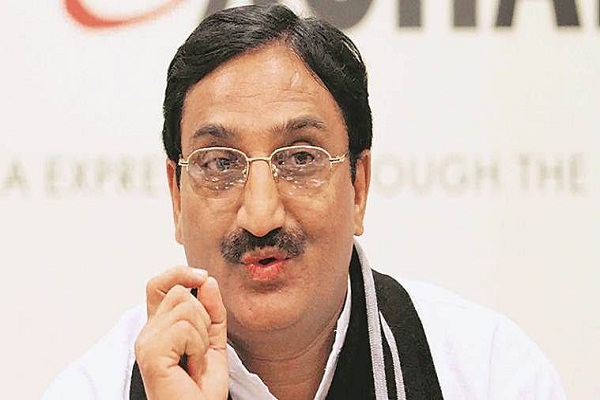
As Uttar Pradesh advances towards its vision of becoming a one trillion dollar economy, skill development and vocational education have emerged as key drivers of growth and employment generation. In an exclusive interaction, Dr. Hari Om, IAS, Principal Secretary, Vocational Education, Skill Development and Entrepreneurship Department, Government of Uttar Pradesh, shared with Ritika Srivastava of Elets News Network his perspective on district-level skill planning, ITI modernisation, industry partnerships, apprenticeship expansion, and the growing role of emerging technologies in building a future-ready workforce across the state. Edited excerpts:
The Department has introduced data-driven mechanisms such as AI-based district skill gap mapping. How is this transforming planning, fund allocation, and demand-led training across Uttar Pradesh?
In the UP Vocational Education Department and the Skill Development Mission, we are working in the field of training youth in the age group of 14–15 years up to 35 years under schemes like DDU-GKY, and we have increased that age limit up to 45 years under the State Skill Development Fund Scheme. So, there is a large target group. Basically, the workforce of UP is our target group, ranging from 14–15 years up to 55–56 years. They are covered under different schemes. Students from middle schools, from Class 9 onwards, are covered under a scheme called Project Praveen.
So, almost one crore people are to be covered under technical skill training. The question then arises: how do we ensure the quality of training? The school-level training is not meant for direct placement or employment, but for equipping students with skills so that when they leave school and move out of educational institutions, they can seek jobs or livelihood opportunities with some practical capability.
For those already in the market, seeking jobs, placements, or planning to start their own ventures, we aim to provide skills that enable them to start economic activities or enterprises. However, it is often said that persons coming out of the ITI network or trained under the Mission are not up to the standards required by industry. This is a key issue we face. Industries often say that trainees are not adequately prepared.
My view is that a person coming out of a lab setup cannot be as productive as someone trained directly in a factory environment. That is why schemes such as internships, apprenticeships, on-the-job training, and the dual system of training are important. Under these models, trainees from institutes visit real factory setups, work with actual machines and tools, and become part of the production process. It is also the responsibility of industry to provide exposure and help them understand real manufacturing processes.
To bridge the demand–supply gap in skills, we initiated a process starting at the district level, known as the District Skill Development Plan. This plan is prepared under the leadership of the District Magistrate, with a committee that includes ITI principals, skill managers, and industry representatives. The committee identifies the industrial sectors in the district that require skilled manpower. Based on these district-level proposals and assessments, we fix training targets.
In the ITI sector as well, we have tried to align courses with the needs and demands of local industry and employment opportunities within Uttar Pradesh. District-wise skill development plans have already been prepared. The UPSSDF fund is allocated to those training partners whose projects align with local industry requirements.
As far as AI-based systems are concerned, we do not yet have a dedicated AI network in the department. While AI is widely discussed today, practical application requires proper understanding and expertise. We are in the process of exploring how such tools can help us better assess demand patterns.
At present, we rely on available databases such as the UP Skill Mitra Portal and the Government of India’s Skill India (SIT) Portal. The data is available, and planning is done based on industry demand and identified skill gaps. This is a dynamic process, not a one-time exercise.
Both in the ITI sector and in short-term training under the UP Skill Mission, we have started collecting field data through surveys and reports. We are also engaging agencies and industry organisations to provide information on sector-wise skill requirements. Uttar Pradesh has distinct regions – Western UP, Eastern UP, and Central UP, each with specific industrial characteristics and demand for skilled manpower. Our planning and fund allocation are increasingly aligned with these regional and sectoral needs.
With ongoing efforts to modernise Industrial Training Institutes (ITIs) and upgrade infrastructure, how is the Department ensuring that these institutions align with contemporary industry standards and emerging technological demands?
Modernisation means bringing our Industrial Training Institutes in alignment with today’s economy, current industrial demands, and the technologies that industries across the world are using. The focus is on ensuring that the kind of trained manpower we produce matches what the industry actually expects.
To achieve this, we are upgrading infrastructure by introducing modern machines and tools in ITI workshops. At the same time, we are restructuring and streamlining the courses being taught, training the trainers and instructors, strengthening assessment systems, and motivating students not only to seek employment after passing out but also to start their own ventures. The larger objective is to upskill young minds and build their interest in new-age forms of education.
In this direction, the Government of Uttar Pradesh has partnered with Tata Technologies Limited in a significant way. Out of 300 ITIs, 212 have been handed over under this initiative. The state has provided land and is in the process of providing workshops. In the first phase, workshops were provided in 150 ITIs, and Tata equipped them with modern machinery in six major trades, including robotics, electric vehicles (EV), laser printing, computers. Last year alone, nearly 12,000 students benefited from these upgraded facilities.
In the second phase, 62 more ITIs are being provided workshops, after which Tata will supply machinery and instructors. An 11-year agreement has been signed with Tata Technologies Limited, under which approximately 80% of the contribution is from Tata and 20% from the state government.
We are continuously upgrading our training systems to meet the needs of both new-age and traditional industries. As Uttar Pradesh is emerging as a fast-growing economy, the demand for skilled manpower will only increase. The state government is therefore focused on widening the scope of training, bringing more youth, women, and unskilled individuals into the fold, and empowering them with employable skills.
Additionally, ITIs are being revamped under the Government of India’s PM SETU scheme. This initiative focuses on upgrading ITIs through the involvement of anchor industry partners. These partners help identify clusters of ITIs, suggest relevant trades, recommend the type of machinery required, guide infrastructure improvements, and support in bringing expert services to run these institutions effectively.
Through these combined efforts, we are ensuring that ITIs evolve into modern, industry-aligned institutions capable of producing skilled manpower for a rapidly changing economy.
How do you see the role of Artificial Intelligence and emerging technologies shaping the future of education and skill development? While several schemes are already being implemented within the traditional education system, how do you envision the broader future of education in this evolving technological landscape?
The New Education Policy has categorically highlighted that only imparting certificates and degrees is not sufficient. Along with knowledge sharing, we must also equip students with specific skills and focus on the application of knowledge.
The application of knowledge requires proper tools, machines, workshops, and practical exposure, especially on the technical side. The world has progressed rapidly in science and technology. Information sharing has expanded, the economy has opened up, and everything is now accessible. In such a scenario, students must learn not just theory, but how to use knowledge effectively.
This is not limited to the technical sector alone. Even in non-technical areas, skilled professionals are needed, whether it is a cook, driver, domestic help, or caregiver. Many companies have emerged to cater to these growing domestic and service-sector demands.
It is not only about handling tools and machinery, but also about performing everyday services efficiently and professionally. Sectors like hospitality, cooking, catering, caregiving, and domestic services have expanded significantly. Tourism is another growing area. For example, in Uttar Pradesh, religious tourism has increased substantially.
This growth creates demand for trained tour guides, food service providers, transport operators, and professionals in hotels and lodging. Every sector today requires skilled manpower.
Artificial Intelligence is advancing rapidly. It accumulates and analyses data according to specific demands and needs. Its application will extend across all sectors. However, how AI tools are applied will depend on the specific requirements of each sector.
The future of education, therefore, lies in combining knowledge, skill development, and the effective use of technology to prepare students for real-world demands.
While skill development is being strengthened at the district level across the state, how are these efforts being extended to villages and Gram Panchayats, and what concrete steps are being taken to encourage and effectively train students from rural backgrounds to ensure maximum outreach?
There are multiple schemes and platforms already working in this direction. Self-help employment groups, State Rural Livelihood Missions (SRLM), Deen Dayal Upadhyaya Grameen Kaushalya Yojana (DDU-GKY), and other rural skilling initiatives are catering specifically to the needs of rural youth. The Agriculture Department runs its own training programmes, Rural Development has its initiatives, and several other institutions and departments are working with the same population. The Labour Department focuses on unskilled, semi-skilled, and skilled workers. As the Vocational and Technical Education Department, we run polytechnics and ITIs.
Everyone is working with the same broad target group. What we need now is synergy. We must coordinate better, understand whether we are targeting the same beneficiaries repeatedly, or whether our efforts are complementing and supplementing one another. In a large state like Uttar Pradesh, inter-departmental data sharing becomes extremely important. We need clarity on who is training whom, in which sector, and at what level.
We are closely coordinating with the Labour Department and sharing data. We also run specific skilling schemes such as those for Building and Other Construction Workers (BOCW), where we train masons and workers in the construction sector. At the same time, new sectors are emerging rapidly. Solar PV system installation is one such area. With rooftop solar panels becoming common in households, especially in urban areas, there is growing demand for trained technicians. Subsidies are also available under various schemes. Government institutions, including ITIs and polytechnics, are themselves adopting solar energy to supplement traditional energy sources.
So, we are trying to strike a balance between traditional trades and new-age sectors like green technologies. The government is also increasing budgets so that we can expand our training capacity and widen our outreach to the youth of Uttar Pradesh.
On apprenticeship, there has been progress, but much more can be done. Currently, large companies are offering apprenticeship opportunities. However, under the Apprenticeship Act, 1961, any establishment with 30 or more employees is required to engage at least one apprentice. Uttar Pradesh has a very large MSME base—around 90 to 96 lakh units on paper. I have requested the MSME Department to recirculate and reinforce this provision of the Act so that MSME units actively engage apprentices from ITIs and polytechnics.
If this is implemented effectively, the number of apprenticeship trainees will increase significantly. While we are meeting the current target of one lakh apprentices in Uttar Pradesh, in my view, that number is still not sufficient. We need to scale up in a much bigger way to truly meet the skilling aspirations of our youth.
Also Read: Redefining Employability for SEND Students
What is your personal opinion on the skilling and education system, and how do you see the role of long-term and short-term strategies in strengthening employability and contributing to Uttar Pradesh’s one trillion dollar economy vision?
There are both long-term and short-term strategies when it comes to skilling and the education system.
The long-term strategy is to ensure that students in each and every academic institution gain some technical knowledge and practical skills. When they pass out with a degree or certificate, they should at least know how to do something meaningful. Education should not only provide qualifications; it should make students capable and confident to work, create, or contribute productively.
The short-term strategy focuses on those who are already searching for jobs, placements, startups, or enterprise opportunities. They need to be trained according to current market requirements. If they already possess certain skills, there should be a system of skill upgradation. Recognition of Prior Learning was one such scheme — people who already have experience or skills in a particular area should be assessed and upgraded rather than trained from scratch. Imparting a new skill is one thing, but upgrading existing skills is equally important.
Another important aspect is the dual system of training – training in ITIs or polytechnics along with simultaneous exposure to industry. On-the-job training must be an integral part of the ITI training system. If a course runs for one year, at least one or two months should be spent in a relevant industry. This practical exposure strengthens employability and bridges the gap between training and real work conditions.
We are in continuous communication with stakeholders in this process. Many industries, service providers, placement agencies, and philanthropists are coming forward to supplement and augment government efforts. CSR funds are now being directed toward this sector, with companies willing to invest their CSR budgets in skill development because it contributes significantly to the economy.
If we empower individuals with the right skills, it has a direct impact on economic growth. A balance between long-term and short-term strategies is essential. At the same time, sustained political commitment is required to keep working consistently in this field and to move towards the vision of making Uttar Pradesh a one trillion dollar economy.