Home Blog Page 801

IIM-A gets donation from corporate

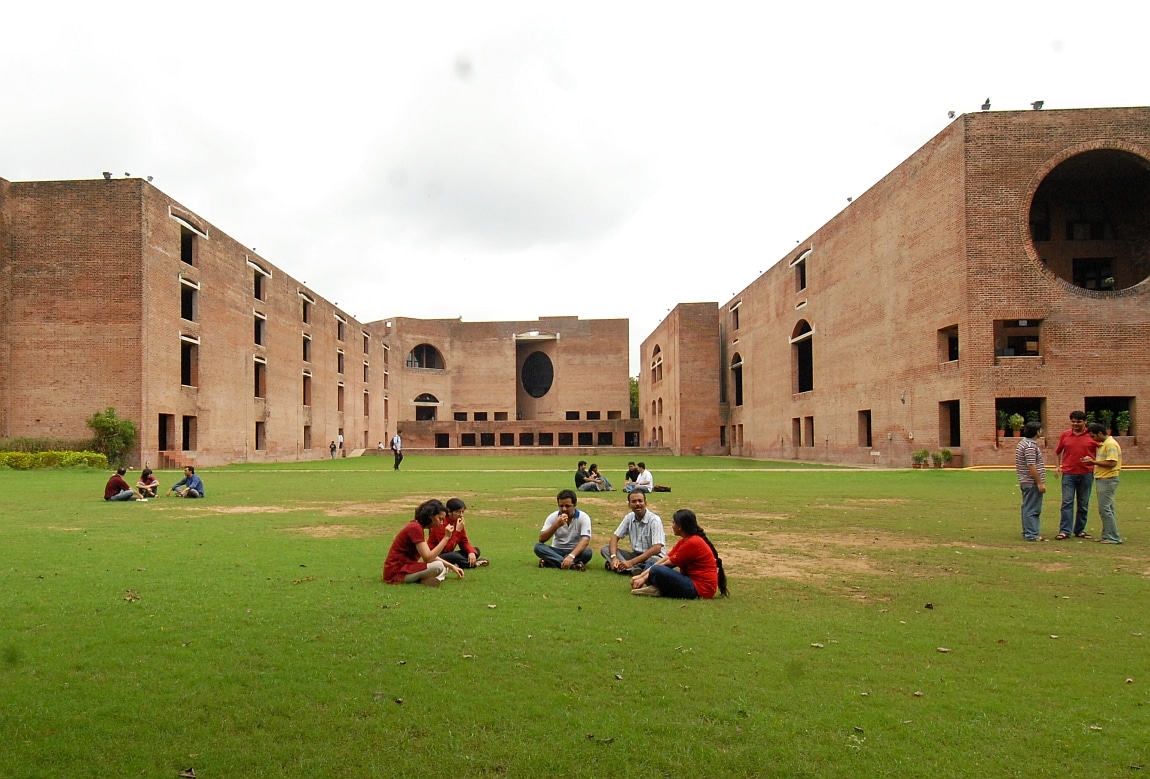
Infosys Foundation, Edelweiss, UTI, PwC, Shapoorji Pallonji, Arvind Ltd. and Ajay Banga and Ritu Banga have contributed Rs. 21.5 crore as a donation to the Indian Institute of Management, Ahmedabad, taking the total raised in the last few years to Rs. 110 crore. An anonymous contribution of Rs.10 crore has also been made by an alumnus, which will be used for admissions process (Rs.5 crore) and to promote entrepreneurship (Rs.5 crore) among students.

Rs.50 lakhs, alumni contributions from two batches 1986 and 2014 will also be used to upgrade the child care centre of the institute. The institute has announced five new chaired professors’ positions and three students’ scholarships. In July this year, IIM-A had also received a donation of Rs.50 crore by JSW Steel Ltd. to establish a school of public policy in the campus.

Indians gain career advancement through digitisation: Survey

digital-mainThe world of digitisation has taken a leap in every field per say. A recent survey has revealed that 82% and 76% Indian learners reported higher career and educational benefits, respectively, than the global average.

The survey by Coursera, in partnership with researchers at University of Pennsylvania and University of Washington, revealed that 72% reported career advancement and 61% registered educational advancement.

These reported outcomes were even greater among learners who cited career or educational advancement as their primary motive to enroll in online courses.

According to the survey, learners from lower socioeconomic status (SES), from emerging economies, and those without a bachelor’s degree reported the greatest impact, hinting that open online education empowers people of all backgrounds.

In this, 50% of Indians seeking to advance their careers reported improved candidacy for a new job as compared to 43% globally.

The survey was divided into two groups-career builders and education seekers.

Ninety-per cent career builders in India saw benefits like improving candidacy for a new position better than global average of 87% and 36% of career builders in India saw benefits like salary hike, a promotion, a new job or starting a new business, said the survey.

Chalking the education seekers, the survey revealed that 35% of learners in India looked forward to further their education, while 68% of Indian education seekers gained knowledge essential to a field of study.

The male-female breakdown was 59/41, the most common age range was 26-35, and 57.6% designated full time employment. The top countries represented were the United States, China, India and Brazil.

Daphne Koller, Co-Founder and President of Coursera, said, “As India increases broadband penetration, we hope to further increase the pace of growth in the market and reach more Indians who can benefit from access to a great education.”

m-Learning: New-age education mantra

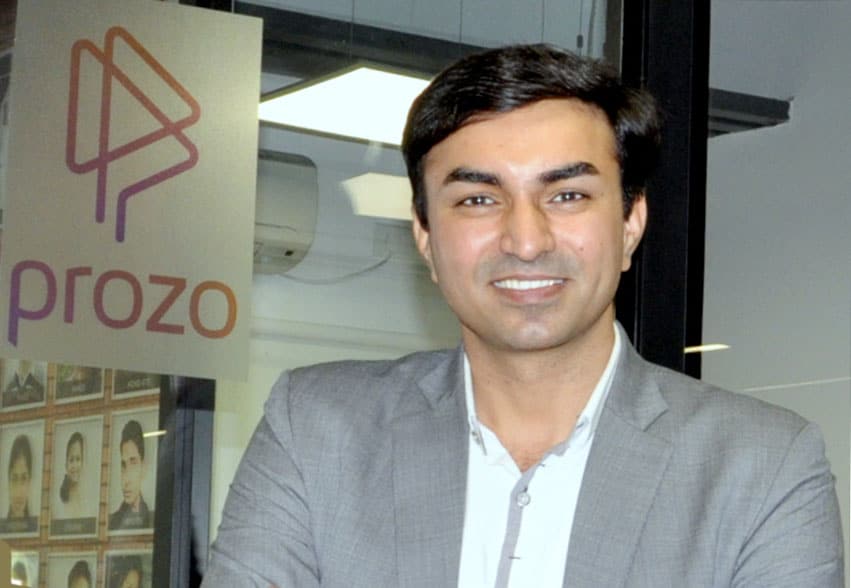
A marketplace for educational resources, Prozo showcases various offerings of new-age learning through m-learning or mobile learning, shares Ashvini Jakhar, Founder, Prozo with Elets News Network (ENN)

 What does mobile learning offer?

M-learning or mobile learning is offering learning across multiple contexts, through social and content interactions. It is providing an aid to the delivery of learning, education or learning support on mobile phones, PDAs or tablets. It allows virtual learning anywhere anytime. It is proving beneficial especially for students who may want to learn outside classrooms at their own pace as per time and location convenience. M-learning focuses on the mobility of the learner, interacting with portable technologies. Sharing is almost instantaneous when using the same content leading to instant feedback and reviews. M-learning has brought strong portability by replacing books and notes with small devices, filled with tailored learning contents. For M-learning to be optimized, following factors play an important role:

  • Smart Phone penetration is growing very high in student population
  • Enablers such as low price smartphones, access to internet in tier 2 and 3 cities is increasing rapidly.
  • Awareness about m-Learning is increasing exponentially
  • Impact is going to be bigger once digital India effort envisioned by our Prime Minister Mr. Narendra Modi starts getting implemented

What are the benefits of m-Learning in education?

The biggest benefit of Mobile learning or M-learning is the use of mobile devices to deliver and access education anytime anywhere; it could prove beneficial for India’s education sector where the tertiary or brickand mortar infrastructure is limited. Our current education system if too adopts more and more of m-learning concept it may create smarter education systems for posterity. Mobile devices are easily available and even accessible to remotest corners in India. People can use mobile devices to access educational resources; connect with experts, or access content other than what is discussed in classrooms. Our organization, Prozo is developing Android and IOS based mobile applications that will provide instant access to quality and relevant educational material for students of all ages helping them in all sorts of exam preparations. It is a comprehensive platform that provides m-learning aids like tablets and PDAs other than books, digital content and mentors who are toppers and specialists in their respective field.   The tele-mentorship programmes will not only provide timely guidance and counseling but also coach young minds to handle the stress of changing exam patterns and syllabus year on year. This is a good example of flipped classrooms that uses a combination of face-to-face content delivery and offline learning approach to enhance the learning experience manifolds. It involves learning initial concepts of a subject offline by viewing lecture videos and then interacting with experts or specialists later for clarifications or further queries while revising. The offline videos can be downloaded and viewed using mobile devices and live interactions with the teachers can be done also using smartphones.

So the crux is:

  • M-Learning has ease of accessibility
  • No additional cost of ownership
  • Live or in real time (Then and there)
  • Easy to collaborate

How will it help students understand the concept of learning?

M-learning complements the traditional form of education. Let me attempt to explain this by illustrating how Prozo has blended the traditional with modern technology. At Prozo, we not only offer traditional resources of learning viz. Books, Mock exams, personal notes and Coaching material but there is also digital content comprising of all kind of mobile devices like tablets, PDAs, PCs or laptops even information about various e-learning courses is made available along with free resources like blogs, tips on specific exams etc. Now, it may not be possible for a student located some 40 – 50 kms away from a resource hub to travel and get study material every time the need occurs. Our platform is extending its technology to provide the same information and help on mobile devices. Students or their parents will have the choice to select study material as per ratings and reviews of users and order via the application which is easy to use on any mobile device. Also not all have the privilege or physical access to specialists or subject experts especially in places far away from educational institutes, coaching centers or other resource hubs.

What are the key differences between m-Learning and e-Learning?

Both e-learning and m-learning are very closely related, the main difference being in the endpoint devices used for viewing and consuming the content. Another aspect of m-learning is the content to be 100 percent relevant and end user experience is paramount. Hence, parameters like layout and format of the content matter while designing applications that run on mobile devices for m-learning. So let us say that whatever was made possible via e-learning is also achievable through m-learning, it is only the facilitating factors that need to grow.

Do you feel the trend of m-earning is picking up among the students? Is it well penetrated in the rural areas or urban sectors? 

I would say the industry is already brewing up. Though India has low Internet penetration at 19% compared with other developed and developing economies that have up to 90% penetration; the country has the third-largest Internet user base in the world, with more than 300 million users, of which more than 50% are mobile-only Internet users. The number of mobile Internet users in India is projected to double and cross the 300 million mark by 2017 from 159 million users at present as per a report by Internet and Mobile Association of India (IAMAI) and consultancy firm KPMG. Increased internet enabled device penetration, decreasing handset prices and data plans tariffs are helping create a suitable environment for a rapid growth of mobile internet in India, with rural India set to take the lead. This all is adding to GOI’s vision of creating Digital India.

The Indian government is committed to setting up a robust digital infrastructure and to promote adoption of mobile Internet and related products and services. In 2014-15, the Government budgeted INR 500 crore for building infrastructure as per the National Rural Internet and Technology Mission with an additional INR 100 crore budgeted for improving e-governance. Further to this, many handset manufacturers are making their contribution towards mobile internet growth by manufacturing affordable handsets supporting even vernacular content. As adoption of mobile broadband technology grows and low cost smart phones penetrate further into deeper markets, m-learning will assist education outreach and delivery to all parts of India.

According to another report, India’s online education market size is set to grow to $40 billion by 2017 from the current $20 billion. India has one of the largest education systems in the world with a network of more than 1 million schools and 18,000 higher education institutions. More than half of the country’s 1.2 billion population falls in the target market for education and related services. With the advent of education providers in this space that are investing considerable amount of time, efforts and money in awareness about the m-learning way and offerings that follow. Quality of products and delivery time will play a crucial role for content providers in times to come for users to hold a distinctive imagery of what suits them the best in terms of relevance, timeliness along with price.

What are the government initiatives in m-Learning under Digital India campaign?

I am not sure. So far, it is known that the Government of India (GoI) has been actively supporting the e-learning drive to strengthen accessibility. Other than funding the National Rural Internet and Technology Mission, distribution of Aakash tablets to college students was also a step towards e-learning. It has launched two schemes – National Mission on Education through Information and Communication Technology (NMEICT) and National Program on Technology Enhanced Learning (NPTEL) – to leverage the potential of ICT in the dissemination of video and web-based course content. The GoI also extensively uses the PPP route in collaboration with ICT providers through the Sarva Shiksha Abhiyan and ICT@Schools projects. Now m-learning can be an alternate to e-learning depending upon choice of users.

Do you think government schools should incorporate m-Learning? Why?

I think it will take its due course of time and may happen naturally when the factors contributing to overall growth of m-learning as discussed earlier may start to evidently influence the users.

Any specific programme are you running with the government or private schools in m-Learning space? 

Not at this point in time, but in near future we may be very keen to do so as per scalability and reach we build.

Making education fun online

Harish Malladi, CEO, EdVIE, talks about how concepts of Math and Science can be instilled through innovative learning online that his start-up, EdVIE practices

Give us the brief of the various reasons behind starting the venture.

EdVIE is a product of Enlume Technologies Pvt. Ltd, an IT services company. EdVIE is the fruition of a long-standing dream of a group of engineers who knew first hand the importance of a strong foundation in science, technology, engineering and math (STEM) subjects for a successful career.

Our journey from small towns of Andhra to Silicon Valley, is credited to the education we received in our schools and colleges. As is the case with most lower and middle class families in India, we also got success primarily because of education.

We started Edvie, because of our passion for and emotional bonding with Education. By leveraging power of Internet and technology we want to bring effectiveness and efficiency in the field of Education.

What are the various difficulties/ hurdles encountered in doing business on ground level?

When we set out to enter the Education domain, we found many problems not only in the delivery but also in content and learning resources for STEM subjects. There is a huge gap between the level the students are studying at and the level they are tested on, in competitive tests.

These are bigger problems which are being overlooked by most of the education providers whether online or offline. Technology startups are trying to give quick-fix solutions which may be good now but may not be valuable for a student in the longer run.

A change of approach was needed; rather than working on a tech solution, we started approaching it from an academic standpoint.

This was the biggest challenge which was in front of us. Building a content which can bridge the gap and lay a strong foundation to prepare students to handle the competitive future.

We took the harder road, studied various curriculum, spent time with school principals, teachers and students to build our own integrated curriculum. More than 100 schools and 20,000 students in India have adopted our Math and Science curriculum which help them prepare for a bright and successful future in STEM areas. Our curriculum is suitable for students studying in State, CBSE, ICSE and IGCSE curriculum.

Having a parent technology company in Enlume, it was not difficult for us to build the technology to solve the problem of delivery of our content and teaching resources to students at right time and at right place.

What is the market size of the services offered by you in India at present?

The market size of online education in India is $20 bn which is expected to touch $40 Bn in 2017. Families, especially in Tier 2 cities have high propensity to spend on Education, as it is believed to hold the passport for a successful future and good life. Major driver for Online Education is penetration of Internet and increasing network speeds, which interestingly also become the limiting factors.

In coming years, with increased actual internet speeds and fading resistance for learning on internet,/,l, the market will grow at a much faster rate. With introduction of 4G networks on Smartphones, we can expect that the mobile segment will grow faster than the desktop segment.

The major benefit for organisations/individuals adopting your solutions?

All of us may know or hear about students who did exceedingly well upto 10th Grade but started scoring low in 11th and 12th Grades, resulting in increased stress and low confidence. This is because of the disparity between the difficulty level in lower grades and in 11th and 12th grades. The difficulty level and bandwidth of the syllabus covered in higher grades increase upto 10-15 times. Creating a situation of shock and stress for students.

When students join Edvie Courses, we equip them to handle the increased difficulty with the help of our curriculum, Live Classes, Online testing and mentorship. Our online LIVE Classes are conducted by experienced, qualified and well trained teachers who take students from Basic to Advanced Level in a gradual way.

Within short period of time, students start feeling confident and start scoring better in their school exams. In longer run, our students achieve highest success in competitive exams. In last academic year, one of our students achieved AIR 1 in NAO Olympiad, he is going to NASA’s Kennedy Space Station for 10 days. Vivek has promised to bring back lot of pics and selfies.

The vision of your company for next two years?

We want to establish ourselves as a dominant player in online STEM education in India. We will be expanding our course offerings in STEM subjects and will enter into different markets and market segments. We are working on making our courses available on multiple devices and platforms. We want to do all that but our prime focus will remain on making students fall in love with Math and Science so that they handle the future competition and challenges better and go on to solve world’s problems.

We have recently launched India’s Biggest Test Series in Math and Science, with more than 345 structured practice and revision tests on each topic and sub-topic. The test series will culminate in Feb 2016 with 3 All India Competitive Exams in Math, Physics and Chemistry. Toppers will be awarded attractive prizes and scholarships.

What are the various methods you are using to increase the visibility of your organisation?

Apart from usual online and offline marketing activities, we extensively do Educational events in housing societies, corporates and schools. Each of our events provides learning opportunity to participating students and parents.

Last summer, we conducted Online Summer Camp with Live workshops in Vedic Mathematics and Science Experiments. The Summer Camp was a huge success with thousands of students joining us for the workshops.

All our educational events create huge brand equity and word-of-mouth for us.

How you can differentiate your services from your competitors?

Our core of strong, well-researched and comprehensive content and our course structures differentiate us from others. We understand the importance of LIVE exchange between students and teachers, hence all our Classes are conducted LIVE so that students can actively engage for a permanent learning. Our classes are conducted in a group creating an atmosphere of collaborative learning. Small batch sizes enable us to give personalized attention to each student.

Our students go on a journey of holistic learning through Live Classes, structured Online Tests, Performance Insights, Mentorship and Peer exchange.

We provide a set of 6 books in Math, Chemistry and Physics to our students, which only a few other players are giving. Our students love coming to our classes because they establish a bond with their teachers and their classmates.

Ways of engaging the customers with you. Any special case study?

Student engagement is the central idea in all our courses. We train our teachers to engage with students using different engagement tools like whiteboard, chat, feedback, direct prompts, audio and video sharing. After every class, students have to finish their online Homework to ensure that the learning has taken place. Every week students have to take a revision test covering the syllabus of the week and every Month there is a Monthly exam they have to take, all to put enough practice for a permanent learning.

We conduct Online Parent Teacher Meeting, which we believe may be the first time in India and in world also.

We want to benefit every student who joins us, even if they do not buy any of our courses. We offer one Free Weekly test containing 30 Qs in Math, Physics and Chemistry.  Every student get access to 35 Weekly tests when they Register for free with us. Within a span of 6 months, we have got 45,000 students registered with us.

We interacted with many students this year who told us that they scored higher in their school exams because they took Free Tests last year. This is something which really makes us happy.

What are the major stakeholders and sectors you are focusing on?

We focus on STEM Subjects in online education sector. For us, students, parents and schools are the major stakeholders.

What are the various initiatives taken by your organisation to emerge as a market leader?

We do a lot of market development activities not only in cities but also in satellite towns and remote areas to train teachers and students on how best to use internet for learning with their limited resources. We are working on innovative technology to make it easier and more affordable for students everywhere to access our courses from multiple devices with limited resources. We are also looking for right funding partners to scale up our operations and reach.

The world is undergoing dramatic changes as we know it. Great things are happening in the field of Education, which is all set to change tremendously within a decade, or may be sooner. Starting early, we want to be among those who will lead the change.


472 Schools In Delhi To Refund Excess Fees

School DelhiEstablished on the instructions of the high court, Justice Anil Dev Singh Committee on fee review have directed all 472 private unaided schools identified to return excess fees charged and submit compliance reports within 15 days.

Through its eight interim reports, the committee identified that these schools have overcharged parents on the pretext of implementing recommendations of the Sixth Pay Commission whereas not doing the same. The high court had accepted all the eight reports. The measures for redress are also recommended in the reports.

According to the recommendations of the committee, “The schools that have charged excess fee to implement Sixth Pay Commission but have not implemented the same are directed to make the payments to its staff as per Sixth Pay Commission, out of excess fee collected, with 9 per cent interest, without further raising any fresh demand from the parents/students.”

A circular of October 20, by the directorate of education, Delhi, has “directed” these 472 school “to comply with the said reports within a period of 15 days and to submit compliance report to the district authorities”.

Skill Development, Solution To Youth’s Unemployment, Says Dr Jitendra Singh

The Indian youths are second to none in the world and are capable of making a niche for themselves wherever they take up a vocation within the country or abroad, said Dr Jitendra Singh, Union Minister of State (Independent Charge) for Development of North Eastern Region (DoNER), MoS PMO, Personnel, Public Grievances, Pensions, Atomic Energy and Space.

He said while inaugurating the IMS Health Skill Development Center under the aegis of “UDAAN” programme, which is aimed at empowering the youth of Jammu & Kashmir with active support and assistance from Central Government.

Dr Singh, while referring to Prime Minister’s Skill India mission, said that the solution to rising number of educated unemployed is to make the best use of the Government’s Skill Development schemes. In this context, he appreciated initiatives like “UDAAN” and public-private participation through agencies like IMS Health.

While referring to the recent Skill Training Programme initiated by him on voluntary basis in district Doda, with specific aim to train the youth in the kind of skill which can get them employment locally, he said, “The Skill Development Programme started in Doda would provide training in local surveys and mapping which could make the youth employable by a host of different hydro and power projects running in the district.”

‘Local To Global’ Concept – Rajasthan School Board to Revise Textbooks

TextbooksFocusing more on local and national leaders, the Rajasthan Board of Secondary Education (RBSE) is all set to overhaul English textbooks for Class I to XII with the next academic session, by replacing chapters and poems written by foreign authors with Indian writers.

Among the many changes in textbooks, a chapter on iconic leader Nelson Mandela will be replaced with a long chapter on ‘Tribals in Rajasthan.’ The poems of William Wordsworth will also be omitted.

However, British author Rudyard Kipling, is among the few lucky whose work will get a place in the revised textbooks.

According to sources, the new guidelines are based on Rajasthan education minister Vasudev Devnani’s concept of ‘local to global’, which has been conveyed to textbook re-writing committee formed by him.

The rewriting of textbooks will be done at two levels: RBSE will do it for XI-XII classes, and State Institute of Educational Research and Training (SIERT) is handling it for classes I to VIII. There have to be two sets of English books for each class – extensive and intensive. The complete curriculum is segregated into four broad sections: comprehension, vocabulary, grammar and speech.

To finish the rewriting before November, the committee is working overtime so that 8 crore new books will be available in the market before March next year.

Deptt of Public Instruction Derecognises 15 Schools In Bengaluru

School derecognisedThe department of public instruction, government of Karnataka, has published a list of 15 derecognised pre-primary and lower primary schools in the academic year 2015-16. They are part of Bengaluru zone 3.

Parents have been asked not to admit their children to these schools; those already studying there have been advised to shift to recognised institutions.

The derecognised schools are: Sovereign Higher Primary School, Venkateshapuram; St JJ Margaret School, Marappa Block; Kushal English School, DJ Halli; Jamia Ashrafiya English School, DJ Halli; Indira Memorial English School, Vinobhanagar; New Carmel English School, Vinobhanagar; Modern Kannada & English School, DJ Halli; St Teresa Nursery & Primary School, DJ Halli; Delight English School, DJ Halli; Marvellous Nursery & Primary School, DJ Halli; Oxford English School, DJ Halli; Presidency School, RT Nagar; Presidency School, Kasturinagar; Alburoz Primary School, KB Sandra; Spectrum School, Ganganagar.

Telangana Govt Plans To Provide Vocational Training In Regular Courses

Vocational TrainingTo bridge the gap between academics and skills, the Telangana State Council of Higher Education (TSCHE) has proposed to initiate additional vocational training in higher education institutes from the next academic year.

With the rapid expansion of industries, the demand for technicians and skilled workers is also growing steadily in all the sectors. However, the intake at vocational institutes has remained constant for several years. In this current scenario, the integrated approach of universities in the country to teach mainstream courses and vocational training is gaining popularity.

To meet this demand and fill the skills gap, the Telangana government is planning to provide vocational training to students at the intermediate as well as undergraduate levels. As per the proposal, students will be trained in any of the selected vocational skills along with their regular courses.

Although the Industrial Training Institutes (ITIs) and the Advanced Training Institutes (ATIs) are already offering exclusive vocational courses at the Intermediate level, but the government still feels that students from technical education lack skills despite their well-designed curriculum and this is affecting their chances of getting jobs in the industry.

TN Schools To Offset New Fee Structure

CalculatorAs per the recommendations of the Tamil Nadu government’s Private Schools Fee Determination Committee, headed by Justice S R Singaravelu, the niche schools in Chennai with less than 300 students are set to implement some major changes in the 2016 academic year, to offset the new fee structure.

The big ICSE, CBSE and matriculation schools have joined forces to seek legal redress. However, several small and mid-size schools are bracing themselves for the inevitable choice – expand or closed down. The small schools and schools which are offering specialised education, and were earlier reluctant to tamper with the teacher student ratio, may now take more students in the next academic year and also reduce the number of extracurricular activities.

As per the information on the Tamil Nadu government website, the annual fees fixed by the committee is between Rs 3,000 and Rs 40,000, depending on the infrastructure, number of teachers and students. In some cases, the fee fixed by the committee is about one-third of the current fees charged by the schools.

LATEST NEWS