



Home Blog Page 812

Changing paradigms of education

Sarvepalli Radhakrishnan was First Vice President and second President of India. He placed Indian philosophy on world map.
Sarvepalli Radhakrishnan was First Vice President and second President of India. He placed Indian philosophy on world map

“A good teacher is like a candle – it consumes itself to light the way for others.”

Teachers act as the guide for life, show the path towards success and enrich the personality of their disciples by imparting ethical and academic knowledge. They are our founding stone as they help us grow into a better citizen. From chalk and board method to projectors and tablets, our teachers are the guiding light in shaping our careers. The changing paradigm in learning has broken the barriers of conventional learning. Today, teachers are reinventing themselves to facilitate students.

Expressing the gratitude and appreciating the hard work of our teacher, digitalLearning salutes all teachers who have helped their students in achieving the goals of their lives. Below are few quotes from the intelligentsia who have created a niche for themselves.

Pranab Mukherjee, President of India

Addressing the students in Delhi to mark the occasion of Teacher’s Day, he said, “I am not a great scholar, never was a very bright student, became an average leader. A teacher gives himself to the students and the job of a student is to draw from him as much as possible.”

Narendra Modi, Prime Minister of India

On the occasion of Teachers Day, Prime Minister Narendra Modi will hold a video conferencing session with 800 students and 60 teachers from various schools in Delhi. Ahead of Teacher’s Day, he said, “Students are an image of teachers. Mother gives birth to a child, the guru gives life. What teacher taught us we will remember for the rest of our lives. I bow to all the teachers. It is the teacher who makes the generation.”

Manish Sisodia, Deputy Chief Minister, Delhi

“Delhi Government has increased the education budget and it is an indicator for our intentions of improving the education in Delhi. We want to streamline the education system first. We should bring innovation in education. We will make skill education as part of the main curriculum in schools. Delhi Government is planning to launch a skill university. We are starting a programme ‘Be a Teacher’, where we will bring the successful people to schools and ask them to be a teacher for one day. I had requested Pranab Mukerjee, President of India to be a teacher for the day. He taught about the freedom movement and constitution of India to students.”

Dr. Sridhar G – Founder Deeksha Network

“The Indian education system for sure is at par with the global trends, especially with our Math and Science fundamentals being strong. But there is a need to excel in the area of application based learning, which is critical for skill enhancement and employability. The key to ensuring this excellence is by making quality content, teaching/learning platforms and assessment process etc. accessible to students, irrespective of their demography or geography. This is possible only through technology. Hence technology based teaching and learning systems are important to achieve excellence.”

Subramanya Bhat- Principal, Deeksha Centre for Learning

“With successful implementation of RTE, mid-day meal scheme, etc. and sustained effort towards bringing students to schools, I feel, we are on the right path. We are witnessing a consistent improvement in enrollment of students to schools. Bringing them to school is the first step. But to sustain this practice until they pass out from higher education is the larger goal. We need to focus our effort towards curbing the dropout rates at schools.

An ideal education set-up should enable equal access to education for all at all levels. I dream of a system that enables aspiring student to take up any course or join any institute of their choice without a second thought, or affordability being a constraint. We need to improve funding and monitor the education system real time to match up to international standards.”

Vinesh Menon, COO, Global Discovery Schools

“The Teachers at the school invest all their time and energy in painstakingly teaching the children and preparing them for the world ahead. Every year, these teachers see their children blossom from preschool days to Grade XII to College to Higher Studies and then finally disappear into the world. This cycle calls for a lot of resilience & patience apart from managing the emotions of letting go of a ward who has been taught with so much of care and love and hence I have no qualms in calling every such Teacher the epitome of selflessness and sacrifice. To all My Teachers in school, college and other institutions I have studied & to all Teachers across the country – Thank You for your dedication, time and patience in making me who I am today.”

Manjula Pooja Shroff, Chairperson, Calorx Education and Research Foundation

“Teachers are the backbone of the education ecosystem.  A good teacher is like a painter who paints the canvas of a student’s life.  My compliments to all those you have chosen to be teachers and towards making positive contribution to students who are the future citizens of the county. Happy Teacher’s Day.”

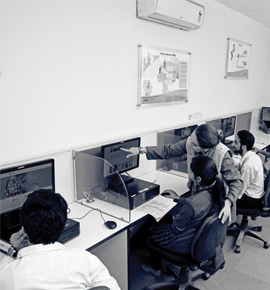
Heralding SKILLS

In an attempt to make students equipped with skill knowledge, CBSE has introduced a number of skill courses that will help them become a competent learner. Elets News Network (ENN) finds out the vocational courses that the Board is currently focusing

Heralding-SKILLSIn the light of National Skill Qualification Framework (NSQF), CBSE has initiated a process of reframing its existing vocational courses to ensure across mobility of students and their absorption in the industry. The Board has introduced new vocational courses in Financial Market Management, Hospitality and Tourism, Mass Media Studies, Medical Diagnostics and Geospatial Technology in collaboration with National Stock Exchange, Mumbai, National Council for Hotel Management & Catering Technology (NCHMCT), Noida, Whistling Wood International Ltd., Mumbai, Apollo Medvarsity, Hyderabad & Rolta India Ltd. Mumbai, respectively.
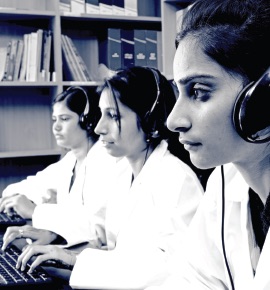
Further, the Board has signed an MoU with Central Institute of Technology, Perth, Australia to introduce skill based courses on Music Production, Business Administration, Beauty Therapy and Design.

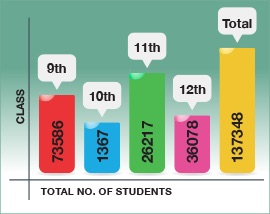
Currently, CBSE is offering 40 courses in seven sectors, and most of the courses are formulated based on the industry requirements. Some of the courses are offered in collaboration with the professional organisations and joint certificates are issued, which enhance the job prospects of the students.

CBSE is offering 40 courses in seven sectors, and most of the courses are formulated based on the industry requirements. Some of the courses are offered in collaboration with the professional organisations and joint certifi cates are issued, which enhance the job prospects of the students

Heralding SKILLS
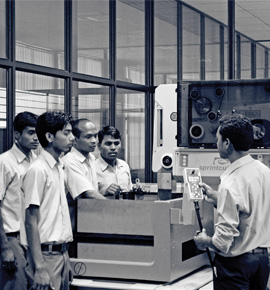
Vocational courses help students get appropriate internship and employment

With inputs from PSSCIVE, SSC, NSDC and School teachers, CBSE has formulated the curriculum and study material for level I to IV (Class IX-XII) of IT, Automobile and Retail sector under National Vocational Education Qualification Framework (now NSQF). In addition, Board also framed the qualification required for the teachers/instructors for said courses.

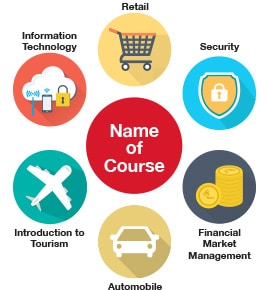
To cope with growing needs of manpower in Retail, IT, Travel & Tourism and Security Industry, the CBSE has introduced vocational courses in these areas from the session 2012-13 at secondary and senior secondary level under NSQF. A difficult task has been carried out by the cell to rationalise the existing secondary level curriculum for introducing new vocational subjects without hampering elementary knowledge requirement at this level. Further, the Board in association with the National Stock Exchange, has introduced a course on Financial Market Management at secondary level in class IX from the current academic session to equip the students with knowledge in financial literacy.

graphThe Board is also working for the industry linkages, specially meant for the schools, and would prepare student database for appropriate internship training and employment. The Board has also successfully conducted a number of sensitisation and awareness programmes for the principals and teachers of affiliated schools, along with the Teacher Training Programmes (TTP) for concerned vocational subjects and also planned to organise many more similar training programmes or workshops at regular intervals to ensure quality of delivery and consistency.
Courses at
Senior Secondary Level
? Office Secretaryship ? Healthcare Sciences
? Stenography and Computer Applications ? Health and Beauty Studies
? Accountancy and Taxation ? Medical Diagnostics
? Marketing and Salesmanship ? Fashion Design & Garment Technology
? Banking & Insurance ? Textile Design
? Retail ? Design & Innovation
? Financial Market Management ? Music Technical Production
? Business Operation & Administration ? Beauty Services
? Electrical Technology ? IT Application
? Automobile Technology ? Security
? Civil Engineering ? Library and Information Sciences
? Air Conditioning and Refrigeration Technology ? Poultry Farming
? Electronics Technology ? Horticulture
? Geo Spatial Technology ? Dairying Science and Technology
? Foundry Technology ? Food Production
? Transportation System & Logistic Management ? Food and Beverage Services
? Ophthalmic Techniques ? Mass Media Studies and Media Production
? Medical Laboratory Techniques ? Bakery and Confectionery
? Auxiliary Nursing & Midwifery ? Front office
? X-Ray Technician ? Travel and Tourism

Name-of-CourseThe Board has further proposed a workable scheme of studies for vocational subjects by way of integrating academic course with vocational course, this will allow free movement between vocational to conventional and vice-versa.

For effective delivery, the following materials are being prepared for each of the vocational courses:

Teacher’s Manual
Student material
Assignment
Internship Project

To tune the vocational courses meeting the present needs of the society, multiple subject committees have been constituted to prepare the materials for students and teachers. Further, the Digital and Multimedia content were also developed for some of the focused courses (Retail, IT, Automobile).

Skill-knowledgeThe Board has also identified some skill knowledge providers for effectively offering the skill-based courses in the schools. It is primarily focusing to increase the stake in post secondary as well as secondary level vocational courses in the areas of Agriculture, Commerce, Engineering & Technology, Medicine, Hospitality & Tourism and other service sectors in collaboration with professional organisations. In addition, the cell is also planning to introduce various skill based modular courses for short duration to cover the large workforce in informal sector.
Having committed to provide quality education to promote intellectual, social and cultural vivacity among its learners, the Board envisions a robust, vibrant and holistic school education that will engender excellence in every sphere of human endeavour. The Board advocates Continuous and Comprehensive Evaluation with an emphasis on holistic development of learners.

Positive Leap

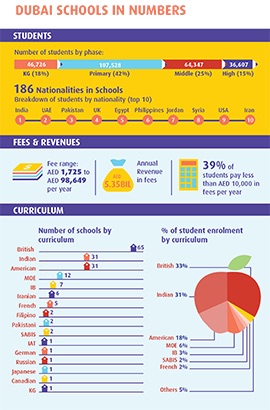
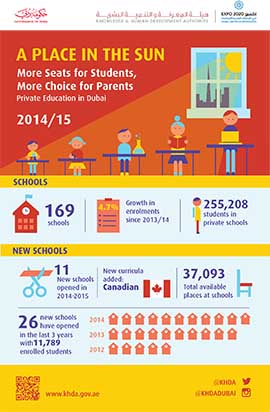
Final_035_KHDA-ENGLISHIn a bid to provide positivity in the education system, the Knowledge and Human Development Authority (KHDA) believes that positivity have the power to transform lives and education in Dubai.

Established in 2007, the Knowledge and Human Development Authority (KHDA) is responsible for the growth and quality of private education in Dubai. KHDA support schools, universities, parents, students, educators, investors and government partners to create a high quality education sector focused on happiness and wellbeing. The Knowledge and Human Development Authority (KHDA) is responsible for the growth and quality of private education in Dubai. We support schools, universities, parents, students, educators, investors and government partners to create a high quality education sector focused on happiness and wellbeing.The Knowledge and Human Development Authority (KHDA) is responsible for the growth and quality of private education in Dubai. We support schools, universities, parents, students, educators, investors and government partners to create a high quality education sector focused on happiness and wellbeing.

Final_035_KHDA-ENGLISHKHDA co-ordinates with many different partners- students, parents, teachers, the private sector and other Government bodies who all play a role in Dubai’s education community. KHDA’s work is guided by the Government’s strategy and carried out in a transparent manner to make sure everything they do benefits their highest priority – their students.

KHDA’s research ranges from early childhood to adult learning and their findings drive initiatives to ensure that Dubai has an educated and flexible workforce to meet the needs of their fast-changing and globalised world. KHDA’s publications, along with their detailed school inspection reports, provide evidence-based information for everyone involved in education.

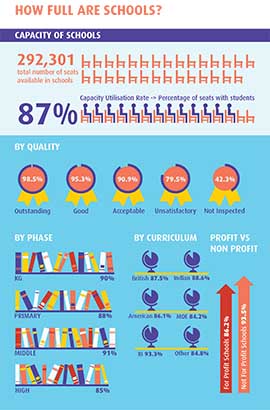
In November 2014, the World Bank launched a report that investigates the approaches taken by the Government of Dubai to foster improvements in the quality of education at private schools. The report identified that KHDA’s unique approach focuses on regulatory oversight of the sector with an emphasis on the enhancement of student outcomes and making information available to the public. By promoting a culture of open evaluation, where the data on the quality of education systems, schools and student learning outcomes is made publicly available to all interested stakeholders, KHDA has effectively ‘turned the lights on.’

Final_035_KHDA-ENGLISHThe report notes that steady improvement in education has occurred overall and that part of the reason for this improvement has to do with incentive arrangements. While competition between schools does exist in some segments of the market, increased collaboration within and between schools through peer reviews and the ‘What Works series’ of events was observed – a positive trend that deserves further encouragement.

The report provides some options for moving forward particularly in relation to improving weaker schools through more post-inspection follow up or through expanded collaborations between schools. We live in a country and community which places innovation at the heart of its long-term strategy, and we know that happiness and positivity are central to true innovative practice. And we are fortunate that happiness already forms a strong part of the shared culture of Dubai – our role is simply to concentrate on that positivity, spread its messages, and make more of it.

Final_035_KHDA-ENGLISHWe know that happiness, well-being and positivity have the power to transform our lives, and transform education in Dubai. The 2015 World Happiness Report, published in April this year, cites a study of 200 school-based programmes that promoted the social and emotional skills of children. This study found that children taking these programmes gained about 10 percentile points in emotional well-being and behaviour as well as in academic achievement.

Unsurprisingly, it also found that low well-being was linked with worse academic performance. We are ultimately attracted to positive education, though, because of its simplicity, and because it just makes sense.

We engage in conversation about happiness and positivity whenever we can, in the hope that this approach will spread to all schools, universities, parents, teachers and students in Dubai.

SCALING THE SKILL GAMUT :: September 2015

EDITORIAL

Transforming the Education Landscape

WIZ IQ

Teachers Vs Technology: Who will rule the future Classroom?

SKILL EDUCATION

Scaling the Skill Gamut

KIRAN

Empowering Young Minds

ROSHNI SEN

‘Catch them Young’

SANFORT

Nurturing Young Minds

MINDBOX

Creativity in Education

DALJEET SINGH CHEEMA

Filling the Gap

SANDHYA RANI

Progressing Towards Girl Education

BOSCH INDIA

Automotive Learning for Gen Y

RP SISODIA

Digitising Andhra Schools

NYSA

ERP saves efforts, time and cost

DET

Skilling the GAP

SKILLS IN SCHOOL

Crafting Children for SUCCESS

KHDA

Positive Leap

i-KVK

Know your SKILLS

TECH SMART

Making Educational Infrastructure Smart

CISCE

Embarking on Road to ICT

CBSE

Heralding SKILLS

NIOS

Tales of INSPIRATION

GLOBUS INFOCOM

Digital HD Classroom for Digital Learning!

OMAN

OMAN Initiatives to Enhance Learning

TSWREIS

Raising the Bar

PRAVEEN KUMAR

The Game Changer

Transforming the Education Landscape

As we at Elets get together to witness the 5th annual edition of the World Education Summit (WES), I am taken back into time to the year 2011 when the first edition of the summit was graced by none other than late Dr APJ Abdul Kalam. A true patron of education, the presence of Dr Kalam had indeed been an enlightening, showing us the way to continue our efforts in the field of education. Acknowledging the work Elets is doing in the field of education, Dr Kalam had lauded our efforts and platform.

WES has grown in stature in the last few years with growing participation not only from within the country but across the globe too. This year, the 5th edition of WES is seeing participation from Australia, Oman, Canada, Bangladesh, Malaysia and Dubai along with 170 leading school Principals, 60 Vice Chancellors of Universities, 50 Directors of Engineering Colleges and more than 25 Government Functionaries.

The journey in the last four years has seen the education sector undergo a paradigm shift. As we discuss and deliberate on the growing trends and technologies shaping the education sector, Elets and digitalLearning magazine has been doing its bit in bridging the divide between the key stakeholders and also providing an elaborate platform for the industry and the academia to connect and converge.

WES 2015 aims to make the summit more than an event by building a strong community around it and providing various business and networking opportunities for the government, education leaders, private sector & civil society organisations. Knowledge sharing collaboration within the country and beyond the Indian soil is integral for the growth of the education sector. And taking forward the objective of knowledge sharing of the digitalLearning magazine, WES will be making its international foray in November 2015. WES Dubai will bring together education stakeholders from across the globe, transcending education barriers.

I hope this two-day summit and deliberations at Delhi will culminate into concrete suggestions that will further transform the education gamut in the country.

Crafting Children for SUCCESS

There is never a paucity of jobs, it is of skilled workers to do it. Empowering children with skills before they leave the school is now being touted as a solution to assure skilled work force in future besides being called the new building blocks for learning, finds Priya Yadav of Elets News Network (ENN)

Crafting-ChildrenI success in life is landing a good job, and the ability to excel in it, the significance of becoming the right candidate can only be overvalued. It takes a skilled employee, to fit into the mould of a desirable job, one needs to possess leadership qualities, be a great team member, a learner and a mentor, one with great emotional intelligence…. the list is endless.

With these and many more demands made of an ideal job candidate, getting a headstart in acquiring skills is now being acknowledged to be of prime importance. Skill education is garnering popularity due to awareness and understanding about the need to develop skills for suitable employment.

Schools are warmly adopting methods that enhance their students’ personality and enable them to become a ‘global citizen’. Krit Serai, Principal, Satluj Public School, Panchkula, says, “The attempt now is to mould the child’s overall personality. Hundred per cent smart classes, use of laptops, tabs ensures that the child is digitally smart but now the focus is to equip children with skills that help them in later life. Our emphasis is especially on proficiency in English that will eventually enhance their professional value. There have been stories recently how professionals are not being able to carry out their jobs so well because of their incompetency in English.”

The Central Board of Secondary Education (CBSE) is following an international curriculum to make children proficient in English. For this, students take Preliminary English test and Key English Test (KET) exams that are reviewed by international faculty

The Central Board of Secondary Education (CBSE) is following an international curriculum to make children proficient in English. “For this, students take Preliminary English test and Key English Test (KET) exams that are reviewed by international faculty and KET being Cambridge Key English Test, students get to learn from the best authority on the language,” informs Krit Serai.

Clearly now, the school curriculum is broader in its approach to make a child not just academically strong but also empowered to adapt in a professional environment. “It is imperative now that the children are imparted 21st century skills. Communication skills are most important, so are emotional skills, creative skills – all these are basically life skills. These are embedded into the curriculum from Class VI onwards and are aimed at making a whole- some personality of the child,” feels Jaya Bhardwaj, Principal of Hansraj Public School, Panchkula.

“Even the structure of question papers, students’ assessment is all oriented towards enhancing their personality that would help them in future life,” she adds.

With this early beginning being made to empower the students and ready them for future challenging professional roles, there is an increasing demand for trained teachers who are specialised in dealing with all aspects of child’s personality.

Empowering children with skills

  • Learning and Innovation Skills
  • Creativity
  • Critical thinking and problem solving skills
  • Communication and collaboration skills
  • Information literacy
  • Flexibility and adaptability
  • Initiative and self-direction
  • Productivity and accountability
  • Leadership and responsibility

Education, especially at the school level, when children are at the stage of learning basics in life, is now increasingly getting more oriented towards employing experiential learning methods and impart business skills that help them understand the world of work. It is also the best way to ensure that there are skilled workers available tomorrow to grab the opportunities.

“Not every child is brilliant in academics. His personality might have other capacities that a studious child might lack. Identifying these strengths and weaknesses, giving an environment for every personality to prosper and brighten, is all that school education is about now. Skill education gives children a direction in life. Organising a range of events, involving children in a wide range of activities brings out their other talents and strengths that can be worked on to help prepare them for later life. The idea is to give an impetus and opportunities to explore and better themselves,” says Archana Jain, Principal of DPS, Panipat.

Empowering students with skills enables them to turn their creative ideas into innovations. Orienting school curriculum more and more towards teaching students, life skills is the best investment for preparing a workforce for the future that will fuel the economy. It is little wonder that these skills are now being referred to as the new building blocks for learning.

Skilling the GAP

Directorate of Employment & Training (DET), Government of Gujarat, has embarked on a transformation journey to transform the skill sets in the state, shares Dr Sandhya Bhullar, IAS and Director, Employment & Training, Government of Gujarat

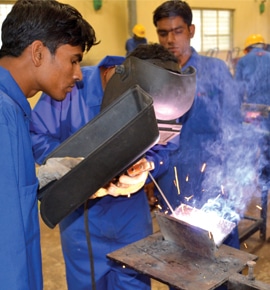
Skilling the gapGujarat has a population of more than six crores and 65 per cent of this population comprises of employable youth. The dropout rate from schools was touching 63 per cent, rendering the drop outs unemployable due to lack of basic skills. The Directorate of Employment and Training (DET), under the department of Labour and Employment, is responsible for boosting employability of the youth of Gujarat and for supporting vocational training needs, which are essential to create a favourable employment climate for the poor, socially backward, residents of remote areas, drop outs and young students.This is achieved through a series of skill-building programmes that are aimed at providing training based on latest industry requirements. Training on various skills is provided through Kaushalya Vardhan Kendras (KVK) and Industrial Training Institutes (ITIs).
Despite the efforts, it was observed that

(a) While training was provided on a constant basis, there was no way to keep the training in sync with the changing trends in the industry as it remained disconnected with the department efforts. This made it difficult for the department tokeep up with the latest industrial trends.

(b) An easier way to manage training modalities of approximately 4.7 lac yearly ITI applications and the services provided through almost 500 KVKs was required.

(c) Prospective trainees required an interface through which interaction with DET could be made smoother with minimal effort investment by the trainees and DET.

(d) Once training was provided, projecting the employability to the right industry vertical was a make or break point of the entire purpose of the department. Until then, this was being done in an unsystematic manner.

Moreover, with no common platform for all stakeholders to come together and participate with a single focus, it was difficult to meet the objectives of the department.

control systemCorrective Measures

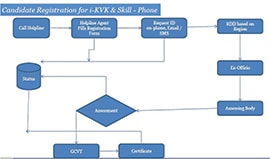
Realising the need for enhanced measures to achieve the department’s objective, DET embarked on a comprehensive modernisation strategy of the entire department. The department proposed the creation of an “Industrial Interface Cell” – a platform to enable real time collection and sharing of information of vocational training institutes, courses, skilled labour between skill seekers, job seekers and job providers– and “Admissions Management, Exam Assessment and Control System” – to make admissions and examinations easier, transparent, faster and time bound.

The project actually comprises of three key systems which have helped DET meet its objectives in an efficient and transparent fashion:

Online Admission Management – This system manages admissions processes for all admissions into Industrial Training Institutes (ITIs). Approximately 4.7 lac ITI applications are received on a yearly basis by the department and until this system, the admissions processes was being managed in a decentralised and manual manner at the respective ITIs. Prospective trainees can now apply online from any place in the State irrespective of the ITI they wish to enrol in. Applications are received online by DET and managed centrally until result declaration.

Online Exam Assessment and Control System – This system manages all examination activities such as applications, hall-ticket generation, Question Bank management, Exam Management, Packet Distribution and Collection and Assessment Management. As a result of this, the management of examination is decentralised but the controls over the entire system remains with DET. Exams are managed efficiently and results are also declared faster.

SkillingIndustry Interface Cell – The Industry Interface Cell, a brainchild of DET, was implemented in the form of an online portal where the industry, the youth seeking skill training and certification, the trainers and the department could come together.

According to Dr Sandhya Bhullar, IAS and Director, Employment & Training, Government of Gujarat, “It is difficult to quantify the return on investment but the returns are clearly visible in terms of the ease with which DET is able to constantly meet its objectives of boosting employment in the state. A visible rise has been observed in the employability ratio because of the sync that exists between the training imparted and the skills required. A better platform now exists between job seekers and providers which have led to more fruitful recruitment for the industry and more opportunities for young job seekers. The efficiency obtained due to these e-governance measures has also left more time to DET employees to focus beyond operations and maintenance.”

The database of trained youth is made available to job providers and industries could put forth their skill requirements thus making it possible to provide training in sync with the latest industry requirements – something which wasn’t possible earlier.

The entire solution is web-enabled and the solution has been deployed in shortest span of 90 days and is being constantly updated with feedback from industries and other stakeholders of this system. Hosted at the data-centre, the entire system is following the work-flow and system management architecture providing check-points and vivid level of the organisation.

39ASanjay Prasad, Principal Secretary, Department of Labour and Employment, Government of Gujarat shares, “The improvement in employability led to a better standard of living for people who had little means of livelihood earlier but could now lead their own lives. Their skill levels improved considerably and the employment further motivated them to add value to their skills and consistently improve. The trainees were provided a joint certificate by the industry and DET, which in a way, helped vouch for their skills and further enhanced their employability. Apart from the key outcomes, familiarisation with the industry made trainees more outgoing and helped them build interpersonal skills, which have added another dimension to this initiative.”

He further adds that, “Government of Gujarat has gone a step ahead in directly connecting the youth to the industries enabling them to seek jobs more actively. Further, we have managed to constantly train skilled workforce which closely matches the requirements of the industry thus boosting employability. While training is provided everywhere, the connection developed between the job seekers and the recruiters is what makes the initiative a huge success. This has also strengthened our bond with the industry and thus created another factor which attracts industrial investments into Gujarat. DET also realises the role of technology in achieving operational excellence, and continues to venture on initiatives that can continue to add value to youth from socially backward and poor background. Recently, DET has started providing weekly training through SATCOM to various areas of Gujarat with the help of Bhaskaracharya Institute of Space Applications and Geo-informatics (BISAG) and companies like Maruti Suzuki.”

With such innovative e-Governance initiatives, DET is trying to involve more industries in partnership for starting i-KVKs in the future. The online admission system is a tested and stabilised system. Further, the online examination and control system is going to be expanded to online skill related learning courses with practical training in ITIs and online examination system. Preparation of eLearning material for ITIs and other vocational training courses is being undertaken. For skill certification and vocational training, spreading awareness to end users will be a key part of the project and DET intend to do that through their own TV channel for e-Learning which will be broadcasted through BISAG. The online job portal with two way free communications and matching between job seekers and job providers is being prepared and tested for two districts. This job portal is expected to be launched this year.

“Before the implementation of the system, approximately 2.8 lakh candidates applied for admissions yearly. Post the implementation of the system, in 2013, the number increased to 4.7 lakhs and further went up to 5.4 lakhs in 2014. The State witnessed a clear improvement in the employability ratio for the target audience i.e. the rural masses. It was successfully able to train the unemployed masses and further connect them directly to the industry to seek jobs. Gujarat being the hub of industrial development in India, industries were always on the lookout for semi skilled labour for their workforce”, adds Pankaj Mistry and Manish Dave, Dy. Director, Employment & Training, Government of Gujarat

ERP saves efforts, time and cost

Niladri Das, Senior Vice President, NYSA Communications Pvt. Ltd.
Niladri Das,
Senior Vice President, NYSA Communications Pvt. Ltd.

Our current education management system and administration needs to be streamlined, which is possible with absolute implementation of IT-based solutions. With a view to business with purpose, NYSA has developed a complete Enterprise Resource Planning (ERP) system that caters to the needs of the students, teachers, institutions and ministries at various levels. Niladri Das, Senior Vice President, NYSA Communications Pvt. Ltd. shares the vision and mission of the company with Elets News Network (ENN)

NYSA is a leading Enterprise Resource Planning service provider. What all its innovations may attract a client to choose the company?

We provide technology-based solutions to various governing bodies, i.e. the Department of Technical Education and private sector, including manufacturing, healthcare, real estate as well as other real time services. Our focus is ‘business with purpose’ for the welfare of society in our country. Keeping in mind the requirements of education sector, we have designed our solutions in a way that it helps ease the process through ERP solutions and Internet. We strive with full potential to offer our customers hassle- free services in the best possible way. This saves one’s efforts, time and cost.

What strategy have you developed and how does it help the education fraternity in a big way?

ERP is the utmost requirement of any educational institute or university to make its work simpler, advanced, error free and efficient. Our process is very transparent. Therefore, we have drastically reduced the burden of RTIs in the departments we are working with. Our solution helps in the overall administration from enrollment of a student to declaration of results of that student. Nowadays, a set of question paper, along with the carbon copy of answer sheet is given to the applicants almost in every examination. Further, to help studentsevaluate their score, we upload the answer sheets online. This system c an be followed at every government institution.

Which all states have you worked with and received a positive response?

We are working with progressive states like Gujarat, Delhi, Punjab, Haryana, Maharashtra, Odisha, West Bengal, Bihar and Jharkhand, etc. The Southern and Western parts of India have acceptance of ERP, but there is a lack of awareness in the Central and Eastern regions. Of late, mindset of people has been changing in the country. As of now, we are providing education solution to more than 500 large and medium sized clients in the Asian region. In Business with purpose addition, we are all set to expand our foothold in the Middle East and African region as well. So far, we have successfully provided our services to Jawahar- lal Nehru University, AIIMS, Maharishi Dayanand University, Punjab Technical University and Al-Falah, etc.

While implementing the ERP solution, how do you cope up with the challenges?

We have an expert team of IT professionals with years of rich experience in the software and education sector to deal with the challenges. The government and people are apprehensive about using technology or adopting new ideas in some of the regions. But, we are committed to make people’s life easier through our solutions at cheaper rates. We work on build-operate transfer (BOT) model. First, we get into the system, study it in detail and then design easier solutions. We handhold the system and our expert sits onsite to educate the end-user on the usage of the solution. The project is for a long duration of minimum two years. We help to streamline the workflow till the time the user feels comfortable to work on the solution. So far, our target was implementing Information and Communication Technologies (ICTs) in higher education, but now we are about to cater to school education as well. We are working on a model to connect every higher education institution via the common server

Digital HD Classroom for Digital Learning!

“Does your child say he or she hates to go to school? This is because Children are natural learners and do not like to do repeated things, a phenomenon that is related to the academic textbooks. The page number remains same and content never changes, same pictures and illustration for them to see throughout the academic year … quite boring indeed!”

Digital-HD-ClassroomGlobus Infocom Limited distinguishes itself as a leading manufacturer of innovative products that helps in changing the education system as a whole. After years of research in observing the teaching trends and learning behaviour in education system, Globus has developed a solution that revives the pedagogy and brings back students to school with their complete interest in learning through technologically advanced gadgets.

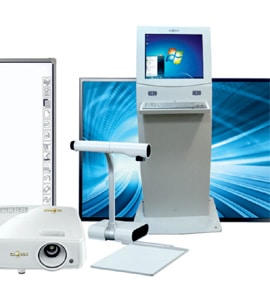
High definition technology significantly refines the picture quality to produce crisp and clear visuals. With introduction of HD content of a topic, students get mesmerised and become eager to study more about a particular subject. Globus HD Classroom solution includes an interactive whiteboard with ceramic steel surface, multimedia projector, digital podium, interactive pad, visualizer, information kiosk and touch LED display.

Interactive whiteboard with ceramic steel surface gives teacher a pleasure for smooth writing and exceptional erasing capability that even erases ink of white board marker pens with ease. Infrared multi touch technology allows multiple students to collaborate and learn with fun.

Multimedia projector shares content from small screen of a laptop or digital podium to a maximum of 300-inch projection size giving each and every student a high resolution view of the content. With digital podium, teachers can organise presentations and deliver lectures using wireless microphone and speakers. A must have for large classrooms.

Interactive pad gives freedom to teachers, making them mobile and not to be restricted to the board while teaching. They can walk towards any corner of the room or hall and annotate on the interactive whiteboard keeping attention on every child in the classroom.

Touch LED comes in 55 inch to 80 inch of display size to suite accordingly, the area of classroom. It allows multiple users to annotate or collaborate together. It can also display videos and pictures from smart phone or pad wirelessly.

Products constituting HD Classroom solution is designed in a way that matches international quality and have been tested durable to bear the rigors of Indian classroom and climate too. HD classroom solution by Globus Infocom is an Ideal package of latest technology, durability, aesthetics and above all cost effective solutions for schools who aspires to step into the modern era of Hi-Tech digital Learning.

Digitising Andhra Schools

RP Sisodia, Secretary to Government of Andhra Pradesh

In sync with the flagship campaign of the country – ‘Digital India’, the Andhra Pradesh State Government has taken up the challenge to make government schools smarter at par with private technology schools. RP Sisodia, Secretary to Government of Andhra Pradesh (School Education), in conversation with Sudheer Goutham of Elets News Network (ENN) shares the Government’s various initiatives that are set to give fillip in quality of education in the rural areas

RP Sisodia, Secretary to Government of Andhra Pradesh
RP Sisodia,
Secretary to Government of Andhra Pradesh

Can you throw some light on the latest endeavours of the state government in school education?

We are set to introduce the audio-visual, interactive teaching in government schools through multimedia computer- aided smart classes. The smart classroom is a proven mechanism which helps in quality enrichment through technological intervention. This technology driven method would not only make teaching more effective but also make it interesting for the students.

How will the infrastructure and installation for the capacity building system be brought in place?

A Geographic Information System (GIS) has been in the making already, with a central data base centre to be maintained by AP Online administration. AP Online, which maintains the government portals, is a joint venture of the government under PPP mode. Both software and hardware solutions will be provided by AP Online.

What is the status of the initiative and how is it going to be implemented to all the public schools of the State?

Currently, all the Kasturba Gandhi Balika Vidhyalayas in the State have complete online solutions in place. Starting from real time monitoring of attendance of students and teachers, this system will also help in tracking learning level achievements of the students. Soon, this system will be rolled out in all the government schools. To begin with, smart-class and online education system has been taken up as a pilot project. In the next six months, this will cover 9,000 schools reaching over two lakh students in the rural areas including those in Educationally Backward Blocks (EBB) of the State.

What are the skill development programmes associated with the introduction of this technology intervention system?

Teachers are being provided training to carry their teaching through virtual classes. Among the trained, the best teachers will be chosen to deliver classes online. Such training programmes will help build an e-environment as the teachers being trained will be acting as master trainers, thus helping in producing a larger number of e-learned teaching professionals in the State. AP Government is keen to multiply the number of smart classrooms in the schools.

Can you explain how the issues of school dropouts and decreasing performance level with increasing class standard be addressed?

Besides having a biometric-based attendance system, the online system will provide a broader system to monitor physical presence of students and teachers in state-run schools with the help of ‘live web streaming’ of video or photographs of classrooms.

This way by sitting at one place, we can see that the teacher, who has marked his/her attendance with biometric device anywhere in the State, is present in his assigned classroom at a particular time. This feature will allow us to cross check the attendance reports generated by a biometric device. Keeping an eye on the teachers will help to improve the quality of teaching as well as a classroom environment. Live monitoring will encourage teachers and students to maintain self-discipline and also act as a parameter for attendance.

LATEST NEWS