Home Blog Page 1157

digitalLEARNING Campus ICT Readiness Survey 2012

digitalLEARNING CAMPUS ICT READINESS SURVEY 2012 aims at mapping & ranking the ICT readiness of educational institutions of various genres imparting techno-managerial education spread all across the country.

The findings of this survey would be released in the World Education Summit – 2012 (www.worldeducationsummit.net) to be held on 23rd-24th July this year at Le Meridien New Delhi.

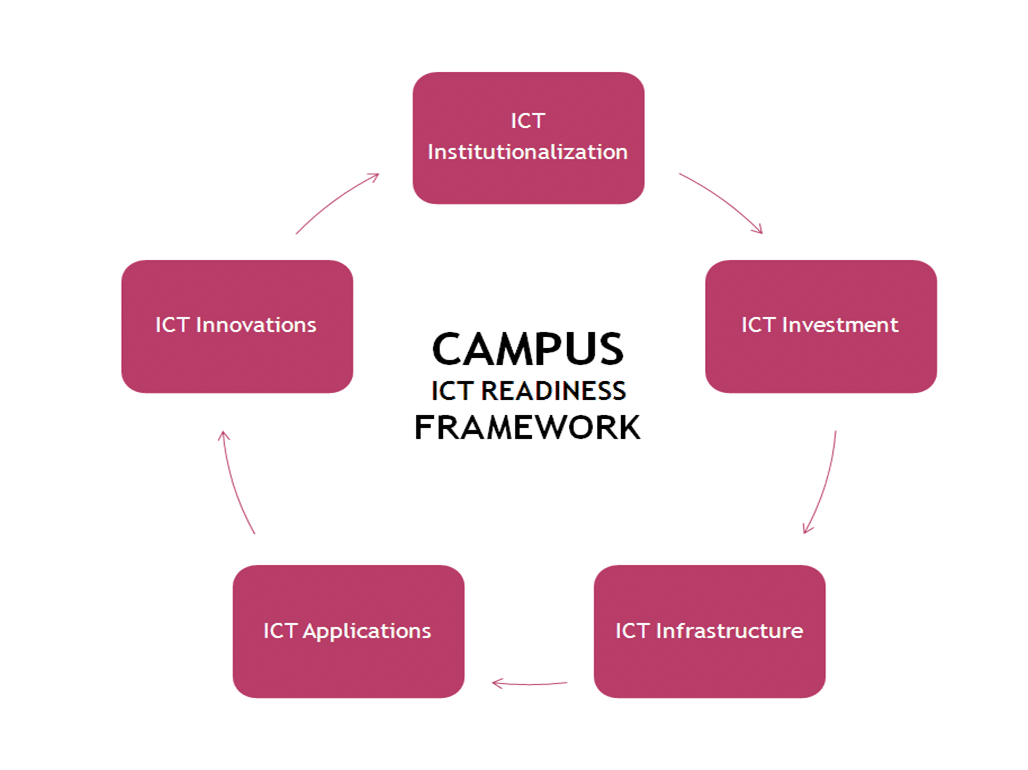
digitalLEARNING Campus ICT Readiness Survey evaluates an institution under the following Campus ICT Readiness Framework

which comprises of ICT Institutionalization at the applicant campus – vision, policies, practices, management structure etc.; ICT Investment made; ICT Infrastructure in place; ICT Interventions – applications, solutions, usage of ICT in teaching, learning and administration and ICT Innovations.

Eligibility:

  • Institutions of various genre imparting technical or management education across India are eligible to participate in this first ever national Campus ICT Readiness survey
  • Applicant Institutes must be recognized by a statutory body like AICTE, UGC etc. established by Government of India or State Government

Benefits:

  • Every qualified survey application would get a FREE Print & e-copy of the Campus ICT Readiness Survey
  • Every qualified survey application would find due mention in the Campus ICT Readiness Report – 2012 which would be released during the World Education Summit on July 23-24. 2012 at New Delhi
  • Every qualified survey application would entitle the institution a special discount of 50% on digitalLEARNING magazine’s bi-annual subscription.
  • Every qualified survey application would entitle the institution a special academic discount of 25% on the delegate fee in the World Education Summit – 2012

General Guidelines:

  • All information will be verified through actual documents including brochures and annual reports of the institute
  • All application will be scrutinized by an expert panel. In case the panel demands, additional information would have to be produced by the institute to verify facts
  • All information will be cross checked and will have to be sent through a higher authority of the Institute
  • Email IDs and contact details of senior functionaries of the Institute will have to be provided in order to cross check information
  • If any information is found to be incorrect or misrepresented at any stage of the survey or evaluation, the entry will be disqualified immediately

You may take the print-out of the pdf version of this survey form to get the various documents assimilated and collected from various departments and use it as a check list. For getting the pdf version of the form click here


Edutor Technologies Raises 2Cr from Hyderabad Angels

Edutor Technologies an innovative technology company serving the global education market has raised 2Cr from Hyderabad Angels, a network of Angel investors focused on early stage businesses. The strategic investment was led by Sashi Reddi, a serial entrepreneur with Rs One crore and other reputed personalities from industry and education field.

Edutor Technologies develops and markets highly interactive learning platforms for touch devices like Tablets PCs or iPads. Their solutions, for K12 students, are designed to help improve their learning outcomes while aiding Educational Institutes in improving productivity and efficiency.

Ram Gollamudi– CEO, Edutor Technologies, said, “We believe in the power of personal learning and are constantly focused on developing products that deliver engaging and effective learning experiences. This strategic investment will further boost our efforts in delivering more innovations in the learning and education space.”

Sashi Reddi, founder of SRI Capital Fund and the lead investor from Hyderabad Angels Network who invested in the city based start up, said, “Edutor Technologies is a technology start-up with a vision to create products for Indian Education Market. Use of Edutor products will enable children to improve their understanding, increasing their learning, boosting their confidence and help them perform better. The Indian Education Market is expected to touch 50 billion USD by 2015 and thus we see a huge market opportunity for Edutor Technologies in this space.”

CBSE Schools in Chandigarh to Introduce Mass Media Course

Central Board of Secondary Education (CBSE) is all set to start mass media as one of elective subjects in Class XI and XII, in the new academic session in Chandigarh.

The course has already been introduced in Delhi and Mumbai last year. The syllabus for the subject will remain the same for students in Chandigarh schools. It is currently available on CBSE’s website.

As per the Board’s framework, the students will primarily be trained in creative writing and basic communication skills. In addition, the students will also be encouraged to bring out newsletters.

The syllabus for Class XI will constitute basics of communication, print media and advertising. Introducing the course, the schools will be expected to invite professional from the industries and from media education field should to interact with teachers as well as students.

The Board has directed all the 61 CBSE-affiliated senior secondary schools in the city to register for introducing the course in Class XI from this year.


AIPMT Admit Cards Goes Online

All India Pre-medical/pre-dental test 2012 , conducted by CBSE, has made admit admit cards available online for students appearing for the tests. This year admit cards will only be available online and won’t be dispatched by post as was the practice during previous years.

CBSE  has uploaded all admit cards on its website and students are being asked to download and retain them till seat allocation is done at the exam centre. According to Controller of examination (COE), students can rectify mistakes on their admit card till March 23.

CBSE to Add Innovations in CCE

The Central Board of Secondary Education (CBSE) is going to revamp with new courses and innovations in Continuous Comprehensive Evaluation (CCE). There will be new courses such as retail, logistics and fitness and gym. Of which fitness and gym will be introduced in the next academic year.

The school projects will be more syllabus-oriented and done in classroom. So, parents will be freed of project work, and there will be no need to purchase study materials. Teachers should integrate the project with the curriculum in such a way that many subjects are involved. This will help reduce the number of projects and save time, and above all, help the students link various subjects.

Students will be guided through skill training for which teachers will be coached and parent advocacy chosen to act as bridges between the board and the school.

“Parents who are willing to interact with schools can register themselves with the board. Parents can also turn resource persons to give feedback to teachers,” Vineet Joshi, Chairman, CBSE quoted in the Express.

To give an international character to CBSE schools, CBSE(i) will soon be introduced. “We have plans to start CBSE International at 50 schools in July, for which, we have got 300-odd applications,” he said.

On the response of the interactive session, he expressed satisfaction that some suggestions were made especially on teachers covering social studies.

He dismissed the parents’ apprehension that CCE may affect cumulative study at the Plus-I and Plus-II levels.

Budget 2012-13 Highlights on Education and Skill Development

Highlights of Union Budget 2012-13 

Finance Minister, Pranab Mukherjee has  announced Union Budget 2012-13, which has received mixed reactions from industry and academia. Here are some highlights of what education received from the budget 2012-13…

Education

Right to Education receives Rs 25,555 Crore

Rs 25,555 crore have been provided for Right To Education-Sarva Shiksha Abhiyan for 2012-13. This is an increase of 21.7 per cent over 2011-12. The Right to Education (RTE) Act is being implemented with effect from April 1, 2010 through the Sarva Shiksha Abhiyan (SSA).

2500 Schools will be set up under Public Private Partnership


In the Twelfth Plan, 6,000 schools have been proposed to be set up at block level as model schools to benchmark excellence. Of these, 2500 will be set up under Public Private Partnership.

 

Sanjaya Sharma, CEO, Tata Interactive Systems
“The Govt has realized and made some very positive decisions focused towards the learning and training of our workforce. This can be seen in the Projects approved by National Skill Development Corporation through which it expects to train 6.2 crore people at the end of 10 years. Every sector in India is challenged with severe crunch of skilled workforce and such initiatives by the NSDC will no doubt help fill the gap by training about 10 lakh workers in the next 10 years. Additionally Rs. 1000 crore more has been allocated for the national skill development fund 2012-13. Other welcome initiatives in this direction are the steps to improve the flow of institutional credit for skill development by setting up a separate Credit Guarantee Fund. The “Himayat” scheme introduced in J&K to provide skill training to 1 lakh youth in next 5 years whose entire cost will be borne by the Centre should be replicated in other states as well going forward. The Govt & NSDC should build on these initiatives and surely look at employing technology as a strategic partner to fast track and bridge the prevalent skills gap.”

Allocation of Rs 3,124 crore for RMSA

In 2012-13, Rs 3,124 crore have been allocated for Rastriya Madhyamik Shiksha Abhiyan (RMSA), which is nearly 29 per cent higher than the allocation in 2011-12. The Rashtriya Madhyamik Shiksha Abhiyan (RMSA) was launched in March, 2009 to enhance access to quality secondary education.

Credit Guarantee Fund for Students

A scheme for education loans is being implemented by banks. To ensure better flow of credit to deserving students, Finance Minister proposed to set up a Credit Guarantee Fund for this purpose.

School education exempt from service tax

Finance Minister Pranab Mukherjee announced that school education will be exempt from service tax. There will be a tax on all services except those 17 items in the negative list. Some infra construction services too have been exempt from service tax.

Anil Goyal, Director, Mexus Education


“With 2500 model schools proposed to be set-up under Public-Private Partnerships, avenues to establish quality benchmarks across the country have opened in this financial year. We are looking forward to have a better defined regulatory structure for better utilization of deployed ICT in schools; with dedicated 975 crs in e-governance. However, this budget leaves a lot to be desired for capacity enhancement and encouraging private sector participation.”


Skill Development

Rs 1000 crore National Skill Development Fund (NSDF)

For 2012-13, Finance Minister proposed to allocate Rs 1000 crore to National Skill Development Fund (NSDF). The NSDC partners have opened 496 permanent and 2429 mobile centres in 220 districts across 24 states. More than 89,500 persons have been trained and almost 80 per cent employed. Under NSDC, 10 Sector Skill Councils have been sanctioned. Of these, 3 Skill Councils for Automobile, Security and Retail sectors have become operational.

In 2011-12 National Skill Development Corporation (NSDC) approved 26 new projects, thereby doubling the number of projects sanctioned since 2009 to 52, with a total funding commitment of Rs 1,205 crore. At the end of 10 years, these projects are expected to train 6.2 crore persons and augment vocational training capacity by 1.25 crore per year in the private sector.

 

Dilip Chenoy, CEO and MD, NSDC
“The Finance Minister should be complimented for his steadfast commitment to the cause of skill development. The additional infusion of Rs 1,000 crore into the National Skill Development Fund (NSDF), coming on top of the Rs 500 crore he had provided last year, would augment the corpus of the NSDF to Rs 2500 crore, and allow the National Skill Development Corporation (NSDC) to fund more sustainable skills training initiatives that can benefit millions of youth nationwide. It would also strengthen our hands in contributing to the Prime Minister’s vision of training 500 million people by 2022. The launch of a credit guarantee fund and exempting vocational training institutions from paying service tax would prove a big help in the creation of a skills ecosystem in the country by making skills training affordable and removing the problem of financial accessibility to skills training programmes for those living at the bottom of the pyramid. It would allow them to enroll at skilling centers in larger numbers and use the training they receive to improve their stations in life and contribute to the country’s growth. The tax deduction provided to the manufacturing sector for investment in skills training initiatives would encourage a greater focus on skill development in this important sector of the economy and help in making the segment more productive, efficient and competitive. The thrust on skill development in traditional sectors, including handlooms, will ensure that these sectors can improve their way of operations significantly.”

Credit Guarantee Fund

In order to improve the flow of institutional credit for skill development, Finance proposed to set up separate Credit Guarantee Fund. This will benefit youth in acquiring market oriented skills.A new scheme titled “Himayat” was introduced in Jammu and Kashmir from 2011-12. It aims to provide skill training to one lakh youth in the next five years. The entire cost of this programme is being borne by the Centre.



Rajesh Janey, President, EMC India & SAARC

“The increased outlays on education with an emphasis of skilling the youth are necessary steps to leverage the demographic divided in the future and tap emerging opportunities in the areas of Information Technology such as cloud computing and Big Data. The decision to increase investment in Aadhar and leverage technology more in larger service delivery initiatives will also provide impetus to the domestic IT sector. Additionally, overall social development and improving India’s competitiveness in the areas of manufacturing, research and innovation augurs well for the overall inclusive growth of the economy.”

IGNOU Receives Japan’s Aid for its Electronic Media Centre

The Indira Gandhi National Open University (IGNOU) received the third Japanese grant-in –aid to strengthen its Electronic Media Production Centre (EMPC) recently at an outlay of 787 million Yen. The centre is the hub of electronic and broadcast media and is aimed at reaching the learners using a variety of communication technologies.

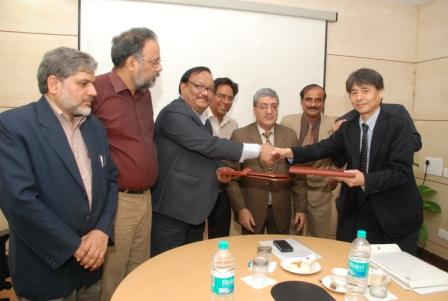
The Memorandum of Understanding (MoU) was signed with the Japan International Cooperation Agency (JICA) in the conference room of the Vice Chancellor’s office between Joint Secretary (ABC), Department of Economic Affairs, Ministry of Finance and the Ambassador of Japan to India. The university has subsequently entered into agreements with NHK ITEC as the consulting agency for the project and M/s Mitsubishi Corporation as the vendor for supply, installation, testing and commissioning of the latest high definition television equipment and operational training on the high end equipment for a period of one month on the recommendations of JICA.

Prof M Aslam, VC, IGNOU, on the occasion stated that this bilateral cooperation between the two countries, in the form of the current grant-in-aid programme would augur well for the future especially in the light of the rapid advances made in the field of ICTs and the tremendous growth witnessed in the open and distance education methodologies.

According to Anil K. Saxena, Director (I/c) EMPC, the equipment has arrived in India and the installation including the operation training will be completed by the end of June 2012.

The university has been a recipient of the Japanese grant-in-aid on two earlier occasions for the improvement of educational technological facilities in the year 1988 and later in the year 1993.

Transferable Officers’ Wards to get 60% seats in Sanskriti Schools

Guidelines for setting up Sanskriti type schools in the country have been framed with a provision of 60 percent seats for the wards of transferable officers of All India Service/Central Services. In case land is provided free of cost by the State Government 10 percent (out of the above 60 percent) seats will be reserved for wards of State Government employees.

As per guidelines, the proposal to set up Sanskriti type School in any State Capital may be initiated by the State Government or Association of All India Services/Central Civil Services Officers in consultation with the Central Government employees Coordination Committee justifying the need to set up such a school at that Station. A proposal to open a Sanskriti type school in Shillong, Meghalaya has been received. However, no decision has yet been taken on the proposal.

Sanjaya Sharma, CEO Tata Interactive Systems on upcoming Budget

Sanjaya Sharma, CEO, Tata Interactive System

Education is very important for the development of a country as it increases the standard of living and opens new opportunities for individuals. It is the key to producing skilled and rational-thinking people who can help lead the country. It is vital for any nation’s growth and development especially when we are competing on a global platform. In the last budget the Government had increased allocation for education by 24 per cent over the previous year. The National Innovation Council was also set up to prepare road map for innovations in India. We think this was a very encouraging move and we need various such tools to promote education making it all inclusive. India has proved time & again that we are a global leader in technology and this can be the precise key to unlock and unleash the power of our true potential. We believe that the Government will continue to rigorously invest and promote investments in IT infrastructure. This will be crucial in connecting even the outmost schools which in turn will enable education as a fundamental growth process for the country.

Koji Oda, Managing Director, NEC India on budget Expectations

Koji Oda - MD, NEC India

We look forward to a more holistic approach towards budget 2012. Not to miss, we expect it to be progressive in terms of giving thrust to innovation and lay greater emphasis on adoption of technology in varied sectors. In today’s scenario, there is increasing deployment of IT in the growing fields of education, retail, healthcare and public safety & security. As in FY 2011, we hope to see further momentum in these sectors.

Among the most important steps undertaken by the government last year, the Union ministry had sought to develop seven cities around the Delhi-Mumbai Industrial Corridor (DMIC) with a total investment of about $90 billion within a decade. We anticipate that this pilot project to develop these ‘smart cities’ will enable the overall development of the country and ensure safe and secure infrastructure with an eco-friendly environment for the citizens. This project has opened doors for technology solution providers in the biometric security and surveillance domain for sustainable delivery. The biometrics market in India is expected to grow at a CAGR of 42.4 percent over the period 2010-2014*. This trend is expected to grow with more and more government projects being undertaken hence we hope that this will be a major focus area in the Union budget 2012-2013.

When we are talking about growth in CAGR, a vital subject such as green infrastructure cannot be ignored. Sustainable development and adoption of green business practices has become the cornerstone of any debate on environment. With India’s economy recording a steady growth rate, it has become even more important for sustainability to feature prominently in the country’s development plans. India has managed a good growth rate with various initiatives to combat climate change. There is no difference between development and environment. Conservation is not just about restraint but progressing in a sustainable manner. Towards this, we see a larger role being played out by corporates and government on energy savings and environment responsive implementation of technology. We are hoping government’s increased influence in the upcoming budget.
While we talk of sustainability and growth, one factor to impact the economy very strongly is proliferation and raising the standard of education in the country. With the emergence of increasingly robust connectivity infrastructure and cheaper computers, school systems around the world are developing the ability to provide learning opportunities to students “anytime, anywhere”. This trend requires a rethinking of the traditional 40 minute lesson. In addition to hardware and Internet access, it requires the availability of virtual mentors or teachers, and/or opportunities for peer to peer and self-paced, deeper learning. A few more things that we perceive will change the face of education in India would be cloud computing, ubiquitous learning, one-to-one learning to name a few. The trend in classrooms is to provide an information appliance to every learner and create learning environments that assumes universal access to technology. Whether the hardware involved a laptop, interactive devised such as a projector, a net computer, smart phone, or the re-emergence of the tablet, classrooms should prepare for the universal availability of personal learning devices. We hope to see a great role of the government in bringing about this transformation. With government funded initiatives such as Sarv Shiksha Abhiyaan, the IT sector will get a chance to implement technology services to ensure highest levels of delivery.

Another very important subject that needs the government’s attention in the upcoming Union budget is towards advanced healthcare facilities for the people. A recent healthcare study indicates, the Indian healthcare spending itself is about $30 bn and is expected to go up to $80 bn in the next 10 years. By 2020, the Indian healthcare industry is estimated to be worth $275.6 bn. As per the research, Government’s long term vision of making quality health care affordable, at least 50 per cent of country’s population should be covered by health insurance by 2020. Taking cue from this revelation, we expect the process to be expedited largely with the help of technology. Hence, an increased budgetary allocation will enable healthcare companies to invest in IT and improve upon their service efficiency.

LATEST NEWS