
Home Blog Page 1292

All is Well with Indian Secondary Education?

Outlook of the Indian middle school education scheme, the Rashtriya Madhyamik Siksha Abhiyan

By Yukti Pahwa

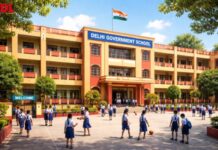
The Union Government launched Rashtriya Madhyamik Siksha Abhiyan (RMSA), a programme for ‘Universalisation of Access to and Improvement of Quality of Education at Secondary Stage (SUCCESS)’, which is a centrally sponsored scheme that envisages to provide free secondary education to students in the age group of 14 to 18 years.

The objective of the scheme is to improve the middle level school education in terms of quality, access, infrastructure, educational aids, quality teaching, teacher training, etc. Elaborating on certain features the government described that the scheme entails supporting high capacity in secondary schools across country through provision of infrastructure and resources; filling missing gaps in secondary education; and removing disparities through emphasis on support of education of girls, rural children and the children belonging to weaker section of the society for supporting quality teaching-learning process in schools.

This government initiative was thought of as an extension of another national level programme for elementary education, commonly known as the Sarva Shiksha Abhiyan (SSA). SSA was launched in 2006-07. Both the programmes have common target of providing universal access and quality education to school age children, respectively. One of the important features of RMSA is creation of a Secondary Education Management Information System (SEMIS). A total amount of  `20,120 crore (for all states) has been allocated for this scheme under 11th Five Year Plan for implementation of RMSA. As per the provision of the scheme, the Centre shall bear 75% of the project expenditure during the 11th five-year plan while states’ share will be the remaining 25%. Sharing pattern will be 50:50 for the 12th five-year plan. For both the 11th and 12th five-year plans, funding pattern will be 90:10 for North Eastern States.


The objective of the scheme is to achieve a General Enrolment Ratio (GER) of 75% for classes IX-X within five years by providing a secondary school within a reasonable distance of every habitation, to improve quality of education imparted at secondary level through making all secondary schools conform to prescribed norms, to remove gender, socio-economic and disability barriers, universal access to secondary level education by 2017 and universal retention by 2020.


RMSA in Action

There was a huge recruitment drive under the Rashtriya Madhyamik Shiksha Abhiyan, under which applications were invited. For instance in Punjab, during January the RMSA authority advertised for 70 posts for experts in the fields of Mathematics, Hindi, Physical Education and so on. At Bapupara, Imphal, in Manipur, a building was made for RMSA exclusively by the State Education Minister, L Jayentakumar, which was constructed at an estimated cost of `35 lakh. One of the foremost localised challenges at this RMSA centre was to adept teachers in the region, with training, to match the global standards on teaching. RMSA’s main focus is government schools. However, due to low number of schools in West Bengal, Ministry of Human Resource and Development decided to adjust the scheme accordingly. The exception in rules was brought only for the state of Bengal it has the lowest percentage of secondary schools in the government sector. According to the change in the “abhiyan rules”, the government is to fund not only the government schools that are less than 5% in number in the state but also some selected private schools. In Tamil Nadu the first major activity that preceded the implementation of the scheme, took place in Tiruchi with an orientation on computer literacy for 65 District Educational Officers and 325 computer science teachers.

In Nagaland, RMSA has been rolled out with 90:10 Central-Sate sharing pattern scheme, having an approval of `85 crores in the 2nd phase of the implementation of the initiative. Alongside with this scheme in order to make education of good quality available, accessible and affordable for all the young children of Nagaland, holistic Perspective Plans for Model Schools, Girls Hostels and Mahila Samakhya have also been formulated and accepted in principle by the MHRD.

Technology@RMSA

RMSA as a scheme is being implemented in line with other programmes such as ICT mission of the government, whereby government is facilitating quality education with inculcation of technology across aspects such as content development and management, teacher training, infrastructure and equipment, administration, and so on. The idea is to supplement teachers increase effectiveness and efficiency, and not replace them. Amit Kaushik while agreeing with the above says, “ICT can play a very important part in implementing RMSA.  For instance, India is the only country in the world that has an education satellite, EDUSAT. Use of technology like this to deliver parts of the curriculum can be a very effective tool in the classroom.  However it must always be remembered that ICT is no substitute for good, trained teachers; ICT can supplement but never supplant their efforts.”

The Challenges

RMSA presents as many challenges, as the number of opportunities. It aims to provide a platform for mass education aiming to enhance the GER from 52% at present to 75% by 2014. It aims to facilitate improvement in secondary education through the funding that it provides to schools, from the central government. These funds are being used for expansion of infrastructure, improvement of classrooms and assisting states in publicity drives for education. The other interventions that would be supported by the RMSA scheme would be providing for infrastructure in schools such as new classrooms with furniture, library, science laboratory, computer room and disabled-friendly provisions and help in recruitment of more teacher, provision of in-service training along with teaching aids such as ICT, and special focus would be given to girls belonging to SC,ST and minorities.

Lack of liberal use of funds, opening of desired number of government schools in the country, lack of quality teaching and teachers, and so on are some of the leading challenges. Amit Kaushik, CEO, Pratham Education Foundation says, “RMSA is a natural and much needed response to the impact of the government’s flagship programme for universalising elementary education, Sarva Shiksha Abhiyan (SSA).  After nearly ten years of the programme, about 94% children in the 6-14 year age group today are enrolled in elementary school; it is inevitable that a significant proportion of this number will wish to transition to secondary education. Today, only about one-third of all children remain in the system till the secondary stage, and RMSA will help to address issues of access and improvement of quality at the secondary level.”

The Private sector role

Private schools and corporates are being encouraged to participate in the RMSA drive. Availability of funds, quality infrastructure, self-sufficiency and profit-based institutions are some of the factors which are mostly present in a private school set-up. If private institutions and corporates agree to aid the cause of RMSA, some factors such as disparity in education can be brought down significantly, if not completely. However, inclusion is a factor that needs attention not only at school level but also at pre-school level. Corporates can especially come forward to enhance quality and reach. According to Amit Kaushik, “I believe that it is high time we re-examine our attitude towards private investment in schools.
After the Supreme Court judgment in the TMA Pai case, it has been held that profit making has no place in education; the fact however is that several private players are already in the market and they operate by bending, if not breaking, these rules. Others who could bring significant resources to this sector prefer to stay out because they do not wish to break the law.  In the long term, expecting the private sector to invest in education from purely philanthropic motives is not sustainable, and unless we are prepare to legally allow a reasonable rate of return on capital invested, it will be difficult to attract capital.  If we are able to amend our laws suitably, the private sector can actually support schemes like RMSA a great deal, bringing about transparency, more efficiency and improvement in quality.”

Government say on RMSA and Role of Technology

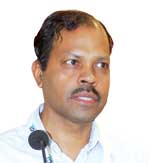
Shri SC Khuntia
Joint Secretary, Ministry of Human Resource Development

In order to support RMSA, we have other schemes that are to help us to support ICT in schools. Started in 2004, the scheme has been revamped 2010 to make it more ambitious. Three years from now every higher secondary and secondary school in the country must be ICT enabled, which would imply to 1,60,000 secondary and higher secondary schools in the country out of which 1,08,000 schools are with government or government aided and remaining are private/unaided schools.

We are ushering a system for all schools to have certain basic ICT infrastructure and related activities

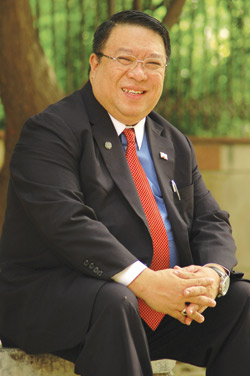
"Competency-based Training is What Philippines offers…" : Dr Lorenzo Emanuel L Guillermo, Technical Education & Skills Development Authority, Republic of the Philippines

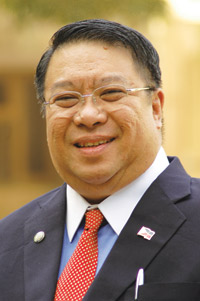
Dr Lorenzo Emanuel L Guillermo, Director, Technical Education & Skills Development Authority, Republic of the Philippines speaks at length with digitalLEARNING team on the importance of the authority set up for the technical education and skill development in Philippines
What are the origins of skill development in Philippines? Is it old or really starting now?

Before 1994 it evolved as national manpower and youth council. In TESDA our main focus is core competency. Core competencies are units that are specific to a stream of a given sector. Competency assessment is the process of collecting evidences and making judgments whether or not a competency has been achieved. Assessment is not testing but gathering evidences. It depends upon orientation.

After three months training, students are able to find jobs.  The most important thing is that you must have competency. There are standard competency packages  and programmes that we offer.

Kindly elaborate upon the ICT scenario in Philippines?

In Philippines, the state provides relevant, accessible, high quality, and efficient technical education and skills development to support the development of a high quality Filipino middle-level manpower; responsive to and in accordance with Philippine development goals and priorities. Technical Education and Skill Development Authority (TESDA) provides technical education and skill development to the young Filipinos. This authority cradles between department of labor & employment, and department of education. The congress of Philippines allocates budget for the implementation of programmes in education.  We train the young Filipinos for the middle level manpower. Young Filipinos from the age 15 years can go to any TESDA office and apply for the scholarship Voucher.  The national certificate that they earn is recognised globally. This is built on the fact that across country, competent standards are defined and evaluated in terms of a common platform. Our country, briefly, offers a competency-based training system.

The State encourages active participation of various sectors, particularly private enterprises, being direct participants in and immediate beneficiaries of a trained and skilled workforce, in providing technical education and skills development opportunities.

Please share with us experience pertaining to technical education in Philippines.

The role of the government in employing youth is downsizing.  The competency standard in TESDA is drastic and is determined by those in private sector.  Normally, a person first gets a bachelor’s degree, then a master’s degree, and then a Ph D. But in the end, when they leave the university, they find themselves in the middle of jungle and with no opportunity. In technical education and training, it is reqruied that one identifies what skill has to be attainted, in accordance with respective interest. And that is what we foster through our training.

How TESDA is helpful for unemployed Filipino?

In TESDA we prepare the unemployed people for the middle level manpower, especially for private sector enterprises. Encouragement for participation to private enterprises and our training framework helps us to follow a systematic approach. For example, if we take the field of automotive industry, the skills must be in the direction of competency requirements of the industry. for instance, if you are taking training in computer programming, you must have the required skills to process the desired programmes. With our national certificate trainind people can work anywhere.

What is competency based training framework? 

Competency based training is based on curriculum developed from ‘Competency Standards’ defined by the Industry. Assessment is based on collection of evidence of the performance of work according to the industry required standards. Training Programmes are registered under the Unified TVET Programme Registration and Accreditation System. Competency Standards (CS) describe the work that is performed and Competency-Based Curriculum (CBC) describes the training that a person needs to take in order to perform the work described in the Competency Standards.

What do you opine about the need of soft skills for trained professionals?

Soft skills imply communication, leadership and team work. The hard skills are for building competency. Many employers look for both hard and soft skills, in a middle level worker. Addition of the soft skills makes a lot of difference. An average technician can be better than a competent technician if he has better communication with the team or has a better set soft skills.

What is the essence of technical education framwork you follow?

Technical education refers to the education process designed at post-secondary and lower tertiary levels, officially recognised as non-degree programmes aimed at preparing technicians, paraprofessionals and  other categories of middle-level workers by providing them with a broad range of general education, theoretical, scientific and technological studies. Skill development is the process through learner get opportunity the qualification for the range of jobs. Competency is designed as an integrated part of this framework. When you undergo training, the reqruied competencies are transferred to you and then you become competent and able to perform. But there are students who are not competent. Our objective is to make them competent internationally.

Please throw some light on your certification levels?

The levels that we have include the following. Level 1 is assistance i.e. routine jobs, and which is not related to decision making. Second is the technical level. This level involves some decision making process. Level 3 is for the supervisors who are to monitor a group of workers. Level 4 is for Managers. This is a brief outlook of our certification system. When we do evidence gathering, we observe checklist, question list, demonstration of work activity and portfolio. For evidence we seek authenticity, sufficiency and validity. We also check the time during which it was acquired to see if the certification is recent or of distant past. There are various assessment programmes. After level three programme one gets registered only for units of competencies, not the whole programme. For example, in catering service, you may get registered in the unit that one provides room service and other is to provide link between beverage and kitchen service.

When one wants to pursue technical education, then he is issued a voucher by government

But in higher education you have to comply with the number of units of general education, electives before you find permission for the final exams. This is the basic difference between technical and higher education.

What are the goals and objective of TESDA for providing technical education and skill development?

Main goal is to promote and strengthen the quality of technical education and skills development programmes to attain international competitiveness. We encourage critical and creative thinking by disseminating the scientific and technical knowledge base to the middle-level manpower development programmes under TESD.

Other objectives are to recognise and encourage the complementary roles of public and private institutions in technical education, skills development and training systems; and to inculcate desirable values through the development of moral character with emphasis on work ethic, self-discipline, self-reliance and nationalism. We have four key tool or basic competencies

Schooling for Returns : Dev Lahiri, Welham Boy

Dev Lahiri
Principal, Welham Boys School, DehraDun


A Rhodes Scholar, Dev Lahiri, Principal, Welham Boy’s School, Dehradun, is currently leading one of the finest schools in India. In conversation with Dr Ravi Gupta and Yukti Pahwa, Dev Lahiri talks about the latest technological trends that are transforming school education

Many say this era is the beginning of the era of technology. What do you opine about the same?

People are going to use common sense and hopefully will use technology wisely. Its like whenever you get a new thing in hand, people get excited, go over board and them settle down. They then think of not letting the new thing dominate their life and weigh the pros and cons of that particular thing, and how it is effecting their lives.

It is not only being noticed in the West but also in India, as to how it is affecting the quality family time. Children are getting alienated and losing their social skills, such as interaction with one another, because of constantly sitting on the box (computer) and fiddling around with it. In our times, when there was no IT, we went out to play, to climb trees, going out, entertaining love for nature and so on. Now, I have to teach environment through text book. Whereas we grew up with the environment and with the environment, because that is where we spent our time. So mankind is paying a heavy price. Nobody can deny the good features of technology, but I also tell my students that cyber space also  a huge junkyard and you got to be careful of what you access. At the same time the positive side of technology cannot be ignored.

We are trying to have an arrangement with ONGC, whereby they take our students and and show them the technology that they are using for betterment of mankind. We are launching a very  ambitious project called “Vidya ONGC” with support from ONGC.

In the age of IT, how do you engage parents of the students with IT?

Our experience of using IT, as a medium, with parents has not been so useful, because majority of the parents we address are not very IT friendly. We have, otherwise, a very good website which is updated regularly. And ideally in an ideal world, parents would be accessing the website to get the latest updates. But it doesn’t happen and I find myself writing to them, in case any communication is required. Many parents are from rural areas or semi urban towns, where mothers are not tech savvy and father doesn’t have time to access mails. So, we find it safer to back up the IT communication with hard copies.

What are the efforts being taken up by the school to upgrade teachers’ skills, in context of technology?

That is being done on regular basis. We conduct in-house workshops for teachers. We have an efficient IT department which is to keep a check and constantly address to teachers’ concerns. Some teachers who are old, are a little reluctant with use of technology. For instance, putting scores from examination digitally, again with backup in registers. So, technology is being used to make things efficient and effective. We have central server and everything but as far as the classroom intervention is concerned, I am very careful with that, as there is a danger of confusing education with entertainment.

There is a whole debate on access of internet and use by students. What is your opinion about the same?

You can’t get away with internet. We try to safegaurd students from unhealthy access, but students these days are so computer savvy. We have spent lakhs of rupees on firewall on all systems. But when students operate systems at home, they access all kinds of sites. We can only teach them the values. If you try to compete with students technologically, its not possible. The kids are very fast and they can hack into anything. You can keep on trying to introduce firewalls and all but beyond a point it is just like fooling yourself. So, that is where role of teachers becomes more effective. You can teach them but not fight them on a technological platform. The fact is you have to teach them moral values and if they know the difference between right and wrong, they can choose for themselves what is good for them.

Envisioning Equity in Global Development Agenda : Prof P R Ramanujam, IGNOU

The Pan Commonwealth Forum (PCF) brings together more than 70 countries to deliberate over issues relating to access and equity in educationthrough application of open and distance learning. Sheena Joseph, in conversation with Prof P R Ramanujam, finds out more about the 6th PCF event and its significance for IGNOU

How would you define the vision and mission of the 6th Pan Commonwealth Forum (PCF6)?

PFC6 envisions an immediate possibility of combining the experiences of the developed and the developing worlds in providing equal opportunities with the global agenda of development implying equitable distribution of benefits through innovative open distance learning methods and programmes.The mission is to give an opportunity for practitioners, researchers, planners and policy makers in the field of open education and development to share their experiences in shaping the future policies of open learning with a view to achieving Millennium Development Goals by 2015 as committed by the UN.

PCF6 has four main themes focussing on access and success in learning and global development perspectives. What is the significance of these themes in the current global scenario?

In the current global scenario, we see a highly complex and contradictory picture of tremendous prosperity on one side, contrasted with extreme poverty on the other. In such a situation social justice should be seen as a real empowerment of people at the local, national and global context. Formal education with proper focus on skills development in the individual as well as community development alone can empower people. 

However, it is easier said than done.  Unless we democratise education and develop appropriate skills for community development, empowerment will remain only a slogan. Without empowerment, equality, liberty and fraternity in a democratic society, and mutual respect, dignity and social justice cannot be expected.  Hence, the four themes were set as the focus for PCF6.

Could you elaborate on the how the PCF forum has evolved and matured over the years?

PCF has been growing in stature and scope involving more than 70 countries. Around 700 participants took part in PCF5 held in London last year. This year, we expect over 1000 participants to take part in PCF6. We envision this trend to continue. Also, the variety of themes and the formats of the conference have been continuously evolving to include greater participation of countries and institutions, besides individuals.

What are the key functions of the Pan-Commonwealth Forum Committees?

The programme committee consists of several international personalities and experts who provide their guidance, support and advice on how to plan and implement the various events during the conference. The diverse local committees take care of the integration of the minutest details of the process, evaluate and select abstracts and full papers. They handle numerous correspondences, and meet from time to time to review the progress of the conference. 

They provide expert advice to the PCF6 secretariat consisting of a handful of people who have to attend to a variety of complex tasks on a day to day basis. All these processes help in carrying forward and coordinating the pre-conference events being conducted at many different places simultaneously and culminating as a grand finale in Cochin.

PCF6 is being jointly organised by the Commonwealth of Learning (COL) and Indira Gandhi National Open University (IGNOU). What is the special significance of this event for IGNOU?

PCF6 coincides with the Silver Jubilee Celebrations of IGNOU that concludes on November 19, 2010. Several pre-conference workshops to be conducted by Commonwealth of Learning, IGNOU and many other institutions actually start on November 18, 2010. PCF6 is being conducted rather quietly and with little media glitter, although it deserves more media focus and support from various organisations. India as a emerging super power should pay more attention to education. The PCF6 platform will assume much more significance in wake of three major bills that will be passed by the Indian Parliament on National Council for Higher Education and Research, Educational Tribunal Bill, and the Foreign Universities Bill.  PCF6 may offer significant insights to the shaping of a reform agenda of education at all levels in India today, after passing the Right to Education Act.

Prim Ed and Panasonic partner for tech classroom

In order to facilitate high technology classroom tools, Prim-Ed has partnered with Panasonic to offer schools and colleges. The deal followed after Tanaiste and Minister for Education Mary Coughlan confirmed the release of

OTA and Sharekhan partner for an education venture

A leading retail broking company, Sharekhan Ltd has tied up with the California-based financial education provider Online Trading Academy (OTA), to offer programmes in stock market education in the country. The course will be designed according to OTA's hands-on coaching style to provide live trading experience to students. All trading costs and losses, if any, incurred by the students, will be borne by OTA. The seven-day introductory course called Professional Trader India Course has been specifically designed to suit Indian trading conditions.

Sharekhan, on its part, will offer brokerage discounts to students till their entire tuition fee is virtually reimbursed. It will also offer access to its recently launched Trade Tiger platform, a single online platform for multiple exchanges as well as mutual funds and initial public offerings (IPOs). Though premier stock exchanges are already offering courses in investor education in partnership with some of the leading educational institutions in India, private brokers are now exploiting this opportunity to enhance the skills of budding traders. Sharekhan is looking at the proposition as a good investment, as it will support addition of clientele for the firm. However, it is not seeking any revenue from the venture in the first couple of years.

Adobe Offers Student Pricing On Award-Winning Software

Adobe Systems Incorporated today announced the launch of the Adobe Creative Suite 4 Design Premium Student Edition and Adobe Creative Suite 4 Design Standard Student Edition, exclusively for full- or part-time students enrolled at an accredited public or private university, polytechnic or college in India. The software retails for students at INR 5499 and INR 3999 respectively, which represents a discount of over 80 % off the commercially available retail price for other segments. Adobe Creative Suite 4 Design Premium and Design Standard Student Editions provide a comprehensive suite of design tools that allow students to express their ideas and create innovative school and personal projects across print, Web, interactive and mobile media with ease. The reduced student pricing will make ownership of the software more accessible and will allow students to gain the skills they need for careers in photography, film and broadcast, media and entertainment, Web design and development, print and publishing, science and medical visualization, and architecture, amongst others.

'At Adobe, we recognize the importance of immediately addressing the issue of skill development among the youth of India,' said Sandeep Mehrotra, director of sales at Adobe India. 'Our endeavor is focused on equipping our youth with essential communication and creative tools at a stage of their lives when they need them the most.' 'Adobe Creative Suite software is widely used around the world by both creative and other industry professionals,' added Mehrotra. 'We hope that by introducing Adobe Creative Suite 4 Design Premium Student Edition and Adobe Creative Suite 4 Design Standard Student Edition software, we will enable students to unleash their creativity and acquire the critical digital media skills required to excel in the 21st century. It was also important to make our products more accessible to students, so they are prepared to compete in the global workforce in the future.' Adobe Creative Suite 4 Design Premium and Design Standard Student Editions are available immediately to all secondary and higher education students (full-time or part-time) in India enrolled at an accredited public or private university, polytechnic or college (including community or vocational college) that grants diplomas or degrees requiring not less than the equivalent of two years of full-time study ('Higher Education Institution'). Each student can purchase only one license, and a valid student ID card is required at the time of purchase.

UIN project by UIDAI and IGNOU

A MoU was signed between Indira Gandhi National Open University (IGNOU) and the Unique Identification Authority of India (UIDAI) for implementation of the Unique Identification Numbers (UID) project. According to the MoU, IGNOU will collaborate with the UIDAI in conduction proof of concept (POC) studies; the university will also be a pilot to test the working of the technology and process of enrollment into the UID database and subsequently full roll-out of the UID project. The MOU was signed between UIDAI chairman Nandan Nilekani and IGNOU vice-chancellor VN Rajasekharan Pillai.

It was also mentioned that IGNOU will do all that is necessary and required in order to effectively complete the POCs and pilots, and follow the criteria and process for appointment of enrolling agencies prescribed by the UIDAI. Unique identification project was initially conceived by the Planning Commission as an initiative that would provide identification for each resident across the country and would be used primarily as the basis for efficient delivery of welfare services. It would also act as a tool for effective monitoring of various programs and schemes of the Government.

IGNOU launches distance learning for govt employees

A new programme on 'Distance and E-Learning Programme for Government Employees' (DELPAGE) has been launched by Indira Gandhi National Open University (IGNOU) and the Training Division of Department of Personnel and Training (DoPT) with the objective of making training and learning opportunities available to a large section of government functionaries. IGNOU and the Ministry of Personnel, Public Grievances and Pensions, Department of Personnel and Training (DoPT) has signed a memorandum of understanding (MoU) for starting these programmes.

The main aim of DELPAGE is to increase the availability and flexibility of options open to employees for enhancing their knowledge and skills in order to improve the functioning of Government organizations and the delivery of services to the public. The academic programmes on offer under the MoU include Masters Programme in Distance and e- Learning, PG Advance Diploma, PG Diploma and Diploma programmes in the subject, along with Certificate, PG Certificate, and Advance Certificate programmes. There will also be a slew of short-duration specialised modules which are oriented towards catering to the requirements of Government officials in the specialized domain. Each programme will have upto 50 seats for a particular course and admission will be given to participants on first come first serve basis.

Pratibha Devi Patil talks about implementation of government schemes

'The government of India has various schemes and initiatives aiming at transforming the nation through ideas. The nation today requires expertise to help charting out ways in which such initiatives can be implemented and the public, private and civil society need to uphold the spirit of giving back to the society,' said HE Pratibha Devi Patil, Hon'ble President of India. She conveyed her message through a video recording at 'PanIIT Conclave2010

LATEST NEWS