


Maharashtra Government has decided to introduce foreign education scholarship scheme for the students belonging to Open (general) and Other Backward Class (OBC) category.
Under the new scheme, along with open and OBC category, students belonging to Vimukt Jaati and Bhatkya Jamati (nomadic and denotified tribes) will also be covered, said an official from the Chief Minister’s Office.
Scheduled Castes (SC) and Scheduled Tribes (ST) students are already getting the scholarship for studying in foreign varsities.
Every year, 20 students will get the scholarship. Ten of them will be from the open category.
“Selected students will get funding for taking admission to 200 leading foreign universities, said the official. The students will also have a special fee rebate in top 25 universities,” the official said adding that the emphasis will be on courses related to artificial intelligence, climate change, energy conservation, data analytics and nano-technology.
According to the official, a budget of Rs 20 crore will be made available for the scheme and 30 percent of the scholarships will be reserved for women students.
In another initiative, the State Cabinet also gave its nod for the formation of “Dr Panjabrao Deshmukh Mission” to encourage organic farming after a meeting chaired by Maharashtra Chief Minister Devendra Fadnavis.
The Ministry of Human Resource Development (MHRD) has withdrawn its decision of conducting the National Eligibility cum Entrance Test (NEET) online and twice a year in 2019.
The decision is revealed after the National Testing Agency has released the detailed schedule for UGC NET December 2018, JEE Main I, JEE Main II, NEET UG, CMAT, and GPAT. The number of languages in which NEET is conducted will also remain the same as last year.
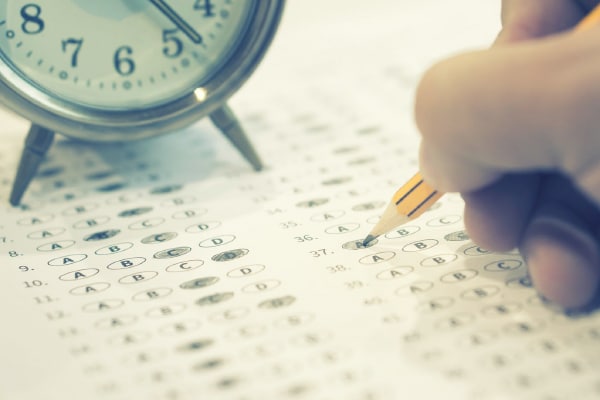
NEET – the entrance exam for admissions to various courses of medical institutions across the country will be held a pen-and-paper based test and conducted only once next year, on May 5 and its registration will begin on November 1 and end on November 30, 2018, MHRD said in a statement.
Earlier, the MHRD stated that JEE Main and NEET UG will be conducted twice a year and the best of two score will be used to prepare merit list of candidates. It was also expected that the NEET will be conducted in online mode.
From December onwards, UGC NET will be conducted as a computer-based test and registration process for the same can be done form September 1-30, 2018. Exam will be conducted in multiple sessions from December 9-23, 2018.
The registration for JEE Main I will begin on September 1 and end on September 30, 2018 and it will be conducted from January 6-20, 2018 in multiple sessions. Registration for JEE Main II will begin from February 8 and end on March 7, 2018 and it will be conducted from April 6-20, 2018.
Registration for CMAT and GPAT will begin from November 1 and end on November 30, 2018 and the exam will be conducted on January 28, 2018.
The Madras High Court has ordered the Central Board of Secondary Education (CBSE) to publicise its “No Homework” rule for class 1 and 2 students. It has also asked to emphasise that stringent action would be taken against institutes not following it.
Justice N Kirubakaran issued the order in response to a plea by advocate M Purushothaman seeking directives for the CBSE to follow only syllabus and books prescribed by the National Council of Educational Research and Training (NCERT).
According to the CBSE affiliation bylaws, schools affiliated to the board must satisfy its advisory of no school bag and no homework for students up to class 2. The board also stated that in compliance of the directions of the high court “It is once again reiterated that schools may ensure that no homework is given in class 3. It is also reiterated that since NCERT is an academic authority for classes 1 to 8, all schools may ensure that CBSE circular dated April 17, 2007, on reducing the satchel load and homework for children, is scrupulously followed.”
The judge asked the counsel for CBSE that which mechanism will be followed by the board to ensure that all the educational institutes implement the rule. In the reply, the counsel said that CBSE would act whenever they are “put to notice of such violation”.
All IITs have unanimously rejected the Government–backed proposal to reform Joint Entrance Exam (JEE) Advanced at 52nd meeting of IIT Council.
According to IITS, the JEE has built a formidable brand over the years and any amendment may hamper the smooth operation of admission process.
Minister for Human Resource Development and Chairman of IIT Council Prakash Javadekar and officials from his ministry as well as IIT directors and chairpersons participated in the meeting.
Quoting the minister, the Ministry of Human Resource Development (MHRD) stated in a press release, “Council did not consider any further changes in the JEE (Advanced) system”.
Doing away with the test was one of the crucial issues on the agenda for the Council’s meeting. The immensely tough entrance has been a pain point as it has lead to vacant seats during the past few seasons. In 2018, only 18,138 candidated cracked JEE-Advanced whereas in 2017, the number was 51,040. Following a directive from the ministry, IIT Kanpur, the convening institute for JEE-Advanced this year, released an extended merit list, after which 13,850 more aspirants got a chance at the premier institutes.
The HRD Ministry in its release said, “There will be no revision in tuition fee being charged from the undergraduate students in IITs.”
“I dream of an India that is prosperous, strong and caring, an India that regains a place of honour in the comity of great nations,” Late Prime Minister Atal Bihari Vajpayee is known to have stated once.
One of the most charismatic leaders of the country in independent India, Vajpayee was a strong proponent of empowering youths in the country.
As a Prime Minister, he always advocated for qualitative and universal education leading to introduction of Sarv Shiksha Abhiyan (SSA) — one of the biggest educational reforms so far in the country.
Launched in 2000-2001, the Sarv Shiksha Abhiyan aimed to provide free and compulsory education to children aged 6 to 14. The initiative was mandated by the 86th Amendment to the Constitution of India, making education to children a fundamental right.
It is significant to understand that the Vajpayee Government formulated the Sarva Shiksha Abhiyan on the line of District Primary Education Programme (DPEP) that was taken during 1993-94 with the objective to improve the condition of primary education system in the country.
Gradually DPEP covered 18 states and 272 districts with 85 percent of the total expenditure provided by the Central government. The programme was also funded by the World Bank, Department for International Development (DFID) and the UNICEF.
The Vajpayee Government involved all the institutes in the country starting from Panchyati Raj Institutions, school management committees, village and urban slum level Education Committees, parent’s Teachers’ Associations, Mother-Teacher Associations, and Tribal Autonomous Councils to other grassroots level structures in the management of elementary schools to participate in the programme.
Due to the presence and success of SSA, the present Government under its aegis launched “Padhe Bharat Badhe Bharat Mission”. The main objective of the mission is to improve the reading and writing skills of children in classes I and II, along with their mathematics skills.
In one of its statements released in 2013, the Central Government revealed that the school dropout has declined from 80 lakh in 2009 to 30 lakh in 2012 due to successful implementation of the SSA. The net enrolment ratio at the primary level also increased to 99.8 per cent since the launch of the scheme.
At present, there is 19.67 crore children enrolled in 14.5 lakh schools in the country, with 66.27 lakh teachers at the elementary level, according to statistics available on SSA’s official website.
He died on 16 August 2018 due to multiple health complications at Delhi’s AIIMS. Hundreds of thousands of people paid their last tribute to him along with Prime Minister Narendra Modi by participating in his last journey up to Smriti Sthal, the memorial site, for about 6 miles despite scorching heat.
RNTU’s focus is on the holistic learning and development of a student ensuring the effective application of knowledge for a secure future, says Santosh Kumar Choubey, Chancellor, Rabindranath Tagore University (RNTU), in conversation with Elets News Network (ENN).
With the changing times and a maddening race to emulate competitors, what prominent challenges a private university like yours is faced with?
Santosh Kumar Choubey, Chancellor, Rabindranath Tagore University (RNTU)
Initially, people did not show much interest towards our private university due to their inclination towards government-run institutions. Gradually, we have developed a trust for us by adopting world-class practices at the campus. Now, we have gained credibility in the region by overcoming the challenges posed due to being located in rural area, as well as providing the best possible education at affordable fee structures.
Lack of research content is another major challenge in rural India that needs to be addressed. We, at Rabindranath Tagore University (RNTU), focus on research and skill-based learning. Unlike other private universities in the region, we have developed an effective research-based educational structure. It helps our students in research-based learning instead of conventional methods. We have ongoing research on internationally trending topics as well as locally-relevant topics, like sustainable agriculture and renewable energy.
As India is facing high rate of unemployablity due to lack of required skills, we have established a skill-based learning curriculum to fill the gap in education system. We are the country’s first university to incorporate necessary skill development courses across all its formal degree programmes. All the students at our university have to learn at least one skill every semester so that by the time they graduate, they are equipped with at least five to six industry relevant skills.
What are some of the innovations being introduced by the Rabindranath Tagore University for improved learning outcomes among students?
RNTU is constantly evolving to inculcate newer dimensions of learning. Some the notable additions to the faculty in the recent times include setting up a lab for Internet of Things (IoT), Simulator Lab for renewable energy, labs on robotics and setting up start-up and incubation cell.
We emphasise on research and patents, for which separate IPR Cell has been established. A separate wing has been started for skills. Pradhan Mantri Kaushal Kendra (PMKK) is supporting skill center of our university. For placement, CRT classes have been started for final year students along with coaching classes for GATE and other competitive examinations.
With placement of students becoming a yardstick to evaluate a university’s status, what has been your achievement level in the context? How significant is innovation to your university?
RNTU has been offering placement assistance and consultancy to all its students. The University’s Entrepreneurship Development Cell is also supports the students in achieving their dream of becoming an entrepreneur.
Our focus on skills, employability entrepreneurship and incubation in addition to the main curriculum has helped us transform our students into industry-ready professionals. We make sure that our students are professional enough for upcoming opportunities by the time they become graduates.
Along with it, the group has established interlinked Entrepreneurship Development Cells and Incubation cells in all its institutions. It is by far India’s only higher education group to receive the Phase-I permission for “Atal Incubation Center (AIC)” by the NITI Aayog.
Innovation lies at the forefront of our operations. Apart from research-oriented learning and embedding skills in formal curriculum, we keep on evolving our educational pedagogies to make them relevant and modernistic.
Almost every other university is enjoying the fruits of collaborations, what initiatives have been taken by your university on this front?
RNTU has partnered with the Indian Institute of Science Bangalore and IITs. RNTU has also partnered with the National Institute of Electronics and Information Technology (NIELIT) to train NIELIT scholars with advanced joboriented skills and provide certificates to students after successful completion of the university courses and exams.
Apart from this, RNTU is a partner in water management research partnership with International Centre of Excellence in Water Resources Management (ICE WaRM), Australia. Under this partnership, the organisations jointly hosted an international conference with 20 countries coming out with a charter for reforms and a roadmap. RNTU students are researching extensively on Air Foil Wind Turbine and Solar Reflective Materials in partnership with Benaka Biotechnologies Inc, USA.
The University also holds research linkages with University of SIGEN (Germany), NCTU (Taiwan), Rennselaer Polytechnic Institute (USA), KAIST (South Korea), KYIV University (Ukraine), Tribhuvan University (Nepal) and MoI University Eldoret (Kenya). Apart from this, RNTU jointly conducts post-graduate courses in partnership with BSNL and holds a forward-looking skill development partnership with Reliance Jio and Tata Group.
What steps have been undertaken for research-based learning by the university?
The rural areas of India lag far behind the metropolitan areas in terms of research and research – related literature. This has greatly hindered the development of rural areas. Therefore, an excellent research-oriented environment has been our first and foremost priority.
We have over 15 International and about 30 national level collaborations with organisations engaged in the field of research and education, focusing on cross-border recognition of experts, developing mechanics for innovative projects with quality assurance and forming research partnerships. The key research areas at RNTU are renewable energy, agriculture, biotechnology, literature, arts, material science, nano-technology and environmental science.
With an allocation of rupees one crore seed money and an equal amount of annual budget to promote research, we have established the CRG, which is autonomous body bringing research strength of five Universities of the AISECT Group of Universities, including the RNTU, on a single platform. Moreover, we have nine centers of excellence for research and skills in Energy, Material Science, Earth & Space Science, Agriculture, Arts & Literature, IoT and Cloud Computing, Science Communication, Entrepreneurship and Environmental science. These centers are known as Navratna Centers of Excellence meant to promote research in the university.
The rising popularity and spread of online education augurs a transformation in our near future that is sure to render it categorically different from traditional learning, writes Dr Sarika Lidoria, Vice President – Enterprise Technology ITM Group of Institutions, for Elets News Network (ENN).
The theorems of Pythagoras and Apollonius, the histories of the two Wars, the intricate details of the criss-crossing of the Danube and the Rhine, the Ganga and the Brahmaputra, the distance in lightyears that separates Jupiter and Mars – these constitute some of the bulk of the intake of a pupil as they enter the higher educational institutions of our country. These have their use and value, but it also bears noticing that an average student would never have seen a tax return, a voter’s ID, a balance sheet, or a corporate legal document as he or she prepares to join the workforce or enrol for further technical studies.
A large-scale change needs to take place in the educational sector to make both the content and method of our institutional learning vocational and market-oriented. Such a sector-wide change, at a cost that could make learning available to increasingly larger sections of the masses, could be engendered only by the rise of E-learning, accompanied by developments in information and communications technology. But so far, the promising advantages that lie at the hands of online education haven’t been reaped to full harvest. PPTs and E-books alone do not fully exhaust these latent possibilities. Mobile and tablet-based learning apps ensuring ‘learning on the go’, interactive boards, animation and video-based training, graphic user interface (GUI) programs allowing for critical and creative engagement of the student with the content, are coming together in recent times to help institutions cater to the unique potential and learning needs of the students. Here lies that unopened window of opportunity where this advanced form of education can join together learning and vocation so indelibly as to transform, in some degree, the classroom itself into a workplace. The rise and spread of Virtual Reality simulation technology allied to developments in Artificial Intelligence technology is sure to place the classroom, the work itself and the market, all on the student’s desk.
As online education is not dependent on a fixed number of employees with appointed tasks and fixed positions, the human material that drives its engine is crowd sourced. It can draw upon a vast network of resources from all over the world. Time and place constraints being here obviated, the ideals long dreamt of by John Dewey in his philosophy of education like one-to-one learning, personal pupil-teacher interaction, democratic participation of the student, experimental and practical nature of imparting knowledge, are closest met by an online education powered by virtual learning environments, video-streaming, webinars and e-conferencing, and other products of a burgeoning communications technology capable of connecting people at the farthest ends of the globe.
The Nobel Laureate Malala Yousafzai almost gave her life to defend the principle that education is a universal human right. The reach of education to the masses without any compromise to its quality, in terms of the teachers and the methods and means of delivery, can only be accomplished by a massive reduction in infrastructural costs. Recorded lectures, educational videos, electronic books and materials that can be repeatedly used and for as long as one wants, contribute in a unique way to a cumulative reduction in costs in the long run. Meaning, the more they are used, the more affordable they become; and the reduction in cost at this level alone can make possible the economizing of the cost that the student is to bear.
“Our books and our pens are the most powerful weapons”, said Malala in her address to the United Nations Youth Assembly. But the ‘pens’ and ‘books’ here stand as metaphors and symbols of technologies much more powerful, much more effective, and, in the long run, much more economical. These ‘Weapons of Mass Instruction’ are what the educational sector needs to arm itself with as it battles for a world in which education would have achieved the impossible trio of reaching the largest number, with the best quality, at the lowest price.
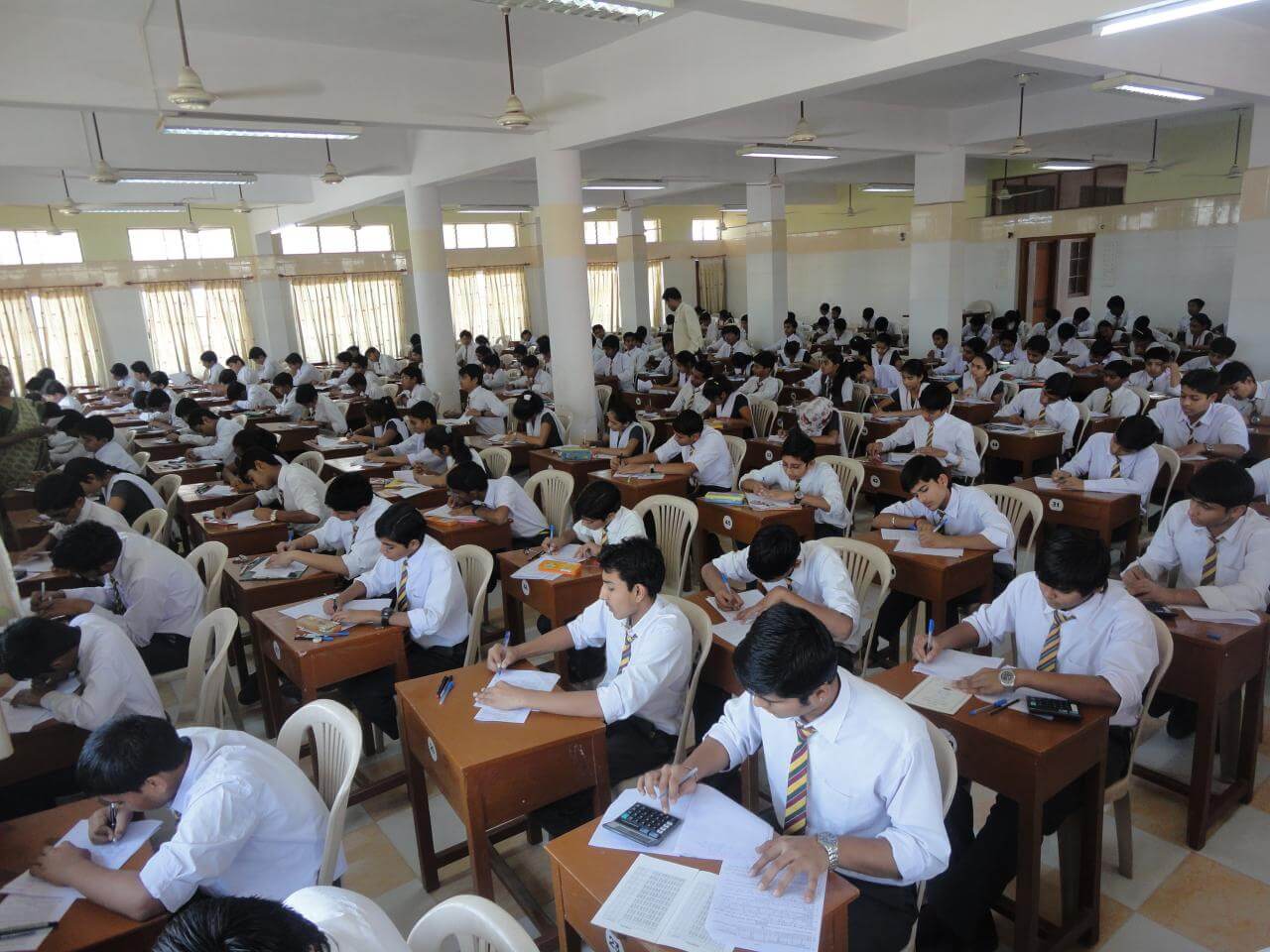
The Central Board of Secondary Education like all competitive exams – Joint Entrance Examination (JEE), National Eligibility-cum-Entrance Test (NEET) or Common Admission Test (CAT) – will ban late entry in classes X and XII board exams.
According to a latest directive, all candidates have to be in the exam hall by 10:15 am in the board exams. Along with this, other measures like encrypted question papers are also to be tried to make the exams more secure revealed sources from the Ministry of Human Resource Development (MHRD).
Currently, the official entry time at the exam centres is 9:30 am but students are allowed to enter till 11 am and emergency entry till 11.15am, mostly at the discretion of the centre heads. At centres, question paper is distributed at 10:15 am and students are given additional 15 minutes to read the question paper thus the exam starts at 10:30 am.
“Exams like JEE or NEET and even CAT are secured for a number of reasons and one of them is strict entry timings. No student is allowed beyond the stipulated timing,” said the ministry source.
According to a senior ministry official, CBSE is going to issue a circular for strict compliance of the entry timing and the centre supervisors will be accountable for its strict implementation.
The Delhi Government has warned the schools in the national capital to withdrawal recognition and initiate strict disciplinary actions against principals if student safety guidelines are not complied with.
According to Delhi Government, there is no decline in the number of various types of physical, emotional and sexual assaults on students within the school boundaries.
An official order by the Directorate of Education (DoE) in this regard said, “Despite serious endeavours by the government, other agencies and by courts, the schools also respond with only half-hearted compliance.”
“In case of some schools, the status of compliance is even more worrisome. No wonder then, that there is no respite in the number of various types of physical, emotional and sexual assaults on school children-within the school boundaries and outside,” The order further said.
“In fact, such incidents are on the rise. In such a grim scenario, it is felt that half-hearted approach won’t work anymore. If our schools are serious about providing foolproof safety and security to the innocent children whose parents trust us and only, therefore, they entrust us with the responsibility of their wards), then they must ensure compliance of the directions,” the official order added.
The department in its order also said that it “shall initiate disciplinary proceedings against the heads of schools and estate managers if they fail to follow the tenets of student safety guidelines in word and spirit”.
“Further, this directorate will be constrained to initiate equally severe action against the schools, including withdrawal of recognition in cases of repeated and deliberate non-compliance to pre-empt any untoward incident endangering the safety of students and thus, inculcate a sense of confidence among the students and their parents,” the order stated.
The directive assumes significance in light of the recent case of alleged rape of a minor girl by an electrician in a NDMC school premises in the city.
Along with imparting education, it’s our responsibility to support underprivileged sections of the society. It will realise the motive of equity in education, says DrSP Singh, former Member of the Legislative Council, Uttar Pradesh, and Founder Manager, Lucknow Public Schools (LPS) and Colleges, in conversation with Arpit Gupta of Elets News Network (ENN).
How are you contributing towards betterment of economically weaker and backward sections of the society?
S P Singh, former Member of the Legislative Council, Uttar Pradesh, and Founder Manager, Lucknow Public Schools (LPS) and Colleges
Nowadays, there is a huge demand of private schools as the government schools are lacking in required number of teachers, facilities and infrastructure. Such a situation brings a great responsibility on private schools to make the children of economically weaker sections educated. We teach such children in our schools after regular classes are over. It is a social responsibility of every teacher, school owner and school. I have started practice of teaching poor children under which the school staff motivates students’ parents to send their wards to get education in our school. We appointed teachers of four subjects: Hindi, English, Science and Mathematics and hundreds of poor students are getting benefitted under the initiative.
In addition to that, we provide these students books and sometimes snacks etc. The initiative is not funded by the Government or any other organisation. To carry out social responsibilities is my prime concern. It’s just like worship. In winters, I distribute blankets and sweaters in far-flung villages. I distribute sweaters in Government and private schools. I organise blood donation camps and eye check-up camps. These all initiatives are taken by me because human values must be lived. The career counselling sessions conducted by me are beneficial for job seekers.
You are also promoting cleanliness related activities in nearby slums. Please describe about them in brief.
The cleanliness initiative was firstly undertaken by Mahatma Gandhi. It is another aspect of social responsibility under which every citizen of the country should be healthy and their surroundings are clean and disinfected. To encourage people take part in this initiative, I distributed soaps in slums and told them about the benefits of the cleanliness. Soap distribution is our regular practice. The activities have been conducted across hundreds of villages.
How do you support the society during any natural disaster?
Natural disasters are a great threat to nature, humanity and other creatures on earth. It’s everyone’s responsibility to help the human beings whenever an area is affected by a calamity. Either it is earthquake in Bhuj, Gujarat or Kosi River’s tragedy in Bihar or Uttarakhand’s disaster, Lucknow Public School and its staff have supported the affected people in the best way possible. I encourage my staff to donate their one day salary and ask my students to donate clothes, edibles and their pocket money. In Uttarakhand, we donated Rs 21 lakh, of which the share of school students and staff was Rs 10 lakh and my share was Rs 11 lakh. In this way, we support any natural disaster affected area in the country.
What is the vision and mission of LPS?
Our vision is to empower and make our country prosperous by providing quality education to a large number of students. Our mission is to try to impart the best quality education to students with support from principals and teachers. It is with our combined efforts that we are producing the best results in the country.
What innovations are adopted in your school and what is the role of technology in improving the educational practices?
When we started the school, only blackboard used to be the tool of the teaching. Nowadays, the technology plays a vital role in education as the entire education sector is using digital tools and devices like tablets, i-pads, smart phones etc to get the knowledge. We also encourage our teachers and students to attend conferences and summit to remain updated about the latest and the best practices of the education segment. Technology is supporting the education fraternity well as the whole world is online and anyone can access unlimited knowledge with a click of mouse.
The group is into school education as well as in higher education, how has been the sync between the two fields?
We have a staff of more than 2,000 people and are teaching more than 28,000 students. We focus on commerce and science till secondary level. We have adopted the curriculum designed and developed by National Council of Educational Research and Training (NCERT) at pre-primary, primary, secondary and senior secondary levels.
At higher education level, we follow the norms decided by the University Grants Commission (UGC) as well as Lucknow University. The professional courses conducted in our institutions are as per the industry demand. These professional courses make the students job ready. We always try that the students pursuing degree courses in our institution get the campus placement and do not remain unemployed after completing their degree.
Recently, we conducted a national level Job Fest in which over 50 multinational companies participated and over 500 students received job offer letters. It is our efforts to provide quality education and job offers to as much candidates as possible.
In the recently announced board results, Lucknow Public School performed extremely well which ranked it among the top 10 schools of the country, what is your take on this?
For the first time, in the school’s history, the first and the second toppers of the ISC-2018 exams are from our college. It is a lifetime achievement for us. Some of our schools are affiliated to CISCE, which is spread across the world and scoring the top positions by students of LPS has established our brand’s name globally. I would like to congratulate students, teachers and their parents for achieving this landmark. Both the toppers have been studying in our school since childhood which clearly reflects that we help every student in achieving his/her dream.
You have opened a new branch of LPS in New Delhi, please elaborate on the infrastructure and other facilities it offers to students.
This is our first branch out of Uttar Pradesh. The Lucknow Public School branch is located at Asthal Mandir Marg, Sangam Vihar, New Delhi. It has been opened with the unique vision of value based quality education. The school with its world class infrastructure, best teaching practices, digital classrooms, vigilance, security, and surveillance system will help students to nurture in a friendly yet secure environment. Like New Delhi, my plan is to open schools in other metropolitan cities of India along with in United Arab Emirates (UAE) and Mauritius.