Home Blog Page 861

Budget 2015: Education sector gets 2 percent less

Jaitley and SmritiThe education sector saw over a two per cent cut in the outlay announced in the Union Budget, even as the government proposed to set up new IITs and IIMs in some states. The slash in the education sector as compared to the revised allocation in 2014-15 is 2.02 per cent.

School education and higher education sectors have got Rs 69,074 crore. The revised estimate for 2014-15 was Rs 70,505 crore. The cut is, however, about 16.54 per cent if compared with the actual outlay the 2014-15 fiscal.

Notwithstanding the cut, HRD Minister Smriti Irani described the Budget as “pragmatic” and said she was “extremely grateful to the allocation of funds for higher learning and also about the thrust on innovation through funding”.

While the school education sector has got an outlay of Rs 42,219.50 crore for 2015-16, the higher education sector has got Rs 26,855 crore. The thrust has been on the higher education sector with the announcement of an IIT in Karnataka and upgradation of Indian School of Mines, Dhanbad into a full-fledged IIT, a long standing demand for the people in Jharkhand.

“I propose to set up an IIT in Karnataka, and upgrade Indian School of Mines, Dhanbad into a full-fledged IIT,” Finance Minister Arun Jaitley had said in his Budget speech. “IIMs will be setup in Jammu and Kashmir and Andhra Pradesh,” he added.

The Minister also announced setting up of Institutes of Science and Education Research in Nagaland and Odisha. A Centre for Film Production, Animation and Gaming in Arunachal Pradesh and Apprenticeship Training Institute for Women in Haryana and Uttarakhand has also been proposed. Jaitley also announced the setting up All India Institutes of Medical Sciences (AIIMS) in Jammu and Kashmir, Punjab, Tamil Nadu, Himachal Pradesh and Assam.

“Keeping in view the need to augment medical sciences in Bihar, I propose to set up another AIIMS like institution in these States,” the Finance Minister said. A Post Graduate Institute of Horticulture Research and Education has also been proposed in Amritsar and upgradation of the existing National Institute of Speech and Hearing in Kerala into a University of Disability Studies and Rehabilitation.

“I also propose three new National Institutes of Pharmaceutical Education and Research in Maharashtra, Rajasthan, and Chattisgarh,” he announced. Bringing his focus to the education sector, he said that a student financial aid authority will be established to administer and monitor scholarships as well educational loan schemes through the ‘Pradhan Mantri Vidya Lakshmi Karyakram’.

“We will ensure that no student misses out on higher education for lack of funds enable all poor and middle class students to pursue higher education of their choice without any constraint of funds,” he said. An integrated education and livelihood scheme called ‘NaiManzil’ will be launched this year to enable minority youth who do not have a formal school-leaving certificate to obtain one and find better employment, he said.

The Finance Minister also announced his government’s intention of upgrading over 80,000 secondary schools and add or upgrade 75,000 junior/middle to the senior secondary level to ensure that there is a senior secondary school within 5 km reach of each child. The Budget proposal also laid down new financing pattern for some flagship programmes in the education sector.

Sarva Shiksha Abhiyaan and Mid Day Meal Scheme would now be fully finaced by the Centre. However, the ambitious programme of setting up of 6,000 Model Schools has been delinked from the central assistance and has been put to the state basket.

Schemes like Rashtriya Madhyamik Shiksha Abhiyaan (RMSA) and Rashtriya Uchcha Shiksha Abhiyan (RUSA) will now be run under a new funding pattern.


Gartner sees Top 10 Strategic Technologies Impacting Education in 2015

gartnerSocial and economic pressures are forcing senior education leaders to rethink business models and consider a range of new technologies, to bring down the cost of administering education institutions and scale the business, according to research from Gartner, Inc.

According to Gartner vice president and distinguished analyst Jan-Martin Lowendahl, traditional educational business models are being fundamentally challenged by digitalization.

“An increasing number of technical innovations and technology trends are emerging from within the industry, but most will emerge outside the industry, driven by major forces such as digital business and the consumerization and industrialization of IT,” Mr. Lowendahl said. “Education sector CIOs need to take a broad approach and consider technologies from outside the education community, as well as looking for lessons from their peers. Focus on those that are most appropriate to your institution’s strategy.”

Worldwide education sector spending is forecast to grow 2.3 percent to reach $67.8 billion in 2015, according to Gartner. This forecast includes higher education as well as primary and secondary schools. Education institutions in Australia will spend A$2.6 billion on technology products and services in 2015, up 4.9 percent from 2014. In New Zealand, technology spending in the education sector will total NZ$362 million in 2015, an increase of 1.9 percent over 2014.

Gartner has identified the top 10 strategic technologies for the education industry in 2015 and provides recommendations to education CIOs and IT leaders regarding adoption and benefits. It is not a list of what education CIOs spend the most time or money on; rather it is a list of strategic technologies that Gartner recommends education CIO should have a plan for in 2015:


Adaptive Learning

Adaptive learning is a concept that traces its roots back to at least the 1950s, but the ability to capture learner data through online learning has provided a breakthrough. True adaptive learning is a type of crowdsourcing and big data collection. The real value of adaptive learning lies in the metadata attached to each learning “morsel,” which must then be combined with enough empirical data of students trying to master the topic to allow personalized learning. It is extremely valuable in designing the pedagogy of the future.


Adaptive E-Textbooks

Unlike traditional print materials, e-textbooks can be edited to include up-to-date information, be assembled or disassembled, or include content from other sources and social interaction. Adaptive e-textbooks add the element of tracking student interaction with the text, and adapting to the learning style. E-textbooks are the first key step of going from analog to digital education.


CRM

Customer relationship management (CRM) is now a widely recognized tool for tracking and managing relationships with constituents, including prospective and current students, parents, alumni, corporations, benefactors and other friends of the institution. However, institutions are grappling with the difficulties of standardizing and integrating the institutional data to achieve success with these solutions, and to enable rapid and informed decision making on their campus.


Big Data

Big data in education is associated with collecting vast amounts of data from the digitized activities of students, parents, faculty and staff, transforming that into information, and producing or recommending actions aimed at improving institution outcomes. Big data in higher education has been around for decades, mainly focused on research. Now, it is a very promising technology-based strategic capability that has the possibility to improve the whole education ecosystem.


Sourcing Strategies

Not a technology in itself, sourcing strategies represent a collection of technologies and vendor services, from hosting to cloud, homegrown to open source, to subscription models for acquiring software/hardware capabilities. A sourcing strategy is a set of scenarios, plans, directives and decisions that dynamically define and integrate internal and external resources and services required to fulfill an enterprise’s business objectives. Strategic sourcing helps IT to focus from administrative transactions and operational support toward activities that enable differentiation and innovation for the institution.


Exostructure

Exostructure strategy means acquiring the critical capability of interoperability as a deliberate strategy to integrate the increasing numbers of partnerships, tools and services in the education ecosystem. When done right, an exostructure approach enables institutions to leverage services from the cloud, rather than having to bring them inside the campus walls. Enabled by standards, it can allow the institution to adapt faster. With the increasing interdependencies in the education ecosystem, Gartner sees it rising in importance for at least the next decade. The future belongs to exostructure rather than to infrastructure.


Open Microcredentials

Microcredentials in the form of various badges or points have existed for some time in digital social environments in general, and in learning environments in particular. A key problem is that these environments are proprietary, which makes it difficult to display achievements outside of them. The aim of open microcredentials is to remedy that problem. For education institutions, issuing open microcredentials is a low-cost, high-value, technology-based capability that will provide more value and motivation to students. Open microcredentials is still relatively immature as a technology, but it is gaining traction in the education community. Gartner sees it as a clear strategic technology with a relatively small investment involved, thereby making it a low-hanging fruit with good ROI.


Digital Assessment

Assessment within education is in itself a vast and complicated area. Digital assessment is ultimately about being able to do any assessment digitally, to remove the need for physically tethered as well as human-proctored tests and improve modes of testing, grading and data analysis. The first-level application of digital assessments is to increase trust in online education by applying identification mechanisms, such as keystroke identification or cloud-based face recognition. Digital assessment is a very practical technology with a clear high-level goal, but with many problems in the implementation. However, good digital assessment is a necessity for trustworthy and scalable online or hybrid (digitalized) education, and will remain a strategic technology until it is solved.


Mobile

Mobile is a popular term for pervasive access via many types of devices. Mobile is not simply a synonym for mobile smartphones or tablets. Mobile in education includes use in all aspects of the academy — administration, education and research. However, the domain is maturing surprisingly slowly. Inhibitors in 2014 still include smartphone cost, device limitations (such as battery life), the development of m-learning course materials, lack of skills and the wide diversity of mobile devices. Education CIOs will need to treat mobile as a strategic technology for several years

Social Learning

Social learning gives learners the ability to establish a presence or social profile that reflects their expertise and interest; to create, discuss, share and capture learning content as learning objects; to organize and find learning objects from a variety of sources, such as search or peer ratings; to interact with peers in their social networks and be able to reach beyond their networks to other trusted sources of information; to engage in experience-based learning exercises; and to receive real-time online coaching and support.

The experience from massive open online courses (MOOCs) shows the importance of “social” in learning platforms and is influencing the acceptance of social learning platforms. However, a significant number of faculty and students prefer to use open social platforms such as Google Sites or Facebook to complement traditional learning-management systems (LMSs) rather than the now-built-in social features in the learning platforms. Vendors and institutions are still trying to figure out the perfect mix in the learning stack.


Sunni body will set up 100 schools in UP

schools UP

In an attempt to make inroads into the state’s Muslim community, Kerala-based ‘Sunni Yuvajana Sangam (SYS)’ has drawn up plans to open nearly 100 primary schools in the state that are estimated to cost nearly Rs 100 crore.

The amount, SYS claims, will be acquired through donations.

If goes through, it will be the biggest educational project targeting the 18 per cent Muslim population of the state. Although the organisation denies it will play any political role in the state, its office-bearers admitted that the outfit is “not averse” to forming a pressure group in politics.

“If you unite and have good numbers, one can form a pressure group. We have done this in the southern states. There is no plan for our direct political intervention but obviously we would decide that at the time of elections,” said Dr A P Abdul Hakeem Azhari, member of Supreme Council, SYS. The outfit claims to have 10 lakh active members. It has already launched its two projects in the state —- a technical institute for girls in Pilibhit district and a medical dispensary for poor in Shahjahanpur.

SYS, which commands considerable following in Kerala, Tamil Nadu and Karnataka, plans to set up at least 1-2 schools in each city. “In sha Allah, we will focus on primary and secondary education in UP. Higher education can be taken care of at the later stage. We will soon start our programme in the state as we have already done our homework at the ground level,” Dr Azhari told. The SYS has also planned to involve local Muslims in setting up the schools.

“The community people should help themselves. We are open for helping other communities as there will be no restrictions. The plan will begin very soon and will be executed in a few years. Ours is a charity organisation working on humanitarian grounds,” he added. SYS runs several technical institutions, hospitals, madrasas and other organisations in southern India.

SYS had recently organised a four-day event in Kerala’s Mallapuram and had invited Chief Minister Akhilesh Yadav and UP’s Minority Welfare Minister Azam Khan. Though Akhilesh could not attend the programme, Azam went there but reportedly did not receive a warm welcome during the conference. As it was made clear that no political speeches will be made from the SYS platform, Azam expressed his displeasure and winded up his customary speech within two minutes. Azhari confirmed it but refused to comment on Azam.

SYS came into news when it had donated Rs 8 lakh each to two natives of Deoria and Maharajganj districts, respectively, who had lost their lives during a mishap in an oil company in Saudi Arabia, where the outfit has its unit. “We had handed over the compensation cheque to CM Akhilesh and (Samajwadi Party chief) Mulayam Singh Yadav. It is our duty to help people on humanitarian grounds,” Azhari said.

Budget a mixed bag

First budget of the Modi-led government has evoked mixed reactions from the education industry.

amol_SirAmol Arora, Vice Chairman and Managing Director, Shemrock and Shemford group of Schools

For the school education sector, the government believes that some of the initiatives of the previous government: the Mid-day meals and the Right to Education focused only on enrolments of children into the schools. The new government however believes that there should be a focus on quality and learning outcomes, instead. Therefore, there has been a major reduction in allocation for both the schemes. Besides, the government appears to have made up its mind on upgrading the infrastructure of 80,000 govt schools, a step in the right direction.

In higher education, the govt. has promised easy loans for the youth and also set up many institutes such as IITs, IIMs, AIMS and other professional & job oriented institutes across the country. This shows an increased focus on employability of the youth. These are good initiatives, though the challenge for the government will now be to maintain the standard of these new institutes so that the brand name of IITs and IIMs is not diluted.

However, I believe the education sector should have had got service tax redemption, but that did not happen. Instead, the service tax and education-cess has gone up to 14% from 12.36%, which is not good. Because of this, an additional burden of the increased service tax will be levied on the general people.

PankajPankaj Bansal, Co-founder and CEO, PeopleStrong HR Services

It is a welcome step that the focus of Government is fast shifting from “Literacy” and “Education” to “Skill Development” and “Educating to Employment” . India has an increasing number of “working” population and out of which hardly 37% are employable (Source: India Skills Report 2015 by PeopleStrong, Wheebox, CII & LinkedIn).  The initiatives like National Skills Mission for skill development and entrepreneurship (fund of 1500 cr), focus on Skill India campaign and increasing the reach and quality of education will definitely speed up the progress on the path towards Skilled and Employable workforce, and will work towards the “Quantum Jump” that the Finance Minister is looking for.

Deepak-MehrotraDeepak Mehrotra, Managing Director, Pearson

We welcome the sizable budgetary allocation for the education sector in the Union Budget that reflects government’s commitment to the sector.

The budget promises to start a school assessment programme and aims to infuse new training tools and initiatives to motivate teachers. This is a step in the right direction as the lack of trained teachers is a big hurdle in improving education outcomes. As an organisation, committed to the concept of efficacy in education, it is reassuring to hear about the greater involvement of Government on improving the quality of education and making it more leaner and outcome focused.

The budget however lacks clarity on the question of private investment in education and doesn’t provide fiscal incentives to attract private sector investment in education sector. 

Muslims’ quota scrapped

fadnavis

The BJP-led government in Maharashtra has scrapped an ordinance providing reservation for Muslims, despite the Bombay High Court allowing quota for the community in educational institutions.

The Devendra Fadnavis-led government, which had earlier said that it was against reservation on religious grounds, did not indicate if it plans to introduce a law to replace the ordinance, which lapsed in December last year.

“The ordinance dated December 23, 2014 could not be converted into an Act. In view of this situation, we have decided to scrap this ordinance,” said a circular issued by the General Administration Department.

In the run up to the Assembly polls last year, the previous Congress-NCP government had issued an ordinance on July 11, 2014 allowing 16 per cent reservation for Marathas and five per cent for Muslims in government-run schools and colleges as well as jobs.

The previous government had decided to provide a five per cent reservation to 50 Muslims communities by including them under a newly formed category — Special Backward Category-A.

The decision was challenged in the Bombay High Court which, in a judgment on November 14, struck down reservation for Marathas, but allowed five per cent quota for Muslims in educational institutions, but not jobs. Meanwhile, a new government came to power in the state.

The new government challenged the overturning of quota for Marathas and appointed a committee to suggest potential solutions, but did not make a similar move to examine the HC order on Muslim reservation in jobs.

The state government also allowed the ordinance to lapse on December 23 and chose not to extend it, thus forfeiting a chance for Muslims to obtain reservations in the education sector as allowed by the High Court.

In a three-page order, the state government stated that the Bombay High Court has set aside a clause of the ordinance that provides for five per cent reservation for the community in government jobs and, therefore, it has taken the decision to scrap the ordinance.

Fadnavis had earlier claimed that his government stood for the all-round development of Muslim community and the present reservation system would only help a section of the community. “Since there was confusion over the issue and over whether reservations can be granted on grounds of religion, we are in the process of consulting constitutional experts,” he had said.

Officials in the State Minority Development Department said there was no immediate plan to allow reservation for Muslims in Maharashtra. Principal Secretary Jayashree Mukherjee declined to comment on the issue. Fadnavis, too, was unavailable for comment.

Interestingly, the CM had held a meeting this week to discuss ways of ensuring the development of minorities in the state. The government’s move, meanwhile, came under fire with former minority development minister Arif Naseem Khan branding the government “communal”.

EXPERIMENTS in a digital Laboratory :: March 2015

Editorial

Digital Deficit

Advertorial

Breaking Boundaries – Technology Helps Education Come Alive

Art of Developing Skills

Interview

Software as a Service

Ideating a Prototype

Special Feature 

Colossal World of Science Digital Labs

Digital Labs Offer a Good Career

Unfolding Trends

Robots Rule Classrooms

Cover Story

Experiments in a Digital Laboratory

Guest Column

New Age Learning

Digital Dividend

Event Report

School Leadership Summit 2015 Confluence of the Best Brains

School Leadership Summit 2015 Confluence of the Best Brains

The second edition of School Leadership Summit (SLS) 2015 at Le Meridien, New Delhi was witness to an auspicious gathering of the most influential school education leaders. The event was attended by Principals and Academicians from top 150 schools from across the country, who discussed and shared ideas on role of digitization in school education. The event began with interactive knowledge sharing session culminated into a grand felicitation ceremony of top schools of India ranked in December edition of Digital Learning

ArchanaArchana Jain Principal, Delhi Public School, Panipat City

The students, nowa- days are experiencing the innovative usage of technology in education and are frequently interacting with innovative trends of technologies like, cloud and mobile to get their learning purpose being served. The delivery models of imparting education to students have also transformed with a change in preferences of a student’s learning method. Earlier, we used to take notes in classrooms but with a change in technologies offered, they are now available on internet. Teachers are sharing them with the students. Education, along with general communication has too shifted to digital boards for delivery purposes. The digitally enabled learning boards leave a very good visual impact on a learner’s mind and an imprinted impression on a person’s mind. However, sometimes a teacher finds it difficult to adapt to tech-savvy students. Mobiles have become a very popular source of learning as e-books can be downloaded on them very easily.

Ratna Dhar Principal, Millennium School, KarnalRatna-Dhar

Millennium School use technology extensively for standardised teaching to the children and believes in teaching through concept, not content. Such a specified environment enables children to learn and deliver on their own learning pace. In our technology enabled environment at Millennium School, we even retain poor performing students’ post school hours within premises, and help them in improving their skills with the help of technology-enabled solutions. We carry out these development activities after the formative assessment of a student with the help of our evaluation modules. Under the student assessment system, we resolve a child’s caliber and his grade. If the child lies under the challenged group, we offer him summative assessment text to carry out the test according to his nature and caliber. However, there are farthest places where technology is not readily accessible and approachable.

AbhilashaAbhilasha Singh, Principal, Sonipat School

Our school primarily operates in rural areas where agriculture is a primary mode of occupation and entire economy thrives on agriculture and agro-based products. Therefore, we have kept the fee structure comparatively low in these areas. However, even with respect to the regular use of technology in these areas, we are lagging 10 to 15 years behind. It makes it difficult for teachers to deliver education, when children are already well-versed with technologies like internet and mobile. This is enabling children to get everything on a swipe of finger on a smartphone and have made them intuitive enough to prompt decision about what they wish to learn, and when and how to learn. This is causing teachers to put more efforts to catch students with respect to the usage of technology.

Naresh Duble DGM- FMD & Training ABP, ArmStrongNaresh-Duble
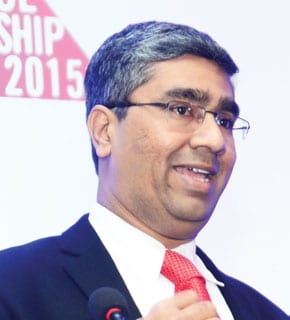
Some recent surveys conducted for assessing top level universities, globally, could not find any of the Indian universities in top 300. India is known worldwide for producing the good number of doctors and engineers. However, with respect to scientific research its position is competitively low. One of the reasons for inferior level of research capabilities in India is lack of suitable environment inculcating different learning and thinking. School building acoustically designed helps students forming an environment in classroom to improve concentration levels. An apt sound meter measuring the right type of DB level in the classroom has generally reported teachers ending up producing noise in a classroom instead of communication. The building solutions offered by ArmStrong, thus make school buildings acoustically refined and forms a level of engagement between a learner and a teacher.
Neeru-MadhuriNeeru Madhuri Parti, Head Academics, Shree Ram Global School, Gurgaon

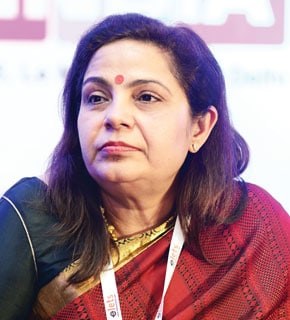
In present times, a school is not just a means to social objective delivery for imparting learning, but has become a project enterprise ranging between 50 crores to 100 crores. With such a huge cost involved in building a school, the school promoters and CEOs spend sleepless nights in a worry to get return on the huge investment they have made. Despite so much pressure on the schools for managing finances, they are still inherent to their primary objective and passionate about providing quality education. To raise the level of education, initiatives like training for becoming a principal or principal training is of the utmost importance. For example, in the US, a huge amount of money is being spent on training of principals. In addition, the unnecessary pressure from private schools should be lifted as they, along with imparting quality education pays valuable tax.

Rustom Kerawalla, Chairman, Vibgyor High, MumbaiRustom-Kerawalla

Running a school administration has become an uphill task in present times. It has become more of a fight with the establishment for issues like fee regulation, taxes, etc. A school owner will spend sleepless nights till the adequate number of students takes admission in his school. Further to focusing on academics, school principals should also concentrate on developing themselves as CEOs and be involved in stages of cost operations, HR functions, maintenance related issues. Earlier, the school trustees used to participate intensively in school administration and accounts, and the principals were restricted only to academics. Now-a-days, things have changed to a greater extent and it has become imperative for principals to focus on areas of cost as well.

ManikandanManikandan R, Director –Business Development, Printing & Personal Systems, HP, India

It is with the emerging effect of technology that the world is changing very fast. Things and processes have not remained restricted only to a single place of origin, they have become global. Similarly, students now belong no more to a single place or district, they are global students. The students need to be innovative, collaborated, and should have the critical thinking skills. 70 percent of the jobs that students will be doing tomorrow do not exist today. Therefore, students have to have these three skills to be able to adapt to the changing environment. Flipped classroom is not far from reality, it’s all happening in India.

Since the dawn of human history, education has continued to evolve, diversify and extend its reach and coverage. The traditional classroom teaching methods are no longer effective to achieve current learning standards; therefore, tech-enabled strategies of learning are being used to engage the tech-savvy future generation.

Atul-SekharLt. Col. (Retd.) Atul Sekhar, Principal, Atul Vidalaya

To make the learning experience more exciting, multimedia technologies like video and audio teaching aids, TV, video conferencing, LCD projectors, online group discussions and peer group tutoring, etc., are being incorporated by many education institutes. Similarly, a mix of technology and traditional face-to-face instruction known as blended learning is a great approach, where students find themselves engaging in vibrant online debates, discussions, writing assignments and collaborative group work. A viable and effective approach to deliver high-quality, up-to-date, on-demand education has been possible with mobile devices, cloud applications and other online educational content. We need to think how schools and colleges can build their own wireless infrastructures to support new emerging trends, including a social network where students can communicate and hold class discussions.

Aditi Avasthi Founder, CEO, EmbibeAditi-Avasthi

Sometime ago, a point was raised whether there should be government funding in five year plans. In a recent datadriven study between private and public schools, it was found that affordable private sector schools were far more prompt and immersive in teaching than the public schools. It was also seen that private schools are better governed and have higher quality pedagogy.

Shreevats-JaipuriaShreevats Jaipuria, Vice Chairman, Jaipuria Group of Schools

If we look from the demographic or market perspective, really the ‘acchee din’ has arrived for the Indian private schools as the economy is developing towards the path of growth. Market is developing, and every person due to better educational facilities plans to send his/her kids to private schools. But, if we look around from the perspective of regulatory system and provisions in India, it is just opposite and we all are facing it. The regulation in India is not conducive to the growth of private schools, whether it is a 25 percent RTE or some other sort of regulation. It increases the cost to a greater extent of operating and running the schools and the brunt comes back to schools. Over and over regulation is just hampering the growth of private schools in India.

Vinesh Menon, Chief Operating Officer, Global Discovery AcademyVinesh-Menon

We are still on the way to keep a balance between being financially viable and delivering quality education. For the past three years, we are running an institution as an education service provider, and are trying to bring paradigm shift the way pedagogy is delivered. We have tied up with school promoters who have become our business partners. With this type of business model, it takes too much effort to maintain balance between business objectives and take care of children without compromising on delivery of education and learning. We are doing it in a professional manner as we are running our activities and operations backed by the Industry professionals. We are bringing out the processes that are quite savvy and simplified. At the same time, we are trying to adapt to IT regulations of the government.

Lisa Jain, Country Representative – India, The College BoardLisa-Jain

SAT is an exam conducted by The College Board that is carried to help students to approve eligibility for appearing entrance exams for the colleges across the globe. It has been observed that students in India have developed an inclination towards under graduate courses overseas as in the US, UK, Australia, Singapore and other countries. First of all, there is a set of students, who, after being not selected in top level technical courses in India as IITs and others opt for the scholarships in foreign universities for their preferred choices. Apart from that, at foreign colleges, the students sometimes aspire for course combinations that are not available in India like business with music, etc. This all leads to the need of customized course as SAT for the students willing to learn at foreign universities.

NiyatiDr Niyati Chitkara, Principal, Chitkara International School, Chandigarh

With an interactive randomly raised question and answer sessions, Dr Niyati Chitkari emphasized on the need of students to be at the center of our all educational activities and modifications to courseware and to any technical introduction to courseware. Even to the contested objection to her suggestions, she even termed PTM (Parent Teacher Meeting) as a verdict to students’ instead of consulted counseling to them.

Satya Narayanan, Chairman and Founder, Indus World SchoolSatya

There is such a knowledge explosion that there is hardly any scope to determine between what is relevant and what is inculcated for development and growth processes. And it is further added with obsoleteness of every emerging technology in a shorter span of time that every course, every skill, every syllabus becomes older in no time. It is time to develop skill of re-skilling. However, this skill of relearning should be added with appropriate filtration of volumes of knowledge scattered across, now on, more readily available mediums and platforms. The school or college curriculum should only have highly selected educational matter in randomly changing technological environment to the benefit of students

Poonam-SinghPoonam Singh Jhamwal, CMO, Extramarks Education Pvt Ltd.

As school leaders, we expect teachers to be effective, students to be successful and parents to be involved in learning initiatives. In Digital learning, our aim is to take teaching at the level of personalised learning, the empowered, and supported and finally let a student grow in his own personal development and emerge as an individual. In these circumstances technology acts as an enabler, facilitator and moulds a student to the grooming as well as educational needs of the modern times, however, with a human touch. It doesn’t mean the role of school teachers gets limited here. They have to play a more important role of cheerleader and an inspirational leader for students amidst the environment of digital learning. Distribution of leadership is another aspect that a school owner should foster for a successful teaching delivery. Finally, the teachers should be effective, students successful and students involved.


Digital Deficit

ravi-gupta

ravi-guptaThe Annual Status of Education Report (ASER) 2014 and Prime Minister Narendra Modi’s pet project Digital India have brought to fore the huge disconnect between Digital drive and educational malaise. Both are big on talk but short on action. According to the target set by the Government of India for 2014-15, about 50,000 villages were to be connected through a National Optic Fibre Network (NOFN) by the end January. However, only 12 percent of the target has been met. The ASER doesn’t draw a rosy picture either.

All is not yet lost. The nation may have achieved a lot in the field of education, mainly due to the creation of new infrastructure and deployment of digital technologies, a lot more work needs to be done to make the goal of inclusive and digital education a reality. Many states are now distributing freebies to students to promote digital literacy.

In the current issue of digitalLEARNING, we have tried to present an overview of the ways by which the digital laboratory is impacting our system of education. We have interacted with the industry leaders and also with the academia to discover how teaching systems are getting transformed. A digital laboratory can fundamentally change the ways to teach and learn. A teacher and a student are the basic agents of change. The idea of “Digital Classrooms” where education is delivered through digital platforms has caught the imagination of the education community. They pose as a good strategy for engaging the digital generation and improving individualised learning opportunities. None has greater stake in the digital education than either of them. The possibilities are exponential. There is no end to the benefits that we can expect.

In this issue, we have also highlighted the need to bridge the industry-academia gap. The country has to take adequate steps towards bridging the gap between the academia and the industry. We have interacted with some of the leading stakeholders in education to develop strategies to address this core issue.

Digital Dividend

Ms Sindhu Aven
Ms Sindhu Aven
Head of Academics, Zee Learn Ltd
Ms Sindhu Aven
Ms Sindhu Aven
Head of Academics, Zee
Learn Ltd

Digital learning has more to do with the right combination of digital platforms, digital content as well as instructional design. The combo has the potential of transforming the education system in India. Ms Sindhu Aven, Head of Academics, Zee Learn Ltd, delves into a digital laboratory

Digital learning is defined as any classroom practice that effectively involves technology to build up to a student’s learning experience in an interactive and fun manner. Digital learning can serve as a great strategy for quality improvement and adding the fun element in education. However, digital learning is not just about providing computer access to the students; it has more to do with the right combination of digital platforms, digital content as well as instructional design. It has the potential of transforming the education system in India, where the quality of instruction and classroom delivery varies immensely from area to area.

Zee Learn has been an early adopter of digital learning. We have been observant and stringent about the extent of digital content being introduced into our classrooms. In Kidzee (our chain of preschools), we have been cautious about maintaining a balance between the developmental needs of the children and the amount of digital exposure. This has been done keeping in mind the sea change in the media habits of children. We, as educators, need to ensure that digital media is used as a medium of learning rather than a medium of entertainment in our classrooms. In Kidzee, we identified that the most effective manner for introducing digital learning would be through tablet applications and audio visuals. Our tablet applications, aim at helping children develop and enhance their fine motor skills (of tapping, swiping, and dragging) along with their cognitive and reasoning skills. They provide interactive and exploratory learning opportunities through the medium of games. Apart from the tablet applications, we actively use audio visuals as a digital medium for learning. These audio visuals aim at covering educational topics through interesting story-based plots.

Similarly in Mount Litera Zee schools, we cater to the digital needs of the primary, secondary, and higher secondary grades. As a part of our school system we promote blended learning. This, as a learning model, promotes the use of interactive whiteboards. These are used to present audio-visuals as well as interactive content in our classrooms. The audio visuals cover educational content through short interesting animations, whereas the interactive content incorporates game-based learning. We also have English digital language labs which promote learning through the medium of technology. The interactive programs in the English digital language lab help the students understand and reflect on their grammar, pronunciation, listening and speaking skills. We also encourage the use of social media in co-scholastic areas. For example, online competitions for photography and short-story writing are held on social media platforms as a part of the Mount Litera Olympiad. Adding to the above, we also have an innovative Digital Citizenship Program that enables our students to understand the right and safe way of using the internet. The students are introduced to the topics of netiquettes, cyber bullying, online safety, privacy, copyright and plagiarism, etc. through this program. Hence, apart from exposing our students to digital learning, we also help them become responsible digital citizens.

As can be seen, digital learning plays a crucial role in both scholastic as well as co-scholastic aspects of education in our schools. So, even though there is an increase of digital learning tools and platforms, we must understand that it is crucial for us to focus on the responsible usage of technology in our schools. We must be aware that the consequences of overexposure to technology are serious, and it is important for us to strike a fine balance. While technology can be a game changer, we should not look at it as a solution for lack of trained teachers or parental involvement. Digital learning complements the involvement of parents and teachers in the student learning process.

Ideating a Prototype

IdeatingPromoting innovation among the young, BIBOX has come up with a unique comprehensive hardware and a software solution which can translate an idea into a prototype, says Sandeep Senan, Director & Founder, BIBOX, interacting with the Elets News Network (ENN)

Please give us a broad overview of your Digital Labs already deployed in the institutes.

We started moving into the schools only last year, February 2014 to be precise. In last one year, we have trained more than 10,000 students. We have also signed 25 schools in Bangalore, Kerala and Delhi with 70% of the schools using our product as an integrated program in the schools. With the kind of response that we have got from the schools, this year we feel that we would at least double the number of schools and the students.

Tell us about your top selling Digital Lab product.

As of now, we have only one product “Bibox Innovation Lab”. The entire session is an hour and 20 minutes long. Every time the students come into the class, they are exposed to a challenge and by the end of it, they are expected to create the prototype with automation, art and craft etc.

What is the price of your top selling product?

The price depends upon school to school and the number of students. Since the entire solution is a service model, the entire material, two mentors (all engineering graduates), tablets which are being used by the kids are a part of the program. Depending on the number of students, our rates vary from 2500/- per annum to 6000/- per annum for a child who attends a BIBOX class.

What kind of systems are parts of the Digital Lab product package that get delivered to the institute for setting up of a digital classroom?

Everything that goes into the school is our propriety and the school only pays per child.

Please tell us about the new Digital Labs you are planning to develop in the future.

Our endeavour is to develop the futuristic products, which is exposed to kids already familiar with the technology and blend with his overall learning. We keep investing into creating newer technology so that these children are able to bring out innovation and make these children ready for the next gen skill sets.

What is the market size of the Digital Labs business in India?

We are unique at this point of time and the solutions are absolutely new. There is no competition as such and hence we stand a good chance to penetrate into the market very well. Proof of the pudding is also to see the enthusiasm in all the schools wherein we had signed up last year.

What kind of growth did your business see in 2014? What growth rates are you aiming for in 2015?

Though, we do not want to disclose our revenues at the moment, our growth next year would ensure that we would earn at least 50-80% more revenue than last year.

Are the digital Labs cheaper than the traditional teaching tools? How has the system of Digital Labs impacted on pedagogy?

In fact in our case, more than the gadget, it is the pedagogy which has made the entire program successful and popular. In our classroom, we divide the children into a group of three, wherein each one of them would have a role viz. Concept Leader, Assembly and Logic guys. Concept leader would lead the team for that day and the responsibility would keep rotating. An assembly guy would create the art and craft for the project and the logic fellow would do the programming. Our programme is based upon the 21st century learning skills and focusses on the 4 “C”s and the STEAM (Science Technology Engineering Arts and Maths concepts). The overall program is based on the Design Platform and the Challenged Based Learning.

LATEST NEWS