



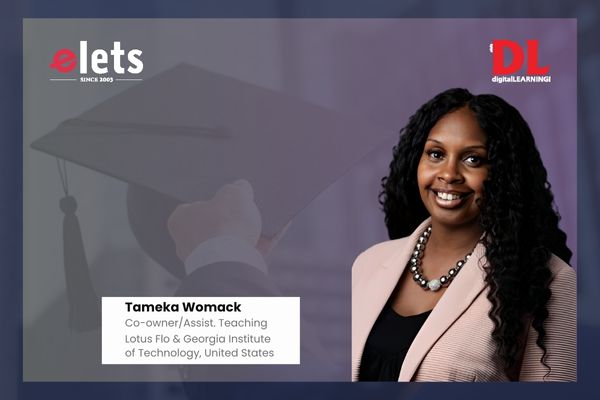
Global education today is not suffering from a lack of ambition; it is struggling with alignment. Around the world, institutions are racing to internationalize, diversify enrollment, strengthen research impact, and prepare graduates for complex global challenges. Yet too often, these efforts exist in silos. My work across STEM, business education, sustainability, and institutional leadership has taught me one central truth: global education succeeds when ecosystems, not programs, are designed intentionally.
At Georgia Institute of Technology, I have had the privilege of supporting graduate education at the intersection of Nuclear Engineering and Medical Physics, two fields that are inherently global in scope and consequence. From nuclear nonproliferation to medical imaging, radiation therapy, and energy sustainability, these disciplines require not only technical excellence but also cross-border collaboration, ethical leadership, and global regulatory awareness. Supporting these programs reinforced for me that global education is not an add-on, it is embedded in the very nature of high-impact STEM work.

Graduate students in these programs are preparing to solve problems that transcend national boundaries. Their success depends on access to international research partnerships, culturally competent leadership development, and administrative systems that are agile enough to support global mobility, joint research, and interdisciplinary training. My role has consistently focused on ensuring that program infrastructure, student support, and institutional strategy move at the same pace as academic innovation.
Previously, as Director of Graduate Programs within a university business school, I oversaw operations that encompassed approximately 77% of the institution’s entire graduate student population. This scale required a fundamentally different leadership approach; one grounded in systems thinking, data-informed decision-making, and cross-campus collaboration. Business education, much like global education, sits at the nexus of industry, innovation, and societal impact. Managing programs of this magnitude sharpened my ability to align enrollment strategy, student success, faculty priorities, and
employer partnerships across domestic and international contexts.
What emerged from this experience was a replicable model:
- Design for scale without sacrificing personalization
- Embed global competencies into academic and co-curricular experiences
- Align financial sustainability with access and equity
Across my career, I have also served on multiple boards and advisory bodies spanning education, nonprofit leadership, sustainability, and community engagement. Board service has strengthened my governance lens, particularly the importance of aligning mission, metrics, and long-term institutional resilience. In global education, this means asking hard questions: Are our partnerships mutually beneficial? Are we measuring outcomes that matter to students and society? Are we investing in programs that will remain viable five, ten, or twenty years from now?
My academic training mirrors this interdisciplinary approach. With a Ph.D. in Higher Education focused on leadership and management, advanced degrees in business and logistics, undergraduate training in chemical and packaging engineering, and ongoing graduate work in sustainability, I have intentionally positioned myself at the crossroads of technical expertise, organizational leadership, and global systems.
Also Read: Education 2026: Driving Innovation & Digital Transformation
This breadth allows me to translate between faculty, administrators, students, industry partners, and international collaborators, an increasingly essential skill in global education leadership. One of the most important lessons I bring to the World Education Summit is this: Global education cannot thrive without operational excellence. Vision alone is not enough. Institutions must invest in enrollment strategy, student support infrastructure, faculty engagement, and financial models that allow global programs to scale responsibly. When global initiatives fail, it is rarely because the academic idea was weak, it is because the system supporting it was misaligned.
Looking ahead, the future of global education will be defined by interdisciplinary STEM integration, business and policy fluency, sustainability imperatives, and equitable access. Programs like Nuclear Engineering and Medical Physics show us what is possible when global relevance is built into the curriculum. Large-scale graduate operations demonstrate how intentional design can serve tens of thousands of students without losing mission clarity.
At WES, I look forward to engaging with leaders who are ready to move beyond fragmented initiatives toward cohesive, scalable, and globally responsive education ecosystems. The work ahead is not simply to expand global education, but to design it to last.
Views expressed by Tameka Womack, Co-owner/Assist. Teaching, Lotus Flo & Georgia Institute of Technology, United States