




Leadership in international schools has long demanded a unique blend of skills and perspectives. Operating across cultural, linguistic, and national boundaries, international school leaders must balance global educational standards with local realities. Throughout the evolution of education there has regularly been cycles of disruption, all of which have led to the profession becoming better and stronger. Beyond global health crises, international school leaders are increasingly required to navigate rapid technological change, regional conflicts, economic instability, and currency fluctuations. In this environment, effective leaders have emerged to be adaptive change leaders capable of guiding their communities through uncertainty.
A defining characteristic of international school leadership is the capacity to lead diverse communities. Students, families, and staff often represent a wide range of nationalities, belief systems, and educational traditions. This diversity enriches learning but also creates vulnerability during times of disruption, when differing expectations and anxieties can surface. Adaptive leaders address this challenge by articulating a clear and values-driven vision rooted in internationalism, inclusivity, excellence and shared purpose. During periods of instability, such clarity in values provides coherence and reassurance, enabling school communities to adapt operationally.

Technological change represents one of the most persistent and transformative disruptions facing international schools. Advances in digital learning platforms, artificial intelligence, and data-driven assessment have already impacted on teaching and learning. Effective leaders approach technological disruption strategically, investing in infrastructure while prioritizing professional learning to ensure that technology enhances pedagogy rather than driving it. Their adaptability lies in balancing innovation with discernment, recognizing that meaningful change requires both technical skill and cultural readiness. “Out with the old, in with new”, is an appropriate mantra. With the rapid change in technology it is important to have a coherent plan to implement the most relevant and ready technologies but also review those long standing and heritage systems.
Regional conflicts and geopolitical instability present another significant challenge for international school leaders. Many international schools operate in regions affected by political tension, conflict, or sudden policy shifts that directly impact student enrollment, staff mobility, and community well-being. Leaders in these contexts must respond swiftly and compassionately, often making difficult decisions related to safety, continuity of learning, and emotional support. Proven change leaders demonstrate resilience by maintaining calm, transparent communication and by building contingency plans that allow schools to function amid uncertainty. Their leadership extends beyond operational management to moral stewardship, ensuring that student welfare and staff care remain central even in volatile circumstances.
Economic instability and currency devaluation further complicate leadership in international schools, particularly those dependent on tuition fees paid in local currencies, with many costs being in USD. For example in 2015 the Brazilian Real dropped in value to the dollar by over 70% and in 2024, the Egyptian currency devalued by 60% nearly overnight. Sudden economic downturns can affect affordability for families, staff retention, and long-term financial planning, especially for international schools where the offering of state of the art facilities are a natural expectation. Adaptive leaders respond by rethinking budget models, exploring fee structures, and communicating openly with stakeholders about financial realities. Rather than allowing economic disruption to undermine trust, effective leaders use these moments to strengthen partnerships with school ownerships, governors and school communities as a whole.
Across these varied forms of disruption, one consistent strategy that should be used in international school leadership is the use of distributed leadership. The complexity of global challenges makes it impossible for a single leader to hold all expertise or solutions. Successful international school leaders therefore cultivate leadership capacity at all levels, empowering middle leaders, teachers, and operational staff to contribute meaningfully to change processes. This distributed approach not only accelerates innovation but also builds organizational resilience, ensuring that adaptability is embedded in the culture rather than reliant on individual authority.
Also Read: Designing Global Education Ecosystems That Work: Lessons from STEM, Business, and Scale
It is important to recognize that living in a volatile environment demands ongoing reflection and growth. Continuing professional development that engages with global professional networks, research, and international accreditation bodies, drawing insights from a wide range of contexts is a must. This outward-looking orientation enables the educational community to anticipate emerging challenges and opportunities, from ethical considerations around artificial intelligence to the growing emphasis on student well-being in uncertain times. By modeling learning and adaptability, leaders reinforce a culture where change is viewed as an opportunity rather than a threat.
Crucially, adaptability in international school leadership is anchored in moral purpose. In times of disruption, there is a risk that decisions become overly reactive or financially driven. Proven change leaders resist this tendency by aligning strategic responses with their school’s mission and values. Whether responding to conflict, economic pressure, or technological change, they prioritize values and educational integrity.
In conclusion, disruption in education is not a new phenomenon, and the industry has a strong track record of dealing with change and uncertainty. Adaptive leadership will continue to operationally navigate the current wave of disruption and any future ones. Success lies not in eliminating them, but in embracing adaptability as a core leadership competency.
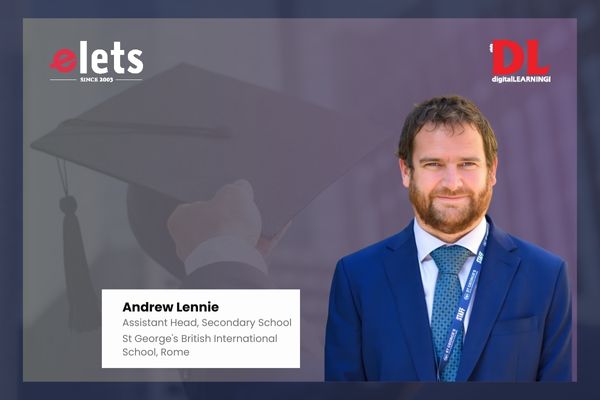
Views expressed by Andrew Lennie, Assistant Head, Secondary School, St George’s British International School, Rome.