


I strongly believe it is essential to trace the roots of everything we do if we want to see the full picture. My natural inclination has always been to zoom out rather than zoom in. Humanity has been doing this for centuries, though the timelines differ across regions. I grew up in Sweden, and that background shapes how I look at the world today. The reason I founded the AI Institute comes from a deep concern I observed over time: the lack of nonprofit thinking and long-term vision in the AI ecosystem. What we are witnessing today is unprecedented investment in AI companies, driven largely by what I see as the monetisation schemes of the century. AI is not merely a technological revolution; it represents a profound paradigmatic shift in how we think, learn, and organise society. Over the past six months, I have been intensely focused on mapping what AI actually is, beyond the hype.
I have worked with AI for years. I have trained it, analysed it, studied it, used it, transacted with it, and extracted value from it. I have also studied AI at the university level through postgraduate and advanced courses, covering both technical and ethical dimensions. Despite all this, I am still learning. I consider myself a lifelong learner because we have entered an era of endless learning. In this age, you are never truly finished, and a degree will never define who you are. What matters is what you bring to the table and what you create. This is why I resonate strongly with ideas such as micro-credentials and microlearning. However, I often ask myself what kinds of MVPs we are really building and where our focus truly lies. Is the goal simply to make more money? If so, do we really understand financial literacy, how money is created, and why we pursue it in the first place? What does success truly mean, and what value do we attach to money?
I often find myself drifting across ideas because everything is interconnected. This era is forcing us to see the bigger picture, and that requires us to go back in time. AI did not begin a few years ago, or even a few decades ago. Its roots stretch back far beyond a hundred years. We must go back to the time of Al-Khwarizmi and the House of Wisdom, where scholars from across the world gathered and collaborated. What we now call algorithms were shaped by collective intelligence. Indian numerical systems were refined and transformed into algebra, revealing how deeply interconnected human knowledge truly is. Remembering history is critical. We cannot afford to focus only on what is trending today and forget it a week later. To truly understand the present, we must reconnect with the past.
The greatest inventions in history have always emerged when people came together, just as we are doing now. Through conversation, networking, and shared ideas, we influence one another. People often ask whether it is AI or humans that matter more. I believe the real answer lies in how we impact each other. AI impacts us, and we impact AI. At its core, AI is made of algorithms, and algorithms were created to bring order out of chaos and restore equilibrium. Balance is a natural law that people across cultures can agree upon, yet today we are far removed from it. While I may be speaking from Dubai, this imbalance applies globally. Excess and exaggeration are pulling us away from what human beings naturally seek.
Much has happened since Al-Khwarizmi, and even more before him. When we look at civilisation, we often trace it back to Mesopotamia, then Egypt, Greece, and beyond. But there is so much history we do not fully know. There is deep and ancient knowledge from South America, Asia, India, East Asia, and Africa. African wisdom, pattern-making, and logic have often been suppressed, yet patterns exist in every culture. We carry immense collective wisdom that we have largely forgotten. Now, algorithms are forcing us to rediscover this wisdom by encouraging collaboration and new ways of thinking.
If we fast-forward through history, we see the Renaissance in Europe after the Dark Ages, while other regions experienced their own golden eras. Classical education and liberal arts once nurtured polymaths, individuals who could think across disciplines. Polymaths have always existed, but in recent times we have confined ourselves to narrow specialisations. Expertise in a small fragment of knowledge is not true expertise if one cannot see the broader context or explain its relevance to others. Collaboration is what reveals where each of us fits within the larger equation of collective intelligence.
Also Read: ThrivePoint Academy: Measurable Results, Community Impact, and a New Model for Student Success
Over the last century, computer scientists and neuroscientists, particularly in the United States, collaborated to explore how humans and machines could communicate. Neural networks mirror how our brains function, and over time, we have built massive machine brains trained on vast stores of human knowledge. The internet once made information freely accessible, and when companies like Google began indexing and digitising books, they were effectively building a new digital Alexandria. Knowledge has always been global, and business has always been part of our DNA. Wanting financial stability is not something to be ashamed of. However, business was historically built on trust, and today we must ask where that trust has gone.
At the AI Institute, we think in terms of generations, not quarterly reports. We are borrowing this planet from future generations, and we must ask what we are leaving behind. AI may feel alien to many, but it is ultimately a mirror of humanity, built on our collective intelligence. No single individual or company can solve the challenges AI presents. It will take all of humanity. AI holds the potential to create both the best and worst versions of our future. That is why we must think broadly, ethically, and historically. We cannot focus only on technology or education in isolation. To make sense of this moment, we need a fuller view that connects history, humanity, ethics, and long-term responsibility.
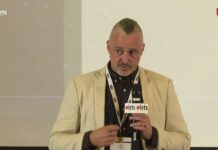
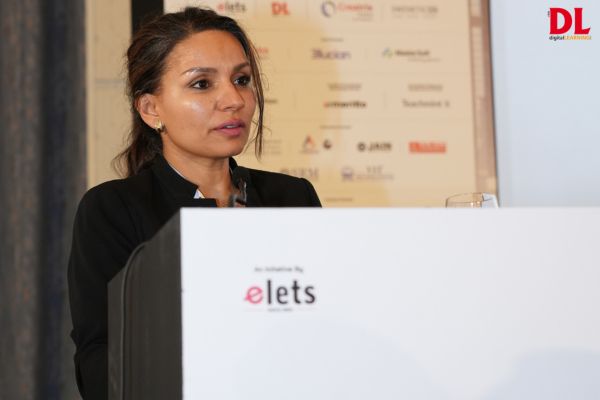
Insights shared by Hani Raisi Halilovic, Founder, The AI Institute (AI-INSTITUTET Sweden), Sweden, at the 35th World Education Summit held on 4-5th March 2026 in Dubai