

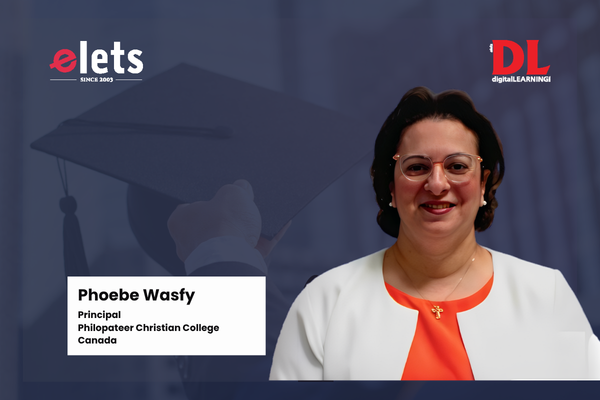
Achievers learn how to meet expectations. Leaders learn how to take responsibility. Many schools unintentionally produce achievers because systems reward compliance, performance, and grades more than initiative, courage, and service, shared Phoebe Wasfy, Principal, Philopateer Christian College, Canada in an exclusive interaction with Kaanchi Chawla of Elets News Network (ENN). Edited excerpts:
Canada is often seen as a model for multicultural education. What do you think Canada gets right, and where do Canadian schools still need to evolve to stay globally relevant?

Canada does many things well when it comes to multicultural education. At its best, diversity is not treated as an add on but as a lived reality. In strong Canadian schools, students see themselves reflected in classrooms, conversations, and leadership. At Philopateer Christian College, multiculturalism is not something we celebrate occasionally. It is what students experience every day as they learn alongside peers from many cultures, languages, and faith traditions.
Where Canadian schools still need to grow is in moving from inclusion to true global readiness. Too often diversity is acknowledged without being meaningfully developed. To stay globally relevant, schools must help students understand who they are, how to communicate across differences, and how to engage the world with confidence and humility. Representation matters, but preparation matters more.
Faith-based schools operate in multicultural realities. How do you keep values clear while ensuring every student regardless of background feels respected and included?
Clarity and inclusion are not opposites. At PCC, faith provides a foundation, not a filter. Our values are clearly stated, but they are lived through daily actions such as respect, service, accountability, and care for others. Students are never asked to abandon their identity in order to belong.
When values are authentic and consistently modeled, they create safety rather than exclusion. Students feel respected because expectations are clear and relationships are strong. Inclusion works best when it is rooted in conviction and lived with grace.
Around the world, parents are demanding both academic rigor + emotional safety. How do you design a school culture where discipline and compassion don’t compete, but reinforce each other?
Discipline and compassion only compete when expectations are unclear. At PCC, structure is an expression of care. Clear routines, high standards, and consistency create emotional safety because students know what is expected and trust that adults will be fair and present.
Compassion shows itself through relationships. Students are held accountable, but they are also supported, guided, and given space to grow. Strong schools do not lower expectations to protect students. They increase support so students can meet them. When students feel known, they rise to the challenge.
Students today plan futures across borders. How should schools prepare them for global admissions + global careers without turning education into a “checklist race”?
Students today are planning lives that cross borders and systems. Schools can easily turn preparation into a checklist of courses, credentials, and applications. At PCC, global readiness is built through transferable skills such as critical thinking, communication, adaptability, and ethical decision making.
Rather than pushing students through a formula, schools should help them understand who they are and what they stand for. Universities and employers are increasingly looking for depth, purpose, and perspective. When students have clarity about themselves, they are prepared for any system they enter.
Also Read: Why Pedagogy, Not Technology, Must Lead the Future of AI-Enabled Education
In your view, what is the difference between producing achievers vs. producing leaders and where do most schools unintentionally fall short?
Achievers learn how to meet expectations. Leaders learn how to take responsibility. Many schools unintentionally produce achievers because systems reward compliance, performance, and grades more than initiative, courage, and service.
Leadership development requires room for decision making, challenge, and reflection. At PCC, students learn leadership by being entrusted with responsibility in academics, service, and community life. The goal is not perfection. It is formation. Leaders are shaped through experience, not just achievement.
If you could build one global partnership model (with schools, universities, industry, or social-impact orgs), what would it look like and what outcomes would matter most?
The most effective global partnerships bring together schools, universities, industry, and social impact organizations with a shared purpose. The focus should not be prestige or branding, but student growth and real world learning.
Success should be measured by outcomes such as mentorship, service, problem solving, and global awareness. When partnerships help students connect learning to purpose and responsibility, they prepare young people not just to succeed globally, but to contribute meaningfully wherever they go.