



Home Blog Page 1123

Smart Education for Smarter Students

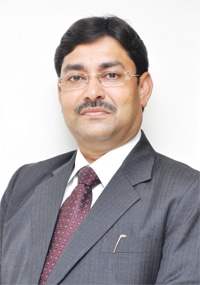
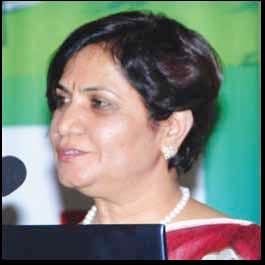
Sudha Goyal, Principal, Scottish High International School, is of the opinion that education system has to be revamped to fulfil the needs of the next generation students, speaks to Sharmila Das

www.scottishigh.com/index.html

In what ways has e-content been helping you in providing proper education to your students?

Scottish High is dedicated to using modern tools for providing quality education to students We have an approach that puts learning and teaching at the centre. Creative teaching, assessing and evaluation techniques are used. We have e-content (mapped lessons) from IL&FS for English, Mathematics, Social Studies and Science. They have provided us the infrastructure such as Kyan, projectors and systems.

Tell us about the challenges that you face in deploying e-content in classrooms?

The teachers were apprehensive in using the e-content especially for subjects like Mathematics, Science and Social Studies where they struggle with the completion of syllabus. The traditional methodologies appear to be safe and reliable to them. They were not very comfortable in using the technology in their routine teaching practices. It was really challenging to motivate teachers of all subjects to deploy econtent in their classrooms.

How do you train your teachers to adopt e-content in your classes?

We continually train the teachers so that they feel comfortable in using the e-content. Also we upgrade the e-content periodically so that the content is always in sync with the syllabus in specialised subjects. Besides, mapping topics in subjects like Mathematics, Science and Social Science with the e-content helps teachers in planning their topics in advance and conducting the classes using the e-content.

How do you think e-content has been beneficial for your students?

The students of 21st century are a different lot. They no longer live, communicate and socialise as we used to do. So they
do not want to be taught the same way as we were taught. Students want to use engaging technologies in collaborative, inquiry based learning environments with teachers who are willing and able to use technology’s power to assist them in transforming knowledge and skills into products, solutions and new information. There are many students who are not able to concentrate in the class. They get distracted easily with the traditional chalk and board methodology. In a 35 minute period, the students with differentiated comprehensive skills are unable to grasp the content of the lecture/topic in the classroom. There is no scope of retention and in-depth understanding of the concepts for such students.

Can you give us an overview of the solutions that you are using for examination and assessment in your school?

We have in-house software for examination and assessment in our school. The Report Cards are compiled and generated at the conclusion of the First term and Final term of each session. The grades for all academic subjects, sports and extra-curricular activities are handed over to the Class Teachers by all subject in-charges. Then the examination department, ICT department and class teachers compile these grades and generate the reports through the in-house software installed in school.

Also Read: Smart Education

CBT or computer-based training is a reproducible system of instruction conveyed through the use of a computer for the purpose of training an individual. The assessments are also carried out periodically and are recorded electronically by all subject in-charges.

What are the benefits of new practices like CBT, IBT in examination and assessments over traditional methodologies?

Computer-based testing delivers a host of benefits directly to the examinee, examiners and the institute by:

  • Providing examinees with the convenience of scheduling their tests on the dates, times and locations most suitable for them
  • Reducing examinee response errors by presenting questions one at a time, if the test sponsor opts for this delivery method. Often, this allows the examinee to better focus on each individual test item
  • Facilitating re-testing by providing more immediate scoring and more frequent or continuous test administration
  • Seamlessly supporting reference materials and a variety of multimedia for more engaging assessment techniques

Embracing e-Content Solution

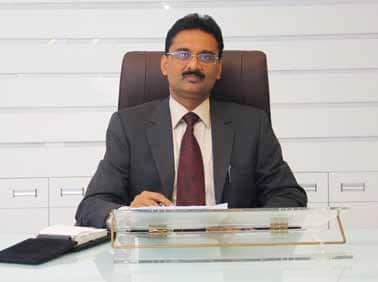
Dr Shaji Klavanal, Principal, Don Bosco Senior Secondary School, Kochi recommends e-Content for his students.

How has ICT helped you to achieve the targeted quantum of success?

The content and presentation has helped the students to better understand concepts. We get the e-content from Teach Next.

Till now what are the problematic areas you have come across in deploying e-content education system in your schools?

The competent of teachers in using the system was lacking and that was the only problem that we had in the initial phase of using e-content in our school. We have sailed through the concern with the training given by our solution provider-Teach Next.

How have been the responses from both student teacher and student-parent community?

Teachers are been finding it easy to explain certain concepts with the help of visual and animated experiments etc.

What is the role of solution providers in setting, replacing required e-content equipments?

Yes, they had installed the e-classroom, they replaces if systems don’t work and no extra charges charged.

What is your strategy to emphasise the need of sports development in the overall education of the student?

Students are trained in one sport or games and special coaching is arranged for it.

An overview of sports infrastructure installed in the school?

Availability of ground for football, bascketball, hockey and indoor games area for Table Tenis, badminton etc

Benefits of Digital Learning

Pradeep Kumar Mishra, Principal, Foundation School, Buxar (Bihar) sees lot of benefits coming from digital learning tools in his school

http://foundationschool.in

How has ICT helped you to achieve the targeted quantum of success?

We are currently using the Teach Next classroom solutions of Next Education India Pvt Ltd, and have found that the quality education and quality admission increases miraculously.

How do you train your teachers to adopt e-content in your classes?

I have got my computer teacher trained by Next Education people and they ensure that every teacher is using the system and every student is getting benefited equally.

Do you think e-Content has a long way to go in Indian education?

Yes. Surely it helps the Indian Education by providing quality animation for concept clarity. Next Education takes the  hole responsibility to setup the infrastructure and to maintain the quality service.

What kind of challenges do teachers face while dealing with Continuous and Comprehensive Evaluation (CCE)?

Teachers have to maintain the records of every activity which comes in CCE Pattern. Their area of observation has increased increasing their work load.

What kind of CCE assistive software is being used by the school?

We are using the CCE Software provided by Next Education in their server setup. It is very useful for teachers to mark entry and get report card generated in few minutes.

“The Next Sachin or Dhoni is Out There”

Martin Gleeson, Chief Executive Officer, Sports Education Development India Ltd, talks about sports education and role of private partnership

Please highlight the current scenario for Sports Education in schools in India?

Sports education is a growing field and with a focus on educational outcomes and not just talent identification, sport education is providing ‘more than just sport’. Parents are increasingly demanding a higher quality sport experience and exposure for their children. Classroom teachers are being trained, certified and provided with a syllabus for teaching to upgrade their skills. Unfortunately, sport in schools has not had the same standards or benchmarks that was attached to it in the past.  The good thing is that now the scenario has started evolving and the emergence of new sport education programmes is helping us in is proving to be more helpful to the students.

How do you see the acceptance of sports education in school curriculum?

The inclusion of quality based and benchmarked programmes such as Cricket Education Programme provides a solution to the sporting needs of a school.  The provision of trained coaches, a syllabus for training and an additional focus on the soft skill development of the child provide impetus to classroom based subjects. To support an individual’s academic growth, sport is able to develop the key values of integrity, honesty, respect, pursuit of excellence, leadership, team work and performance.

How important are the private partnerships for school in providing better sports facilities?

Sporting facilities are very important in schools.  The provision of a suitable facility allows a child to mix sporting activities will classroom based education. Obviously the quality of the programme and teaching needs to be of high standards.

How do you enhance the skills of students to produce more Sachin and Dhoni?

We can produce the next Sachin or Dhoni if we can ensure a holistic developmental system, which helps in fostering an all round development of the student.  A systemised programme will help to build the foundations for success. The next Sachin or Dhoni is out there. It’s our role to provide the programme and infrastructure to allow that talent to reach its potential.

Please highlight sports education solutions that you are offering to schools?

Currently, we are offering a specialised cricket programme through Cricket India Academy, our cricket division.  We have secured the rights to Cricket Education Programme in Affiliation with Cricket Australia.  The programme is a six level curriculum based coaching programme with inbuilt assessment and performance monitoring.  Our coaches combine their local knowledge and experiences with specific training and accreditation from Cricket Australia.

The response to the programme has been very good so far. Across five major cities, there are 17 Cricket India Academy centres with over 950 children.  In fact, we are currently offering franchising opportunities for interested partners. Cricket India Academy is our first division and we are currently in discussions with a few other sports about developing similar quality based and benchmarked programmes.//

Potency Prevails in Smart Education

Dr Manjula Goswami, Principal, Millennium School, Lucknow, shares her views on the deployment of new ICT enabled learning infrastructure at the school to Sharmila Das

www.themillenniumschools.com

How has ICT helped you to achieve success in education field?

ICT can be used to great effect to improve understanding and performance in the target subject and to improve both learning and ways of learning. ICT has helped our teachers and students to develop as better and more informed personalities. We have Educomp Technology enabled Classrooms with maximum number of Smart Class and various other technology enabled products like Mathguru, Educomp online, Wiziq, SAS, O3, CMPC etc.

What kind of response do your high-tech education solutions see from students, teachers and also from the parents?

We have got amazing response from students and parents. Students who did not take interest earlier in studies are keen to learn through Smartclass. This has really improved the results

We have got amazing response from students and parents. Students who did not take interest earlier in studies are keen  to learn through Smartclass. This has really improved the results. We also invite parents to demonstrate the Smartclass way of teaching. Parents appreciate this technology and very often adults want to repeat their school days with the new age tools.

Do the solution providers help you in setting up the infrastructure?

Yes, they provide all the infrastructure and installation. Their technical and e– learning coordinators provide regular trouble-shooting support. In case of any problem in an ongoing class, a teacher can call the coordinator for immediate help. A Smart Class register is maintained in all departments / staffrooms wherein all complaints are registered by teachers on a regular basis. These are resolved on a daily basis. A report on usage, troubleshooting and all areas of concern is mailed on a daily basis by the IT Coordinators.

What kind of challenges do teachers face while dealing with Continuous and Comprehensive Evaluation (CCE) system?

The CCE has been very thoughtfully designed after considerable research and as a motive to reduce the stress /pressure of board examinations for students. As change is the only constant, this kind of a change was sought in the education system. The CCE emphasis on Life Skill development, deployment of a variety of modes of evaluation and the clearly marked stress on Co-Scholastic development of students is the need of the hour. Young learners of the present generation clearly need an education system geared to prepare them for the challenges facing them in the 21st century. However, the CCE may not always be successful at its aim of reducing the stress for students and educators alike:

  • Change in any system, as all-pervasive as the CBSE in India’s school education, is bound to happen in phases and thus, the CCE is still in a state of flux, to a great extent. Changes in syllabi etc. add to the stress level of students. Thus, these should be communicated well ahead of the beginning of the academic sessions for the board classes. The communication procedures amidst schools and the CBSE definitely need to be more transparent, quick and effective.
  • The Rubrics that need to be designed for the evaluation of Life Skill assessments are very tedious and difficult to achieve for teachers not adequately trained to create the same.
  • With no reduction, on the contrary, increase in the syllabus to be covered, there is very little time left for proper development of Co-Scholastic activities within school hours.

What is your take on CBSE guidelines for CCE?

The CCE is a very well-researched and needed change in the education system. However, like most major changes, it shall take some time to move on from the state of flux to becoming a seamless new structure. Thus, the flow of information from CBSE to the schools needs to be wellorganised.

  • The Inclusion of Life-skills and the emphasis on Co-scholastic development of students is a praiseworthy effort by the CBSE.
  • The inclusion of Disaster Management in Social Studies is also a good addition, but it should be allocated more marks so that it is conducted seriously in schools.
  • To reduce the pressure on students, the syllabus and marks allocated for Summative assessments can be reduced. Some sections can be evaluated through research-based learning techniques. For instance, students may conduct some real-time research and prepare dissertations. There can be viva-voce etc. on these. This shall go a long way at reducing the stress of an extensive syllabus to be prepared for an exam.
  • The CCE can include some skill development trainings for teachers so that educators can be empowered enough to accept and adapt to the varied changes in the education environment and to understand the changing needs of young learners.

What is your strategy to emphasise the need of sports development in the overall education of the student?

Sports are an integral part of the education system.

Apart from the regular Sports fitness and Swimming classes, the school offers students a choice between various sports to be played regularly during their co-Curricular activity periods. The student may choose between Basket Ball, Foot Ball, Lawn Tennis, Table Tennis, Badminton, Skating, Cricket and Shooting. Specialized trainers are engaged to train students on their chosen sport. Indoor Games like Chess, Scrabble and Carom are also available for students who prefer these. However, outdoor activities are compulsory. Yoga is an integral part of the daily assembly at the school. Regular  Health checkups are conducted and students are trained about their general well-being and hygiene on a regular basis.

What kind of sports assessment system the school has?

Sports evaluation is a part of the Report card in each term. The students are individually marked on Sporting Skill, Team Spirit and Interest. The report card also includes a detail of the students’ Height, weight, Vision, Oral Hygiene and reflexes. Yoga is a special skill area on which the students earn Co-Scholastic grades in CCE.

Can you give us an overview of the solutions that you are using in examination and assessment in your school?

We are using smart class SAS system. It includes software, hardware receiver and remotes. The remotes are distributed among the students and with the help of SAS software, a questionnaire is displayed on the Smart board through projector
with some options (MCQs). All students are required to push the correct option with the help of remotes. This activity is captured by the receiver. The Smartclass assessment software displays the correct answers student-wise and also compiles the results. This is time-saving for teachers and interesting for students. Moreover, with the SAS generated graphic analysis we directly come to know the areas of improvement to focus upon. The ‘O3’ technology, which connects the teacher’s laptop with students’ CMPCs, is also used for evaluations of soft copy assignments like PowerPoint Presentations. These may be assigned as group or individual work. While the presentations can be evaluated through Rubrics, the content can be accessed through direct O3 (One-On-One) data sharing basis.

How the challenges of traditional examination methodology are overcome by the introduction of ICT?

Compilation of assessment data is always an arduous task at hand for teachers. Thus, we have data management software to support the same. A Database management system for compilation of CCE and other evaluation marks and the printing of report cards is provided to the teachers who can enter the marks obtained and the skill-based grades get generated as per the percentage allocations defined by MLS and CBSE. The SAS is also used as an evaluation tool after each chapter.

“Schools Adopt Sports from a Compliance Perspective”

Sudhanshu Fadnis, Founder Director & CEO, Sportseed, speaks on the subject of acceptance of sports education in India

Objective of Sportseed in India

The National Sports bill has been tabled by Shri Ajay Maken, Honourable Minister of Sports.  The bill is focussed on broad basing sports in education system of India. The broad basing is in terms of reaching out to Panchayat, villages, etc. with sports other than the most popular sports like football and cricket.

Second thing, which the bill is looking at, is excellence in sports where India is likely to do well in the next 8-10 years.   We at Sportseed are focussed on offering the kind of sports curriculum that is in line with the objectives of the National Sports Bill. We differentiate sports education and physical education in our own way. Sports education is a subset of physical education.  Our focus is on sports education. We try to focus on various developments in kids through the medium of sports.

In the lower classes where the development objective is typically body balance, the child is required to do balance beam. But in our case, we are doing that doing with sports association.

Due to limited access to land in cities and towns, we thought of creating mobile centre of excellence to achieve our next objective of attaining excellence. There are two types of constraints that children face. Firstly, they are unable to reach the sporting facilities as the cities are getting bigger. Secondly, the space is not large enough to accommodate all the kids. That is why we are taking the whole thing into the schools and introducing the various Olympics and Asian games level sports in the schools. Our focus is on non-mainstream sports like Archery, Horse shoe, etc.

We want to create excellence in these sports from the school level to identify and groom the talent.

Acceptance for outsourcing of curriculum by schools

The maturity is yet to come. The existing players existing facing challenges that have to do with traditional mindset of schools. Typically schools have very few PE staff. Schools look at sports as an empty activity. In fact, more importance gets provided to things like art or music. PE is not accepted as a subject like maths and science, which every child in the class has to study compulsorily.  If schools were to be of the view that sports has to be made compulsory then much better training can be provided to the children.

Expansion plans
Currently, we are working with close to 50 schools. We are largely based out of Delhi-NCR. But we are eager to start extending our footprints. By end of 2014, we will be present in four states in the country. We will move to Gujarat and Maharashtra in the west. In south we will target Karnataka and Andhra Pradesh.


“Modern Parents Prefer Schools with Good Sporting Facilities”

Jay Shah, Director, The Sports Gurukul talks about the necessity of having quality sports education in schools

How do you see the acceptance of sports education in a curriculum by schools, students, parents, and teachers?

Sports education is gaining good amount of support from institutions. A new breed of international schools have started focusing actively on sports. In fact, these new age schools have started using their excellent sporting infrastructure to garner new support from parents.

Modern parents prefer to enrol their children in schools with good sporting facilities.

How important are the private partnerships for school in providing better sports facilities?

This is the critical aspect. Schools will have to look at raising revenues and investing in better sports facilities. Sports infrastructure entails heavy capital investments, at times the schools are not capable of developing that kind of investments by themselves. Also the technology involved is also very advanced. The bottom line is that it is much better for schools to outsource their sporting requirements to private players.

Please highlight your contribution for the development of sports in schools?

We have done lot of work in the field of sports. We have worked with more than 8 schools – Ajmera Global School, Holy Family School, Billabong High International School, Thane, Billabong High International School, Juhu.

Some of our achievements include the setting up India’s first full size tennis court on a terrace, also provided sports training opportunity to over 15000 kids in the last 10 years. //

Private Partnerships for Focused Approach to Sports

Vasanth Bharadwaj, Co-Founder and former Table Tennis International, TENVIC, shares his views on the development of sports education school

How do you see the acceptance of sports education in school curriculum?

Although sport education in India has evolved in the past few years, there is no denying that there is lack of structure and scientific approach to coaching. Developing competency in sports has to start along with physical education and fitness at a young age, but schools still have some way to go towards adopting a sporting culture at the grassroots levels and towards having people with the right set of competencies to train children at a particular sport. That’s the differentiator we bring in and that is what we offer.

Our engagement with parents has helped us in understanding certain assumptions that we made. Apart from being encouraging they are far more involved than we thought. A lot of parents’ especially in Tier 1 and Tier 2 cities realise that sports is an important element in a child’s upbringing. Parents have also moved to a stage where sports finds immense acceptance as a potential career for their child. None of the schools we approached, have dismissed the need. However there are still schools that have not yet embraced sports as an integral element. Generally speaking, schools, parents and teachers are very receptive and understanding. They are also fascinated by the fact that we are focusing on it with the same level of structure and method as the treatment proffered to an academic curriculum. They like that because it aligns very well with the way they function today.

How important are the private partnerships for school in providing better sports facilities?

Although schools are realising the importance of sports education, not many have the necessary infrastructure, time and manpower to train students in the right manner. A private partnership will help bridge this gap, by providing trained coaches and guidance on infrastructure and curriculum and also by understanding the needs of grassroots sport development. With schools keeping focus towards academic excellence, a private partnership will provide these schools a focused approach to sports.

What are the challenges in sports education in India?

Public Private Partnerships (PPP) is the way forward in developing the quality of sport. The key challenges faced today in sports pertain to availability of quality infrastructure and this is a significant area in which the government can have an impact. The actual skills pertaining to the sport can be handled by professionals operating in the private sector as well, with the right kind of competencies. However, the government has been showing impetus towards the development of a sporting culture in India and some of the changes we see around are a result of that.

Being an eminent sportsperson, please highlight your contribution to the development of sports among students?

Having seen the sport from a player’s perspective as well as a coach’s perspective, I understand the needs of both stakeholders. Our model is to engage with schools and to make structured sport available to every level of the society. While the content offering is world class we have got the best brains in the world to come together, spending time with us and developing content which is modular and also scientific. So our model is to engage with schools, carry these offers for them, look at the infrastructural facilities and limitations they might have and offer this option there, which is clearly credit based. Today we have the vision and goal to address 20-25,000 students in next two year.

We have signed around 11 schools across India and are in the process of signing a couple of major school groups in the South. You might also be aware of the validation that TTFI (Table Tennis Federation of India) has given our ‘train the trainer’ model. We have also executed multi-sport summer camps across North and South India this year and have observed good turnouts for the same. //

No Limits to Digital Tools in Classrooms

Norina Fernandes, Principal of Smt Lilavatibai Podar High School leaves no stone unturned in ensuring that the school delivers the best ICT based learning experience to students. Shares her insight to Sharmila Das.

How has ICT helped you to achieve the targeted quantum of success?

The ICT e-content has been generated in Lilavatibai Podar Senior Secondary School (LPSSS) to supplement both teaching
and learning and we have been the pioneer for the same. We have won the best ICT enable school. All our classrooms are fitted with ICT, ‘Starboard’, from (STD I to XII).

We have achieved our targeted quantum of success after six years, with all our stakeholders very comfortable. All our e-content is developed in-house in our IT hub where academicians, technologist and IT media managers coordinate and work on the syllabus for the subject assigned. The content gradation is done timely and in-sync with the latest technologies. [Smart boards, Visualiser].

The School Heads review the lecture produced and certify its correctness academically. The lectures for each subject comprise of objectives, subject mapping, summary, text, case studies, FAQs, videos to enhance learning (eg movie clips for English, Hindi language and Marathi language) and audio (use of songs to teach concepts in language), assignments, quiz, tutorials, references, glossary, links, blogs, contacts.

How do you train your teachers to adopt e-content in your classes?

We have regular weekend training programmes to ensure that teachers are comfortable in using the required e-tools. Training sessions are held to refresh teachers on the effective use of Star board and subject wise. A hands-on training is then followed to monitor the teacher’s competencies with ICT. Teachers are then asked to prepare presentation on topics in subjects that they tech to check their command with ICT and effective usage in the classroom. Mock lessons sessions are held to make the teacher comfortable with its use. All their lessons include exercise, simulation,
questionnaire, diagrams, graphs, index, tables, narrative text, exam, experiment, problem statement, self assessment and lecture. Both our student-teacher and student-parent community have a positive outlook.

Give us an example of using e-Content system that has solved your students’ issues.

The biggest problem that learners have with Shakespeare’s plays in their inability to understand a play by reading it. Our teachers felt that the plays were meant to be seen and not read to bring about deeper understanding of the period in which it was written. To approach Shakespeare’s complex languages, teachers at LPSSS us a multimedia approach in our classroom, watching a particular scene from a particular act on one screen and then reading the text of the play on screen. The pedagogical approach serves both as a model for teaching Shakespeare and as a site for discussion of the various ways to teach Shakespeare. The use of multi media has erased the fear of discussion of the various ways of teaching Shakespeare. The use of multimedia has erased the fear of learning classics like Shakespeare and his works. It also creates opportunities and develops strategies that permit students to demonstrate through their own work, the influence of language and visual images on thinking and composing like minded matter.

To approach Shakespeare’s complex languages, we use a multimedia, watching a particular scene from a particular act on one screen and then reading the text of the play on screen. This serves as a model for teaching Shakespeare

What is your strategy to emphasise the need of sports development in the overall education of the student?

A sport has a critical role to play to improve the lives of people. Sports builds bridges between individuals and across communities providing fertile groups for sowing the seed of development and peace. At LPSSS we understand the need and importance of physical and mental health of our students. The regular Time Table offers our students weekly two periods of

  • PT
  • Aerobics
  • Yoga

Besides this the school encourages and coaches our students in many sporting events like Table Tennis, Lawn Tennis, Cricket, Football, Chess, Swimming, and Gymnastics. LPSSS students participating in interschool sporting events at the state and national level.

Can you tell us the nature of investment the school has made in the sports infrastructure.

At a distance of three furlongs from the school building, we have Podar Sport Academy and ground, where students are taken regular for their Physical Education Class and coached for athletics cricket, football, basketball, table tennis, and throw ball. Indoor sporting activities like gymnastics, karate, chess, carom, table tennis and skating are also taken care off.

What kind of challenges do teachers face while dealing with CCE system?

Introduction of Continuous and Comprehensive Evaluation has bought about a sea-change in the classroom. The main aspect of this change is the fact that assessment has become an integral part of the teaching-learning process.

There are not many challenges with regard the CCE system as we have seen a progressive growth curve with its introduction. The one off area of challenge in this system is dealing with student absenteeism. Especially with long sick leaves where the student has missed out on a whole concept.

The other challenge teachers face while dealing with CCE system is that they have to be on the go all the time. They have to continuously upgrade themselves and assess themselves. It also requires all teachers to be more interactive and have a sound knowledge of the students as applied to the various Bloom’s Taxonomy Process. Understanding and knowing every student should now be their priority.

What is your take on CBSE guidelines for CCE?

CBSE introduced the CCE Scheme for doing a holistic assessment of a learner which also includes co scholastic area of Life Skills, Attitudes and Values, Sports and Games as well as Co-Curricular activities. The CCE scheme aims at addressing
this in a holistic manner.

At LPSSS we do not outsource for any assistive software for CCE. We have our own well planned formative and summative evaluation throughout the year incorporated within the e-report card developed by our own IT Centre. For 2012, we are taking the Detailed Assessment Program offered by Educational Initiatives, Ahmedabad they will be conducting at least 12 Formatives for the students, working jointly with our teachers on the lines of the syllabus covered. Being the first year, we have opted for only Std VI, VII and VIII for this program.

No doubt CCE can help in citing or learning problems and corrections/remedial for individuals, but the biggest challenge of the CCE is the grading system. The student scoring 90 marks and 99 marks will both score A – so it may seem unfair for some students.

Also a huge pool of students will be grouped together. A scenario emerges where all students scoring say above 91 per cent in all subjects will have the same cumulative grading. How can one rank them? The grading system may actually lead to more stress and disincentive to performance for many. Though with CCE, we are able to identify progress of students at regular time intervals on small portions of content.

The Young e-Learning Adopter

Aarati S Mhasawade, Principal, Secondary School, Pimpri-Chinchwad Municipal Corporation (PCMC), Pune, has tested the water before implementing ICT aided teaching system in her school

How has e-content been helping you?

School has very recently completed the implementation of the e-contents for K-12 state board curriculum, computer skills contents and spoken english contents provided by Guruji World Technologies Pvt. Ltd. under ICT@School project Phase II, Maharashtra.

e-Contents implemented by GurujiWorld are as per syllabus of state board and easy to learn so teachers and students are enjoying the new ICT based learning approach.

What are the problematic areas you have come across in deploying e-Content?

School was lacking in infrastructure which was required for the implementation of digital learning. In this regard we have
received lot of help from Director of Education (Secondary & Higher Secondary). Government has provided us basic infrastructure such as hardware, projectors, lab infrastructure along with full time instructor for the period of 5 years to run this project successfully.

How do you train your teachers to adopt e-Content in your classes?

Solution providers have trained the instructors to adopt econtents in classes. Students and teachers are excited to have e-contents in school. Teachers are willingly using e-contents in classes. They found it attention-grabbing and effective with a student centric approach. Now a day’s parents are aware of e-learning and its benefits so they are evenly happy.

Give us an example of using e-Content system that has solved your students’ issues.

E-contents have been beneficial for our students as e-contents facilitate them and keep them engage during the classes. Instead of traditional teaching methods in classrooms, students are exposed to the advanced digital learning tools and e-contents repository. Students are also provided with World Wide Web in labs to prepare them for the competitive persona and know-how attitude.

Can you give us an overview of the solutions that you are using in examination and assessment in your school?

Along with the traditional method of assessments, our solution provider has also incorporated e-assessments at the end of the every chapter for all the subjects. This is an innovative solution and subject teachers can carry out oral assessments or select the chapters and carry out a mock assessment for those particular chapters. Students also get their results instantly after finishing the exam.

Tell us about your solution providers.

HCL and Guruji World are our solution providers for hardware and software respectively. We are very happy with the services which we are getting from our service providers.

How the challenges of traditional examination methodology are overcome by the introduction of modern ICT solutions?

The Director of Education (Secondary & Higher Secondary) has provided us basic infrastructure and a full time instructor for the period of five years to run this project successfully

We were facing challenges with traditional methods of examination and assessments. We tried to overcome these challenges by using tools offered by solution providers. Solution providers have given handy assessments with each chapter which is very useful for students as well as teachers. Though multiple choice questions, they are very effective and evaluation is easier and accurate, subjective questions are also equally essential and should be obligatory for students to enhance their creative and ingenious minds.

e-Content Facilitates Better Understanding

Mamta Gupta, Principal, Shiksha Bharti School, feels her school is yielding good results because of ICT aided educations system. She talks to Sharmila Das.

How has ICT helped you to achieve the targeted quantum of success?

ICT is very much helpful. It’s an audio visual medium and through visualization children get more information. Even it’s a good experience for the teachers as well. When teachers show the text content on board, it becomes the better means of understanding. Through e-content teaching has become easier. With very less time we can correct the things in no time.

We have got our solutions from Educomp Digital learning process and it is indeed very helpful for the teachers and for the students. Teachers find it very helpful. In the beginning, there were few problems but as the teachers learnt the how-tos involved they are feeling it more convenient. Rather than pen and paper students are showing more interest to learn their lessons. Retaining knowledge also gets better, when they see the content visually.

What are the problematic areas you have come across in deploying e-Content?

Last year when I attended your World Education Summit (WES) I realised that all my teachers should be computer trained. Furthering this, I had asked my computer teachers to teach computer to other teachers and he did. Then I made
it compulsory for every teacher to type the Unit Test questions on their own, later on I also asked them to prepare PPT presentation of the contents they are going to teach in the classes. So that was the beginning. Although in the first phase, teachers came to my room and told me that it is not possible for them to learn computers. Some of them even complained that these things were not mentioned at the time of appointment. I counseled them patiently and when they were convinced, they took help of their children to learn computer. Some of them taught it from outside computer training institutes, and from our computer teachers alike.

Later on when they learnt to operate computers, they brought the PPT to me and commented this is the better way of teaching, because maximum syllabus can be covered with lesser time. Naturally, understanding is also better. So my teachers got interested and they wanted to prepare the PPTs for the next session as well. I welcomed their efforts and they prepared the contents willingly. That was a very successful start and I got appreciation from the parental community and my students were also very happy with the change. The school management also was delighted with the digital learning process and the outcome.

Give us an example of using e-Content system that has solved your students’ issues.

I will cite the example of our History classes, as we know History is a dull subject. So when we started teaching History classes with the help of e-content, the students were enlightened. They came up with the feedback that History classes are no more boring.

Challenges do teachers face while dealing with Continuous and Comprehensive Evaluation (CCE)?

It is very challenging for the teachers; CCE recommends observing students behavior. Sometime I feel, the students are not behaving the real way, they are actually pretending to be something else in front of the teachers. Reasons could be fear or earning good grades. So this is the problem with CCE. To deal this problem I counsel my teachers to counsel the students to be honest and not to be diplomatic.

What is your take on CBSE guidelines for CCE?

I welcome CCE and through CCE I have come to know that every child is special and through CCE I realised that if any student is not good in studies it does not mean that he/she is good for nothing.

CBSE guidelines are okay; only thing is that CBSE is more conservative, they advocate pen-paper examination. So I would like to have more CCE.

CBSE has fulfilled all my expectations but few things are there which are still not cleared in the parental mind about the grading system. CCE has given a wide range of grading system that says from 91-100 per cent it is A- 1 and from 81to 9o, it is A-2. The range should be minimised. I expect CBSE to change this grading system.

LATEST NEWS