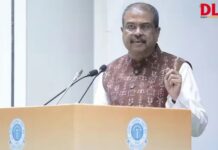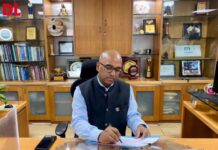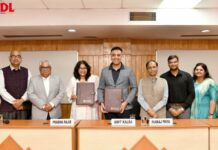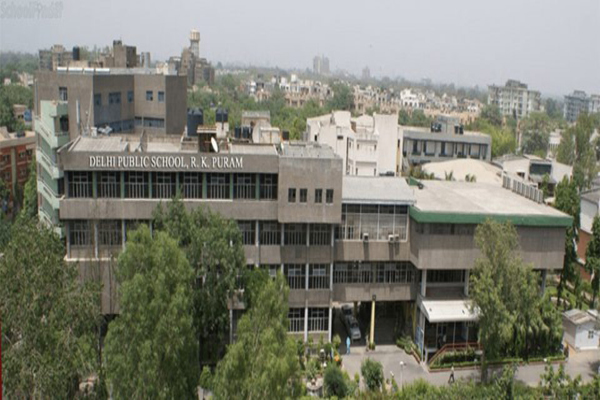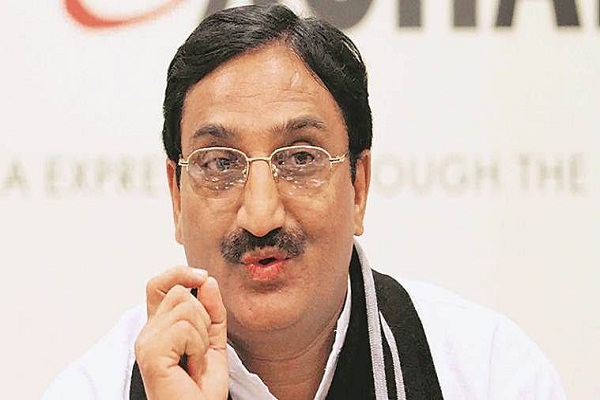
A six-member panel of experts from government and private industry has been set up by the Human Resource Development ministry to fix norms for selecting private firms who can participate in Public Private Partnership (PPP) for setting up 20 new Indian Institute of Information Technology.
London university looking into Gaddafi’s son plagiarism claims
The London School of Economics (LSE) said on Tuesday it was looking into claims that Colonel Muammer Gaddafi's son, Saif al-Islam, had plagiarised his doctorate thesis. “LSE is aware that there are allegations of plagiarism concerning the PhD thesis of Saif Gaddafi,” the university said in a statement. “The School takes all allegations of plagiarism very seriously, and is looking into the matter in accordance with standard LSE procedures.” Saif al-Islam studied at the LSE between 2003 and 2008 and left with a Master of Science degree and a doctorate. But, according to British media reports, he employed a ghostwriter and copied parts of his thesis. The LSE has already had to defend itself from criticisms over its involvement with the embattled Libyan leader after it emerged that the Gaddafi International Charity and Development Foundation had in 2009 pledged a donation worth 1.5 million pounds.
Employ-ability in High Growth Sectors
The bookish knowledge of a new employee is not enough in the long run as sustainability is a big factor in the growth of an individual. Thus researching into the deficit, universities and industries are conducting workshops; experts from the industries are training students at various levels as per their needs. Short-time programmes are on the focus of both sides and are proving beneficial in the long run of enhanced employability skills
By Jaydeep Saha
In recent times, our higher education system has been discussed in many fora with regard to its relevance and quality. India is ranked third in terms of graduates output next to that of USA and China, but in terms of quality, we are trailing, as hardly one percent of our students get quality education.
Today's high unemployment rates mask longer-term talent shortages that May affect both developing and developed countries for decades. The global population of 60 years and older will exceed that of 15-years-old or younger for the first time in history by 2050. But, the talent crisis will start much sooner. Barring technological breakthroughs, the United States, for example, will need to add 26 million workers to its talent pool by 2030 to sustain the average economic growth of the two past decades.
The global IT industry has been a big employer of young talent across the globe because of the increasing influence of IT in business transformation. The global meltdown is being seen as an opportunity to transform across the world and they are looking at IT to lead this transformation. IT has become “glocal”
Union Budget 2011-12
Education Overview
The Union Budget 2011 -12 saw high priority being given to secondary education keeping in mind India's demographic dividend and opportunity of seventy percent of the India's population being of working age by 2025. The allocation of higher education has been proposed for Rs 52,057 crore, an increase of 24 percent over the current year.
Sarva Shiksha Abhiyan
The Sarva Shiksha Abhiyan project has been an important tool for promoting elementary education. The budget provides for more positive measures by proposing an allocation of Rs 21,00 crore, a 40percent increase from the previous year's allocation of ` 15,000 crore.
A modified scheme of 'Vocationalisation of Secondary Education', which has been a centrally sponsored scheme, will be put into operation from 2011-12 to perk up the employable skills of the youth
The budget saw renewed emphasis being given to the promotion of education among the backward section of the population. While post metric scholarships have already been available, there has been a welcome introduction of pre-matric scholarship scheme in the 2011-12 budget. The scholarship scheme has been introduced for disadvantaged students belonging to the Scheduled Castes and Scheduled Tribes studying in ninth and tenth standard.
National Knowledge Network
The budget has proposed that the National Knowledge Network (NKN) will connect 1500 higher education and research institutes through an optical fibre backbone. 190 institutes will be linked through NKN in the present year. The proposal of connecting all 1500 institutions has been proposed to be done by March 2012, as the time for the creation of the core will extend till March 2011.
In order to promote innovations, the National Innovation Council under Sam Pitroda has been instituted to chalk out plans for promotion of innovations in India. Activities for setting up of the State Innovation Councils in every State and Sectoral Innovation Councils aligned to Central Ministries are also underway.
Skill Development
Emphasising on the success of the National Skill Development Council (NSDC) in achieving its target of the creation of skilled workforce, an additional Rs 500 crore has been allocated to NSDC for carrying forward its mandate of creating employable skills to the youth.
They speak on Budget 2011-12
An increase in the number of scholarships for SC/ST students is definitely in line with inclusive higher education and social mobility. Prime Minister's national skill mission is given ample priority. Minority education is also being advanced. As anticipated , overall it has been a good budget.
Prof V N Rajasekharan Pillai
Vice Chancellor,
Indira Gandhi National Open University
Increased allocation in RTE is a good sign and states will be able to implement it more effectively
IGNOU Going Full-throttle in Tourism & Hospitality
The IGNOU School of Tourism, Hospitality Services Management has come up with not only training people but also providing excellent placements in leading organisations in the country for aspirants in the Tourism and Hospitality Sector
The training cell of the School of Tourism, Hospitality Services Management (SOTHSM) of Indira Gandhi National Open University (IGNOU) at the Regional Centre Bhopal in collaboration with Tourism Department, Government of Madhya Pradesh is an initiative and way forward to develop and design vocational training programmes for human resource development in the tourism sector.
The Preparatory Steps
At the very basic level a detailed project report for training 320 students in housekeeping, front desk operations, food and beverage was prepared and submitted to Madhya Pradesh State Tourism Development Corporation. Further to that the project was sanctioned under the scheme of Capacity building for service providers.
An MOU was signed between the Madhya Pradesh State Tourism Development Corporation (MPSTDC) and Indira Gandhi National Open University for the development of the certificate programme and diploma in Hotel operations on Monday 05th January 2009 by the registrar of the IGNOU and the Principal Secretary Madhya Pradesh State Tourism Development Corporation in the presence of Hon. Vice Chancellor and State Tourism Minister.
The project allowed a detailed picture of the expenditure on faculty fees, food, tool kit, uniform, study material and administrative contingency. Nevertheless, the study material was prepared by a group of experts but was essentially approved by the Tourism department. The local needs of the hotel industry were ascertained and contents were tailored to meet its needs. This was critical to make the training employment oriented.
The Areas Of Training
The course was focused to customise it for an industry-specific and job-oriented programme. In consultation with the stakeholders the certificate courses were prepared in following three sectors:
-
Certificate in Front Office Operations (CFO)
-
Certificate in Housekeeping Operations (CHO)
-
Certificate in Food & Beverage Service Operations (CFBO)
Nine books were developed at the Regional Centre level in self instruction mode by the subject experts drawn from various institutions on; -
Understanding Tourism
-
Functional communicative skills and personnel grooming
-
Destination Madhya Pradesh
-
Front office operations Part-1
-
Front Office operations Part-2 (Practical manual)
-
Housekeeping operations Part-1
-
Housekeeping operations Part-2 (Practical manual )
-
Food and beverage service operations Part-1
-
Food and beverage service operations Part-2 (Practical manual)
Special Features of the Project
The course was designed specifically to which includes 60 days of intensive class room sessions and intensive Practical Industrial training in core areas for 60 days in the finest hotel of the Madhya Pradesh.
Facilities extended to the students include, a low fee structure Rs.3000/- per student, free study material and training kits, lunch and refreshments during class room training, two sets of uniforms (including shoes), stipend Rs.1500/- every month during hotel internship.
In the admission process the eligibility criteria is 10+2 in any stream with a minimum 45% marks for Certificate in Front Office Operations (CFO) and Certificate in Food & Beverage Service Operations (CFBO) and 10th with a minimum 45% marks and the batch size- 40 trainees/batch /programme.
The Study Centres of the course are Madhya Pradesh Institute of Hospitality Training (MPIHT) Bhopal, for CFO and Institute of Hotel Management (IHM) Bhopal for CFBO and CHO.
Curriculum and Faculty
These certificate programmes are finely designed for a single stream to create an expertise in a specific stream which May help the student to focus for the selection of the functional area in the industry.
The faculty was identified from the Institute of Hotel Management (IHM), MPIHT, Frankfinn Finishing School and managers of reputed hotels.
SOTHSM finalised the time table, assigned classes to faculty and monitored the conducting of the contact sessions.
Preparation of assignments, guiding students for project work.
-
Log books for hotel training maintained by trainees and verified by manager/trainer.
-
Evaluation at the end of the classes.
-
Grading of students on the basis of their performance.
-
Certification by IGNOU R.C, Bhopal.
-
80% attendance in classroom and internship was mandatory.
Total number of students certified under Certificate in Front office Operations( CFO), Certificate in Housekeeping Operations (CHO) and Certificate in Food and beverage Service Operation(CFBO) is 87, 43 and 45. Of these according to the records maintained in the placement cell of IGNOU & MPIHT 80% of the students got job offers. These placements were effected in reputed companies like PVR, ITC Groups of Hotels, Barbeque nation and in reputed three star category hotels both inside and outside Madhya Pradesh.
These courses are designed with a multi-dimensional focus which generates the skilled personnel's for the growing tourism and hospitality sector of the state and facilitate the unemployed youth of the state to enhance their skill and avail the benefits of the jobs opportunities in the tourism and hospitality sector in the state and other parts of the country.
This course not only provides the basic technical knowledge about the hotel industry, but also helps in the improvement of personality and communicative skills of the students, which help these students to enter the booming tourism sector.
Education for Employability through Sustainable Initiatives
Employability has been one of the key problems plaguing the society across the developing countries. There is a strong need for developing a national academic framework that promotes 'education for employability'. The Planning Commission, Government of India has very aptly started the process of preparing an approach to the 12th Five Year Plan and Twelve Strategy Challenges have been identified to initiate these consultations- Enhancing the Capacity for Growth, Enhancing the Skills and Faster Generation of Employment, Managing the Environment, Markets for Efficiency and Inclusion, Decentralisation, Empowerment and Information, Technology and Innovation, Securing the Energy Future, Accelerated Development of Transport Infrastructure, Rural Transformation and Sustained Growth of Agriculture, Managing Urbanisation, Improved Access to Quality Education, and Better Preventive and Curative Health Care. A cursory look at the 12th Plan Strategic Challenges indicates the significant roles of education, skill and employability in all the sectors. Indira Gandhi National Open University (IGNOU) will participate proactively in this dialogue initiated by the Planning Commission to accelerate faster, more inclusive and sustainable growth.
The first four year period of the 11th Plan (aptly described as Education Plan) has witnessed unprecedented growth and consolidation in the activities of IGNOU. Some of the important achievements of IGNOU are establishing 11 more new schools, getting the best faculty, experienced consultants, full-time research and teaching assistants and developing relevant new programmes for these schools. The necessary inputs for these activities were given by National Knowledge Commission, Planning Commission and Parliamentary Committee on Higher Education.
This period has also been very fruitful for the University in its national and international networking for effective and optimal utilisation of intellectual capabilities and infrastructural facilities for providing knowledge and skills to vast number of people in a financially sustainable way.
The University has maintained its exacting standards as the premier national resource centre for open and distance learning and seamless provider of quality education, at par with other international institutions of higher learning. The University has also been unwavering in its commitment on access to education and equity in opportunities to women, scheduled castes and scheduled tribes, the rural population, remote areas, tribal regions, the differently-abled and the socially and economically weaker sections of society. The student enrolment in IGNOU has doubled in the past four years from 1.5 million to over 3 million, prompting the United Nations Educational, Scientific and Cultural Organisation (UNESCO) to declare it as the largest, most diverse and inclusive institution of higher learning in the world in 2010. Partnering the Government in its various plan schemes and aligning and streamlining teaching and training activities with national priorities delineated by the Planning Commission in the 11th Plan helped the University to grow in the right perspective.
The special issue is an attempt to explore the employability needs of the new age economy. There is a strong need for a well coordinated and comprehensive approach substantially equipped with the proactive participation of the academic community, administrative authorities and statutory bodies along with the ministry to achieve the desired goal. We envision such a collaborative path in approaching the Twelfth Plan for Inclusive Education, Training and Capacity Building at all levels.
With Best Wishes…
International Conference on Digital Libraries and Knowledge Organisation
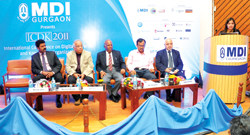
Management Development Institute (MDI) in association with Indian Association of Special Libraries and Information Centres (IASLIC) and INDEST-AICTE Consortium, Ministry of HRD, Government of India had successfully organized the International Conference on Digital Libraries and Knowledge Organization (ICDK 2011) during 14 to 16 February 2011 at MDI Gurgaon. International organizations such as UNESCO, South Asian Studies Council of Yale University and Goethe-Institute (Max Mueller Bhavan) were also partners in organising this conference. The conference has brought together over 300 delegates from all parts of the world. Around 50 participants from outside India.
The galaxy of international experts and academicians from the domain of digital information systems and knowledge organization processes who attended the conference as speakers, pre-conference workshop resources persons include names like Prof. Gary Marchionini, Dean & Cary C. Boshamer Professor, School of Information & Library Science, North Carolina University; Prof. Fausto Giunchiglia, Department of Computer Science, University of Trento, Italy; Prof. Mitsuhiro ODA, Department of Education, Aoyama Gakuin University, Japan; Prof. ARD Prasad, Indian Statistical Institute Bangalore and Prof. John Rose of University of Waikato, New Zealand among others.
The conference was inaugurated by Prof Surendra Prasad, Director, Indian Institute of Technology at a function organized at Epicentre Auditorium, Apparel House, Gurgaon on Monday, 14th February 2011. Prof. V.K. Gupta, Director MDI welcomed the delegates. The conference had six pre-conference tutorials on cutting-edge digital library topics by international experts. There were 24 invited talks and over 90 research papers were presented during the conference. The main themes of the conference were: (1) Case studies of digital libraries and institutional repositories (2) Digital preservation strategies (3) Semantic web applications (4) Digital library support for e-learning (5) Knowledge management (6) Web 2.0/3.0 and social media application in information services (7) Knowledge representation models (8) Open access initiatives (9) Web retrieval tools and techniques among others.
The valedictory function was organized on Wednesday, 16th February 2011 at MDI campus. Prof. Mushirul Hasan, Director General of the National Archives of India delivered the valedictory address. Dr. Jagdish Arora, Director, INFLIBNET welcomed the delegates. Prof. V.K. Gupta, Director, MDI presided over the function.
Dr. Antony Jose of MDI was the Conference Chair of this three-day international conference.
As an outcome of the conference, two international journals (International Journal of Computer Applications and Emerald’s journal Program: Electronic Library & Information Systems) will bring out special issues with selected papers from the conference. Apart from that, Edited book(s) with reputed international publishers are also planned covering selective papers from the conference.
Education and Employability
The key determinants for employability of an individual are moving self-sufficiently within the labour market through knowledge, skills and attitudes and the way they use these assets to present themselves to their employers. While some countries put emphasis on changing their education systems to be more employment-centric, in most parts of the world, education and employment are not in sync with each other.
The high growth sectors in India are currently facing acute shortage of employable graduates, thereby hampering fast paced advancement in these sectors. India has one of the highest graduate producers per year in the world. But, this does not equate to a high percentage of employable candidates. Young people in India make up 19 per cent of the population and despite growing demands for skilled employees the unemployment rate is at 50 percent for youth across the country.
A comparatively younger population can equally be a challenge as it can be an immense opportunity for any country. More than 70 per cent of Indians by 2025 will be of employable age. In this context, universalising access to secondary education, increasing the percentage of our scholars in higher education and providing skill training is necessary. India has historically created employment to the tune of 6.5 – 7 million per year, implying India can face significant challenges in employment creation – should growth derail even slightly. Unemployment among the educated youth occurs due to a disparity between the ambitions of graduates and associated employment opportunities accessible to them. In this background, the real challenge is about how we invest in education and ensure we create rich, employable talent that is globally useful. As per the industrial requirement, there is a huge gap between number of students graduating per year and the employment they get after completion of their course. The need was felt to redefine and restructure the entire education system to address this issue.
The budget 2011-12 has brought cheer to the education sector with a hike in the government spending, especially under Sarva Shikha Abhiyaan by upto 40 percent. Vocational education has duly received added impetus through the additional allocation made to the National Skills Development Council and efforts in vocationalisation of secondary education. Skilling the workforce is of urgent necessity in the current scenario. We hope that the current budget will promote further partnerships and initiatives for bridging the employability gap.
Automotive Industry Set for Global Competition
The growth in Indian Automotive Industry has grown at a CAGR of over 14%. The size of the automotive sector in 2008-09 was estimated to be around `1,910 billion. It is expected that an additional 2- 2.5 million employment opportunities per annum will be created in the next decade
The liberalisation of the Indian industry saw significant growth in the Indian Automotive Industry. Today, the Indian Automotive Industry is a significant contributor to the Indian economy, contributing nearly 5% to the country's GDP and about 17-18% to the kitty of indirect taxes to the Government, while investment outlay stood over `83,500 crore in 2008-09.
The evolution translated into a clustered growth owing to high dependence of the industry on integrated supplier network. The nucleated growth further gained support from favourable policies of those particular States wanting to promote industrialisation in their respective regions. As a result, certain key centres of production with high concentration of Auto-Original Equipment Manufatures (OEMs) and Auto-component manufacturers emerged, namely Pune, Gurgaon, Chennai and Bangalore supported by upcoming smaller clusters like Pitampur and Pantnagar.
All this has been in keeping with the Government of India's Automotive Mission Plan (AMP) 2006 – 2016 which envisaged that “India would emerge as the destination of choice in the world for the design and manufacture of automobiles and auto-components. The Output of the automotive sector would be US$ 145 billion contributing to more than 10% of India' GDP and providing employment to 25 million persons additionally by 2016.”
Generating Employment for the Youth
The Automobile segment, comprising of the OEMs, is at the topmost Tier of the Automotive Industry with a wide network of Tier I, II, III level suppliers supporting the OEMs for end product production. In terms of activity, manufacturing is the most key function in the Automobile segment, owing to nearly 60-70% of the manpower engaged in this activity at the manufacturer's end (direct employment). Indirect employment generated by this sector is considerable as personnel are employed in functions such as sales, finance, insurance, etc.
Further, the automotive landscape in India has several underlying support systems which, though not directly linked to the industry, are support areas or “enablers” of growth. Key enabler segments for the core segments of the Automotive Industry include auto insurance, financiers, mechanics, and auto dealers etc. The enabler segments are associated with providing indirect employment to personnel in the Auto Industry and employment in these industries constitutes about 60% to 70% of the total employment in the Automotive Industry in India.
The automotive industry, on account of its backward and forward linkages, is a significant generator of employment – both direct and indirect. It is estimated that the Indian Automotive Industry provides direct and indirect employment to over 13 million people.
Demand for minimally skilled people, which includes Industrial Training Institute (ITI) diploma holders and school educated workmen is expected to be around 12~15 lakh per annum; demand for manpower at the next level
Translation its Role and Scope in India
Translation has helped knit India together as a nation throughout her history. Ideas and concepts like ‘Indian literature’,’Indian culture’,’Indian philosophy’ and ‘Indian knowledge systems’ would have been impossible in the absence of translations with their natural integrationist mission
By K Satchidanandan
The role of translation can hardly be over-emphasised in a multilingual country like India with 22 languages recognised in the eighth schedule of the constitution, 15 different scripts, hundreds of mother-tongues and thousands of dialects. One can very well say that India’s is a translating consciousness and the very circumstances of their real existence and the conditions of their every day communication have turned Indians bilingual if not multilingual. One can even add without exaggeration that India would not have been a nation without translation and we keep translating almost unconsciously from our mother-tongues when we converse with people who use a language different from ours.
Our first writers too were translators. Indian literature is founded on the free translations and adaptations of epics like RaMayana and Mahabharata. Upto the nineteenth century our literature consisted only of translations, adaptations, interpretations and retellings. Translations of literary works as well as knowledge-texts: discourses on medicine, astronomy, metallurgy, travel, ship-building, architecture, philosophy, religion and poetics from Sanskrit, Pali, Prakrit, Persian and Arabic had kept our cultural scene vibrant and enriched our awareness of the world for long. Most of our ancient writers were multilingual: Kalidasa’s Shakuntala has Sanskrit and Prakrit; poets like Vidyapati, Kabir, Meerabai, Guru Nanak, Namdev and others each composed their songs and poems in more than one language.
Translation has helped knit India together as a nation throughout her history. It brought, and still brings languages closer to one another and introduces to one another diverse modes of imagination and perception and various regional cultures thus linking lands and communities together. Ideas and concepts like ‘Indian literature’, ‘Indian culture’, ‘Indian philosophy’ and ‘Indian knowledge systems’ would have been impossible in the absence of translations with their natural integrationist mission.
Translation also plays a role in extending the scope of language and reframing the boundaries of the sayable. New terms and coinages necessitated by translation create new vocabulary and contribute to greater expressibility. One thus learns not only to understand foreign literature and philosophy through the mother-tongue, but also to speak about modern knowledge, from quantum physics to nano-technology and computer-science to molecular biology in the regional language.
Translation strengthens democracy by establishing equality among different languages and questioning the hegemony of some over the others as it proves that all ideas and experiences can be expressed in all languages and they are exchangeable in spite of their uniqueness. It also enables the weaker sections of the society to be heard as they can speak in their own dialects or languages and then get translated into other languages that are more widely spoken and understood. Thus translation contributes to the empowerment of the marginalised or deprivileged sections like the poor, women, dalits, tribals, minorities, the disabled and others.
Translation also helps fight colonial prejudices. For example, by translating our works of literature and knowledge into English, we prove to the world that the coloniser is in no way superior to us as we too have a long history of great writing and research. The British had translated from India only what suited their taste; but now the empire is writing back , telling them what they have to read to understand our peoples and cultures, thus changing their old ‘orientalist’ conceptions of India.
No doubt translation also promotes the growth of indigenous literature and knowledge by bringing into our languages the great wealth of other literatures and cultures. By translating masterpieces from other Indian languages as also from foreign ones, we enrich our own literatures. Thus we also raise our writing standards: this happens especially when we translate great masters of world literature like Shakespeare, Homer, Dante, Vyasa, Valmiki, Kalidasa and Bhasa or more contemporary writers from Tolstoy, Dostoevsky, Kafka, Beckett, Lorca, Eliot and Thomas Mann to Gabriel Garcia Marquez, Mario Vargas Llosa, Orhan Pamuk, J. M. Coetzee, Pablo Neruda, Octavio Paz and others. These exchanges also create new movements and trends.
We are living in an age of translations and the avenues for translators are constantly expanding. Some of these areas and vocations are indicated below:
Literary translation: There are many institutions here and abroad dedicated to literary translation. Translating foreign literature into Indian languages, Indian literature into foreign languages and Indian literature in one language into other Indian languages are all gainful activities in every sense. Sahitya Akademi, Ntional Book Trust, regional literary associations and publishing houses both in English and the languages are on the lookout for capable translators. There is a new interest in Indian literature abroad as the young non-resident Indians who do not know their languages are eager to read their literatures in translation in the languages they know and also as foreign readers are eager to know what is happening in Indian literature. The recent spate of literary festivals all over the world from Berlin to Jaipur and book fairs like the ones held annually at Frankfurt, Paris, London, Bologna, Abu Dhabi etc have contributed to this rising fascination.
The Government of India has also recently responded to this new interest by launching a new mission, Indian Literature Abroad (ILA). Big Indian publishing concerns like Penguin, Macmillan, Orient Longman, Oxford University Press, Harper-Collins, Hatchett etc as well as smaller houses are encouraging translations of literary and discursive works in a big way.
Our freedom struggle and later democratic struggles for change had received great impetus from the translations of the works of Victor Hugo, Tolstoy, Rousseau, Gandhi, Tagore, Emile Zola, Maupassant, Gorky, Premchand, Subramania Bharati
Knowledge Translation: The National Translation Mission, a brain-child of the National Knowledge Commission intends to translate textbooks and classical works in areas like sociology, history, geography, geology, medicine, chemistry, physics, mathematics, linguistics and political science into the Indian languages in order to raise the standard of education done in mother tongues and to render accessible current and cutting-edge knowledge so far available only in English to the rural poor and the backward sections of the society. The Commission is looking for competent translators from English into all the Indian languages and there is evident scarcity in the area.
Media Translation: The print, electronic, visual and auditory media- newspapers, magazines, radio, television, cinema etc- need plenty of translators from one language into another. Many media houses publish papers and journals or run television channels in several languages at the same time and they need quick yet communicative translations of news, serials, film scripts and programmes. Dubbing and subtitling are other areas.