




Home Blog Page 13

Growth Must Feel Personal: How STEMROBO Is Redefining Future-Ready Learning for 2026 and Beyond

Anurag Gupta

2025 taught us something very important: growth and personalization must go together. As we expanded our labs and launched new products, we saw that every school has different needs, every teacher has a different style, and every child learns at their own speed. This will guide our focus for 2026, shared Anurag Gupta, co-founder of STEMROBO, in an exclusive interview with Kaanchi Chawla of Elets News Network (ENN). Edited excerpts:

What have been the most transformative milestones for STEMROBO last year?

2025 has been a truly incredible year for us as we reaffirmed our purpose at STEMROBO.  Every milestone felt less like a business target and more like a real step toward changing how children learn, think, and create. 

Our biggest success this year would be the launch of SIL 1.0, that is the STEAM INNOVATION LEAGUE. Here, students from all over the country came together to compete in a competition that showcased their creativity, knowledge, and awareness. Watching these young students present with such pride and confidence was a reminder of what true education looks like.

The next biggest success would be the establishment of our Dubai-registered headquarters, a smart step that will help us grow faster in the Middle East and reach more countries around the world.

And another major highlight of last year would be our collaboration with the Cyient Foundation that sets up Cyient Labs, a state-of-the-art innovation space in 50 schools across Andhra Pradesh, where STEMROBO contributes as the implementation partner. We also expanded ourselves to Narayana Group of Schools, which helped us reach out to more schools. 

Last year, we also introduced Screen – Free Coding Kits for the young learners.

Because we feel that at the present when technology and screens are everywhere, the children of the Alpha generation should learn the concepts through hands-on experiences and not only screens.

This will imply a paradigm shift on how the foundational skills of STEM will be introduced in India.

These important key events reflect our vision and mission to encourage students to express their creativity and realize their potential.

What lessons from 2025 will shape your strategic priorities or product roadmap for 2026?

2025 taught us something very important: growth and personalization must go together.

As we expanded our labs and launched new products, we saw that every school has different needs, every teacher has a different style, and every child learns at their own speed. This will guide our focus for 2026.

In 2026, we will work on:

  • Improving lab models that can be set up quickly and adjusted for different regions
  • Strengthening our screen-free and hands-on learning tools for young children
  • Creating more personalized learning paths through activity-based and maker-style learning

Our plan for 2026 is simple. We want to grow widely, but we also want our impact to feel personal and meaningful to every learner.

What role do you see generative AI playing in personalized learning, assessments, and skill-building for students in 2026?

Generative AI will be an important part of learning in 2026. It will help students learn in the way that suits them best, at their own pace.

In 2026, we want to use GenAI to:

  • Make learning plans that change for each child based on how well they are doing
  • Replace fixed exams with simple, real-time checks that understand how a child is thinking
  • Give students easy tips and guidance while they try robotics, coding, AI, and maker activities

Generative AI can also make learning more fair by giving every child personalized help, no matter their background. 

2025 saw increased emphasis on NEP 2020 implementation. How has STEMROBO aligned its solutions with NEP goals, especially around experiential learning and skill development?

Our entire approach already matches the core ideas of NEP 2020, which focuses on practical learning, multiple subjects, and preparing students for the future.

In 2025, we supported NEP by:

  • Setting up Innovation Labs and Composite Skill Labs that encourage hands-on and inquiry-based learning
  • Helping schools through teacher training programs that improve competency-based teaching
  • Expanding screen-free and early coding tools so young children can start building basic tech skills
  • Bringing AI, robotics, and activity-based learning into classrooms to build important skills like critical thinking, design thinking, problem-solving, and creativity

Our aim is not just to follow NEP. We want every school to truly bring the NEP vision to life inside the classroom.

What new-age skills do you believe Indian students must master by 2026 to stay globally competitive in STEM and AI-driven careers?

By 2026, students will need a mix of technical skills and people-focused skills to do well in a world led by technology.

The most important skills are:

  • Understanding AI and basic computational thinking
  • Learning by making, designing, and building things
  • Screen-free basic coding for young children
  • Knowing the basics of robotics and automation
  • Reading data and solving problems
  • Thinking creatively and from different angles
  • Working together and communicating digitally

These skills are no longer optional. They are the new basics that students need to compete and grow in a global world.

Also Read: Redefining Higher Education Through AI, Skills and Employability

What does “future-ready education” mean to you, and how is STEMROBO enabling that future today?

For us, future-ready education means helping students grow confidently in a world where AI, automation, and global teamwork are normal parts of life.

It means:

  • Learning by creating, not by memorizing
  • Building real-world skills from a young age
  • Using technology in a safe, hands-on, and inclusive way
  • Supporting teachers so they can guide students in new and innovative ways

We make this possible through our Innovation Labs, Composite Skill Labs, Mini Science Labs, screen-free coding tools, and global programs like SIL.

Our main aim is to turn every classroom into a place where imagination connects with engineering and curiosity connects with future skills.

What is your long-term vision for STEMROBO by 2030, and how do 2025–2026 serve as the foundation for that journey?

Our vision for 2030 is very big and clear :-

We want to take this modern and future-ready education to all parts of India and also grow across the Middle East, Africa, and other global markets.

By 2030, we plan to:

  • Build a strong presence in Africa, across our “Africa 2030” plan
  • Use our Dubai office as the main center for Middle East and global growth.
  • Create a full ecosystem of Innovation Labs, Composite Skill Labs, Mini Science Labs, and screen-free learning tools for young kids.
  • Set up strong channel partners and sales teams so that more schools can easily access our innovation programs.

Everything we are doing in 2025–2026, from expanding partnerships to launching new models and products  is preparing us for this long-term plan.

Our goal is simple: to help build a generation that doesn’t just use technology, but also creates it, improves it, and makes it meaningful for the world.
ThrivePoint Academy: Measurable Results, Community Impact, and a New Model for Student Success

Dr. Timothy A. Smith

A support-heavy, innovation-driven approach to engagement, credit recovery, and “Next Big Step” outcomes.

Across the United States and in many education systems globally, schools are confronting the same urgent reality: too many students are falling behind, disengaging, and leaving school without a diploma or a clear plan for life after graduation. In underserved communities, the stakes are even higher. Students are often balancing responsibilities and barriers that traditional school models were never designed to support, work schedules, family care, transportation instability, housing transitions, anxiety, and academic gaps that compound year after year.

ThrivePoint Academy was created to meet this challenge with a different philosophy and a different operating system.

Rather than asking students to fit into a system built for stability, ThrivePoint is built around the realities of at-promise learners. It is a flexible pathway academy designed to increase engagement, accelerate credits earned, and improve long-term outcomes through a Human + AI support model that is measurable, scalable, and community-centred.

ThrivePoint is not a “program.” It is a school model designed to produce results, and to prove those results with data that authorizers, districts, families, and community partners can trust.

Network Growth Demonstrating Community Need

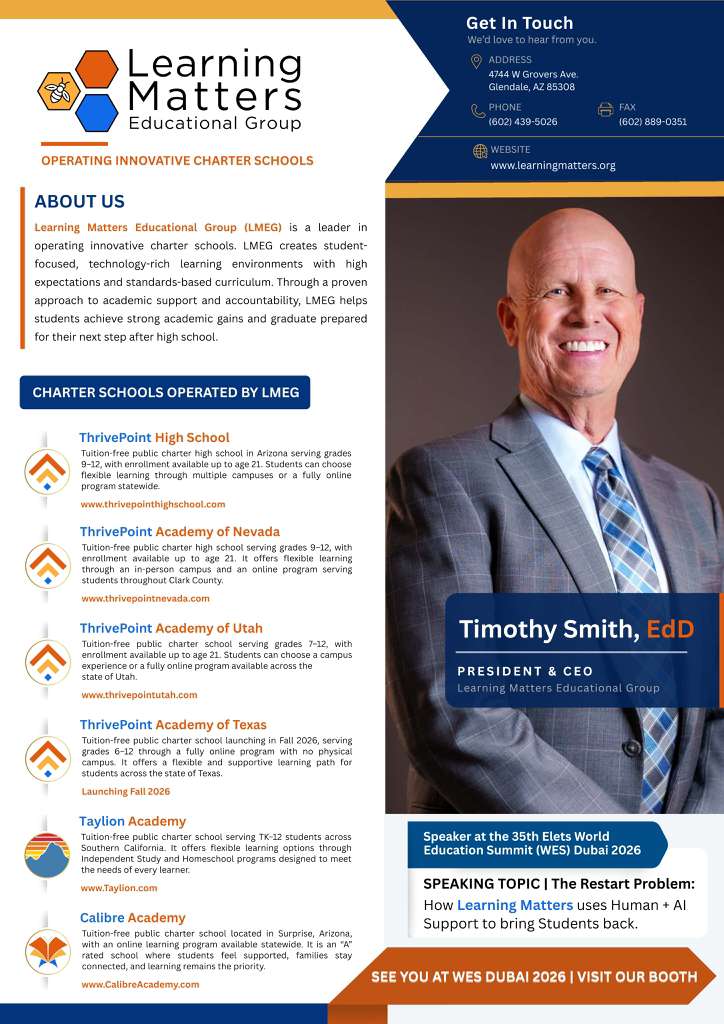
Learning Matters Educational Group and the ThrivePoint Academy network have experienced significant recent growth across multiple states, demonstrating both demand and community need for a flexible pathway model built for underserved student populations. ThrivePoint Arizona currently serves approximately 1,500 students, ThrivePoint California serves 1,000 students, and ThrivePoint Nevada has grown to 500 students in its second year. ThrivePoint Utah launched in year one with 200 students, and the network is preparing to expand further with Oklahoma and Texas launching for fall 2026. This multi-state growth reflects a consistent pattern: when schools combine personalised learning, success coaching, and scalable support systems, students who were previously disengaged re-enter education with renewed momentum and clearer postsecondary direction.

The ThrivePoint Mission: Graduation as a Launchpad, Not a Finish Line

ThrivePoint’s mission is simple and measurable: help at-promise students re-engage, earn credits consistently, graduate on a realistic timeline, and transition into a meaningful Next Big Step.

For ThrivePoint students, graduation is not treated as the end goal. It is treated as a launchpad into a career pathway, a credential, a training program, college, or stable employment with upward mobility.

That future focus is central to ThrivePoint’s identity. Many students disengage not because they cannot do the work, but because school feels irrelevant, overwhelming, or emotionally unsafe. ThrivePoint rebuilds the experience of school around three principles: momentum, belonging, and purpose. This approach aligns with research demonstrating that well-implemented social-emotional learning programs improve both behavioural outcomes and academic performance (Durlak et al., 2011).

Challenging the Traditional Ecosystem: Why Students Disengage

Traditional high school systems often rely on assumptions that unintentionally push at-promise students out: attendance equals learning, content delivery equals engagement, failure triggers intervention, students should “catch up” through increased workload, and one pacing model fits all learners.

These assumptions may work for students with stable routines and consistent support. But for many underserved students, these structures create predictable failure points.

When students fall behind, they don’t simply work harder. They often experience a cycle of overwhelm and avoidance. Missing assignments becomes emotional weight. Logging in becomes stressful. A few missed days become a week. A week becomes a month. And eventually, students disappear quietly, not because they lack ability, but because restarting feels impossible.

ThrivePoint exists to solve that specific problem: the restart problem.

The ThrivePoint Operating System: Human + AI Support

ThrivePoint’s model combines four integrated components that work together to produce measurable outcomes.

Fully Online Learning (Flexibility and Access): Students learn online in a competency-focused structure designed for flexible pacing and personalised pathways. However, ThrivePoint does not treat online learning as content delivery. Research on online credit recovery suggests that outcomes can be limited when online coursework is implemented without strong surrounding supports (Rickles et al., 2024). ThrivePoint addresses this by integrating coaching, resource centres, and rapid re-engagement systems.

Resource Centres (Structure, Stability, Belonging): ThrivePoint uses resource centres to provide stability, structure, and human connection. Resource centres support tutoring, small-group instruction, coaching sessions, quiet workspaces, reliable internet access, testing support, and re-engagement routines.

Student Success Coaches (Accountability and Barrier Removal): At ThrivePoint, student success coaching is not optional; it is the centre of the model. Evidence from structured mentoring interventions shows that consistent adult support paired with monitoring and follow-up can improve attendance and academic outcomes for higher-risk students (Guryan et al., 2020).

AI Support Layer (Speed, Consistency, Personalisation): ThrivePoint uses AI to strengthen the adults in the system, not replace them. AI supports the model by identifying disengagement early, summarising student progress, recommending next steps, and reducing administrative workload so staff can spend more time on instruction and coaching. Humans lead. AI supports.

Also Read: The Use of Systemic Constellations in Systemic Management in Organizations

Innovation That Produces Measurable Results

ThrivePoint’s model is designed to improve results across three categories: engagement, credits earned, and Next Big Step outcomes.

Engagement Results: Detect Drift Early and Respond Fast. Research on early warning indicators shows that attendance, course performance, and credit accumulation, especially in the first year of high school, are highly predictive of graduation outcomes (Allensworth & Easton, 2005, 2007). ThrivePoint operationalises this research through weekly engagement metrics such as weekly active participation, time-to-contact, and time-to-return.

Credits Earned: Micro-Lessons and 10-Minute Comeback Plans. Microlearning research suggests that brief, targeted learning experiences can support retention and performance when designed intentionally and aligned to learner needs (Shail, 2019). ThrivePoint applies microlearning as a structured restart pathway that reduces overwhelm and restores momentum.

Next Big Step Outcomes: Purpose-Driven Planning. ThrivePoint measures success beyond graduation by tracking future readiness. Career academy research shows positive impacts on postsecondary and labour-market outcomes when learning is connected to real opportunity structures (Kemple, 2004).

Community Impact: Strengthening Families, Workforce, and Local Stability

ThrivePoint’s impact extends beyond individual students. When at-promise learners graduate, communities benefit in measurable ways through stronger families, workforce development, reduced dropout-related social costs, and scalable school models that can expand responsibly across underserved regions.

Responsible Innovation: Ethics and Trust Built In

ThrivePoint recognises that AI in education must be implemented with care. Ethical design is not optional, especially in underserved communities. ThrivePoint uses role-based access to sensitive data, transparency with students and families, human review for high-stakes decisions, bias monitoring, and strict guidelines for staff use of AI tools. Trust is the foundation of re-engagement.

A Second-Chance Engine Built for Scale

ThrivePoint Academy is built on a belief that should reshape the education ecosystem: students don’t need more pressure, they need a restart that feels possible.

By combining flexible online learning, resource centres, success coaching, AI-driven early warning, micro-learning comeback plans, and Next Big Step planning, ThrivePoint creates measurable outcomes that move students forward, toward graduation and beyond.

Not just a new program. A new ecosystem. One designed for the students who need it most.

Views expressed by: Dr. Timothy A. Smith, President and CEO, Learning Matters Educational Group, United States of America

Redefining Higher Education Through AI, Skills and Employability

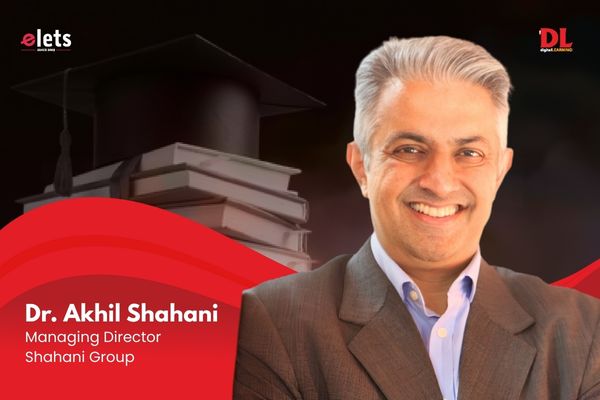
Dr. Akhil Shahani

“AI literacy is going to be non-negotiable not just prompting, but using AI to automate tasks, design workflows and speed up decision-making,” shared Dr. Akhil Shahani, Managing Director, Shahani Group, in an exclusive interaction with Kaanchi Chawla of Elets News Network (ENN). He emphasised that institutions must move beyond viewing AI as a supplementary tool and instead embed it into core academic, administrative and governance processes to remain future-ready. According to him, the real impact of AI in education will be realised when leaders focus on responsible adoption, upskilling educators, and aligning technology with learning outcomes rather than treating it as a standalone innovation. Edited excerpts:

Looking back at 2025, what has been the most significant shift you witnessed in higher education and employability training across India?

2025 was the year when higher education finally admitted what industry has been hinting at for a decade: “Don’t show me your degree, show me what you can do on Monday morning.” Employers became far more selective about real competencies, especially in finance, tech & sales roles.. Students also became more direct, they now walk in asking, “Sir, placement kitna assured hai?” And honestly, that clarity is refreshing.

Institutes that survived this shift were those willing to embrace outcome-based learning, blended formats, and micro-credentials. The old model of four classrooms and one PowerPoint no longer cuts it. If anything, 2025 made career ROI the real syllabus.

What emerging digital skill sets do you believe will become non-negotiable for students entering the job market in 2026?

AI literacy is going to be non-negotiable — not just prompting, but using AI to automate tasks, design workflows and speed up decision-making. I’ve seen students who couldn’t draft an email last year now using AI to create full client pitches. Now, with AI pervading all sorts of enterprise systems like CRM, Excel, Project Management etc, they need to know how to use it well across these areas.

Data skills are becoming the new English, every job needs at least basic analytics and dashboards. Add to that cloud skills, cybersecurity fundamentals and global communication abilities. And yes, the ability to collaborate asynchronously with teams in four different time zones without losing your sanity — that’s a digital skill too!

Could you share key milestones achieved by your institutions this year—whether in placement outcomes, partnerships, or digital learning innovations?

This year we’ve doubled down on hybrid learning & establishing offline centres. We’ve partnered with 8 colleges in Mumbai & launched franchise locations in Gujarat & Madhya Pradesh. Along with Thadomal Shahani Centre For Management (TSCFM) which runs our business courses, we launched Thadomal Shahani Institute of Technology (TSIT) to run our technology courses. This expands the bouquet of courses we run in our partner college locations. In addition, we’ve scaled up our inhouse recruitment firm, Ask Talent Services (ATS) to offer our graduates better job opportunities & also offer mid-level placement services for our corporate clients. 

AI & Data skills have been rolled out across all our courses to enhance our students’ employability. We’ve partnered with some UK Universities to offer our students pathways to global MBAs through them. 

What policy-level reforms or regulatory changes in 2025 do you believe have been most beneficial for skill-focused institutes like Ask.CAREERS?

The National Credit Framework (NCrF) continued to gain traction, making modular learning far more mainstream. For institutes like ours, which thrive on short-cycle, job-ready training, this was a blessing. The government’s encouragement of industry collaboration through apprenticeships, CSR partnerships and practical training also aligned well with our model.

What helped most was the policy push around hybrid and digital learning. The idea that high-quality education can be delivered flexibly without compromising outcomes is something we’ve championed for years. 2025 essentially validated that direction.

With the rise of AI-first job roles, how are you preparing faculty for this next wave of digital transformation?

Frankly, preparing faculty for AI has been quite interesting. Some of our senior professors were initially concerned about how AI helps students cheat on their assignments. However, once they realised it could cut their administration workload and give them creative superpowers, the adoption curve shot up.

We run regular AI training programs for faculty from lesson planning to simulations, content creation and assessment design. Many of them now co-create digital modules with industry mentors. The biggest shift, however, has been mindset: moving from being a “sage on the stage” to a “guide on the side,” helping students use technology to achieve learning outcomes rather than memorise content.

Also Read: India’s New Path to Global Universities

If you had to define 2026 in one theme for the education sector what would it be and why?

For me, the theme of 2026 is “Personalised Employability at Scale.” Students don’t want generic courses anymore; they want personalised pathways that help them achieve specific career goals. And thanks to AI and adaptive learning, we can now deliver that at scale.

As India’s digital economy grows and industry sectors get more sophisticated, employers are expecting job-ready talent, not just degree-holders. 2026 will belong to institutes that combine technology, industry alignment and personalised learning,  the ones that can help an ordinary student become an extraordinary professional. That’s the ecosystem we’re building across our institutions.


The Use of Systemic Constellations in Systemic Management in Organizations

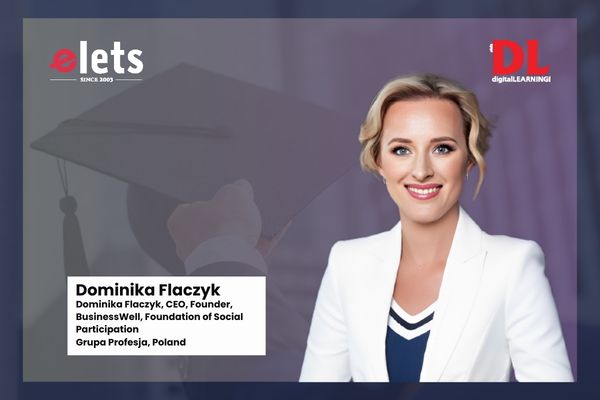
Dominika Flaczyk

The competitive advantage of a modern enterprise lies, among other things, in the functioning of its processes, their efficiency, relationships, and a systemic approach to both the internal and external environment of the company. Today’s economy is largely based on intangible values, human capital, and the mutual relationships between people. Knowledge of these factors and the ability to manage evolving systems of interconnections appear to be just as crucial today as the development of modern technologies.

Every organization is a system composed of numerous elements, such as employees, customers, products, services, mission, professed values, networks of partners, suppliers, sales markets, and so on. A system exhibits characteristics that differ from the mere sum of its parts. It can even be compared to a living organism, in which every cell is connected and individual cells influence the functioning of the whole. Individual systems have their own dynamics resulting from the connections and constantly changing relationships among all their components. When one element changes, that change simultaneously affects all the others.

This article presents the specificity of the systemic constellation method in organizations (conceptualization), indicates its possible applications, and highlights its advantages and limitations in the context of organizational management. In the systemic perspective, the fundamental paradigm is a broad and holistic view and examination of the organization. Systems theory was originally a biological theory and was later developed and expanded by cyberneticists and engineers (systems engineering). It also includes strands of social sciences such as sociology and economics. More recently, it has aimed at increasingly broad generalizations under the terms “systemics” or “general systems theory.” Today, this theory aspires to comprehensively explain the functioning of living organisms, societies, and technical/artificial systems. The organizational system that has become the central focus of this school of thought is the enterprise.

The Systemic Approach to Management

Many modern management theories are based on assumptions similar to those of the network (systemic) approach, identifying seven fundamental theoretical foundations:

  • Whole and part – a system is a dynamic whole composed of diverse parts;
  • Networked nature – refers to the relationships between parts or mutual interactions occurring between systems;
  • Openness – no system functions autonomously and must adapt to external circumstances to survive in a dynamic environment;
  • Complexity – systems can assume many different states over a given period in order to survive in a changing and largely unpredictable environment;
  • Order – the whole is described by a known pattern; the system is created through rules that enable people to orient themselves within a given structure, understand the whole, and eliminate errors;
  • Control (steering) – understood as the system’s ability to self-regulate, based on information (control is divided into steering and regulation);
  • Development – understood as the learning process of the system.

At the same time, independently of systemic management theory, the method of systemic constellations in business and organizations has been developing dynamically for over 20 years and has gained popularity worldwide. It has been used by companies such as Daimler-Chrysler, IBM, McDonald’s, Microsoft, and BMW. The method was discovered and refined by the German psychotherapist Bert Hellinger, who applied it in short-term therapeutic interventions. It was later adapted to business needs and further developed by business consultants.

The method refers to the systemic level of organizational functioning, similarly to how an individual functions within a social system. Each of us is connected to various systems. The primary and original one is the family system, in which family members are linked by a range of different relationships and dependencies. The systemic constellation approach in organizations focuses more on managing relationships than actions, illustrating relationships between departments as well as team members, and contributes to the overall effectiveness of the organization.

Systemic constellations emerged from the phenomenological philosophical approach. The phenomenological method consists of observing and describing what is directly given and is characterized by an absence of preconceived assumptions. Therefore, in systemic constellations there is no predefined theory; what is available, such as the basic “laws of the system” are regularities discovered during work with the method.

The essence of the method lies in the fact that after the client defines the topic of the “constellation consultation,” people not directly connected to the situation are “used” to represent individuals or aspects of the enterprise. Bert Hellinger discovered that there is a phenomenon whereby people in no way connected to the constellation topic can access information about hidden dynamics, emotions, and events within the system. Hence, the method uses representatives, individuals who agree to represent people or aspects of the organization.

A trained consultant, also known as the facilitator, using verbal and non-verbal information from the representatives, reveals the image of the system, provides insight into operating mechanisms and hidden dynamics, and, with the client’s consent, initiates a process of change conducive to resolution. The systemic approach to management ensures greater clarity and simplicity of processes and relationships within the organization, creating a coherent and integrated management system.

The systemic constellation method is based on principles similar to those of systemic management theory. Knowledge of the laws governing a system is crucial for management. The first step in systemic consultation is to verify whether the laws that create order in the system are being respected. The most common source of problems in a system is precisely the violation of one or more of these laws.

According to systemic constellation theory, every organization functions properly if three fundamental laws (assumptions) are fulfilled:

  • Everyone has an equal right to a place in the system – the principle of respect and recognition of competence;
  • Within the system, there is an appropriate order/hierarchy of positions based on length of membership;
  • In every exchange, a balance between giving and taking (costs and benefits) must be maintained.

Possible Applications of the Systemic Constellation Method

Organizational constellations make it possible to obtain essential information about a system in a surprisingly short time. The size of the system plays little role. The topic of a constellation may concern cooperation among numerous companies within a holding structure, as well as seeking answers to questions related to a small team with high staff turnover.

Examples of applications of the systemic constellation concept and method include:

  • A diagnostic instrument – the method helps find solutions to complex situations within the enterprise system and its environment, clarify goals, avoid pseudo-goals, and develop new perspectives for action; it also provides systemic and often surprising insights into situations requiring solutions and/or decision-making;
  • An instrument of change – effective when major organizational changes are required, such as creating a new organizational structure in which all managers have their place and work in harmony;
  • Establishing new enterprises or making merger decisions – useful as a tool in designing new ventures and in negotiations;
  • A recruitment tool, for example when hiring for key positions;
  • A significant decline in employee engagement;
  • Long-term difficulties with company profitability;
  • Conflicts or stagnation in the development of company boards, partners, or management teams;
  • Identifying and analyzing bottlenecks, such as departments being overloaded with work, understaffed, unclear organizational structures, blurred role boundaries, or insufficient coordination and communication;
  • Organizational leadership and improving information flow;
  • Behavioral change – the method helps change behaviors that generate unnecessary tension, such as lack of respect, coalition-building and deadlock, arrogant or rebellious behavior, or high employee turnover;
  • Searching for realistic goals and aligning team members toward them, creating action strategies;
  • Designating a successor in a family business;
  • Examining one’s position within the organization;
  • Creating a positive workplace atmosphere;
  • Clarifying issues related to marketing, introducing new products and services, sales, and customer relationships;
  • Testing or searching for new areas of business development.

Systemic constellations have been used for nearly 40 years in psychotherapy, psychological support, career counseling, and business. They are an “ultra-short-term” method, meaning that usually a single constellation is sufficient to reach the root cause of a problem and reveal a solution. Example applications include company restructuring, mergers and acquisitions, leadership changes, personnel changes, recruitment, marketing decisions, and organizational dysfunctions that are difficult to explain logically—such as high turnover, declining revenue/profits, low employee morale, customer issues, communication problems, internal conflicts, and burnout.

During a constellation, collective intelligence operates, helping to unravel highly complex issues in a transparent way—often too complex to be solved through analytical thinking alone. Furthermore, constellations facilitate identification of the authentic root cause of a problem without wasting resources on secondary issues. Crucial here is insight into where to begin, who in the system needs to change and to what extent, and which problems are primary versus secondary. Knowledge of the system as a network of interdependencies is essential.

During and at the end of the consulting process, the systemic constellation method works excellently for testing possible solutions, increasing the amount of available information before making decisions critical for the organization. For example, in the recruitment process, when several candidates meet all predefined criteria, systemic constellations can help select the best candidate whose competencies and way of working will best “resonate” with the organizational system. The same applies to selecting members of project teams or identifying who will perform best as a team leader.

Advantages of the Systemic Constellation Method

The concept of systemic constellations offers a holistic and symbolic approach to managing an organizational system. Solutions obtained through this method are clear and based on multiple actions of the systemic consultant. A constellation session requires the presence of only the company owner, department head, or employee affected by the difficulty and/or facing dilemmas. It is neither necessary nor advisable to involve all parties concerned, due to time efficiency, privacy, and the need to maintain neutrality for greater objectivity of insight.

Companies using the systemic approach and systemic constellation method value it for its simplicity, effectiveness, and excellent cost-to-result ratio. Examples include subtle issues such as a founder’s lack of humility and respect for work repelling customers, or a forgotten, disreputable event from the organization’s history whose systemic memory casts a shadow over the company’s ability to achieve higher profitability.

It is intriguing that participants in a constellation possess no information about the people they represent. This involves a particular flow of information that is neither verbal nor mental. It is unclear how such information transfer occurs, although certain concepts exist, such as Rupert Sheldrake’s theory of morphogenetic fields or selected models of molecular biology.

Relationships in constellations are usually multi-aspect, multi-level, and largely unconscious. Systemic constellations make it possible to reach this unconscious dimension, identify entanglements and disturbances in relationships with other system members, and initiate a process of “healing.” The success of implementing an appropriate strategy depends on employees; therefore, it is important to manage relationships effectively, fully utilize organizational potential, and improve processes as a source of competitive advantage.

This method allows hidden information about the system to be brought to light, supports changes in the area of human relations, and contributes to organizational health. Constellations help draw universal conclusions that restore order in organizations, support strategic and operational management processes, and provide rapid diagnosis in crisis situations. Remarkably, working with just one person from the company can trigger change throughout the entire system.

Also Read: ODM Educational Group Expands Beyond Borders with Its First International Campus in Dubai, UAE

Summary

The systemic constellation method in organizations is independent of origin, beliefs, or leadership styles, as it is based on universal principles that ensure coherence and clarity of a system composed of interconnected elements. The systemic perspective reveals intangible, psychological, and “energetic” connections, offering an alternative approach that can release energy and introduce order within both small and large, complex organizational systems.

The method is effective because it is alive and continuously applied in management practice across many developed countries, corporations, and SMEs alike. This approach is distinguished by speed, clarity, and simplification of processes, which is extremely important given the complexity, diversity, high dynamics, and unpredictability of today’s economic environment, where we are constantly threatened by information overload leading to organizational chaos.

Views expressed by Dominika Flaczyk, CEO, Founder, BusinessWell, Foundation of Social Participation, Grupa Profesja, Poland


ODM Educational Group Expands Beyond Borders with Its First International Campus in Dubai, UAE Born in Odisha. Built Across India. Now to the World.

ODM Educational Group

ODM Educational Group, one of India’s most respected and fastest-growing K–12 school networks, has announced a landmark achievement — the establishment of its first international campus in Dubai, United Arab Emirates with acquisition of Sabari Indian School, Dubai. Sabari is a KHDA – “Good”-rated CBSE school in Deira locality of Dubai.

This milestone marks the beginning of ODM’s global journey as it takes Indian educational excellence to an international platform, reinforcing the Group’s vision to build a world-class network of schools rooted in Indian values and powered by innovation.

A Defining Step for Indian Education

From its humble beginnings in Odisha, ODM Educational Group has evolved into a multi-state education leader with campuses across Odisha, Jharkhand, West Bengal, NCR, and now the UAE — serving over 11,500 students with a dedicated team of 2,000 educators and professionals across seven campuses.

Over the last two decades, ODM has earned a reputation for academic excellence, strong value systems, and progressive education models that integrate sports, creativity, and innovation into mainstream learning. The Group’s entry into the UAE marks its transition from a nationally admired institution to a globally recognized education brand.

Leadership Vision

Commenting on the milestone, Swoyan Satyendu, CEO of ODM Educational Group, said:

“ODM was born in Odisha with a vision to redefine K–12 education through excellence, empathy, and innovation. Over the years, our journey has expanded across states, impacting thousands of young lives. This step into Dubai is a natural progression — a reflection of our commitment to take Indian education and values to a global stage.”

The chairman, Dr. Satyabrata Minaketan added:

“Our goal is not just geographical expansion, but the creation of learning ecosystems that nurture global citizens while staying deeply connected to Indian ethos.”

Newron – The Education Arm of ODM

The global expansion has been driven through Newron, the education arm of ODM Educational Group, which oversees the Technology, Academic & Operational excellence of all ODM schools in India and abroad.

Newron embodies ODM’s modern, system-driven approach to schooling — integrating world-class educational practices, digital platforms, and institutional processes that ensure every ODM campus reflects the same standards of quality and care.

Through Newron, ODM continues to extend its academic philosophy, leadership framework, and institutional expertise to new regions — including the UAE — with the same commitment to integrity and impact.

ODM’s Growing Footprint

With a strong presence in multiple Indian cities — including Bhubaneswar, Gurgaon, Ranchi, Durgapur, Gurgaon — ODM Educational Group stands among the few Indian K–12 institutions to successfully expand internationally.

The Group’s global campus in Dubai will follow ODM’s established model of holistic education, offering a blend of academic excellence, international exposure, and character development. It will also open avenues for cross-cultural learning, student exchanges, and faculty collaborations between Indian and UAE campuses.

The Road Ahead

ODM’s UAE chapter is just the beginning of a broader international vision. The Group aims to develop a global network of Indian-origin schools that represent India’s educational strengths — discipline, innovation, and values — while adapting to the aspirations of global learners.

Newron will continue to enable this journey as the Group’s educational backbone, driving academic consistency, operational quality, and technological transformation across all campuses.

About ODM Educational Group

Founded in Bhubaneswar, ODM Educational Group is one of India’s premier integrated school networks, widely recognized for its academic rigor, holistic development programs, and innovative educational approach. With over two decades of legacy, ODM today educates more than 11,500 students across 7 campuses in India, supported by a 2,000-member team of educators and professionals.

Through its education arm, Newron, ODM operates its network of schools across India and internationally, ensuring that every campus embodies the Group’s vision of empowering students with knowledge, values, and global competence.

Is literature dead? Reawakening it through Sound Movie Pedagogy for inclusive literacy

Dr. Cecilia Vallorani

As education enters a post-textual era shaped by artificial intelligence, multimodal communication, and pervasive digital media, traditional reading practices are being challenged by faster, sensory-driven formats. This trend prompts a critical inquiry for educational institutions and cultural organisations: The central question guiding this inquiry is whether literature is undergoing a decline in its role within the educational landscape or if it possesses the capacity to transform into novel experiential forms. This presentation puts forth a solution through Sound Movie Pedagogy, an innovative audio-cinematic approach that integrates narrated text, acting, music, and sound design to transform reading into an immersive, embodied experience.

Sound movies, which are grounded in research on digital orality, storytelling, and inclusive literacy, have been shown to stimulate cognitive engagement while reducing entry barriers for learners who struggle with printed text. Evidence from classroom trials and EdTech prototyping indicates that students exposed to audio-narrative learning activities demonstrate enhanced listening comprehension, vocabulary development, interpretive skills, emotional connection, and creative output. The multisensory structure of this approach has been shown to benefit multilingual classrooms, neurodiverse learners, and those with visual or reading difficulties, offering equitable access to literary content without compromising depth or rigor.

Also Read: The advantages of  an inquiry based approach to learning – Why this matters now in education

The session will present live examples, production workflows, and AI-supported tools for scalable audio creation. It will also highlight how educators and institutions can integrate sound movies into language learning, literature units, and cross-curricular projects. This contribution contends that literature is not becoming obsolete; rather, it is undergoing a process of evolution. The integration of immersive sound experiences has the potential to rekindle a sense of curiosity, imagination, and a profound appreciation for narratives among the forthcoming generation of global learners.

Views expressed by Dr. Cecilia Vallorani, CEO & Founder, EchoEd L.LC-FZ, UAE

The advantages of  an inquiry based approach to learning – Why this matters now in education

Emma Navin

“Tell me and I forget, teach me and I may remember, involve me and I learn.” attributed to Benjamin Franklin.

For many years, education has relied heavily on rote learning, memorising facts, formulas, and definitions to repeat them when tested. While this approach can help students recall information quickly, it often falls short in developing deeper understanding, creativity, and critical thinking. As the world becomes more complex, schools are increasingly shifting toward inquiry-based learning models that better prepare students for real-life challenges.

Inquiry-based learning moves beyond knowledge and memorisation and places students at the centre of the learning process making it far more interesting. Instead of being told, learning facts for the sake of learning facts or simply receiving information, students ask questions, research, explore problems, and actively seek answers. Teachers act as facilitators encouraging curiosity and discussion. This model helps students understand not just what something is, but why it matters and how it connects to the world around them.

Through inquiry based learning models students have opportunities to discuss, collaborate, present and reflect, undertake independent inquiry, apply skills to problem solving and real life projects. For example, defining a real-world problem such as reducing waste in  school. Through guided questioning, they research the issue using a range of sources, gathering data and evaluating different perspectives. Students then collaborate in small groups to discuss and develop possible solutions, refining their ideas based on peer feedback and teacher conferencing.

As part of the inquiry, students present their findings and proposed solutions to an audience, such as peers or their families. This process encourages clear communication, confidence, and leadership. Following the presentation, students reflect on their learning journey, considering both the effectiveness of their solution and the skills they developed, including problem-solving, critical thinking, and collaboration.

This approach encourages students to take ownership of their learning and pursue questions that align with their interests, applying skills to real-life projects, demonstrating leadership by proposing actionable changes and evaluating the impact of their work, thereby connecting classroom learning to meaningful, real-world outcomes.

Rote learning, by contrast, requires students to recall facts, definitions, or procedures with limited emphasis on understanding or application. Learning is typically teacher-directed, with students working individually to memorise content for tests or assessments. While rote learning can be useful for building foundational knowledge (such as times tables or vocabulary), it rarely encourages deep thinking, creativity, or meaningful connections to real-life contexts.

Also Read: Case in Point: How AI and Operational Leadership Close the Learning Gap

Inquiry based learning strengthens a diverse curriculum, spotlights leadership skills,  provides opportunities for deeper learning, inspires pride and leadership and champions children’s interests. One major advantage of inquiry-based learning is engagement. When students investigate topics that spark their interest, learning becomes more meaningful and memorable. It also builds essential skills such as problem-solving, collaboration, and communication, skills that rote learning rarely emphasises. Students learn to think independently, evaluate evidence, and reflect on their learning.

This does not mean rote learning has no place in education. Basic knowledge and foundational skills are still important. However, when memorisation is balanced with inquiry, students gain both knowledge and understanding. The shift from rote to inquiry-based models represents a move toward education that values thinking over repetition and learning over testing.

In embracing inquiry-based learning, schools help students become lifelong learners—curious, confident, and ready to navigate an ever-changing world.

Views expressed by Emma Navin, Head of Junior, St Georges British International School, Rome

The Future of Learning in the Era of AI

Anand Prakash

In 2015, I visited a rural school where a teacher armed with only a chalkboard and relentless determination, taught a class of 70 students. She told me, “I just wish I could give each child the attention they deserve”. A decade later, her wish is no longer impossible. Artificial intelligence has finally given us the tools to deliver personalised learning at scale whether in primary classrooms, university lecture halls, or corporate training centers.

Today, we stand at a defining moment in the evolution of education. AI is not merely enhancing learning; it is fundamentally reshaping how knowledge is created, delivered, and applied. And while headlines often question whether AI will replace humans, the deeper story is about how humans and AI will learn and grow together.

Personalisation at Scale: The New Learning Standard

For decades, educators and corporate trainers have imagined truly personalized learning pathways. But doing that manually across diverse classrooms or large, distributed workforces was nearly impossible. AI has finally made it achievable.

Adaptive learning systems powered by machine learning can now analyze thousands of data points per learner mastery levels, engagement patterns, assessment performance and tailor content in real time. A 2024 HolonIQ report confirms this shift: 38% of global EdTech investment now goes into AI-driven personalisation, and 30% of education institutions have already deployed an AI solution, with another 35% actively running pilots.

In K-12 education, this means students no longer move through the curriculum at the same pace. Instead, AI tutors can break down concepts, provide instant feedback, and offer remediation precisely when and where it’s needed. For higher education, AI-driven diagnostics help faculty identify struggling learners weeks before traditional assessments would have surfaced issues.

And in the corporate world, where upskilling cycles are shrinking from years to months, AI helps employees map career paths, identify skills gaps, and receive curated microlearning content that fits their growth trajectory.

Personalization is no longer a premium feature; it is the new baseline expectation of the next generation of learners.

From Information Consumption to Human Capability Building

AI’s real power lies not in giving learners answers, but in freeing humans to focus on the capabilities that machines cannot easily replicate: creativity, empathy, critical thinking, problem-solving, and sense-making.

A 2023 World Economic Forum survey found that 44% of workers’ skills will be disrupted within five years, driven largely by the rise of AI. However, employers increasingly value hybrid human-AI skills where human judgment is augmented by machine intelligence. This shift is forcing education systems to go beyond content mastery and cultivate “AI-age fluency.”

In schools, this means project-based learning, interdisciplinary problem-solving, and AI-assisted research. In universities, it means integrating AI literacy across disciplines from engineering to humanities. And in the corporate landscape, it means moving from compliance-based training to experiential learning that builds innovation mindsets.

The question is no longer: “What do learners know?”
The real question is: “What can learners do with what they know—especially in partnership with AI?”

A New Era for Teachers and Trainers, Not a Replacement

Whenever I work with educators, one concern surfaces quickly: “Will AI replace us?” The answer is a confident no, but the role will evolve.

AI takes over administrative load, grading, scheduling, assessment analytics—giving educators what they’ve always asked for: more time to teach, mentor, and inspire. A McKinsey analysis suggests AI could reduce teacher administrative work by up to 40%, allowing them to focus on high-value human interactions.

Teachers become learning architects.
Professors become innovation coaches.
Corporate trainers become capability strategists.

AI doesn’t diminish the value of educators—
it amplifies it.

Learning Will Become More Continuous, More Mobile, and More Human

Across all sectors, learning is shifting from episodic (“take a course once a year”) to continuous (“learn while working, doing, exploring”). AI enables:

  • Microlearning that adapts to daily workflow
  • Real-time skills assessments and nudges
  • Contextual learning embedded into tools employees use
  • On-demand mentoring via conversational AI

Picture this future:
A school student gets math help at 8 PM from a personalized AI tutor.
A university student partners with an AI assistant to analyze complex datasets.
A corporate employee receives a timely learning nudge right before meeting a client.

This isn’t tomorrow’s prediction. It’s today’s reality.

Learning is evolving into a living, breathing ecosystem—intelligent, responsive, and seamlessly woven into everyday life.

Also Read: India’s New Path to Global Universities

Equity, Ethics, and Access: The Responsibility Ahead

The promise of AI in learning is extraordinary—but it comes with responsibility.

To realize AI’s full promise, we must ensure

  • Equitable access so students in rural areas benefit as much as those in urban centers.
  • Ethical frameworks that protect student data and privacy.
  • Transparency in how AI makes recommendations and assessments.
  • Teacher and workforce training to ensure humans stay in control of decision-making.

If we fall short, AI risks widening educational gaps. But if we get this right, AI could become the greatest equalizer in the history of learning.

The Future is a Human-AI Learning Partnership

The future of learning isn’t about replacing humans with algorithms. It’s about combining the strengths of both. AI will power the scale, speed, and personalization we once thought impossible and humans will bring empathy, judgment, creativity, and context.

Across schools, universities, and workplaces, this Human–AI partnership is redefining what learning can be. Students receive support the moment they need it. Faculty spot challenges long before grades reveal them. Employees discover personalized growth paths aligned with their ambitions and the company’s future.

When I think back to that teacher in a crowded classroom, overwhelmed by the needs of 40 students at once, I realize something: the challenge she faced for years is finally solvable. Not by AI alone, but by AI working with her — amplifying her abilities, not replacing them.

AI is not the future of learning.
AI and humanity together are.

And that future has already begun.

Views expressed by Anand Prakash, Co-Founder, Calibr

IIT Dharwad Secures ₹18 Crore for Defence Technology Centre of Excellence

IIT Dharwad

The Indian Institute of Technology Dharwad has secured ₹18 crore to establish a Strategic Centre of Excellence in Defence Technology and Industry 5.0, strengthening India’s push towards deep-tech research and indigenous innovation in line with Atmanirbhar Bharat and Make in India (Defence).

The Centre will focus on next-generation defence systems, advanced manufacturing, human–machine collaboration, and AI-driven cyber-physical technologies. Anchored at the dhaRti Foundation Research Park, it will bring together academia, defence PSUs, MSMEs, startups, system integrators, and global OEMs to accelerate TRL-driven research, prototyping, and deployment.

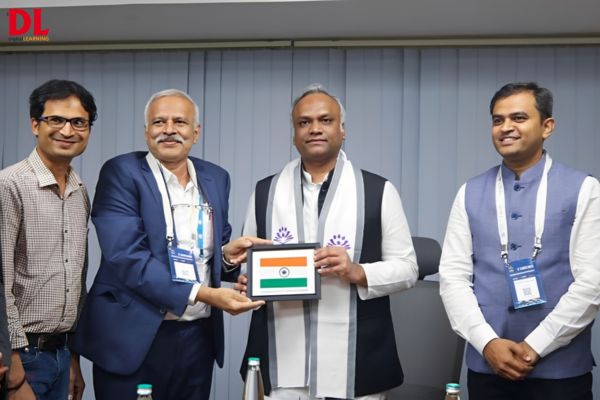
In this regard, Prof. Venkappayya R. Desai, Director, IIT Dharwad; Rakshit Kalyani, COO, dhaRti Foundation; and Prof. Somashekara M A, Associate Dean (R&D External), met Priyank M Kharge, Hon’ble Minister for IT, BT and Electronics, Government of Karnataka, to discuss the Centre’s roadmap.

Also Read: Chhattisgarh’s AI-Powered Education Platform Earns National Recognition as Governance Model

The Centre will be rolled out in phases under the oversight of the Karnataka IT, BT and Electronics Department and the Karnataka Innovation and Technology Society, positioning North Karnataka as a key defence and deep-tech innovation hub.

India’s New Path to Global Universities

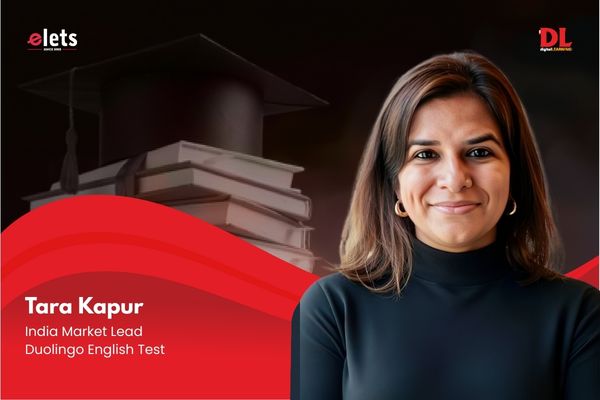
Tara Kapur

The Duolingo English Test has seen rapid and sustained growth over the past few years, reflecting a broader shift in how students and institutions approach English proficiency assessment. Today, the test is accepted by over 6,000 institutions worldwide, more than doubling its acceptance since 2020, shared Tara Kapur, India Market Lead, Duolingo English Test in an exclusive interview with Kaanchi Chawla of Elets News Network (ENN). Edited excerpts:

What emerging patterns are you seeing in program selection and career-driven decision making among students?

India’s outbound education ambitions continue to accelerate and we’re seeing this reflected clearly in how students plan their academic and career journeys. As more Indian students pursue international education across markets such as the United States, Canada, Australia and Europe, demand for English proficiency testing has grown in parallel. India is one of the largest markets for the Duolingo English Test, underscoring both the scale of aspiration and the need for more accessible pathways.

From a program perspective, students are largely focused on graduate education, with business, computer science, mathematics and engineering among the most sought-after fields. While States such as Andhra Pradesh, Telangana, Punjab, Maharashtra and Gujarat continue to be study abroad hubs, the DET has been taken from over 4500 unique locations in India, including remote towns, indicating that interest is no longer confined to a few urban centres but spread across the country.

More importantly, students today are far more intentional about how education aligns with long-term career outcomes. Program selection is increasingly shaped by employability, skill relevance and future resilience. Destination preferences are also evolving. While traditional markets like the United States and Canada continue to attract strong interest, students are expanding their consideration set to include countries such as Germany, Japan and Ireland. These destinations are being evaluated not just on academic reputation but on practical factors such as cost efficiency, visa clarity and post-study work opportunities. This reflects a more informed, research-led mindset, where students are balancing aspiration with return on investment rather than relying solely on legacy perceptions.

What are your expectations for 2026 in terms of student mobility, overall demand, and destination stability?

The demand for international education is expected to remain resilient in 2026, even amid evolving geopolitical and policy landscapes. Indian students will continue to be one of the largest and most influential cohorts globally, driven by strong demographic momentum and sustained aspirations for international education. With over 1.8 million Indian students already studying abroad, the intent to pursue overseas education remains firmly intact.

Student behaviour is also becoming more pragmatic and adaptive. While traditional destinations such as the United States and Canada are expected to continue attracting the highest volumes of Indian students, growth is likely to be steadier rather than accelerated. The United Kingdom and Australia should see stable demand, while Europe and parts of Asia are gaining traction as complementary options rather than replacements. Students are increasingly diversifying their choices to manage risk, cost and policy uncertainty. This shift points to a more balanced and sustainable global education ecosystem in 2026, one where flexibility, transparency and accessibility will play a critical role in sustaining mobility, even in a more constrained macro environment.

How has the Duolingo English Test grown in recent years, and what does its acceptance by over 6,000 institutions signal about changing admissions practices?

The Duolingo English Test has seen rapid and sustained growth over the past few years, reflecting a broader shift in how students and institutions approach English proficiency assessment. Today, the test is accepted by over 6,000 institutions worldwide, more than doubling its acceptance since 2020. This includes all eight Ivy League universities and all 15 members of Canada’s U15 for undergraduate studies. 

The test is trusted by over 3 million test-takers globally and has been taken across 70,000 locations in more than 230 countries and territories, underscoring its global reach. More than half of these students are using the test for undergraduate admissions while nearly a third are certifying their English proficiency for graduate studies. In the United States alone, the Duolingo English Test is accepted by over 4000 institutions, including a significant number of top-ranked universities, with graduate-level acceptance continuing to grow across disciplines such as engineering, business and the sciences.

Beyond scale, this growth signals a meaningful change in admissions philosophy. Historically, English testing has often been limited by access to physical test centres, high costs and logistical barriers, challenges that disproportionately affect students outside major cities. The Duolingo English Test was developed to address these gaps by offering a secure, digital-first assessment that expands access without compromising academic rigour. In India, adoption continues to grow not just in metros but across smaller towns, improving access for students in remote and underserved regions.

This shift is also being driven by student preferences. Globally In 2025, one in five international applicants to US universities applied with Duolingo English Test scores, highlighting growing demand for testing options that are faster, more affordable and aligned with how today’s students live and learn. As universities increasingly prioritise accessibility, fairness and security in admissions, the expanding acceptance of the Duolingo English Test reflects growing confidence in technology-enabled assessments as a credible and inclusive alternative to legacy testing models.

Acceptance numbers:

  • North America : 4300+
  • Europe : 800+
  • Asia : 600+
  • Australia: 200+
  • South America: 110+
  • Africa : 40+

How is growing comfort with digital and accessible testing influencing the adoption of online English proficiency tests, particularly in Tier 2 and Tier 3 cities?

For many students outside major urban centres, traditional English proficiency testing has long been constrained by geography, cost and access. Centre-based exams often require students to travel long distances, incur additional expenses for transport and accommodation and spend time away from academic preparation. These barriers are structural in nature and often unrelated to a student’s actual ability or readiness.

Digital-first assessments like the Duolingo English Test are helping dismantle these limitations. The ability to take a test from home, receive results quickly and retake the exam without significant logistical burden is particularly impactful for students in Tier 2 and Tier 3 cities. Cost also plays a critical role. Compared to traditional exams, digital tests reduce not only the exam fee but also hidden costs associated with travel, lodging and missed study time making the overall process far more affordable.

Beyond convenience and cost, digital testing also helps reduce test-related anxiety, an important factor in high-stakes assessments. Studies comparing the Duolingo English Test with traditional exams show significantly lower anxiety levels among test takers, which can meaningfully influence performance. Together, these factors are expanding access and enabling a broader, more representative pool of students to participate in global education pathways. 

In fact, research conducted by The Quantum Hub further shows that technology-enabled assessments can strengthen India’s testing ecosystem by removing long-standing barriers, improving accessibility, lowering costs and enhancing security. Models such as the Duolingo English Test demonstrate how next-generation testing can align with modern requirements while supporting Indian talent in pursuing global academic opportunities.

Also Read: From Apps to AI: Why Interaction Design Is the Future of Technology Careers 

What are your plans to further expand DET’s reach and institutional partnerships in the coming year?

Over the coming year, the focus is not just on scale but on depth; building sustained awareness and engagement among students, counsellors and institutions, particularly beyond metro centres where access gaps are most pronounced.

On the institutional side, the acceptance milestones achieved over the past year provide a strong foundation. The priority now is to continue expanding global recognition while working more closely with universities to ensure testing innovation aligns with evolving admissions requirements. Partnerships will play a central role in this effort, helping create clearer, more inclusive pathways for students planning to study abroad.

In India, this includes continued collaboration with study-abroad counsellors and education partners to increase awareness and access to global opportunities. Partners such as Leap, TCY and Canam support students with structured practice material through their test prep products, live coaching and personalised feedback, making the admissions journey more navigable. This year also saw the launch of the DETermined scholarship, in partnership with the Office of the Principal Scientific Adviser, aimed at supporting Indian women pursuing STEM education overseas. Additionally, we entered into strategic partnerships with the Neeraj Chopra Classic and the Battlegrounds Mobile India Masters Series to engage students through relatable role models and local-language content, making outreach more accessible and relevant to learners across India

The focus on reach is supported by a dedicated on-ground team driving outreach, partnerships and student engagement across regions. Collaborations with youth organisations such as AIESEC, DU Beat and Under25, are helping extend awareness beyond traditional channels. Market investments, including targeted campaigns and initiatives reflect a long-term commitment to India, not only as a growth market, but as a core part of the broader mission to make high-quality global education more accessible, fair and inclusive.

LATEST NEWS