




Home Blog Page 15

India launches ‘SOAR’ to equip school students & educators with AI skills

SOAR

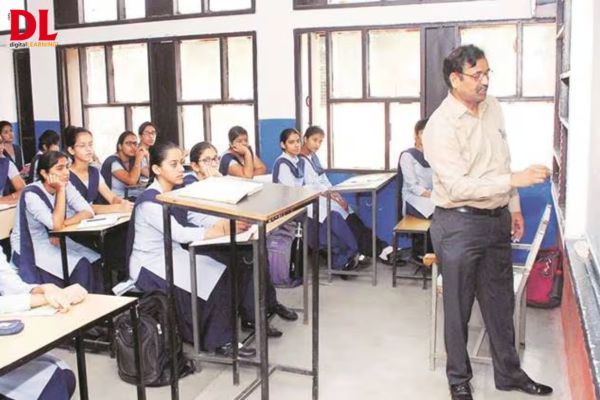
To mark 10 years of the Skill India Mission, the Ministry of Skill Development and Entrepreneurship (MSDE) has rolled out a national-level initiative — SOAR (Skilling for AI Readiness) — focused on building AI literacy among school students (Classes 6–12) and teachers across the country.

SOAR aims to introduce young learners to core artificial intelligence concepts like machine learning, natural language processing, neural networks, and ethical AI practices. Designed in partnership with leading tech companies and academic experts, the curriculum meets international benchmarks.

The program offers a mix of online learning and hands-on workshops, encouraging schools to set up AI labs and student-led AI clubs. This initiative ensures that even students in remote areas have access to quality AI education, supporting the government’s goal of bridging the digital divide.

Structured Modules for Students and Teachers

  • For Students: Three progressive 15-hour modules — AI to be Aware, AI to Acquire, and AI to Aspire
  • For Teachers: A standalone 45-hour course titled AI for Educators

Topics covered include generative AI, ethical use of AI, basic programming, cybersecurity, and insights into AI-driven careers.

Also Read: What if the future of Indian higher education is being rewritten at this education summit in Delhi?

Highlighting a results-driven approach, Minister of State (Independent Charge) Jayant Chaudhary announced that MSDE has secured $14.4 million through the Skill Impact Bond (SIB) in collaboration with the National Skill Development Corporation (NSDC), aiming to reshape skill financing with a strong focus on employment outcomes.

What if the future of Indian higher education is being rewritten at this education summit in Delhi?

education summit in Delhi

Every few years, higher education in India hits a breaking point, where old systems crack, new rules emerge, and only those who adapt fast stay relevant.

That moment is now.

And the decisions shaping what comes next?
They’re not being made in ministries or on social media.
They’re being made in person at the 33rd Elets World Education Summit in Delhi, happening 19–20 August 2025.

If you’re leading an institution, building bold initiatives, or steering through the shifts of NAAC reforms, AI integration, and evolving policy, this isn’t just another event.

It’s the war room.

The agenda isn’t “what’s trending.” It’s: What do we build next? Who do we partner with? And how fast can we move before someone else takes the lead?

NAAC is changing the rules. Are you still playing the old game?

Let’s be honest: accreditation is no longer a box-ticking exercise. It’s a battleground for relevance.

With Prof. Anil Sahasrabudhe, Chairman of NAAC, NBA, and NETF, leading a top-down shake-up of quality frameworks, institutions are under pressure to evolve fast.

This Education Summit in Delhi is where insiders will break down:

  • The new NAAC playbook: transparency, tech, and transformation
  • How top institutions are leveraging reforms to raise rankings and unlock autonomy
  • What not to do as the old system phases out

Miss this, and you’re stuck navigating blind.

Who’s in the room and what are they not telling the internet?

It’s not just a summit. It’s a strategic gathering of the people shaping India’s education narrative:

  • Prof. (Dr.) Tankeshwar Kumar, Vice Chancellor, Central University of Haryana
  • Prof. Rajat Moona, Director, IIT Gandhinagar
  • Prof. Laxmidhar Behera, Director, IIT Mandi
  • Prof. Bharat Bhasker, Director, IIM Ahmedabad
  • Dr. Prafulla Agnihotri, Director, IIM Sirmaur
  • Dr. Vinita Sahay, Director, IIM Bodh Gaya
  • Prof. M. P. Gupta, Director, Indian Institute of Management Lucknow
  • VCs from Adani University, Sharda University, Delhi Skill & Entrepreneurship University, and more.

This isn’t where they give rehearsed keynotes. This is where they talk frankly about what’s working, what’s broken, and what’s next.

If you’re not there, you’re not part of the conversation.
You’re catching up late.

Is your institution still teaching for the past or building for what’s coming?

AI in classrooms. Industry-ready degrees. Startup campuses.


The future of education isn’t theoretical anymore, it’s real, it’s fast, and it’s happening now.

This summit will reveal:

  • How leading universities are embedding AI, XR, and data literacy into core programs
  • What it takes to attract top industry collaborations
  • Why your competition is moving faster than you think, and what they’re doing differently.

Panels will go deep. Private rooms will go deeper. This is where ideas turn into pilots, and pilots scale into breakthroughs.

Also Read: Why global educators are flying to Delhi for the 33rd Elets World Education Summit Delhi 2025

One Room | Two Days | Infinite Impact

If your institution is still waiting for policy clarity, internal alignment, or “the right time”, you’re already behind.

This isn’t an academic ritual. This is where the country’s top minds collide and collaborate.

So here’s the real question:

Will your next big leap begin in that room or will you be stuck reading about it a week later on LinkedIn?

Join the Waitlist for the 33rd Elets World Education Summit in Delhi | 19–20 August 2025

Seats are limited. Stakes are high.
The leaders are already confirmed. The only question is are you?

Free laptops for students under Delhi’s digital education drive

Delhi Government

The Delhi Cabinet has approved the Mukhyamantri Digital Education Scheme, aimed at modernising government school infrastructure and empowering students with access to technology. Education Minister Ashish Sood announced the initiative during a press conference on Tuesday, outlining key highlights of the scheme that includes free high-performance laptops for meritorious students and the establishment of 175 state-of-the-art ICT (Information and Communication Technology) labs across the national capital.

As part of the scheme, 1,200 top-performing Class 10 students will receive free laptops with advanced i7 configurations, supporting their academic and digital needs. The total budget earmarked for the scheme stands at ₹8 crore.

Minister Sood emphasized that each ICT lab will feature 40 computers, built in line with CBSE-approved specifications, aiming to bridge the digital divide and align with the broader objectives of the National Education Policy (NEP) 2020. “This marks a transformative step in preparing Delhi’s youth for the digital future,” he stated.

However, Sood also criticized the previous AAP-led administration, alleging that no functional ICT labs currently exist across the 1,074 government schools in Delhi. He claimed that the existing labs, developed between 2015 and 2019 under the Sarva Shiksha Abhiyan in partnership with the central government, are now non-operational.

In response, an Aam Aadmi Party spokesperson dismissed the allegations, accusing the minister of engaging in political blame games. “Instead of repeatedly targeting the former government, the minister should initiate a proper investigation through the Anti-Corruption Branch if there is any substance in his claims,” the spokesperson said.

Also Read: PhysicsWallah launches Aryabhata 1.0

Contradicting the minister’s assertions, some school officials claimed that their ICT facilities remain operational. A school principal, speaking on the condition of anonymity, said, “Our computer lab is fully functional with 40 working systems.”

The Mukhyamantri Digital Education Scheme aims not only to enhance access to technology for students but also to lay the foundation for future-ready learning environments in government schools, promising a digitally empowered education landscape for Delhi.


PhysicsWallah launches Aryabhata 1.0

PhysicsWallah

Edtech leader PhysicsWallah has introduced its first Small Language Model (SLM), aptly named Aryabhata 1.0, tailored specifically for mathematics preparation for competitive exams like JEE Mains. This innovation reflects the company’s deeper push into AI-driven, domain-specific learning tools that are both resource-efficient and highly accurate.

Co-founder Prateek Maheshwari shared the update on LinkedIn, stating that Aryabhata 1.0—trained using just a single H100 GPU—has already delivered stellar results. The model achieved 86% accuracy in the January 2024 JEE Mains (Maths) and an impressive 90.2% in the April session, surpassing the performance of several larger, more resource-intensive models.

The model is powered by over 130,000 meticulously curated question-and-answer pairs developed by the PhysicsWallah team. Combined with advanced fine-tuning techniques, Aryabhata 1.0 is designed to emulate pedagogically sound reasoning patterns, enhancing problem-solving abilities for learners targeting engineering entrance exams.

Named after the legendary Indian mathematician Aryabhata, the model symbolizes a fusion of India’s ancient mathematical legacy with cutting-edge artificial intelligence.

Looking ahead, PhysicsWallah plans to scale Aryabhata 1.0’s capabilities to tackle JEE Advanced and cover additional mathematical domains. Maheshwari also extended an open invitation to educators, developers, and researchers to engage with the model, test its effectiveness, and contribute feedback to shape future iterations.

Also Read: Centre proposes Higher Education commission of India to streamline regulatory framework

With a robust learner base of over 10 million paid students, PhysicsWallah’s foray into AI education could redefine how competitive exam preparation is delivered in India.

Centre proposes Higher Education commission of India to streamline regulatory framework

Higher Education

In a significant move aligned with the National Education Policy (NEP) 2020, the Ministry of Education is advancing efforts to set up the Higher Education Commission of India (HECI)—a comprehensive and unified regulatory body for higher education. This development was confirmed by Minister of State for Education, Sukanta Majumdar, during a written reply in the Lok Sabha on Monday.

The proposed HECI aims to overhaul the existing fragmented regulatory system by integrating the responsibilities currently distributed among various bodies such as the University Grants Commission (UGC), All India Council for Technical Education (AICTE), and National Council for Teacher Education (NCTE). Currently, the UGC governs non-technical education, the AICTE oversees technical institutions, and the NCTE regulates teacher education programs.

Also Read: Maharashtra Government collaborates with IIT Bombay

Envisioned as a cornerstone reform under NEP 2020, the HECI will function through distinct verticals focusing on regulation, accreditation, funding, and academic standards. The policy outlines a “light but tight” approach to regulation—emphasizing autonomy, accountability, innovation, and good governance while ensuring transparency and operational efficiency.

The concept of a consolidated higher education regulator first emerged in a 2018 draft bill proposing the repeal of the UGC Act, which was later circulated for public feedback. With this current initiative, the government aims to establish a modern, cohesive, and globally competitive education framework for India’s higher education landscape.


Maharashtra Government collaborates with IIT Bombay

Maharashtra Government

The Maharashtra Government has signed a Memorandum of Understanding (MoU) with the Indian Institute of Technology (IIT) Bombay to introduce a specialised Public Policy Certificate Course. The MoU was inked in the presence of Chief Minister Devendra Fadnavis, aiming to enhance the academic and practical exposure of participants in the Chief Minister’s Fellowship Programme.

Chief Minister Fadnavis emphasized that this strategic collaboration with a premier institution like IIT Bombay will equip fellows with critical policy-making skills and broaden their administrative perspectives. “The Fellowship Programme, which has been evolving since its inception in 2015, is now being enriched further with this value-added course that blends academic learning with grassroots governance,” he remarked.

The MoU was formally signed by Rajagopal Devara, Additional Chief Secretary of the Planning Department, and Prof. Shirish Kedare, Director of IIT Bombay. Both parties acknowledged the transformational potential of this initiative in grooming future leaders and policy professionals.

CM Fadnavis highlighted that the core vision of the Fellowship is to integrate academically talented and socially conscious youth into the government system. “These young minds bring fresh thinking and innovative approaches to public administration, ultimately making governance more dynamic and responsive,” he added.

Starting this year, the Fellowship Programme has expanded its reach from Mantralaya to the district level. Fellows will now work directly with District Collectors and Zilla Parishad CEOs, gaining hands-on experience in policy implementation and public service delivery at the grassroots level.

Speaking about the academic framework of the course, Prof. Kedare revealed that the curriculum will feature 20 days of in-person training, 90 hours of online learning annually, and insightful interactions with esteemed professors, former bureaucrats, and industry experts.

Also Read: Deepak Bagla appointed as Mission Director of Atal Innovation Mission

Devara noted that the certificate will equip fellows with analytical tools and knowledge essential for addressing complex developmental challenges and contributing meaningfully to state policies.

This pioneering initiative is expected to not only enhance the capabilities of young professionals but also infuse the state’s administrative machinery with fresh insights and innovative solutions.

Deepak Bagla appointed as Mission Director of Atal Innovation Mission

Deepak Bagla

NITI Aayog has announced the official appointment of Deepak Bagla as the new Mission Director of the Atal Innovation Mission (AIM). A seasoned professional with a distinguished career spanning investment promotion, banking, multilateral engagement, and strategic advisory roles, Bagla is set to steer AIM into a transformative new chapter.

With an exceptional background that bridges the public and private sectors, as well as multilateral organisations, Deepak brings to AIM a rare combination of visionary policy leadership and hands-on execution capabilities. His cross-sectoral experience is expected to catalyze deeper synergies across India’s innovation ecosystem.

Prior to this role, he served as the Managing Director & CEO of Invest India, the country’s premier investment promotion and facilitation agency under the Government of India. Under his leadership, Invest India was globally recognized for its best practices and emerged as a strong pillar for driving innovation, entrepreneurship, and startup development nationwide.

He has also served in key advisory capacities on numerous high-level government panels and was elected President of the World Association of Investment Promotion Agencies (WAIPA), representing India on various prestigious global platforms.

An alumnus of St. Stephen’s College, University of Delhi, Bagla holds Master’s degrees in International Diplomacy and International Trade & Finance from Georgetown University, Washington, D.C.

In his first official remarks after assuming charge, Deepak Bagla stated,

“It is a privilege to lead the Atal Innovation Mission at this crucial juncture. With AIM now entering a renewed phase backed by an expanded mandate, we have a tremendous opportunity to further shape India’s innovation narrative. I am committed to fostering strong collaboration across government, academia, industry, and civil society to build an inclusive, resilient, and globally competitive innovation ecosystem—advancing the Hon’ble Prime Minister’s vision of a Viksit Bharat.”

Also Read: Chandigarh University Online launches CU LMS App

The Atal Innovation Mission, a flagship initiative under NITI Aayog, has been central to India’s innovation and entrepreneurship drive. With the Union Cabinet’s approval of its strengthened mandate, AIM is poised to amplify its national impact through result-oriented, high-impact programs aligned with India’s developmental goals.

Chandigarh University Online launches CU LMS App

Chandigarh University

Chandigarh University (CU) Online marked a significant milestone with the official launch of its Learning Management System (LMS) App, a major step forward in reshaping the digital learning experience for its students. The CU LMS App is designed to make education more flexible, accessible, and engaging, ensuring a seamless academic experience for learners worldwide.

The launch event was graced by the presence of Dr Gurpreet Singh, Director of CU Online, who was joined by two distinguished alumni and two current students. Their participation symbolised the university’s ongoing commitment to bridging tradition with innovation and to connecting the wisdom of past experiences with the aspirations of today’s learners.

Speaking on the occasion, Dr Gurpreet Singh emphasised, “The CU LMS App is more than a digital platform, it’s a promise of our continuous evolution in delivering quality education. Whether our learners are on campus or studying remotely, we aim to meet them wherever they are with the same excellence and support.”

The app offers a user-friendly interface, enriched content delivery, real-time progress tracking, and personalized learning paths, all designed to cater to the dynamic needs of modern learners. It reinforces CU Online’s vision of inclusive, learner-centric education powered by technology.

Also Read: CBSE makes CCTV mandatory in schools

The launch was also a moment to recognise the relentless efforts of the CU Online team whose innovation, commitment, and collaboration brought this project to life.

As CU Online continues to scale new heights, the CU LMS App stands as a testament to its dedication to shaping the future of education—smart, seamless, and student-first.

CBSE makes CCTV mandatory in schools

CBSE

The Central Board of Secondary Education (CBSE) has directed all affiliated schools to install high-quality CCTV systems with audio-visual recording in key areas across the premises. This includes classrooms, corridors, libraries, staircases, and other critical zones, while strictly excluding washrooms and toilets.

The latest update to CBSE’s Affiliation Bye-Laws (2018) also requires schools to maintain a minimum of 15 days of video backup, which must be made available to authorities if needed.

This initiative aims to curb bullying, ensure emotional and physical safety, and deter any potential security threats. It aligns with the guidelines laid out by the National Commission for Protection of Child Rights (NCPCR) in its 2021 manual focused on children’s protection in school environments.

Also Read: EduFund secures $6M in Series A to Power AI

CBSE Secretary Himanshu Gupta emphasized that student safety is both about shielding children from harmful external influences and nurturing their well-being within the school. He stated that adopting modern surveillance tools can play a vital role in ensuring a secure, respectful, and supportive educational space for all students.

EduFund secures $6M in Series A to Power AI

EduFund

EduFund has raised $6 million (approx. ₹50 crore) in a Series A funding round led by Cercano Management and MassMutual Ventures. This brings the startup’s total funding to $12 million.

With this fresh capital, EduFund plans to launch an AI-driven personalized education planning engine, widen loan accessibility for undergraduate students, and deepen its footprint in India’s fast-growing tier-II and tier-III cities — regions where education costs are rising faster than household incomes.

Founded in 2020, EduFund offers a comprehensive suite of services for Indian families planning domestic and international education. Its offerings include tailored investment plans, education loans, forex assistance, visa services, and expert counselling.

Also Read: Why global educators are flying to Delhi for the 33rd Elets World Education Summit Delhi 2025

Currently supporting over 2.5 lakh families, EduFund has partnered with 40+ asset management companies and 15+ lending institutions, spanning banks, NBFCs, and global education lenders. The platform also works closely with consumer brands like Hamleys, DTDC, and Prisms (school ERP).

As per Entrackr, Indian edtech startups have raised $1.2 billion since 2024 — with education loan-focused platforms accounting for over 35% of that total, amounting to $424 million.

LATEST NEWS