Home Blog Page 1532

University of Miami Trades IPS for Top Layer Security System

The Miller School of Medicine engaged in an evaluation of IPSs that included the Tipping Point 2400E it was running as well as a solution from Reflex Security. As a final test, it evaluated the Tipping Point IPS and the Top Layer IPS 5500 in parallel on the network in front of data centers to compare traffic and behavior. 'The Top Layer solution was performing at 28% to 35 % capacity, maybe peaks to 50 % once in a while, which was quite impressive,' said Vijay Haripal, information security manager. 'This sealed the deal, and we then left the Top Layer IPS 5500 in the network to replace the [system] we used previously.'

The university has 15,400 students and about 11,000 faculty and staff. Its school of medicine campus consists of 45 acres within the 100-acre University of Miami/Jackson Memorial Medical Center complex.

US University Takes On-Demand Approach to Multimedia Delivery

Extending classroom walls through educational videos and other multimedia offerings has become common in higher education but often brings its own set of challenges. Managing the increasing amount of multimedia content, along with cataloging new material, such as live recordings, can be costly. Bryant University in Smithfield, RI, has a substantial and growing collection of educational videos that it needed to manage and distribute to its classrooms on demand. The university also wanted to stream live events to its 3,700 undergraduate and graduate students, including speeches given at the school by former United States Presidents Bill Clinton and George Bush.

To help with its multimedia asset management needs, Bryant is using video on demand software from Connecticut-based VBrick Systems, a company that offers digital video appliances and other solutions for managing video content. Before the VBrick system was in place, according to Daniel Greene, Bryant's media production specialist, professors had to physically visit the library, select a video, download it to a portable media such as disk or tape, and carry it to class. When the university purchased a large number of professionally produced educational documentary videos several years ago, it became obvious that a better system was needed to manage and distribute them.

Washington Uuiversity Healthcare Researchers Turn to Virtual Storage

The Center for Clinical Imaging Research (CCIR) within Mallinckrodt Institute of Radiology at Washington University's School of Medicine in St. Louis is using BlueArc's Titan to provide back-end storage for a VMware virtual server environment serving the Center's bio imaging research. CCIR is using Titan as the backend for 60-plus VMware ESX virtual machines.

CCIR uses the Radiology department's Titan implementation, which was performing as backup storage for images and raw data. Rather than add storage attached network technology at additional expense, the center chose a virtualization strategy using VMware ESX, tied into Titan via Network File System (NFS) protocol. The storage system creates a unified directory structure across file system types, allowing CCIR to manage virtual storage pools and file systems without affecting how users access their files. The center has also leveraged Titan's file virtualization capabilities to allow for direct transfer of large data sets from the CCIR's biomedical imaging scanners directly to shared file systems. Additionally, CCIR is using Titan's replication capabilities to duplicate the virtual machines over to a secondary site for simplified disaster recovery purposes.

Barack Obama on Higher Ed

Many higher education leaders had hoped to see college issues, or education generally, emerge as a major issue in the 2008 race. That never quite happened. And with the war in Iraq and the collapse of the economy, that may not be surprising. But over the course of two years leading up to his election, Sen. Barack Obama has given many policy addresses and issued many proposals about education that may guide his work in office

e-Books challenge to traditional book publication

The event opened with a hard hitting talk by best selling Brazilian author Paulo Coelho. He accused traditional publishers of a lack of understanding of the Internet

Small College goes Wireless

Small colleges can often be just an innovative and leading-edge in their technology roll-outs as large ones, or even more so, with the right approach and know-how. Davidson College, located 20 miles north of Charlotte, NC, is a highly selective liberal arts college that has graduated 23 Rhodes scholars and offers a student to faculty ratio of 10 to one. Average class size is just 15 students. Despite the small size of their college, Davidson students now have a high-performance broadband wireless network covering the entire 450-acre campus. The network, with just 27 nodes, uses a less conventional approach to WiFi than many institutions have chosen, one that has halved the number of wireless access points needed ensure good coverage.

For its 802.11b/g network, Davidson turned to a solution from BelAir Networks, replacing a previous wireless system. Wireless at Davidson before the upgrade, according to Jeff Bowman, Davidson's wireless LAN manager for IT services, was spotty and underpowered–more a convenience than a communication tool. It relied on a small number of stand-alone consumer-grade access points in limited areas across campus. When Bowman arrived, he began beefing up wireless coverage but still had just a handful of buildings covered and no outdoor coverage to speak of. In 2005, he began an initiative to put BelAir's wireless coverage in buildings throughout campus. Davidson is now using the same broadband wireless technology used in the Lincoln Center in New York and in citywide networks in large cities such as Minneapolis, London, and Toronto. Beyond the standard e-mail and Web access functions, Davidson students can also use the new network with devices such as the iPhone, anything that is WiFi certified, essentially, although all devices must be registered on the network first.

Technology in Podar International School, Mumbai :A motivated leadership building creative spaces : Dr. Vandana Lulla, Podar International School

Power School

Podar International School ranked fourth amongst the best schools in the western zone, is a model school in ICT implementation with latest technology for an overall improvement in delivering quality education to all its students and nurturing an interactive teaching-learning environment. The school is an example of pro-active leadership to break the rules of traditional archaic methodology of delivering quality education. The transformation has been possible under the guidance of a motivated and enthusiastic school management which believes, it is time for introduction of technology tools for students and teaching aids for teachers in classrooms.

New age classrooms: Nurturing students for 21st century

The school has been techno savvy right from start. There are no Blackboards in the classes. The school boasts of an interactive whiteboard in each classroom – a facility for all students, from kindergarten to senior secondary classes. The StarBoard, an interactive white board allows students and teachers to make notes, save lessons plans, conduct assessment tests and deliver class presentations. The school has installed Visualiser, in all the science labs. The tool enlarges and scales up the specimens with magnification power upto 200% the original size. It aids in teaching science concepts that require attention on minute details and makes subject live and interactive. The ICT lab has computers and laptops for all students to learn and research on assigned topics. The library has a workstation with 150 computers with WiFi connection. The teachers regularly use them to research on their subject and get information on their assigned syllabus. The school has had a robust school information management system for the past four years and has all its students-teachers records on electronic format. The school has recently launched SMS systems for parent-teacher interactions, wherein the parents are informed about the attendance and performance of the students’ alongwith regular SMS alerts of circulars.

The Interactive Whiteboard – ‘Starboard’ has transformed the way students learn in the classroom at Podar School. Its presence in each classroom gives each student access to the latest technology in learning using technology. Young students enjoy drawing activities and confidently make their presentations on the software. As the software can directly link up to the Internet, so the teachers open the wide world of information on line using images and videos to explain difficult concepts of science and other subjects. They then save their work reports, assignments and projects on the Starboard, as the software has the option to folder the entire syllabus and curriculum that is to be taught for a particular class. The advantage of the repository lies in the ability to upgrade the teaching resource material each year. This also eliminates the loss of teaching resources if a teacher becomes absent or leaves the school, as the new teacher can just reach out to the relevant folders and start from the same point where the previous teacher had left. This saves a lot of time for the teacher and the school in delivering classes.
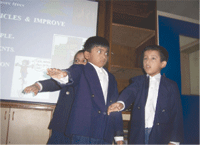
The whiteboard also provides the facility of paper-free tests and assignments using the software, as the students respond to each question using a remote control and the software captures their answers and evaluates them at the end of the test. This feature relives the teachers of checking answer sheets – a paper-less assessment methodology is done in each classroom.

The school has been conducting the School Council elections on Starboard in the recent past. The candidates are introduced along with their photographs and the voting happens using the remote control, the software then processes the data and generates results.

The technology component has been a facility offered by the school since its establishment, with computer labs since its initial years backed by an equipped IT support team. So whenever the monitor doesn’t power up, the teacher need not push the panic button


IIT model eyed by Centre to fill vacant quota seats

The government wants all Central universities to implement a course long run by the Indian Institutes of Technology (IITs) to fill the vacant quota seats for other backward classes (OBCs). The ministry of human resource development, which oversees education, is considering a proposal to introduce preparatory courses at the Central universities to enrol quota students who fail to secure admission. The year-long feeder course would coach them for admission to the varsities.
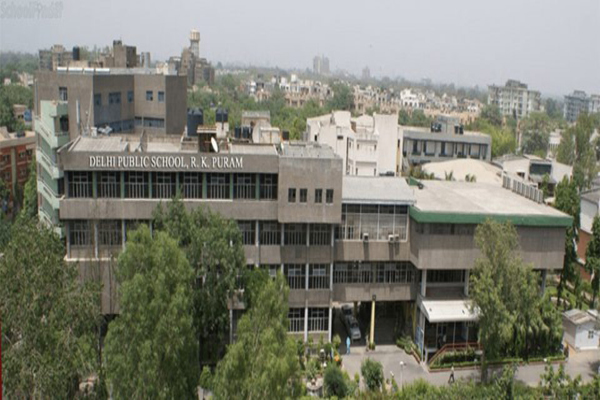
Showing the way: A photo of IIT Delhi. IITs have allowed ST and SC candidates who do not clear the joint entrance examination to take preparatory courses

2.7lakh aspirants to take test CAT

Coming November 16, the common admission test (CAT) would see a new high with around 2.7 lakh aspirants taking one of the `globally-acclaimed toughest entrance-test'. In the NCR alone, over 50,000 students would be appearing for the test to get into one of their favourite B-schools. According to CAT committee sources, there has been a 23 percent increase in the total number of applications filled this year. However, the number will come down substantially after the screening of applications. Satish Deodhar, a faculty member at IIM, Ahmedabad, and member, CAT committee, said, 'We have received over 2.9 lakh applications, of which over 2.7 lakh would be receiving the admit cards for the exams, which would be around 70,000 more then that of last year.'

Delhi region, which falls under IIM Lucknow, is handling 59,000. According to IIM Lucknow sources, the NCR region would be having 55 to 60 centres. IIM Ahmedabad is handling over 51,000 applicants, while its Bangalore counterpart is handling over 60,000 applicants and IIM Kolkata would be taking care of over 50,000. Apart from the Indian Institute of Managements (IIMs), this year 118 other B-schools would accept CAT score for admission for the academic session of 2009-2010. NCR tops the list with 34 B-schools.

All Gram Panchayats to have Broadband by 2012

In its efforts to bridge the urban and rural digital divide, the Government of India has decided to provide broadband connectivity in all Gram Panchayats, Government Higher Secondary Schools and Public Health Centres by the end of 2012. Disclosing this on Tuesday, the country's Minister of Communication and IT A Raja, however, regretted that the telecom growth in rural areas has not kept pace with that in urban areas. 'The government is working hard to correct this imbalance by shifting focus to small towns and rural areas, but it has still to go a long way in bridging the rural urban divide,' he said at a function here.

Raja further stated that the government's decision to allot licences to more operators was directed at raising competition, lowering tariffs and enhancing rural tele-density. He hoped that the current provision of over 7,000 mobile towers and future projects of over 11,000 towers with Universal Service Obligation Fund (USOF) support will drastically change the mobile telephony scenario in rural India. Stating that connecting rural India is the next biggest opportunity before the telecom sector, the Minister called upon the industry to play a catalytic role in taking the telecom revolution to rural and remote areas.


LATEST NEWS