

Home Blog Page 1554

EduWave Live launched in the Middle East

EduWave Live, an e-learning and educational management solution, was launched in the Middle East with the aim of providing the educational sector in the UAE and across the region with an advanced software platform that will help to enhance the management of the region's schools and universities, and facilitate country-wide collaboration between teachers, students and educational administrators.

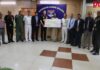
The Special Launch Event was held under the Patronage of the Minister of Education in Jordan, His Excellency Dr. Tayseer Alnoaimi, and attended by educational representatives from Ministries of Education across the Middle East, in addition to a large number of Microsoft's regional partners.

EduWave Live is ITG's next-generation award-winning, comprehensive e-Learning and educational management solution that is built on the latest collaborative Microsoft technologies including Microsoft Office SharePoint Server 2007, Microsoft Exchange Server 2007 and Microsoft Windows Platform.

Together, Microsoft and ITG, a Jordanian partner, have designed, developed and will market EduWave Live, a multilingual, comprehensive and user-friendly e-Learning Platform that caters to schools from K-12 onwards including students, teachers, parents, administrators, and the educational community as a whole.

Zeid Shubailat, Country Manager of Microsoft Jordan, stated, 'EduWave Live is the result of a strategic partnership between Microsoft and ITG. It is a combination of the power and comprehensiveness of EduWave in education and the strength of Microsoft's platform and breadth of its capabilities for delivering the next-generation of computing.'

He added, 'EduWave Live is also part of the Learning Gateway initiative, which enables schools and educational authorities across the region to get the most from existing investments in technologies. A very important aspect of this project is the investment that is being made in an e-learning platform developed by a local Jordanian partner, which demonstrates Microsoft's continued support for the innovative products developed by our partners and our commitment to introduce EduWave Live across the region.'

Walid Tahabsem, President & CEO of ITG said, 'We are extremely proud of our strategic partnership with Microsoft. EduWave Live will most definitely bring great benefits to the educational sector in the Middle East, and we believe that together with Microsoft, we can take this advanced solution to many countries around the world.'

Maher Al Khaiyat, Partner Strategy and Programs Manager of Microsoft Jordan, said, 'EduWave Live is consistent with Microsoft's Software plus Services approach for the next generation of computing, which brings together the best of cloud-based services such as software hosted off-premise, and the software that resides on a world of devices such as PCs, servers and mobile phones.' He added, 'The Software plus Services vision will provide seamless experiences for individuals and information workers. Organizations will have the choice and flexibility of how and where to deploy and manage their infrastructure and line of business applications.'

EduWave Live is a fully interactive and comprehensive solution that includes a Learning Management System (LMS), a Content Management System (CMS), an Instructional Management System (IMS), and a Student Information/Management System (SIS/SMS) seamlessly integrated in one solution that allows related educational elements to work together in the most effective manner.


Texas must improve math, science education, task force says

Texas schools must improve math and science education in all grades and improve low graduation rates if the state is to remain competitive in the global economy, a panel of business, education and government leaders have said in a report.

The report by the Governor's Competitiveness Council also called for holding schools fully accountable for 'producing results' in making sure their students acquire the knowledge and skills they'll need.

And the 29-member panel said state and education leaders must begin work now on a solution to expected 'critical' workforce deficits in six key industries. Among those: energy, computer technology, advanced technologies in manufacturing, and aerospace and defence.

'In a competitive global economy, companies will locate where there is a constant stream of available human resources that can rapidly fill workforce needs,' the report said.

But in Texas, the council noted, the state's economy is 'creating an employment demand that will far exceed the supply created by the state's skills pipeline. In coming years, this employee supply deficit will be exacerbated by the retirement of the state's skilled baby boomer population.'

'If the state's talent development system [schools, colleges and training programs] does not make critical changes at every level to ensure a dependable workforce is available, Texas will not remain a high quality place for doing business.'

Gov. Rick Perry commented on the report at a conference on July 6, signaling his support for the panel's recommendations and promising to work with the Legislature next year to enact many of their suggestions.

'We need to do a better job developing our state's talent,' Perry said. 'In particular, we need to equip our education and workforce systems to get Texans ready for the jobs demanded in the global economy.'

Former Bush education adviser Sandy Kress, a member of the council, also spoke at the conference, saying that while Texas schools and colleges have done many things right, they also have failed in key areas.

For example, he said, Texas is near the bottom of populous states in percentage of its workforce with a college degree, and he noted that half of college freshmen in Texas are enrolled in remedial classes. Further, he added, only 18% of high school students who took the ACT met college readiness standards in all four core subjects.

'All this data should surprise us and shock us, and should force us to take dramatic and aggressive action,' said Kress, an Austin lawyer and former president of the Dallas school board.

In calling for improved, uniform curriculum standards in kindergarten through 12th grade, the council said a 'great disparity' exists in the way standards are now implemented and taught in the state's 1,031 school districts. The State Board of Education is revising the state curricula in core subjects.

'Texas needs to develop or identify model curricula and teaching practices, particularly in science, technology, engineering and math courses,' the council said in its report.


Higher Education Sustainability Act Provides for Green Learning

The US Congress has passed the Higher Education Sustainability Act (HESA), the first new federal funding for environmental education in 18 years. As part of HR 4137, the Higher Education Opportunity Act of 2008, the act, which is expected to be signed by President George W Bush, creates a 'University Sustainability Grants Program' at the Department of Education.

This programme is designed to present competitive grants to colleges, universities, and other institutions in order for them to develop academic programs and practices on sustainability.

HESA has been widely supported by a variety of organisations – over 220 groups including institutions of higher education, NGOs and corporations. The act also instructs the Department of Education to gather leaders in the field (higher education sustainability experts, federal staff, and business leaders) to collaborate on the practices and principles of sustainability.

'This is an ambitious and crucial step for higher education and it is important that Congress continues its support for comprehensive education that incorporates the principles of sustainability,' says Sean Miller, Earth Day Network Education Director. 'This bill will promote sustainable principles in future generations as we will certainly continue to deal with the challenges of global warming, energy, sustainable development, and environmental protection.'

Co-sponsors of the bill have stated that these grant programmes will contribute both to the environmental health and global economic competitiveness of the United States. By allowing institutions of higher education to develop, teach and implement sustainability practices society will benefit from the knowledge and capability in sustainable development gained by students.

The grant programme will 'allow for institutions of higher learning, the mainstay for innovative thought, to develop new programs and ideas regarding sustainability,' says Miller. 'College students understand the importance of sustainability

Rwanda Govt. adopts OLPC curriculum policy

The Government of Rwanda is planning to digitalise primary and secondary school curriculums based on the One Laptop Per Child (OLPC) plan, which aims to provide each student with a laptop computer.

Rwanda is participating in the OLPC roll-out program, which will be extended to all primary school children within five years. The government has undertaken this initiative to transform from the traditional chalk-and-blackboard methodology to ICT used methodology. Rwanda's ICT adviser is currently in India in order to adopt that country's digital science content as the two countries have similar curriculums. Last year, Rwanda Government has signed a deal with OLPC to provide laptops to schools. Under the deal, OLPC would provide laptops and support to fully test its concept at no cost to Rwanda.


Duo-WhiteBoard Interactivity in Pen and Fingers : Tarun Jain, Hitachi Home Electornics Asia (S) Pte Ltd, India

The cutting edge Hitachi StarBoard products, which promise to transform the digital learning environment and set new benchmarks, include a suite of interactive whiteboard technologies that helps make teaching and learning both exciting and effective.

Tarun Jain, The Country Head, Hitachi Home Electornics Asia (S) Pte Ltd discusses more…

Tell us about Hitachi’s foray as a provider of educational solutions. What all services are available under its educational solutions? What is the latest on this?

 The focus of Hitachi’s interactive educational solutions is going to be its interactive whiteboards

NComputing: Revolutionising Affordability : Raj Shah, NComputing, India

As Chief Marketing Officer of NComputing, Raj Shah leads the company’s marketing and business development efforts. He brings more than 20 years of business management experience spanning start-ups, growth stage companies and F500 corporations. Prior to NComputing, Shah was the CMO of ClearCube Technology, pioneer in PC blade computing systems. He was also the co-founder of SiteStuff, a leading e-Procurement service for commercial property management firms. He also served as a senior manager at McKinsey & Company, where he helped Fortune 500 clients in the technology, consumer goods, retail and manufacturing sectors improve their operations, marketing, and organisational effectiveness

Q. Please give us a business overview of NComputing and its offerings for education sector.

NComputing’s mission is to enable everyone in the world with access to computing at an affordable cost. Our solutions are  based on a simple fact that today’s PCs are so powerful that the vast majority of applications only use a small fraction of their capacity. NComputing’s virtualisation software and hardware tap the unused capacity so that it can be simultaneously shared by multiple users. Our virtualisation software is loaded onto a standard Windows or Linux PC. Each user’s monitor, keyboard, and mouse connect to the shared PC through a small and highly reliable NComputing access device. The device itself has no CPU, memory, or moving parts so it is easy to deploy and maintain. Till now, over 7,50,000 NComputing seats have been sold to 20,000 organisations to slash their computing costs as much as 70% and electric consumption by 90%.

In the new economic order, it is very important to equip children with information and communication technology skills. So there is an urgent need for schools, colleges, universities and training institutes to have computer labs or computers in classrooms so that students can learn about computers and also use computers to learn more about other subjects (for example science and maths) through e-learning programmes. However, almost all educational institutions have limited funds for computer equipment. This is where we come into picture. We enable them to use their existing budget and stretch it so that they can double or triple the number of students who can have computer access at the same cost. In addition, since our devices are so small and produce virtually no heat or noise, they are perfect for a classroom or a computer lab where students are clustered together.

Q. How does NComputing make computing truly accessible and affordable?

According to Gartner (technology consultancy firm) figures, 850 million people around the world, mostly in developed countries, have access to computing. But there another billion people in the world who want computing access, but can not afford it. They cannot afford to spend INR 20,000 on a PC, but can spend INR 4,500, which is the cost of our solution.

Picture a school in India wanting to set up a 30 student computing lab. Either it can buy 30 PCs with peripherals. Or it can purchase four PCs and 26 NComputing access devices for a fraction of the cost and energy usage. Over the four to five year useful life of a PC, the school will only have to manage four PCs instead of 30. When its time to replace the PCs, the school will have to replace just the four PCs instead of 30 as the NComputing devices and peripherals (monitor, keyboard, mouse) can be continuously used.

Q. In what ways can technology in education help bridge the digital divide? What is NComputing’s role in it?


One of the root causes of the digital divide is the non-affordability of the standard PC technologies in developing nations. Our model revolutionises affordability. Take a look at Macedonia, a relatively poor country by Western standards. In 2007, its government decided to improve the living standard there, for which they had to join the digital economy. This meant that every student coming out of the school system had to be computer literate. But Macedonia could not afford to give every child a laptop

Establishing Edupreneurship : Shantanu Prakash, Educomp Solutions Limited

Shantanu Prakash setup Educomp Solutions Limited, India’s first school centric education solutions company in 1994, a few years after acquiring an MBA degree from the Indian Institute of Management, Ahmedabad.  Notable amongst his innovations include ‘teacher-led’ content system called SmartClass which dramatically improved learning effectiveness in classrooms, development of India’s largest K12 Content Library with over 8000 topics of 3D content, India’s first structured pre-school learning system called Roots 2 Wings, and MathGuru to dramatically simplify access  to qualitative Math help. Educomp group serves over 15,000 schools and 7 million learners and educators across the world. In an interview with Digital Learning, Shantanu Prakash shares more of his thoughts and views…

He likes to devote most of his time to entrepreneurial pursuits and does yoga and meditation in spare time. His ultimate desire is to attain self-realisation. This was, probably, instrumental in veering him away from the safe option of a campus placement at Indian Institute of Management

Maharashtra BOOTing on to ICT@Schools Programme : Sanjay Kumar, School Education, Government of Maharashtra, India

Teachers are the hardware of education delivery system, we need to invest in them to achieve education goals, says

Sanjay Kumar, Principal Secretary School Education, Government of Maharashtra

Q.  Schools are now envisioned to improve the quality of education delivery through Central scheme ICT@Schools. What is your vision for bringing technology in schools in Maharashtra?

Technology should be used in the social sector such as health and education to accelerate the achievement of education and health objectives for India. Technology as a tool has found its application in all the sectors. In education it can act as an aid for education management of resources such as school information database to deliver informed decisions. It is a powerful tool for bringing access to education direct in your homes through distance learning. It will be key realising our goal for bringing educational opportunities for each child. We had implemented the scheme in 500 schools in Phase-I and plan to cover more than 1000 schools in the next phase. We are also targeting on the drop-out students segment to be included in the education environment through ICT and distance learning by strengthening the informal education programmes. Our vision is to empower the students with knowledge, by going beyond installation of hardware and software peripherals in schools. We are in the process of developing our website to be a one-stop on all information relating to education in the state.

Q.  Have you formed a technical committee for monitoring and implementation of the scheme?

ICT in school education cannot be implemented in isolation, its roll-out needs co-operation and collaboration between Departments within the Government. We, in Maharashtra are planning for bringing ICT in School Education in a planned and holistic environment, we have hence built a Technical Committee comprising of representatives from the Department of IT, Department of Finance and Department of School Education to pool in our expertise and build a robust plan.

Q.  ICT literacy is now becoming a need to survive in the digital age. How does the scheme help in delivering critical skill sets to students and teachers?

ICT literacy includes both understanding and usage of IT for classroom teaching and learning. We have set up computer labs in schools to help students familiarize with technology, along with prescribed curriculum and syllabus for each class. Similarly for teachers we conduct regular training programmes on subject studies and pedagogy to understand and effectively adopt IT in their respective subjects. The prime aim of the training and capacity building programmes is to eliminate the fear of computers and familiarize the teachers with the basic know-how of IT. The reduction in fear factor directly translates into greater adoption and usage of technology-aids in classrooms.

Q.  The scheme is run on a Build-Own-Operate-Transfer (BOOT) model. How has the state government implemented the model in Maharashtra schools?

We brought out tender inviting companies for implementing the scheme under the BOOT model in 500 schools, as a pilot test. NIIT bagged the contract and has set up labs with installation of 10 computers in each school including hardware and software for conducting classes, alongwith training programmes for teachers. The pilot is still on-going, and the response is enthusiastic as the students and teachers are learning new tools for teaching and learning. The pilot is still on-going.

Q.  What are the challenges in adopting BOOT model for implementing ICT in schools?

The Challenges in the BOOT model are mainly three, the first and foremost is breaking the psychological fear of technology by the teachers. There scheme needs more investment and focus on teacher training and change management for teachers and schools. As the teachers are the implementers of ICT in classrooms and they need to be well-trained and confident in using technology. The second challenge lies in maintenance and upkeep of IT infrastructure especially when implementing the scheme in rural areas, as there is power shortage and lack of technically skilled staff. We do have provision of generator back-up under the current BOOT model by NIIT in each school under the scheme. Lastly, the biggest challenge lies in implementing the scheme beyond mere installation of IT peripherals and equipments. The state government aims to deliver not only computer literacy but also improving the overall delivery of education system in Maharashtra. We do not see the scheme in isolation to other education initiatives in the state.

Q.  What are the future plans and projects for ICT in schools in Maharashtra?

We are working towards digitization of the entire state school education process. In this we have currently identified, three main focus areas; firstly we aim to bring in technology in recruitment of teachers, we aim to bring in online examination for teachers as done for GRE testing. This would enable candidates to take examination online. Teachers are the hardware of education delivery system, we need to invest in them to achieve education goals. Secondly we are planning for bringing in EDUSAT for teacher training programmes, with a range of subject-specialized programmes for teachers. Lastly we are giving emphasis on informal mode of education delivery through distance education and peer-to-peer learning. IT can bridge the education divide that exist between the urban and rural areas, by providing an opportunity for anyone to learn and be educated.

Raising High! : Improving Standard of Teacher Education with Technology, National Council for Teacher Education, India

Prof. Mohammad Akhtar Siddiqui took over as the new chairperson of the National Council for Teacher Education (NCTE) in June this year. As the Dean and Professor at the Faculty of Education, Jamia Millia Islamia, he was instrumental in integrating Information and Communication Technology (ICT) practices in teacher education programmes. He acquired his academic qualification in Education and Commerce from JMI, University of Delhi, Himachal Pradesh University and University of Leeds (UK). Prof. Siddiqui has 30 years experience in teaching and research in the field of Education and specialises in education of minorities and marginalised groups and educational administration. With the new role at NCTE, he now brings his expertise in addressing the gap areas and issues of integrating ICTs in teachers’ capacity building. Digital Learning finds more…


What role does the National Council for Teacher Education (NCTE) play and how do you align your role with it?

Before NCTE was formally set up in 1995 by an act of Parliament, NCERT played the role of imparting teacher education for over 20 years. There had been a long pending demand for a separate regulatory body by educationists who wanted teacher education to be accorded a professional status. So the Council was set up.

The idea was to help raise the standards of teacher education and through this to improve the quality of education at the school level. So by way of improving the level of teachers through various tools, norms, standards and regulations, etc, the idea was to improve the standard of education and also provide a kind of leadership to researchers by granting recognition to innovations carried out in the field.

With the government focusing on the Sarva Shikhsha Abhiyan programme for the universalisation of elementary education, there was a huge demand for trained teachers. This led to mushrooming of teacher training institutes all over the country. So NCTE was primarily engaged with the task of granting recognition to these institutes, provided they fulfilled certain norms and standards.

Once this was effectively done, the professional and academic dimensions started receiving attention. We have a massive set-up of administrative staff in every region across the country, but we have a constraints of academic staff. We need to have professors, readers in our team who will be engaged in some goal oriented research activity. However, the Planning Commission has asked us to prepare a proposal where they can provide us some academic support.

What more perspective do you see with the kind of priority given to teacher education in the 11th Five Year Plan?

The 11th Five year Plan is need based and comes with an understanding of the emerging global, economic and educational perspectives. It is very conscious of the fact that if we as a country, want to engage our people in these perspectives, there is no other way except to strengthen our education supply, provisions and most of all the quality, not only at the school level but also the higher education. And in pursuance of this understanding, the 11th Plan attempts to very consciously devote lot of resources at all levels of education.

Besides this, way back in 1987, the Government of India had launched a very important scheme called Strengthening and Reorganisation of Teacher Education (SRTE), a centrally funded scheme. The government is thinking of strengthening and upgrading this scheme in the 11th Plan.

Please elaborate on this SRTE scheme.

Through this scheme, which came up in 1987, the government was to provide the teacher education institutes (of course identified institutions for elementary and senior secondary teachers training) with central support to strengthen their human and infrastructure resources. It was also decided that one elementary teacher training institution will be opened in every district to cater to the primary teachers demand of the district

IGNOU to launch new medical courses

Indira Gandhi National Open University has joined hands with Christian Medical Association of India to launch a set of medical courses through its distance learning model.

The university will offer short and long term training courses in health related areas like medical, allied health among others.

The IGNOU signed a Memorandum of Understanding with CMAI on July 31 for setting up of 'CMAI-IGNOU Chair for Health Sciences' in this regard.

'The new arrangement will help in imparting professional training in health sciences to students from different parts of the country,' said V N Rajasekharan Pillai, Vice Chancellor IGNOU.

He noted that with its large network and reach IGNOU can cater to a huge section of the population with such popular courses.

Degrees for successful candidates in these courses will be awarded by IGNOU.

CMAI president Joyce Ponnaiya said the new health care courses will be 'need based' and emphasis will be on developing and imparting professional and quality health care training.

The two institutes will collaborate together in producing and distributing self instructional course materials, apart from imparting training through various available media.

LATEST NEWS