

Home Blog Page 1610

Need To Melt Steel Frame Of Teacher

What specific practices make the Department of Educational Technology of Bharathidasan University glorious?
The Department of Educational Technology, Bharathidasan University, Tiruchirappalli, Tamil Nadu is a Teacher Education Department with national and international reputation as a leading centre for study and research with a focus on the integration and application of ICT (Information and Communication Technology) for enhancing the quality of teaching and learning of all subjects and at all levels. This Department has made significant contributions in popularising the applications of ICT among the schools, TTI’s/DIETs, Colleges of Education, Departments of Education, UGC Academic Staff Colleges and Other Educational Agencies, across the State and Nation. The Department has got International Reputation in terms of Commonwealth, UNESCO, British Council, and DFID Projects and Awards on areas like ‘Use of ICT in Education’, ‘Learning to Learn with ICT’ and ‘Reduction of Poverty and Gender Equity through ICT’. The Department of Educational Technology has been selected as the First Teacher Education Department in the entire South India for the award of the UGC’s Special Assistance Programme under Departmental Research Support. The identified thrust areas are Educational Communication and e-Content Development. Under this scheme, the Department would receive funds for a period of five years from 2007 to 2012 for Capacity Development of Teacher Educators in e-Content Development and creation of e-Content materials at various levels.

The Department invites Post Graduate students (M.Ed. students) and Ph.D. students to undertake studies in the field of ICT in education. A strong publications and dissemination programme helps evolve the Department into a clearing house on ICT in teacher education. Organising national and international conferences, seminars and brain storming sessions on specific areas of relevance is a regular feature of the Department’s activities.

What are the new programmes being planned in Educational Technology?
The targeted activities of our Department of Educational Technology under the aegis of SAP include capacity building programmes; production and dissemination of educational progra-mmes; and providing a knowledge sharing forum for  the scholars.

The Department plans to network with leading institutions in education and ICT to develop and deliver interventions in pre-service and in-service teacher education, equipping the teachers of the future with the skills and knowledge of ICT, its integration with other subjects and its other applications in enhancing the effectiveness of the teaching learning process.

Developing an online digital repository of e-Content Modules and Short Learning Objects have been planned to catalyse the use of ICT.  Undertaking research studies to inform practices and policy perspectives in ICT in education has been and will continue to be one of the major activities of the Department.

What are the e-Readiness challenges in the higher education sector? e-Readiness is the capacity of stakeholders (Administrators, Teachers and Students) to generate e-Learning opportunities by facilitating computer-based technologies. The e-Readiness of the environment is the degree of conduciveness of the environment that an institution provides for the development and use of ICT. In the field of education, it is the teacher education system which is most resistant to change. Most of the teachers do not go beyond chalk and talk and tap the potentials of digital technology for teaching and learning. Through various orientation and refresher courses, we have changed the mindset of the teachers and made them positive minded towards ICT.   

Top Educationists Just A Click Away – Online Academy : Monica Malhotra Kandhari, Director, MBD Alchemie

How and what leads to the launch of MBD Alchemie? What is the idea behind it?
We launched MBD Alchemie to provide web based quality education at a low cost to cater to the needs of large section of society which is deprived of education. MBD Alchemie is an online academy that collaborates testing and teaching, that trains and evaluates at the same time. We started research on it two and a half years ago and started with CBSE X and XII classes. Multimedia content of total curriculum is being provided to the students, some short term courses are also being provided, of three months to two years duration. It also includes chapter wise test, evaluations and answers, sample and mock tests for students. Just like the MBD text books, Alchemie covers different boards including State Boards like Delhi, Karnataka, etc. To introduce its unique concepts, it provides a 15 day free trial which is available on the portal.

How interactive is the portal for facilitating online education?
We focus more on personalised coaching, which includes self-learning materials and self assessment tools, online problem solving facility, etc. Online mentoring is there to help in resolution of problems, clarifications of queries, etc. There is animation with voiceover to give the feel of  actual classroom.

How have you studied the market for the purpose and how did you prepare for starting the venture?
We have 4,000 authors associated with MBD already. We selected authors who have good teaching background, expertise and who are aware of  the innovative teaching concepts. The instructional design of the course underwent a lot of research and then its elements were developed. There are expert in house course and module coordinators and content editors. We are empowered by the Learning Management Systems and also fully complaint with leading international standards and is built on a flexible architecture. It is SCORM compliant and can run on any technology and system, can be used even with the open source system.

Would you like to share more on the publishing industry in India?
Publishing has become more structured in India and is taking very giant leaps. With the size of the market  and the increased focus of government on education, everybody is targeting India. The country is growing at the rate of 20 percent in online education. We conducted a research that showed 15 to 20 percent growth in the publishing sector and e-Learning in India had a INR 1200 crore market a year ago. Also, the adoption of CBSE pattern across the states makes it easy for publishers focusing for the pan India presence. So getting into this sector today, specially in the web based publishing is quite favourable.

Does the legacy of MBD put any performance pressure on you?
MBD has the legacy of 30 years of providing education in India in different languages.,We  are providing our services in many vernacular languages, including Kannada, Malayalam, Tamil, Urdu and Hindi. We customise our own books for different Boards of studies.

That

0% illiterates by 2010! : Keshab Majumdar, Minister, School Education, Government of Tripura

What is the current strategy adopted to make ICT an integral part of the educational system in Tripura?
We are introducing computer learning from class I and computer education from class VI. We have started education through satellite with EDUSAT in August this year at 50 stations in Tripura. The teachers and students at all these 50 stations are getting distance education from Agartala through EDUSAT. We have also introduced it in our technical education institute that is sponsored by the Central government and also in the engineering college for technical education. We have started an ICT College from Women too.

Tripura Board of Secondary Education includes computer as subject from Class VI to XII. In the First phase, 8 schools have already been covered and 50 more schools will be covered soon.

What are the challenges you come across in the state education sector?
Challenge is the illiteracy! Our goal is

Policy And Framework For Engagement – Need Further : Sonjib Mukharjee, CEO, Metalearn

How about the Indian market for a product or service like that of yours, who needs it, who will have it? Would you also like to provide a sort of business overview on this in Indian market?
Our products are a good fit in the emerging digital delivery of learning sector across companies and institutions.  It

Maximum Coverage Of CAL : Deepak chauhan, MIS Officer, Government of Gujarat

In emerging trends of e-Learning where do you place the school education system in your state? What are the innovative learning solutions, best practices or policies specific to the state, that make it a glorified or a successful teaching/ learning system?
The School Education System at elementary level in Gujarat is at half way in context with the emerging trend of e-Learning. In Gujarat, the Computer Aided Learning(CAL) was started in 2003-04 with 517 schools as an innovative activity which was expanded in 5,371 schools. The idea is to make the students able to learn themselves the difficult topics of the syllabus with the help of Multimedia based Education Contents. Use of Technology as a tool and not as a subject at elementary level is an innovative and best practice for a successful learning system.

Do you think what you have been able to do in the SSA project or in this state

More ICT = Better Results? : N. Ravi Shanker, Jt. Secretary & Group Coordinator E-Infrastructure/E-Learning Group

Can you broadly define your areas of operation in the emerging e-Learning trends?
The e-Learning component of Department of Information Technology focuses mainly on development of tools and technology which will enable e-Learning to be expanded or proliferated.

In the technology aspect, what we are trying to do is develop authoring tools, by which we are trying to see how the learning process can be condensed through the medium. The second aspect deals with the optimisation of the transmission process. Like with any kind of traffic management, you are actually trying to send across more material in a given time.

Can you outline some of the projects you are active in?
One co-related activity that we are handling is a project known as the Digital Library of India. We have embarked on a project of digitising a million books and have developed a lot of partners in the process. Through them, we are trying to host the books on the web for free downloading.

We also have an activity called Technology-in-Content, through which the quality of services that we are rendering can be improved, enhanced and innovated. Technology partners such as IITs and our own institutions such as C-DAC are also associated with this activity. This is basically a test-bed activity to ensure that any product that is launched in the public domain has a high reliability factor. 

Are there any success stories or products and projects that you have supported?
For example, DIT had supported a project called Brihaspati

50 Lakh More Students To Go College By 2012 : Dr Sukhdeo Thorat, Chairman, University Grants Commission

The 11th plan has proposal for increasing the number of universities and colleges in India . The University Grants Commission (UGC) has prepared a road map to achieve 15 per cent enrolment in higher education by 2012, with special focus on
Dr Sukhdeo Thorat backward areas and minority sections.What are the quality assurance mechanisms established by University Grants Commission for higher education?

UGC is committed to maintain and improve the quality of higher education delivery in India. It has been working towards excellence through its various schemes and programmes in the past years. Financial support is the first step towards quality promotion in our universities. We have provided grants to more than 225 state universities apart from the central universities for maintaining the quality higher education standards in the states. The second initiative taken by the Commission is to promote Centres of Excellence. The concept aims to promote institutions of quality potential for excellence. We are planning for an additional 10 universities of excellence in the coming years. Provision for quality education to all, including students from poor and minorities will be the focus of higher education during the 11th Plan.

A dual grant scheme is planned for infrastructure upgradation and maintenance; also 56 Academic staff colleges for in-service faculty support the quality of teachers through regular courses and programmes. For pre-service teachers the NET examination system ensures the quality of faculty coming into the universities. NAAC (National Assessment and Accreditation Council) assesses universities and colleges along quality guidelines and standards followed by an accreditation procedure.

Hence since inception of the commission, UGC has developed an elaborate mechanism of quality assurance and quality check for its institutions of higher education.

ConHow do you see deploying new technologies for ensuring quality
education? The use of ICTs in teaching and learning systems in higher education
is an on-going process and there are many initiatives taken by UGC in this direction. These include Consortium for Educational Communication (CECs), Educational Multi-media Research Centres (EMRCs) and online opportunities in distance education. Their role is to transmit knowledge through distance education and to reach out to the regional and remotest of areas. They are also encouraged to produce and telecast programmes on their own. We have dedicated channels for CECs and they now have an increased telecast time for lectures and courses. CECs use ICTs in multiple ways for graduate and postgraduate courses. The digital content is based on curriculum and general interest which is a boon for students to learn anytime anywhere. Technology has reduced the constraints of time and space; it has reduced the distance of
the source and delivery of knowledge. Technology is now playing a key role
in data and administration systems; technology-facilitated lectures are making classrooms more dynamic and interesting. Distance mode of education
is now making teaching and learning more easy. Whole world of knowledge
is now open through ICTs and specia ly through Internet. The 11th plan has proposal for increasing the number of universities and colleges in India . The University Grants Commission (UGC) has prepared a road map to achieve 15 per cent enrolment in higher education by 2012, with special focus on  Dr Sukhdeo Thorat backward areas and minority sections. Chairman University Grants Commission Consortium for Educational Communication (CEC) is
an inter-university Centre named as ‘Consortium for Educational Communication’ was set up in the year 1993. Its objective is Dissemination of educational programmes through both the broadcast and non-broadcast
modes. Production of educational programmes (especially video and audio) and related support material and setting up of appropriate facilities for this.
Research related to optimising the effectiveness of the programmes. January 2008 | www.digitalLearning.in We are in the process of developing an e-Governance plan for connecting internally all the university and colleges for communications and it will have all the student and faculty information
management systems. Do you see the interconnected and distributed knowledge repositories through networks like UGCInfonet have impacts on educational research? How does Infonet contribute to governance in the higher education system? UGC-Infonet programme is a successful initiative to establish stateof the art campus-wide network, co-ordinated by a nodal agency
INFLIBNET centre that facilitates linkages between universities. The information and library network (INFLIBNET) has a consortium of e- Journals. It is an important programme to provide a number of universities and colleges with more than 30 journals that the faculty and students can download free of cost. UGC-Infonet currently offers more than 4,600 journals in 20 disciplines with a combination of subscribed and free journals. All the journals are selected according to their curriculum-relevance to the subjects taught at the universities. We have also planned for e-Books in the next phase of planning for INFLIBNET, where the students can download books free of cost. There has also been an agreement to develop data centres under the Infonet network. How do you endorse partnerships with the corporate sector to promote
ICTs in higher education? At what  level(s) do you see their engagement in bringing in ICT revolution in the sector? What are the implications of such efforts so far? We welcome partnerships and
collaborations to achieve our objectives and goals of quality education. Our policy framework on e-Governance is also considering a framework of public-private partnerships (PPP) in detail. What are the 11th plan development objectives of UGC, in relation to technology-mediated education? The 11th Plan aims at policy initiatives for expansion to access to higher education. We are targeting an increase in the enrolment, decreasing the quality gap between the ‘A’ grade and ‘C’ grade colleges and increasing the number of universities and colleges under UGC grant.sortium for Educational Communication (CEC) is an inter-  niversity Centre named as

What are the 11th plan development objectives of UGC, in relation to
technology-mediated education? The 11th Plan aims at policy initiatives for expansion to access to higher education. We are targeting an increase in the enrolment, decreasing the quality gap between the ‘A’ grade and ‘C’ grade colleges and increasing the number of universities and colleges under UGC grant. The aspect of ‘Inclusiveness’ is given more focus in the 11th plan to target the lower sections of society, girls, disabled, rural areas through financial support of scholarships and grants. We have schemes to help girls, poor, SC/ST students to get fellowships. We have recently started new fellowships for students in central universities. We are also working on revised framework of curriculum for higher education under the guidance of Prof Yash Pal. The systemic changes include more decentralised and democratic functioning of  ducational institutions in future. The UGC is ready with its higher
education policy to be implement d under the 11th Plan (2007-12) that has the target of bringing another 45-50 lakh students to college between 2007- 08 and 2011-12. The 11th plan has proposal for
increasing the number of universities
and colleges the University Grants
Commission (UGC) has prepared a
road map to achieve 15 per cent
enrolment in higher education by 2012,
with special focus on backward areas
and

Understanding Learning Curve Of Average Indian : girish prabhu, CEO, GurujiWorld Technologies Pvt. Ltd.

Whre would you place India on the global eLearning map?
India is still to reach the levels of computer literacy and usage that can take it to the top in the e-Readiness index. e-Learning tools like Guruji – Computer Based Training (CBT), are required and useful to bridge the digital divide and increase IT Literacy and computer usage in urban as well as rural India. India has a potential of more than INR1,00,000 crores in e-Learning Industry, and this is growing day-by-day as the need for usage of IT as a medium of training is increasing. India is still at a nascent stage in the e-Learning spread and usage.

Any surprises or interesting story on who and where the company

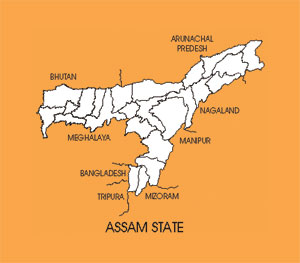
Universalising Secondary Education – In Agenda : N K Bhagawati, Deputy Director of Secondary Schools, Government of Assam

How would ICT impact education in your state?

The State of Assam is still lagging far behind the rest of the Country. Not to speak of innovative in the e-Learning arena solutions and best practices, we could not even start the basics of e-Learning in our school education. Our school education is still in an infant stage in the use of e-Learning in teaching and learning processes.

So, we have to adopt some specific policies to cater to the academic need, in this area.

How would you envision th SSA project replicated in other states or other educational contexts?
Mass enrolment of non-starters/ dropouts alone cannot be termed as an achievement of an educational project; rather the quality output should be the main target of any educational project. The sustainability of good results for such projects needs to be planned before designing any activity taken up for implementation. There should be some mechanism for neutral evaluation and for identification of successes or sustainability issues, where in the organisation(s) identified for sustaining the benefits in future should have been involved. The question of replicability will come based on identification of achievements, in terms of quality, which should be judged from the situation that prevailed before the project started.

What are the key areas where ICT can upgrade human resource development? What are the key skill requirements for Educators: Pedagogical/Technical?
ICT can definitely upgrade the human resources for overall development of the Country. As I mentioned already, the State of Assam is still lagging far behind in this respect and hence the key skill requirements are both pedagogical and technical. Because, a large chunk of teachers, teacher educators and the educational administrators are yet to know the basics of computers itself, not speaking of innovative e-Learning solutions. In this case too, mere supply of some systems will not achieve anything unless the teachers, teacher educators and the educational administrators are motivated and trained adequately. 

What is the State

Poland Embassy donates 35 computers to secondary schools

The Government of Poland has donated 36 computers to secondary schools in Kilimanjaro Region as part of a strategy to integrate educational institutions in computer-based learning systems.

The Polish embassy has donated these computers to the NGO, which coordinates computer-based technology to upgrade country's secondary schools in Kilimanjaro, Ruvuma and Singida regions. The project is part of the government strategy so as to speed up ICT skills in the secondary schools. According to the official, the CCYD project will help schools to generate incomes by providing computer education at affordable prices to the local communities. The computer enabled classrooms will allow students and teachers from outside the schools` compound to access computer and related technology, and thus improve their knowledge in ICT.

LATEST NEWS