Home Blog Page 1614

Mark Your Calendar, Jan08

february

International Research Conference
27 to 29 February 2008
Iloilo City
Philippines
http://www.wvsu.edu.ph

iLearning Forum Paris 2008
4 to 5 February 2008
Paris, France
http://www.ilearningforum.eu

march

The 2008 International Conference on e-Education
27 to 29 March 2008
Bangkok, Thailand
http://www.e-case.org/e-Education2008/

Intl. Conference on Quality Enhancement in Educational Communication
29 to 30 March 2008
Tiruchirappalli
Tamil Nadu, India
http://bdu.ac.in

International Conference Of Educational Technology ICOET2008
3 to 5 March 2008
Muscat
The Capital, Oman
Website: http://www.icoet,.com

april

Strategic Marketing for Higher Education Providers Conference & Workshop (Hong Kong Venue)
7 – 9 April, 2008
Causeway Bay, Hong Kong
www.conferences.com.sg/conf-em.htm

The International Conference on Technology, Communication and Education (i-TCE2008)
7 – 9 April, 2008
Kuwait
http://www.i-tce.org

Blended Learning Conference
9 – 11 April, 2008
Sydney, NSW, Australia
www.liquidlearning.com.au

TCC 2008 Worldwide Online Conference
15 – 17 April, 2008
Online
http://tcc.kcc.hawaii.edu

2nd International Computer & Instructional Technologies Symposium
16 – 18 April, 2008
Izmir, Turkey
www.icits.org

Third International Conference on Interactive Mobile and Computer Aided Learning, IMCL2008
16 – 18 April, 2008
Amman, Jordan
http://www.imcl-conference.org

International Conference on Open and Distance Education ICODE'08
25 – 27 April, 2008
Rome
Italy
http://wahss.org/

May

Sloan-C International Symposium on Emerging Technology Applications for Online Learning
7 – 9 May, 2008
Carefree, Arizona, United States
www.emergingonlinelearningtechnology.org

5th Global Conference: The Idea of education
8 – 10 May, 2008
Budapest, Hungary
www.inter-disciplinary.net/ati/education/ioe/ioe5/cfp.html

TL2008 – Teaching and Learning 2008
26 – 28 May, 2008
Aveiro, Portugal
www.iask-web.org/tl08/tl2008.html

13th International Conference on Education
20 – 23 May, 2008
Bandar Seri Begawan,
Brunei Darussalam, Brunei
Darussalam
www.ubd.edu.bn/news/conferences/webice08/index.htm

June

everaging Learning for Regional Development: An International Forum
24 – 27 June, 2008
Thunder Bay, Ontario, Canada
www.theconferenceplanner.ca/lifelearning/

LIHE 08 – LEARNING IN HIGHER EDUCATION
1 – 5 June, 2008
Aghia Marina, Island of Aegina, Greece
http://lihe.wordpress.com

SOLSTICE 2008 – eLearning and Learning Environments for the Future
5 June 2008
Ormskirk, Lancashire,
United Kingdom
www.edgehill.ac.uk/SOLSTICE/Conference2008

Cooperative Learning in Japan and the World
6 – 8 June 2008
Nagoya, Japan
http://iasce.net

2-3-98: Open Source in Higher Education & MoodleMoot
19 – 20 June, 2008
Delhi, New York
United States
snydelwd.delhi.edu:8443/x/dYMd

Increasing Enrollment and Retention via Technology: Blending High Tech and High Touch
18 – 20 June, 2008
Cincinnati, Ohio, United States
www.innovativeeducators.org

International Conference on Language Issues in English-medium Universities: A Global Concern
18 – 20 June, 2008
Hong Kong, China
www.hku.hk/clear/conference08

Improving Social Infrastructure And Quality In Education

India along with other nations is a signatory to the resolutions made at Dakar and is committed to ‘Education for All’ Goals. According to estimates on the Internet the e-Learning segment in India would be one of the major determinants of providing access to quality education and training to all in an equitous manner.

IL&FS Education and Technology Services Limited (IETS) was established in 1997 as the social infrastructure initiative of IL&FS, one of India’s leading infrastructure development and finance companies. IETS, works in the field of education and technology using appropriate delivery mechanisms including robust public-private partnership modalities to develop effectively, social infrastructure initiatives in education, technology and training.

IL&FS Education and Technology Services Limited (IETS) is dedicated to the ‘Education for All’ goals. IETS works towards providing educational infrastructure and educational technology across India. IETS partners various state governments of India and other national and international organisations to catalyse the outreach of education and is committed to the creation of sustainable social infrastructure.

latest in technology with learning and training needs and offers holistic andcomprehensive solutions in the fields of pre-primary, elementary, secondary and higher education, adult education, vocational training, entrepreneurial training, continued professional development including ICT materials for community groups like Village Education Committee (VEC) members under SSA, IT training, communication skills, foundational soft skills training, and teacher training. IETS understands that technology makes a perceptible difference in learning and the organization works extensively in the field of ICT. School Transformation and Quality Improvement IETS in public-private partnership with Pimpri-Chinchwad Municipal Corporation and Science and Technology Park will be upgrading and transforming 156 schools run by the Pimpri-Chinchwad Municipal Corporation. The transformation project includes providing integrated solutions for enhancement of the quality of school education through effective up gradation  f IT infrastructure. This includes setting up of web-enabled MIS systems that will increase efficacy of administrative functions and enhancement of classroom processes through the use of ICT tools. The major input comprises of providing Marathi Computer Aided Learning (CAL) materials to supplement syllabi and competencies that pose as hard spots for students. Interactive Learning with K-Yan Learning through use of technology has several benefits and to this end IETS has in collaboration with IIT
Content for School Education
IETS has also created interactive multimedia lessons that are syllabus based  nd  ertain to the ICSE, CBSE,  State Board, and NCERT (2005) Curriculum  ramework. The lessons take hard to comprehend topics and  make learning a  delight using puzzles,  quizzes, and hands on learning methods. The approach is   ighly interactive and  learner centric. Content for EDUSAT The Government  f India has launched a  dedicated education satellite—EDUSAT.  Many states like  Haryana have  introduced EDUSAT transmissions to schools run by the  overnment. IETS  has, in partnership with the Haryana government created   ontent for the primary level, that make syllabus based  lessons come alive. The  DUSAT  ransmission modules are created by IETS along with NCERT, SCERT,  Haryana government school teachers and students. The transmission of the  content was inaugurated by the Prime Minister Manmohan Singh on 19 May 2007. Lifelong Learning and Adult Education  In partnership with UNESCO, IETS has designed and produced for VillageEducation Committee Members’ a Computer Aided Learning Training programme that will facilitate Sarva Shiksha Abhiyan’s aim to Universalise Elementary Education through decentralising control of schools and encouraging community ownership of schools. Consisting of six modules the  Village Education Committee Training Programme covers aspects of VEC orientation; developing sensitivity; school management and planning; financial literacy; personal effectiveness; effective communication. The CAL training modules produced by IETS & UNESCO  supplement the existing instructor-led training programs for VECs run by SSA.  UNESCO is now planning to upscale it across India in partnership with State  overnments.  IETS has developed a multimedia e-Learning programme for the  SelfDigital Learning | Vol 4 Issue 1 January 2008 131  employed Women’s  Association (SEWA). The programme teaches  Gujarati alphabets to adult    omen through folk songs and through linkages  to life Computer on Wheels  The  ‘Empowering the Poor—ICT  Programme for Rural Students’ was a project   ndertaken by Vidya Pratishthan Institute of Technology, Baramati, the World   ank, and IETS. Computer education was reached to 51 schools  located in 40  villages in Baramati  through five buses fitted with computers. The buses visited   cheduled schools in the villages each week to teach  computers to  hildren. IETS fitted each  bus with 20 computers which ran on 12 volt batteries.   ermed Hasat Khelat Sanganak the project taught IT skills  to 12283  hildren of classes 5, 6, and  7 studying in rural schools in the year 2004-2006.  IETS for the bus project  reated syllabus based work books, content in Marathi,  and teacher  raining programmes.


Leaders&rsquo: Speak

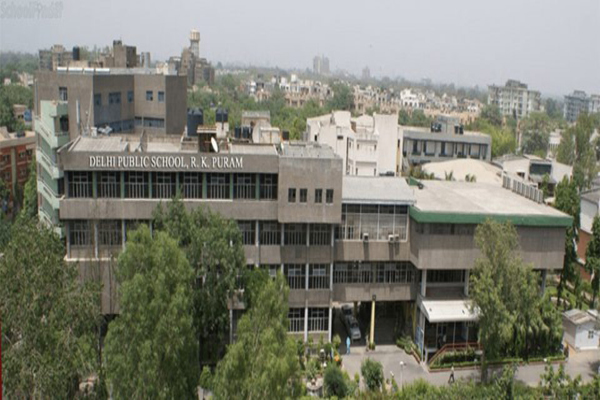
Meera Balachandran, Principal, Ramjas School, R.K. Puram believes that ICT in education is very useful. She is emphasising about the teacher training and takes measure to keep the teachers at her school updated with the ICTs and in many other fields. The school has the training facilities that aims to train teachers, students and to develop research-based projects including Maths lab and to improve speaking skills.

Balachandran says, the biggest challenge today in education is keeping one updated. “Because knowledge is expanding at a very fast rate. If the teachers and the students are not updated they will be left behind.” She strongly supports the idea of self learning, letting the students learn on their own where the teacher is just a facilitator. On the contrary, most teachers like to teach rather than leaving the children find the answers on their own, she added.

Ramjas school has come up with the novel concept of dynamics clubs: computer based clubs that the students run themselves. The clubs are exclusively managed by the students, who also maintain the website of the school. These clubs organise inter school competition every year that are crucial in the capacity building of the students. Ramjas has been one of the preveliged schools that has been offered a complete set up by Intel with 15 computers.

'For the primary school we are planning to keep15 laptops at the headmistress office.' We roll it in the class. The children pick up the laptop, work within the class room and they don't come out of the class.

The training programme is developed by the teachers only in collaboration with the students. We dont collaborate with any other external organisation in developing  such programmes.

Kendriya Vidayalaya Sangathan (KVS) has over 1000 schools across the country and one each in Moscow, Kathmandu and in Tehran. Elaborating on the use of ICT in School educat ion, V K Aggarwal says that ICT will supplement to formal education by ways of disseminating information, facilitating lifelong education, etc. But it should not be the hub of everything. There is a need to bring about a change in mind. 'Why we think that we can not do anything without ICT? We should realise that ICT is a solution provider and not solution generator. They are not empowering the children to generate the solution. This is where we are lacking.'

At the initial level, the children should not be exposed to the ICT assisted education, atleast up till class 6. Aggarwal holds such an opinion because he believes that ICT integration in the early year of a child's education kills the thinking skills of the kid for the simple reason that when a kid gets a readymade solution for everything he stops thinking. This is the time that they should be exposed to the natural learning. 'If we are exposing them to the ready made learning we are shunning their skills.'

The KVS officer again says initially KVS didn't have computers and other ICTs upto class six. But when it was decided to introduce ICTs in class 3 onwards, it was found that there was a significant difference in the original thinking power in the children of class 5 who come from class 3 with ICT exposure and those without ICT exposure. He also added that when an application based  problem was given to them which is not a part of their text, the children who were not exposed to computers were able to solve them quickly as compared to those who were exposed to ICT. Nonetheless, he advocated its use for making children learn dawning, MS Paint and other thing of that nature. One strong reason he put forth against early exposure of ICT to children is on the ground of socialisation. Children exposed to ICTs are engrossed with their computers so much that they hardly find time to play and attending social gatherings. He added that children should come up to that level where they are able to filter it down and know what is relevant and what is not. But its unfortunate that its not been observed.

He emphasised on building a healthy, positive relationship with the child and have a firm belief that every child has the potential to learn. Putting forth the recent recommendations by NCERT favouring constructivist approach for teaching, Aggarwal says, children should be allowed to do on their own and let them find out the thousand ways and means things can be done. There can be different meanings things have for different children rather than giving a unified particular solutions  for all the problems.

Sharing his concern on quality education, Aggarwal says, quality has got as many meanings and is as diverse as the diversity in India. Most people speak of quality in terms of achievement in examination, that alone is not quality. Rather it consists of several criteria through which the so called test marks of the child can be increased. A child who secures 90% marks is no better than that who scores lesser, but has got better value education and knows how to support learning in terms of  knowledge. Thus the parameters for quality in education should be the understanding of the child, whatever he is being taught. He appears of the opinion that an increase in budget for education sector is critically significant to reach out to those who are out of education. There is need to reach to the unfocused and deprived areas. He said quality will always carry the quantity with it. If you increase  the quality, quantity will come along. But are we able to provide enough quantitative schools? Still millions of children are unable to access education and are not enrolled to schools. Every year, primary schooling for a person earns about 30% of his productivity. We need to look for that quality.

Adit Gupta, the Principal, MIER –  a  67 years old institute in Jammu feels that any new technology introduced in education  will face many hurdles. But he believes that every hurdle can be overcome. Gupta pronounced teacher training to adequately equip them  to cope up with the changing trends and innovations in the education field. He sounded positive regarding the  increased budgetary allocation and said, its is in the right  direction. But added, planning and management of the funds is of utmost importance and more efforts need to ensure whether the funds are going in the right direction.

Gupta accents upon achieving the ultimate goal of satisfying the customers. We need to ask this question if the students are satisfied with the current education practices and whether they are positively contributing in their learning and building capacities. Sharing his own experiences in school education he says, it has been observed that children using ICTs are more interested in education, more curious and inquisitive to learn. Referring to a study in his own school he said, ICTs  impacts positively in Science education, and the results are great.

By integrating ICTs in education we are not sidelining teachers, rather we are just bringing a way out to explain difficult concepts like a frogs dissection in the laboratory. The tools for learning have chaged, but the pedagogy remains the same. ICTs should be an integral part of every teacher training programme and in courses like B.Ed. Teacher Training paper should be made compulsory in the course as this would save resources that are spent on teachers on job.

Workshop On e-Learning

The African Knowledge Exchange (AKE), a multi-country workshop, was organised by the Global e-Schools Communities Initiative (GeSCI) on 3rd – 4th December 2007, in Nairobi, Kenya.

Information and Communication Technologies (ICT)-supported education is currently a core component of the development plans of most African governments. ICTs are being integrated into many national educational systems in order to reach the Millennium Development Goal (MDG) of “Education for All” (EFA).

Towards this end, the Global e-Schools Communities Initiative (GeSCI), founded by UNICT Task Force and based out of Dublin, Ireland has introduced the Africa Knowledge Exchange (AKE) initiative to build dialogue and establish processes and mechanisms of knowledge exchange amongst participating countries and provide assistance in building competencies in adopting ICT in education policies, programmes and projects. Keeping in view of the recent and rapid developments of ICT in Africa, GeSCI aims to co-ordinate the ICT and e-Learning progress and activities for achieving educational goals.

The Organiser
GeSCI was established in 2004 with the mission to assist developing countries reduce poverty by improving education through the use of ICTs. To achieve this mission, GeSCI works directly with developing country governments in partner countries, and specifically their Ministries of Education and other stakeholders using a comprehensive, demand driven, contextualised, coordinated and multi-stakeholder approach. GeSCI's work is based on real needs and demands of stakeholders. Based on information collected through various methods, e.g. workshops, surveys, interviews and experiences in partner countries, 3 key gaps were identified in ICT in education initiatives and addressing these gaps have formed the core of GeSCI activities:

  • Designing and implementing ICT in Education policies and plans
  • Building capacities within Ministries of Education to effectively implement their ICT policies and plans;
  • Utilising ICTs cost-effectively to achieve educational objectives.

GeSCI conducted a multi-country workshop on Teacher Professional Development (TPD) in Namibia in September 2006. The countries represented at the workshop were Ghana, Kenya, Mozambique, Namibia, Senegal, South Africa, Tanzania and Uganda. Based on the recurring issues discussed during that workshop, the conclusion from the workshop was that GeSCI would include a work stream on ICTs in Teaching and Learning amongst its other work streams to respond to the needs of its partner countries while addressing the key gaps indicated above.

Workshop Objectives
The strategic objective of the African Knowledge Exchange workshop was to explore the domain e-Learning for increasing access to education in the Sub-Saharan region. It aimed to understand the requirements, cost-effectiveness and implementation of learning network systems as an integrated approach to the overall plans and initiatives of the invited countries.

The broad objectives were:

  • Share information with invited countries on lessons learned from GeSCI' work in Namibia
  • Share information, trends and developments in the field of e-Learning and e-Learning centres (Elc) and outline the process of integrating e-Learning into National learning systems
  • Facilitate peer-to-peer exchange on e-Learning programmes amongst countries
  • Explore the establishment of Sub-saharan African e-Learning working group
  • Introduce GeSCI' Africa Regional Office in Nairobi to the invited countries

Workshop Proceedings

DAY I


Opening Remarks: Astrid Dufborg, Executive Director, GeSCI
Astrid Dufbrorg gave the opening remarks with a brief introduction of GeSCI and its work areas across countries as a demand-driven organisation, GeSCI' presence in three continents that brings varied perspectives to the work. She introduced the strong alliances that have been formed with African countries in building institutional and knowledge capacity of the government and administrators in implementing ICT in education in their respective countries. The work in Ghana, Namibia, Rajasthan was highlighted with launching of the ICT in implementation plan in Namibia as a success story and development of tools integrating education for effective ICT in education policy. India (Rajasthan)' initiative was introduced to the invited countries while also sharing the ICT in Education policy building process with Ministry of Human Resource Development (MHRD) in India.

Some suggestions are made for an end to end concept of using ICT and e-Learning, identify appropriate technology, peer-to-peer learning, scalability of e-Learning, structures for knowledge building and sharing, develop multi-stakeholder partnerships, address thematic areas, and for pedagogy-focus.

Introduction to AKE Workshop: Khalid Bomba, Regional Director Africa, GeSCI
Khalid Bomba highlighted the aims and objectives of the workshop, introducing AKE as a platform for invited countries to participate and contribute their issues and concerns. He highlighted GeSCI-Africa Knowledge Exchange initiative as a sustainable forum for moving towards a continued dialogue and partnership for knowledge sharing and knowledge building amongst the African countries.

Keynote : Kennedy Khara, Directorate of e-Government, Govt of Kenya
Kenya has made strides in integrating ICT in the governance systems. The country was also host to the Africa e-Learning initiative last year. The increasing progress of IT infrastructure is creating spin-effects in education sector. Representing the Directorate of e-Government, Khara highlighted the success and achievements of his department in integrating technology applications in governance services. He oriented the invited countries on the structure of institutional capacity developed by Kenya; each Government department has an ICT unit, for conducting and co-ordinating activities in ICT. Integrating e-Learning in education and heath has already begun followed by announcement of e-Government strategy in March 2004. He voiced his concern over the delay in the implementation plan roll-outs, citing the dynamics of technology as a core challenge of the government to continuously update and revise plans. Aprt from highlighting capacity building as the major challenge for the country in implementing ICT initiatives, Khara promoted building communities of practice on e-Learning inviting all regional players to address issues of digital divide in the rural areas.


Buzz Groups for Introduction

Next, an interactive session where the participants explored ways to identify expectations and concerns, virtual collaborations and partnerships. Various ways were explored to take ICT and education forward, the need for a common framework and to address capacity building at regional levels, along with the need to arrive at an understanding on e-Learning and GeSCI.

After lunch, a prese

Harnessing Open Source for Education, CII-Shiksha way

Open Source has been the much talked about during the last few years and we have everyone talking about it in just about any ICT conference or seminar. As they say “Necessity is the mother of Invention”, so was CII-Shisha's tryst with Open Source philosophy.

Around 2 years back (early part of January 2006), CII-Shiksha, in its bid to bring in more relevant and appropriate technology tools chanced upon Open Source. The concept was new to us and so every move was deemed crucial. CII-Shiksha did a few experiments with introducing Moodle LMS to a select group of DAV ( Dayanand Anglo Vedic ) schools from Delhi and NCR. The response was excellent and very encouraging for us as here was something that teachers had been waiting for anxiously. A category of tools that could help them move beyond just using ready made CDs or presentation tools and make available to them tools that they could map to their teaching-learning process and help achieve the set objectives with the desired outcome.
 
The initial sucess of introducing open source tools propelled CII-Shiksha to explore more and provide a full range of open source tools and technologies to the teachers, thus enabling them to control their teaching-learning, both content-wise and delivery wise CII-Shiksha with a clear cut focus on empowering teachers with variety of e-Tools has trained close to 2000  subject teachers across India in various open source tools. The open source toolkit of CII-Shiksha includes a combination of  productivity and pedagogy based tools so that an appropriate relevance and usefulness could be brought in.

CII-Shiksha is helping teachers make a transition from a classroom teachers to being an e-Teacher by building the necessary capabilities in the teachers. Teachers, now have shown tremendous results on how they can make their teaching-learning more effective, if given the freedom to let out their creativity. The early description of content as just being a readymade CD is out of date. Now, the content refers to a teaching-learning resource. CII-Shiskha is helping the teachers to utilise their subject knowledge and sound awareness about pedagogy principles and then blend it with their technology capabilities to deliver the teaching-learning as they want it.

During the past one year, CII-Shiksha has introduced many interventions to encourage and promote e-Teaching as the preferred methodology for teaching-Learning. The teachers are being trained in various web-tools to help them build up various online learning platforms for their students. A free online portal (using open source), www.eshikshaindia.in has been setup for teachers and students to provide a sharing and collaboration platform for teachers and provide free learning resources for students. 

Open Source in Education

The open source software movement has received much well deserved attention within the Indian development community, but the time May be right for the academic community to adopt the precepts of open source to provide innovative instructional materials to the country's educators.

Scott McNealy, the founder and chairman of Sun Microsystems, recently said, “why are we open-sourcing browsers and spreadsheets and operating systems, when we ought to be open-sourcing third-grade math textbooks?” Towards this, he and Sun Co-founder Andy Bechtolsheim created Curriki (http://curriki.org).

Curriki's goal is to make curricula and learning resources available to everyone. To do this, they have created a system educators can use to share the curriculum and learning resources they use in the classroom with other educators around the world. With their easy to use web based interface teachers around the world can search for educational content relevant to their own classes, and can upload class materials of their own.

While Curriki was started in the USA they recognise that many of its benefits will be enjoyed by educators in nations with smaller education budgets. In India they have entered into an agreement with the Azim Premji Foundation to provide their educational content in multiple languages available through the curriki website. Further, they are working with IndicTrans.in to translate the website into Hindi and other local languages to make its content accessible to a wider range of the Indian rural population.

Former Princeton University professor Randy Wang and Dr. Urvashi Sahni established the Digital Studyhall (DSH – http://dsh.cs.washington.edu/StudyHall/) project to create free high quality video learning materials which can be used to help teachers in the nations poorer schools educate their students. DSH creates video records of very good teachers conducting classes in the local language. Teachers in surrounding rural schools are shown how they can use the videos in the classroom, not as a replacement for the teacher but rather as a prompt, providing a continuous structure for the class which the local teacher can break up by pausing the video lecture and asking the same questions of their classes that the teacher in the video is asking of the original class.

DSH has operations in Lucknow, Pune, Bangalore and Kolkata.  All the videos they produce are freely available.

Nagarjuna Reddy an open source evangelist in India and head of Homi Bhabha Centre's Gnowledge Lab has been working with the European Commission funded SELF (Science, Education and Learning in Freedom) project to develop the SELF Platform (http://www.selfplatform.eu) a graphical web based multi-lingual platform for collaborative authoring of courses and lessons. It also helps to organize the content and distribute it to educational institutes around world. The SELF Platform hopes to serve as a central access point for educational materials and to facilitate community participation in a multilingual environment.

A number of other projects deserve some mention:.

  • ShowMeDo.com

Converging Open And Distance Learning And Conventional Systems

How the existing colleges and the university departments can be provided with capabilities of ICT and web-based teaching-learning?

How the idling time of the physical facilities like classrooms, computer labs, etc can be more effectively and optimally utilised through a combination of face to face and distance education approaches?

How the capabilities and services of large number of qualified teachers in affiliated colleges can be additionally used for enhancing the quality of education delivery by giving them ICT capacity building?

How the ICT infrastructure of the technlogical institutions like UGC, IITs, etc can be availed in a clustering approach to enhance the capabilities of other institutions for quality education delivery?

The role of technology augmented conventional face to face education, open and distance learning, satellite education and online education in enhancing the quality of the teachning-learning process and in expanding the reach of education with social inclusivity is enormous…says Dr VN Rajasekharan Pillai, Vice-Chancellor, IGNOU.

We are planning to create a national ICT (Information and Communication Technologies) infrastructure for networking for open and distance learning (ODL). That is one priority area that we are looking in, in addition to opening a large number of open schools. When we say ODL institutions, its not only the state open Universities, but also the distance education of the conventional University system and even the private player in the ODL like several corporates.

Some of the corporate institutions including government institutions are looking for expertise in ODL and capacity building. We May look for the private public partnership for this. In association with the Distance Education Council, we will provide a leadership for creating this national ICT infrastructure. We have already proposed to the National Education Foundation to develop web based common Open Resources. Our own materials are being used by a number of Universities. But this has to be an accepted philosophy and accepted practice. Although as of now we are doing it from our own side, but materials of all other institution including the conventional universities have to be pooled and shared between all the institutions.

We have recently developed some concrete guidelines that consists of what are the norm, standards, etc. We advise institutions to follow these guidelines. We have sent the new materials to all the institutions along with providing some financial support to work on it.

The other thing we are trying to do is the transition from one system to another, from conventional system to ODL. Not all but a part of the course can be delivered through distance education method, which can even be done by an open University. We are creating a mechanism to effect this transition to a course credit system.

Another major point is about standardisation of the quality parameters of the education, for which we are proposing to the government for a national open testing service for assessing ODL students. The standards and norms of this will be set by the stakeholders in the corporate sector, people from the working area and from academia. This testing service will ensure evaluation and assessment of the students what is the level of his achievements, skills, knowledge, etc. NASSCOM is also suggesting this testing service and the various models that have been implemented in the US.

We are also trying to provide a National Qualification Framework, which will facilitate concept transfer from one system to another. Someone May be having a diploma in Polytechnic, another May be having a B.Sc., and the other May be having a 3 years experiences in a research institute. This type of knowledge through this particular Polytechnic Diploma can be equivalent to 60% or 70% of the B.E degree provided by Mechanical Engineering provided by the engineering Colleges or the university system. So if this person comes to the mainstream of education he needs to cover only 30 or 40% of the engineering course. Thus the level of expertise achieved by the person will be quantised.

By facilitating the academic and professional mobility from one sector to another a hallmark of the quality education system is created. 

Similarly a student in a conventional institution study B.Sc. in Physics or Chemistry. He May be learning some percentage of the science or physics requirements of an Engineering graduate. Now if he wants to pursue an Engineering course  after a B.Sc., why not that  30% which he has studied for B.Sc. would be detached and the rest 70% be taught. We have already started it. The National Qualification Framework, will facilitate this which would be more helpful in the Vocational Sector in particular.

We are also trying to provide an assessment and accreditation mechanism. As of now, Distance Education Council (DEC) and All India Council of Technology Education (AICTE) are looking at recognising courses. All that is important, but more important is how the students come out of these institutions after completing education. So we are looking at several criteria like institutional mechanism, teaching learning process, how technology is used, student outcome, industry relevance and industry intake. This application is not just to grade the institutions for A, B or C, it would be rater a SWOT (Strength, Weakness, Opportunities, and Threats) analysis of the institutions. The criteria would be physical infrastructure, quality of the faculty, teaching learning methods and also the examination process, student support system, placement, students and stakeholder satisfaction. The physical infrastructure would be decided by the type of courses. For example, for the ODL, effective delivery mechanism, the technology used, multimedia technology, whether satellite can be introduced, etc are the indicators. Other criteria are about the qualified personnels, trained teachers, outcome of the examination, cost effectiveness, placement of the students, and other social factors.

More than 50% of teachers in the school eduction system are untrained; to train them through conventional means is an impossible task. So another area that we need to look is how ICTs can provide in-service teacher training. IGNOU is providing in-service B.Ed. Programme for teachers.

We are focusing on the vocational eduction which is important for teachers' vertical mobility. The national productivity is directly related to the  qualified personnel available in the workforce and we are looking how to provide vocational training to the teachers in collaboration with Media Lab Asia. We are also collaborating with NIOS but as a university we are more focused to the training of teachers.

Distance education is not a correspondence education, rather is a technology assisted conventional system of education. The overall purpose is to increase the quality of education, with an attempt to guide the students for self learning methods. The overall purpose of distance education is to enhance the quality of education by providing this additional capabilities and also the quantity of education delivery will be enhanced which means the increased reach of education.

Corporate Dairy: Jan 2008

CBSETutor.com launched to provide free online tutoring to school students
Unified Learning, the India based online tutoring and assessment company has launched CBSETutor.com, an e-Learning site that aims to make it easier for students of the CBSE curriculum to self-learn and test themselves interactively.

CBSETutor.com caters to students and parents from Classes Pre-Nursery to XII. The initiative offers poems, stories, nursery rhymes and learning games on the site. For middle and senior school students, the site offers notes, lessons, tests and assignments organised chapter-wise. The website keeps records of all activities and allows students to view their progress as they proceed. Students can build their profiles and interact with other students who have common interests using Live Chat and Message features. They can also use the blog feature to practice creative writing. The website users can also ask and answer questions on science and mathematics. In ‘the classroom’, the scores of students are compared with other students to show them relative performance. Teachers can post their writing for each chapter and topic and let students access it. They can also exhibit their presentations and project reports for students to view.

Everonn buys Aban e-Learning unit
Everonn Systems India Ltd, a satellite-based education service provider, has acquired the e-Learning division of Aban Informatics (P) Ltd, a part of Chennai-based Aban group.

The e-Learning division of Aban group consists of Classontheweb.com, an educational portal catering to all academic needs. Everonn will have access to over 30,000 students all over India. The acquisition will help the company cater to the needs of digital content to suit the syllabi of all educational boards within India and abroad. It will also provide content material for e-Tutoring and retail market through CD-based instructional materials, according to a press release issued by Everonn.

MBD Alchemie launches courses for CBSE Classes on CD
MBD Alchemie, the online educational academy in India, a venture of INR 200 crore MBD Group,  launched MBD Alchemie CBSE crash courses and CBSE test series for the Class X & XII board examinations 2008 on CD’s. The CDs will be available through more than 10,000 leading booksellers spread across the length and breadth of the country.

The first CD offering from the company has an integrated web mentoring model, available to students for the first time in the CD category. The CD based market for CBSE test series is estimated to be around INR142 crore and MBD Alchemie is looking at tapping a sizeable part of this market.

The subjects dealt with in CBSE X are Maths and Science & Technology and for CBSE XII are Maths, Biology, Physics and Chemistry.

Educomp Solutions forms joint venture with Learning.com
Educomp Solutions Ltd has announced that the Edumatics Corp. Inc, a wholly-owned subsidiary of the company based in Ventura, California, U.S.A. has signed a joint development agreement with US-based company Learning.com, to provide educators with innovative, Web-delivered curriculum solutions that support student
learning outcomes.

Learning.com partners with schools and districts to improve student-learning outcomes. The portal transforms learning experiences through its understanding of the art and science of Web-based teaching and learning. The Digital curriculum developed under this joint agreement will be delivered through Learning.com’s innovative digital learning environment that allows teachers and administrators to individualise instruction, customise assignments, and quickly access student process reports.

Tata Interactive Systems named on IITT Awards shortlist
A game, developed for ICICI Bank in India by the global learning provider, Tata Interactive Systems (TIS), has been shortlisted for an award in the ‘e-Learning Project of the Year’ category at the forthcoming Institute of IT Training (IITT) Awards.

Using its game-based learning objects (GamBLs) model, TIS created a computer game which cast players – drawn from ICICI Bank’s Process Managers – as airport managers. The game, which involved optimising the airport’s revenue by managing the throughput of travellers, helped  managers to learn the principles behind the bank’s DQM system.

Intel and World Ahead Alliance expand in education in India
Intel Technology India Pvt Ltd in collaboration with other Intel World Ahead Programme Alliance members and the Government of India announced a number of initiatives to help in transforming the education in the old city of Chandini Chowk, Delhi.

Intel India has unveiled three projects aimed to accelerate access to education to residents of Chandini Chowk. These projects are part of a global initiative under the Intel World Ahead Programme that provides people with faster access to Information and Communications Technology. The project will address both healthcare and education needs for 2,000 children in the school, through a web-based solution that provide schoolchildren and faculty with digitised health records and health camps with participatory, action-based health learning.

TCS and Intel are hoping to create a model that can be implemented in schools across the country, that will help ensure government-aided schools are safe and healthy places for children.

Google’s Digital Library project takes off
Google has started a project to create an authoritative store of information about any and every topic. It has already started inviting people to write about the subject on which they are known to be an expert.

Google has promised that it would not act as editor for the project but will provide the tools and infrastructure for the pages. However, Google’s initiative has been seen as an attack on Wikipedia. By indexing the Web, Google strives to make information more easily accessible. By getting respected authors to write about their specialism Google hopes to start putting some of that information in better order.

The system will centre around authored articles created with a tool Google has dubbed “knol” – the word denotes a unit of knowledge – that will make webpages with a distinctive livery to identify them as authoritative. A knol on a particular topic is meant to be the first thing someone who searches for this topic for the first time will want to read.

TCYonline.com launches exam preparation service for students
India based TCY (Top Careers & You) Learning Solutions, a global provider of end to end education services provider has launched a free online testing service through its education portal TCYonline.com.

The new service would help users to better prepare for their exams and improve their reasoning, verbal and other skills. The company has introduced online tests and tutorials for CBSE and NTSE preparation; college test preparation for MBA, MCA, GMAT, GRE, LAW, SAT; and pre-employment screening tests. Currently the service only focus on adoption and user experience.

Everonn announces courses through VSAT in India
Chennai based Everonn Systems India, a knowledge management, education and training company, has announced three new courses.

A postgraduate certificate course in Banking and Finance spanning six months, an advanced diploma course in Java/J2EE programming spanning 10 months, and a certificate programme in ‘Tech BPO’ spanning two months will soon be offered to students. Everonn Systems, a satellite-based education service provider, is associated with over 200 colleges across south India. The courses, aimed at bridging the gap between academia and industry, will be conducted with the aid of VSAT technology. Students of engineering, arts, commerce and science colleges are eligible for the courses. The programmes would also include a module on personality, communication and aptitude development and preparation for an interview.
Currently, Everonn is providing 15 courses through its virtual classrooms.

Aptech selected best ICT training Programme

Aptech Computer Education’s flagship programme ACCP (Aptech
Certified Computer Professional) has been selected as the “Best ICT Training programme” in the “Best ICT Choice of Mongolia-2007” competition.

Aptech’s Mongolia Training Centre was given this award. The competition was organised by the Information, Communication and Technology Authority of Mongolia and Midas Monita NGO, National IT Park, MFMC Co. Ltd. and Biz Online Co. Ltd. The winner was decided on the basis of on-line voting and letters of support from various companies. But the final decision was made by the expert committee.


Intel Leads By Empowering Lives

“Technology gives us the opportunity to develop and we have to use it to the optimum” expressed Vidyashankar, Secretary -IT Department, Government of Karnataka. He was delighted at the number of awards bagged by the schools, teachers and students of rural areas of the state, for exhibiting commendable work in innovative use of technology in their respective fields. NGOs and Universities were also felicitated at the event “Empowering Lives” held in Bangalore on December 10,2007.

As a global technology leader, Intel is committed not only to creating innovative technology, but also to helping people around the world effectively use it to better their lives. Hence, through sustained public-private partnerships with educators and governments, Intel is delivering programs that improve the effective use of technology to enhance 21st century skills, and encourage excellence in mathematics, science, and engineering. Intel Teach Programs are adapted to address the needs of each country and focus on building a local competency for professional development and technology innovation.

The partnership between Intel Teach Program and Department of State Education Research and Training (DSERT), Karnataka has been flourishing since 2001. As a result, more than 19000 teachers have been trained to improve teaching and learning through effective integration of computer technology in classroom curricula.

The event commemorated 60 years of India’s Independence and Intel’s commitment to the cause of education and its various interventions for improving the ICT in education in India. During the event, Intel released a case study on its education interventions in Karnataka: across K -12 segment, Higher Education and Community Programs. In a first-of-its-kind initiative in the country, Intel announced the collaboration with Sarva Shiksha Abhiyan (SSA), Karnataka to launch an open source-based teacher training programme to train 10,000 teachers of primary schools. The Intel South Asia Corporate Social Responsibility Newsletter was also released during the occasion.


M N Baig, Director DSERT briefed the gathering about launching ICT in higher secondary schools. He congratulated Intel for its efforts and hoped that Intel grows with these schools.

During this event, 7 schools, 14 teachers and 14 students who had excelled in use of technology in regular classroom learning practices were honored at the state ‘Technology in Education’ contest, jointly conducted by DSERT and Intel. Others who were felicitated during this event included National Association for Blind for successfully providing computer training to 180 visually impaired individuals, whereby 70% of these visually impaired students secured jobs in BPO/ ITES industry.

From the University segment, Nandini Sindal (Visvesvaraya Technology University),  Prof. S. Bhaskar (Principal, Institute for Advanced Studies in Education), Dr. K. Yashodara (University of Mysore) were felicitated for successfully integrating Intel’s industry-relevant curriculum in their institutions.

Under Initiative for Research and Innovation in Science (IRIS), two young budding scientists were felicitated for their exemplary projects on ‘Blind Mind Busters’ and ‘Natural color for food and fabrics from Ixora flowers ‘.

Lalitha Bilgi, a teacher from Swayam, a progressive NGO (parent support group), was felicitated for effectively integrating Project Based Learning for teaching children with special needs.

Center for the Economic Empowerment of the Intellectually Challenged (CEEICs) was also felicitated for their community development program by using computers to train and educate intellectually challenged individuals.

Prof Sadagopan (Director, IIIT, Bangalore) said, “IT today is India’s tomorrow. Children are the future of the nation and it is in the hands of the teacher to mould students and contribute to the development of the nation.”

Intel ‘s Education Programs envision to enable each student in the country to emerge a technological innovator.

Display Technologies in the Classroom

Classroom design: The right way to integrate computers
While most education experts agree that integrating computing technology into classrooms can yield compelling benefits, implementations have not always delivered on the promise of an enhanced teaching experience. That's because, too often, previous classroom-computing deployments have actually detracted from the education process by removing the central point of focus and shifting attention away from the teacher at the front of the classroom. With many PC-based lessons, children focus on their own PC and the teacher becomes a secondary figure in the lesson. Not surprisingly, many educators have recognized that computer projection is an essential requirement to successfully integrate computing into the curriculum.

International Data Corporation's research on classroom integration confirms that projection systems dramatically impact student performance.  IDC reports that 98 percent of educators believe 'projectors improve student attention'.  What's more, 90 percent believe projectors improve the understanding of information and 80 percent feel it improves retention as well.

Classroom design should also reflect the fact that projector technology should create a 360-degree experience for teaching, learning, interacting, and sharing.  The projector has multiple purposes depending on how it is used.  Location of the screen is a critical consideration.

Projection 101: Understanding Projector Technologies
Most schools and systems today choose from two distinct projection imaging technologies

LATEST NEWS