Ayse KOK
founder and Executive Director
Camp Rumi, Istanbul, Turkey
ayshe.kok@gmail.com
 The purpose of this literature review is to provide information about several ICT initiatives undertaken in education on a global basis in order to overcome the digital divide and summarise the findings of these initiatives. Due to the limited scope of the study, the bulk of the review mainly concerns initiatives undertaken in secondary schools from 1990 onwards, though general information regarding other areas of digital development has been included where relevant.
This literature begins with a description and definition of the digital divide. The paper then provides a theoretical framework and organises the results of the literature review for sections like-
-
Descriptive case studies
-
National policies
-
Country comparisons and
-
Empirical studies
Defining the digital divide
The term digital divide was first coined by Lloyd Morrisett, president of the Markle Foundation (Hoffman, et al., 2001). According to Hoffman et al., Morrisett vaguely conceived of a divide between the information-haves and have-nots. While Morrisett is credited with the term, the coupling of ICT and inequality is not new. This belief is also evident in Compaine’s (2001) claim that: “Before there was a ‘digital divide’ there were the ‘information haves and the have-nots.” (Compaine, 2001).
The marked gap between the number of countries that are high-level ICT participants and the number that are low-level ICT participants has been referred to as the global digital divide (World Economic Forum, 2000). So, an uneven pattern or gap of ICT diffusion between industrialised countries and least developed countries exists as measured by the number of phone lines per inhabitants (teledensity), the number of Internet hosts, the number of Internet users, the number of households that own computers, and the number of cell phone users (Campbell, 2001).
The global digital divide, as well as the digital divide within countries, is also referred to as the ‘technological divide’ (Rice, 2001).
In a similar vein, according to an ITU (2002) report, the digital divide is not only defined in terms of lack of access to telephone services, but also in terms of lack of access to ICT.
OECD (OECD, 2001) roughly frames the digital divide as: “the gap between individuals, households, businesses and geographic areas at different socio-economic levels with regard both to their opportunities to access ICT and to their use of the Internet for wide variety of activities.” So, the digital divide reflects various differences among and within countries.
According to Alcántara (2001), the digital divide is an integral part of a much broader and more intractable development divide. People in low-income countries are limited not only by their lack of access to modern means of communication and sources of information, but also by a complex network of constraints ranging from unresolved problems of poverty and injustice in their own societies (Alcántara, 2001).
Van Dijk (2003) distinguishes four kinds of barriers to access and the type of access they restrict:
1. Mental access”: This type of access is restricted by a lack of elementary digital experience caused by lack of interest, computer anxiety, and unattractiveness of the new technology.
2. “Material access”: This is restricted if there is no possession of computers and network connections.
3. “Skills access”: A lack of digital skills caused by insufficient user-friendliness and inadequate education or social support limit skills access.
4. “Usage access”: Lack of significant usage opportunities restrict usage access.
In the light of these definitions, there appears to be a converging viewpoint that the digital divide is not just about access to technology, nor necessarily of high cost, but has a socio-economic component (ITU, 2002).
Although it is beyond the scope of this study, it should be noted that the legal, political, and economic circumstances under which a country operates gives some indication of a country’s e-Ready condition. Therefore, it is claimed that under the right circumstances, ICTs can greatly expand a country’s economic growth, create or enhance a country’s participation in global markets, dramatically improve human welfare and human capital, and promote political accountability (United Nations Development Programme, 2000).
The digital divide in educational context
Many parts of the world are undergoing a digital revolution in the area of ICTs (Commission of the European Communities, 2001). Similarly, it has been stated in a United Nations Report (2000, p. 3) that “the world is undergoing a revolution in ICTs that has momentous implications for the current and future social and economic situation of all countries of the world”. This report also identifies several important benefits to countries and their populations from the wide application and use of ICTs, including the direct contribution of the ICTs tremendous potential for improving education, including distance learning and training (Rice, 2003).
The OECD (2000) has defined the digital divide for students in three ways:
-
Missing Link: In remote rural or poor inner-urban areas where telecommunications are limited and/or expensive and for students who have disabilities.
-
Wasteland: Groups who find the technology isolating and mechanical, for example, females and some minorities.
-
Foreign language: High poverty homes lacking equipment and language skills.
Furthermore, the following four important factors to bridge the digital divide have been cited in an ITU report: (ITU, 2002):
-
Awareness: The state and individuals should be fully aware of the importance of digital technologies and their applications.
-
Accessibility: Infrastructure should be expanded and improved in order to provide the necessary connectivity for effective use of ICTs.
-
Availability: ICT must be offered within reasonable proximity, with appropriate hardware and software.
-
Affordability: Means should be found to provide low-cost services to users, low-cost equipment, and training on the effective use of ICTs for national and individual development.
Even within the poorest population sectors and countries, ICT is now too cheap to ignore since literacy and technology are becoming increasingly inter-dependent
In their article “New Technologies for Literacy and Adult Education: A Global Perspective”, Kozma and Wagner (2003) put forward that there are ICT digital divide programmes that can widen the divide, by investing in the top end (easier to reach) parts of the spectrum of the disadvantaged population. Thus, it is suggested here that if the UN Decade, which refers to the the years 2003-2012 as proclaimed by the United Nations General Assembly (UN, 2002a) to be the United Nations Literacy Decade, is to succeed, it must also try “to reach the unreached, to reach those at the bottom end of the literacy divide, and to pay attention to how ICTs can make a special contribution” (Kozma, Wagner, 2003). They conclude that even within the poorest population sectors and countries, ICT is now too cheap to ignore since literacy and technology are becoming increasingly inter-dependent (Kozma, Wagner, 2003). Besides, private sector involvement is essential in order to take advantage of the latest ICT tools (Kozma, Wagner, 2003).
Theoretical lenses
According to Trujillo (2000), regardless of the source, or quality of the study related to the digital divide, one can distinguish different paradigms whose assumptions and characteristics reflect one of the following viewpoints:
From a “structuralist” view, the structure of the social actions, attitudes, and processes determine the use, or non-use of information technology within a society (Trujillo, 2000). On the other hand, Trujillo (2000) notes that the “instrumentalist” approach considers ICTs as a powerful instrument with the ability to act as a catalyst to the “desirable” change in the structure of society. Besides, from each point of view, there is an assumption regarding the positive or negative effects of information technology on a society’s development (Trujillo, 2000).
According to Norris (2001), optimists believe in the positivist role of the Internet for transforming poverty in developing societies, while sceptics believe that new technologies alone will make little difference one way or other (p.9). On the other hand, pessimists emphasise that digital technologies will further exacerbate the existing North-South divide (Norris, 2001).
Similarly, Tambo (2003) states that the question of the digital divide is much more to do with national economic performance than with mainstream development objectives and poverty reduction and he broadly defines the following categories:
?”Digital optimists” have argued that ICTs offer developing countries including the LDCs, an opportunity to “leapfrog” stages of technological development and compete in ICT and knowledge areas with industrial countries on more equal terms than they have done in the past.
On the contrary, “digital pessimists” believe, that digital divides are likely to grow over time as ICTs become increasingly pervasive in industrial countries while most developing countries, particularly LDCs, lack the expertise to follow.
Results of literature review
As Adeya (2002) claims, the importance of ICTs and education is a topic that runs across all thematic areas on ICTs and development.
Trujillo (2000) argues, the discussion regarding the digital divide has been spurred by the recent availability of official international and national statistics.
Over the last two years, international agencies have produced several reports and published books that described the digital divide. To exemplify, the International Telecommunication Union (ITU) reports on the access indicators of the information society worldwide (ITU, 2003), OECD’s studies that review evidence for links between ICT and a country’s economic growth (Tambo, 2003) and its published papers regarding the ICT developments in education in LDCs (Kozma, Wagner, 2003); UNESCO’s reports about the use of ICT indicators in education (UNESCO, 2003) and European Commission’s country reports (European Commission, 2005) regarding the modernization of education include several national statistics.
Trujillo (2000) claims that, “most of these described statistics that stated how access to the Internet ran along the fault lines of national societies, dividing educated from illiterate, men from women, rich from poor, young from old, urban from rural”. Monitoring the use of ICTs and the Internet became a priority for those interested in studying the digital divide (Trujillo, 2000).
Case studies
Information regarding the empirical studies on information technology and development were obtained from the web pages of several international organisations, such as the World Bank Institute, UN, UNESCO, UNICEF, ITU, EU and OECD that currently fund or carry out development projects with a component from the ICTs.
As Norris (2001) states, these international organisations raised concerns about the growing global digital divide and there is a need to overcome this disparity before the situation rigidifies “into a new virtual Berlin Wall splitting rich and poor worlds”.
In this context, OECD produced reports consisting of descriptive case studies such as “Schooling for Tomorrow” (OECD, 2000) which confirm that technologies themselves can be a powerful influence in the educational arena. Moreover, OECD’s published papers that present how technology can support the development of both youth and adult literacy (Kozma, Wagner, 2003) include several case studies.
The proceedings from the forums of the UN ICT Task Force that depict the contribution of ICTs to education initiatives (Bracey, 2005); UNESCO’s studies regarding the ICT integration into schools (Haddad, Draxler, 2001) and its published books such as Pelgrum and Law’s (2003) “ICT in Education Around The World: Trends, Problems and Prospects” can be cited as instrumentalist studies illuminating several case studies.
Another example for case studies has been provided by the authors Hepp, K., Hinostroza, S., Laval, M., Rehbein, F. (2004). They have demonstrated in their study “Technology in Schools: Education, ICT and the Knowledge Society” that introducing ICT into the schools, without a proper staff development plan and without a pedagogical perspective, is a low-return investment.
Hinostraza, Guzman and Isaacs (2002) claim that educational projects such as those using the framework of application of SITES (a worldwide assessment of the use of ICT for learning) that connect students and teachers from different countries might expand students’ horizons by allowing them to know and interact with people from other cultures and they can also stimulate group work and social interaction (Hinostraza, Guzman and Isaacs, 2002).
More insights from a few cases
WorldLinks, GeSCI and Enlaces both deserve particular attention because of their extensive experience with ICT in many developing countries around the world (Hinostraza, Guzman and Isaacs, 2002).
World Links
The World Bank Institute launched the World Links for Development, or WorLD Programme in 1997 “to expand access to digital learning resources and address the growing digital divide between the technology haves and have-nots” (Cossa, Cronje, 2004). The aim of the WorLD Programme is to link secondary school students and teachers around the world in order to improve education in developing countries and help develop skills that youths need for obtaining jobs in the 21st century.
The WorLD Programme has five components (Kozma, 2002):
-
Internet connectivity for secondary schools in developing countries
-
Training in the use of technology to improve teaching and learning
-
School-to-school partnerships, as well as regional and global partnerships with public, private, and non-governmental organisations
-
Telecommunications policy advice for the education sector
-
Monitoring and evaluation
 With direct reference to education, Hawkins (2002) writes about World Links for Development Programme’s experiences in connecting schools to the Internet and conceptualises the story into ten practical lessons that policy makers and business and community leaders should consider as they plan to incorporate the Internet in the educational process. These lessons are (Hawkins, 2002):
-
Computer Labs in developing countries take time and money, but they work.
-
Technical support cannot be overlooked.
-
Non-competitive telecommunications infrastructure, policies, and regulations impede connectivity and sustainability.
-
Wireless technology is most effective for connecting schools in developing countries.
-
The community should be involved.
-
Private-public sector partnerships are essential.
-
ICT and education efforts should be linked to broader education reforms.
-
The professional development of teachers sits at the heart of any successful technology and education programme.
-
Technology empowers girls.
-
Technology motivates students and energises classrooms.
GeSCI
GeSCI has been established in 2004 by UN ICT Task Force to harness the power of new technologies to strengthen education and communities around the world (Bracey, 2005). In partnership with governments, the private sector, and civil society, GeSCI cultivates the growth of ICT in secondary education environments (Bracey, 2005).
As the UN Secretary General Kofi Annan (2005) states “GeSCI matches the power of ICT with educational need, and has the potential not only to improve education, but also to empower people”.
With reference to GeSCI initiative, Dufborg (2005) states that the integration of ICT into secondary education systems is of particular value to developing countries because it gives them an opportunity to leapfrog inherent limitations and to acquire new resources.
Similarly, deriving from the GeSCI experience, Twinomugisha, Callan and Bunworth (2005) have developed a framework regarding the deployment of ICT in education. Twinomugisha, Callan and Bunworth (2005) have based their approach on the following key considerations:
-
There should be a focus on educational objectives since ICTs are a tool and not an end in themselves.
-
Installing ICTs in schools is part of an integrated, comprehensive and on-going system.
-
Benefits, feasibility and long term costs should be considered.
CTCs and Enlaces
CTCs or “telecentres” are used to increase access to technology and promote the use of technology in education in urban and rural areas and economically distressed communities.
In the literature, there exist many case studies that provide a description about these CTCs that focus on youth at the secondary school level (Michalchik & Penuel, 2003; Davies, Pinkett, Servon, & Wiley-Schwartz, 2003; Wagner, 2001; Best, Maclay, 2002). Especially, in developing countries, telecenters have also received a great deal of attention, particularly as a way of providing greater technology access, with the broader goal of increasing economic development (Proenza et al., 2001).
To exemplify, the Enlaces Project being an ICT initiative of the Chilean Educational Reform provide all of the nation’s secondary schools with computers (Hepp, Hinostroza, Laval, Rehbein, 2004). The programme provides schools with computer labs, community access to technology, access to an education portal on the Internet and training in the use of technology (Wagner, Kozma, 2003).
The results of the study of (Hinostraza, Guzman and Isaacs, 2002) show that these projects did not provide evidence of having impact on students’ learning as defined in the national curriculum. However, they show that students participating in these projects had the opportunity to develop abilities defined as cross-curricular and practised ICT related skills (Hinostraza, Guzman and Isaacs, 2002).
National Policies
Needless to say, there have been several implications of country specific policies on a national level in the use of ICTs. This group of studies shares the assumption that the impact of IT adoption on a country’s development including education is positive, and therefore analyzes different policy scenarios that would favor faster diffusion of ICTs (Kozma, Wagner, 2003; Kozma, 2002; Jhurree, 2005, Lim, 2002; Cossa, Cronje, 2004; Leask, Kington, 2000; Monstad, 2004).
Similarly, Kozma (2005a) has explored in his paper “ICT, Education Reform and Economic Growth”, the relationships between ICT, education, and economic and social development. Kozma (2005a) suggests how policy makers can best connect technology and education reform to sustained, equitable economic growth.
International agencies such as the World Bank Institute’s report provide implementation strategies for support of ICT in education in developing countries (World Bank, 2002) and proceedings of the World Summit on the Information Society address barriers in the area of education (WSIS Civil Society Plenary, 2003).
One of the organisations that has been consistently studying the relation between IT and country’s economic growth is OECD. A series of OECD studies have been carried out by the OECD’s Development Centre intended for the design and establishment of economic policies (OECD 2000). However, these studies focus on OECD member countries, and only occasionally include data from developing countries for comparative purposes.
Cossa and Cronje (2004) discuss in their article “Computers for Africa: Lessons Learnt from Introducing Computers into Schools in Mozambique” a research undertaken to document the process of introducing and using information and communication technology (ICT) in the secondary schools of Mozambique in the last three years of the 20th century. Their study shows that, in spite of the extreme socio-political background and relatively low levels of training, the project has been reasonably successful (Cossa and Cronje, 2004).
As Alcántara (2001) claims, at the national policy level, no single ICT strategy is likely to prove most effective in all cases. Furthermore, Alcántara (2001) maintains that: “In the process of designing an appropriate local strategy for using ICTs to the benefit of disadvantaged groups, success will depend at least as much on understanding the structure of economic and political constraints affecting people’s livelihood as on remedying immediate problems of access to ICTs” (Alcántara, 2001).
Country comparisons
According to Trujillo (2000), one of the reasons that studies dealing with cross-country comparisons between the link of information technologies and national development are less frequent, may be due to the fact that comparisons among countries require agreement on an underlying theoretical conceptual model that does not yet exist.
 In their book “Computers in Third-World Schools”, Hawkridge, Jaworski and McMahon (1990) have looked at experience in African, Asian and Arabic-speaking countries that already have computers in some of their schools and have identified the rationales commonly deployed by Ministries of Education and international agencies. Deriving from these experiences, Hawkridge, Jaworski and McMahon (1990) justify using computers in schools by defining the following four rationales in the related chapter “Do Schools in Developing Countries Need Computers?”:
Likewise, Kozma (2005b) identifies in his paper as mentioned above- “National Policies that Connect ICT-Based Education Reform to Economic and Social Development”- a systemic framework of types of development that can be used to connect ICT-based education reform to national social development goals. For this purpose, Kozma (2005b) demonstrates three national case studies, namely, Singapore, Finland, and Egypt.
Furthermore, Alcántara (2001)’s paper “The Development Divide in a Digital Age” discusses the role that ICTs can play in improving the level of education.
Empirical research
Abbott (2001) quotes in his book “ICT: Changing Education” from Selwyn (1998) who claims that “IT’ s benefits to schools have largely remained unchallenged”. Selwyn (1998)’s argument to this effects is worth quoting at length: “There is an emphasis on quantitative and case study research in this area at the expense of qualitative and ethnographic approaches … Societal belief in IT as a technical fix has blighted the successful integration of ICT into the educational system over the last twenty years”.
Regardless of taking a positive or negative, instrumental or structural approach, the systematic exploration of the effects of the global digital divide (Trujillo, 2000) on national education process seems to be a logical first step
On the contrary, some argue that discussions on the nature and characteristics of the digital divide are not supported by empirical research literature and that existing empirical research regarding the effects of the global digital divide and development in the developing world is modest (Trujillo, 2000). Yet, there are some studies that are worth to mention.
To begin with, Arquette (2001) explores in his research paper “Assessing the Digital Divide” the various discursive approaches to framing the research on the digital divide. From a meta-analysis of the different discursive frameworks, Arquette (2001) proposes the Information Intelligence Quotient (IIQ) as a tool for assessing the state of a target community’s information and communication system development. Although the results can not be easily applied into the area of education, his results provide descriptive evidence that regardless of discursive framework, there is a digital divide (Arquette, 2001).
In his book “Access Denied in the Information Age”, Stephen (1998) focuses on how technology is utilised. Using an analysis of his empirical data, Stephen (1998) claims that ICTs might provide the opportunity to reduce the unit cost of education to the point where the society could afford to provide open and equal access to learning opportunities for all members throughout their lives.
Time for more studies
A preliminary conclusion drawn from the reports produced by international development agencies, studies that measure the diffusion of ICT in the developing world, and the few empirical studies that evaluate the relation between information technology and development is that the global digital divide exists and is diverging (Trujillo, 2000).
Furthermore, there exists a general lack of information in the literature regarding the relationship between the measurement of ICT and a country’s educational development. Regardless of taking a positive or negative, instrumental or structural approach, the systematic exploration of the effects of the global digital divide (Trujillo, 2000) on national education process seems to be a logical first step.
In the literature, there has been also a mention of the possibilities for further research:
Adeya (2002) suggests that more studies are needed that focus on the social analysis of the use of ICTs to understand what kinds of assumptions are made about social relationships between people, support structures for the range of technological options, and how these may restructure the education and the social life.
Moreover, Wijewardena (2002) suggests that the study of the digital divide must move away from ad-hoc analysis methods to a more technical approach with policy prescriptions being guided clearly by understanding of the underlying causes of the digital divide. Wijewardena (2002) also states that narrowing the digital divide should be a key goal of public policy.
To conclude, the issues outlined in this paper are not unique to developing countries since schools around the world face the same challenges and by and large the same lessons apply (Hawkins, 2006). Advantage should be taken of the power of technology to improve the conditions in the educational area. As Hawkin (2002) states if together this transformation could be begun, “schools a hundred years from now will sit at the heart of a learning society and allow youth from any country in the world-rich or poor-to have the same opportunities to create a better world”. 





 Tailgating accidents account for 65% of all vehicular accidents. The aim of this experiment was to find out whether it was possible to prevent these tailgating accidents by giving the driver in the rear vehicle additional time to apply his brakes and thereby bring his car to a safe stop when the car in front stopped. Presently, the rear brake lights come on when the brakes are applied. They wondered whether, if an additional rear light of a different color came on when the accelerator was released prior to the brakes being applied, it would indicate to the driver in the car behind of a possible intention to stop, and he would then get that additional time required responding and bringing his car to a safe stop.
 Termites are a major cause of destruction of property; especially wood, paper etc. They multiply very fast. Hence, controlling them is very difficult. They grow and reproduce under moist conditions. Termites are mainly cellulose degraders. Dead trees are also known to inhabit termites. Heritage buildings built close to 100 years ago are also known to inhabit termites. These buildings are meant to stand for years and hence one would have to spend lakhs of rupees in treating them.
 Rishin Behl, 18, from Kendriya Vidyalaya, Mumbai has won total 5 awards at ISEF. Second prize of $1500, first prize is $1000 & a trip to SEG International Exposition, second prize is a trip to China for a week to attend the 22nd China Adolescents Science and Technology Innovation Contest to be held in Kunning Yunan Province , third prize of $1,000 U.S. Savings Bond , full tuition scholarship awards by University of Mexico in individual category for Geophysics for his project ‘A Novel Design for Magnetic Levitating Seismograph’.
 The Higher Education Commission (HEC) is working on four projects relating to the establishment of engineering universities. The first project is the establishment of a university of engineering science and technology Pakistan (UEST) in collaboration with China, worth INR 49.120 billion. The second project is the establishment of a UEST in collaboration with Germany worth INR 51.024 billion. Two other universities are to be established in collaboration with Austria and Italy. The costs of these projects are INR 49.894 billion and INR 47.648 billion respectively.
 NIIT, NComputing team up for low-cost education in schools
 Richard Muller, a professor at the University of California at Berkeley is offering semester-long course on YouTube with help from Berkeley University and Google’s video-sharing site.
 However, the focus on compliance does not end there. ECS’s innovative electronic IEP, known as the Form Assistant validates IEP data as it saves each section of the IEP. The system enables users to follow the required IEP process but still provides the flexibility to complete certain sections of the IEP as and when data is available. For instance, the solution provides Warnings when IEP developers must ensure that parental notifications are sent along with the completion of a specific form, but does not prevent the user from completing the form. Similarly, the system generates an Error and the user must complete any required information if the final IEP will be out of compliance when saved.
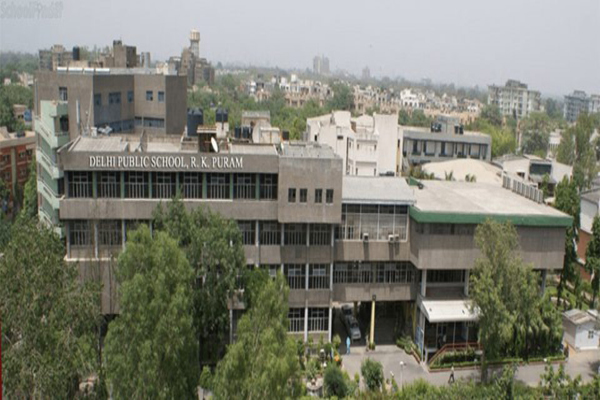
 At the very initial phase of launch of smart class for Indian private schools some of the most reputed schools in India such as the DPS R K Puram, Bal Bharati School, Pitampura in Delhi and Padma Seshadri Group of schools in Chennai were amongst the first to adopt the programme. Smart class has now been adopted by over 500 schools across India and is at the threshold of bringing in a rapid transformation of moving technology into classrooms in private schools in India.
 The initiative is to enhance professional training in Mathematics, Science, and English. The iPods are loaded with the IRI lessons as well as with audio and video training materials designed to support teachers in their presentation of complex topics. Using the iPods in combination with a foot- or solar-powered generator and a set of speakers, the teachers can also broadcast the IRI lessons without being tied to the radio broadcast schedule.
 The research pointed out the educational resources appeared to have been allocated inefficiently and inequitably in the programme, since most resources had gone to schools with higher proportions of better-off children. While there had been an improvement in exam results, only a third of the improvement could be attributed to government policy. The response of the Department for Children, Schools and Families was defensive, accusing the report of not looking at the whole picture. The same defensive reaction was evident this month when Cambridge University published its interim reports from a wide-ranging, independent, two-year review of primary education in England. They demonstrate that the initial sharp rise in primary school test results between 1995 and 2000 is now understood to be largely a result of teaching to the tests, and not to a dramatic improvement in learning. It points out that the Qualifications and Curriculum Authority and the government’s own Statistics Commission accepted the rises were overstated. The review also finds that the primary curriculum has narrowed in response to the testing; that statutory tests make it harder, not easier, to judge pupils’ progress; that there have been rises in test-induced stress among pupils; that the results of the tests are unreliable in up to a third of cases; and that the gap between the highest and lowest achievers in Britain is wider than in many other countries. The reports conclude there has been a genuine, although modest, improvement in children’s numeracy. It cannot say the same about literacy.