Home Blog Page 1728

U-Learning in Palm of Hand

Makers of the video-on-the-go players are expanding partnerships with educational content providers as they consider it critical to survive in the ever-intensifying battle with other mobile gadgets such as mobile phone, compact PC and personal digital assistant (PDA). Such a move is in line with the South Korean government's ubiquitous learning (u-learning) plan.

Digital Cube, leading PMP seller in South Korea, which has a 65-percent share of the market, said that it started providing high-quality broadcasting of EBS TV's college entrance test preparation programs. The PMP users can download the video files of the e-learning classes via Internet free of charge. It is the first time for the TV lectures to be transformed to other platforms at high picture quality. The offering of the EBS package is likely to be a big attraction for potential PMP buyers. The Ministry of Education and Human Resources Development is basing the college entrance test on the EBS lectures and the TV company insists about 80 percent of last year's test came from the EBS-covered contents. Before the introduction of the EBS lectures, there were various educational contents available on PMP, such as language courses bought from offline content providers. Not only teenagers will benefit from the handheld learning devices. For example, Cowon, another PMP maker, is planning to sell a yoga instruction video made to fit in the small screen of PMPs.

PMP refers to the palm-sized entertainment unit, which is geared for playing video and audio files. Applications for the technology have been extended to various fields. This year, it has been the satellite car navigation system that has spurred sales. According to Digital Cube, its sales have jumped from 7,000 a month before adopting the navigation programs to 20,000 after. The company is also planning to launch the first multi-tasking e-dictionary in October. The machine, named Udic, will be able to redirect users to multimedia files when searching for the meaning of a word.

Meanwhile, the ministry of Education and human Resources Development has launched its u-learning project by designating 18 elementary, middle and high schools in April for its pilot project. So far, online education networks have focused mainly on PCs and PDAs.

Software to help students clear exams

Blending cybernetics and principles of the ''gurukul'' system of education, a new software claims to help an average student crack exams without burning the midnight oil. Named ''CLEaRS,'' acronym for Compuertised Learning, Evaluation and Review System, the software has been developed by New York-based multinational, Learning Accord (L A).

The software teaches exactly what the student does not know, what he needs to know and is knowable to him, in the time frame available before his exams. The software has two versions, one for the Medical College Admission Test (MCAT) for students in the U S and Canada and another for Indians taking the board examinations and entrance tests for medical and engineering institutions. This is the fourth generation knowledge transfer system which combines the gurukul system of education and book-based teaching. It maps the student's mind 18 times per second to work out a strategy. After mapping his activities, it tells the student what time of the day he is most attentive and formulates a strategy for preparations. The software evaluates the student's lack of subject- wise knowledge and its remedial teaching technologies and provides optimal learning from a huge knowledge bank compiled by 60 full-time professors.

10 lakh Indian schools to be linked through Internet

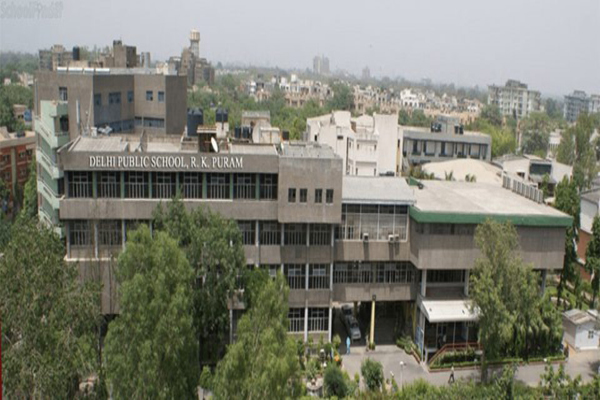
The Internet will soon become the medium through which one can enter the classrooms of about 10 lakh schools in India. Information regarding the state of the classroom, number of teachers and students, playing facilities as well as examination results will also be available online. Not only government schools but even top private schools like Delhi Public School, RK Puram, Modern School, Bharakhamba Road and Doon School in Dehradun or Lawrence School in Kasaulli will be part of one of the biggest school interlinking exercise the country has ever undertaken.

Just about 50,000 schools are not covered under the programme. The National Institute of Education Planning and Administration (NEIPA) will put report cards of over 10 lakh schools, for which it has collected data, on the Internet. There will be a report card on each school available. Information from each school has been converted into a school report card for putting it on internet. While the exercise to collect data from schools started in 1994 with 42 districts, it is for the first time the information will be available for the citizens.

97 public high schools in Phillipines to get computers

Some 97 public high schools in Region 7 in Phillipines will be beneficiaries of the Department of Trade and Industry's (DTI) PCs for Public Schools Project (PCPS). Under the PCPS Phase 3 Project, around 1,200 public secondary schools nationwide will receive 12,000 computers.

Each beneficiary school in the region will receive 10 computers, including peripherals and local area network connections. Bohol will receive 27 units, Cebu will have 43, Oriental Negros will get 22 while Siquijor will get five units. DepEd will train teachers while the Department of Science and Technology (DOST) will test the units and the software. With DTI's PCPS 3 pro-ject, more schools will get ICT upgrade, “empowering” more students and teachers. According to DTI re-cords, 32,240 computers were given to 2,228 public high schools nationwide composed of 1,167 schools in Luzon, 569 schools in Visayas and 492 schools in Mindanao under the first two phases of the project.

Log in to get CAT forms now

Common Admision Test (CAT) has just gone hi-tech. From this year, to appear for CAT, all one needs to do is apply online. Apart from selling CAT bulletin and application forms through bank counters , Inidan Institute of Managements (IIMs) have also created this online facility.

IIMs will also set up an interactive voice recorder system (IVRS) which will be functional later this month to answer queries regarding application as well as admission status. The CAT which will decide admission at all six IIMs, besides 60 other B- schools, had over 1.8 lakh applicants last year.

Important dates of CAT: Last date for receipt of completed CAT applications: September 9, 2006 Dispatch dates for admit cards: October 16, 2006 Date after which IIM should be contacted (in case of non-receipt of Admit Card): November 3, 2006 Common Admission Test: November 19, 2006 Call for interview sent by: January 2, 2007 Last date for receipt of completed applications: January 31, 2007 Interview schedule: February-March , 2007 

e-Learning Toolkits launched to boost public service delivery in Asia

ADB and ADB Institute launched two e-Learning toolkits to improve transparency and accountability in the delivery of public services in Asia. The toolkits

Ghana aims to be West Africa’s IT hub with India’s help

Inspired and aided by India, the Ghanaian government is taking measures to make information technology (IT) a key driver of its economy and transform the country into the IT hub of West Africa. To achieve its aim, the government says it is determined to make IT popular among youth. Communications Minister Haruna Iddrisu said the government is spending $5 million on an ICT project to empower youth. As part of the project, to begin this year, offices of the defunct State Housing Corporation (SHC) will be transformed into an IT hub. Similar centres will be established in all the 10 regional capitals beginning with five this year. Iddrisu said the initiative was aimed at making the country a manpower pool for industry requirements and an attractive place for global business process outsourcing. India has a key role in the development of the IT sector in Ghana, providing in March assistance of $800,000. There have also been several Indian-assisted projects to promote IT in the country. Among these is the main training centre, the Ghana-India Kofi Annan Centre of Excellence in ICT (AITI-KACE), which came up Dec 9, 2003, as an outcome of then President John Kufuor's discussions with Indian leaders during his trip to India. Ghana provided the infrastructure to house the computer hardware, software and other communication equipment, while India supplied the initial instructors, who helped in drawing up the curriculum. “The centre came into being after the then UN secretary general, Kofi Annan, who was inspired by India's achievement in the IT industry, decided to find a way of replicating this success across Africa,” its director general, Dorothy K. Gordon, told IANS in an interview. “After just eight years, one can say the IT industry (in Ghana) has started to take off and the centre has become a hub of IT activities,” she said. Gordon clarified Ghana's move into the IT industry “was not intended to take away India's long-time role but to assist Indian companies that are looking for alternative locations”.

Aptech Computer Education announces ‘Techno Minds’

Aptech Computer Education-the flagship brand of Aptech Ltd. hosted an inter-centre competition Techno Minds for the students of the premiere career programme, ACCP course and the Sun Java, Oracle & Red Hat Linux certification courses. Participants included students from the fist and second year exclusively from the North zone, i.e. Delhi, Lucknow, Kanpur, Varanasi and Agra. Techno Minds also gave away 'Tech Guru', the award for the best faculty of North for his/ her contribution towards maintaining quality delivery and expertise. The panelists for this prestigious event were Mr. Venkat, Global Academic Head

Ireland Govt to put Euro 20m for ICT equipment for schools

It has been recently announced by the government that the next phase of its

NIIT University appoints Eminent Researcher Rajeev Shorey as President

NIIT University, a not-for-profit institution today announced the appointment of Dr. Rajeev Shorey as the first President of the educational establishment. Dr. Shorey, will be responsible for the overall functioning of NIIT University, which is dedicated towards building great careers and ensuring exceptional job opportunities. Spread over 100 acres of Green Campus, at the foothills of the Aravali Range in Neemrana, Rajasthan- NIIT University aims to create a research culture from day one, forge deeper industry linkages and provide seamless education using best technology. Welcoming Dr. Shorey on board, Rajendra S Pawar, Founder, NIIT University, remarked, 'It is my privilege to welcome Dr. Shorey as NIIT University's first President. A renowned scholar and an eminent researcher, Rajeev has been acclaimed in national and international forums at a young age. I am confident that Rajeev's dynamism and zeal for research will help shape NIIT University as a centre for excellence in academia and research, committed to building great careers in tomorrow's knowledge economy.'

A Ph.D holder and a Gold Medalist from The Indian Institute of Science (IISc), Bangalore, Dr. Shorey's research papers on wireless and wired networks have been published in more than 50 international journals and conferences and he has 10 US patents to his credit. Dr. Shorey worked with General Motors India Science Laboratory (ISL), in the Vehicle Communications & Information Management Group, Bangalore, prior to joining NIIT University. His earlier assignments include a 7 year stint at the IBM Research Laboratory, New Delhi and with SASKEN Technologies, Bangalore. During his association with IBM Research, Dr. Shorey was an adjunct faculty in the Computer Science Department at IIT, Delhi from 1998 to 2005. He has served as a faculty at the Computer Science Department at the National University of Singapore from 2003 to 2004, while being associated with IBM Research Labs. Talking about his new role Dr. Rajeev Shorey remarked, 'Research as an approach in any discipline is the key to success in today's complex and fast changing information economy. This is a challenging opportunity for me to ignite the passion for excellence in research and academia in today's youth.'

LATEST NEWS