Home Blog Page 1748

Reality bites on computer Brailles for blinds in India

According to some reports, just 5% of the millions of blind children in India get an education. And for these brave few it's an uphill struggle. Recently, the University Grants Commission, the apex regulatory body for university education in the country, paved the way for visually-impaired students to be given the option of using a computer to write answers during exams. UGC's stance follows a similar instruction from the Central Board of Education (CBSC) allowing candidates from Delhi to use PCs or typewriters during exams.

Till recently, the visually-impaired needed to depend on scribes or writers for examinations, a system that is fraught with problems. A switch to computers, however, will do little to change the plight of the visually-impaired, unless institutions back this up with some progressive support. Examinations are in fact just one part of what is a daily struggle for the visually-impaired. Take the most basic need any student has- books. There is no accessibility of reading and study material in India. In the absence of these, visually-impaired students are left to the mercy of others or spend hours scanning page after page of text books to be loaded on to computers so that screen-reading software (which allows the blind and visually-impaired to access information on their PCs either by voice or through Braille or both) can be used. The National Association in Delhi for the Blind is trying to change what is a cruel reality for the visually-impaired by using its in-house mini-computerised Braille press to publish textbooks and literature of general interest. All year round, the organisation gets special requests from school and college students for transcriptions. Already, NAB has covered substantial college-level material in subjects like history, political science, English and BEd. With the help of Media Lab Asia it hopes to provide material in 12 other subjects identified as being popular choices for visually-impaired students within the next three years. These include Hindi, Sanskrit, sociology, philosophy, law and social work.

NAB Delhi has been working with the Delhi University, under which it believes 200 visually-impaired students study to bring about just such a change. It hopes that by 2007 they will have the training in place to transition DU's students to computer-based exams. Apart from training, another problem that some foresee in using technology to give visually-impaired students greater academic indep- endence is infrastructure. The other problem that could emerge, is if colleges are asked to provide computers themselves.

Classroom construction funded by Vietnam

It was announced recently, that a project for building classrooms and teacher's houses through 2012 will receive around US $241 million in form or government bonds, by the minister of Education and Training at a conference. Nguyen Thien Nhan, deputy Prime Minister, has asked the ministry to make a list of localities that have already used up the funds by June. The ministry and the Ministry of Finance will recommend which localities are to receive additional grants from the 2011 budget.

Local leaders were asked to utilise their available land, as the money would only be enough for construction, not land compensation. Priority should be given to poor districts, Nhan said, repeating instructions from Prime Minister Nguyen Tan Dung. The programme on school construction began in 2008. It received more than VND12 trillion ($642 million) in government funding over the past two years, including VND8,275 billion in government bonds. The rest of the money came from local funds and private sponsors. 

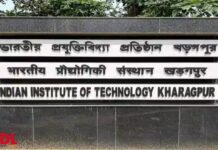
IIT to host first Indian school on IPR Law

IIT-Kharagpur and George Washington University (GWU) have signed a technical collaboration agreement to set up India's first school of Intellectual Property Rights Law. 
 
Christened the 'Rajiv Gandhi School of Intellectual Property Law', and approved by the Union HRD ministry, this school will attempt to equip post graduate students in the fast emerging field of IPR. This school has also got funding of US$1 million from Vinod Gupta, under whose guidance IIT-Kharagpur became the first IIT to house a business school. The Law school will start its academic courses from July 2006 and the starting programmes will be a 3 year, 6 semester, full time, residential course leading to Bachelor of Law in Technology and Intellectual Property Law. The eligibility for this course will be degree in engineering or technology or PG degree in any branch of science or MBA. Admission announcement shall be made in March 2006 and will be based on examination, group discussions and personal interviews. 

Govt schools run by Pvt to reserve 25 lac seats for poor

In order to develop and enhance a more inclusive educational society in India, the government has opted to permit corporates, non-profit companies and societies to establish 2,500 schools all over the country. The Public Private Partnership (PPP) model that would allow the government to fill up 1,000 seats from the existing 2,500 seats in each school having children from disadvantaged sections, has been finalised by the Planning Commission in consultation with the private sector.

Around 25 lac students are to receive benefits from the schools that are to be set up and run by a private management, but are still to remain as government schools. Out of the 1000 available seats at the PPP schools, half of these would be reserved for students from the scheduled castes (SC), scheduled tribes (ST) and other backward classes (OBC). These students would only have to pay a tuition fee of INR 25 per month. The panel has decided that the rest of the seats would be allotted to children of non-income tax paying parents, who would have to pay a monthly tuition fee of INR 50. The students would be provided free textbooks and two uniform sets in a year.


IDRC announces Open Archive, an intellectual platform for developing countries

Canada's International Development Research Centre (IDRC) has announced plans to create an Open Archive, the first among Canadian research funding organizations.  The Open Archive will provide full access over the Internet to IDRC's rich research archive.

In addition to making information more freely available, this initiative will provide IDRC-funded researchers with a much-needed outlet to publish and showcase their work. The Open Archive will help Southern researchers to engage in the international dialogue on important development issues and increase the impact of their research. Throughout its 35-year history, IDRC has believed that to bring about positive change in people's lives, knowledge should be shared. Research results and documents generated by IDRC-supported projects, IDRC recipients, and IDRC staff represent a tangible intellectual output of the Centre's mandate. The Open Archive will streamline and centralize the capture of IDRC project outputs and research documents. It will raise the visibility and facilitate the retrieval of the vast array of IDRC materials by consolidating them in a well-managed, indexed, secure, and permanent location. By creating an Open Archive, IDRC promotes transparency of its results-based research and participates in the global movement to remove  economic, social, and geographic barriers to the sharing of knowledge. Canada's International Development Research Centre (IDRC) is one of the world's leading institutions in the generation and application of new knowledge to meet the challenges of international development. For more than 30 years, IDRC has worked in close collaboration with researchers from the developing world to build healthier, more equitable, and more prosperous societies.

Nationwide elibrary project rolls out

Kapil Sibal, Union Minister for Human Resource Development, India recently, formally launched the 'National Library and Information Services Infrastructure for Scholarly Content (N-LIST)'. The N-LIST project provides access to more than 2,100 electronic journals and 51,000 electronic books to students, researchers and faculty from colleges and other beneficiary institutions through server(s) installed at the Information and Library Network (INFLIBNET) Centre.

Faculty, staff students and researches from colleges covered under section 12B of University Grants Commission (UGC) Act are eligible to access e-resources through the N-LIST project. Registration of the above mentioned colleges is required, however, on the N-LIST Website. Currently, 665 colleges are registered members. The project provides for cross-subscription to e-resources subscribed by the two Consortia, i.e. subscription to INDEST-AICTE resources for universities and UGC-INFONET resources for technical institutions.

eCurriculum in IIIT A plans for IT courses

In an announcement, the Indian Institute of Information Technology – Allahabad (IIIT-A) mentioned that they will be developing e-contents for 18 subjects of Information Technology (IT) for all IT courses in the country. The move has been taken in accordance with the National Knowledge Process programme launched by the Ministry of Human Resource Development (MHRD).

IIIT A has been assigned with a task of training mentors and developing IT e-learning modules for institutions that provided technical training such as Indian Institutes of Technology (IIT), National Institute of Sciences, etc, by the MHRD. The MHRD had assigned IIIT-A with the task of The purpose behind the move by MHRD was too spread education about information technology in the northern regions of India. IIIT-A Director M.D. Tiwari mentioned that the ministry had released an amount of INR 75 lakhs for the project. Tiwari said that the institute was working towards content generation and connectivity with a provision for access devices for institutes and learners.


Municipality to introduce e-Education

The Ukhahlamba District Municipality in the Eastern Cape in South Africa is to introduce electronic education (e-Education) for teachers and pupils in the municipality.

A centre has been established at Idyoki Public School in Ugie. This is in line with the e-Education White Paper that sets out government's response to a new information and communication technology environment in education. Government aims to ensure that schools are connected, that they access the Internet and communicate electronically; and that communities use and support ICT facilities in public schools. The municipality in partnership with Asante Management and Development Services as well as Kit Plant Hire have donated 16 computers, a printer, a scanner, a copier, a satellite dish, a DVD player and a data projector to the learning communities. Forty-eight educators from Idyoki School, including ABET educators as well as a representative from the community will obtain ICT training from the resource centre. Some of the modules to be introduced in their training include Introduction to Information Technology, Basic Word Processing Skills Part 1, Basic Word processing Skills Part 2, Basic Spreadsheet Skills as well as Basic Skills in Presentation.

MEXUS EDUCATION consults FRANCORP for advice on its Pan India expansion of Iken Braingym

IKEN Braingym, the flagship brand under the aegis of which Mexus Education delivers its interactive learning centers and services, has hired the services of FRANCORP for their pan India growth plan. Mexus Education, started in 2008, is an education innovations enterprise of the Bilakhia Group. Mexus is making its first entrance ever into franchising to expand its presence across India with the help of the Francorp's global expertise in franchise management. The foundation of Mexus is a belief that learning is most effective when it is personalized, entertaining, voluntary and involves active participation by the students. It is this thought that has inspired Mexus to design innovative learning solutions and tools with an able team of over 300 professionals from premier science and management institutes in India.

In India FRANCORP is a part of Franchise India Group, which is Asia's largest integrated Franchise and Retail Solutions Company that specializes in providing innovative solutions to its global clientele. Iken Braingym, a unique and state-of-the-art learning centre developed by Mexus Education offers technology enabled and self-learning course modules for age groups 3 to 30 yrs. Course content is delivered through modern technology and a 'hands-on' methodology that includes learning with the help of films, animations, games, toys, demo kits, project work, case studies, activity based learning and many more. Iken Braingym offers learning solutions ranging from Pre-school (Brain-e-kids), Middle School Curricular based learning programs (Study Smart, Science and Math for Std. 6 to 9), Middle School extra-curricular and skill based learning programs (Futuristic Kids, Std. 6-9) and Professional Learning programs in Information Technology and Teacher Training (Fine Tune for graduate students, aspiring professionals and homemakers). All courses are uniquely built on the Iken BrainGym philosophy of multiple learning methodologies and give the learners a life long educational experience that is unique in the Indian education sector. Iken Braingym also follows a distinctive real-time performance tracking mechanism for instant results and thus much greater customer satisfaction.

Speaking on the future plans, Saurabh Saxena, Director, Mexus Education, said, 'Braingym is the next generation learning space which is a unique combination of lab, museum, workshop, classroom, hobby center and play group. Through this initiative, we take forward our philosophy of bringing back the joy in learning and to provide hands on activity based learning to the students. We intend to set up 50 Iken BrainGym centers in the current fiscal year across Tier1 and Tier2 cities. With FRANCORP's expertise in this sector, we are confident that we will be able to meet our targets and deliver quality education and educational tools to the consumers.' Commenting upon this association, Gaurav Marya, Managing Director, Francorp, said, 'The education market that our client wishes to address is estimated to be INR 1000 Crs in 2008 (in Vocational training). Mexus is committed to create a new wave in the domain of education by providing end to end solutions for content, methodology, delivery technology and assessment. These learning tools facilitate collaborative learning and self-analysis as students not just learn their lessons but begin to analyze the Whys and Hows of things. We are looking forward to help them with their franchisee model & roll-out plan for pan-India expansion program and also provide marketing support, legal documentation, & help with recruitment of franchisee. Mexus will help franchises for centre set-up, Marketing support, Recruitment & Training support and after sales & service support etc.'

Kiwi students rank high on access to ICT

Organisation for Economic Cooperation and Development (OECD) report says, New Zealand secondary school students stand fifth out of 41 countries for access to Information Communications Technology. This study shows that the government's strategy to equip all young New Zealanders with skills in, and access to, ICT is achieving good results.

Every school in the country now has access to broadband and ICT equipment and more than 600 schools are involved in ICT clusters. New Zealand 15 year olds' access to ICT in home and school was the fifth highest of participating countries at nearly 100 percent. Most 15 year olds (approximately 80 percent) had home internet access in 2003, a figure that is likely to have risen since 2003. Approximately 56 percent of New Zealand 15 year olds had been using computers for more than five years. New Zealand students ranked very highly for their confidence with Internet tasks (8th) and higher-level ICT tasks such as managing databases and building web pages (6th). The government has invested $300 million in ICT in schools since 2000. This year schools will receive $50 million specifically for ICT over and above the $22 million provided as part of their operational grants.

LATEST NEWS