

Home Blog Page 1752

President of India moots US$200bn target for Indian IT industry

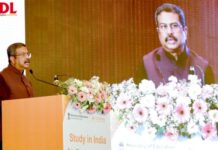
Addressing the NASSCOM 2006, the president of India congratulated the Indian IT industry for achieving US$33.6 billion business for the 2006 from US$28 billion in 2005. It is notable that the NASSCOM is aiming to achieve US$60 billion by 2010.< ?xml:namespace prefix = o ns = "urn:schemas-microsoft-com:office:office" />

The president was armed with a plan to achieve US$200 billion business by 2010. Currently, Indian IT services contribute 3.4 percent of the global market. Work out this for 15 percent, then youone could expect to achieve $200 billion, he said. Presenting an eight point agenda to achieve this objective, president Kalam said, aim with competitiveness – aim high and keep trying; address small and medium ICT industries and encourage consortium approach for IT solution; undertake a major drive in capacity building the graduates with the aim to provide value added IT services; ITeS and BPO in the secondary cities; encourage innovation and creativity among IT personnel thereby increasing ROI for customers; focus on Asia Pacific, ASEAN and African countries; focus on Indian domestic market; India is proposing a 'Pan Africa e-Network' for connecting 53 countries for tele-medicine, tele-education between India and Africa; proposed world knowledge platform will be a launch pad for many innovations and create new markets for partnering nations.


IGNOU and NBE tie up to develop medical education in India

Indira Gandhi National Open University (IGNOU) and National Board of Examination (NBE) entered into a Memorandum of Collaboration to lay the foundation for cooperation and joint action to support the development of medical education and training in the country.

Common Objectives & Concerns for this MoU are, recognizing the common goals of Higher Medical Education and continuous training needs of Doctors to participate effectively in the processes of national Development, considering the capabilities of IGNOU in providing higher education to large target groups of learners in areas of education identified above with focus on sharing resources and mutual acknowledgement of the experience, expertise and capabilities of IGNOU and NBE and give due importance to collaboration, resource sharing and partnerships.

Strategies are to establish a network of centres identified jointly by IGNOU & NBE and other such institutions of learning in India who are involved in related activities in the field of higher medical education, to provide for sharing of academic and technological experiences between IGNOU and the NBE from time to time and develop strategies for design, development and implementation of Postgraduate and continuing medical education programmes with provision for suitable funding.

IITs decide to almost double intake, open new campuses

All set to expand, Indian Institutes of Technology (IITs) will be nearly doubling their present intake, opening new campuses and introducing new courses.

IIT-Roorkee has already zeroed in on NOIDA to locate its new campus while at least two other IITs are scouting for land. Though the attempt by IIM, Bangalore to open a campus in Singapore had ran into trouble with the Ministry of Human Resource Development, IIT expansion plans have the full backing of the Ministry. IIT-Delhi is likely to open a campus in Rajasthan, either in Jaipur or Alwar. IIT-Chennai will start a research centre in BHEL at Trichy, keeping the option of developing it into a campus later. IIT-Mumbai, which had signed an MoU with the Goa government four years ago, is pursuing the project to start a campus there. It will also upgrade its present campus in Powai. IIT-Kanpur too will have a new campus. IITs are also in the process of enhancing coordination amongst themselves to ensure uniformity in standards.

5,000 students for Cyber Olympiad in India

India's first online cyber Olympiad will be held on February 19. Organised by the Delhi-based Science Olympiad Foundation, the National Cyber Olympiad is meant for students of Class III to XII.

In all, 5,000 talented students from over 1,800 schools across the country are expected to participate in the LG Fifth National Cyber Olympiad for Indian schools. Testing a student's mental ability, reasoning and Information Technology, the question paper will have 30 questions for each class, with a student getting just about a minute to answer each. In its fifth term now, this year will see Indian students from Gulf, Singapore, Nepal and Andaman also participate in the online examination. This project will act as a model for corporate partnership with NGOs to deliver projects with national level impact. The examination will be held in India at the web centres of Reliance Web World, where students will take the second round of the Olympiad.

Do a project in Tamil computing, win cash prizes

Students of information technology or computer science/computer applications in engineering and arts and science colleges now have a chance to win cash prizes for their mandatory final year project.

There is a caveat though: the project should be in Tamil (one of the Indian languages) computing. The three best projects in 2006-07 will get cash prizes worth Rs. 50,000, according to an announcement by the Kani Thamizh Sangam, an association of Tamil computing enthusiasts, and Tamil Virtual University. With global IT majors looking to localise content and developing local language computing, such projects could lead to entrepreneurship opportunities too. Last year, a similar project helped in achieving awareness on the prospects and job opportunities in language computing.

Reinventing High School education infused with technology

High Tech High, in this innovative charter school, in a converted warehouse, students don't take tests or write papers. Instead, they use the latest technology to produce documentaries, books and presentations.

The brainchild of lawyer-turned-educator Larry Rosenstock, High Tech High is one of many attempts in America to reinvent high schools. The movement is fueled by growing alarm over dropout rates – especially among blacks and Hispanics – disengaged students, and a decline in American competitiveness in science and math. High Tech's model is to locate small schools with no more than 450 students each on the same campus. In San Diego are High Tech High, two other specialty high schools, two middle schools, and an elementary school. The schools are more like college than high school, with students taking responsibility for their own learning through interdisciplinary projects and internships. Unlike many charter schools that target low-income students or minorities, High Tech High seeks students of all backgrounds on the conviction that they learn best together. Its student body is about 55 percent white, 15 percent each black and Hispanic, the rest Asian and Filipino. About 15 percent are poor enough under federal guidelines to qualify for free and reduced-price lunches.

High Tech High, with its high ceilings, exposed ductwork, and glass-walled offices, doesn't look like a school. Student work clogs the classrooms and hallways, everything from computer-altered photographs to a human-powered submarine, the work of a physics class. While every moment is abuzz with activity, there is very little disruption. The curtained, gray-carpeted oval in the center of the one-story building, called the common space, sometimes is used as a classroom, sometimes as a meeting place, sometimes for quiet study. It is “high tech” not because it trains students to fix computers and write software, although some do, but because technology is infused throughout the curriculum. Students work on networked laptops and maintain digital portfolios. There are plans to open more school campuses in California as well as Texas.

Illiterate parents in India can go to school

This is the mother of all programmes- educating illiterate parents for free. The Mass Education department along with Sarva Shiksha Abhiyan (SSA) in India will conduct classes for illiterate parents of out-of-school children during the Chinnara Angala programme.

Chinnara Angala, a two-month bridge course held twice a year, aims at bringing drop-outs back to the mainstream. Since Chinnara Angala is mostly held in government schools, a decision has been taken to educate parents along with their children. While SSA teachers will concentrate on students, mass education volunteers will cater to adults. As the bridge course extends up to 100 days in areas where drop-out rate is high, accommodation will be provided to students and their parents in government schools. There are two incentives: A common venue for the entire family to get educated and no fixed timing for classes. As per the March 2005 Child Census, there are 1.05 lakh out-of-school children in the state. Every bridge course will have at least two volunteers

Microsoft to ‘Empower’ Kuwaitis

Microsoft and Kuwait Economic Society (KES) announced the signing of an MoU to collaborate on a new project and provide Information and Communication Technology (ICT) training to Kuwaitis. The 'Empower' project will provide opportunities for young Kuwaitis, especially women on the welfare programme to train in essential computer skills, to improve their employment prospects.

This partnership with Microsoft aims at encouraging the affiliation between community development organisations and the private sector to drive social and economic growth in the country. Microsoft is helping bridge the global technological gap by providing the training and tools people need to realize their potential. Project Empower is part of Microsoft's Unlimited Potential (UP) programme, a global initiative that focuses on improving lifelong learning and providing technical skills training to underserved individuals through Community Technology and Learning Centres (CTLCs). A CTLC has been established by KES at the society premises where the training will take place. The centre will also use the Microsoft UP curriculum, an easy and efficient set of lessons for ICT learning, that have been developed by Microsoft and its partners.

The UNESCO Literacy Portal http://portal.unesco.org/education

Literacy is a basic cognitive skill, which is compulsory for the development of an individual and of society at large. A prosperous and progressive future of the world will only be possible when universal  quality education is provided to all.
Corresponding to this truth of today’s world, achieving universal  primary education is one of the eight goals (Millennium Development  Goals) set and adopted by the UN General Assembly in its Millennium  Declaration in 2000.
The United Nations Educational  Scientific and  Cultural rganisation (UNESCO) has been striving to  provide education to all. The purpose  of UNESCO’s  educational  programme has  been to promote  education as a  fundamental   uman  right, to improve the quality of   education and to promote  experimentation, innovation and  sharing of information and best practices in    dition to policy dialogue in education.  Literacy is one of the UNESCO’s three  main target areas to accelerate  progress towards the goal of  Education For All  EFA) by 2015;  Teacher Training and HIV/AIDS  prevention education are the  other areas.  Keeping up the tradition of providing high quality content,   NESCO   as  eveloped a new portal on  Literacy.The importance of literacy  can   e best understood by the statement in this portal – “Literacy is an indispensable means for effective social and economic participation,  contributing to human development and poverty reduction”. The portal  assumes significance in the light of the fact that UNESCO is celebrating 2003-2012 as literacy decade and its mission statement declares: Literacy  as Freedom. This web site contains information on themes such as gender equality, HIV/ AIDS, information and communication technologies, life skills, microfinance, non-formal education and poverty reduction in the context of literacy  and educational development.
The main objective of the literacy portal is to provide an online platform  for information sharing on literacy  related projects and activities, which are taking place around the world. It’s most important aim is to enhance  UNESCO’s capacity in coordinating the United Nations Literacy Decade  (UNLD) in building partnerships at all level. This portal provides a  comprehensive overview of  UNESCO’s literacy related activities, its strategy, domains of action,  initiatives. The Literacy portal also provides information and valuable documents from various literacy actors such as  United Nations Organisations (UNDP,UNFPA etc) Member states, bilateral and multilateral institutions  (Commonwealth of Learning, World  ank etc), Non-Governmental Organizations / Community Based  Organizations , Foundations and Private sector. Some of the documents  which can be obtained form this portal are: United Nations Literacy Decade: Progress Report 2004-2005, Literacy-A  UNESCO Perspective, Literacy for All- Information kit on UN Literacy Decade(2003- 2012),Address of  Director General of UNESCO at the launch of UN Literacy Decade, The plurality of literacy and its implication for  policies and programmes, The Dakar Framework of Action,  for Education For All: Meeting our Collective Commitments etc.  This portal also provides updated information on the  events and activities in education sector around the world in its news  section along with information on new publications on education. The portal  has an extensive coverage of projects and conferences related to literacy and education.  The portal also highlights and marks various  nternationally important days  and decades such as International Literacy Day, United Nations Literacy  Decade, United Nation Decade of Education for  Sustainable Development and Millennium  Development Goals.  This portal is a one-stop location for all updates on the state of literacy of  the world.

Market Place

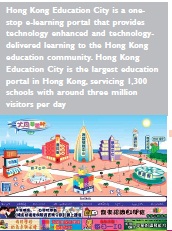
During the SAR outbreak in  ong Kong, when all the schools and  lasses were  suspended, the Hong Kong  Education City portal  page view rate escalated from 2 million to 4.6 million a day. 42 online  courses were made available for free to all 1,300 schools, with the  support its partners.  More than 70  ultimedialearning games were  re-packaged, together  with other online resources, encouraging  asynchronous learning. The number of messages posted also hit a record  high; senders ranged  from group messages from  university staff to short messages from  primary school pupils. Hong Kong Education City is the largest  education portal in Hong  Kong, servicing 1,300 schools. Self  learning takes place at the website for students and parents alike,  while virtual classrooms have been set up  for teachers to continue with current curriculum, training both parents and students during this time of   national crisis. HKedCity is designed to promote IT  in education and to build a one-stop education portal for teachers, students and parents. Through this  network, the general public can share information, collaborate online and  enjoy access to e-learning facilities. Market Place  The HKedCity web site is now recognized as the largest and most popular educational web site in Hong  Kong, with around three million visitors per day.

Who manages HK education City?
Founded in May 2002, Hong Kong Education City Limited (HKECL), a wholly owned subsidiary of the Education and Manpower  Bureau is responsible for managing the Hong Kong Education City  (HKedCity) website and to uphold the
mission of promoting quality education and IT education in Hong  Kong. The HkedCity is funded by the Quality Education Fund. Other major  partners in this initiative  include TechCreations Company Limited  (TechCreation) and First Virtual Communications.  TechCreations (http://  www.tech-creations.com/.) is  an IT solution provider specialized in IT in education,  infrastructure and security. Headquartered in Santa Clara,  California, First Virtual  Communications (http://  www.fvc.com) is a premier provider of next generation  web conferencing and  collaboration solutions.

Why Hong Kong Education City?
The first wave of IT education in Hong Kong came in with the  strategy  Information  Technology for Learning in a New Era’-1998-2003. The strategies emphasized on linking students to the ‘vast  network world of knowledge and information to enable them to acquire a broad  knowledge base and a global outlook’ along with developing in  students ‘the attitude and capability for independent life-long  learning’. The Hong Kong Education City portal  eveloped  as a response to the government strategy. The HkedCity was build as an education portal based on IRIS model (Information-Resources-  Interaction-Services).  The target audiences are the students for ‘Self-Paced Learning’,  teachers for ‘Classroom Teaching & Professional Development’ and parents for ‘parenthood and  life-long learning’.

LATEST NEWS