




Home Blog Page 367

New Education Policy 2020- Approaches, Opportunities and Challenges

Dr Dhrubajyoti Chattopadhyay

The main objective of this is to develop streamlined critical thinking, higher order thinking, having more grip on the subjects and domain, to develop problem solving skills along with team work and communication skills, Dr Dhrubajyoti Chattopadhyay, Vice Chancellor, Sister Nivedita University, Kolkata in a conversation with Elets News Network (ENN).

The National Education Policy gives equal right to education. It incorporates school education as an elementary part and makes it compulsory for every child. There have been provisions of multiple entry and exits for secondary students and extends to Undergraduate, Post Graduate and research levels. It allows the flexibility for a student to complete his education at any point of time the student thinks so and has mainly been framed for students who had to discontinue their studies midway due to work or family pressure. The policy aims to provide a strong base of liberal arts along with Vocational Training at Undergraduate levels. A candidate who is in the fourth year of the Undergraduate course can seamlessly integrate itself at Masters and Doctoral levels which in the long run will help in bringing professional education into mainstream undergraduate education. Vocational Education will also be an integral part of the Education Policy.

Also read: Rishi Khemka, CEO – ARK Infosolutions, MindBox hails new education policy

The Higher Education sector has been combined with liberal arts with Mathematics, Sciences, Technology and Engineering. The main objective of this is to develop streamlined critical thinking, higher-order thinking, having more grip on the subjects and domain, to develop problem-solving skills along with teamwork and communication skills. The postgraduate and the doctorate levels have been given the options of one year, two-year and five-year degree. The post-graduation will have more research level concepts and will have for professional competence. The National Research Foundation has been constructed whose main objective would be to focus of the Education System mainly at College and University levels. It will also take care of research capacity expansion and monitoring the same with a more formal mechanism.

The most important component of this Education Policy is Digital literacy and Computational thinking. The emphasis would be given to make students digitally literate and also will be trained in programming and coding to enhance their IT skills. NEP has been entrusted to integrate ICT in education so that the process becomes less cumbersome, fast and transparent. ICT will enable the students to have a better education through proper monitoring. NEP has also plans to integrate online education into the education process so that the students can maximize their educational experience. The policy talks about the inclusion of disruptive technologies into the system. It will include Artificial Intelligence, Cognitive tools to ensure that online education is guided by student learning and student growth at an individual level. It plans for huge IT infrastructure and technology platforms. It plans to have more and more online courses and expects to have tie-ups with top-level Universities and Institutes to have more Massive Open Online Courses (MOOC’s).

However, the challenge is its implementation. Different states have different education systems and hence accepting one uniform education policy would be a bit challenging. However, we need to understand that through proper participation we can overcome this challenge and make it successful across the country.

Pokhriyal distributes CBSE Awards to 38 teachers

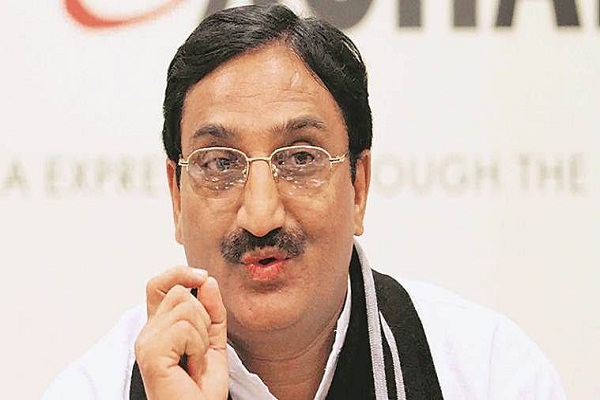
Minister Ramesh Pokhriyal 'Nishank'

The Union Education minister Ramesh Pokhriyal Nishank, distributed the Central Board of Secondary Education (CBSE) Award to Teachers to 38 educators from affiliated schools across the country.

The CBSE Award is organised by the board to felicitate teachers and principals who have shown excellence in school affiliated.

Congratulating the teachers, education minister Ramesh Pokhriyal ‘Nishank’ said:“ I feel that teachers play an important role in the development of students, family, society and the nation. We all understand how extensive the impact of a teacher can be in a students’ life.”

Also read: Pokhriyal: Can’t allow to waste precious year of students

Among the teachers facilitated is Arti Qanungo, a teacher at the Government Girls Senior Secondary School in Shakarpur, Delhi, for working on developing listening abilities of students and creating activities to bring environmental and societal awareness among students. Another awardee is Reenu Bindra, a physical education teacher at the Darshan Academy in Kirpal Bagh, Delhi, whose students have received medals in sports and games in various national competitions. Bindra has also encouraged and helped specially abled students and dropouts to pursue sports and games.

Minister of state (MoS) for education Sanjay Dhotre, CBSE chairperson Manoj Ahuja, and secretary of Department of School Education and Literacy Anita Karwal were also present at the ceremony.

VIBGYOR Group of Schools announces zero-interest easy-EMI education loan

EMI education loan

Country’s leading chain of K-12 schools, VIBGYOR Group of Schools, has announced the launch of Easy-EMI Education Loan, financial assistance programme for COVID-impacted families. Under the programme, each family can avail of a maximum of 2 loans for up to Rs 5 lakh (Rs 2.5 lakh per student) for 27 months.

The loan is being offered interest-free with outstanding fees, with VIBGYOR subsidising 100 per cent of the interest amount till 30th September 2020.

Peshwa Acharya, CMO, VIBGYOR Group of Schools, said, “We are continuously working on innovative ways and means to help students whose parents are financially impacted by the on-going pandemic. In this difficult time, our aim is to support each other, as we work to ensure continuity of education amid the lockdown. We have listened to their problems, and have subsequently rolled out the Easy-EMI Education Loan, to help VIBGYOR parents who have been financially affected by the pandemic and are doing their utmost to facilitate learning for their children.”

Also read: Results are out, Now the Next step- ‘Education loans’

Easy-EMI Education Loan is being offered in Mumbai, Pune, Nashik and Vadodara. The 27-month tenure of the loan also includes a 3-month moratorium.

In March 2020, VIBGYOR Group of Schools also launched the EduBridge Scholarship Programme (fee waiver scholarship), to provide financial support to parents (salaried and non-salaried/business-owner) who had been impacted by the COVID-19 pandemic.

5 Ways in Which AI Will Revolutionize engineering in Post COVID World

Dr. S.G Gopalakrishna

The advent of technologies like Artificial Intelligence, Virtual Reality, Robotic Process Automation, Machine Learning have made them important skills to have for engineers to be accepted in the industry, says Dr. S.G Gopalakrishna, Director, Nagarjuna Group of Institutions in a conversation with Elets News Network (ENN).

Engineering is one of the most sought after educational streams in India and students often relate engineering education as a suitable way to embark on a successful career journey. This often means that the job prospects are much more if one follows this discipline as compared to other streams.

Earlier, streams like Mechanical Engineering, Electronics and Communication Engineering, Computer Science were the domains that students usually pursued and were considered the traditional fields. Lately, there has been a lot of focus around inculcating research in the curriculum, experiential learning, STEM education, deep tech etc.

Also read: Kendriya Vidyalaya to introduce Artificial Intelligence

The advent of technologies like Artificial Intelligence, Virtual Reality, Robotic Process Automation, Machine Learning have made them important skills to have for engineers to be accepted in the industry.

Given the scenario and the unlocking procedure in the country, manufacturing industries can be expected to rise in terms of business in the first place. Engineering education with a sharper focus on technologies like Machine Learning and Artificial Intelligence is helping students to understand the impact of their learning and the need in society.

Following are some of the ways in which AI will revolutionize the career journey for engineers in the post COVID world:

1. Human-AI collaboration: In an attempt to find a COVID-19 vaccine, the human-AI collaboration will have an important role to play. In the medical field, AI will help to accelerate the search and overcome challenges.

2. AI in retail and supply chain: The nationwide lockdown has certainly changed the consumer behaviour patterns. To maintain social distancing norms, online buying or e-commerce, in particular, has witnessed a surge. AI will be specifically useful in the e-commerce industry and will help to strengthen the supply chain. This means bringing retailers and buyers closer.

3. Industrial Automation: Many industries will witness a tech renaissance in the post COVID world. Programmable robots to speed up the production process while also maintaining social distancing norms are being considered by manufacturers. This is not only limited to the automobile industry but also in the food and beverages sector, electronics and pharmaceutical sector.

4. AI-based Disease Surveillance: Medical practitioners and researchers will depend heavily on AI-based tools and tracking systems for disease surveillance.

5. AI-driven economy: The global pandemic has also compelled us to adapt to digital transformation. Be it workplaces adapting tools to enable work from home or educational institutions taking to online platforms and adapting virtual classrooms.

For students pursuing engineering, it is about time they build their skills around these contemporary technologies to be able to innovate and collaborate with the industry, develop a mindset to be prepared with upcoming changes and deal with any kind of uncertainty.

NEET 2020: SC rejects plea to postpone exams

NEET 2020 SC

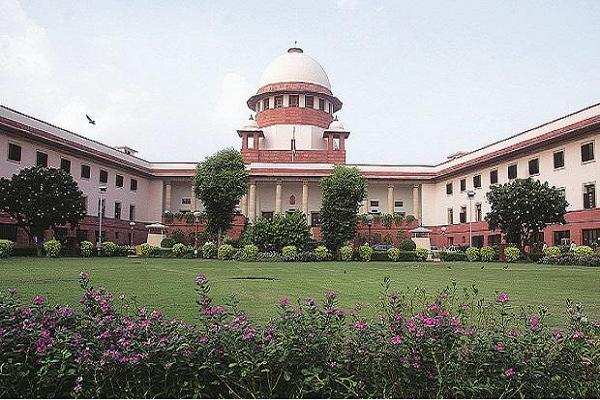
In a major development, the Supreme Court refused to entertain a batch of pleas seeking deferment or cancellation of the National Eligibility cum Entrance Test (NEET), scheduled to be held on September 13.

A bench headed by Justice Ashok Bhushan said that the authorities will take all necessary steps for conducting the NEET-undergraduate entrance exam amid the COVID-19 pandemic for admission in medical courses. “Sorry, we are not inclined to entertain,” the bench said, dismissing the review petitions.

The apex court had on September 4 dismissed petitions, including one filed by ministers of six opposition-ruled states, seeking review of its August 17 order which had paved the way for holding NEET and JEE exams.

Also read: NTA releases NEET 2020 admit card

Presenting a fresh plea for deferring the exam and requesting for more centres, the senior lawyers of the Supreme Court made last ditch effort to bring relief to students who have been seeking to postpone NEET 2020 amid the Coronavirus scare.

The National Testing Agency (NTA) had recently conducted JEE Main 2020 examination, following which students and experts had questioned how would social distancing be maintained when more number of aspirants would sit for the National Eligibility cum Entrance Test for medical courses.

Health Ministry issues guidelines for higher education institutions

Health Ministry issues guidelines

The Union Health ministry has issued SOPs for Higher Educational institutions, as well as skill training centres, can resume their classes from September 21. The Union health ministry asked them to implement staggered classroom activities with separate time slots, mandatory six feet distance between desks and carry out disinfection of premises.

The guidelines, issued by the ministry, said that seating arrangement should be done in a way to ensure a distance of six feet between chairs and desks. “Staggering of classroom activities to be done, with separate timing slots, to allow for adequate physical distancing and disinfection of classroom premises. Academic scheduling should have intermix of regular classroom teaching and online teaching and assessments,” the ministry said. In shared rooms and dormitories, the guidelines said, beds should be placed at a distance of six feet from each other.

Also read: Health Ministry issues SOPs for reopening of schools

“Temporary partitions may be considered, if feasible. Any symptomatic student should be immediately given a single room and then provided requisite medical care,” the guidelines said. “Mess facility, if any within the premises, shall follow physical distancing norms at all times.

Staggering of meal timings may be done to prevent overcrowding. Hostels should be out of bound for all persons except essential staff with known health status,” the ministry said. The generic preventive measures include simple public health measures that are to be followed to reduce the risk of COVID-19. These measures include physical distancing of at least six feet, use of face covers or masks, frequent hand washing with soap and use of alcohol-based hand sanitisers, they said.

NTA releases JEE Main answer key; check details

JEE Main answer key

National Testing Agency (NTA) has released the JEE Main official answer key. Candidates can check the answer on official site-jeemain.nta.nic. According to the notice released by NTA, the candidates will be able to raise objections against JEE Main Sept 2020 answer key till September 10 (10 AM). JEE Main paper 2 answer key 2020 has also been released along with Paper 1.

To access the answer key, the candidates will have to visit the official website jeemain.nta.nic and login using the required credentials. The question paper along with JEE Main response sheet 2020 has also been made available. The correct option will be given along with the question type and ID.

Also read: SC rejects review plea on NEET and JEE Mains exams

To raise objections against the JEE Main official answer key, the candidates will have to select any one or more than one of the Option ID(s) listed on the screen by clicking the checkbox. The option on which objection is to be raised has to be selected. The supporting documents for the objection have to be uploaded and payment of Rs. 200 per question has to be paid through Debit/Credit Card/Net Banking.

To calculate the scores using JEE Main Sept 2020 answer key, they will have to compare their responses with the correct answers and use the official marking scheme. The total scores will be the possible scores secured by the candidates in the exam.

New Education Policy 2020 – Approaches, Opportunities & Challenges

(Dr.) Sanjay Gupta

The National Education Policy (NEP) 2020 while providing a short & crisp framework document greatly simplifying the regulatory structure for the sector has incorporated many features addressing some of the problems of the second and third world highlighted above says Prof (Dr.) Sanjay Gupta, VC, World University of Design, Haryana in a conversation with Elets News Network (ENN).

A little over two decades back, two leading industrialists of India – Mukesh Ambani and Kumarmangalam Birla, in a report made some perceptive observations about the state of affairs in the education sector of India. In their exact words “While the larger world embraces the information age, the world of education in India encompasses different ‘worlds’ that live side by side. One world includes only a fortunate few with access to modern institutions, computers, Internet access and expensive overseas education. A second world wants to maintain status quo – teachers, administrators, textbook publishers, students – all have reasons to prefer things to remain as they are or change only gradually. The third world struggles with fundamental issues such as no books, wrong books, teachers desperately in need of training, teachers with poor commitment, rote learning of irrelevant material, classrooms with hundred students, dirty floors and no toilets. India cannot hope to succeed in the information age on the back of such three disparate worlds.”

The National Education Policy (NEP) 2020 while providing a short & crisp framework document greatly simplifying the regulatory structure for the sector has incorporated many features addressing some of the problems of the second and third world highlighted above.

Also read: PM Modi to deliver speech on New Education Policy

While implementation of the policy is envisaged over the next 15 years, for the higher education sectors there are some low hanging fruits that can be harvested in five or fewer years. These include freeing up undergraduate students to take courses across all disciplines; launch of a four-year bachelor’s degree; opening India to foreign universities, and creation of a National Research Foundation.

Changes such as permitting undergraduate students to take courses across all disciplines, launch of a four-year undergraduate degree, and autonomy to leading colleges can be implemented even within the current legal structure in higher education. The simple addition of a year after 12+3 will help students become eligible for many top-ranked global programmes and remove unique barriers that Indian students have faced in the past. The biggest differentiator in Indian vs. International education has been the academic flexibility that one experienced abroad. The NEP 2020 with flexibility and multiple exit options, including a one-year master’s programme and focus on digital education, will surely impact future students.

Another good suggestion is that of scrapping the MPhil degree. It was meant to hide a lot of disguised unemployed, by spending two more years in the university, given the fact that the Indian economy is unable to absorb these students in proper jobs, not to mention the unemployable nature of the MPhil when the highest academic degree gets precedence over a masters research degree.

In the last two decades Chinese universities have shown that a focused approach can lead to fantastic outcomes. NEP 2020 should lead us there.

Health Ministry issues SOPs for reopening of schools

Health Ministry issues SOPs

In the wake of Coronavirus pandemic, the schools are closed from mid-March. In line with the Unlock 4.0 Guidelines, the government has allowed partial reopening of schools for students in their higher classes.

For the opening, Union Health Ministry has now issued SOPs or Guidelines that needs to be followed for the same. The Ministry of Health and Family Welfare issued the guidelines, which provided the necessary SOPs and norms that are to be followed for the partial reopening of schools from 21st Sept 2020.

The reopening of schools would be applicable to only those students who are Class 9 and above. Even such students would be allowed to visit schools for doubt solving sessions on voluntary basis. Students will need to submit a declaration signed by their parents in order to visit schools during this period.

Also read: Health Ministry issues SOPs for students from containment zones

Detailed guidelines issued by the Health Ministry:

-Physical Distancing of 6 Ft to be followed by teachers and students

-Face masks and face covers are mandatory while on school premises

-Hand Hygiene to be ensured through frequent hand washing

-Respiratory etiquettes like covering one’s mouth and nose while coughing/sneezing to be followed strictly

-Self-Monitoring of health and reporting of illness at the earliest

-Installation and Use of Aarogya Setu App advised

-Only Schools outside containment zones allowed to reopen

-Students, teachers residing in containment zones not allowed to visit schools

-Complete school campus, including all work areas laboratories, other common utility areas shall be sanitized with 1% sodium hypochlorite solution

-Schools used as quarantine centres to undergo deep sanitization and cleaning process

-50% of teaching and non-teaching staff allowed to visit schools

-Class 9 to 12 students allowed to visit schools on voluntary basis

-Contactless attendance system to be developed and followed for teachers and students

-Assemblies, sports and events that can lead to overcrowding are strictly prohibited

Ed-Tech firm Byju’s raises fresh funding from Silver Lake

Edtech

In another huge investment, Ed-tech major Byju’s has raised fresh funding from Silver Lake and existing investors, Tiger Global, General Atlantic and Owl Ventures. According to reports, the Ed-tech firm raised $500 M from the investments.

With the new investments, the firm in the new round that valued it at $10.8B.

Byju’s founder and CEO Raveendran said, “We are fortunate to be in a sector of positive relevance during this crisis. This has brought online learning to the forefront and is helping parents, teachers and students experience and understand its value”.

Also read: Ed-tech firm WhiteHat Jr to hire 20,000 teachers

“We are delighted to lead this investment and partner with Byju and his impressive team of education technology pioneers in their mission to help children in India and around the world achieve their true potential,” Greg Mondre, Co-CEO of Silver Lake, said.

Over the last few months, BYJU’S has entered the after-school learning space with the launch of BYJU’S Classes, a comprehensive online tutoring program.

Last month, Byju’s acquired WhiteHat Jr, a Mumbai-based coding platform. With coding fast emerging as a key skill for the future, the company expects the integration will accelerate its international expansion plans.

Currently, the app has over 64 million registered students and 4.2 million annual paid subscriptions. The company has doubled its revenue to Rs 2,800 crore in FY19-20 from Rs 1,430 crore in the previous fiscal.

LATEST NEWS