

Home Blog Page 419

USAGE OF E-LEARNING IN THE TIMES OF CORONA

Kerala CM launches E-Learning platform “KIDGLOVE”

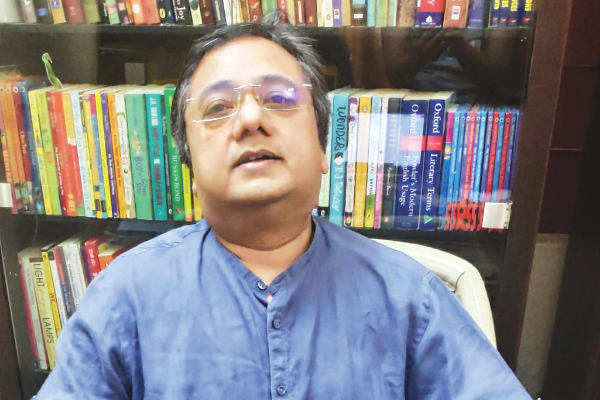
Kerala CM

Kerala chief minister Pinarayi Vijayan has launched a first of its kind E-Learning platform, “KIDGLOVE”- a new Portal to empower students to be digitally safe.

The project, initiated by Kerala Police in association with ISRA and the eSafety Commissioner, Australian Government, is a unique step to educate students, teachers and parents on cyber security.

Loknath Behera, State Police Chief and Manoj Abraham, ADGP have attended the function.

The Kerala Chief Minister Pinarayi Vijayan also launched an initiative named ‘First Bell’. Kerala has begun its academic year with online classes for school students.

The Kerala Infrastructure and Technology for Education (KITE) has released the timetable for the classes that will be carried out through KITE Victors Channel, and they will be also available on YouTube.

Vijayan said that the government has opted for online classes as students cannot reach schools due to COVID-19, during the launch of the initiative.

IGNOU begins registration for SWAYAM Courses

SWAYAM Courses

The Indira Gandhi National Open University (IGNOU) has also added 24 new courses on the SWAYAM Portal making the total number of courses 45 including some independent courses from verified fields and subjects such as Agriculture, Sustainability Science, Library and Information Science, Sociology, Law, Tourism, Languages, Information Technology, Event Management and Visual Art.

Candidates interested to apply for the online courses offered by IGNOU can visit the official website of IGNOU to register.

Candidates interested to register for the online programmes can also complete the registration process through the IGNOU Online Portal or through the Samarth Portal.

While sharing the details of the new online programmes launched, professor Nageshwar Rao, Vice-Chancellor of IGNOU in a Facebook Live session conducted said that the new courses launched is in continuation to the university’s efforts towards the MHRDs initiative ‘Bharat Padhe Online’

Earlier on, the MHRD Minister had launched IGNOUs MA Hindi, MA Gandhi and Peace Studies and other online programmes last month which gave a boost to the online education culture amidst the ongoing COVID-19 pandemic across the country.

The University Vice-Chancellor also gave the details of the programmes being offered by the different schools of IGNOU online along with appreciating the faculty members for making all this happen in such a short period of time.

CBSE to resume tele-counselling of students from July 1

CBSE tele-counselling

The Central Board of Secondary Education (CBSE) has decided to resume the tele-counselling services for the students. The councelling will be conducted ahead of remaining class 10 and 12 exams.

The CBSE is scheduled to conduct the remaining Class 10 and 12 board examinations for the Northeast Delhi students from July 1 to 15, 2020. The tele-counselling services will be conducted from 9:30 AM to 5:30 PM for seven days in a week from July 1 to 15, 2020.

The Psychological Helpline of the CBSE will have the IVRS and Live Counselling which will be available on a toll-free number 1800-11-8004.

The general queries will be answered by the tele operators while 73 counselors and principals will be available for the live psychological counselling for the students in the country.

The board will also continue to provide the Interactive Voice Response System (IVRS) facility as it has the advantages of accessing the pre-recorded information anytime.

The students and parents can also get the required information on the board exams along with tips for better exam preparation, managing exam anxiety and time, contact details of the CBSE offices, FAQ’s etc.

The statement released by the CBSE also states that the COVID-19 pandemic has impacted everyone and has also prompted the board to provide help for the mental well being of the students and parents amidst the cancellation of the examinations, disruption of the regular schooling and the compulsory lockdown imposed.

PM Modi: Working to have one medical institution in every district

PM Modi

To improve the health facilities in the country, the Centre is working on establishing a medical college in every district. While speaking at the silver jubilee celebration of Rajiv Gandhi University of Health Sciences (RGUHS) Bengaluru, Prime Minister Narendra Modi has said the government is working on ensuring one medical college or post-graduate medical institute in every district.

PM Modi also said the country has seen rapid progress in setting up 22 more AIIMS in the country. PM Modi said that over the last five years, the country has added over 30,000 seats in MBBS and 15,000 seats in post-graduation programmes.

“A nation like ours has to have the proper medical infrastructure and medical education infrastructure. During the last six years, we in India have given top-most priority to reforms in health and medical education. We are broadly working on four pillars,” PM Modi said.

The prime minister inaugurated the one year-long silver jubilee celebration of RGUHS through video conferencing. While inaugurating the celebration he said: “In normal times, the celebrations would have surely been bigger. Had it not been for the global pandemic, I would have loved to be with you all in Bengaluru to mark this special day.”

Talking about the university he said that 25 years means this University is in the prime of its youth. This is the age to think even bigger and do even better. “I am confident that the University will continue to scale new heights of excellence in the times to come,” PM Modi said.

UGC drafts guidelines to open campuses

UGC guidelines

With passing time, the Union Human Resource Development (HRD) ministry readies for consultations on the reopening of institutions. Teachers, students and parents, higher education regulator, the University Grants Commission (UGC), has drawn up an initial list of do’s and don’ts for campuses.

Universities may first invite only research scholars back to the campus and gradually open their doors for other students, when they open their campuses after the COVID-19 lockdown.

All higher education institutions will also need to form strategic tie-ups with medical facilities and put protocols in place to deal with students who are unwell.

While the final standard operating procedures ( SOPs) for schools and colleges will be published by the government after discussions between the health, HRD and other ministries, the UGC’s draft norms were part of the agenda at a meeting on the subject.

The health ministry may issue a protocol for educational institutions after discussions with the other ministries.

In the draft prepared by the UGC, it was suggested that the process of admissions be conducted online to avoid visits by students to the campus.

Students and faculty with a history of ailments like heart disease or diabetes would be told to prefer the online mode. For international students, too, the focus would be on promoting the online mode of learning.

Institutions would be advised to stay in touch with health facilities and put in place a mechanism for quarantine; contact tracing would be followed in case a Covid-19 case emerges. Hygiene in common facilities like kitchens and libraries are among the issues raised.

Regular screening of faculty and students and awareness drives are also part of the plan. In higher educational institutions, regular visits by counsellors to help stressed students are also planned.

Another suggestion, especially for teaching of subjects that have a practical component, is to teach half the students in the classroom and engage the rest in laboratories. Even in common facilities like labs, it will have to be ensured that equipment is not widely shared.

Varsities and colleges will also require to have plans in place to regulate the movement of outsiders.

NTA extends deadline for UGC NET, ICAR, CSIR- NET, JNUEE, IGNOU exams

NTA extends deadline

In the view of COVID-19 across the country, National Testing Agency (NTA) has further extended the deadline to apply for UGC NET and other examinations including ICAR, CSIR- NET, JNUEE and IGNOU Open MAT till June 15. The extension has been done in view of hardships faced by applicants in filling the application forms during Covid- 19 lockdown.

Many exams are postponed or cancelled due to the COVID crisis in the country. The NTA has asked applicants to visit nta.ac.in for any clarifications.

Earlier, the deadline to apply for these exams was till May 31. Aspirants who could not apply for the examinations can do it now before June 15, 2020.

Applicants should visit the official website of NTA at nta.ac.in to apply for the exams. Submission of online applications will be accepted till 5 pm while the submission of application fee will be accepted only till 11:50 pm on June 15.

According to the official notice, the detailed schedule having the revised dates of downloading the admit card and of the examination will be notified in due course of time. Candidates are advised to visit the official website only for any update.

Vipin Kumar appointed as Joint secretary of School Education & Literacy

vipin Kumar

In a major reshuffle, Vipin Kumar, has been appointed as Joint Secretary Department of School Education & Literacy, Government of India. Vipin Kumar, IAS officer, Bihar 1996 batch who is presently posted as Resident Commissioner, Government of Bihar. He has been appointed on the post for a tenure of five years. Earlier, Sachin Sinha was holding the post.

The latest reshuffle of bureaucrats included 16 senior officials at the level of Joint Secretary in various departments. Notable among them are R. Jaya, an IAS officer of the Tamil Nadu cadre, as Joint Secretary in the Ministry of Tribal Affairs, Maharashtra-cadre officer V. Radha as Joint Secretary in the Department for Promotion of Industry and Internal Trade, and Alaknanda Dayal, Punjab-cadre officer, as Joint Secretary in the Department of Agriculture, Cooperation and Farmers Welfare.

Elets Exclusive | Educators: Need to revamp and reinvent education with help of technology

School Leadership Virtual Summit, Chandigarh

In the face of a crippling pandemic, technology has emerged as a major lifesaver. Communication is a major key to our interconnected existence and technology is the driving force that maintains our connections.

For education, that means creating content and delivery systems that harness and utilize technology to its fullest. Perhaps, education may become more flexible and accessible, relinquishing its over-reliance on rigid structures that we currently consider necessary.

The future of education will find no room to ignore the utilization of technology since it may very well be the best platform to empower learning in an age that is integrating technology as a way of life. Blended learning will be the new norm when schools will be re-opened.

Elets Technomedia and Elets Education organized the biggest School Education Virtual Summit on “School Leadership Virtual Summit, Chandigarh. Various government dignitaries, school leaders and leaders from industry participated in the summit. Eminent speakers including Ramanan Ramanathan, Mission Director, Atal Innovation Mission (AIM), NITI Aayog, Government of India; Pramod Kumar, State Education Officer, Dept of School Education, Govt of Haryana and Amneet P Kumar, Director General – Secondary Education, Govt of Haryana and many more school leaders. Form the industry speakers including Garima Babbar, Head Programme, Education and Skill Development, Adobe; Sahiba Pahwa, Country Head – India, Classtime; Divya Lal, Founder & MD, Fliplearn; Venkata Ramanan, Education Business Manager, ViewSonic presented their views on use of technology in school education. Dr Ravi Gupta, Founder and CEO, Elets Technolmedia Pvt Ltd introduced, welcomed and introduced the speakers.


In the opening remarks, Ramanan Ramanathan said “tackling COVID is a huge challenge for the country. We have to become a nation of job creators. The AIM is created to form entrepreneurs. More than 10,000 schools are identified for Atal Tinkering Labs. Students must be prepared as future leaders. AIM has been creating job creators for the country. We need to have a holistic approach towards education.”

He even said usage of digital in education is going to be default in future. Extra-ordinary talents come from remote areas and talent exists everywhere. The role of parents is very important in shaping the future of children.

Amneet P Kumar, Director General – Secondary Education, Govt of Haryana said “The assessment and monitoring is still an issue for educational institutions. There will be huge budgetary allocations post COVID. The Central govt, state govts, private schools and parents will feel the pinch of the COVID. We need to prioritize and rationalize budgets. Data management is also important.”

She also said there were huge challenges for students to adopt E-Learning. We need to identify issues and provide free data, gadgets and other things to students for E-learning.

The syllabus must not be textbook oriented anymore. Technology can be used as a tool. We cannot leave the underprivileged behind and equity must be maintained. The peer group learning is missing in digital learning. We need to find new methodologies and pedagogy for students, she added.

Garima Babbar, Head Programme, Education and Skill Development, Adobe said “Technology will play an important role in the education sector. In this crisis, education must not stop. We need to come together to tackle the crisis. We need to provide assistance to students, teachers and all stakeholders in the crisis.”

Also read: Success story of Clay Preschools during Lockdown

She also said we have to shift from physical to digital form. We need to channelize things. We have to look at the quality of education.

Anirudh Gupta, CEO, DCM Group of Schools said “We are in the middle of an unprecedented situation. The lockdown has impacted over 1.3 billion students across the globe. It’s high time to re-strategize our education sector and create a competent environment for students.”

He also said “Soon, the industry will offer jobs over skills not certificates. We need to understand the need of the hour and prepare students for the future. Schools must start skill education and make students future ready. “

We need to bring a long and short term plan. We need to constitute a task forum with ministries and academia to change the education sector. The complex of all businesses will change, he added.

Teachers need to re-innovate, re-invent things to provide quality content to students, he added.

A panel discussion was on Financial Survival Strategies in COVID19 Crisis: Emergent Resource & Implementation.

Pramod Kumar, State Education Officer, Dept of School Education said “School education is hugely impacted due to the COVID crisis. The schools are closed from mid-March. We must not panic as NCERT is making an online syllabus for students. Things will become normal very soon. No one is talking about the students, who are the main stakeholder. Over 33 cr students are impacted in this crisis. “

Reekrit Serai, Managing Director, Satluj Group of Schools said “The crisis is huge for many schools. The livelihood of millions is at stake. The education sector hasn’t changed much in the last few decades. Salaries are not the only cost schools have to bear; there are numerous other costs. It is important to focus on positives. Some parents understand the crisis and support us.”

He asked to focus on the PERK module – Postpone, Eliminate, Reduce and Keep.

Many schools have closed down due to the crisis. It’s a very tricky situation and we must try to manage for the next three to six months, he added.

He also requested the govt to provide Deferment of taxes and financial support to schools in this crisis.

Brig. Navdeep Mathur ( Retd. ), Director ( Admin ), DCM Group of Schools, Punjab & Haryana said “The three major stakeholders in the education sector are schools, parents and government. The solution is with society as these are unprecedented times. We need to have long and short term strategies. We need to focus on how to survive in this crisis.”

He also said to analyze the risk issue and ways to tackle the crisis in coming days.

Robin Aggarwal, Director, Learning Paths School, Mohali said “Schools are under a lot of stress. All the schools are not having the resources to tackle the crisis. A large amount of parents are supporting us. This is the matter of survival. We need to look into the non-salary expenditures. “

He emphasized over developing passion, compassion and empathy. He also said to We need to focus on academic quality.

Dr Prem Kumar, Executive Director, Hero Group – BCM School, Ludhiana said “We must not waste the crisis as it can be turned into an opportunity. Schools need to talk to banks, stakeholders over the crisis. Most of the schools are under pressure. Teachers have risen to the crisis.”

Overuse of technology, he said “The use of technology in education was there for 20 years. We need to redefine the process.” It’s a black swan event. The technology will change in 10 years which hasn’t changed in the last 100 years. We need to find ways to integrate technology within schools. We can transform the school education sector, he added.

Sahiba Pahwa, Country Head – India, Classtime presented her views on the use of technology in education. She said “Technology has always been there in the education sector. The crisis has made us adopt the technology. We can provide real time data to parents to provide them confidence over e-learning. We need to have hybrid solutions in schools.”

She also said “We have to provide quality education. Institutions must find out ways to re-define education.”

Sunita Gupta, Chairperson, Heritage School, Jammu said “We will have issues, when schools will be re-opened, from safety of students to salaries of teachers. We are gearing up for the crisis. The connectivity is not good in the state, which is a huge challenge for us. We have to bring parents on board in the crisis. Our teachers are working hard to provide study materials to students.”

She also said all the private schools are working on debts and they need fees to keep running smoothly.

Divya Lal, Founder & MD, Fliplearn said “We need to focus on four things- Live classes, Learning content, Online Assessment, stakeholder management. The idea is very simple, to provide quality content and give teachers the control of content. We allow teachers to create their own content for students.”

In the afternoon session, a panel discussion was done on Virtual Learning is the New Normal: Are Teachers enough Skilled & Equipped.

Manju Rana, Principal cum Director, Seth Anandram Jaipuria School, Vasundhara said “Online education will not match the physical ones. The online education is here to stay and there is a paradigm shift witnessed in the sector. There will be huge changes coming up in the sector. We have seamlessly transformed from offline to online classes. Our teachers were not ready for such a crisis.”

She said “Teachers have emerged as online warriors. The basic challenge was to engage children during the virtual classes.”

Strong communication, orientation of parents, preparedness is the most important in this crisis, she said.

Syed Naqishah Razvi, Founder, Imamiya Mission School, Leh, Ladakh said “The e-learning is not new in India. The e-learning has been used for higher education for the last few years. We have a different school calendar than other parts of the country. Many older teachers were reluctant to adopt the e-learning process. We were not equipped to adopt online learning.”

Only 42 pc of Urban and 14 pc of rural areas have proper internet connections in India, he added. The new normal will be blended learning, he said.

Geetika Sethi, Director-Principal, The British School, Panchkula said “Within a span of two-day, online classes began in the school. There were hiccups initially as there was no preparedness for such a crisis. However, things were resolved very soon. The challenge was to deliver quality content to students. There was a lot of resistance from parents, when online classes started. This challenge has provided us an opportunity to prove ourselves on the international platform. “

She even said to emphasize on preparation, prevention and preparedness. Parents and society must change their mind-set towards online education post-COVID, she added.

Kawaljeet Dhindsa, Director, SEABA International Public School, Lehragaga said “Our teachers are working very hard to deliver content in the lockdown. We are conducting a lot of life skill activities for students. These activities are keeping the students engaged. We have used subjects to provide them life skill learning. “

He also said it will be very tough for us to start the school as parents will be very skeptical about the safety and hygiene of their wards.

Seema Handa, Managing Director, Eklavya School, Jalandhar said “Teachers are unsung heroes in this crisis. Learning must be the same in both online or offline classes. Teachers are under scrutiny in virtual classes due to various challenges. Many times parents relate education to infrastructure. Education is not about infrastructure; it’s the human touch which teachers provide to students.”

She said the role of teachers is pivotal in the crisis. Teachers are makers of generations and they need to be given their due respect.

The pre-primary and primary students will come back last to schools, so we need to prepare different strategies for them, she added.

Gulshan Kaur, Principal, Bhavan Vidyalaya, Panchkula said “We were not prepared to handle the crisis. The teachers have started a new journey and it is full of challenges. Content development, delivery were huge challenges for teachers. There will be more focus on blended learning. Health and hygiene measures will be prioritized.”

She also said students have learned the value to people around them in this crisis.

Anit Arora, Principal, Cambridge International School, Hazipur Road, Dasuya said “Evolution is the key to success. We need to empower all the stakeholders. Children will adopt online education with ease. Teachers and parents have accepted the new change. Teachers who have accepted the changes will go to the next level. The online learning has provided us flexibility and is cost-effective. It’s now survival of the fittest.”

Over technology, he said “Technology is a wonderful tool to introspect. In the next 10 years, there will be augmented classes for students and they will enjoy it. It’s a huge learning opportunity for us.We need to have all SOPs ready for all the departments. “

Venkata Ramanan, Education Business Manager, ViewSonic said “Students are missing real time experience. Teachers are feeling more stress during online classes. There is a digital gap between teachers and students. Teachers are digital immigrants and students are digital natives. We need to bridge the gap between teachers and students.”

In the last panel, the discussion was on “Role of Ed-tech in the Virtual Education Environment”.

Dr Sandeepa Sood, Principal, Saffron Public School, Phagwara said “The technology has grown immensely. Technology has played an important part in the education sector. However, we cannot remove traditional ways of teaching. We have seamlessly shifted to online classes as soon as lockdown is announced. The impact of virtual classes will be immense. With virtual classes teachers can provide content to students anytime and anywhere.”

We have started new things to engage students. Technology is in our blood and we are well prepared for any such crisis, she adde.

We need to train our parents and teachers about the usage of technology. Technology is a boon for the education sector, she added.

Kavita C. Das, Principal, St. John’s High School, Chandigarh said “Physical classrooms cannot be removed from schools. Technology is a blessing in disguise in this crisis. Technology is now available in every school even in rural areas. Teachers are using technology to make classrooms more engaging and interactive. Testing has become fun for students. It is enhancing and adding new dimensions to the sector.”

She also said we need to keep the human touch with children and try to evolve them. We need to strike a balance. Education will become fun for students. With flexible timing, we need to keep a check on virtual classes also.

Kiran Dalal, Principal, Bright Scholar Sr. Sec. School, Sonipat said “It was easy to adopt the technology. Earlier, it was a bit difficult for teachers but with time it became a cakewalk. Technology has given new parameters to learning. With technology, learning is easy and beautiful. However, pen and paper classes cannot be replaced. Virtual classrooms have given us a new scope to grow in the education sector.”

She also said Technology is here to stay for a long time. Home and blended learning will be the new normal. No one will be left behind in the age of technology, she added.

Parents, children and teachers are working as a team. Parent trust is the foremost thing. We must hear from parents what they want, she added.

Sumeet Puri, Director, Jagat Jyoti High School, Amritsar said “From last 60 days, people are learning new things. In the coming days, technology will play a vital role in education. Like God, technology is also omnipresent. Virtual learning will give more clarity. Virtual reality is very essential for all schools. But, overuse of technology will hamper students and make them robots.”

He also said “We need to reduce the screen time of children. Blended learning will be the new norm. We need to give direction and bring clarity with students.

Dr Augustine Isaac, Academic Director, Kirpal Sagar Academy, Nawanshahar said “Learning can take place in virtual classrooms also. The effectiveness is the same as offline classes. The virtual classroom is the best place to learn as the entire world is under lockdown. Both physical and virtual classrooms cannot be compared.”

He also said Virtual classrooms are not comfortable to everybody; we need to bring new innovations to make online classes more engaging.

Technology holds the future. Technology and teachers should combine to provide a better future for students.

Kerala starts academic year with online classes

Kerala online classes

In the view of Coronavirus pandemic, the Kerala Chief Minister Pinarayi Vijayan on Monday said that the academic year in the state has begun from today with online classes for school students. An initiative named ‘First Bell’ launched by the state government.

With the start of online classes, Kerala became the first state to do so.

The Kerala Infrastructure and Technology for Education (KITE) has released the timetable for the classes that will be carried out through KITE Victors Channel, and they will be also available on YouTube.

Chief Minister Pinarayi Vijayan said that the government has opted for online classes as students cannot reach schools due to COVID-19, during the launch of initiative.

The chief minister also said “Our children are entering the new academic year. Due to COVID-19 children cannot reach schools right now. Instead, the government is preparing a system for a home study. Our academic year begins with online classes. Classes will be broadcast according to the timetable set by the Kite Victors Channel.”

The online classes will be held from 8.30 a.m. to 5.30 p.m. from Monday to Friday for all the classes. Various time slots have been allocated to students of different standards.

LATEST NEWS