Home Blog Page 5

Dharmendra Pradhan Reviews NCERT Textbook Availability, Directs Timely Distribution Across States

NCERT Textbook

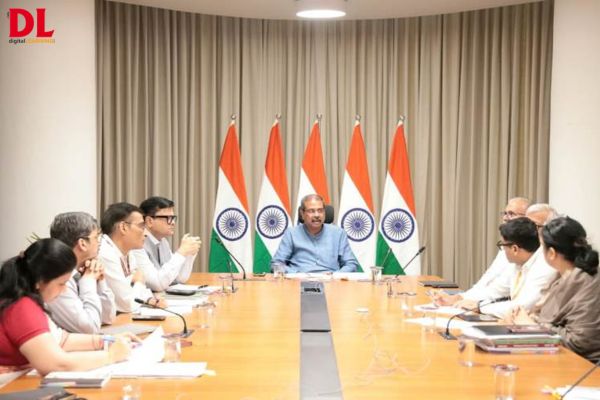
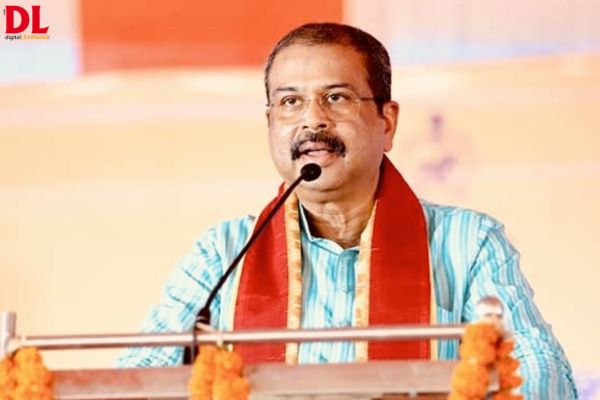
Union Education Minister Dharmendra Pradhan has reviewed the availability and timely distribution of NCERT textbooks, amid concerns over delays and shortages in several markets.

During the review meeting, the minister assessed the printing, supply, and distribution status of textbooks for the new academic session. He directed officials to ensure that students across the country receive books on time and that no disruption is caused to classroom learning due to supply constraints.

The meeting focused on strengthening coordination between NCERT, state governments, publishers, and distribution agencies to streamline textbook availability. Special emphasis was placed on ensuring access for students in rural and remote regions, where supply chain delays often have a greater impact.

The review comes at a time when demand for revised textbooks has increased due to curriculum changes and the start of the new academic year. The government is also encouraging the use of digital versions of NCERT books through official online platforms to support uninterrupted learning while physical supplies are being replenished.

Read More: Uttar Pradesh to Prioritise School Enrolment of Children from Underprivileged Communities

NCERT textbooks remain the primary learning resource for lakhs of students in CBSE-affiliated and many state-board schools. Ensuring timely delivery is considered critical for smooth academic progress, especially during the first months of the school session.

The move reflects the government’s broader focus on improving access to quality learning materials and strengthening education delivery systems nationwide.

Uttar Pradesh to Prioritise School Enrolment of Children from Underprivileged Communities

Uttar Pradesh government

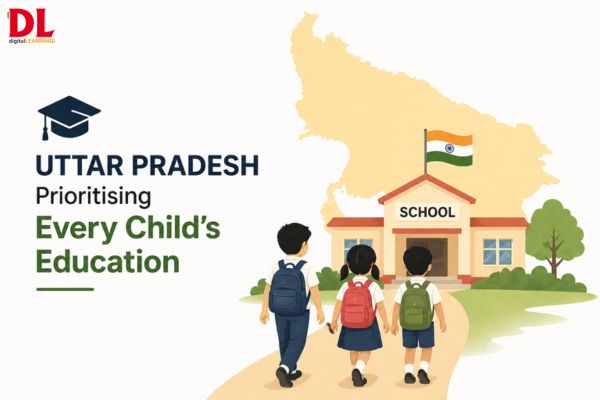
The Uttar Pradesh government has announced a special statewide enrolment drive aimed at bringing children from underprivileged communities into the mainstream education system. The campaign will begin from May 1 under the state’s School Chalo Abhiyan mission.

The initiative will focus on identifying and enrolling children living in labour settlements, brick kilns, and economically weaker communities who are currently out of school. Officials said the government has made it clear that no child should remain outside the formal education system.

Additional Chief Secretary for Basic and Secondary Education, Parth Sarathi Sen Sharma, has directed district magistrates to ensure enrolment of every child aged 6 to 14 years under all circumstances.

The campaign will also prioritise admission of children with disabilities, ensure 100% admission of eligible children selected under the Right to Education Act in allotted schools, and increase enrolment of girls in Kasturba Gandhi Balika Vidyalaya institutions.

Also Read: Karnataka Partners with Naukri.com to Offer 90-Day Free Hiring Support for New GCCs

To support implementation, officials have been instructed to conduct surveys in every village, ward, and settlement to identify dropouts and out-of-school children. The government also aims to ensure full transition rates from Class 5 to 6, Class 8 to 9, and Class 10 to 11 so students continue their education without interruption.

The move reflects Uttar Pradesh’s broader push to improve school participation, reduce dropouts, and strengthen inclusive access to education across rural and urban areas.

Design to Include: Understanding Design Thinking and Its Impact Towards Inclusive Learning Ecosystems

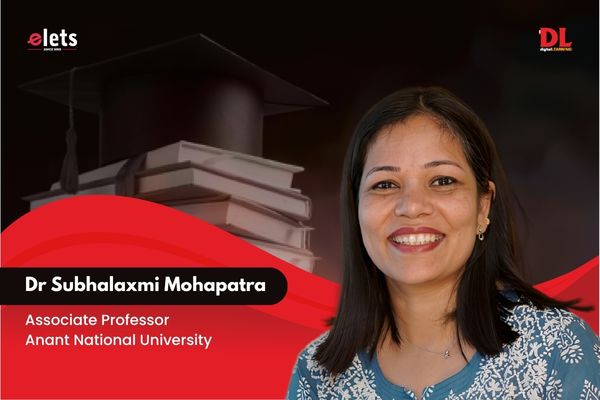
Dr Subhalaxmi Mohapatra

In today’s rapidly changing world, characterised by digitisation, complexity and information overload, design thinking has evolved as a powerful tool for human-centric design and innovation. It can help identify, empathise with, address complex problems and guide change across different facets of life. Since its inception, design thinking has emerged as a framework not only for creating effective or efficient outcomes but also for cognitive and effective outcomes. In this process, it is also recognised as an effective educational change-maker. Design thinking can emerge as a vehicle for developing an inclusive and equitable learning ecosystem and drive student-centric design to offer creative and collective collaborations with the objective of creating and delivering a big impact. By empathising with students and drawing on the philosophies and practices of design, the design thinking process can understand and articulate the problem clearly, ideate and co-create with learners to achieve maximum impact. 

The stages do not follow a linear process, but rather an iterative one, essential to promote inclusion and enable a learning ecosystem that supports diverse learners. Along with this, by integrating the universal design for learning framework into the educational system, learners can access, engage with and demonstrate learning through flexible, inclusive and evidence-based teaching strategies. Design thinking also emphasises the importance of co-creation, collaboration and reflection to identify and address social and environmental challenges. This approach can foster and promote a sense of community and belongingness among learners. Rather than adopting and accepting a fixed curriculum, the design thinking framework allows learners to explore their diverse needs and thereby design learning environments appropriate to them. 

Universal design learning aims to motivate learners to engage, create and sustain interest to continue and foster meaningful collaboration. This is often done by providing choices, integrating learning with the learner’s interests and promoting autonomy. The learning framework should also present information and materials in multiple formats (such as visual, audio, interactive and graphic materials) to ensure accessibility and readability for various learners. Designing learning through multiple levels of engagement could be applied through gamified learning, interactive discussion or real-world problem-solving. This can simplify complex concepts while providing scope to meet diverse cognitive needs. Additionally, the design thinking learning framework would allow learners to demonstrate and understand their learning outcomes in various forms, such as creative projects, digital media, oral presentations, etc. This provides the flexibility to showcase different learning styles and their individual strengths, while offering varied learning outcome content. This is aimed at enabling students to be strategic and resourceful in this process of learning. 

Also Read: Karnataka Partners with Naukri.com to Offer 90-Day Free Hiring Support for New GCCs

Thus, an inclusive design framework is not one-size-fits-all, but rather a dynamic and evolving framework that adapts to new insights, research and feedback from learners and educators. Such a framework can enable inclusive solutions in the classroom, curriculum and institutional practices that emphasise equitable and accessible education for learners from diverse backgrounds.

Views expressed by Dr Subhalaxmi Mohapatra, Associate Professor, Anant National University

Karnataka Partners with Naukri.com to Offer 90-Day Free Hiring Support for New GCCs

Government of Karnataka

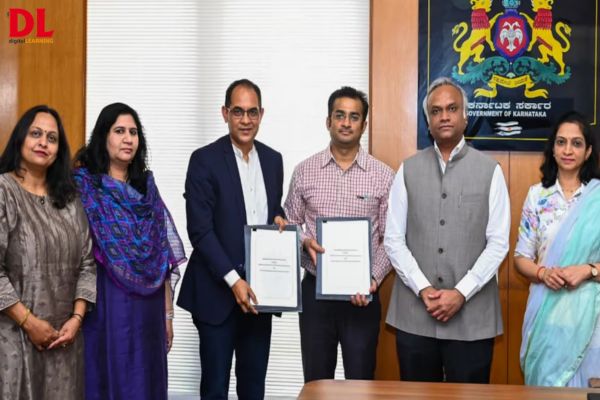
The Government of Karnataka has signed a Memorandum of Understanding with Naukri.com to provide newly established GCCs with complimentary hiring support for the first 90 days of operations.

The initiative, facilitated through the Karnataka Innovation and Technology Society (KITS), will offer eligible GCCs a customised starter package that includes employer branding support, assisted hiring services, and premium talent sourcing tools at no cost during their early setup phase.

The partnership aims to reduce time-to-hire and help multinational companies establish teams faster as they set up operations in the state. It also aligns with Karnataka’s GCC policy and the KATALYST platform, the state’s ease-of-doing-business initiative for capability centres.

Also Read: National Economic Forum and Cape Breton University Sign MoU to Boost India-Canada Academic Collaboration
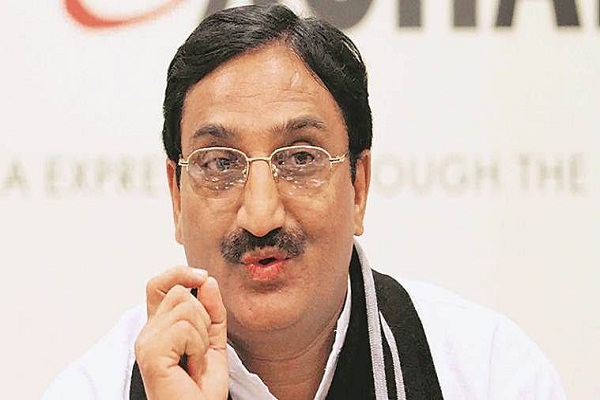
Priyank Kharge said Karnataka’s leadership in the GCC sector is driven by its deep talent pool and strong innovation ecosystem. He added that the partnership with Naukri.com would enable faster and more efficient access to skilled professionals.

A key focus of the collaboration is to promote distributed growth beyond Bengaluru by supporting GCC expansion in cities such as Mysuru, Mangaluru, Hubballi, Belagavi, Kalaburagi, Tumakuru, and Shivamogga.

The two-year agreement reflects Karnataka’s continued efforts to attract global investments while creating a wider technology talent network across the state.

National Economic Forum and Cape Breton University Sign MoU to Boost India-Canada Academic Collaboration

National Economic Forum

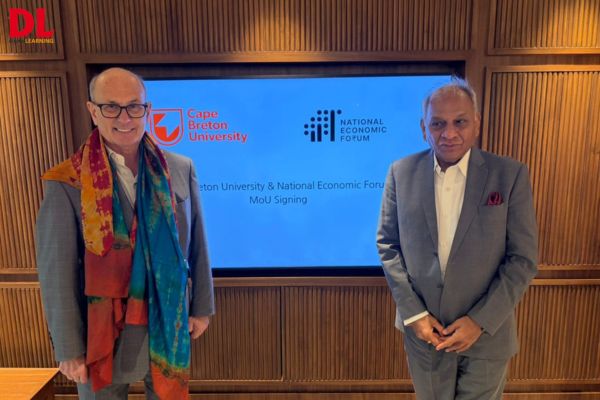
In a significant move to strengthen higher education ties between India and Canada, Cape Breton University (CBU) and the National Economic Forum (NEF) have signed a non-commercial Service and Cooperation Agreement focused on talent mobility, institutional partnerships, and knowledge exchange.

The Memorandum of Understanding was signed during a high-level delegation visit to India by David C. Dingwall, President and Vice-Chancellor of CBU, and Jagdip Rana, Executive Director of NEF.

Under the agreement, NEF will serve as the official convening partner for CBU in India, facilitating structured engagements with stakeholders across central and state governments, as well as leading academic institutions. The collaboration is expected to support initiatives in student mobility, faculty exchange, institutional tie-ups, joint research, and broader knowledge partnerships.

The MoU also authorises NEF to lead stakeholder mapping, outreach facilitation, and engagement structuring for CBU’s India roadmap. This is aimed at enabling focused, protocol-aligned discussions and creating opportunities for roundtables, policy dialogues, and institutional interactions.

David C. Dingwall said India remains a priority geography for Cape Breton University due to the scale and evolving strengths of its higher education ecosystem. He noted that the partnership would help deepen institutional collaborations, expand student pathways, and strengthen research engagement aligned with shared global priorities.

Also Read: NCERT Makes Class 9 Textbooks Available Online Amid Market Shortage

Jagdip Rana said the initiative is focused on converting international academic intent into structured, high-impact collaborations for India. He added that the partnership would enable stronger talent mobility, deeper research engagement, and enhanced institutional capacity.

The agreement is expected to pave the way for a more future-ready India-Canada higher education corridor through long-term collaboration frameworks.

NCERT Makes Class 9 Textbooks Available Online Amid Market Shortage

NCERT

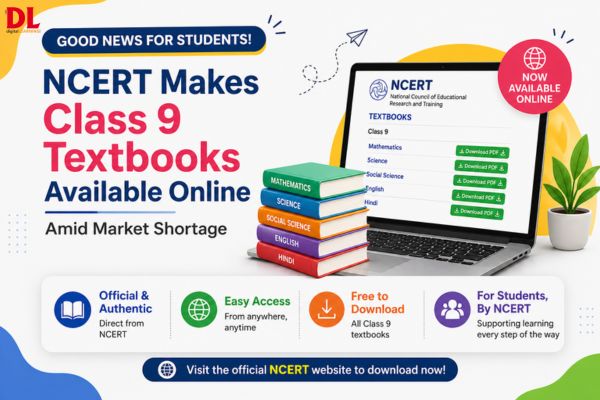
The NCERT has made Class 9 textbooks available online following shortages of printed copies in several markets, offering relief to students, parents, and schools at the start of the new academic session.

The move is aimed at ensuring uninterrupted access to learning material while supply constraints affecting physical textbook availability continue in many regions. Students can now download digital versions of the books through NCERT’s official platforms and other recognised education portals.

The shortage is linked to the rollout of revised Class 9 curriculum and updated textbooks aligned with recent education reforms, which reportedly impacted printing timelines and distribution schedules. Earlier reports had indicated delays in the availability of the new books for the 2026–27 academic year.

Also Read: Dharmendra Pradhan Launches ₹280 Crore Development Projects in Odisha’s Deogarh

By making the books accessible online, NCERT is seeking to minimise disruption for learners and teachers, particularly as schools begin classroom instruction and internal assessments. The digital access is also expected to support students in remote areas where physical supply chains may take longer to stabilise.

The initiative reflects the broader push toward blended learning and digital education resources in India’s school system. It also highlights the increasing role of e-content platforms in ensuring continuity during periods of logistical or supply-related challenges.

CBSE Class 12 Result 2026 Expected Soon; Students Await Marksheets on Official Portals

Class 12 Result 2026

The Central Board of Secondary Education is expected to announce the Class 12 Board Examination Results 2026 shortly, with lakhs of students across the country awaiting the declaration of their mark sheets.

According to multiple media reports, the CBSE Class 12 result is likely to be released by the end of April, although the board has not yet officially confirmed the exact date and time. Students are advised to regularly check official platforms for verified updates.

Once declared, students will be able to access their provisional scorecards through official result websites including cbse.gov.in, results.cbse.nic.in, and cbseresults.nic.in. Digital marksheets are also expected to be available through DigiLocker and the UMANG app.

To check the result online, students will need to enter their roll number, school number, admit card ID, and date of birth as required on the portal. After logging in, they can download and save their marksheet for future use.

CBSE conducted the Class 12 board examinations between February and April this year for students across Science, Commerce, Arts, and vocational streams. Reports indicate that the board has used its On-Screen Marking system to streamline evaluation and improve accuracy.

Also Read: Dharmendra Pradhan Launches ₹280 Crore Development Projects in Odisha’s Deogarh

Following the declaration of results, CBSE is expected to issue separate notifications regarding verification of marks, re-evaluation, compartment examinations, and collection of original certificates through schools.

The Class 12 result is a key academic milestone for students as it determines eligibility for undergraduate admissions, competitive examinations, and future career pathways. Students and parents are advised to rely only on official CBSE announcements and avoid unverified social media claims.

Dharmendra Pradhan Launches ₹280 Crore Development Projects in Odisha’s Deogarh

Dharmendra Pradhan

Dharmendra Pradhan, Union Education Minister and Member of Parliament from Sambalpur, inaugurated and laid foundation stones for 124 development projects worth around ₹280 crore in Deogarh, aimed at strengthening the district’s socio-economic infrastructure.

During the visit, Pradhan inaugurated 63 projects valued at ₹130.79 crore and laid foundation stones for 61 additional projects worth ₹147.70 crore. The initiatives span sectors such as education, irrigation, rural development, infrastructure, and social welfare.

A major highlight of the programme was the inauguration of the permanent campus of Kendriya Vidyalaya Deogarh, developed at a cost of ₹31.40 crore. Spread across 9.22 acres, the campus includes 24 smart classrooms, science laboratories, computer labs, and facilities expected to benefit more than 1,000 students.

Pradhan also inaugurated an integrated urban hostel at Deogarh College, aimed at supporting students from SC, ST, and OBC communities with improved access to higher education.

Also Read: IIT Roorkee Hosts Vision 2047 Meet, Targets 61 Crore Jobs

Addressing the gathering, the minister said the projects would serve as a milestone in improving living standards for nearly one lakh families in the district. He outlined a roadmap focused on agriculture, horticulture, fisheries, animal husbandry, and better utilisation of forest produce to boost livelihoods.

The large-scale rollout reflects continued efforts to accelerate regional development and strengthen education, connectivity, and welfare infrastructure across Odisha. 

IIT Roorkee Hosts Vision 2047 Meet, Targets 61 Crore Jobs

Indian Institute of Technology Roorkee

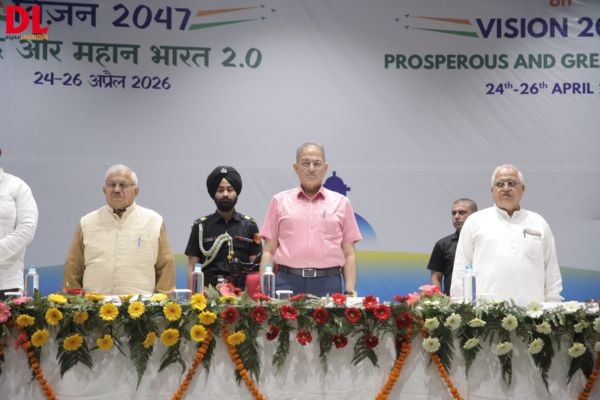
Indian Institute of Technology Roorkee, in collaboration with Swadeshi Shodh Sansthan, inaugurated the International Conference on Vision 2047: Prosperous and Great Bharat 2.0, bringing together academicians, policymakers, and industry leaders to discuss India’s long-term development roadmap.

Held at the institute’s Convocation Hall, the conference focused on inclusive growth, technological innovation, employment generation, sustainability, and India’s emergence as a globally competitive and self-reliant nation by 2047. A key highlight of the event was the release of an employment roadmap projecting the creation of 61 crore job opportunities.

The inaugural session was attended by Kavinder Gupta as Chief Guest, along with senior academic and policy leaders including K. K. Pant, Ajit Chaturvedi, and Surekha Dangwal.

Also Read: Thakur College of Engineering and Technology Granted Deemed University Status

During the event, the National Employment Policy was also introduced, aimed at strengthening workforce readiness and economic resilience in line with the Vision 2047 agenda. Discussions emphasised collaboration between academia, industry, and government to accelerate innovation-led growth.

The dignitaries also inaugurated the Centre for Precision Manufacturing at IIT Roorkee, developed with support from the Ministry of Heavy Industries and multiple industry partners. In addition, delegates visited the institute’s Electric Vehicle laboratory and reviewed an Accessible Mobility Vehicle developed for persons with disabilities.

With participation from over 100 institutions in India and abroad, the conference highlighted IIT Roorkee’s growing role in shaping policy dialogue, advanced research, and nation-building initiatives.

Thakur College of Engineering and Technology Granted Deemed University Status

Thakur College of Engineering and Technology

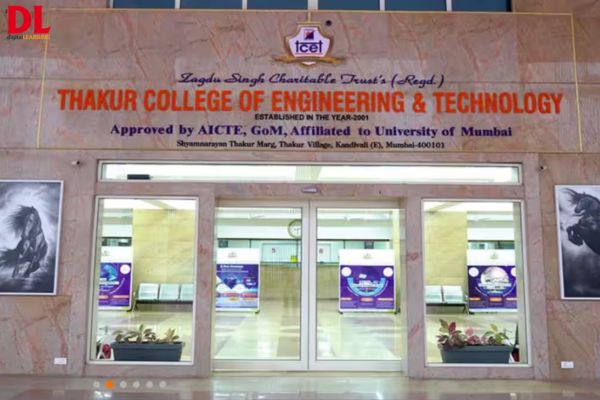
In a major boost to higher education in Maharashtra, Thakur College of Engineering and Technology (TCET), Mumbai, has been granted deemed-to-be university status under the revised UGC Regulations 2023 by the Ministry of Education.

With this recognition, TCET becomes the first institution in Maharashtra to receive deemed university status under the updated regulations. The development is expected to provide the institute with greater academic autonomy in curriculum design, introduction of new programmes, research expansion, and innovation-led initiatives.

Earlier affiliated with the University of Mumbai, TCET will now have the flexibility to function as an autonomous higher education institution while maintaining regulatory standards.

Also Read: Delhi to Upgrade 376 ICT Labs, Add 31 New Digital Labs in Government Schools

The move is aligned with the objectives of National Education Policy 2020, which encourages multidisciplinary learning, institutional excellence, research growth, and global competitiveness in India’s education ecosystem.

As part of the approval conditions, the institute is required to maintain academic quality benchmarks, strengthen postgraduate and research programmes, and continue accreditation processes with the National Board of Accreditation and National Assessment and Accreditation Council.

LATEST NEWS