



Home Blog Page 561

Technology Paving Way for Quality Higher Education in Telangana

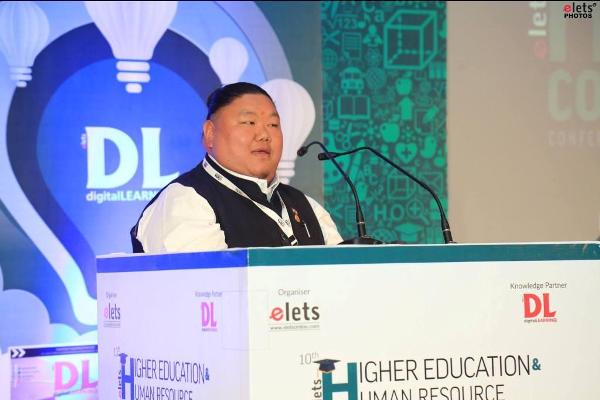
Along with improving the Higher education ecosystem in telangana, the department is also taking various initiatives to bring quality of education at par with global standards. Adopting technology for smooth processes is one of the key initiatives, says Navin Mittal, Commissioner, Department of collegiate & technical education, Government of Telangana, in conversation with Sudheer Goutham of Elets News Network (ENN).

How is the department ensuring that all its processes turn paperless yet effective?

Navin Mittal, Commissioner, Department of collegiate & technical education, Government of Telangana

The Department of Higher Education has undertaken various initiatives that helped the department, teachers, students, and educational institutions.

One of the initiatives is the launch of portal “Degree Online Services, Telangana” (DOST) — A common admission portal for all the Higher education institutions in the State. Any student who wants to join any course in telangana can visit the portal and register for different course options. Students are selected on merit-basis. The list is prepared as per class 12 scores. This has been a real gamechanger in Telangana, as earlier students had to visit every institute first for getting an application form, then to submit it and deposit the fee and lastly for gaining admission. Now, we have made the admission process completely paperless in a way that students belonging to Telanagana only need to enter the number of respective certificates and educational department automatically fetches the data from the respective department. The process is hassle- free. It has enabled over 2,10,000 students to take admissions in higher education institutes of Telangana.

We have also introduced concept of e-office in the commissionerate as well as in regional offices. It helped us to speed up the processes and improve communication between the State government and institutions. For example, soon after receiving a digitally signed copy from any college principal, an order is issued in that regard to the respective college online. Colleges are also allowed to check the status of their complaints or applications.

The third thing which has been done is that a public sector bank — Vijaya Bank – has come up with a fee management system. All the government educational institutions are on the platform wherein students can pay fee without any hassle at the branch of the bank or via electronic transfer, net banking, debit card, credit card, UPI payment interface etc. Cash fee collection has been stopped at all the government’s higher educational institutes.

The fourth thing which we have implemented in the technical education department and one of the universities of the State is BioMetric attendance System. in next few months we will install the system across all the government institutions in the State. It is helpful in maintaining the students’ attendance, as without students there is no meaning of education.

In terms of technology in education, what are the latest practices adopted by the Department to facilitate effective learning?

We have implemented digital evaluation system in technical education department. In the system, all the answer sheets are uploaded online and distributed to evaluators. It helps us to avoid any question without being checked. Moreover, it also has helped teachers to evaluate the answer sheets anywhere and anytime. Earlier, we used to set up camps for evaluations which we have now done away with. We are also working on development of institute Management System which will help the department in managing information of technical institutes and students.

We have also worked a lot to improve curriculum. For example, the polytechnic curriculum in the State has been completely updated from academic year 2018-19. We have made it more flexible and practical. All India Council of Technical Education (AICTE) has already published a model curriculum for the engineering colleges which has also been adopted in Telangana.

We have also tried to improve our grading system. We are trying to develop a relative grading system rather than an absolute grading system.

What vision inspires Telangana Government to improve education scenario in the State?

The vision of the State Government involves three things. First thing is to improve Gross Enrolment Ratio (GER) which is around 36 percent. Though, the GER of Telangana is nearly 10 percent higher than that of the national average, but the access of education to every student in the State is the top most priority of the government. Other than that the government has initiated various schemes for the underprivileged and economically weaker sections of the society.

The second focus area of the government is ensuring basic infrastructure in both government and private sector. A lot of focus is on maintaining the infrastructure which includes building, labs, libraries, equipments, furniture and other basic amenities.

The third thing is improving overall quality in terms of teaching and learning. The latest practices are integrated into the education system of the State to improve the quality.

What is your message for student fraternity?

Not only all of us should be ready for the industrial revolution 4.0 and the education 4.0 but we should be leaders in this. it is so because the kind of numbers which we have, there is no reason for not being a leader.

ICFAI Group: Pioneering Professional Education for Over 30 Years

ICFAI Group

ICFAI was established in 1984 as a not-for-profit society with the broad objective of empowering citizens through quality education. The Institute marked its presence in the Indian education fora by launching a high end, innovative professional programme in financial analysis in 1985. The programme was first-of-its-kind in India, aimed to equip students and working professionals with cutting-edge knowledge in contemporary areas of finance. Since its inception, ICFAI Group has made a significant mark in the Indian educational field with a pan-Indian network and presence.

ICFAI Group has established campuses across 16 States which includes 11 ICFAI Universities, 9 ICFAI Business Schools, 7 ICFAI Tech Schools and 6 ICFAI Law Schools. All the programmes offered in these campuses emphasise on academic rigor and differentiated curriculum that bridges the industry- academia gap.

Innovation has been the mainstay of ICFAI Group with innovation prevalent in its programmes and even in its culture. ICFAI started, ICFAI Business School (IBS) in 1995 to offer MBA Programme. Since its inception, IBS has been consistently placed among the top ranked B-Schools of India providing excellent academics and infrastructure to its students and transforming them into future leaders. Another example that is a testimony to the culture of innovation is the introduction of Case Study Methodology at IBS. The Case Research Centre at IBS has become a centre of excellence and has won several accolades across the world.

Outstanding Achievements by the Case Research Centre

  • ICFAI is the third largest contributor of cases, next only to Harvard and INSEAD B-Schools
  • In 2015, 7 percent of The Case Centre’s 150 Best Selling Cases were from ICFAI
  • ICFAI cases were taught in more than 870 B-Schools across 75 countries in the world
  • In 2015, the sales of ICFAI cases made up 7.5 percent of the Case Centre’s sales
  • ICFAI currently contributes 6,000 cases to the Case Cen- tre, UK which forms more than 10 percent of their total collection of 57,318 cases

ICFAI Group focuses on learning rather than instruction. In addition, the institute engaged in important areas of research covering environmental sustainability, agricultural economics, health policy, financial economics, banking, intellectual property rights etc. There have been path-breaking research and good quality publications in these areas.

Also ReadICFAI Pioneering Quality Higher Education in Jharkhand

ICFAI’s Teaching Methodology

ICFAI GroupThe ICFAI Group’s culture of teaching and learning supports and fosters intellectual and personality development among its graduating students. The programme as a whole is designed in a way that it makes the students DO and ACHIEVE and not just limit themselves to ivory tower thinking. Fun-filled and tech enabled learning also plays an important role in ICFAI’s teaching methodology. The delivery takes place with the use of hi-tech learning management system at IBS. It also needs to be enjoyable to enable easy learning. This leads to a learning that helps in holistic development of the pass-outs. They carry an attitude of ownership towards their work. ICFAI strives to make the students – DOERS.

Founder’s profile:

N J Yasaswy (1950-2011), founder of the ICFAI Group of educational institutions and a pioneer in promoting higher education in the private sector, had a brilliant academic career: B.Com (Andhra University 1969 – First Rank), CA Inter (May 1971– First Rank), CA Final (May 1973 – First Rank), ICWA Inter (July 1970 – First Rank) and ICWA Final (July 1972 – First Rank). He was the recipient of the Basu Foundation Award for the Best Student of the Year from both – The Insti- tute of Cost and Works Accountants of India (in 1972) and The Institute of Chartered Accountants of India (in 1973). He stood for professional management, excellence in the quality of education offered in the ICFAI institutions, and absolute discipline. He was charismatic, a great teacher, an in- stitution builder, a visionary and a genius who was years ahead of his time. His vision will continue to guide ICFAI forever.

The programmes are designed such that the professionals passing out of the institution have the ability to take risks, make decisions and own the work. Apart from this, students also inculcate research and analytical orientation because of institutional strengths in research and case methodology. Holistically, the student undergoes a transformative change. The alumni of ICFAI Group are working in renowned companies world-wide. Collectively, ICFAI Group alumni contribute significantly to the growth story of India.

Awards

  • Great Place to Study Certification 2017-18 – GPTS Research Institute
  • Thought Leadership Award 2017 for ICFAI Case Research Center – Skill Tree Knowledge Consortium
  • Best Higher Education Brand for Innovation in Curriculum – 2017 – Business World Education Award
  • Iconic University of India 2017-18. Awarded by World’s Greatest Brands and Leaders Asia and GCC. – URS, Asia One & PwC.

QS Rankings by Subject: 22 new entries from India ranked in Global top-200 list

QS World University Rankings

The latest edition of QS World University Rankings by Subject released on Wednesday has shown improvement in the performance of Indian Institutes as the 22 new Indian departments are placed in the top-200 club, taking the total to 89 this year.

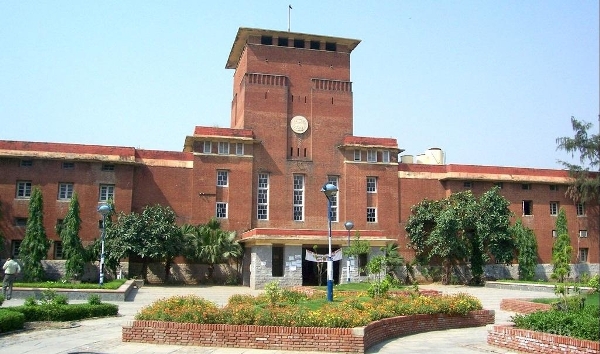
Three universities have at least one department in the top 50 globally. Delhi University’s department of development studies is ranked highest at the 37th position followed by Mineral and Mining Engineering of IIT-Bombay (38) and then IIT Kharagpur (47).

Indian institutes have largest representation in Computer Science and Information System as 17 universities have been ranked under this category. IIT-Bombay and IIT-Delhi are the leaders under this category among all Indian institutions.

“India’s eight IITs and IIScs are ranked 104 times, with 33 improvements in rank and only 7 drops in rank,” the press statement released Wednesday said.

With 1,884 departments, US has the largest number of departments ranked worldwide followed by the UK with 958 departments and then Australia with 508 departments.

Tamil Nadu CM launches free laptop scheme

Tamil Nadu CM launches free laptop scheme

Tamil Nadu Chief Minister Edappadi K Palaniswami has launched the scheme of free laptop scheme for the academic year 2018-19 to 15.18 lakh students on Wednesday.

As a token of gesture to launch the scheme, the Chief Minister handed over the laptop to seven students at the state secretariat.

The AIADMK government under then Chief Minister J.Jayalalithaa launched the free laptop scheme for students in 2011. At least 37.88 lakh students have benefited from the Government’s project so far.

In a statement issued by the Tamil Nadu Government, during this academic year 2018-19, around 15.18 lakh students will be given free laptops which will involve the expenditure of Rs 1,340.44 crore.

From this year onwards to benefit 5.12 lakh students studying in class XI of government and government-aided schools along with class XII students, students in first year of government and government-aided polytechnics students, and Class XI and XII students in government and government-aided differently abled schools.

Palaniswami also opened and laid foundation stones for various projects executed by the home department, including residential quarters for police personnel, police, fire and rescue services stations across the state at Rs 85.21 crore.

West Bengal Govt launches web portal to provide real-time data on schools

web portal to provide real-time data on schools

West Bengal Education Minister Partha Chatterjee has inaugurated a web portal to provide real-time data of state-run and aided schools.

The portal named as ”Banglar Shiksha” (banglarshiksha.gov.in) is likely to be operational within two months” time, revealed the minister. During the launch, the minister also suggested his department officials to update the portal on regular basis with relevant information.

“This is probably the first-of-its-kind online initiative in the state as well as in the country. It will be operated on a trial basis for two months to remove glitches, if any. The portal should be fully functional by May 1,” Chatterjee stated.

The minister also said that the web portal would keep records of school attendance.

“Unlike many initiatives of the previous regime, we have to ensure it (portal) does not become dysfunctional. The portal will address many issues, including attendance of students and teachers. “A class teacher will also have to be present in the school to fill in data pertaining to academic and co-curricular activities of every student,” he maintained.

Chatterjee also asked the officials of school education department to upload videos of teaching sessions from various institutes on the portal.

“The school principals and headmasters will play a vital role in supplying information. They should be the first ones to receive training on how to operate the web platform,” Chatterjee said. “The State Government is also taking measures to introduce e-learning in government-run primary schools,” he added.

According to a statement issued by the school education department, “The proposed portal will store real-time data of 1.5 crore students, five lakh teachers and one lakh schools.”

Jaipur hosts 14th elndia Innovation Summit

elndia-Innovation-Summit

The Department of Industries, Government of Rajasthan in association with Elets Technomedia Pvt Ltd organised the ‘14th elndia Innovation Summit Rajasthan’ on Wednesday in Jaipur.

With an aim to evoke discussions and deliberations on the holistic development of Rajasthan, especially in terms of  its industrial policy, the Rajasthan Industries Department  in association with Elets Technomedia, a media and research company in Asia and Middle East, organised the 14th elndia Innovation Summit Rajasthan.

The summit witnessed a confluence of key government officials from various departments of Rajasthan, industry experts, start-ups, entrepreneurs, global innovators, academia and the relevant stakeholders.

Today, Rajasthan is one of the finest growth platforms for innovations, entrepreneurs and industry. The capital city  Jaipur is one of the top 10 cities in India ideal in terms of start-up ecosystem and investment. The State’s policies are also well focused on promoting entrepreneurs and innovators like start-ups, MSMEs and the promotion of Knowledge Economy including IT /ITeS.

“In the era of industrialisation, the deployment of AI, IoT and Machine Learning into the manufacturing sector is helping in the growth of Industry,” said Arvind Mayaram, Economic Advisor to Chief Minister, Government of Rajasthan.

“The discussions and deliberations on the Ease of Doing Business, investments and CSR, banking and finance for industrial development, strengthening local industries and MSMEs, urban, housing development and real estate, transport and infrastructure, PSUs for economic growth, IT innovations-based industries will definitely help in designing the new Industrial Policy of Rajasthan,” said Dr Subodh Agarwal, Additional Chief Secretary, Industries & Public Enterprises, Government of Rajasthan on the occasion. “We are bringing some major changes in the system and working on the new Industrial Policy.”

Govind Sharma, Advisor to Chief Minister, Government of Rajasthan, said, “The new Government in Rajasthan is planning a new industrial policy that focuses on attracting investments and generating employment simultaneously. Under the leadership of Chief Minister Ashok Gehlot, a new draft of the industrial policy is being prepared in Rajasthan.”

The Rajasthan Government’s Department of MSME carries the mandate to promote MSMEs, artisans, handloom and service sector in the State, said Alok, Principal Secretary, MSME, Government of Rajasthan on this occasion.

“The major sectors in which the MSMEs of Rajasthan are primarily involved include textile, apparel, engineering, ceramics, marble and Kota stone processing, chemical, food processing and IT services amongst others,” the Principal Secretary added.

“The new Industrial Policy of Rajasthan is committed to encourage investors with speedy and time bound approval processes, timely water and electricity supply, and effectively implement business reforms action plan,” said Dr Krishna Kant Pathak, Commissioner Industries & Secretary, CSR, Government of Rajasthan. “The policy envisions activating the single window system so that the works are done timely through online services.”

Speaking on this special occasion, Dr Ravi Gupta, Founder Publisher and CEO, Elets Technomedia and Editor-in-Chief eGov magazine, said:  “eIndia Innovation Summit is one of the biggest summits of its kind in Rajasthan. Elets Technomedia has been organising eIndia Summit across the nations for last 14 years under the aegis of different State governments.”

Central Government likely to announce skill development scheme: Prakash Javadekar

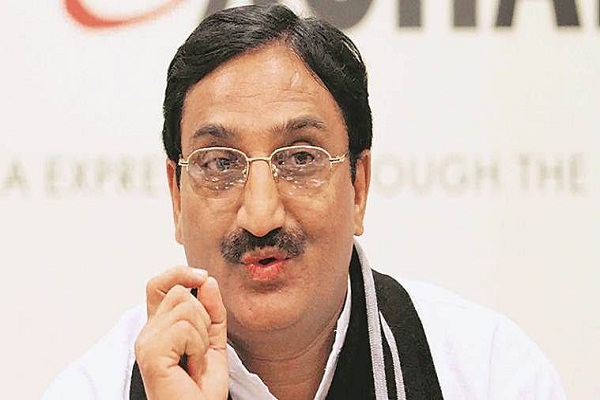
Prakash Javadekar

Union Minister for Human Resource Development Prakash Javadekar has said that the Central Government would announce a new scheme on skill development on Wednesday February 27.

While addressing a meeting of party workers in Ahmedabad, Javadekar said, “For employment, first we need skill courses. Tomorrow, Union Petroleum Minister Dharmendra Pradhan and I will announce a new scheme. Graduates are applying for the job of a sweeper. It means that required skill is not available. For that, we are also preparing an apprenticeship programme which we will announce tomorrow.”

He also said that the Government is planning to draft a new system to keep statistics of every employment. It will help in providing the correct picture on employment in front of the public.

This comes in the wake of the Government discarding the National Sample Survey Office’s (NSSO’s) report that claimed unemployment in India is at 45-year-high in 2017-18 with 6.1 percent.

The report further said that unemployment was higher in urban areas (7.8%) as compared to 5.3% in rural areas of the country.

According to report, the labour force participating rate (LFPR) –the portion of the population working or seeking job -declined from 36.9 per cent in 2017-18 as against 39.5 per cent in 2011-12.

RGUKT: Inculcating Innovation and Entrepreneurial Skills among Rural Youth

RGUKT: Inculcating Innovation and Entrepreneurial Skills among Rural Youth

Rajiv Gandhi University of Knowledge Technologies, Basar understands that the quality technical education among students would not be honed to required standards unless there is a strong Academia – Industry interaction, says Dr A Ashok, Secretary & Commissioner, Board of Intermediate Education, Government of Telangana and Vice Chancellor, Rajiv Gandhi University of Knowledge Technologies (RGUKT), Basar, Telangana, in an interview with Sudheer Goutham of Elets News Network (ENN).

Give us a brief overview of innovation, incubation and entrepreneurship related programmes started at RGUKT.

Dr A Ashok, Secretary & Commissioner, Board of Intermediate Education, Government of Telangana and Vice Chancellor, Rajiv Gandhi University of Knowledge Technologies, Basar, Telangana

At Rajiv Gandhi University of Knowledge Technologies (RGUKT), our vision is to nurture world class professional engineers by imparting quality education and transforming rural youth into world class engineers. To achieve this, students are required to be trained in the skills relevant as per the industry demands. As the job market demands latest advancements in technology, innovation in education is our most preferred approach for conducting any course.

How significant is the role of incubation centres for preparing global citizens? Please describe about various incubation related activities in RGUKT.

Incubation Centres have a major role in higher education. These centres help students in developing a diversified thinking that helps in finding a more effective and innovative solution to problems. At Incubation Centres in the State, we follow the process; innovate, incubate, conceptualise the idea, scale up the idea and then mass production.

Also ReadRGUKT Incubating Industry-Academia Collaborations

At RGUKT, Basar, a Japanese company “SafeTracehub” operating in the premises of its incubation centre, we will soon be seeing more companies from around the world signing moUs to set up innovation labs and incubation centres.

In line with Government of India’s Startup India initiative, how is RGUKT encouraging entrepreneurship among its students?

We encourage students for entrepreneurship. We support students in setting up their start-ups as it will help them to realise their dreams rather than being in a job and realising others’ dreams. moreover, a successful start-up also paves the way for employment to others.

Recently, our students have come up with non Invasive Glucometer which is a cheaper way to test the sugar for diabetic patients. So, in this way we are helping students to innovate and bring their ideas into reality.

Many of our students visit NASA every year and grab first and second prizes. So, we not only encourage innovative ideas but teach in a way that students are nurtured with the skills to support new ideas. We organise techno festival every year where students from other universities as well come with new ideas. In the recent festival, we have received many solutions related to the day-to-day problems in Agriculture and health sectors.

How is RGUKT catering to the needs of rural youth?

Students in RGUKT are selected on merit basis. most of them are from middle-class or economically weaker sections of the society. These students are very meritorious and we are turning them into world-class professionals.

As most of our students are from rural background, they are well aware of the day-to-day problems in rural life. We introduce them to the new innovations or technologies that help them to solve any such problems. our students developed a software through which farmers will know the different prices prevailing in different markets for a particular agricultural product. It helped the farmers to get the most profitable deal for their agricultural products.

Along with that, we also helped nirmal handicrafts to develop software and website so that the organisation can enhance their market reach.

Anil Swarup pens down ‘Not Just A Civil Servant’

Having had an illustrious career of nearly 38 years as a civil servant, Anil Swarup, the former Education Secretary in the Ministry of Human Resource Development, recently launched his book ‘Not Just A Civil Servant’ in the national capital.

With a narrative, “if civil servant wants, he can deliver”, his book describes the challenges experienced as a civil servant. It states, however, every bureaucrat has to take all things in the stride and deliver results.

In his another role as a Secretary for Ministry of Coal and Ministry of Human Resource Development, Government of India, Swarup overcame all the challenges and set exemplary standards for others.

During his book launch on Saturday, Swarup, who recently retired as an IAS, said, “Neither all bureaucrats were bad nor all politicians corrupt, therefore it wasn’t correct to blame all the challenges faced by the country on either.”

He added what was required is a “proper coordination between dedicated and honest bureaucrats and ministers with good ambitions”.

Swarup, in the past years, also participated in various educational events organised by Elets Technomedia’s 13th World Education Summit, Mumbai; 6th School Leadership Summit Delhi; 10th World Education Summit Delhi, and many others, always had an influence on key educationists, industry leaders, and decision- makers of the world of education.

His speeches were a treasure house of knowledge gained over the years as a civil servant and a thinker.

Click Here to listen some of Anil Swarup’s thoughts on improving education sector

During his speech at the 13th World Education Summit Mumbai, the former education secretary, said: “There are good people in both sectors –– private and public. Both are required to enhance the educational ecosystem of the country and hence I am a great believer of PPP model in education.”

As the then School Education Secretary, MHRD, Government of India,  Swarup during 6th School Leadership Summit Delhi, said: “Don’t limit yourself to criticism. Recognise the good works happening around you. The good works need to be replicated…We have to see and highlight the scalable part of the good work.”

“No matter what technology you have, if people are not present in the scheme of things, it will not work, since any technology is only as good as its impact on the ultimate beneficiaries,” said Anil Swarup, then Additional Secretary, Cabinet Secretariat, during the Smart City Summit Delhi in 2014.

RGUKT Incubating Industry-Academia Collaborations

RGUKT

The world today is intensely driven by knowledge economy where consumption and production are both based on intellectual capital. A country which analyses the collected information effectively has better prospects of growth in future. The case of Finland is a classic example in this. After a World Economic Forum report (July 2014) by Ricardo Hausmann that pointed out that traditional wood related products from Finland barely accounted for 20 percent of their exports, Finland upgraded old machines and designed new automated ones to chop and cut the wood. It made Finland the top choice for designing and manufacturing automated machines for different purposes – Nokia, Kone, Fortum, and Fiskars being classic examples. Today 40 percent of Finland’s exports are all machines of various types.

RGUKTThe above is a classic example of how knowledge economy is the key to growth. By its very definition, knowledge economy would require to partner with industry – the role of the partner being to gather, generate, disseminate and correlate information which industry can then use. Educational Institutions fit this role perfectly. A healthy partnership between the academia and industry will certainly see the development of knowledge economy which in turn will contribute to the growth of a country.

Despite stupendous work being done separately in Industry and academia, the level of collaboration seems either inadequate or failing in most cases. In the paper “Industry-academia collaborations in software testing: experience and success stories from Canada and Turkey; Software Quality Journal, 25(1091) 2017”, the authors have mentioned that correlation and interrelationship of challenges by proactively working together could eliminate the risk of challenges and possible failures in industry-academia interactions. These collaborations (as mentioned in Laredo, P, Revisiting the third mission of Universities: Towards a Renewed Categorization of University Activities; Higher Education Policy 20(4) 31-48 (2007)) are those which many MNCs engage in with Universities with the primary objective of teaching and educating students. Some such laudable initiatives are Cisco Network Academy, Oracle’s Work Force Development Program, IBM Career Education Program.

Also ReadRGUKT: Catering to the Educational Needs of Rural Youth

Traditionally, universities have been looked upon as knowledge centres – in the sense that they were seen to provide an education to the society and act as the custodians of knowledge. With dwindling resources to support them, Institutions of higher education are today increasingly looking to not only be knowledge centers, but also bring in industry collaboration in the academic pedagogy. Certain studies by scholars (Muscio et.al.; Does government funding complement or substitute private research funding to Universities? Research Policy, 42(1), 63-75 (2013)) have argued that industry engagement with academia for research and entrepreneurship brings in additional funds, which in turn could be ploughed back into enhancing the educational infrastructure.

It is important to note that it is not sufficient for Universities to merely host startups for Innovation through industry collaboration. As pointed out by Nicolas Colin – An eminent author in The Forbes (September 25, 2018), such missions only end up in ‘mere existence’ that produce nothing progressive. What is needed is a relentless entrepreneurial drive.

This being the case, especially in India, Corporate collaborations between young technology-led companies and research establishments are rapidly gaining ground with many business start-ups choosing to partner with Universities for cutting edge technology, as highlighted by J Vignesh in a leading newspaper on February 8, 2018. This trend seems to be fermented by the fact that universities remain the main source of resource persons who can engage in research while Industries need that leverage for developing technology.

Seen in this background, the Rajiv Gandhi University of Knowledge Technologies (RGUKT) Basar provides an excellent opportunity for being a test-bed for incubating industry-academic collaborations. Identified by the Government of Telangana as one of the Universities where Innovation, Incubation and Entrepreneurial Development programme will be established, the University is a residential campus that houses state-of-the-art laboratories and a young faculty community. The student community consists of the state-toppers who are bright and eager. These are invaluable assets where fermenting an industry-academia collaboration is being sought.

RGUKTThe University has an MoU with TITA (Telangana IT Association) under which an Innovation hub called TIIC (Telangana Innovation and Incubation Center) has already been established in the campus. In the first phase, TIIC will host close to 15 industry startups and will also have space for a few student startups. IT professionals who are associated with TITA are mentoring the students and also helping bring in industry incubations to TIIC. SafeTraceHub, a Japanese company, has already established an Innovation laboratory in TIIC. At the time of this article appearing in press, more such start-ups are in the process of being incubated in the next few days at TIIC. RGUKT, Basar has a knowledge-base that is strong on contemporary technologies like Block Chain, Data Analytics, and Deep Learning etc. This provides a perfect platform for Industry to capitalise on the readily available knowledge-base and establish innovation start-ups. MoUs with a few industry leaders that will take the benefit of this readily available talent pool is underway.

RGUKT, Basar is also on the verge of signing MoUs with KIHT (Kalam Institute of Health Technologies). Under this MoU, KIHT will lend complete end-to-end support to help faculty and students of RGUKT, Basar to incubate startups that will be useful to the health sector – including medical diagnostics, medical devices, community health etc. The University has a rich expertise in domains of Signal processing (which can be very useful for biomedical signal processing), Machine learning, optical character recognition, IoT etc. – all of which are available for use in not just traditional applications for electronics but also in medical devices. RGUKT, Basar has qualified and experienced researchers in the domain of Drug synthesis, molecular modeling, Catalysis and green chemistry and Bio-inorganic chemistry which makes the upcoming MoU with KIHT an exciting prospect.

Another domain which the University is actively looking to encourage innovation is the domain of design of efficient power converters and smart charging algorithms – an invaluable asset for the development of electric vehicles and smart homes of the future. The University also has faculty experienced in the domain of solar PV systems which are today one of the KFAs where alternate, non- conventional sources of energy are concerned. RGUKT, Basar also has faculty experienced in the use of 3D printing in automotive industry, design of medical and surgical implants, tissues etc. The University has excellent equipment for fatigue testing, creep testing, corrosion studies, X-ray diffractometry, FESEM etc. which can be used for material characterization tests.

With a rich knowledge base and a pool of talented, well qualified and eager researchers, RGUKT, Basar today stands as a beacon that invites innovation and encourages entrepreneurs to take up the challenge of meeting the changing dynamics of the professional world. While becoming an entrepreneur may not be everybody’s cup of tea, an innovative spirit is definitely a great personal and institutional character to assimilate. In that aspect, RGUKT, Basar is making every effort to ensure it takes the right steps forward.

LATEST NEWS