



Home Blog Page 618

Bihar Govt offers Rs 1 lakh incentive to SC/ST aspirants clearing UPSC Prelims

The Bihar Cabinet has announced encouragement incentives of Rs 1 lakh and Rs 50,000 for students belonging to Scheduled Castes (SC) and Scheduled Tribes (ST) categories on qualifying the Union Public Service Commission (UPSC) preliminary test and Bihar Public Service Commission (BPSC) exams respectively.

“Under the scheme of the SC/ST Welfare Department, the state cabinet has decided to give one-time Rs 50,000 amount to an SC/ST candidate clearing prelims of BPSC and Rs 1 lakh for clearing prelims of UPSC,” said Arun Kumar Singh, principal secretary, cabinet secretariat department.

The Nitish Kumar-led Bihar government has approved the “Mukhyamantri Anusuchit Jati Evam Anusuchit Janjati Civil Seva Protsahan Yojana” to help the bright aspirants of these categories to focus on their studies without worrying about expenses.

The scheme is a follow-up of the chief minister’s flagship Student Credit Card scheme. Under the scheme, students with annual family income less than Rs 1.5 lakh and have passed class XII are eligible for the loan of up to R 4 lakh.

The Cabinet also decided to provide Rs 1,000 to each SC/ST student as hostel incentive and free supply of 15 kg food grain to the hostels.

Recently, the Government has also extended all schemes for ‘Mahadalits’ in the state – be it provding land for housing or Dashrath Manjhi Skill Development scheme – to the categories.

Centre gives nod to first medical college of Daman-Diu, Dadra & Nagar Haveli

The Central Government has approved to set up the first medical college in the Union Territories of Daman & Diu and Dadra & Nagar Haveli (DNH).

The Government has allocated the fund of Rs 189 crore for the construction of the medical college at Sayli in Silvassa, the capital of Dadra and Nagar Haveli. The medical college is likely to start functioning from the academic year 2019-20, said Praful Patel, Administrator of the two Union Territories.

“As promised by Prime Minister Narendra Modi to the people of Daman-Diu and Dadra and Nagar Haveli during his visit on February 24, the central government has approved a medical college for which Rs. 189 crore has been approved by the Union Home ministry,” Patel said.

The college will offer enrollment to 100 students of which 50 each will be reserved for students from the two Union Territories, he said.

“Ever since Daman and Diu was liberated from the Portuguese rule in 1961, its people were demanding a medical college,” Patel said.

The construction of the medical college is likely to begin soon and officials of the Home Ministry will check the progress in every three months, he added.

Chinese consulate to host education expo in Kolkata

The second “Chinese Higher Education Expo” in Kolkata is likely to witness the participation of over 60 Chinese universities. Consulate General of China in cooperation with the School of Chinese Language will organize the expo.

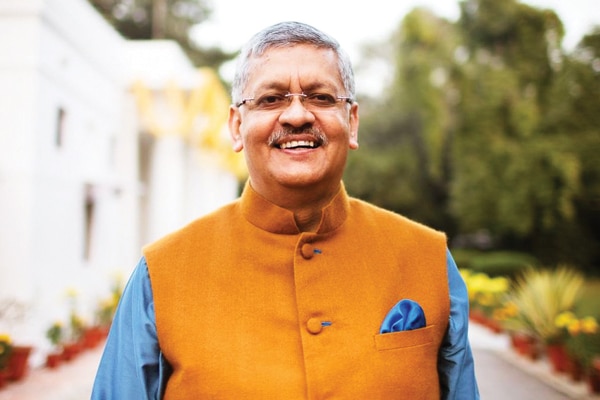
Ma Zhanwu Chinese Consul-General in Kolkata, India
Ma Zhanwu, Chinese Consul-General in Kolkata, India

According to Chinese Consul General in Kolkata, Ma Zhanwu, “About 100 major courses in the fields of engineering, medicine, IT and AI will be on offer at the expo. Over 60 universities from eleven provinces and municipalities of China will participate in the expo. They are here to publicise their achievements, to find Indian partners of cooperation and to woo Indian students. Various types of scholarships will also be available for students.”

The two-day long conference to be organised on May 10 and May 11 will see the participation of Chinese universities at the expo such as Nanjing University, Xi’an Jiaotong University, Sichuan University of Science and Technology, Northeast Normal University and others.

“This is the first time that so many universities are coming to India together. We were expecting around 50. But the response was even better than we expected. Visitors have registered from as far as Delhi, Kerala and Uttar Pradesh.” Zhanwu added.

The consulate has been promoting bilateral exchanges between educational institutions in Bengal and China. Recently, two delegations of high school principals have visited China.

UPSC Exam: Haj Committee to provide free coaching to Muslim aspirants

The Haj Committee of India has decided to provide free coaching to Muslim aspirants for Civil Services exam across states and union territories from next year.

Haj Committee of IndiaThe committee has taken the decision after 51 Muslim candidates cleared civil services examination earlier this year. Committee’s Mumbai-based headquarters is providing free coaching for the last seven years and two of the students studied there were selected for the prestigious service this year.

Union Minority Affairs Minister Mukhtar Abbas Naqvi said, “Two students who took coaching at the Haj Committee of India-run classes, cracked the UPSC exams. Next year onwards the government will start free coaching in Haj Bhavans in states and union territories.”

The Haj Committee has sent a proposal of providing free coaching to civil services aspirants of muslim community in Haj Houses across all states and union territories to the Minority Affairs Ministry. The ministry has accepted the proposal.

 “We requested the ministry (of minority affairs) to start free coaching service in Haj Bhavans in different states. We are happy that the minority affairs minister has approved the proposal. We want to start the (coaching) service from next year. We will implement this with the state Haj boards,” said Maqsood Ahmed Khan, Chief Executive Officer of Haj Committee of India.

For the last seven years, 40 students are provided free coaching at the Haj Committee of India’s headquarters in Mumbai every year, he added.

Self-learning Solutions – A Boon for Working Moms

Mothers are the first influencers of their children. For a working mother, it is difficult to keep a balance between professional and personal life. Self-learning solutions are potent tools to empower them with all the requisites for managing their children’s learning, writes Beas Dev Ralhan, Co-founder & CEO, Next Education India Pvt Ltd for Elets News Network (ENN).

Beas Dev Ralhan, Co-founder & CEO, Next Education India Pvt Ltd

Working mothers often face the dilemma of balancing work and family life. Research shows that women often quit their jobs after embracing motherhood. Societal pressure and negative work environment are some of the reasons that propel women to make such choices. Women who choose otherwise are often torn between home and work, and consumed with guilt for not being able to contribute to the learning process of their children. Parents often fail to realise that 24*7 supervision is not needed to make their children successful. Instead, parents should aim at making them independent learners. They should find age-appropriate ways to help them apply the concepts taught in class in real-world situations. Introducing a self-learning solution to children could be an effective way to keep them engaged and help them take charge of their own learning. Thanks to the emergence of m-learning and e-learning, self-learning is becoming a trend.

Self-learning and its advantages

A rather self-explanatory term, self-learning refers to a learning process that does not require any direct supervision. It allows learners to devise their own rhythm and time of study. They can supplement their classroom education with self-learning courses to augment their learning effectively. Self-learning has numerous benefits, which if reaped carefully, can benefit every child.

Self-paced

Self-learning provides students with the time and scope to study at their own pace. It is different than the classroom learning, where all students are expected to follow a set pattern, which might be a hindrance to some learners. For instance, a student may have difficulty in following a section of audio-visual content in the classroom, and it might not be possible for a teacher to pause the video every time a learner is unable to grasp a concept. Self-learning allow students to build up their own momentum of studies and allow their working mothers to continue the office work.

Independent research skills

While self-learning, students are active participants in their own learning process and not mere passive recipients of information. This makes them independent and responsible learners, and also helps them acquire and apply their problem-solving and critical-thinking skills. Self-learning prepares them for academic life, where the teachers’ role will be more of a facilitator than an instructor. It is imperative that mothers treat their children as individuals and help them to be independent for life ahead.

Anytime, anywhere learning

In the 21st century, teaching–learning is no longer confined to the classroom. Thanks to tablets and laptops, students can now learn even on their way to school or within the comfort of their own home.  They could read up on any topic discussed in class that captures their interest. Self-learning empowers a student to quench his/her thirst for knowledge.

Holistic development

Self-learning also improves students’ self-confidence and increases their ability to take initiatives. They realise the importance of making sound, self-affirming decisions, which improves their decision-making skills. They also learn to solve problems on their own without depending on teachers and parents, which improves their decision-making skills.

Gamification of learning

Various self-learning platforms for students use Gamification for learning. Students can watch videos and participate in various discussions on these platforms. Contrary to the deferred gratification that end-term exams offer, gratification in a gaming platform is instant. Gamification incentivises learning process itself and also frees students from boredom. Different students have different learning needs and a teacher may not be able to design assessments as per the varying needs of each student. Gamification of learning can address this problem by introducing activities as per the potential of each student.

Technology empowers mothers

Parents want to be reassured all the time that their children are learning new things and are settled and happy in their lives. However, parents often get bemused over choosing the right approach to soothe their worries. Technology helps them in this regard too. Adoption of a Learning Management System (LMS) can be helpful as it helps in design, delivery, and monitoring of the learning process. It shares comprehensive student performance reports with parents and also recommends interventions if required.

‘Faculty and researchers indulging in plagiarism will be punished’

Business concept image of a hand holding marker and write Plagiarism with cross sign isolated on white

As per the new norms by University Grants Commission, the faculty members and researchers will be punished if found indulged in plagiarism, said All India Council of Technical Education (AICTE) chairman Anil Sahasrabudhe.

Sahasrabudhe was addressing a gathering at “Academic & Research Integrity Conclave 2018” where he said, “As per new UGC (University Grants Commission) regulations, the faculty and researchers indulging in plagiarism will be punished which is a positive development in our higher education system as it will bring more credibility to the research in the country.”

The conclave was organised by  Turinitin on May 3. Launched in 1997, Turinitin is a commercial, internet-based plagiarism-detection service.

Expressing his views on use of technology in academics, Sahasrabudhe said, “Technology tools can assist in promoting academic integrity, but they are not complete solutions. The best scenario is when technology assists bigger cultural commitment at an institution.”

“Technology might assist in discovering academic misconduct through plagiarism and authorship. But, when technology tools are weaved into holistic academic integrity solution, they have the power to help promote cultural change, “said Marc Daubach of Turnitin.

Along with renowned institutes like IISc, IITs and IIMs, more than 400 institutions across India subscribe to the services of Turnitin.

Google.org to support education initiatives, announces $3-mn grant

Google.org, the philanthropic arm of Google, in its effort to bridge the learning gap in India, has announced an additional grant of USD 3 million over two years to Central Square Foundation and The Teacher App.

The grant will help the two organisations to scale their initiatives and fund content creation and teacher training, through tech-based learning solutions.

Out of the total, grant of USD 1 million is provided to The Teacher App with an objective to empower teachers through training and resources on concepts of math, science, language and others. The funds will also help to scale the platform to reach 5,00,000 teachers in two years.

“The success of our existing partners has given us the confidence to expand our efforts in India. We strongly believe that technology can play a powerful part in solving the learning gap in India, and we are expanding our investments in India to ensure that all teachers and students are able to benefit from it. These new funds will help contribute in building more locally relevant solutions and content for students and teachers,” said Nick Cain, Education Lead, Google.org.

Google.org committed USD 50 million grants globally to support non-profit organisation building tech-based learning solutions. India is among the first countries to receive the grants. With latest announcement, Google’s total grant for NGOs is USD 11.4 million.

Another USD 2 million grant by Google will also include technical assistance from the YouTube Learning team to Central Square Foundation for expansion of curriculum aligned educational video content.

The grant will support a minimum of 20 content creators to produce at least 200 hours of quality content in vernacular languages.

“With growing connectivity and affordable data, YouTube is emerging as a popular destination for learning in India. Globally, learning and educational content drives over a billion views a day and we believe there is a huge opportunity for creators in India to enhance education and learning through YouTube,” said Satya Raghavan, Head of YouTube Entertainment in India.

Fake educational boards in Delhi, Government warns students

The Delhi Government has warned students and parents against 12 fake education boards operating in the national capital.

“There is no state board of government of Delhi. Further, the Directorate of Education (DoE), which regulates government, private, unaided and aided schools in Delhi, does not grant any recognition to any board,” a DoE order said.

“As far as Delhi is concerned, there are only three relevant boards — Central Board of Secondary Education (CBSE), Council for the Indian School Certificate Examinations (ICSE) and National Institute of Open Schooling (NIOS),” it said.

Identifying the fake boards, DoE has prepare a list of fake boards which include Urdu Education Board, Gramin Mukth Vidhalyai Shiksha Sansthan, Delhi Board of Secondary Education, The Central Board of Higher Secondary Education, National Open School and Board of Secondary Open Education, Delhi, Higher Secondary Education Board of Delhi, State Council of Senior Secondary Open Education, Delhi Board of Senior Secondary Education, Board of Higher Secondary Education, Delhi, Council of Secondary and Higher Secondary Education, Delhi, and The Central Board of Higher Education, Delhi.

Bihar to implement online system for admission to degree courses

Bihar is soon going to facilitate the admissions to various degree courses through an online system.

In a notice issued by the Bihar School Examination Board (BSEB), Patna, all the principals recognised degree colleges in the State has been informed to conduct the admission to degree courses of students qualified in the Bihar Board’s Intermediate exam online from the upcoming academic session.

The one window online system will enable students to apply to different colleges in one place.

Till now in the admission process, students appeared in Bihar Board had to apply for every college separately causing a lot of inconvenience to students and involving more money.

The admission process was also not supposed as the transparent one which was unfair to meritorious students and those who came from an economically weaker background.

The online registration system for admission to degree colleges will be implemented by the State Government keeping the welfare of students in mind.

BSEB has activated the link for Online Facilitation System for Students (OFSS) on its official website, where currently the principals of each degree college have to upload data regarding subject information (degree), facility information, last year application fee, prospectus cost etc by May 10, 2018.

Building New India Ensuring Skill Oriented Education

EDITORIAL
Skill Education to Lay Foundation of New India
COVER STORY
India Needs Skill-oriented Education to Boost Employabilitya>
AICTE PERSPECTIVE
AICTE Expanding Students’ Horizon through Internship
GUEST ARTICLE
Industry-Academia Collaborations: Imperatives for Sustainable Development
HARYANA’S EDUCATION SCENARIO
Govt’s Joint Efforts with Private Sector for Better Future of Students
Higher Education Perspective
Carving Global Leaders through Technical Education
ADVERTORIAL
Sinhgad Institutes: Unleashing Students’ Potential
ADVERTORIAL
RIT Fostering Excellence in Higher Education
ADVERTORIAL
Redefining the paradigms of digital education in India
ACADEMIA PERSPECTIVE
CiTech Providing World-Class Education
Industry Perspective
Everybody is employable, but not for any job: Technocrats TIT Group
ADVERTORIAL
MIT World Peace University: Addressing the Challenges of Tomorrow
ADVERTORIAL
Sphoorthy Engineering College Nurturing a Facilitative Education Ecosystem
LWES PERSPECTIVE
Learning Wings Committed To Developing International Standard

LATEST NEWS