National Skill Development Corporation (NSDC) is going to establish state- of-the-art Trainer and Assessor Academies in the country To meet the rising demand for trainers and assessors in India.
NSDC has partnered with Singapore Polytechnic (SP) and Temasek Foundation International on a Technical and Vocational Education and Training (TVET) programme. Under the progamme, capabilities of 300 education leaders and specialists will be enhanced to establish and manage these academies across India. Temasek Foundation International has supported the programme by providing a grant of USD 5,02,955.
During Prime Minister Narendra Modi’s visit to Singapore from 31 May to 2 June 2018, NSDC and SP will sign a Memorandum of Understanding (MoU) to formalise the programme.
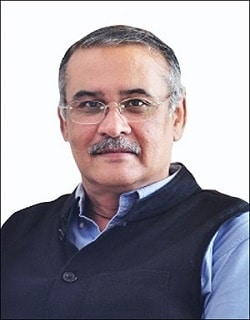
Speaking on the partnership Mr. Manish Kumar, MD & CEO, NSDC said, “There is an urgent need for quality trainers and assessors across different sectors in India. To fulfill this requirement, we are happy to collaborate with Singapore Polytechnic and Temasek Foundation International. This will help us develop best in class framework for vocational training and quality assurance in India and will further help in scaling-up various initiatives under Skill India mission.”
The above engagement is in line with the larger collaboration between India and Singapore on skill development.
National Skill Development Corporation, under the aegis of Ministry of Skill Development & Entrepreneurship, is one of its kind public-private-partnership which aims to catalyze creation of quality vocational training in India across different sector.
Through its innovative, influential and industry relevant education, S P Jain School of Global Management is nurturing professional global leaders of tomorrow, says Dr Tarun Pasricha, Dean-Undergraduate, SP Jain School of Global Management Mumbai Campus, in conversation with Elets News Network (ENN).
What are the innovations introduced by the SP Jain Global University to improve the teaching-learning processes?
Dr Tarun Pasricha, Dean-Undergraduate, SP Jain School of Global Management Mumbai Campus
Personalised learning, a global curriculum, an international tri-city immersion experience, a technology-driven classroom environment and the deployment of cutting-edge pedagogy are adopted by the SP Jain School of Global Management to maximise student learning.
With the placement of students becoming a yardstick to evaluate a university’s status, what are the achievements of university in this regard? How significant innovation is to your university?
Our BBA programme guarantees a 2 year student work visa in Australia and our students find placement with some of the most well-known companies in the world – Bloomberg, KPMG, Citibank to name a few. A majority of our students get placed within 3 months of graduating. In terms of regions, about 35% get placed in Australia, followed by India (25%), Dubai (15%) and Singapore (10%).
Almost every other university enjoying the fruits of collaborations, what initiatives have been taken by the SP Jain Global University on this front?
We have exchange programs with many other international schools and send our students there on a regular basis. In exchange we also accept students at our school from these institutions. The incoming students contribute to diversity in our classrooms and the outgoing students get exposure to different teaching environments across the world. Some of the international school we collaborate with include ESADE (Spain), IESEG-Lille (France), Schulich (Canada) & Linnaeus (Sweden).
What steps have been taken by the university to ensure the finest faculty delivering in this fast developing world?
Some of the world’s best faculty are drawn by us from leading institutions in the world. We ensure that our faculty have rich corporate experience in addition to academic qualifications so that they can impart knowledge in a meaningful and practical way. Both our adjunct faculty and fulltime faculty consistently get high student feedback scores.
What measures have been undertaken for research-based learning by the university?
Our faculties consistently publish high-quality research papers in peer-reviewed journals and bring this knowledge to the classroom. In addition, there are a large number of projects undertaken by students which require not only secondary research (library, internet) but also primary research (survey, interviews).
The scope and use of data analytics is not only a global phenomenon, but as it is turning out, India is being considered as a big market for data analytical skills sets, says Anthony Kilili, Head, Dunnhumby India & Global Head of Customer Engagement Science, in conversation with Elets News Network (ENN).
What are the new ways to analyse data? What about the future technologies to process data faster?
Anthony Kilili, Head, Dunnhumby India & Global Head of Customer Engagement Science,
As a data science platform, dunnhumby is at the forefront of using retail data to understand the customer. We then apply this understanding towards implementing ‘Customer First’ solutions and provide unmatched shopping experiences through activations such as 1:1 personalised marketing activities both online and offline.
To achieve this, we process huge volumes of data at a rapid pace. With cheaper storage and faster computer processing, the amounts of data accumulated continue to grow through increased social connectedness and internet of things, among others. Given the vast variations in structure and velocity of the data, technologies have emerged to help scientists build the tools needed to navigate these waters. There is an increase in open-source systems which result in faster adoption of new methods and cloud-computing as well as distributed-computing which provide a lot more flexibility in how data is consumed.
In addition, we have seen drastic changes in consumer behaviors such as higher expectations regarding convenience and great shopping experiences. This means that businesses need to use sophisticated algorithms and methods to accurately determine and predict customer needs. We use artificial intelligence methods to drive these solutions. Through machine learning techniques, our algorithms can automatically and rapidly adapt to changes in behavior and data.
What is the difference between a data analyst and a data scientist? How their career distinguishes and upcoming trends in respective careers?
Data scientist is not a glorified term for data analyst. There are clear differences between the two. A data scientist uses sophisticated analytical techniques to mine large amounts of structured and unstructured data to identify useful nuggets. To do this, they are skilled in data wrangling, programming, advanced statistics, complex algorithms and visualisation. They also have a strong academic curiosity and use these skills to predict future behaviors using data from disparate sources.
Data analysts will typically not require strong programming or predictive analytical skills. They work with structured data and packaged software to derive insights based on hypotheses. Typically, the data analyst does not build complex models using machine learning or advanced programming. They also create reports using various business intelligence tools such as MicroStrategy.
There is a projected global shortage of data scientists. India has, over the years prepared, well through a strong focus on science and technology. The country is well-poised to continue in its leadership position in the supply of talent around the world. Within India, there has been a rapid growth of startups seeking skilled data scientists hence the market provides a variety of choices for candidates from well-established organizations to startups and Data Science Research Hubs serving multiple clients.
Can a data analyst be turned into a data scientist? How?
Many business analysts can be trained into data scientists. A strong business analyst already has good domain knowledge and brings an understanding of the ‘why’ of the project. To grow into a data scientist, two other skillsets are essential. One is a strong programming acumen, which allows the scientist to manipulate structured and unstructured data using a variety of languages. The other is an understanding of advanced analytical algorithms appropriate for solving specific problems. Many analysts can quickly learn these and become data scientists but they need to have strong motivations due to the steep learning curve involved.
What are the career opportunities in retail analytics?
Until a few years back, the analytics market in India was primarily being driven by a handful of specialized analytics firms, that too predominantly in the BFSI space. But, the situation is very different now- we’ve seen a flurry of start-ups in this space, increasing amounts of companies setting up internal analytics wings across industries, separate from IT and Consulting firms, also getting into this space.
India is already among top 10 big data analytics markets in the world. Indian executives are upbeat about using analytics in leveraging it for decision making, not just for understanding what’s happened in the past but also forecasting for the future.
Organisations are increasingly realising that unless they infuse analytics within the functions in a significant way they cannot drive decisions and respond to the changing dynamics across industries. There are reports that over the next two years, a lot more organisations plan to invest $10 million or more for data and analytics resources.
The current market status of Digital Marketing shows that the industry is at its peak and is here to stay for the obvious reasons, observes Kunal Choudhary, Founder, Delhi School of Internet Marketing, for Elets News Network (ENN).
A basic for digital development and commitment has risen; active internet users in India as of January 2018 are 462 million; amid the deliberate time period the country had 250 million active social media users. There are 3.49 billion internet users around the world.
Kunal Choudhary, Founder, Delhi School of Internet Marketing
As of 2017, India ranks second in a top of countries with most internet users and China on first. There are several details & certainties to confirm that we are experiencing a daily reality where ‘everything’ is digitised’. Truly, we have acknowledged how quick the change has happened and how transformational it has become.
Why, because digitisation drives for the simplest means of communication. And, as its capabilities extend, essentially every part of life is caught and put away in some digital form, we move closer towards the organised interconnection of everyday objects. This has marked marketing too. Marketing and technology are all intertwined and the presence of the social digital technologies has brought digital natives. They are skilled to use these and are our consumers. So, brands and companies dependably need them.
Brands of all sizes have understood that they should be additional cautious in maintaining a watchful eye on their interest group and this is the reason they say, “We have digitised.” Yes, they have moved from paper to digital info and from manual to digital processes. Now, they believe in creating a broader and wider market appeal for their products/services.
At this moment, the legacy of newspapers, radio and television still hold enough influence to be significant yet the variety of brand new digital avenues such as Facebook, Buzzfeed, Quora, Twitter, etc. inside the realms of SEO and paid search and more has become important too. The changed consumer-brand approach has offered a profligate importance to digital marketing management and so, to it as a career.
Future of digital Marketing
Worldwide digital landscapes keep on evolving in shocking ways. World internet usage and population statistics have seen 1,052% of growth in 2000-2018. The number of internet users in India is expected to reach 500 million by June 2018. Why am I sharing the details? To understand the surprising & interesting growth of tech savvy internet users in India, it has extraordinarily expanded the scope of digital marketing in India and the future is looking great.
Digital is now pervasive in all marketing strategies and there would be seen a continuous shift from a one-to-many approach, to one-to-one tactics.
With more than 1.5 lakh jobs being created in India due to digital marketing, there couldn’t be a better time to become a digital marketing professional. The zones of center for brands now are Social media marketing, Search engine optimisation, Content marketing via blogs, Email campaigns, Landing page optimisation, Search engine marketing, etc.
With companies adopting online marketing, individuals need learning of the components of digital marketing and what it takes to become a digital marketer. India has a major future in digital marketing and you as an individual should ensure that you gain by this opportunity.
Career growth in Digital Marketing
India’s internet uprising is a perfect platform for online brands. The digital marketing looks hopeful and brands need to get overwhelmed with tasks like SEO, content ideation, social media strategy, email marketing, website design, and more. They can’t invest quality time on understanding top, middle and bottom funnel objectives and draw in audience. Brands need digital marketers to come to their rescue.
With India going digital, there arrives every single possibility to light up a digital marketer’s career in coming years. Bigger budgets, increased pay and more career choices are just some of the benefits digital marketing professionals are looking forward to have in the year and beyond. In fact, digital marketing is one of only a handful couple of industries where you can climb up the job ladder quickly. Let’s look at how Digital Marketing as a whole can be a good career opportunity and how the academic course takes care of it.
In this budding industry, the major segments one could dwell in are- Organic Search Optimisation, Paid Search & Display Marketing, Social Media Marketing & Management, Email & Newsletter Marketing, Digital Analytics and Tracking, Content Marketing, Direct Email Marketing, etc. And, there is an ocean of learning and growth consequent to each of these.
An aspirant can work as an SEO, SMO, Email marketer, Affiliate Marketing professional, PPC Expert, Blogger/Content Writer, Digital Marketing Manager, etc. They have many choices. They can do job as a professional or can begin as an entrepreneur. They can earn through freelancing projects or make additional income through Google AdSense, Affiliate Marketing.
A fresher can procure up to 15K-20K every month in a mid-level to a large company. If it’s a start-up, the starting salary might be slightly lesser from 20K per month. And, once you get certified, this gives you the power to negotiate and get a salary of 20-25K per month. With 2-4 years of experience, salary varies from 40-50K per month. 5+ years of experience makes you qualified for earning somewhere between 10-15 lakhs.
Seeing digital marketing institutes mushrooming everywhere make sure you are arriving up at a good place; choose an established name to avail the certification. How does a digital marketer’s salary grow; it relies upon the nature of experience and the companies you have worked for. It’s recommended to get a professional certification in digital marketing. Once certified and with the correct abilities for the job, you may get up to 40% hike with little negotiation on your current pay.
How does the academic course take care of it?
Learning digital marketing course strongly helps you to shine in your career. Moreover, courses also make certain trainees to become master in several practices starting from the usage of internet to mobile application, SEO, visuals, Search Engine Advertising, etc.
When ready to undergo the preferred digital marketing courses, consider some points to go-through. Choose course that helps you stand unique and brave in the stream. It’s all about seeking for the course that fits in your requisites and enhances you in developing contemporary advertising ideas.
There are institutes like Delhi School of Internet Marketing, Simpli Learn, NIIT, Manipal Global Education Services, etc. offering professional digital marketing training. DSIM offers Masters in Digital Marketing Training Program- a combination of 4 different courses in one and it delivers 36 modules and 15 certifications. It’s also worth mentioning that DSIM’s course is suited for both beginners & professionals. Simpli Learn offers digital marketing course with quality training in SEO, Social Media Marketing, and PPC with practical advice; NIIT offers Professional Diploma in Digital Marketing; etc. there are heaps of courses available, chose wisely!
Independent of which field of marketing, industry or academic background you’re from, digital marketing is available to everyone and with certification courses, one can sharpen the essentials. It is the time you add the most important skill- digital marketing to fasten your career growth. You could either take up a full-time job as a digital marketer or freelance opportunities as a part-time consultant. (Views expressed above are author’s personal)
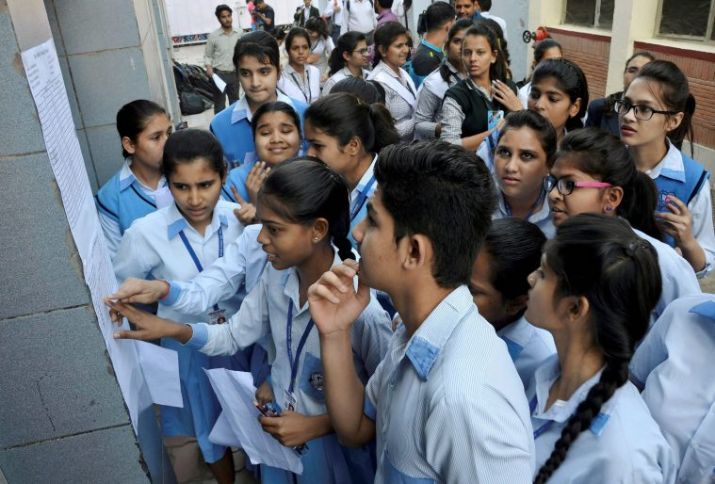
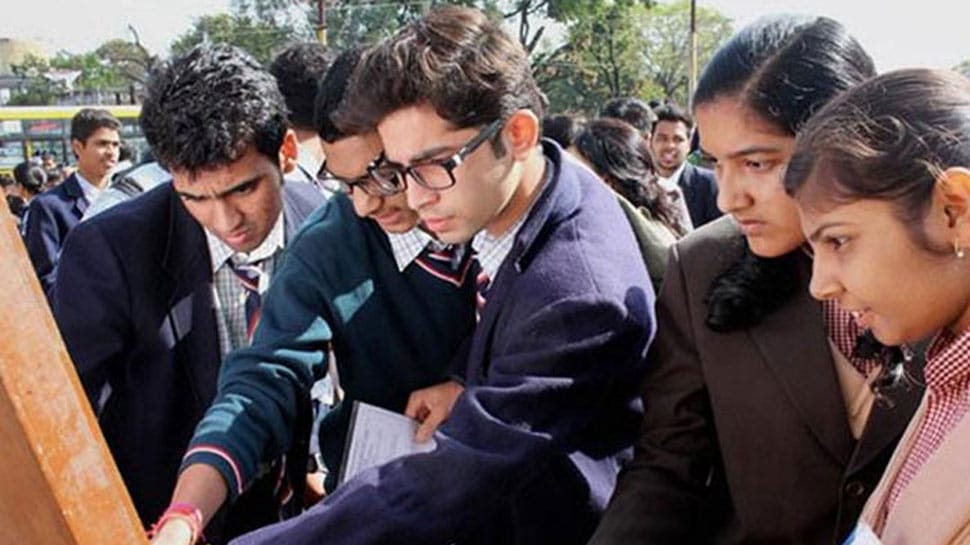
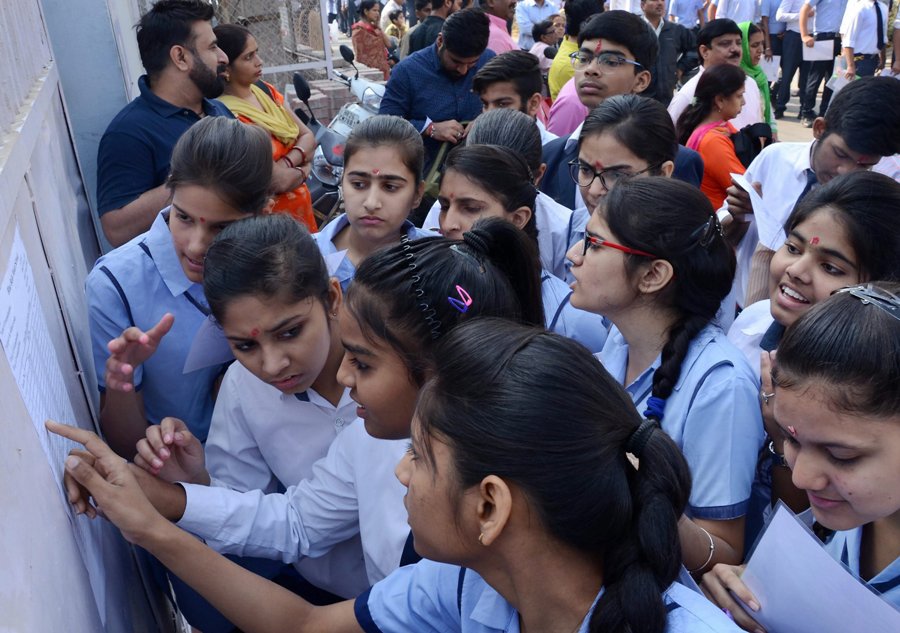
The Central Board of Secondary Education (CBSE) announced the results for class 10 board exams 2018 today on its official website. The overall pass percentage in CBSE class 10 board result is 86.70 per cent this year whereas the same for Delhi region is 78.62 per cent.
Other than the official website of CBSE, candidates may get the result on the websites: results.nic.in and www.cbseresults.nic.in. Students may check their results on the direct link given below.
Click Here to check the CBSE class 10 Board Result
Secondary Examinations or Class 10 board exams were successfully conducted by the Board for the session year 2017-18 in the month of Feb-March. Students will be needed to follow the steps given below to get their CBSE Board Class 10 Result 2018
Step 1: Click on the official website cbse.nic.in
Step 2: Search for CBSE 10 Result 2018 or CBSE Result 2018 Section
Step 3: Click on CBSE 10 Board Exam result 2018 or CBSE Result 2018 for Class 120
Step 4: Enter your admit card details
Step 5: Download your CBSE Result 2018 for future reference
CBSE Class 10 Result 2018 can also be accessed through the following modes:
IVR: CBSE Class 10 Result 2018 can be accessed via an IVR system that gives you your results via a call. The charges for the same are 30 paisa per minute per roll number
SMS: Students can access their results via SMS charged at 50 paise per SMS
DigiLocker: The account details are sent via SMS to the student’s registered mobile number. You will get your mark sheets for CBSE Board Results 2018 in your locker
Official School Websites: Some schools also post the CBSE Board Results 2018 on their website and you can access your results there.
Central Board of Secondary Education (CBSE) is all set to announce the class 10 Board results tomorrow. The result is scheduled to be declared at 4 pm bringing an end to the long wait of over 16 lakh students appeared in the exams.
All the students appeared for the CBSE class 10th Board exam must keep their admit card in hend to check the results. The admit card will be required to log in to the result portal. Along with online options, offline options are also available for students to check their results.
This year, the CBSE has brought in two new options for checking the result through partnership with Google and Microsoft to bring in two new additional options. For the first time, over 16 lakh students will be able to check their results on the search page of the Google at www.google.com. They need not to go to the result page. As seen during the class 12 results, the result page in the Google search page will remain active for more than an hour.
Microsoft has introduced SMS Organizer app to help students check the results offline. To check their results through this app, students will be required to pre-register their details and the results will be delivered to them in the form of SMS.
The CBSE class 10th board result will be available at www.cbse.nic.in, www.cbseresults.nic.in, www.results.nic.in.
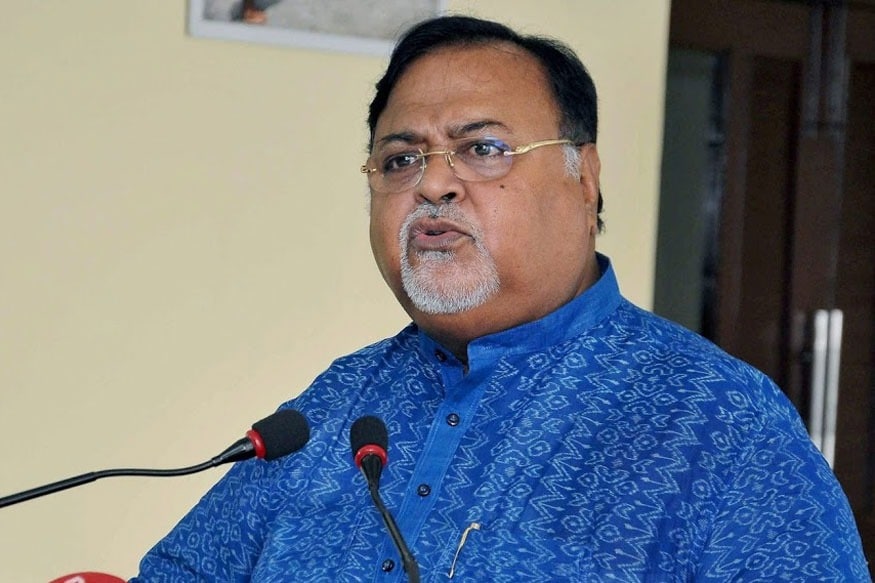
Four new universities are going to set up in West Bengal soon, said State’s Higher Education Minister Partha Chatterjee.
While addressing the convocation at Kazi Nazrul University, Chatterjee said that the new varsities will be set up in Alipurduar, Jalpaiguri, East Midnapore and Jhargram. The minister also said that during the seven years of Trinamool Congress rule, 22 new higher educational institutions have come up in West Bengal.
To fulfill the State Government’s objective of bringing higher educationto more people, Chatterjee said that the State will set up two-three colleges and one university in each district.
At the convocation earlier today, the Kazi Nazrul University conferred a D Litt (honoris causa) on Bangladesh Prime Minister Sheikh Hasina.
“It is a matter of pride to confer the honour on Hasinaji from a state university named after Kazi Nazrul Islam on his birth anniversary,” Chatterjee said. “Our government has worked to make Churulia, the birth place of Kazi Nazrul, a place befitting his stature as a poet of the Bengalis, and restored it,” he added.
The minister added that more students from Bangladesh will be enrolled in the higher educational institutions for future studies.
Higher Education Institutes are now allowed to offer online Certificate, Diploma and Degree Programmes in the disciplines which they are offering at graduation level in regular mode (of classroom teaching) or in Open and Distance Learning mode.
UGC (Online Courses) Regulations, 2018 has been approved in a recent meeting of University Grants Commission (UGC) officials. Under the Regulation, Higher Educational Institutions can now offer online programmes for the courses approved by the statutory councils and in which at least one batch has been graduated, stated a statement from Ministry of Human Resource Development (MHRD).
In a recent notification by UGC, it was clarified that the Degrees, Diplomas or Certificates awarded for programmes conducted by Open and Distance Learning(ODL) institutions, recognised by the commission, should be treated as corresponding degrees of regular institutions.
According to the UGC (Online Courses) Regulations, 2018, online Programmes requiring Practical/ Laboratory Courses as a curricular requirement shall not be permitted.
“The Examinations shall be conducted in proctored mode and in conformity with any norms for such examinations stipulated by the commission,” said the statement from HRD.
According the regulation, the content of online courses shall have minimum four quadrants: video lectures, e- content, self-assessment and discussion forum to clarify doubts.
To offer online courses, it is mandatory for the Higher Educational Institutions to exist for at least five years and to be accredited by the National Assessment and Accreditation Council (NAAC) with a valid minimum score of 3.26 on a 4-point scale. In addition to that the institute should also be among the top 100 in overall category in the National Institutional Ranking Framework (NIRF) for at least two years in the previous three years.
However, NAAC and NIRF conditions shall not be applicable to existing government Open Universities till NAAC or similar accreditation system or NIRF are made available.
“Overall Regulations provide enabling provisions for maintaining sanctity of admissions, teaching-learning, examination, authenticity of the learner and mandatory disclosure of Programme-wise information such as duration, start & end dates, fee, number of students, name of students with identifier, results, on HEI website/public domain,” said the statement.Aadhaar and Passport shall be used to authenticate the Indian and foreign students respectively for all online interactions including teaching-learning and examinations.
CBSE class 12th Board result 2018 has shown an increase of 1 per cent in overall pass percentage than that of the last year.
In 2017, 10,76,761 students registered for the 12th board exam of Central Board of Secondary Education (CBSE) of which 10,20,762 candidates appeared in it. Out Of the candidates appeared in the exam, approximately 82 per cent i.e. 8,37,229 candidates passed the examination.
In 2018, out of 11,84,386 registered candidates, 11,06,772 appeared in the exam and 9,18,763 have passed in it which is a little more than 83 per cent.
In the CBSE class 12th board result 2018 announced today, Meghana Srivastava- an Arts student from Noida, Uttar Pradesh, has topped the exam with 499 marks out of 500.
The top region in overall pass percentage is Trivendrum with 97.32 per cent followed by Chennai with 93.87 per cent and Delhi with 89 per cent.
Delhi as a region has also seen increase in the pass percentage as in 2017, the same was 88.37 per cent.
In 2017, number of schools participated in the board exams were 10,673 whereas in 2018, 11,510 schools participated in these exams.