Home Blog Page 640

MVGU — Nurturing Globally Competitive Citizens

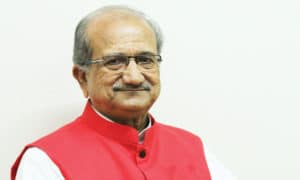
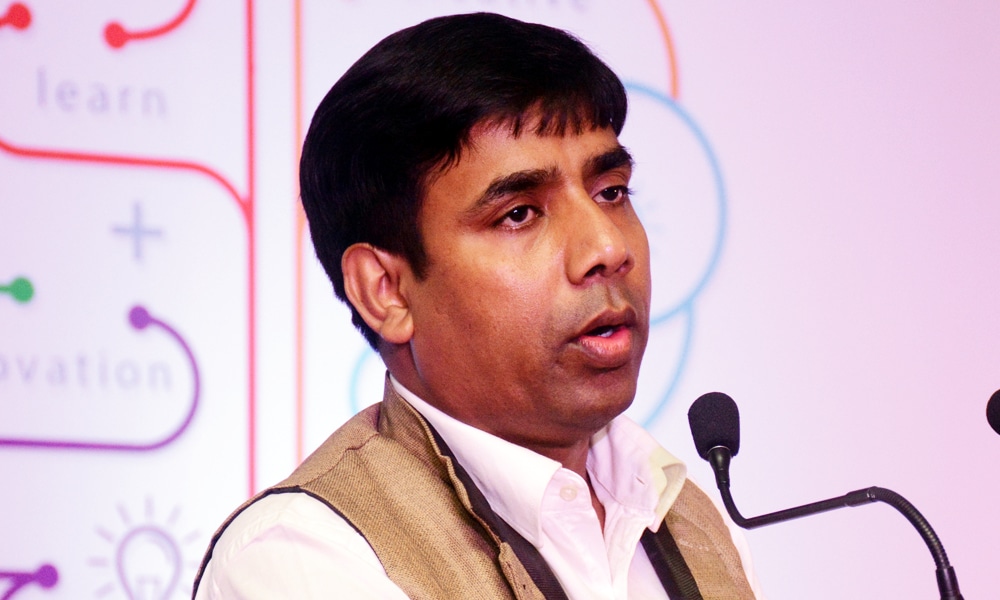
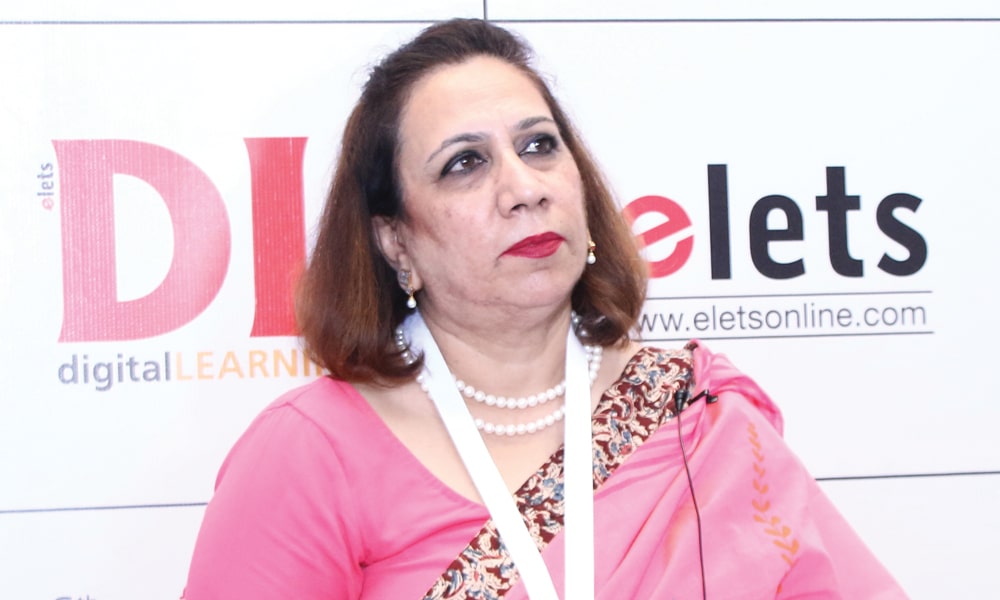
Our students are provided with academic tools, practical skills, and real world opportunities necessary to advance as leaders in their professions and their communities, says K L Mina, Founder Chairperson, Maharaj Vinayak Global University (MVGU) in conversation with Elets News Nework (ENN).

What is the vision of Maharaj Vinayak Global University?

K L MinaMaharaj Vinayak Global University has pioneered private technical, medical and higher education institutions in Rajasthan. We, at MVGU, offer the best platform to absorb knowledge from all sources and enable our students to access endless opportunities available in the global market. We are committed to instil leadership and offer internationalised curricula in all the core medical and technical courses to shape the future of our students.

Your university has been consistent in academic excellence, what has been the secret? Share us about your journey. 

Maharaj Vinayak Society was the first institute which got an no-objection certificate from the government to open Jaipur Dental College, the first dental college in the State. We started offering our courses initially under Rajasthan University. Later, we were affiliated to University of Medical & Health Sciences. We have established the first private Nursing, Physiotherapy and Occupational Therapy colleges in Rajasthan. The Jaipur Dental College has been awarded as the best dental college of North India for four consecutive years.

What kind of infrastructure, resource and technology related facilities are made available to the students to boost learning capabilities? 

Our courses are primarily in medical and allied sciences. These courses demand sophisticated and high end equipments and we have ensured the availability of every such equipment in Dental, Biotechnology, Pharmacy, and Physiotherapy stream. We have outsourced the equipments from Germany and Canada also.

For placement of our students from every course we bring in teams from USA, Canada, and Australia to groom our students for the international job market.

What are the distinct courses offered by your university? As far as career prospect is concerned, do you offer any value additions in the learning process to offer best exposure to your students and increase their domain knowledge? 

Jaipur Nursing College is the first nursing college that offers B Sc degree and caters to the growing demand of allied medical services. Jaipur Physiotherapy and Occupational therapy colleges are the first ever in the state to offer these kinds of studies. These colleges not only ensured the quality higher but also offered training as per latest industry to the students of Rajasthan.

How do the courses at Maharaj Vinayak Global University make its students ready for the employment market? 

Be it dental, nursing, pharmacy, physiotherapy, occupational therapy, law etc, all these subjects offers attractive career prospects in government, public and private sector. These courses are highly promising from self employment point of view. In addition, students are encouraged to organise and participate in seminars and conferences.

IECS – On a Mission to Build New Tomorrow

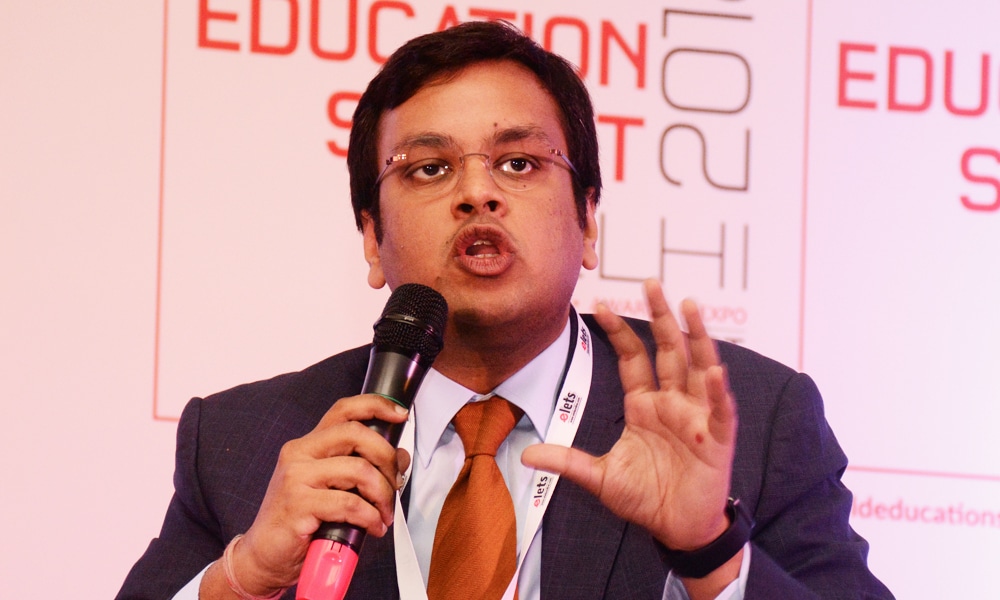
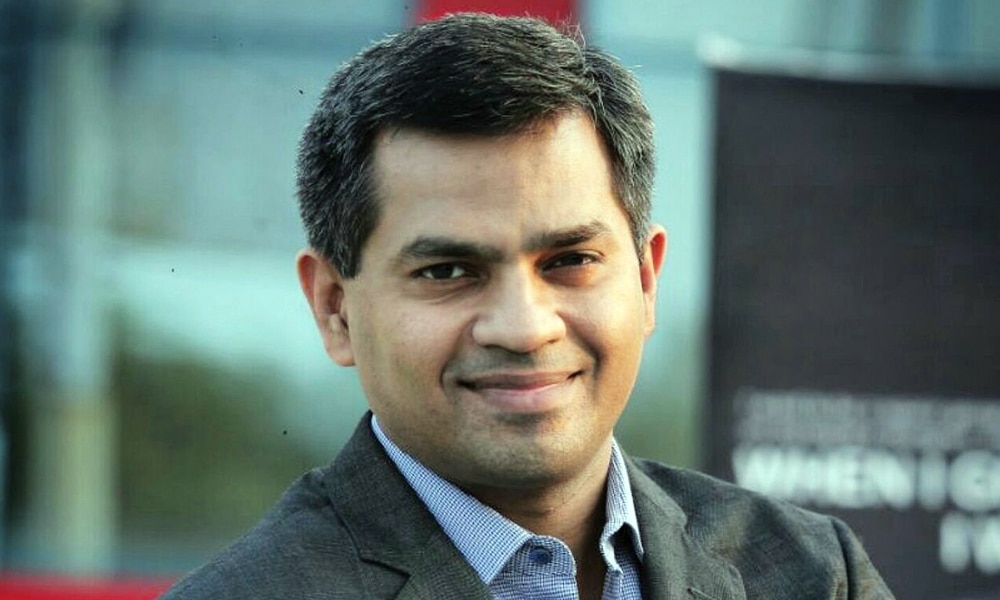
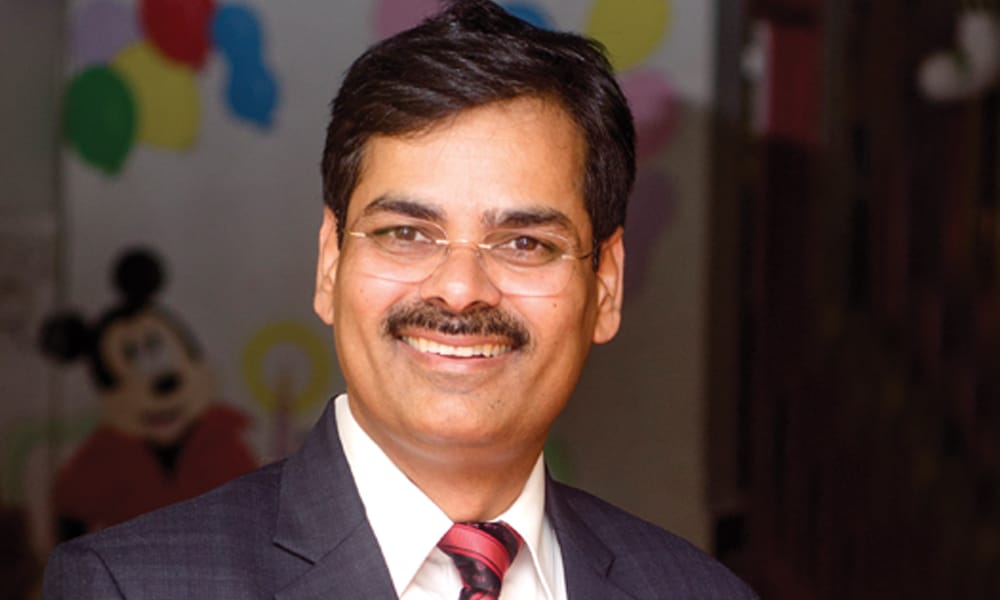
Our vision is to be the best solution provider in education segment and to deliver best global practices to the society, says Manish Mansharamani, Director, International Electronics & Communication Systems Pvt Ltd, in conversation with Elets News Netework (ENN).

What was your vision behind establishing the IECS? 

Manish Mansharamani, Director, International Electronics & Communication Systems Pvt Ltd

Established in 1991, International Electronics & Communication System Pvt. Ltd (IECS) as an ISO:9001:2008 is now a leading solution provider in the field of education. With great pride we share that IECS has successfully implemented over 5,000 interactive classes in pan-India.

IECS is driven by a single corporate principle – Customer-oriented approach. We work closely with our clients, right from the concept to completion and that’s the basis of the long-term relationship with our clients – a strong partnership built on trust, integrity and commitment. Our vision is to be the best solution provider in education segment and become most innovative, reliable, effective, sustainable and relationship-based company.

Education is one of the most promising segments in India but still we are lagging far behind globally, what needs to be done to improve education scenario?
The mindset needs to be changed at decision-making level. Indian brains are superior in the world, we have been only deprived off infrastructure and facilities. Given these basics in current scenario where technology is available we can be number one and competing in the world at any level.

We should have schemes and schools that provide good education to children living in villages. Also, it should be assured that good and experienced teachers are there to impart education to children.

“Education segment is growing segment in India. We will invest more on technology upgradation and will bring latest innovative products for education field for all level.”
Also, focus on teachers training, our country has already got many training programmes for teachers. Educating parents is equally important so that they do not force their children for careers which do not actually interest them. Implementing Smart Classes though many of the educational institutes are already following this concept, but we should take a step where all educational institutes can be connected with the concept of smart classes. With the help of different audio-video devices, multimedia concepts and other necessary IT elements, we can make our students learn and understand in a much better and modern way.

What do you think of the impact of technology on education? How technology can help in improving educational scenario in rural areas? 

Technology has a very positive impact on education. Teachers and students should take advantage of this in good light and eliminate the drawbacks which are pulling back many of students as well as educational institutes from achieving. Students are able to learn on a global scale without ever leaving their classrooms. Technology can enhance literacy development, provide greater access to information, support learning, motivate students, and enhance their self-esteem.

The education system of today demands changes of meet the local and global needs. It is strongly felt that the kind of education a student receives must ensure to be an investment for the future. In a world increasingly dependent on technology whether it is at home or institution students and teachers must be fluent in technology. Digitisation in education has transformed the learning as well as teaching methodologies to a great extent.

We all know how helpful it is to remember something that is taught visually to us rather than the one that is read through pages. Just imagine, how beneficial would it be for students to understand a chapter visually in class. The concept of smart class education is indeed a blessing to the students of the 21st century.

Shridhar University Offering Skill Oriented Courses

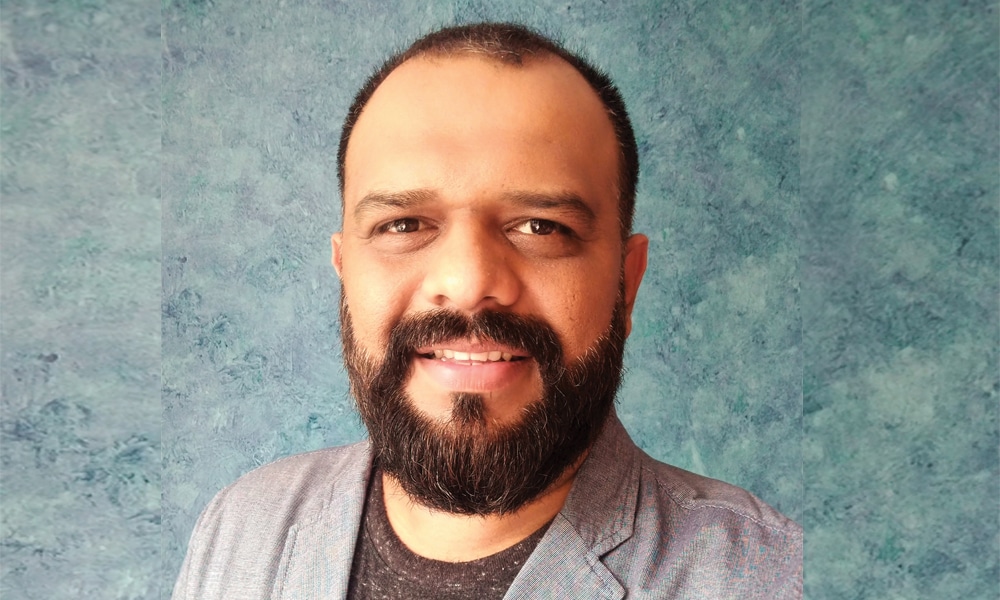
Majority of Shridhar University students come from rural area and they look up for employment rather than startup. Since most of our students want job oriented training, we are laying emphasis on that aspect, says Brig Kartar Singh (Retd), Vice-Chancellor of Shridhar University, in conversation with Elets News Network (ENN).

What interventions the Shridhar University is taking for ‘skilling’ and enhancing ‘employability’ of the students? 

Brig Kartar Singh (Retd), Vice-Chancellor of Shridhar University

It is a well-established fact that employment today is directly proportional to knowledge, skill and attitude popularly known as KSA. While a student is put through the prescribed “knowledge” capsule through the prescribed syllabus, he is not given any particular skills as formal input. We, at Shridhar University, conduct “Skill” capsule to include:

  • Soft Skill including communication skills
  • Social Skills
  • General knowledge and environmental skills

As far as “attitude” is concerned it is developed through actual conduct and formal lectures by senior specialists and psychologists.

What are the initiatives Shridhar University has undertaken in the Student Startup domain? 

Majority of our students come from rural area and they look up for employment rather than startup. However, we do realise that as a higher educational institute we should look into this aspect. As we are finding that most of our students want job-oriented training we are laying emphasis on that aspect presently. In case, the need arises, we will
take initiatives towards Startup.

Many countries have started introducing Artificial Intelligence(AI), Coding etc. in the curriculum.
What initiatives is the Shridhar University undertaking to make students competent with the
emerging technological trend? 

Shridhar University is a technology and livelihood-oriented university. As far as technology is concerned we are having collaboration with Computer Aided Designs (CAD) as also we teach cloud computing techniques. However, we have not yet reached the state of AI, and virtual reality level. We do cater for practical, livelihood related and daily useable technology needs as part of our teaching. We teach web designing, CAD and software programmers related to daily and domestic use.

Shridhar University is a technology and livelihood-oriented university. As far as technology is concerned, we are having collaboration with CAD and also teach cloud computing techniques.

Internship plays a vital role in enhancing the employability of students. Highlight the initiatives of Shridhar University has undertaken to facilitate internship for students to provide them hands-on experience within a corporate working environment?
This is our strongest core strength. We conduct internship with industry for a full semester. These internships are conducted with popular names which also help in giving us offer letter during the internship.

Types of Internships Conducted:

Agriculture Students: These students get a RAWE (Rural Agriculture Work Experience) with Krishi Vikas Kendra and rural agriculture based companies in our own States. They see the students working for full semester (nearly six months). Depending upon their performance they give offer letter. Our first B.Sc (Agriculture) has got 100 per cent
employment.

Diploma Courses: Our Diploma and post-Diploma courses do a PDPT Training with Government and semi-Government coal fields and during this training they are offered job based on three-month training with the company. Our Diploma – Mining students find nearly 100 percent employment in the coal industry immediately after passing out.

Hotel Management Courses: We do internship, pre-placement training and finally placement training with UEI Global an international brand in hospitality management. Majority of our students find job as per their capability and choice with the help of internship training.

Preparing Industry-ready Student via Internship

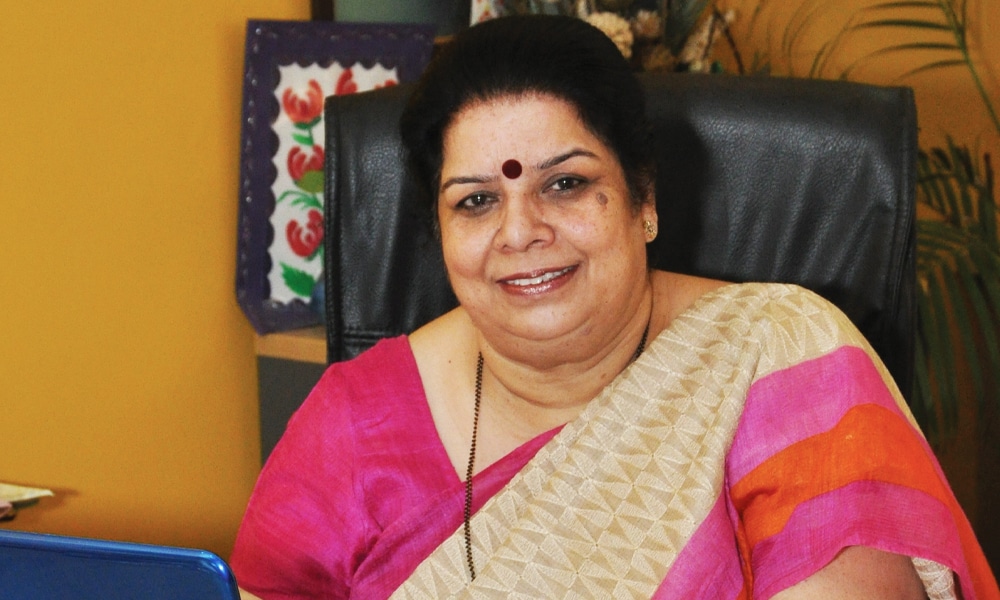
Sandip University, Nashik (SUN) is trying to be a creator of world-class educational service provider thereby to transform the potential human resource of the nation, says Col Prof N Ramachandran, Vice-Chancellor, Sandip University, Nashik, in a conversation with Dipen Pradhan of Elets News Network (ENN).

Sandip University, Nashik (SUN) has recently signed a MoU with AICTE-ECI to facilitate Internship programme for the students. Tell us how the university plans to take it forward?

Col Prof N Ramachandran, Vice-Chancellor, Sandip University, Nashik

AICTE-ECI approach of signing a MoU with the universities across India to facilitate advancement of engineering,  management and pharmacy profession in various programmes and for enhancing the style and image of building engineers, managers and pharmacist etc, is a boon to the nation-building exercise on Human Resource
Development. The move is historical in nature which will bring a rich dividend in near future.

Sandip University, Nashik, a non-affiliating private university functioning in the State of Maharashtra, which is continuously improving its infrastructure – will be used to hone the knowledge and skills of our students. We follow
outcome-based education in teaching-learning process. We emphasise on knowledge, skills and attitude for all the courses taught. For every course, teacher sets her/his objectives in an achievable form. Hence, preaching and practicing are carried out together to achieve the objectives in the form of measurable outcomes.

This MoU will facilitate every student in their respective domain to acquire necessary skills in various industries/R&D organisations on a real-time basis. Minds-on and Hands-on will make them ready for Do-on by taking up their real-time challenges.

SUN and its regulations have made compulsory internship in 15, 21, and 45 days during the summer vacation after completing I, II and III year programmes assigned with 1, 2 and 3 credits respectively. Besides summer internship, regular industrial/field/project visits are also happening during the academic sessions. All our programmes are aimed to develop industry/society ready graduates.

What are the initiatives Sandip University has undertaken to foster Student Startup ecosystem in the affiliated colleges and university to enhance students’ innovation?

Sandip University, Nashik has a vision to mould our youngsters into Millennium leaders not only in technological and scientific fields, but also to nurture and strengthen the innate goodness and human nature in them and to equip them to face the future challenges in technological breakthroughs, information explosions and deliver the bounties of
frontier knowledge for the benefit of humanity in general, the downtrodden and the underprivileged in particular.

We are committed to practice the vision of the University. SUN is trying to be a creator of world class educational service provider thereby to transform the potential human resource of the nation. Curricula have been designed to imbibe research – bent in every course. The system is developed in such a way that every student could think and work independently, resulting ideas leading to a product/process etc. Co-curricular activities are focused towards social, economical, political orientation – thus encouraging students either by individual/groups to take up such life-oriented problems.

“NEETI will reduce lots of redoing exercise of many, but before implementation, MHRD should ensure every one’s interest is well addressed and protected.”

Nashik has a rich treasure of having Maharashtra Industrial Development Corporation (MIDC) in seven locations of Nashik District, covering Automobile, Energy, Electrical, Infrastructure and Infotech industries. This facilitates students/staff to work along with their minor/major problems, which really make the individual to realise their life goals. Another facility in Nashik, established by the Ministry of Commerce and Industry, is Nashik Engineering Cluster (NEC), which works for preparing Nashik Industries to face the global market by achieving global quality assurance standards. This facility is also open to youths to take up their startups in their premises at an affordable cost.

SUN has been collaborating with many MIDCs and NEC and Central Government’s R&D organisations to give exposure to its students/staff. These practices make students/staff to involve jointly on developments of practical/live issues, which leads to develop an ecosystem which I strongly believe that leads to many new and innovative ways to create incubation centres, new startups.

SUN, its campus has Innovation and Entrepreneurship Development Cell (IEDC) supported by the Department of Science and Technology, Government of India. This cell promotes and facilitates our students to become an
entrepreneur and also helping them in registering their intellectual property rights.

What strategies or methodologies have been adopted by the University to enhance students’ teaching-learning experience? 

SUN is creating various infrastructures to serve students of different backgrounds, abilities and other personal attributes through its effective Teaching-Learning Experiences (TLE). We follow the following strategies to enhance TLEs:

  • We have signed a MoU with Spoken Tutorial project carried out by IITB, Mumbai, to have many ICT interventions
  • All classrooms/seminar halls/theatres are made ICT enabled
  • Our teaching-learning system is more of student centric which enables everyone to practice participative learning, experimental learning and collaborative learning
  • Curriculum also encourages Activity Based Learning (ABL), Project Based Learning (PBL) and Research Based Learning (RBL)
  • Our Outcome Based Education (OBE) system encourages every student and staff to use ICT gadgets at every possible level to improvise the learning curve better

We are practicing Action plan 17-by-17, a digital initiative guided Minister for Human Resource Development Prakash Javadekar.

SUN and its regulations have made compulsory internship in 15 days, 21 days and 45 days during the summer vacation after completing I, II and III year programmes assigned with 1, 2 and 3 credits respectively. All our programmes are aimed to develop Industry-ready graduates.

The Ministry of Human Resource Development (MHRD) is planning a major reshuffle in India’s technical education through the implementation of the single National Entrance Examination for Technical Institutions (NEETI) from January 2018, which includes teacher training and annual revision  of curriculum, among others. How prepared is the University?

Change is inevitable, growth is optional; but we in SUN adopt changes as our policy – by adapting it in a way one can enjoy it. Following this dictum of change, we have initiated many changes in our curriculum-design, teaching-learning process, recruitment and retaining the talented teachers in our midst, evaluation process and reforms,
promotions and research facilities, resource mobilisation for research, publications and awards and innovation ecosystem, etc., thereby we are aligning with MHRD and implementation of such things that are happening in the Campus through our dedicated trained faculty and with the cooperation of diligent student community – thus
again guided and supported by our Trust namely “Sandip Foundation”.

In the 21st century, knowledge is the primary production resource instead of capital or labour. Efficient utilisation of this existing knowledge may create comprehensive wealth for the nation in the form of better education.

Proposing NEETI is a welcome move. At the same time, sufficient time and preparations to the aspiring students of Higher Secondary Education, parents and allied stakeholders are very important. NEETI will reduce lots of re-doing exercise of many, but before implementation, MHRD should ensure every one’s interest is well addressed and protected.

What message do you have for the technical graduates, who would soon embark on their career paths?

My message to the technical graduates and other students who are likely to exit from various Higher Educational Institutions are:

  • To exercise self-discipline and self-denial
  • To work on character and competence
  • To dedicate their talents and resources to noble purposes and to provide services to others and nation

Mewar University – Preparing Industry-Ready Students

The specifically formulated training/internship module offered in Mewar University is not only helping students in acquiring the required skill sets but also helping them to find their dream jobs, Dr Ashok Kumar Gadiya, Chairman, Mewar University, writes for Elets News Network (ENN).

Dr Ashok Kumar Gadiya, Chairman, Mewar University

We, at Mewar University, believe that education is a powerful means to transform a society, which itself is changing rapidly in ways that will profoundly impact the role of universities in the 21st century. Significant changes have been noticed in higher education, including innovations in curricular design, pedagogy and examinations reforms. However, there is a dire need of bridging the gap between Industry and Academia to be aligned. As a university, we will have to understand the industry’s ever changing requirements and have to develop industry-oriented  curriculum, which can nurture the students accordingly.

Our goal has been to create highly skilled professionals for the top echelons of both public and private sector enterprises who are also equally dedicated to the cause of our nation’s socio-economic growth. Our students from diverse socioeconomic backgrounds continue to receive rigorous training to further their technical, managerial and leadership capabilities.

Mewar University offering industry-specific courses:

Mewar UniversityThe University offer courses on the job training with practical exposure as an in-built feature of the curriculum. Skill development of the students is an integral part. Focusing on the same, University has devised its course curriculum in such a way that attending a short term training in a reputed Govt/Semi Govt institutes like Indo-German Tool Rooms (IGTR ), Advance training Institute (ATI ), Central Tool Room (CTI ) National Academy of Construction
(NAC) and many such other organizations is mandatory for all the students, which later is followed by a six months internship during the last semester of the course.

The goal has been to create highly skilled professionals for top echelons of public and private sector enterprises.

This specifically formulated Training/Internship module is not only helping the students in acquiring the required skill sets but is also helping them in their search for getting their dream jobs. For this, university boasts a full-fledged Training and Placement cell which looks into the execution of training /internship and placement programmes.

As a outcome of these initiatives today the university is proud to have its students working in most admired organization like Infosys, Accenture, Hitachi, Ceat, Caparo, Philips, Mahindra, Mitsubishi, Citibank, IBM, HDFC, ICICI etc., to name few.

It is less than ten years of being into existence but the milestones achieved during these years reflect the untiring efforts of the management, due to which students from 29 states of the country have chosen Mewar University for their higher studies.

Standing to its commitment of producing dynamic leaders in all the fields, who will make a difference with their knowledge and skills. Mewar University has pledged to offer Best Teaching, Best Training, Best Counselling, Best Placement, Best Research to all its students.

Shaping Up Youth’s Future Through Skill Training

The Government of Jharkhand is targetting to ensure 20 lakh youth are skilled through its various training programmes. Not only different government departments but the corporate are also contributing to initiatives of the State Government, says Ajoy Kumar Singh, Secretary, Higher, Technical Education and Skill Development, Government of Jharkhand in an  interview with Gopi Krishna Arora of Elets News Network (ENN).

What is the mandate of your department for skill development of youth of Jharkhand?

We have got a mandate to skill 20 lakh people in next five years i.e. by 2022. In order to achieve that mandate, the government has also time and again reiterated that all the budgetary allocations were made to the Jharkhand Skill Development Mission Society (JSDMS) and different departments.

Now, this mandate is not only for the society but the entire target has to be achieved by JSDMS along with other departments like urban development department, rural development department, and health and welfare department. out of this 20 lakh, 12 lakh will be trained by JSDMS whereas training of rest will be done by the aforementioned departments. In order to achieve that, the department has initiated various training programmes one of which is Saksham Jharkhand Kaushal Vikas Yojana (SJKVY), started in December 2016.

Another scheme is Mega Skill Centre also known as Deen Dayal upadhyaya Kaushal Kendra and we have to establish one such training centre in each of the districts of the State. Recently, we have established 14 Mega Skill Centres across the state. Third one is Employability Excellence with College Education and Learning (EXCEL) programme in association with Tata Institute of Social Sciences. The programme is for the students pursuing graduation, passed their 10+2 but don’t want to pursue higher studies and for the students who have graduated but are unemployed due to lack of skills. So broadly speaking, these are the three main programmes for the skill development of youth in Jharkhand.

Which departments are involved in imparting skill training in Jharkhand? Throw some light on their role in brief.

Apart from JSDMS, urban development department is a major department involved in skill development of Jharkhand’s youth. urban development department is executing Deen Dayal upadhyaya Grameen Kaushalya Yojana. Rural development department is another major department contributing to the skill development mission of the State. The third department is the ITIs, a major contributor to the skill development programme. These three are the major departments.

There are other departments like Industry Department, Health Department and the Agriculture Department that are contributing to the skill development programme.

What are the features, vision and mission of the Skill Development Policy of Jharkhand to the State as the “Skill Destination of India”?

The first and foremost reason that we are taking is to develop the State as skill hub of India and for this purpose we want to have a world class skill development centre in the State. We have signed a Mou with Institute of Technical Education (ITE) Singapore and they will be establishing a Brownfield project and a Greenfield project in Ranchi that will be the apex institutes for the skill development in the State. Chief Minister of Jharkhand has also announced to establish a Skill university in the State by next year. So these two will be the apex level institutions to guide skill development programmes and will act as the certifying agency. other than this, at mid-level there will be Mega Skill Centres. These will be the big centers with the capacity to train around 2,000-3,000 people.

We want to establish more such Mega Skill centres in Jharkhand to provide residential training so that anybody from any part of the State can pursue skill training. We have also increased the duration of the training programme. Initially, the duration was 300 to 400 hours but now the training is of 500 to 600 hours. We have also added soft skills as a component in the training programme so that youth of Jharkhand do not lack in these skills. Around 150 hours of soft skill training is provided in these programmes.

We have received positive feedback on Mega Skilling Centres, so now we want to increase the number of these centers by 40 or 50. These centres provide training to lots of people that’s why the centres will play a major role in achieving the target of skilling 20 lakh people by 2022.

Thirdly as we have talked about Saksham Jharkhand Kaushal Vikas Centres which are the smaller centres established blocks or villages to provide easy access of skill development training programmes to citizens.

So in order to achieve our vision, it will be our way. Moreover, we are also linking the training programmes to jobs and we have also introduced a component of on job training.

We are trying to link higher and technical education with the skills development programme. We want to provide skill development training programme through our educational institutions in association with TISS and ILFS. We are also setting up Centre of Excellence and Skill Development Institutes in association with Siemens. one such centre five such institutes are already being established.

How “HUNAR” as a platform is benefitting the citizens and government of Jharkhand in skill development training and fulfilling the requirement of skilled labour?

The youth population in the State is fairly large as 1.08 crore people are between the age of 18 to 35. This is a perception all over India that skill programme is not job oriented, means the youth are not getting jobs, they are only getting training. In order to break that psychology, we are going to organise Skill Summit 2018. During the summit, we will give offer letters to 25,000 youth.

We received very good response for skill training and trained students from colleges and polytechnic are also participating in different placement melas. All over the State, we are having placement drive from the 1st November. Many of which are conducted and around 14,000 students are placed through these drives.

HUNAR brings employer and student on common platform. Employers and students can register online and may participate in interviews. After clearing the interview, the students will get the offer letter immediately.

How is the response for this HUNAR platform?

Excellent, especially for the campus drive we have undertaken. College principals are very enthusiastic and entire scenario is going to change because of this.

Industry engagement will act as a catalyst to create placementled training initiatives for skill aspirants of Jharkhand. How the Government is planning to partner with business communities and employers in this regard?

Industries are also involved in setting up the Mega Skilling Centres. These centres are either established with the help of industries or they have tie up with different centres e.g. one CMC Center has been set up in association with Hiranandani Group. A motor vehicle training centre has tie up with Mahindra. At the centre, Mahindra will be providing all the equipments The benefit of industry sponsored training centres is that the trained students are either recruited by the organisation itself or by any other organisation of the same industry. Another training centre in Madhupur has tie up with the health services. These training centres were set up in such a way that theyhave industry tie up from their inception.

“We have got a mandate to skill 20 lakh people in next five years i.e. by 2022. In order to achieve that mandate, the government has also time and again reiterated that all the budgetary allocations were made to the Jharkhand Skill Development Mission Society (JSDMS) and different departments.”

What initiatives are being taken for the skill training of economically weaker section and minority community of the society?

All our programmes are as per the norms of Government of India. We are also providing uniforms to the candidates coming tour training centres. We have opened 14 placement centres and regular placement drives are conducted at these training centres throughout the year. We are also giving daily incentives of Rs 200 to every candidate appearing in these placement drives.

There are many cases of skilled students who don’t want to go outside their native State for jobs. What steps are taken to overcome this?

We have faced similar kind of problem in our placement drives. So, to resolve the issue, Chief Minister of Jharkhand addressed the industries and business houses of Jharkhand on December 22 to employ citizens of Jharkhand. We have signed Mous with companies for establishing the industries within the State and train youth of the State and prepare them as industry ready resource. It will help such candidates who don’t want to go outside the State in getting the local jobs We are also trying to train the people in such a way that they get better salaries outside their native States. It is useless to send the skilled youth outside the State on the salary they are getting locally. Level – 3 trained candidates are getting a salary of Rs 8,000 to 10,000; Level – 4 are getting Rs 11,000 to 15,000 and level – 5 are getting Rs 15,000 to 20,000. We are training the candidates in level – 3 and Level – 4. From next year our strategy will be to train people at level – 4 and more people to level – 5 to get a respectable livelihood. In order to achieve the same we have increased the course durations and at the same time we are encouraging to get enrolled for level – 5 training. It will also help the candidates to go outside the state willingly.

20 lakh is the target JSDMS is going to achieve by 2022 but what are the targets for 2019? What message you would like give to youth of Jharkhand?

Government is ready to provide skill training to youth as per their requirement and choice. At the same time, the Government is also trying to provide jobs to at least 70% people. 20 lakh is a big target but we are trying to develop the infrastructure in such a way that the target can be achieved easily in a phased manner. In just one year we achieved our previous target and through the summit we are going to celebrate it as the youth day by providing 25,000 certificates. This will change the public’s perception towards the skill training programme and will also boost us to achieve the targets.

Jharkhand: Building Foundation of Development with skilled Work Force

With a vision to prepare a sea of skilled manpower, the Government of Jharkhand is operating various skill development schemes through various departments in the State, says Jharkhand’s Minister for School & Literacy Department, Higher and Technical Education and Skill Development Dr Neera Yadav in conversation with Gopi Krishna Arora of Elets News Network (ENN).

Prime Minister Narendra Modi said the Higher education should trigger the spirit of innovation and entrepreneurship, ensuring students’ employability. What role does your department play in skilling and providing jobs to the youth under Jharkhand Skill Mission?

Dr Neera YadavMinister for School & Literacy Department, Higher and Technical Education and Skill Development, Government of Jharkhand
Dr Neera Yadav, Minister for School and Literacy Department, Higher and Technical Education and Skill Development, Government of Jharkhand

The outline of the Entrepreneurship and Innovation building programme is proposed to be a two-step approach. First, it should be boosting the ease of doing business for the existing enterprises in the State. Second, it should provide requisite training and skill base for generating new entrepreneurs who can absorb the skilled youth as well
as contribute to the economy of the state by boosting the secondary and tertiary sector. The proposed measures to promote/improve entrepreneurship and innovation includes creating pathways for curriculum changes in schools and colleges, connecting entrepreneurs to peers, mentors, incubators which can support aspirant entrepreneurs in sector identification, enterprise planning, credit linkages, market linkages, operational support etc.

How is the State Government promoting school, higher and technical education in Jharkhand and linking it with skill development mission? What are the policies in place and new initiatives undertaken in this regard?

The Jharkhand Skill Development Mission Society has been incorporated under the Societies Act under Department of Higher, Technical Education and Skill Development to promote quality skill development initiative in the State and develop a healthy and sustainable skill ecosystem. More than 30,000 youths have been trained and placed till now through various Skill Development training programmes. The major skilling programmes are:

  1. SJKVY – Saksham Jharkhand Kaushal Vikas Yojana
  2. DDU-KK – Deen Dayal Upadhyay Kaushal Kendra
  3. EXCEL – Employability Excellence with College Education and Learning
  4. COE – Centre of Excellence

Department of Higher, Technical Education and Skill Development has partnered with Siemens in setting up technical skilling centres “Centre of Excellence” at BIT Sindri and “Technical Skill Development Institutes” in five Government polytechnics. An ambitious programme named EXCEL (Employability Excellence with College Education; Learning) has also been launched in colleges making youth technically sound and industry ready leading to successful employment.

Jharkhand is emerging as the Skill Destination of India. The Government of India is also emphasing on Skill India Mission, how is the State implementing this mission and making youth skilled?

The Government of Jharkhand has an ambitious target of skilling 20 lakh youths in next five years which includes 12 lakh by the Department of Higher, Technical Education and Skill Development and remaining 8 lakhs by other departments. The Mission is leveraging upon its various Skill Development programs like SJKvY (Saksham Jharkhand Kaushal vikas Yojana), DDU-KK (Deen Dayal Upadhyay Kaushal Kendra), EXCEL (Employability Excellencewith College Education Learning) and CoE (Centre of Excellence) to achieve its target. The Mission is aggressively working towards establishing large size Skill Development Centres with high training capacity under DDU-KK programme also known as Mega Skill Centres covering all 24 districts.

How is the State government ensuring skill training in Jharkhand serves global standards as well? Tell us about the recent initiatives of the department.

Chief Minister of Jharkhand Raghubar Das has visited the Institute of Technical Education (ITE), Singapore, and signed a MoU there to develop a skill development centre in the State. The centre will provide class training facilities to create better employment opportunities in the State. our various schemes are helping students to get the jobs in foreign countries like United Arab Emirates (UAE).

Tell us about the special budget allocated for skill development mission in the State and how government is planning to increase this in next year? 

The government has established Jharkhand Skill Development Mission Society and Mega Skill Training Centres along with increase in budget for skill training of the youth. The current budget allocated for Skill Development in the State is Rs 700 crore which is expected to be increased to Rs 1,000 crore next year. To boost the skill training in the State, the government has tried to remove all the financial and administrative hurdles.

What message you would like to give to the youth of Jharkhand and for the Skill Summit 2018?

The message for the Jharkhand youth under this Skill Summit event is “Jharkhand Government is committed towards skilling youths and making them self-reliant and employable which would enable them earn a respectful living”.

Neev Finance – Lending Support for Educational Needs

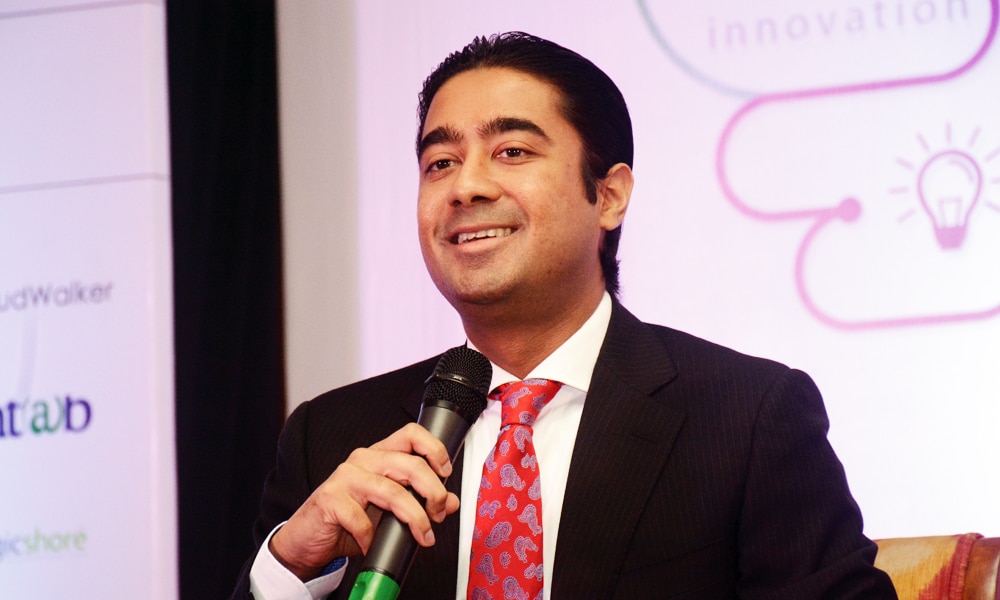
Neev Finance intends to be the most preferred education finance lender in the country having presence in 50+ cities catering to at least 30,000+Intuitions in next five years, says Rishi Kedia Co-founder and CEO, Neev Finance, in an interview with Elets News Network (ENN).

What is the scope for a Non Banking Finance Company (NBFC) like Neev in the education sector of the country?

Rishi Kedia, Co-founder and CEO, Neev Finance

The Indian education market is over $140 billion market. It is extremely untapped as far as financing is concerned. Not even 1% of the market is currently being serviced by banks or NBFCs.

Financing is required for each and every aspect of education right from Preschool courses to Post Graduate programmes. Skill development and vocational training is another area which is again untapped as far as financial assistance is concerned. Once a proper ecosystem is developed around education financing, it can certainly be a multi-billion dollar opportunity.

What mechanism has been devised by Neev to help parents in paying the education fees for pre-schools, schools, colleges, tuition centres and other academic centres?

Neev has collaborated with 300+ educational institutions wherein students studying at these institutes are being financed by Neev. We convert the entire year cost of education into monthly EMIs which creates a convenience and affordability among the parents to ensure that the finance does not become a problem for these parents.

To provide financial assistance to parents has the company tied up with the schools, colleges and other institutions? Please shed some light on your clients.

 As on date we are tied up with more than 300 + Educations Institutions. Few of them are Mount Litera Zee School  – Chain of Schools, Delhi Public School – Chain of Schools, Orchids The International School – Chain of Schools, Gowtham Model School – Chain of Schools, Edify School – Chain of Schools, ITM University, Raisoni University, Seacom University and many more.

It is a new concept. What challenges are being faced and how are those challenges handled by the organisation?

 Yes, it’s being a new concept, the initial days were really challenging. Making School owners convince about the model was really a difficult job. While they were extremely happy with the Model, they were initially skeptical about Neev execution capabilities. However, once we showed our performance in one Academic Year cycle, there has been no looking back since then. Now most of our new tie ups are reference based or Inbound .

As far as convincing parents for availing the loan, the same has not been a difficult task since a big pain point of parents that we are solving.

What is your vision and mission for the future?

We want to be the most preferred Education finance lender in the country with presence in 50+ cities catering to at least 30,000+Intuitions in next five years. We want to touch upon every aspect of education i.e from Pre KG to PG. Academic to Skill development.

Not the Fear to Lose Jobs, But the Desire to Learn New Skills Will Drive Automation

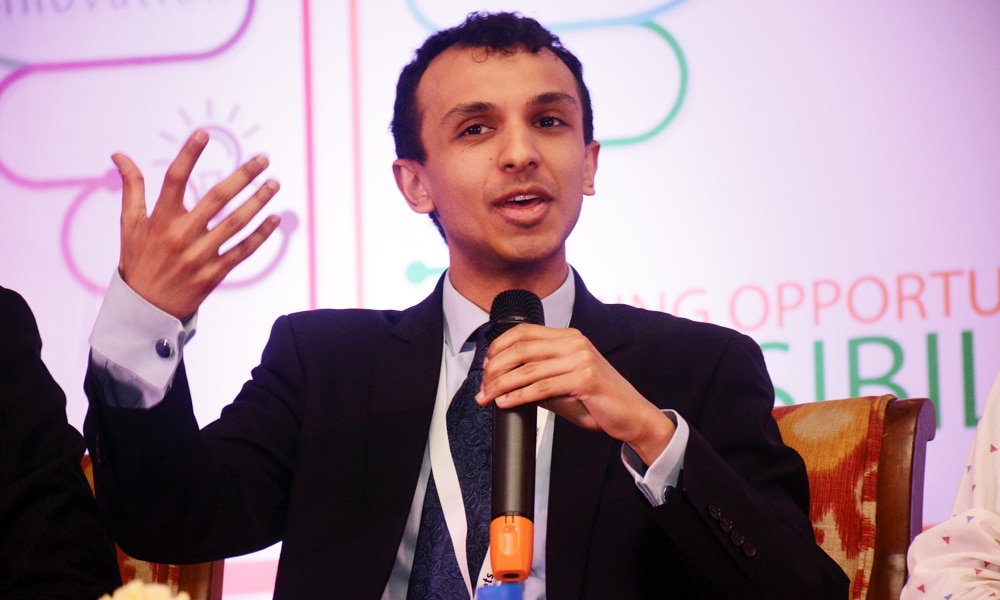
Nowadays, there is buzz about jobs crunch due to automation in various industries. Sameer Bora, Executive Vice President, Next Education India Pvt Ltd, observes the scenario and tries to find out the solutions for youth to handle any such situation.

Sameer Bora, Executive Vice President, Next Education India Pvt Ltd

Reports have predicted that 50% of the present jobs will be lost to automation, and to stay relevant at their workplaces, employees will have to upskill themselves. While the bit about upskilling is true, the panic about automation replacing human labour might be misplaced and hyped. First, we need to note that while technology is replacing old jobs, it is also creating new ones. Second, the need for skilling has always existed in all sectors of employment. Previously, the core responsibilities of an employee would change after a 20-year period. This period has now been reduced to 10 years. This length of time will be reduced further to 5-6 years in the near future. Thus, the process of unlearning and relearning needs to happen at a faster pace now.

Automation of jobs – what is it?

The advent of artificial intelligence (AI) has brought forth technological innovation in all aspects of life. Once computers are programmed and large sets of data are fed into them, the machines learn on their own how to perform a designated task. The machines even improve over time as they build upon their own learning to be more intelligent. The need to explicitly program them also disappears, as they learn how to function independently. The automation of jobs involves the use of machines and robots, or technology in short, to monitor and control the production and the delivery of products and services. This definitely helps in completing a task faster, and perhaps more accurately too. Another important aspect of automation that is worth mentioning here is that automation does not really replace jobs. 20-25% of a particular task is automated, but human intervention is still needed to complete the entire process.

Implications of this technological disruption

The report titled “Skilling for Digital Relevance”, published by the National Association of Software and Services Companies (NASSCOM) last year, informs us that as long as the growth in the output is higher than the “rate of reduction of jobs due to automation, net employment will continue to grow.” Therefore, the panic is uncalled for. However, the importance of workforce reskilling cannot be overstated, as the jobs that are being created and the ones that are being lost to automation are of different kinds. For instance, there would be no need to process orders manually anymore, but what about the insights that I get from the huge chunk of data being generated with automation? This creates a need for an analyst, who would be able to analyse the data, figure out the regions in which the orders are fluctuating, and devise strategies to have better outcomes. This kind of a role is going to be imperative in businesses.

How to tackle the changes

The report correctly points out that “the IT sector is not only driving these changes, but is itself impacted by it.” In fact, this is true for all sectors—health, infrastructure, education, and so on—that will be impacted by the automation of jobs and is not limited to the IT sector. The Human Resource (HR) department might face a couple of challenges, such as the realigning of the workforce. Every workplace needs to have a performance appraisal of employees at regular intervals to keep them updated about their progress and mitigate gaps, if any.

Also, the employees need to understand that they have to combine the knowledge pertaining to their domain with technology skills to succeed at a workplace. For this, the employees need to upskill themselves. However, the way skilling is perceived is often erroneous. Skilling does not mean becoming faster at work. Nobody can be as fast as a machine, and the comparison is neither desirable nor relevant. Skilling is not about improving efficiency, but about acquiring a new skill set. As mentioned previously, it is about making a professional journey from one role to another. For instance, a person formerly working as an order processor can work as an analyst by upskilling.

Rethinking workforce upgradation

The hype about automation replacing human labour has led to a lot of misconceptions. First, it is important to clarify that employees themselves can understand the need to upskill themselves, and skilling is not a top-down decision. Recently, an employee approached and asked me to automate a process to reduce the workload and shared his experience in acquiring new skills by taking online tutorial classes. Thus, the desire to learn is stronger and can lead to the automation process. This actually contradicts the popular perception that the fear of losing jobs is forcing people to take up upskilling.

People might be scared of a future where robots handle communications, conduct legal research and manage customers in a pizza place. It is erroneously perceived that robots will take over human labour completely, and only a few humans with extraordinary capabilities will stand a chance to compete with automation. However, an in-depth analysis of history and economy informs us that if growth in the economy is observed, old jobs may be lost, but new jobs will be created to meet the increase in demand. For example, 21 million jobs are lost in the US every year due to tech, and the business changes to create 23 million new jobs. Therefore, the fear in the job market is a little unfounded.

In fact, it might be empowering to imagine a future where a robot carries out the duties of a present manual scavenger. It is important to bring forth automation in jobs, such as mining, where the life of humans is at risk.

Jharkhand: Skilling Youth Enabling Growth

Jharkhand is among the fastest growing economies in India, characterised by a young demography. 57 per cent of the State’s population belongs to age group of 15-59 year. Around 70 per cent of the population is below 35 years. The growing demand of skilled workforce in various industries is compelling the youth to have relevant skill training during their studies. It is necessary to develop skills of Jharkhand’s youth to make them employable. At the same time, it is necessary for the government to have a dynamic approach that evolves according to the students’ age and qualification.

To utilise and engage the existing unemployed population in the workforce through relevant skill training, the Jharkhand Government has launched various initiatives and schemes. The government is focussing on various aspects as the State is blessed with huge natural resources such as minerals, forests, horticulture, water resources etc. Value addition to these resources in the form of skilled workforce is expected to enable the State to develop fast. Jharkhand can be classified into eight major zones based on raw material deposits and industrialisation:

MAJOR INDUSTRIAL REGIONS JHARKHAND

Source: Jharkhand Industrial and Investment Promotion Policy, 2016

1 Palamu-Garhwa 2 lohardaGa industrial area/ latehar 3 ranchi industrial area
Mineral Deposit
Deposits of Iron Ore, Dolomite, Coal, Graphite, China Clay & Granite
Major Industries
Mineral and chemical based industries
Mineral Deposit
Bauxite
major industries
Aluminium Industries, Power Plants
Mineral Deposit

major industries
Medium and Large Scale Industries, IT-ITES, Food Processing

DHANBAD – BOKARO INDUSTRIAL AREA GHATSILA INDUSTRIAL AREA SINGHBHUM INDUSTRIAL AREA
Mineral Deposit
Coal, Fire Clay, Silver
Major Industries
Coal and Steel, Refractories, Coal based Power Plants
Mineral Deposit
Copper
major industries
Copper and Forest based Industries
Mineral Deposit
Iron Ore, Dolomite, Kyanite, Lime Stone, Manganese, Uranium, Copper, Quartzite, Kaolin, Fire Clay
DEOGHAR- JASIDIH & SANTHAL PARGANA KODERMA HAZARIBAGH INDUSTRIAL AREA MAJOR INDUSTRIES
Mineral Deposit
Deoghar – Jasidih & Santhal Pargana
Major Industries
Glass, Steel, Aromatic- Medicinal Plant, Coal based power plant, Silk textile industries, Food Processing
Mineral Deposit
Mica, Stone Chips, Coal, Fire – Clay, Lime Stone
major industries
Mica Based Industries, Power Plant, Glass, Alloy Steels, Cement, Refractory
Iron & Steel, Auto Components, Cement, IT-ITES, Horticulture, Food Processing, Silk and Textile

Based on the analysis of the employment generation potential of the sectors,

following are the districts and sectors Government is focussing on:

Potential sectors and districts oF jharKhand towards
Employment Generation

Source: Jharkhand Industrial and Investment Promotion Policy, 2016

Current top employment Future Generation of employment

DISTRICTS

Dhanbad

Ranchi

East Singhbhum

West Singhbhum

Bokaro

SECTORS

Apparels

IT-ITES

Auto

Retail

Tourism & Hospitality

Capital Goods

Focus districts

Dhanbad

Ranchi

East Singhbhum

West Singhbhum

Bokaro

Giridih

Hazaribagh

Palamu

SECTORS

Telecom

Security

BFSI

Beauty & Wellness

Electronics

Management

LATEST NEWS