


Home Blog Page 782

Smart Learning Centres in UAE to Train Educational Bodies

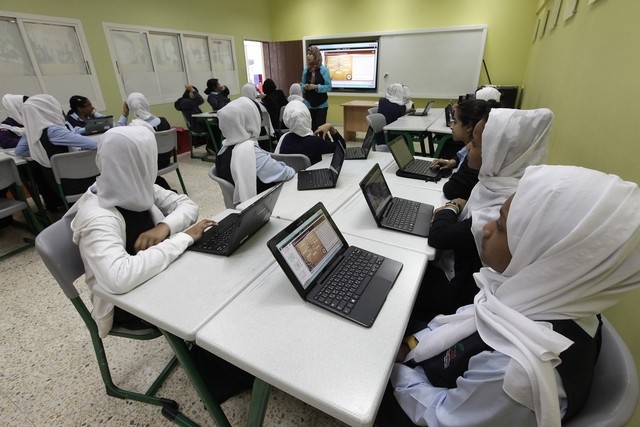
Smart Learning CentresA proposal to set up a Regional Smart Learning Centre in the UAE was revealed at the Smart Learning Forum in Dubai on December 14.

The three-day forum aims to provide a platform where knowledge and expertise in the field of smart and sustainable cities can be exchanged between countries.

Ebrahim Hadad, Director, Arab Regional Office, ITU, which is part of the United Nations system, said the centre aims to train and share experiences with educational bodies and individuals from Arab countries who want to adopt smart learning.

He added that the training will be based on the UAE’s experience and expertise in smart learning in partnership with the Mohammad Bin Rashid Smart Learning Programme.

Hadad said, “The centre aims to look at how UAE’s smart learning initiative can be transferred to other countries. However, affordability and accessibility is something to consider beforehand because not all the Arab countries have the required infrastructure or funds.”

During his keynote speech at the forum, Mohammad Al Gheyath, Director General of the programme, said that the smart learning programme has been implemented in 50 per cent of the UAE’s 423 public schools and will be implemented in all UAE public schools by 2018.

He said the UAE aims to be a front-runner in the smart education. To achieve this, it is implemented in a three-stage strategy: (i) Introducing the tools, (ii) Training the teachers and students on how to use these tools, and (iii) Ensuring continuity.

Al Gheyath briefed that this year, a total of 283 schools have been transformed to smart schools, which include 1,760 classes, 6,349 teachers and 34,513 students.

By 2018, all 423 schools will be transformed, this includes 7,606 classes, 12,320 teachers and 121,205 students, he added.

The forum was organised by the International Telecommunication Union (ITU), UAE Ministry of Education, Shaikh Mohammad Bin Rashid Smart Learning Programme, and the Arab League Educational Cultural and Scientific Organisation (ALESCO).

Yoga is in CBSE’s 24 Disciplines

Yoga in SchoolsTo promote Yoga among the youth and bring the talent to the fore, the CBSE Board has included Yoga as one of the 24 disciplines for competitions at National Level. The outstanding students are also felicitated with CBSE Chacha Nehru Sports Award annually.

To train a large number of youth in yoga and popularise it in various countries, Yoga is an integral part of CBSE’s Physical Education and Sports activities. Yoga is being taught in its affiliated schools under Physical Education Curriculum at Senior Secondary level in 17000 affiliated schools, spread across India.

Morarji Desai National Institute of Yoga & Naturopathy (MDNIY), New Delhi, an autonomous organisation under the Ministry of AYUSH conducts a number of Yoga education and training programmes to train the Yoga enthusiasts.

Last year in December, the Government of India and the United Nations General Assembly unanimously adopted June 21 as the International Day of Yoga (IDY). Consequently, efforts were made by the Government of India to celebrate the IDY across the world. As an outcome, millions of enthusiastic people participated in the events successfully organised in 192 member countries of the United Nations to celebrate IDY.

NIIT Technologies launches Shiksha to enable Employability Training

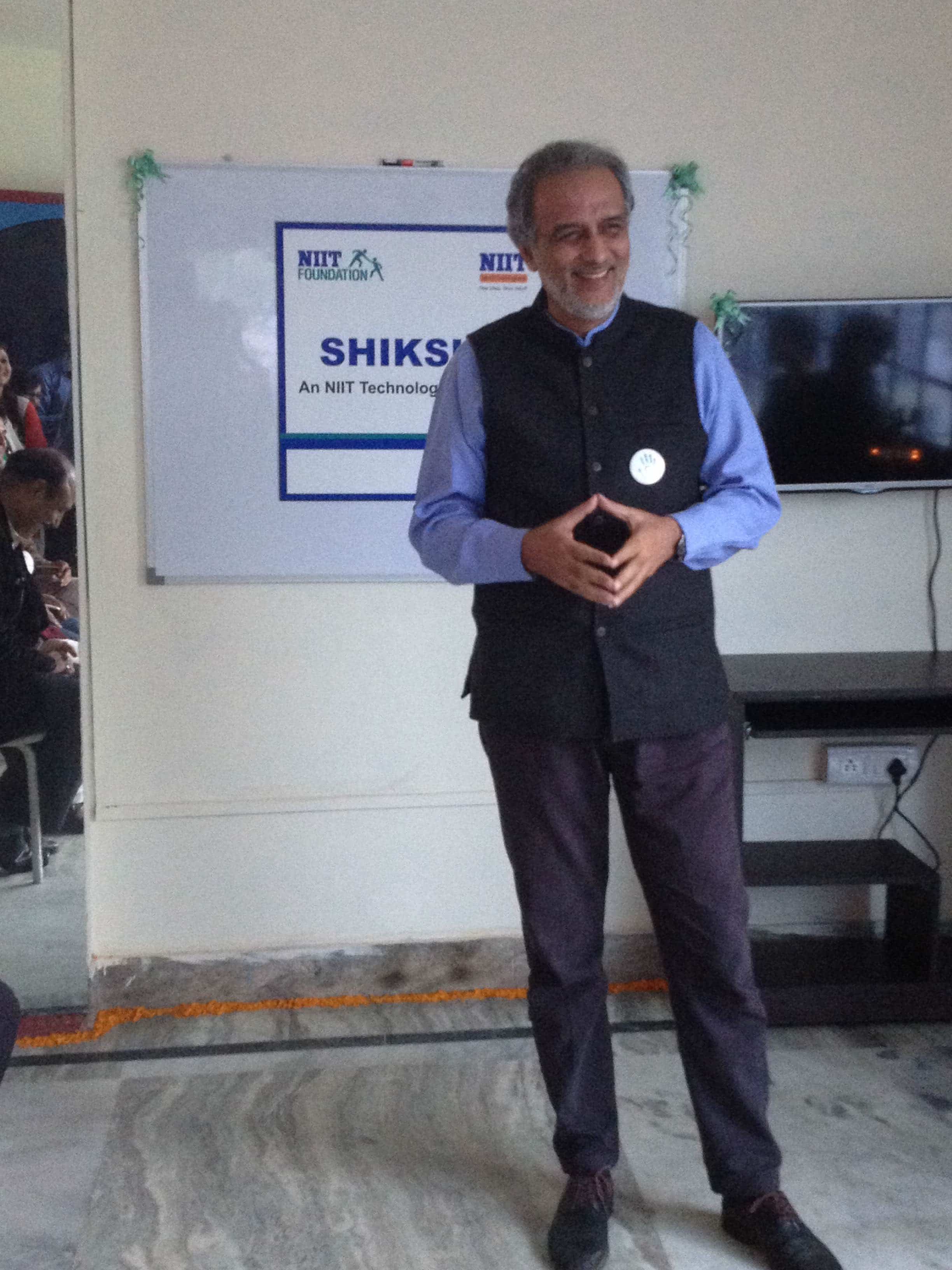
NIIT ShikshaNIIT Technologies has launched ‘Shiksha’ – a new CSR initiative in association with NIIT Foundation at Dankaur Village, Greater Noida. Aligned with company’s CSR objective, the initiative intends to impart education, employability training and digital literacy to youth of Dankaur and nearby villages. It will introduce courses like Basics of IT, Advanced IT, Social Networking and English Foundation. There will also be industry-specific courses related to Showroom Retail, Food & Beverages, Data Entry, and BPO.

Arvind Thakur, CEO, NIIT Technologies inaugurated the center and addressed the local community, Government officials and principals from nearby schools and colleges. He said that technology is an integral part of everybody’s life, thus, IT education is extremely important for all to be employable. He mentioned, with this initiative, a developed and educated India where men and women alike will be empowered and get equal opportunity in all spheres of life.

The launch also witnessed participation from the leadership team of NIIT Technologies and NIIT Foundation, media person and Head of the local community and colleges.

‘Education is Important for Nation Building’

General Dr. VK Singh speaking at the Education Leaders Summit organized by Educomp Foundation - CopyEducate all to contribute to nation building and that is the true purpose of education, said General Dr VK Singh, MoS (Independent Charge) for Statistics and Programme Implementation, MoS for External Affairs and MoS for Overseas Indian Affairs, at Education Leader’s Summit 2015 in New Delhi.

Emphasising on educating a child, he said, “A good education system develops the mind of a child towards progress, nationalism and social development. Children must be allowed to think, analyse, debate, react and come up with their own conclusion.”

He further added, “Change is a new constant and it is required for nation building. Students should be nourished with this thought process and teachers should adapt to such changes. The wholesome development of a child or a person is very important for nation building and progress. As a nation, we need to create educated and creative personalities.”

The two-day Education Leader’s Summit 2015, held on December 10-11, was organised by Educomp Foundation, the CSR division of Educomp Solutions Ltd, India’s largest education company to discuss and consolidate the best ideas in education delivery, content and pedagogy practices.

In his address, Shantanu Prakash, Trustee, Educomp Foundation said, “Being the largest education economy in the world, India has a shortage of financial capital that can cater to the large population having no access to education. There is not only a dearth of quality schools and institutes but also quality teachers. Nearly six lakh teachers position in schools are vacant in the country. Now we have to think where our nation stands in terms of giving and producing quality educators and students.”

He added, “Through this summit, we are looking forward to leading educators and best minds in the field to deliberate over these challenges and come up with solutions that begin to address some of these critical issues.”

Over two-days, a series of sessions were held and issues such as future trends in education; regulatory regimes and their impact; managing schools successfully; new pedagogical approaches to learning; the potential and the threat of the internet and other such key subjects that the industry is facing today, were explored and discussed by eminent personalities and domain experts.

In a largest ever event of its kind, over 300 school principals/leads, educators and domain experts from private sector, civil society and the Government, across the country were in attendance at the summit.

No Paper Admit Cards for Civil Services Main Exam

UPSC (1)No paper admit card will be issued for this year’s civil services main examination, the Union Public Service Commission (UPSC) has said. The candidates will have to download their e-admit cards and take a printout thereof.

UPSC will be conducting the main examination at 23 centres from December 18 to 23. The civil services examination is conducted annually in three stages – preliminary, main and interview – to select officers of the Indian Administrative Service (IAS), Indian Foreign Service (IFS) and Indian Police Service (IPS), among others.

“The Commission has uploaded the e-admit cards on its website at www.upsc.gov.in. The candidates are advised to download their e-admit cards and take a printout thereof. The candidates will have to produce the printout of their e-admit cards at the allotted venue for appearing in the examination,” according to a UPSC press release issued.

“No paper admit card will be issued for this examination by the Commission,” the release said. In case the photograph is not visible or available on the e-admit cards, candidates are advised to carry identical photograph for each session along with proof of identity such as valid identity card, Aadhar card, voter identity card, driving license, passport etc, to the venue of the examination.

About 15,000 candidates have qualified in this year’s civil services preliminary examination, results of which were declared on October 12.

As against a record number of 9,45,908 candidates who had applied for the exam, about 4.63 lakh wrote the test on August 23, which is about 49 per cent of the total applicants.

Ashoka University selects Juniper to provide Network Infrastructure

Ashoka UniversityAshoka University has selected Juniper Networks®, the industry leader in network innovation, to provide the network infrastructure to support its ambitious goal of growing tenfold in the next five years. The university, which is breaking the mold of higher education in India by aiming to be a world-class liberal arts college, is also setting a new benchmark with cutting-edge network technology to accelerate learning and strengthen collaboration.

The new, privately-endowed institution deployed a complete campus network infrastructure running on Juniper Networks Junos® operating system. The combination of Juniper’s switching, routing and security platforms, tightly integrated under the same management system, will greatly simplify the task of scaling the campus network over multiple phases as Ashoka University goes through its planned tenfold growth in students over the next five years.

Chandresh Kumar, Head – IT, Ashoka University said, “Our students can and should expect an interactive educational experience in the classrooms, in dorm rooms, from anywhere on-campus and eventually off-campus through our distance learning programme. Our network has, therefore, been designed from the outset to be capable of delivering high-definition video streams to hundreds and eventually thousands of computers and tablets. Juniper Networks is fully engaged in helping us realise our vision of delivering a world-class liberal arts education in India, with a high-performance network that will enable us to scale across new learning spaces.”

Amajit Gupta, Country Manager, India, Juniper Networks said, “The opening of Ashoka University represents a very exciting development in the field of tertiary education in India, and Juniper Networks is very proud to be a part of it. This is a showcase for the capabilities of our campus network architecture, delivering non-stop performance with end-to-end security that can be scaled to support the high-bandwidth demands of thousands of students and faculty, on and off-campus. I believe this project sets a new benchmark for university networking in India.”

Fanshawe College-NSDC sign MoU to Train 1 lakh Youth

Fanshawe College Canada..Fanshawe College, leading public community college of Canada, has announced an MoU with the National Skill Development Corporation (NSDC) for a partnership to train one lakh youth over the next 10 years. The tie-up, initiated during Prime Minister Narendra Modi’s visit to Canada early this year, was operationalised in New Delhi coinciding with the visit of Prof Peter J Devlin, President, Fanshawe College to India.

Fanshawe College, a leader in vocational training, will collaborate with NSDC to build training capacity in areas of automotive and apparels along with sectors like hospitality, construction and aviation.

With the MoU in place, Fanshawe’s role will include:

  • Developing expertise in areas of curriculum development, teaching and learning resources development;
  • Occupational standards;
  • Testing and certification;
  • Labour market information system;
  • Providing expertise in teacher training; and,
  • Setting up centers of excellence in developing and delivering these programmes.

In subsequent agreements facilitated by the NSDC, Fanshawe College has entered into an MoU with Badve Engineering, which is a large automotive product manufacturer based in Pune, India to collaborate in skill-development in Automotive/Manufacturing sector. Badve Engineering has a turnover of $300 millions with manufacturing units in Maharashtra, Rajasthan, Gujarat, Uttarakhand, Madhya Pradesh and Tamil Nadu. They will be rolling out training programmes at multiple locations based on Fanshawe’s curriculum and quality standards.

Initially, the area of focus will be Welding, Robotics and CNC Operator. This training (Welding) will start in February 2016 and it targets to skill 50,000 people over the next 10 years. Initially, the training will be delivered in Alwar (Rajasthan), Pune (Maharashtra) and Ahmedabad (Gujarat) but it will be then rolled out to several other locations, where Badve manufacturing is located.

Similarly, Fanshawe College also signed an MoU with Modelama Skills to create capacity in skills education in apparel and textile sectors. Modelama Skills Pvt Ltd runs vocational training centers as the implementing Agency for the Ministry of Textiles and other central and state governments. With more than 25 vocational training centers in place, and another 30 scheduled to start soon, the mandate is to skill 50000 people in India over the coming few years. The operations are expected to be spread over NCR, Rajasthan, Andhra Pradesh, Jammu & Kashmir, and North Eastern Region and the focus area is textiles, apparel and handicrafts etc.

This agreement will also focus on extending vocational education to Indian High Schools so that the Indian students can be skilled, while they are in grade 8 to grade 12. This training will align to NVEQF standards and will provide credits to students, who are looking to study in Canada in future.

Cabinet approves 6 new IITs

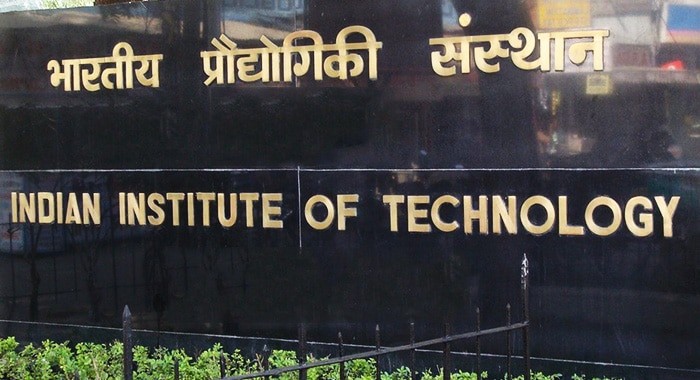
IITThe Union Cabinet, chaired by the Prime Minister Narendra Modi, has approved setting up of six new Indian Institutes of Technology (IITs) in Andhra Pradesh, Chhatisgarh, Goa, Jammu, Kerala and Karnataka. The Cabinet further gave its approval for operationalisation of these IITs initially by forming of Societies under the Societies Registration Act, 1860 in order to give a legal status to them till the amendment for their incorporation in The Institutes of Technology Act, 1961 is enacted.

Each new IIT will have an initial intake of 180 students in its first year from temporary/transit which would increase to 450 in the second year and to 928 (840 Undergraduates, 80 Postgraduates and 8 PhD) in the third year of their operation.

The total cost for running these IITs is Rs 1,411 crore and will be incurred between 2015-16 and 2018-19.

The new IITs will be operated from their temporary campuses for the initial period of three years before shifting into their permanent campuses in the fourth year. Each IIT will have a sanctioned strength of faculty members, with a faculty-student ratio of 1:10.

Technology: Panacea for Educational Fault Lines

Ravi Gupta

The recently held ruling of the Hon’ble Supreme Court to scrap quota in Higher Education Institutions in National Interest has created the much expected political furore and dilemma as to who shall bell the cat.



The twin challenges of access and quality have been the persistent fault lines of our education system which in the case of higher Education assumes the third challenge of directionality.

Technological Interventions in Education have, however, induced a silent but substantial transformation meeting out both the classic issues of access and quality as well as making a dent in the philosophical confines of directionality as well, a matter of great interest in the ongoing consultations on National Education Policy.

This lead story in this issue of digitalLEARNING wraps up the intellectual quest of this momentous year with a wider consultation cum inquiry into this impending Role, Relevance & Impact of Technology in Bridging the Educational Fault Lines.

Medical Education has find a special feature in this year end issue, with an elaborate commentary as to how technology is helping achieving the 1:1000 Doctor to Population ratio.

The existing higher education superstructure of the country has found little mention in the ongoing NEP Consultations. At digitalLEARNING, we have taken a stand to take due cognizance of the same. Creating Affordability of Higher Technical Education is yet another theme which has been captured in this year end issue.

We have introduced a new feature dLANALYTICS whereby we intend to analyse one or the other aspects concerning the spectrum of education in the digital era. This issue carries a quick analysis of MHRD e-Content platforms.

I would like to take this opportunity to invite you to be an integral part of the exemplary journey of digitalLEARNING for the coming year.

NIIT.tv announces Free Exam Preparatory Classes

To help school students succeed in their Class X and XII CBSE board exams, NIIT.tv announced a significant initiative – Board Exam Preparatory Classes. These are Fast Track Refresher Courses, designed to help prepare students score higher grades in their CBSE Board exams. The courses are available on www.niit.tv for free.

NIIT.tv was launched in October 2015 to bring skilling from NIIT classrooms to every digitally connected Indian, for free, at any time and place of their choice.

This initiative from NIIT.tv, extends the unique technological platform to enable students get that extra confidence boost to excel in their board exams. A carefully curated programme will be delivered live by expert teachers on NIIT.tv. Every care has been taken to not overload students, but instead help them recap and refresh what they have learnt while addressing doubts that remain. In fact special sessions dedicated to only clearing doubts have also been planned. The students will also be able to view their sessions on demand as per their convenience. Two rounds of mock exams will also be organised on the NIIT.tv platform in the months of January and February 2016.

Preparatory classes on NIIT.tv are scheduled for Maths, Science, and English for Class X; Maths, Physics, Chemistry for Class XII Science Stream and Accounting, Economics, Business Studies for Class XII Commerce Stream. Live sessions will be held between 6:30 p.m. to 8:30 p.m. every day. Sessions will be conducted over the Synchronous Learning Technology platform from NIIT.tv studios.

Board Exam Preparatory Classes from NIIT.tv offers a very structured approach to preparation for the boards. These preparatory classes are based on the CBSE Exam pattern and focus on how to perform well in the exams and improve grades. The objective is not to teach them the full syllabus but prepare them to face the exam well through these classes.

LATEST NEWS