



Home Blog Page 784

Offering Lucrative Opportunities

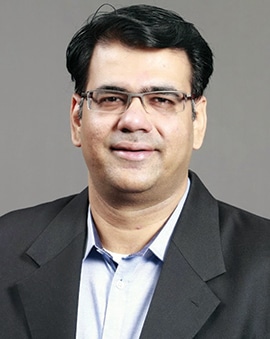
Barry O’Driscoll, Development Advisor, Enterprise Ireland

Ireland is a much sought after destination for education, with its universities in the top most list, globally. On his visit to India, Barry O’Driscoll, Development Advisor, Enterprise Ireland, shares with Aamir H Kaki of Elets News Network (ENN) the education scenario in Ireland, opportunities for Indian students, Ireland Government’s initiative to promote education in India and much more

How do you perceive the education scenario in India as compared to Ireland?

Despite the significant difference in scale, both India and Ireland place great importance on education for economic development and prosperity. Ireland has a long tradition of education excellence and is known as ‘The Land of Saints and Scholars’. This tradition stretches back to the Middle Ages when Irish monks were leading educationalists within Europe. Today, Ireland has one of the highest education participation rates in the world. Ireland is, in fact, the most ’youthful’ country in the EU, with four out of 10 people (40.1 per cent) aged under 30. In turn, this has had a positive impact on the economic growth and development of our country.

India, with a growing young population, is seeing an increased demand for higherlevel education, including overseas study. Ireland, despite its size, is well placed to provide world-class education to Indian students at all levels from undergraduate and postgraduate to PhD level.

What are the opportunities for Irish Universities in India, with regard to collaboration and imparting distance education?

Ireland’s higher education institutions have their own individual strategies for internationalisation, but one common priority in the longer term is to increase the level of mobility of students and staff – in both directions. Currently, there are over 2,000 Indian students studying in Ireland at higher level, and this is growing yearon- year. The next step in collaboration is to increase the number of partnerships, whereby Irish students and staff, may travel to universities in India to undertake postgraduate studies or for research collaborations.

What steps the Government of Ireland is taking in promoting the participation of Indian students in Irish universities?

The Education in Ireland brand comes under the remit of Ireland’s Department of Education and Skills. The ‘Government of Ireland Scholarships’ for Indian students offer full fee waivers as well as stipend to cover their living expenses. There are also around 200 scholarships from our higher education institutions that comprise grants, ranging from 25 per cent to 100 per cent of the education expenses.

What are the focus areas of your visit to India?

We are travelling with a group of 11 educational institutions from Ireland across five cities of India, Chennai, Bangalore, Mumbai, Pune and Delhi. The academic staff in the delegation come from a range of disciplines, including management, data analytics, and mobile technologies. In general, the majority of students we have been meeting for the past several years look at postgraduate options, mainly in engineering, business and sciences. However, we are now seeing an increased interest from students in the areas of arts and humanities, and also at undergraduate level. We have a visa officer with us to undertake one-on-one counselling with students in order to answer all their queries on the visa application process.

What is ‘Education in Ireland’ initiative all about?

‘Education in Ireland’ is the Government brand that promotes Ireland as a destination for international education. We undertake events in India at various times throughout the year, including education fairs, predeparture briefings, alumni events and media engagements. Our aim in India is to increase awareness about the high quality education that is available in Ireland. All of Ireland’s universities rank in the top five per cent globally. Our institutes of technology are renowned for their close links with the industry. Irish universities are in the top one percent of research institutions in the world, in terms of research impact in 19 fields, spanning natural sciences, social sciences and humanities.

Whether it is science, business or engineering, studying in Ireland can be a passport to a successful career. Ireland has a one-year stay back option, which allows international graduates to remain in the country for one year to seek employment.

Making Quality Education Accessible

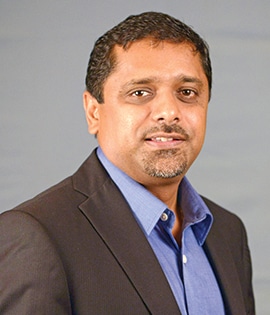
Uday Thakkar, Chief Operating Officer, Dynaflex Pvt Ltd

Uday Thakkar, Chief Operating Officer, Dynaflex Pvt Ltd, shares with Elets News Network (ENN) about the reservation in higher education, role of technology in making quality education accessible to all and future educational technological transformations and more

Does reservation in higher education is defeating the purpose of imparting the best possible education to meritorious candidates?

The reservation system was put into practice as a result of principle of positive discrimination enshrined in the constitution in order to correct the historical injustices made to certain sections of the society. On analysing the system, it shows that it has failed to achieve the stated objective. The Supreme Court’s move to scrap the quota system has entailed both positive and negative aspects within it.

According to me, removing the quota will make sure that admissions are given only on the basis of performance rather than some other indicators. Also, putting up a merit criteria will ensure that every candidate puts his/her best efforts to get admission. This would bring healthy competition and make sure that the best talent is selected.

In my opinion, a better way would be to adopt a middle path, whereby, reservations are made on the basis of an objective criteria-economic indicators so as to achieve the idea of egalitarian society.

In the light of Supreme Court ruling, what would be the impact of doing away with all forms of reservation in institutions of higher education?

I don’t think it is ever going to happen as promises for providing reservation to people is one of the crucial ways to seek votes in our country. However, if it happens, the total scenario of India will change.

There is no scarcity of talent in India, the only reason people don’t get chance is due to their poor financial conditions. The decision of scrapping reservation will be the proof of equality in India.

‘Access’ to all & ‘Quality’ of education are the major fault lines in the education system in India. What role can technology play in bridging these fault lines?

It has been promised for a long time that technology will change education for better – make it more affordable and accessible. The promise of educational technology is more important in Indian context because we have a massive deficit of access to high quality education at the primary and high school level due to a number of seemingly insurmountable challenges, ranging from geographical distribution to socio-economic condition of the learners who attend a majority of Indian schools. Also, the cost of educating one of the world’s greatest populations has been steadily increasing, and there is expectation that technology may make education affordable for those who are so far unable to benefit from the same.

For policy makers, it is important to understand where the education technology industry is headed and how it’s potential can be tapped in to change the stark realities prevailing in India with respect to education at the grassroots. This will, in turn, help to bridge these fault lines leading to economic prosperity and spread of education.

How technological transformations and innovative learning tools can change the education landscape in India in the coming decade?

Today, technology is widely used in every sphere of life, influencing students’ expectations for using it in higher education. Online learning, in particular, is touted a key delivery mode in higher education that will address the majority of drivers of change. Now, high-school students see their educational future built almost entirely around technology. They are eager to incorporate the electronic tools (smartphones, i-pads, etc) into their education. Students entering college today want to design their own curriculum and find ways to learn in their own style.

In my view, technological transformations and innovative learning tools will surely change the education landscape in India in the coming decade

Democratising Education through Technology

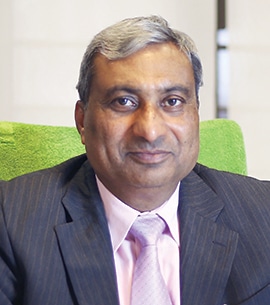
Sonya HoojaSonya Hooja, Director & Co-founder, Imarticus Learning, shares her views with Elets News Network (ENN) on the notion of access and quality education for all, role of technology in transforming education and more

According to you, does reservation in higher education is defeating the very purpose of imparting the best possible education to meritorious candidates. If yes, how?

I think everyone would agree that our system is not completely meritorious. But that goes beyond just quotas and includes the massive capitalisation fees that parents have to pay.

The Mandal Commission’s heart was in the right place. Centuries of pervasive and entrenched caste system affected a significant portion of India’s population. It was detrimental to their advancement while offering enormous opportunities to others. However, the question lingers: are we ready for a truly meritorious system? Probably not, but we need to redraw the lines underlying our affirmative action and use socio-economic indicators rather than religious, caste or class based ones. This way we can give truly give a chance to deprived sections to gain quality higher education.

In the light of Supreme Court ruling, what would be the impact of doing away with all forms of reservation in institutions of higher education?

Supreme Court is not asking to do away with reservation but to rethink the logic behind it and address the issue of social backwardness rather than class or caste. Theoretically, doing away with all quotas in higher education should create a completely meritorious eco-system but that would also require us to rein in the corruption and ensure that students from disadvantaged backgrounds are receiving quality primary and secondary education.

‘Access to All’ & ‘Quality of Education’ are the major fault lines in the education system in India. What role can technology play in bridging these fault lines?

Technology is often referred to as a great equalizer. It has the potential to bridge gaps and homogenise experiences. Inaccessibility and compromised quality of education are unmistakable fault lines that deter students from accepting online education. Today’s generation of students and consumers are growing up in a digital world and according to a survey by Live Mint, 93 per cent students in India access the internet everyday.

A key driver for democratising education is the advent of MOOCs, or Massive Open Online Courses. These are short-term certification courses endorsed by top universities and are available to students for absolutely no cost.

Being into the technology-enabled learning space, how your organisation can contribute/is contributing in bridging the education faultlines?

Imarticus Learning provides online programmes in the investment banking and data analytics space. These are conducted via a state-of-the-art learning management system that has the capability of hosting content in the form of HD quality videos, interactive quizzes and case studies. Our experiential learning methodology ensures extremely high engagement rates and student satisfaction.

In addition to our paid courses, we also host a series of free workshops on our Learning Management System. Students can undertake these workshops from our website for absolutely no cost. Another development that has the potential of transforming online education is the advent of Adaptive Learning techniques. This allows consumers to customise their learning experience to their strengths and areas of development.

How technological transformations and innovative learning tools can change the education landscape in India in the coming decade?

Imarticus Learning was traditionally a classroom-training institute and recently forayed into the online space. While instructor-led classes allow students to interact and engage with their teachers in real-time, the future of education truly lies in a barrier-free platform where students are able to replicate their classroom experience online.

Leveraging Technology to Reach Masses

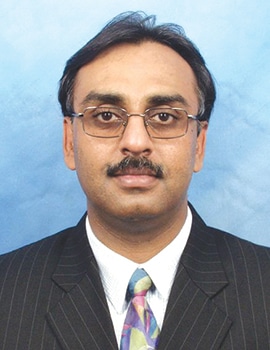
Jatin Bhandari, CEO, PythaGurus

A lot of global universities have significantly increased their online presence, and are leveraging technology to reach out to the masses, shares Jatin Bhandari, CEO, PythaGurus with Elets News Network (ENN)

Do you think reservation in higher education is defeating the purpose of imparting the best possible education to meritorious candidates?

There are two things I want to address in the higher education quota. The first one is the impact of higher education on the ability of candidates to make a contribution to their career as well as country. If you consider medical, engineering and management as professions, the bandwidth of impact is much wider than the school level education.

If we offer seats on the basis of reservation, we are essentially depriving the candidates who are motivated to make a career and are driven to learn. The size of the Educational PIE is the same – and we are splitting it with a very distorted rationale. For every person gaining admittance with a reservation quota, there is one deserving candidate who gets left out.

Another factor that I want to consider is the stage of higher education in the overall lifecycle of a human being. Don’t you think we are too late in hand holding someone if we are providing quota in higher education? Not only are we sending the message to a 14-year-old child that he does not need to nurture his learning potential and fight as there is quota waiting for him at a later stage of his life, but we are also making him lazy. If we want to spend more budget in teaching the candidates with reservation quotas, I think the emphasis should be in the early stages of their lives. It should be in the first 12 years of their education. The system should enable them to reach a level commensurate with the people in the general category.

In the light of Supreme Court ruling, what would be the impact of doing away with all forms of reservation in institutions of higher education?

Doing away with all the reservation will enable the talent to come forward. It will allow hundreds of thousands of students across the country to gain access to a well -deserved education. This will also have a great impact on the GDP – by injecting the country with more efficient workforce.

Technology can eliminate the barriers that a lot of people face with regard to accessibility, cost, etc, of education. With technology, you can provide education to anyone, anywhere, with ease and within less cost

‘Access’ to all & ‘Quality’ of education are the major fault lines in the education system of India. What role can technology play in bridging these fault lines?

Technology can eliminate the barriers that a lot of people face with regard to accessibility, cost, etc, of education. With technology, you can provide education to anyone, anywhere, with ease and within less cost. A lot of global universities have significantly increased their online presence, and are leveraging technology to reach out to the masses. Therefore, technology is bridging the educational fault lines and opening entry to different sects of the society.

Being into the technologyenabled learning space, how your organisation is contributing in bridging the education fault lines?

Our organisation helps people in employability. We identified that the student community faces massive rejections in recruiting, interviewing, and higher education. We have created technology products to bridge this knowledge gap. Students can take our video courses and understand a lot about different styles of interviewing and prepare for different B-Schools, and jobs.

Personalised Learning through Technology

Shantanu Rooj, CEO, Schoolguru

Education is an organic process where every learner learns at his own pace. ‘Technology Enabled Learning’ stands for flexibility, freedom, choice, personalisation and individualisation. Shantanu Rooj, CEO, Schoolguru, talks with Elets News Networks (ENN), about the benefits of technological learning that frees up students from the rigors of the classroom

Is reservation in higher education defeating the very purpose of imparting the best possible education to meritorious candidates?

Reservation by caste, in higher education, is an old practice and has outlived its purpose. The main purpose of introducing the reservation was to provide an opportunity to the extremely backward classes of the society, mainly the SC/ST students, to rise and come up to the level where they can compete with the upper class students, who were assumed to be the privileged. However, after the cabinet decision to expand the reservation quota to include the OBC students without considering the case of the creamy layer, the purpose seems to have shifted from the ‘upliftment of the classes’ to ‘securing of the vote bank’. The decision of the Supreme Court seems to be in the right direction, as it directs the government to remove the quota from higher education in general, especially in highly specialised streams like medical services, thereby ensuring that the best possible training is provided to the meritorious students, thereby creating a ‘Competent India’.

Reservation seldom helps the needy but at the same time it creates another privileged section, the creamy layer, which suppresses its own community. Reservations, if at all needed, should be for the needy based on several other factors and not the caste. The effective use of financial subsidy provided to the challenged class as scholarships can bridge some part of the gap. The concept of reservation, very often, denies an equal opportunity to the meritorious, the deserving, the efficient, the qualified and the truly needy, an opportunity to avail the right education or the job.

‘Access’ to all & ‘Quality’ of education are the major fault lines in the education system in India. What role can technology play in bridging these fault lines?

Technology can play a decisive role in ensuring the accomplishment of the above-mentioned initiatives. The Gross Enrolment Ratio (GER) amongst the 18- 23 year olds is at a meagre 22 per cent as per a report of the MHRD. Filling the gap would require us to create large physical infrastructure and the appropriate number of educators in a very short period. Looking at the budget allocations to the education sector, this clearly does not seem to be the priority or the strategy of the government. Moreover, creation of a large number of well-qualified and well-trained teachers require time, in addition to financial resources.

Technology, with its several variants like online learning, mobile learning and blended learning, has the potential to reach out to the masses, the deprived, the challenged and the under-privileged much faster than the classroom model of education. The smartphone and the Internet revolution sweeping the country, come as an advantage and should be able to boost the purpose.

NetworkBeing into the technologyenabled learning space, how your organisation can contribute in bridging the education fault lines?

Schoolguru, as an organisation, has been built around the simple philosophies of helping students get Access (available to the students on demand), Equity (affordable and flexible as per the profile of the students) and Excellence (high quality learning outcome without any differentiation) in higher education. We believe that the online audio-visual medium has the potential to bring in ondemand high quality education, taught by the top educators from across the world, at the doorsteps of the students.

To help the rural youth, various initiatives of the Indian Government in this line, are a testimony to the same. However, to make them employable beyond basic literacy skills, the higher education infrastructure of the country needs a lot of overhauling.

Keeping in mind the efforts and time required to prune up the physical infrastructure, we believe that the ‘online’ and the ‘virtual’ medium of education can quickly fill up the void without compromising on the quality of education. Various reports published across the world (Report on NMEICT of the Government of India and the report on the potential of Online Education by the US Department of Education) are corroborative of the fact that this audiovisual medium has immense potential, if delivered well, to deliver high quality, highly interactive, yet highly flexible learning to the masses.

How technological transformations and innovative learning tools can change the education landscape in India in the coming decade?

The several technological innovations taking place in this domain of education are set to change the way quality education is imparted by universities. With some help from Schoolguru, several Indian universities like SNDT Women’s University (Mumbai), Krishna Kanta Handiqui State Open University (Guwahati), Tamil Nadu Open University (Chennai) and The University of Burdwan (West Bengal) have implemented such student-friendly technologies and have proven their focus.

Keeping in mind the efforts and time required to prune up the physical infrastructure, we believe that the ‘online’ and the ‘virtual’ medium of education can quickly fill up the void without compromising on the quality of education. Various reports published across the world are corroborative of the fact that this audio-visual medium has immense potential

The students of these universities have access to audio-visual course content on their smartphones through a hybrid android app, thereby taking away the two biggest impediments of online education – the availability of a computer and an Internet connection. These universities have adopted several initiatives like launching their own MOOCs programmes, taking initiatives to strengthen their student support services by setting up a call center, providing the highly interactive mobile app to all students, helping them with analytics on their progress, conducting virtual classroom sessions for live interactions and promoting social learning.

Schoolguru also believes that the social media has a great inherent potential to change the way people learn. Online learning can be made more effective by the right use of social and peer learning.

Several universities in India have started adopting the technologyenabled learning platforms to assist their classroom education. Availability of good quality educators in the interior parts of the country has always remained a challenge. Colleges and universities located in smaller towns and cities find it very difficult to attract and retain the right talent. The use of the right technology can help these institutions fill this gap and complement the classroom education.

Enabling Learning For All

Arun Jagannathan, CEO, CrackVerbal

Arun Jagannathan, CEO, CrackVerbal, shares with Elets News Network (ENN) an insight on bridging the educational gap through technological solutions in the higher education sector

According to you, does reservation in higher education defeat the purpose of imparting the best possible education to meritorious candidates?

Historically, reservation was necessary in the Indian milieu. However, I believe that with respect to higher education, especially management education, you are essentially competing in a global workspace. In my opinion, it is not helpful or beneficial to enforce reservation in management education. However, there are certain exceptions – for instance, since most organisations are setting targets for a gender ratio at senior management positions, premier management colleges might seek to cater to this requirement by setting their own gender diversity targets.

In the light of Supreme Court ruling, what would be the impact of doing away with all forms of reservation in institutions of higher education?

In the short-term, removing reservation completely from all institutes of higher education could cause a lot of angst in some segments of the society. However, keeping aside the political and civicorder ramifications for a moment, I believe that such a ruling would cause far less of a ripple in the management education institutions than in primary, secondary and undergraduate educational institutions.

‘Access’ to all & ‘Quality’ of education are the major fault lines in the education system in India. What role can technology play in bridging these fault lines?

The Internet has drastically changed the landscape of education in India. Today, we have so many success stories in the Internet-enabled education space – Khan Academy, SimpliLearn, Vedantu, to name a few. Technology has eased many of the traditional fault lines of Indian education. Now, with the help of online learning, these concerns can be managed very effectively. Technology has opened up avenues to prepare for competitive exams, and enables the growing popularity of MOOCs (Massive Open Online Courses) that provide niche, highquality education, delivered by professors from premier institutes around the globe.

Being into the technologyenabled learning space, how your organisation can contribute/ is contributing in bridging the education faultlines?

One of the basic philosophies at CrackVerbal is to constantly elevate student experience with innovative methodologies. As I see it, there are two gaps in test-prep education that we are focused on bridging. Firstly, our students want flexibility in studying as per their own convenience. Given the hectic schedules, they just want a course that fit into their daily routine. Secondly, they want access to the best faculty for that particular subject and are no longer satisfied who they have access to in their own cities. We have zeroed in on this trend to create online various avatars of our GMAT and GRE courses. Though we got into the online space many years ago, we have recently launched the new GMAT and GRE on-demand courses that are completely revamped from groundup. Besides, we have a mobile app for GRE students, called WordToonz, an innovative, mnemonic-driven method to learn GRE words, anywhere and anytime.

How technological transformations and innovative learning tools can change the education landscape in India in the coming decade?

I see two major transformations that are revolutionising education. The first is the fact that online learning enables the rise in popularity of the ‘flipped classroom’. Here, students learn the basic concepts and theory through instructional videos, and interact with teachers in order to work on higher-order problems and activities. With online learning, students can learn at a pace that is comfortable to them, rather than being forced to keep up. A decade down the line, we are likely to see a classroom that is starkly different from the classroom of today, with teachers using innovative pedagogies and teaching tools that are evolving even as we speak!

Digital Learning: Empowering Youth

Sajan Paul, Director, Systems Engineering - India & SAARC, Juniper Networks
Sajan Paul, Director, Systems Engineering – India & SAARC, Juniper Networks

‘Digital Learning’ is the future of education in India, shares Sajan Paul, Director, Systems Engineering – India & SAARC at Juniper Networks with Elets News Network (ENN). He believes that the mass adoption of digital learning will not only address the accessibility and quality education concerns, but also empower billions of children and youth in the hinterlands of India

‘Access’ to all and ‘quality’ of education are the major fault lines in the education system in India. What role can technology play in bridging these fault lines?

Technology adoption in the education sector is highly relevant in the Indian context because of massive deficit of access to high quality education at the primary and high school level. India’s education sector is grappling with host of challenges, including geographical distribution to socio-economic condition of learners, cost of quality education, poor infrastructure and amenities at government schools, teacher absenteeism and low teacher-student ratio.

Increased adoption of technology will enable the country to counter all of the above issues, here and elsewhere, making it more affordable and accessible. Today, several edutech solutions are on offer that are allowing access and quality like never before. The government has been emphasising on e-learning to be introduced in all schools as part of the larger Digital India programme. The programme itself is a right step in this direction to provide good quality education to all.

Being in the technology-enabled learning space, how can your organisation contribute in bridging the education fault lines?

Being a technology enabler, Juniper has a lot to contribute for transforming India’s education sector. Xavier University Bhubaneshwar (XUB) started operations at its new state-of-the-art campus with a complete network infrastructure supplied by Juniper Networks. The new campus network has allowed XUB to scale to support up to a ten-fold increase in students.

The campus network currently serves about 1,000 full-time students and 80 staff, based on an architecture that will enable the university to scale up to 10,000 students while maintaining low operational overhead and delivering seamless and secure network performance through both wired and wireless access.

The network design is aligned with XUB’s drive to be a fully digital institution with leading edge services such as Xavier Videobook, which enables students to source relevant and contextual video content to make learning more immersive, and Xavier My Room, a platform for hosting virtual classrooms and peer-to-peer interaction using highquality video and audio conferencing.

The Juniper Networks solution integrates switching, routing, security and wireless networking in a holistic manner to simplify network administration and minimise operational overheads.

How technological transformations and innovative learning tools can change the education landscape in India in the coming decade?

We, at Juniper Networks, strongly believe ‘Digital Learning’ is the future of India’s education sector. Mass adoption of digital learning will not only address the accessibility and quality education concerns that the country is fighting with, but also empower billions of children and youth in the India’s hinterlands. It will bring them to the mainstream and the educational inequalities between an urban child and the rural child will become a story of the past.

As the country gears up to transform itself as a digitally empowered knowledge society through the government’s dream project – ‘Digital India’ initiative, digital learning will soon become a reality all across the country.

Successful digital learning initiatives require high-performance, robust, and secure network infrastructures with highdensity Wi-Fi support. Schools, campuses, other educational institutes and data center networks must be ready to support mission-critical digital learning, online courses, and online assessments.

With increased technology adoption in India’s education sector, the country will witness a ‘learning revolution’ in the coming decades. For a country like India which has world’s largest youth population, empowering its youth is a key priority and providing ‘quality education to all’ will bring a massive change in its socio-cultural-economic landscape.

Opening Arms of Learning

Dr Santanu Paul, CEO & MD, TalentSprint

The advent of technology has reaped in lucrative options of digital learning in the higher education space, shares Dr Santanu Paul, CEO & MD, TalentSprint, with Elets News Network (ENN)

According to you, is reservation in higher education defeating the purpose of imparting the best possible education to meritorious candidates?

Reservation in higher education has always been there but the percentage of reserved seats was small and the selection bar for those seats was still fairly high. This scenario has been changed in recent times with increase in the number of reserved seats and decrease in the bar for selection. So, in a sense, we have drifted heavily towards a model where excellence and merit are no longer a prerequisite for higher education. Naturally, we are seeing a tremendous dilution in quality and skills at the end of the higher education. I am not making a case against reservation, I am simply making the case that we can still have reservation for socially deprived segments of society while still enforcing a threshold of merit.

Use of technology has become an integral component of education. What do you think are the challenges the Indian higher education system is facing with regard to implementation of technology?

Even in the current scenario, where technology is touching every person’s life, several higher education institutions in India are only using technology to the extent that they have computer labs. That’s just like scratching the surface. Lecturers need to first upgrade their mindsets and then their skill sets with regard to technology. Most of them view e-assisted classrooms, live virtual classes, self-paced online courses, mobile learning and so forth with suspicion and perceive them to be a threat to their job security. Just like bank unions resisted the advent of banking technology in the 1980s, we are seeing, to some extent, the same thing happening now in higher education. Ultimately though, the economics of technology wins in every field. The same will happen over the next decade or two as the next generation of teachers show up.

‘Access’ to all & ‘Quality’ of education are the major fault lines in the education system in India. What role can technology play in bridging these fault lines?

Technology is by far the only credible and likely answer to the twin dimensions of quality and access. I would even add the third dimension called engagement. This is already evident from digital learning platforms like Khan Academy, where the content is rich, deep, diverse, globally accessible, and most importantly, highly engaging and entertaining. Technology can lead us to edutainment, which I believe is the true future of education. The days of drab classroom lectures are over. Higher education must deliver an enriching user experience or else it will not attract modern learners.

Being into the technology-enabled learning space, how can your organisation contribute/is contributing in bridging the education fault lines?

We, at TalentSprint, focus on skill and career education, which is a postscript to higher education and a precursor to employment. Data shows that more than 90 per cent of college graduates leave campus without the basic skills required to get a wellpaying job. This is not just a fault-line, it is a massive chasm. Deficiencies include hard skills and soft skills. We are addressing this space through a combination of digital and contact programmes. We currently address 50,000 trainees per year, which should rise to 100,000 soon, and then our target is 1 million by 2020. We are clear that tech-led learning is the answer to the questions of access, quality, and learner experience.

How technological transformations and innovative learning tools can change the education landscape in India in the coming decade?

Technological transformations can change the education landscape, if:

  • laptops, tablets and smartphones will play a major role in changing the nature of access to learning.
  • the decline in calibre of teachers and professors in physical classrooms will lead to much greater acceptance of digital programmes conducted by high quality master trainers.
  • the price of digital programmes will keep coming down, and the costs of safe travel and accommodation will keep going up, which means the costbenefit ratio will tilt towards digital programmes.
  • nano-courses will become popular because of their convenience and flexibility, and degree giving institutions may morph themselves into custom aggregations of heterogeneous nano-courses.

All this may appear pretty disruptive in the short and medium-term, but when the dust settles, we will have high-quality education and affordable edutainment that is both flexible and affordable.

Removing Barriers for Learners

Dr Surendra Kansal, Director, ABES Engineering College, Ghaziabad

Use of technology will increase the flexibility of delivery of education to the students so that learners can access knowledge anytime, anywhere, tells Dr Surendra Kansal, Director, ABES Engineering College, Ghaziabad, to Elets News Networks (ENN)

In the light of Supreme Court ruling, what would be the impact of doing away with all forms of reservation in institutions of higher education?

According to Supreme Court, the national interest requires doing away with all forms of reservations in institutions of higher education. In the past 68 years since independence and after the adoption of our constitution in 1950, the weaker section of our society was not able to achieve much, as compared to what our leaders may have thought while adopting the reservation policy. It has been witnessed that larger section of weaker society is still struggling to get the basic education facility in rural and urban areas. In this era of globalisation, where India has to compete with the world without compromising the quality output, we have to think out-of-the-box to bring changes in the policy. Leaders in collaboration with the intellectuals have to work towards revision, where policy can innovatively facilitate the weaker section with better education and at the same time able to tap best talents to compete globally.

To reduce the adverse impacts, we can make arrangements of special classes in the institutes to help and motivate weaker students to bring them to the same level where they can work on their improvement areas to compete with the world. After so many decades, we have realised that simply by drafting and implementing a reservation policy we may not be able to uplift the weaker section in the society. It requires a timely upgrade and we all together at various levels still need to work tirelessly to take India ahead by nurturing talents fromall sections of the society. Anyhow, we should not de-motivate people with creativity, rationality and innovations on basis of class they belong to.

What are the challenges Indian higher education system is facing with regard to implementation of technology?

Today, the use of technology is touching almost every part of our lives and communities. This is the reason why use of technology has become an integral component of education as well. When properly used, technology will help students acquire the skills they need to survive in a complex, highly technological knowledgebased economy.

There are certain challenges that Indian higher education system faces with regard to implementation of technology in the institutes:

  • Lack of qualified teachers to teach ICT;
  • Lack of electricity in institutes located in the backward areas of the country;
  • Low Internet bandwidth due to the high costs involved in the connectivity;
  • Lack of initiative by the community leaders as they do not see the need to purchase and subsequent installations of computers as a priority;
  • Obsolete computers lower the morale of both the teacher and the student; it is very common to findsome schools/colleges using very old computers running on obsolete operating systems;
  • Internet pornography, cyber bullying and other antisocial behaviours is a worrying emerging problem.

With the help of technology, how Higher Education Institutions can play a pivotal role in imparting education to the public at large and serving the greater need of society?

Education in India performs certain functions for the society as a whole. It trains the individuals with the skills that are required by the economy. Hence, it is necessary to work according to the needs and demands of the society. Since the population is increasing and number of schools and colleges are limited, we cannot deprive the future of our country from getting educated. Bringing in technology will help removing certain barriers between education and the learners.

The promise of educational technology is more important in Indian context because we have a massive deficit of access to high quality education at all the levels due to a number of seemingly insurmountable challenges, ranging from geographical distribution to socio-economic condition of the learners who attend a majority of Indian schools.

Implementing technology will help in creating interactive study material to engage audience effectively. Technologies when implemented in the institutions, will help impart education to the public at large and serve greater need of the society. Students sitting at distant places can also avail the online classes, give exams, attend lectures, get access to study materials and interact with faculty as well as other students. This will not only extend the reach of education, but will also reduce the cost incurred on setting up an infrastructure for any institute.

‘Access’ to all & ‘Quality’ of education are the major fault lines in the education system in India.What role can technology play in bridging these fault lines?

Use of technology will increase the flexibility of delivery of education to the students so that learners can access knowledge anytime, anywhere. It can influence the way students are taught as now the processes are learner-driven.

The technology is changing rapidly and the growth has been exponential in the last decade. As technology is widely used in almost every sphere of life, it is influencing students’ expectations for it being used in higher education. Online learning, in particular, is publicised as a key delivery mode in higher education that will address the majority of the drivers of change

Through technological transformation, there will be a wider availability of content and best course material in education which can be shared with students easily, fostering better teaching. It will also allow the academic institutions to reach the disadvantaged groups and new international educational markets, enabling the democratisation of education. In developing countries like India, effective use of technology for the purpose of education has the potential to bridge the digital divide.

Use of technology will help in imparting higher education through various forms like multimedia, e-learning, educational apps. These forms of learning can be used on personal devices, thus, giving access of education to all.

How technological transformations and innovative learning tools can change the education landscape in India in the coming decade?

The technology is changing rapidly and the growth has been exponential in the last decade. As technology is widely used in almost every sphere of life, it is influencing students’ expectations for it being used in higher education. Online learning, in particular, is publicised as a key delivery mode in higher education that will address the majority of the drivers of change. People will now expect to be able to work, learn, and study whenever and wherever they want. The world of work will become increasingly collaborative in near future, giving rise to reflection about the way student projects are structured. This growth is expected to create opportunities for new content-publishers to enter the textbook market and accelerate the formal adoption of open educational resources to supplement premium digital content.

It is expected that in coming decade, technological transformation will change the education landscape and has become necessary in following ways:

  • It will open new opportunities that improve teaching and learning;
  • Technological literacy is essential. People without technical knowledge will suffer from a new form of the digital divide, which will impact their capacity to effectively operate and thrive in the new knowledge economy;
  • Technology is an integral part to accessing the higher-order competencies often referred to as 21st century skills, which are also necessary to be productive in today‘s society;
  • Technological transformation will open up knowledge and content that otherwise would be less accessible, through access to open educational resources. In this era of globalisation, implantation of technology will internationalise the curriculum which in turn help the students in getting admission in foreign universities, easily.

Increasing Educational Productivity

Udai Singh, Chief Strategy Officer, NIIT Ltd

A combination of digital platform-based services and physical services will serve the need of a large majority of customers who are looking for professional skills, tells Udai Singh, Chief Strategy Officer, NIIT Ltd, to Elets News Network (ENN)

e-learning is not a new concept but is still developing. In the coming years, we are likely to witness dramatic changes in the space. Education industry today is battling several challenges like accessibility of quality education, expert teaching faculty etc. Even premier institutes like IITs and IIMs are faced with shortage of faculty. Therefore, technology in education should be used constructively and appropriately so that it has maximum impact. Technology should be used to resolve the challenges posed due to limited number of expert instructors.

The need of the hour is to embrace technology in education. If best institutes showcase their technology, it sets a trend for the rest to follow. This would require evolution in terms of pedagogy and education in design. The system has to evolve from teacher-centric to learnercentric with teachers becoming a part of the environment that fosters learning.

Online education can cover a wide spectrum of courses and curriculums from vocational courses, special skills training to degree courses and higher education courses. However, in a country where diplomas and degrees have greater importance than the actual knowledge or skill gained, a lack of accreditation and acceptance of online courses is an issue. With time, I think India will move towards a blended learning model.

NIIT is a blended player in the education space. We believe in a combination of digital platform-based services and physical services at physical locations that will serve the need of a large majority of customers who are looking for professional skills.

With the help of technology, how can Higher Education Institutions play a pivotal role in imparting education to the public at large and serving the greater need of society?

We, at NIIT, believe that technology is becoming critical but pure technology delivery model can’t deliver the results. So, you need the combination of technology and people-based delivery. In India, and other developing markets, technology can be a potent force multiplier that can dramatically increase the impact of other scarce resources such as expert instructors and physical learning infrastructure.

Recently, NIIT has launched a digital learning platform NIIT.tv, an Internet TV portal that can be accessed on a computer, tablet or smartphone anytime, anywhere. In the initial phase, over 20 skill-based training programmes in IT, banking and finance, retail and management were made available, which scaled up to more than 50 ‘live’ as well as ‘on-demand’ courses.

‘Access’ to all & ‘Quality’ of education are the major fault lines in the education system in India. What role can technology play in bridging these fault lines?

The education space is evolving. Today, online learning opportunities and use of digital learning tools can help increase educational productivity by accelerating the rate of learning, reducing costs associated with instructional materials or programme delivery and better utilising teachers’ time. Technology can ensure access to quality education anytime, anywhere.

At NIIT, we have always used technology-enabled delivery models innovatively to impart quality education to our students. We launched Netvaristy. com, one of the first initiatives in terms of online learning as early as 1996. Synchronous Learning Technology used in NIIT Imperia is another such example. We have also pioneered the concept of Cloud Campus in India.

How technological transformations and innovative learning tools can change the education landscape in India in the coming decade?

Technology is enabling multimodal teaching, changing curricula and spawning rich forms of online research and collaboration. Online-collaboration tools, software that supports individually paced learning and learning-management systems are among the communication technologies most expected to improve academics over the next five years.


LATEST NEWS