
Home Blog Page 786

‘Tier 2 Cities’ Candidates More Employable’

Skills ReportThe recent initiatives in the skills and job arena might not have resulted in radical changes but have surely kept the positivity flowing, indicate the results of 3rd India Skills Report 2016, a joint initiative by Wheebox & PeopleStrong, in collaboration with Confederation of Indian Industry (CII) and LinkedIn.

In its third season, the report captures the insights from the largest employability test that was spread out to 3000 educational campuses, assessing five lakh students across 29 states and seven union territories, from noteworthy educational universities and professional institutes in the country along with the India’s hiring intent survey that reached out to over 150 employers across 12 major sectors.

The study shows an improvement in employability which is 38.12 per cent, compared to the number of past two years – 37.22 per cent (2015) and 33.95 per cent (2014). The study notices an interesting trend where Tier 2 cities were found to be more employable (over 50 per cent candidates assessed were found employable) than Tier 1 cities (employability 30 per cent).

From the demand side, the study forecasts an overall increase of 14.5 per cent in the hiring intent from the current year to the next year. The sectors which will see maximum hiring are Retail, e-commerce, BFSI, Pharma, Telecom, manufacturing with an increase of over 20 per cent in the hiring numbers followed by BPO/KPO/ITeS Core sector, with an increase of more than 10 per cent. However, FMCG, Hospitality and Software & IT expect the hiring numbers to remain the same compared to last year. In domain-wise hiring, there will not be any significant mix of industry sectors, however interesting trends are observed in sector-wise domain preferences. BFSI forecasts a preference for management and bachelor degree while expecting a drop in hiring of ITI and Diploma candidates. The core sectors will see a decrease in hiring graduates, however, hiring of engineers will go up significantly. The consumer durable sector will double  the vocational graduate hiring in comparison to last year. Another sector which will see a significant increase in hiring of vocational candidates is hospitality. However, the sector plans to reduce the intake of diploma graduates in the overall hiring mix.

The report also studied the correlation between age and employability. Out of total number of candidates in the age group of 18-21 years, 37 per cent scored more than 60 per cent and hence were part of the employable pool. For age group 22-25 years, this number was 31.59 per cent and for age group 26-29 years this number was 21.88 per cent.

Similar to last year, most of the industry sectors prefer younger workforce with about 80 per cent employers preferring to hire candidates of age 30 years and below. An interesting trend is the increase in preference of software industry towards candidates of age more than 30 years. This number has increased to over 23 per cent in this year’s survey.

Hrushikesh Senapaty Is Appointed As NCERT Director

NCERT logoProfessor Hrushikesh Senapaty has joined as director of National Council of Educational Research and Training (NCERT) on November 23, 2015. Prior to this, Senapaty was the principal of the Regional Institute of Education (RIE), Bhopal (a constituent unit of NCERT).

An alumnus of BJB College Bhubaneswar and Devi Ahilya Bai University, Indore, Senapaty joined RIE, Bhopal in 1997 as associate professor in education. Subsequently, he also worked with RIE, Bhubaneswar as professor and then came back to RIE, Bhopal as its principal in 2012.

Having more than 25 years of experience in teaching, training, research and extension activities, his areas of specialisation are teacher education and information and communications technology in education (ICTE).

The post of NCERT director  has been vacant for over a year after Pravin Sinclair was unceremoniously ousted. On August 24,  in a meeting of the search-cum-selection committee headed by Md Akhtar Siddiqui, the names of Senapaty and Anil Shukla were shortlisted.

The initial task before Senapaty will be to accelerate the process of consultation on the proposed New Education Policy (NEP). NCERT has been tasked to take forward few crucial components of the NEP. He will also have to take a stock of the review of textbooks as well as formulate the new curriculum framework. The last curriculum framework was devised in 2005.

Webinar To Link 105 Schools Across UAE

Sharjah MuseumAs a part of the innovation week, a webinar for students linking 105 schools across the UAE was organised on November 24, at the Sharjah Museum in coordination with the Ministry of Education and Sharjah Education Council, Sharjah Museums Department (SMD) and Mohammed Bin Rashid Smart Learning Programme (MBRSLP).

Coincided with the nationwide campaign to build a culture of innovation a defining element of the society, the event linked students with an astrophysics and astronomy expert.

In the first of a series of webinar sessions to be held at Sharjah Science Museum, students including ones with special needs participated by listening and directing questions to an astrophysics expert, unlocking a new universe of knowledge exchange between the museum and the smart learning schools.

Using interactive live streaming, students from 105 different schools including Al Amal School for Deaf Students, part of Sharjah City for Humanitarian Services, participated with simultaneous interpretation provided to students with hearing impairment.

GLI Certification To 14 Indian Univ & Colleges

GLI certification at House of Commons, UKLeading international education auditing and recognition platform Great Place to Study Research Institute hosted 2nd Global League Institute Certification for newly affiliated Indian Universities and Colleges, providing certification to 14 more Indian educational institutions at a ceremony held at the prestigious House of Commons, UK.

Rt Hon Virendra Sharma, MP, hosted the ceremony with a prestigious gathering where 14 Indian colleges/universities were affiliated with GLI Certification. The historic Churchill Room saw in attendance a distinguished guest list from the world of academia, politics, business and public service, all united to laud India’s educational prowess on the international stage including Baroness Verma, Lord Dholakia and host Rt Hon Virendra Sharma, MP.

The 2015-16 GLI certification was conferred to the following Indian institutions:

  1. ABBS, Bangalore
  2. Apeejay Education Society, Delhi-NCR
  3. Ecole Hotelier Lavasa
  4. IFIM Institutions, Bangalore
  5. Jagran Lakecity University, Bhopal
  6. NSHM, Kolkata
  7. PSG, Coimbatore
  8. Whistling Woods International, Mumbai
  9. XIM, Bhubaneswar
  10. Tula’s Institute, Dehradun
  11. Sharda University, Greater Noida
  12. NIET, Greater Noida
  13. Unitedworld Group of Institutions, Ahmedabad
  14. RV College of Engineering, Bangalore

Shekhar A Bhattacharjee, Chief Executive Officer & Founder of Great Place to Study Research Institute said, “An institution needs great determination and commitment to apply for Great Place to Study Certification. Given the changing needs of learning in this era, a Great Place to Study should not just offer a respected faculty and quality lectures, but also run comprehensive educational programmes to hone the personality of students and nurture them into responsible citizens of the world. We evaluate educational institutions on a number of important criteria before giving the certification.”

A great institute cannot be defined with only great courses, infrastructure, andragogy and faculty. In 21st century to assure great learning, an institution must focus and ensure right measurement of learning objective, learning outcome, life on campus and happiness quotient for the students.

“Certification conferred by Great Place to Study Research Institute to a university or a college is beyond independent rating. It is about global commitment towards uplifting standards, practices and sustainability. We are happy that a number of educational institutions in India are working consciously to raise the standards of education and learning, and our certification serves to recognise their efforts,” said Arvina Purkayastha, Co-founder, SkillTree Knowledge Consortium.  

“Indo-British relations were given yet another boost and it was my pleasure hosting the 2nd GLI Certification ceremony by Great Place to Study Research Institute. Promoting the partnership between UK and India’s education system has always been a key aim for me,” said Rt Hon Virendra Sharma, MP.

WeSchool Hosts Conclave On ‘Rising NE India’

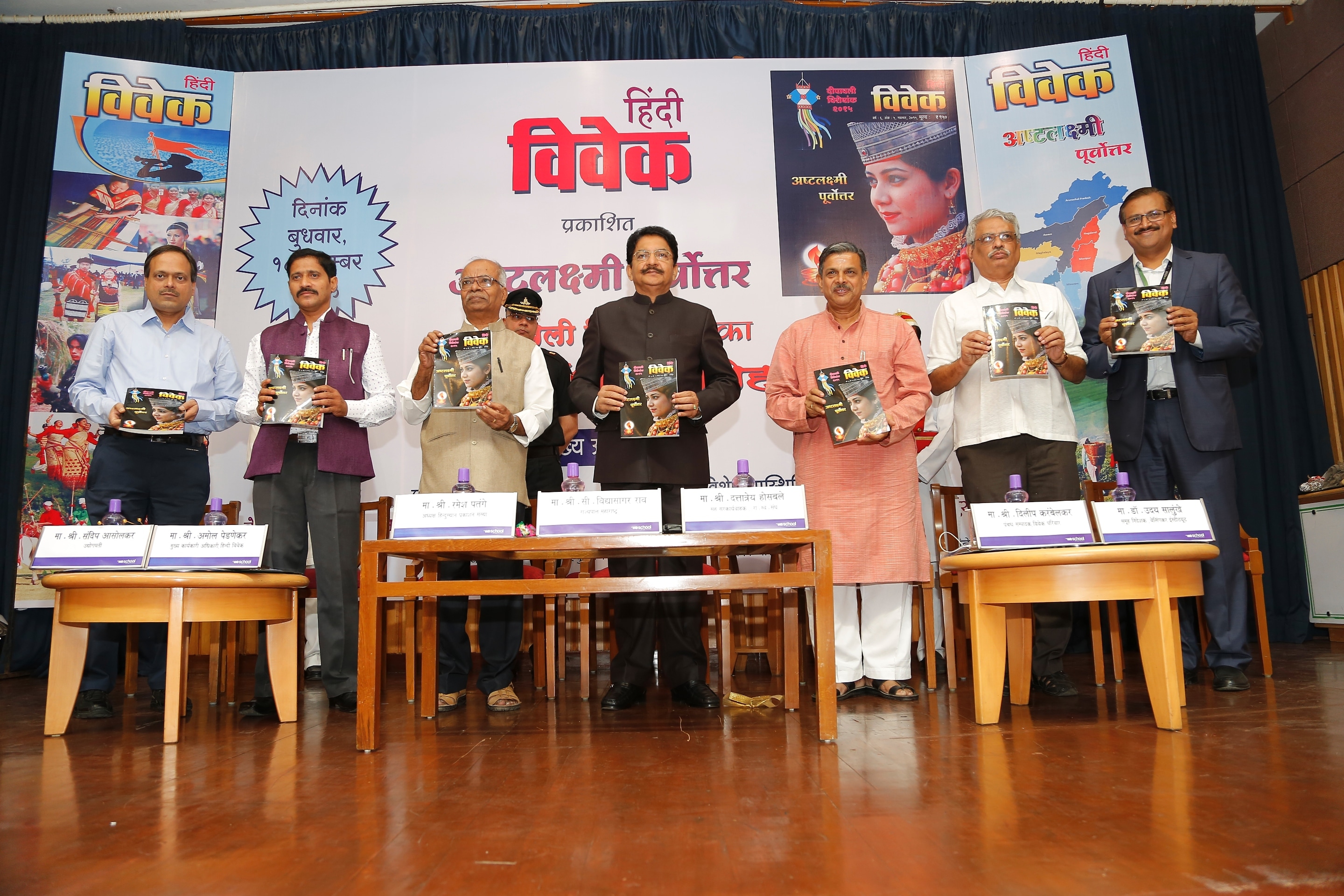
Hon' Governor of Maharashtra Shri CV Rao release the special edition of Vivek Hindi Magazine focused on North-East India in thePrin LN Welingkar Institute of Management Development and Research (WeSchool) along with Vivek (Hindi) Magazine hosted a conclave on the Rising North-East India, bringing in more progress and inclusiveness in presence of Hon’ble Governor of Maharashtra CV Rao and Dattatreya Hosabale, Joint General Secretary, Rashtriya Swayamsevak Sangh(RSS).

As a key speaker at the event, Hosabale, highlighted the potential of the North-Eastern States that remained undiscovered for a long time.

Sharing his views, the Governor spoke about how the north-east region has tremendous potential to contribute and further India’s economic and social development. He said, “Maharashtra as a state must come forward in order to provide technical and management skills to support the students of North-Eastern States and make facilities available for them. All the states of north-east are rich in their heritage and have always received high tourist attraction.”

While emphasising on the potential of the youth in the north-east region, he said, “I strongly recommend education institutes like WeSchool to come forward and encourage students and specially girls to learn new skills and compete at the national level.”

Prof Dr Uday Salunkhe, Group Director, WeSchool, spoke about the role of education institutions in the inclusion of North-East India. He said, “As a representative of the education fraternity, I believe we should focus on three mantras of Leadership, Innovation and Entrepreneurship that will help to nurture and develop the youth community and the nation. WeSchool believes in building Global Citizen Leaders, and as an institute we work towards instilling leadership skills in youth community and the budding entrepreneurs. With this in mind, we have initiated Project Netrutva, under which we groom students coming from economically weaker backgrounds and offer them an opportunity to attain management education to facilitate in building their career.”

Punjab begins training master trainers

By Priya Yadav

Chandigarh

The three day specialised Orientation Programme to train the 400 Masters as Resource Persons today started at National Institute of Technical Teachers’ Training and Research (NITTTR). The objective of this ambitious project of Punjab Education Department is to train the Masters as Master Trainer and equipping them the modern techniques imparting quality education prevalent world wide. These master trainers would subsequently train all teachers in their respective districts so as to ensure the quality education to the students as per the need of hour.

The orientation programme was inaugurated by Dr. Daljit Singh Cheema, Education Minister, Punjab. In his inaugural speech Dr Cheema urged the Masters trainers to take advantage of this orientation programme to restore the faith of the society in the government education system. He said that it has become imperative for the teachers to change their course of imparting education as per the needs of the changing society.

The Minister said that these master trainers would keep on educating the teachers at different periods of their services like, from the time of their entry into services till the retirement. Dr. Cheema said that the education department has decided to introduce `Learning Outcome Evaluation Examination’ under which State Council of Education Research and Training (SCERT) would conduct exam for 5th and 8th Class.

Earlier speaking at the occasion Principal Secretary, School Education, C. Roul said that the teaching is a pious profession and teachers are generally known as makes of any Nations. He persuaded the teachers to full equip themselves with all the desired skills and techniques desires in the changing scenario to imperative quality education to the students.

Prominent among others who were present at function included Director General School Education Mr. Pardeep Aggarwal, Director NITTR Dr. M.P. Punia, Director, SCERT, D.P.I. (Elementary Education) Harbans Singh Sandhu, Deputy Director, SCERT, Dr. Ginni Duggal.

20% Stipend Hike in IIM-C Summer Placements

IIM_Calcutta_LogoFor the 2015 batch, summer placements at Indian Institute of Management, Calcutta (IIM-C)  have successfully concluded with 23 per cent of its batch getting placed in consulting sector. For PGDM courses at IIM Calcutta, the summer placement or internship is mandatory. This year, the placements witnessed a hike of 20 per cent in the stipend. The students were also given flexibility to hold an offer and appear for another placement.

According to a report, the highest number of offers were given by companies such as The Boston Consulting Group (20), Accenture Strategy (15) Bain and Co (13),  McKinsey (12), AT Kearney (8). Several companies visited the campus for the first time like Deloitte US S&O, Auctus and Arete Advisors.

The most sought after sector is the finance sector. More than 1/4th of the batch got offers from banking and financial services. The major banks that offered 20 front-end investment banking and market roles were Citi bank, Bank of America Merrill Lynch, JP Morgan Chase, UBS, Goldman Sachs, Avendus Capital, and Deutsche Bank.

Dubai Students To Share Ideas For Future

InnovationStudents from 30 schools in Dubai will put their creative minds to task, and design schools of the future. With Lego blocks and innovative smart apps, teams will build school models for the year 2030. The participating schools will be sent a kit, and they can download the app to create the models.

After finalisation, the creations will be displayed at the KHDA office and judged by a panel of experts.

A part of the UAE Innovation Week, this initiative will see students, educators and parent community come together to discuss and share new ideas.

Dr Abdulla Al Karam, director general of KHDA, said, “We live in a world where the ambitions and expectations of people are continuously changing. To meet and exceed these expectations, we have to come up with innovative ideas. The UAE Innovation Week marks a major step forward in our journey to achieve the goals set out in UAE Vision 2021.”

The students will be divided into groups of three. Each group will use Lego Education StoryStarter set by Atlab to build primary school of future. The students will also use the kit with an iPad to build a model school that reflects exactly how they would like their school and learning environment to be.

KHDA will also showcase innovation in education by providing a space for ideas and projects in a 35-foot shipping container outside the KHDA office. The innovation container will house some of the best projects crafted by student makers – who will also be visiting the container to learn from each other and share ideas.

English-medium International Schools Reach 8,000 Globally

International SchoolsAccording to new data from The International School Consultancy (ISC) Research, the number of English-medium international schools around the world has reached 8,000, with China and the UAE displaying the fastest growth.

The Research from ISC, leading provider of data and market intelligence on the international schools market, has also found that the number of students taught at international schools now totals 4.26 million worldwide.

In 10 years, ISC predicts, there will be at least 15,000 English-medium international schools with over eight million students enrolled.

According to the Research, with 526, China has the most number of English-medium international schools. The country has also seen the biggest growth in the number of institutions, increased by 218 from September 2011.

Presently, having 513 international schools, the UAE has also seen rapid growth in the market. It has seen a rise of 143, since September 2011. In the next two years, 21 new international schools are expected to open in Dubai alone, says the ISC Research.

In addition, India has 401 and Saudi Arabia has the next highest number with 245 English-medium international schools.

CISCE Board Revamps Syllabi

Keeping abreast with the current competitive examination requirement and empowering their students ambitions, the Council for the Indian School Certificate Examination (CISCE) announced revamping of their syllabus, infrastructure and training methods at their 58th Annual General Meeting. CISCE board with an objective to centralise education has decided to frame Class XII question papers on the lines of CBSE pattern from 2018.

The CISCE reviews its prescribed syllabi periodically so as to ensure that they are at par with the syllabi of other boards and also to meet the requirements of various competitive examinations. The Council has recently reviewed its prescribed syllabi at the ISC (Classes XI and XII) and ICSE (Classes IX and X) levels.

At the ICSE level, syllabi for History & Civics, Geography, Mathematics and Physics have been reviewed for the year 2018 Examination. The objective of these reviews was to ensure that in addition to conforming to present day educational trends, the syllabus is also relevant, flexible and meaningful in content. The syllabi for the above subjects have been modified accordingly, so as to facilitate a progressive and phased upgradation of subject knowledge and understanding.

Gerry Arathoon, Chief Executive and Secretary, ICSE said, “Specimen question papers for the subjects – Physics, Chemistry, Biology and Mathematics have already been prepared on the CBSE pattern. The new pattern – possibly with an eye on competitive exams conducted by the CBSE – will be introduced from the 2018 ISC exam.”

The specimen question papers deal with questions on recall, understanding, application, analysis and evaluation.

In keeping with the requirements of many Universities for higher education after Class XII, the break-up of marks of the Theory and Practical components at the ISC level, for the subjects Computer Science, Fashion Designing, Physical Education, Indian Music (Hindustani), Indian Music (Carnatic) and Western Music has been revised. The existing mark breakup of 50 percent Theory and 50 percent Practical has now been changed to 70 percent Theory and 30 percent Practical, in order that these subjects be considered as elective subjects. This change will be effective from the ISC Year 2016 Examination onwards.

The Council has already been following the Common Core Curriculum for mathematics, science and commerce at the ISC level. The curriculum had been prescribed by the Council of Boards of School Education in India (COBSE), an apex body that has all school boards as its members.

Specimen question papers for these subjects have already been sent to schools and are also available on the Council website (www.cisce.org).

LATEST NEWS