


Home Blog Page 819

VSAT or Virtual Classroom – Which Platform Should Educators Choose?

Virtual-ClassroomComing together of the Internet and learning has revolutionized education delivery. The Indian e-learning industry is estimated to be at a whopping $3 billion by the end of 2015. With a rapid increase in mobile and Internet penetration, India is steadily moving towards becoming one of the largest consumers of online education. Newer ways of imparting education, such as VSAT and Virtual Classroom have become game changers. These technology solutions are facilitating learning anytime, anywhere.

Online education has offered immense possibilities to learners and an unprecedented reach to educators. When it comes to live learning, many educators are still undecided while choosing the right education delivery platform. The two available options – VSAT and Virtual Classroom – seem to be promising. Let’s deep dive into these platforms by comparing the WizIQ Virtual Classroom, the awardwinning online classroom, with VSAT based on a set of parameters and find out the best option for educators.

Ease of use & Maintenance

To impart learning through VSAT, an educator has to set up the complete VSAT system which includes, learning centres, the Hub Earth Station, a studio for teachers to deliver classes from, servers for data, dish antenna above classrooms for reception and a few more technical things. Sounds a little complicated? Yes, this might be too much to handle for an uninitiated educator.

To deliver learning through the WizIQ Virtual Classroom, all you need is a device (desktop, laptop, mobile phone, Android tablet or iPad) and an Internet connection. You don’t need to go through the tedious process of setting up things. You can start using the Virtual Classroom right away.

VSAT requires technical support and high maintenance for elaborate and expensive infrastructure. With the WizIQ Virtual Classroom, you can breathe easy. It is practically a zero-maintenance platform and comes with round-the-clock technical support provided by a team of trained professionals.

Cost

The initial cost of setting up a VSAT system is much higher as compared to the WizIQ Virtual Classroom. You can simply subscribe to a Virtual Classroom plan based on your teaching needs. Your total cost of ownership (TCO) is restricted to your subscription plan. Moreover, the subscription plans are flexible, which allow you to make an investment depending on the size of your teaching business.

The cost of maintaining the VSAT equipment is high. The setup and maintenance costs are not affordable for individual educators and mid-level education service providers. The WizIQ Virtual Classroom clearly emerges as a viable and cost-effective solution for educators.

Quality of Communication

Live, online learning relies heavily on data transmission for high-quality communication. Since, educator and learners are at different locations, any fluctuations or instability in transmitting data can hamper the learning experience.

VSAT system provides a stable transmission via satellite. However, only oneway transmission is possible through VSAT. Learners can only listen to the lecture delivered via radio or TV. Real learning happens when both educator and learners can communicate freely and instantly without any restrictions.

The WizIQ Virtual Classroom makes two-way communication possible between educator and learners. It offers 6-way video and unlimited audio streaming, enabling educator and learners to view and hear each other. Audio and video communication can happen even on low Internet bandwidth. Class participants have an option of switching to the audio mode if the Internet connection is very slow. However, two-way communication is still maintained, which makes the live class interactive.

Reach & Flexibility

The Virtual Classroom lets educator and learners collaborate in real time anytime, anywhere, even from the comfort of their homes and offices. Just log in to your computer and launch the Virtual Classroom to learn or teach instantly.

However, there are a few challenges with VSAT, including:

  • Teachers need to travel to a studio to deliver classes.
  • Learners need to be present at one place where dish antenna is installed to receive transmission.
  • Currently, education delivery through VSAT technology is restricted to only Indian citizens. This is a big drawback as online education is about global reach.

Mobile Learning

According to a recent study, India has approximately 213 million mobile Internet users. More and more content is being consumed by people on their mobile devices. Mobile learning is surely becoming popular among learners. The WizIQ Virtual Classroom allows learners to attend live classes on mobile devices, such as iPhone, iPad, and Android tablets using WizIQ Apps for iOS and Android. Learners can learn on the go without feeling the need to be confined to a certain place for learning. Mobile learning has a strong potential to be the future of online education.

VSAT doesn’t support mobile learning. It allows educators to deliver learning through radio and TV only. This is a limitation that can snowball into a serious challenge as more people start preferring mobile devices over any other medium.

The Final Word

In conclusion, the Virtual Classroom offers obvious benefits to educators in terms of cost-effectiveness, ease of use, and flexibility, among other things. VSAT has proved to be successful in providing education to learners in the rural areas of India. However, when you consider online education in the present day context, it presents quite a few limitations, with respect to high setup and maintenance costs, and limited reach and feature set, to say the least. The ideal solution for educators and educational institutions to deliver live, online learning is the Virtual Classroom which is built using the cutting-edge technology and offers a wide range of features. Moreover, it allows educators and educational institutions to reach out to learners across geographies and be truly global.


Reaping the Benefits of Higher Degree

Benefits-of-Higher-DegreeThere is a growing awareness about greater return on investment in higher education as higher studies and post graduate degrees fetch you higher salaries. A string of surveys have also indicated that a higher degree will ensure you land a job and have better chances of employment. Elets News Networks (ENN) checks out signs of the times

If you already have a graduation degree and are scouting for a job, there are high chances that you will start earning at much lower scale than the next candidate who had a post graduate degree. But if you have a post graduate degree then you could hope for a higher salary package.

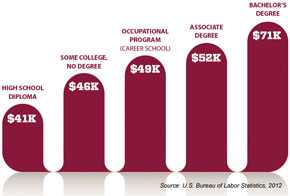
Demands are rising for a greater return on investment in higher education. By some measures, the return on investment is high: college graduates have much higher earnings and lower unemployment rates, on average, than people with a lower-level degree or diploma. The gap is even greater between the expected earnings of graduates holding a four-year bachelor-of-arts degree and those with a master’s or professional degree. The rate at which this gap is growing suggests that many students must continue their education past college to reap the full benefit of their degree.

A survey by recruitment firm, Monster India says that the level of education is a key factor that defines the pay cheque. As per the survey, someone with a professional or post-graduation degree is likely to earn Rs 100 per hour more as compared to an ordinary graduate. Also, a person who has a 3-year bachelor’s degree will earn Rs 80 per hour more than a candidate who has had only higher secondary education. “In general, it is beneficial to invest in education in order to obtain higher returns in future, in terms of wages,” says the survey report.

The increasing gap in the salary scales between the graduate and post graduate degree holders has fuelled a race of sorts among students to go in for higher studies. An awareness about higher studies and their greater prospects is gaining ground and percolating to all levels. An increasing number of surveys done in the area are also indicative of the same.

corporate-sector
Higher Degrees fetching better pay packets in corporate sector

Numbers Support

A survey done globally by Graduate Management Admission Council (GMAC) has shown how business school graduates have seen a huge jump in salary offers over their pre degree levels. The students who got job offers early this year said that the post degree salary increase was nearly 90 per cent over their pre degree salary.

The GMAC study is significant since it is a non profit organisation, that runs the GMAT examination which is mandatory to gain entry to global business schools. It has its relevance not just globally but also domestically.

The survey was conducted among 3,329 graduate management students in 2015 spread across 112 universities in 29 countries. It said that more than half, as many as 59 per cent, of job-seeking graduate business students reported that they received an early job offer prior to their graduation.

The survey also showed that domestic students have higher chances of receiving an early job offer compared to international students. It said that, “In 2015, 70 per cent of domestic students seeking jobs reported an early job offer, compared with 42 per cent of job-seeking international students.” Significantly, the jobs applied by both domestic and international students is much the same yet Indian students receive 25 per cent higher interviews.

The increasing gap in the salary scales between the graduate and post graduate degree holders has fuelled a race of sorts among students to go in for higher studies. An awareness about higher studies and their greater prospects is gaining ground and percolating to all levels

In this context, the survey has defined “domestic student” as one attending school within their country of citizenship while an “International student” refers to individuals who are either studying outside their country of citizenship, or who seek to work in a location outside their country of citizenship.

Salaries-improve
Salaries improve with higher academic degrees

As per an ASSOCHAM survey, a staggering number of students go abroad to pursue higher education including for MBA degrees. In 2014 about 7 lakh students from India went outside the country up from 2.9 lakh in 2013.

Anshu Kataria, heading Aryans Group of Colleges says, “The demand for skilled work force is not being met with by simple graduates. There is an awareness in the student fraternity for the need to go in for higher studies to get a good job at the end of their academic stint.”

India is not an isolated case when it comes to higher preference for post graduate students who end up getting better salaries. Globally the scene is much the same. A study done to understand the market forces and factors that impact salaries by Graduate Careers Australia indicated that a post graduate degree could drive you into a different pay grade, a higher one and helps you negotiate more.

The study looked at 50,000 educated job hunters and found that 86.3 per cent of post graduates who sought full time jobs landed one. In the same period 76.2 per cent of graduates who wanted a full time job finally bagged one – 10 per cent less than the post graduates.

Even as chances of a post graduate landing a job improve, it is the cost of higher education, coupled with stiff competition across India that makes people start scouting for jobs as soon as they are out of the college.

Market Indicators
In 2015, 70 per cent of domestic students seeking jobs reported an early job offer, compared with 42 per cent of job-seeking international studentsJobs applied by both domestic and international students is much the same yet Indian students receive 25 per cent higher interviewsAs many as 59 per cent, of 3000 job-seeking graduate business students reported that they received an early job offer prior to their graduation


In a global survey, where 4000 students were targeted, who were fresh out of the college, a staggering 75 per cent said that they were keen on a post graduate degree as they were convinced it would boost their employment prospects.

Another report, titled as ‘tomorrow’s growth’ that was released in 2013 by the Confederation of British Industry, predicted that the employment prospects would be much higher in the highly skilled roles. “Anticipated changes to occupational structure mean that by 2020 nearly half of all employment will be for highly skilled roles.”

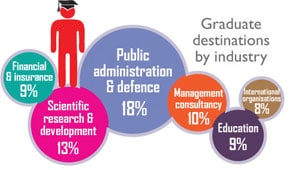
Graduate-destinationThe indications are already there. Says, Katja Hall, CBI Policy Director, “Businesses already report major skills shortages in areas like manufacturing and engineering – a situation expected to become more acute as the economy picks up… In short, we need many more people to achieve appropriate higher level qualifications.”

Back home in India, the head of the Institution of Engineering and Technology, Shekhar Sanyal, told a popular media house, “MTech, Master of Technology, graduates are in high demand and much sought-after by technical industries, not just in India but worldwide… If you are good and technically sound, MTech can open up various opportunities for you.”

The business sector too is relying heavily on the post graduate business force. The Graduate Management Admission Council studied employers in 50 countries around the world and found that 75 per cent of employers were looking at hiring MBA graduates – five percent more than previous year.

Even as the cost of post graduate degrees goes up, compelling students to think twice before they venture into higher studies, experts in the field suggest that finally it is not the degree but what you manage to do with it that defines your success. The onus finally rests on the candidate to convince the employers about your knowledge and skills.

In the Secure Zone

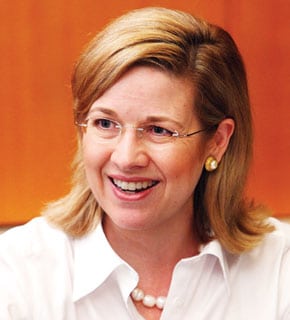
Over the last 20 years, Symantec has been working as a guardian angel in the field of cyber security in India. Equipped with an able workforce of more than 4,000, the company considers the Indian market a key innovation hub for Symantec. Cheri McGuire, Vice President – Global Government Affairs & Cyber security Policy, Symantec Corporation shares with Garima Pant of Elets News Network (ENN) the organisations plans for the future

Cheri-McGuire
Cheri McGuire,
Vice President – Global Government Affairs & Cyber security Policy,
Symantec Corporation

After being in the Indian market for the last 20 years, how do you gauge the current scenario of cyber security? What are the key threats and challenges when it comes to cyber security in India?

We cemented our presence in India with our hard work and dedication. 23 per cent of our workforce is spread across some of the major cities like Pune, Chennai, Bangalore, Delhi, Mumbai and Hyderabad and we have 35 per cent of global engineering talent with us here. Our prime focus as a company is on identifying and nurturing innovation and talent. We have a long-term commitment in the country and we are looking forward to grow that. As a part of this commitment, we will be delivering hands on experience and filling the skills gap in the sector.

We saw a number of significant emerging trends last year in the security domain. As we all know that service security is not a problem. India has always been in the terror target and over the last few years there has been a steep rise in the terror related activities in the country. A slew of terror attacks targeted various key sectors like financial services, transportation and communication, including the economic and national security of the country. It is not just the large organisations that are on the radar of the terrorists, but also small establishments. Taking up this huge challenge, we are creating a massive blanket of security which will provide full proof security for all. Along with this, we are also generating awareness amongst the netizens and also doing our best to secure all electronic devices such as mobile, computer or any other.

Increasing threats have also opened a gamut of opportunities. How have you seen the business grow and what are the business opportunities in the coming year?

We made an announcement last year in October that we were refocusing Symantec just on security and we are actually separating the business. So, a third of Symantec’s global business is on information management, storage, back-up, e-discovery and archiving and with the explosion in applications and content development, there is a huge demand for storage and archiving and information management solutions. But, at the same time, we see this explosion in the growth and need for cyber security. So, both these parts (security and information management which includes storage, back-up, e-discovery and archiving) of the company can be accelerated to provide solutions in the market place. Thus, the CEO and the Board of Directors decided on separating out an entity and creating an independent company on the information management side, called Veritas. We will be operationally separated on October 1st, and by January next year, the independent identity will be on its own.

What steps can be taken to firewall India against all possible security threats?

There are a number of basic things which we need to keep in mind in this era of cyber terrorism which go towards using strong passwords, using multi-factor authentication, encrypting data at rest and in transit and making sure that you have up to date and modern security suites installed. We have a significant challenge of using outdated security and we have watched the threat landscape evolve significantly in the last several years. The solutions that were available four-five years ago, only provide a fraction of the protection that we need today to protect against advanced persistent threats that we are seeing on a regular basis. So, following some basic practices that do not take much to implement but can truly make a difference in securing infrastructure securing networks.

ERP makes Education Proactive

Schools and higher education institutions need an ERP solution to bridge the gap and also move towards creating world-class institutions. For the successful ERP implementation, both the school as well as the ERP implementation partner should work in unison and understand the key issues, informs Suhas Gopinath, Chief Executive Officer, Globals

Suhas-Gopinath
Suhas Gopinath,
Chief Executive Officer,
Globals

Why does the education sector need ERP solutions?

Education sector in itself is quite a large sector like any other large industries where data driven decision-making is critical. An education institution comprises of multiple departments and many stakeholders including students, teachers, parents, administrators, management and the alumni. All these cannot be managed with paper work. Schools and higher education institutions need an ERP solution to bridge the gap and also move towards creating world-class institutions and get benefited with data driven decision-making capabilities with business intelligence and analytics that an ERP system offered with tools like Cognos, making the education institution proactive from being reactive in their administration.

What are the benefits of deploying ERP solutions in the education system?

Unlike the good old days, institutions these days are connected and hence can utilise the power of technology to enhance productivity. Some of the benefits of deploying an ERP solution in the Education system are:

  • Increased efficiency and reduced business process cycle time
  • Collaboration and enhanced communication between multiple stakeholders
  • Real-Time data for teachers and parents on student’s academics, for better implementation of remedial programmes
  • Consolidation of valuable data and streamlined flow of information
  • Making education institutions to be less dependent on people for access to information and making people agnostic
  • Analytical reports helping in data driven decision making
  • Information available in omni-channel (mobile, web, Email / IVRS)

What are the key pain areas to be focused on while deploying these solutions?

For any successful ERP implementation, both the school as well as the ERP implementation partner should work in unison and understand the key issues and follow the process to ensure that the solution meets the needs of the end users on a day-to-day basis. Based on our experience of implementing Educube in hundreds of schools across six countries, we have identified the following pain areas:

The key process involved – student lifecycle needs to put in place correctly. This includes student related modules like the enrolments/ admissions, student management, attendance, notifications etc.

For teachers, one of the key pain areas is grading. With Educube, we solve this with our flexible and comprehensive performance module that comes with different flavours to meet the complex needs of different types of schools like CCE module for CBSE and performance module catering to IGCSE, ICSE, Ontario, IB and State Board Schools as well.

It is very important to understand the current process followed at the school and use the opportunity of the ERP implementation to enhance any processes. While implementing Educube, we work very closely with schools to not only implement our solution but also share the best practices and consult them for any business process reengineering.

How can technology improve the education structure?

A comprehensive ERP solution is a one stop shop for managing the entire institution or group of institutions as it lets management access data from any location anytime. An ERP solution streamlines the workflows, management and administrative processes of an institution with just a single application. Sharing of information and data across the departments is made possible and reduces the redundant multiple entry of data.

Communication is made quick and easy with email reports and SMS alerts. This especially benefits parents to know about their children’s attendance report; notice board updates etc. An ERP solution helps the administrator to easily update employee payroll, school fees and much more.

Enabled Efficient Learning

Shantanu-Rooj
Shantanu Rooj,
CEO, Schoolguru

The implementation of ERP system makes the institutes cost efficient over disjointed traditional systems. An ERP system shall also help organise data better and provide the right MIS to the stakeholders thereby making decision prompt and more accurate, says Shantanu Rooj, CEO, Schoolguru

Why does the education sector need ERP solution?

An ERP Solution automates various processes in an organisation using one integrated solution, thereby bringing interoperability of data. The intended advantage of implementing an ERP is to bring process efficiency across the organisation and reduce chances of error. An educational institute, like any other type of organisation, performs multiple functions like admission management, enquiry management, fees management, timetable management, infrastructure management, human resource management, stores management, library management, accounting, transport management, examination management, student support management etc. To bring in efficiency, effectiveness and accuracy into their operations, it is imperative for the education sector to implement an ERP system.

What are the benefits of deploying ERP solutions in the education system?

Implementing an ERP system is more cost effective over disjointed traditional systems. Basic campus management requires lots of manpower for various functions like admissions, fees etc. Bringing an ERP solution can dramatically cut costs for mundane activities. An ERP system shall also help organise data better and provide the right MIS to the stakeholders thereby making decision prompt and more accurate. Due to the use of various database management systems, the data stored in an ERP system is quite secure. An institute shall be able to provide segmented rights to various types of users ensuring that critical data is protected from misuse.

What are the key pain areas to be focused on while deploying ERP solutions?

Implementing an ERP solution requires a lot of top management commitment. Once implemented, the ERP becomes the backbone of the organisation for performing routine functions. Without proper guidelines and monitoring, an ERP implementation fails due to faulty decision making during the process of implementation. A ready-to-use ERP often requires the organisation to modify or change its existing processes and adapt the standard processes defined in the ERP. This change management becomes one of the crucial factors for the successful implementation of an ERP solution.

While implementing an ERP, the organisation must take the total cost of ownership into consideration. This shall include several associated costs (apart from the cost of the software) like cost of servers, licensed operating systems, databases and antivirus. ERP systems may also necessitate certain changes on the desktop computers and the local LAN. Some ERP systems also require skilled professionals to manage the same on a continuous basis. Last but not the least, it is important to budget the cost of customization of the ERP, in case some of the standard processes are not suitable for the organisation.

How can these solutions improve the education structure?

ERP-improvesA proper implementation of an ERP solution can bring in better efficiency and transparency in an institute. Most of the institutes in India are operated and owned by charitable trusts. It is hence important to ensure a transparent system of flow of data which shall boost the process of decision making. For trusts, who manage multiple institutions, an integrated multi-institute ERP shall be a big advantage which shall help them cross-pollinate the institutes by optimally using the available resources. A CRM solution, which front-ends such ERP systems, helps the management keep in touch with the ultimate customer.

What is the market size of these technological solutions?

The ERP market size in India is a multi-billion dollar opportunity. The market comprises of opportunity in the core area of ERP software and supplementary areas like implementation services, customization services, maintenance services, servers and storage, databases and operating systems, associated security solutions etc.

What is the rate of adoption of these solutions in education sector?

Due to the increase in the penetration of the internet, the educational institutes have now started realising the importance of automation. Currently, not even 2 per cent of the institutes in India are automated and less than 0.5 per cent have implemented an ERP solution. However, we believe that in the next few years, as we see more privatization and corporatisation of education taking place, the rate of adoption of such solutions shall improve.

A proper implementation of an ERP solution can bring in better efficiency and transparency in an institute. Most of the institutes in India are operated and owned by charitable trusts

How can institutes keep ERP database protected at all times?

Institutes must use multiple strategies to keep their data safe and available at all times. Use of a proper RDBMS system with well configured access controls shall work as the first ring of defense. Institutes need to protect their data from various attacks like viruses, malware and hacking attempts. It is important to implement a sturdy antivirus system and keep it updated at all times to protect the data in the servers. Needless to say that institutes must have a rugged data back-up and recovery management system to protect their data against any accident or catastrophe.

A Tribute to the Missile Man

Ravi Gupta

ravi-gupta-featureThe man who added ‘Wings of Fire’, fuelling the education dreams of millions of children passed away doing what he did best – Igniting Minds. The missile man who came from out of political spectrum, Avul Pakir Jainulabdeen Abdul Kalam rose from the humble origins to become the President of India from 2002 to 2007.

An aeronautics engineer from Madras Institute of Technology, Dr. Kalam was considered the brain of missile programme. Always close to education world, he utilised any opportunity that came to him to address students, especially school children, to dream big so that they become achievers in life. He stressed upon to make education system more skill oriented and called for a review of universities and senior secondary syllabi.

He also mooted the idea of introducing mobile skill development laboratory, which will be ICT enabled and will have a mechanical and chemical engineering set up. And to pay respect to the departed leader Delhi Government announced to name the higher education and skill education guarantee scheme after the former President Abdul Kalam, who passed away while giving a lecture in Shillong recently.

Vocational education and skill development has become a dire need to improve the productivity and efficiency of the youth in the country. It is absolutely necessary to have skilled workforce for rapid economic growth, high productivity and reduction of unemployment. India has 69 per cent of its population between 16-29 years. Greater efforts have to be taken to provide vocational education and training so that employability of people should be increased worldwide.

A lot of private sector companies are investing into the skill development of the workforce. New technical training institutes are getting established and vocational institutes are coming up to provide special training to the economic and socially disadvantaged, through social partnership and in house training.

Taking this initiative forward, digitalLearning is organising the 5th World Education Summit (WES) in August to discuss the paradigm of skill education and the significance of skill development in the creation of a knowledge sharing society. With thought leaders and the who’s who of the education sector slated to be a part of this platform, WES 2015 will add wings to the skill development initiative of the government. Looking forward to your presence at the 5th World Education Summit 2015 to be held on August 21-22.

NIIT new training centre offers advanced training programmes

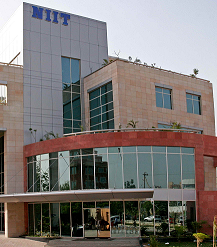
Established in 1981, NIIT Limited, a global leader in Skills and Talent Development, offers multi-disciplinary learning management and training delivery
Established in 1981, NIIT Limited, a global leader in Skills and Talent Development

NIIT has launched its Flagship Training Centre in central Delhi which will offer advanced training programmes in executive management, banking, digital marketing, big data, IT and other multiple sectors. These programmes will be backed by Cloud Technology to ensure anytime anywhere accessibility.

The new centre is the first step in a series of changes that the company will now witness owing to Business Transformation Programme that was initiated in the last financial year. Focused on upskilling, the centre will offer programmes in Executive Management, Banking and Finance, Digital Marketing and Social Media, Cloud & Mobile Software Engineering, Big Data and Business Analytics, e-Commerce & Business Administration and Cloud Computing & IT Management.

Young professionals and students will have the flexibility to choose options from a range of multiple new-age career programmes, aligned to the evolving needs of the knowledge economy.

MSD conducts skill requirement analysis

Rajiv Pratap Rudy

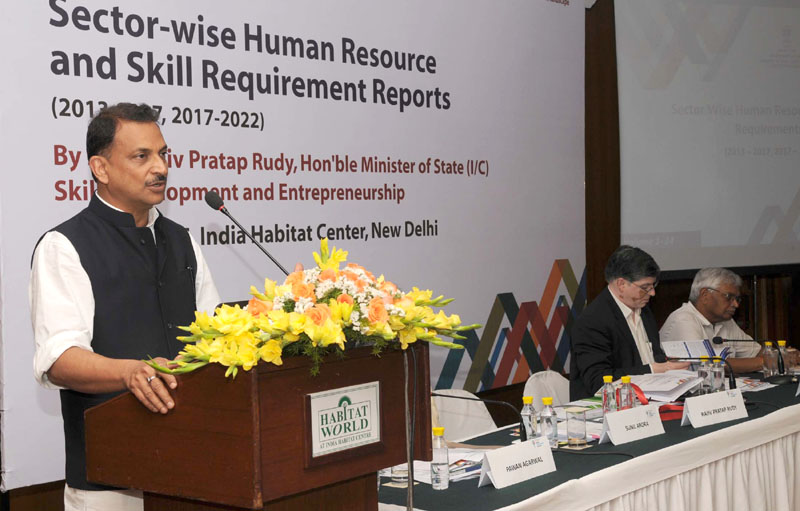
Rajiv Pratap Rudy, Minister of State (Independent Charge) for Skill Development and Entrepreneurship has said that the National Skill Corporation, a public private entity of Ministry of Skill Development and Entrepreneurship has conducted district vise human resource and skill requirement analysis.

The report covers the demographic profile of districts including challenges and aspirations of the youth. The report analyses demographic heterogeneity on parameters viz. population density, gender ratio, literacy rate, livelihood options. Studies have highlighted aspirations of the youth across the country.

Rudy said, a sub-group of Chief Ministers on Skill Development have been constituted by National Institute for Transforming India (NITI) Aayog to suggest measures for strengthening State Skill Development Missions to enhance capacity and improve standards of skilling at the state level.

Education must reach unreached sections of society: Piyush Goyal

piyush goyal

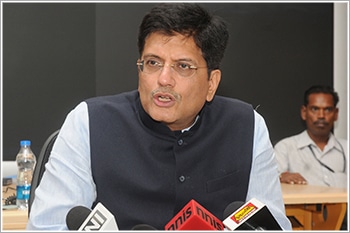
Piyush Goyal, Union Minister of State (IC) for Power, Coal and Renewable Energy said that Don Bosco Institutions have embarked upon a journey to educate, engage and empower the young.

Speaking at the Don Bosco Bicentenary educational seminar at Guwahati, Goyal said that education must aim at providing future leadership and it should aim at the pursuit of excellence. Education must produce good citizens, able to serve the country at all times and in all circumstances, he added.

The Minister further said that education would reduce the disparities in wealth and power by providing young people with skills and competence to make them find a valued place in society. On Good Governance the minister said that it is the shared responsibility of Educators, Political Class, Artists, Business, etc; to bring Good Governance to society.

He said, Education’s prime aim is to make every individual self reliant. On Extremism, he said that the root cause is attributed to poverty, illiteracy and ignorance. It is the bounden duty of educators to eliminate the above through quality education to all specially to the unreached sections of society.

New attires for Surat teachers to duck green-saffron row

Surat Municipal CorporationSurat Municipal Corporation sets an example by zeroing into multi-coloured uniforms for their teachers which are completely devoid of green or saffron shades. More than 4,000 teachers and principals will now wear the non-controversial uniforms. This decision will not only cork the controversy which raked up after the SMC body green uniform for their teachers.

From now on the prescribed attire of women teachers will be light brown sarees with a matching dark blue blouses and their male colleagues will wear violet and black striped shirts and black trousers. Recently the budgetary allocation for the schools was increased from 40 lakhs to 63.50 lakhs. So the SMEB has decided to colour the uniform of the teachers and the entire bit went into the kitty of Mafatlal Fabrics.

The SMEB will be supplying the dressing material to the teachers along with the stitching amount. The approximate cost of the sarees will be Rs.1,655 and the cost of the shirts will be around Rs.957. Presently Surat Municipal Corporation is running 327 schools with more than 1,432 male teachers and 2,755 female teachers, who are imparting quality education to 1.60 lakh students. The SMEB would approximately spend Rs.63.50 lakh on the uniforms.

LATEST NEWS