

Home Blog Page 847

Departments of major Univ’s in global top 100 list

Quacquarelli Symonds (QS) World University Rankings list In a milestone for India’s education industry, individual departments of Indian universities have made it to the top of the Quacquarelli Symonds (QS) World University Rankings list, with Delhi University achieving the highest rank out of all 20 universities that have made the cut. It is ranked 17 globally on the development studies subject table.

Nine Indian institutions are listed in the top 100 with nine disciplines. “India secures 107 places across the 36 subject tables, including the six new disciplines for 2015 – Architecture, Arts and Design, Business Studies, Dentistry, Development Studies and Veterinary Science,” the statement said.

“Of those places, 37 have moved downwards compared to 2014, 44 have maintained the same position, seven have gone up and 19 are new entries,” it added.

IT Bombay has emerged as the best technical institute in India and one among the top 100 worldwide. In fact, IIT Bombay is the most recurring Indianurther institute in the top 100 for eight subjects. There are five departments from IIT Delhi that also figure in the top 100 along with Jawaharlal Nehru University.

It may be mentioned that India has not achieved any position in The Times Higher Education 100. The ranking is an analysis of the world’s top 100 universities in the last 50 years. The first Indian University to appear in the Times list is the Indian Institute of Science, Bangalore at 279. Other colleges like IIT Delhi, IIT Kanpur, IIT Kharagpur and IIT Roorkee had made it to the list in 2014 at 356, 367, 358 and 359 ranks, respectively.

“Indian universities display increased international competitiveness in the top 100 with a stronger presence across the subjects,” it said.

Switzerland, Hong Kong and Korea are fast emerging as major education hubs that may challenge the US and the UK in the near future.

IIM-A begins mentoring IIM-Nagpur

IIM Nagpur The HRD ministry, the Government of India, recently entrusted the Indian Institute of Management, Ahmedabad (IIM-A) with complete responsibility to start and look after IIM at Nagpur (IIM-N) from the new academic session beginning in July.

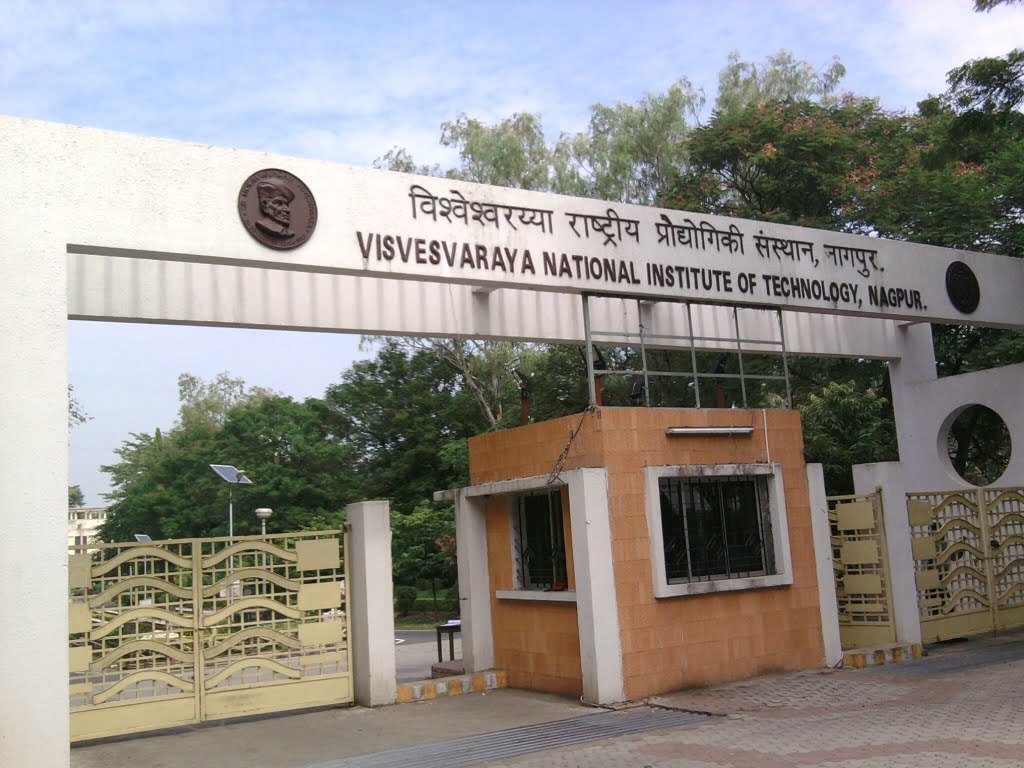
IIM-A has started by appointing an officer to set up administrative section in its temporary premises. IIM-N, which started its operations last week, will operate out of Visvesvaraya National Institute of Technology (VNIT) campus, till its permanent campus on 200 acres at Mouza Dahegaon in non-SEZ area in Mihan project is ready.

Reports say that IIM-N would work as sub-centre of IIM-A for a few years till its new campus is ready. IIM-A also plans to open a full-fledged website for IIM-N soon where the students would get all the information.

It may be mentioned that earlier this year, a team from the ministry for human resources development (MHRD) had made site inspections for the proposed IIM-N and gave a positive feedback, indicating that the premier institution may commence operations from July. IIM-Ahmedabad director Ashish Nanda, chief engineer of Central Public Works Department (CPWD) in city Narendra Kumar, and principal secretary for higher and technical education Sanjay Chahande were other members of the team. They were accompanied by divisional commissioner Anoop Kumar, collector Abhishek Krishna and joint director for technical education in Nagpur Gulab Thakre.

Andhra University restoration work suffers due to funds crunch

Andhra University The restoration work at Andhra University (AU) in Visakhapatnam, which suffered considerable damage due to cyclone Hudhud last year, has been slowed down due to crunch of funds. The repair includes Hudhud debris clearance.

The campus needs to be ready by July end because classes will begin for the new academic session and the varsity has to go for NAAC accreditation. Moreover, monsoon will set in June. This has made it a difficult situation for varsity authorities, who had managed to raise Rs 2.5 crore through donations and decided to divert the funds meant for regular maintenance work for restoration. The authorities are also planning to divert some money from the block fund of around Rs 218 crore and later ask the state government for compensation.

Rs 3.5 crore had been spent so far on repairs and cleaning works on campus as well as relaying the wiring, but this is just a small part of of what requires to be done to bring the campus back on its feet.

It may be mentioned that for the first time in its history, AU announced a deficit-free budget of Rs 332.03 crore for fiscal 2015-16. AU authorities said that the state government will provide Rs 218.5 crore as block grant, the Centre will give Rs 20 crore as block grant and Rs 1.75 crore for development of sports hostel and gymnasium. The rest of the money will be raised internally.

They also said that Rs 149.5 crore will be spent on paying salaries to regular employees, Rs 18 crore as salaries for contract employees, Rs 100 crore for pensions and Rs 64 crore on projects like the biometric attendance system, automation of the administrative block, construction of new residential blocks, solar electricity generation project and development of the gerontology department.

Education will be given within constitution’s parameters

New-National-Education-Policy (1) India’s new education policy will be formulated in consultation with the states and “Education will be given within the parameters of the constitution”, Human Resource Development Minister Smriti Irani has said. The minister countered Congress members apprehension about saffornisation of education as they has expressed.

Irani claimed that the education policy was earlier formulated on the basis of advice of a select few people. She further said that “We should go the blocks, to the districts, talk to states, make the new education policy through mutual consultations”.

The minister said the government was also paying attention to teachers’ training and Rs.900 crore have been allocated under the Pandit Madan Mohan Malaviya National Mission on Teachers and Teaching.

She urged the MPs to monitor progress in construction of toilets in schools in their constituencies.

TISS-UNFPA Centre of Excellence on Youth and Adolescents launched

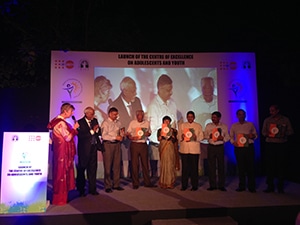
TISS-UNFPA Centre of Excellence on Youth and Adolescents launched The Centre of Excellence for Adolescents and Youth, an on-ground and online solution for fulfilling the needs of young people, was recently launched by the Minister for Skill Development and Entrepreneurship, Rajiv Pratap Rudy.

An initiative of the United Nations Population Fund (UNFPA) and the Tata Institute of Social Sciences, the Centre was launched in the presence of the secretaries of the Government of India, Dr Babatunde Osotimehin, Executive Director of UNFPA, Dr. S. Parasuraman, Director of TISS, and heads of UN agencies at the United Nations Office in New Delhi. The Centre of Excellence is a first of its kind knowledge hub that aims to advance young people’s development agenda, by pioneering research and investment into fulfilling their needs for health, education and skill development.

Highlighting the Prime Minister’s mission to provide skills to India’s youth, the Minister for Skill Development pointed out urgent needs, including resources, in skilling young people and preparing them to join the workforce. “The Government of India is working towards convergence among the programs of different ministries to prepare a comprehensive roadmap for skill development. The Centre of Excellence will help in this effort”, he said.

Welcoming the collaboration of TISS and UNFPA, the Minister invited the private sector to work with the Government on skill development.

“The Centre of Excellence would enhance the participation of young people in India’s development and create a space for their voices to be heard. The initiative, which improves the availability of knowledge and services for young people, and brings together multiple stakeholders on one platform, is part of concerted efforts to ensure that the benefits associated with India’s demographic dividend can be seized”, said Dr Babatunde Osotimehin, Executive Director of UNFPA. UNFPA, the lead agency on population and development issues globally and in India, works to deliver a world where every young person’s potential is fulfilled in India and globally.

Between 2012-2013, after several consultations with young people across the country, held by the UN system, it was found that: “Young people are not heard”, “not seen, understood or respected as equal partners, stakeholders and decision-makers”. The dropout rate for youth above 15 years, especially girls, remains very high at 47% for girls and 39% for boys.

“The Centre of Excellence would help young people make informed choices, and contribute to informed policies and investments”, said Frederika Meijer, UNFPA Representative India. It has three pillars: Research and Development, Youth Portal and Virtual Marketplace that will assist youth in different aspects of growth. The centre will establish partnerships with South Asian and other international academic institutions and youth organizations, fostering regional and South-South cooperation.

The youth portal, www.youthinfoindia.org, is India’s first comprehensive online database on young people, which also offers young people a platform to voice their concerns. The Virtual Marketplace is a state-of-the art online space where products, services, ideas and expertise on young people can be found. It is a meeting place for young people and service providers including the government, development and community based organizations and the private sector.

Furthermore, people aged 15 to 24 are invited to participate in a contest to suggest a name for the Centre of Excellence on the youth portal- www.youthinfoindia.org. The winner will visit the UN headquarters in New York for a week and serve as a youth advocate.

‘Innovate for Digital India’ challenge launched by Intel and DST

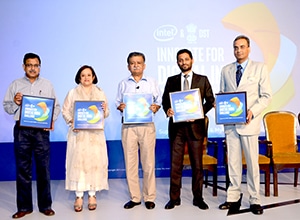
Intel and Department of Science and Technology Launching the Innovate for Digital India Challenge in a press conference in New Delhi today (1) (1) Intel and the Department of Science and Technology (DST) have launched the “Innovate for Digital India Challenge”, which will focus on the creation of products to increase technology adoption in India that will eventually result in the creation of a local technology ecosystem. It will be open to aspiring and existing entrepreneurs, innovators, academia, designers, engineers and makers from diverse backgrounds. Participants will be provided mentoring by industry stalwarts and Intel experts, assistance in terms of technical know-how, access to product kits and infrastructure, and commercialization opportunities. They will also be offered market linkages and access to funds at various stages to help make their ideas a reality.

The challenge was designed in collaboration with DST, with support from the Department for Electronics and Information Technology, MyGov.in and will be managed by IIM Ahmedabad’s Centre for Innovation Incubation and Entrepreneurship (CIIE).  R S Sharma, Secretary, Department of Electronics and Information Technology (DeitY), Ministry of Communications and Information Technology, Government of India, led the launch event together with H K Mittal, Member Secretary, National Science and Technology Entrepreneurship Development Board (NSTEDB); Gaurav Dwivedi, CEO, MyGov.in; Professor Rakesh Basant, chairperson, CIIE; Vikas Jain, co-founder, Micromax Informatics; and Debjani Ghosh, Vice President, Sales and Marketing Group and Managing Director, Intel South Asia.

Speaking at the event, Ram Sewak Sharma, Secretary, Department of Electronics and Information Technology (DeitY), Ministry of Communications and Information Technology, Government of India, said, “We are delighted to see industry leaders like Intel contributing to nation building and joining forces with the government in its journey to transforming India into a knowledge economy. With this challenge, we expect to see breakthrough ideas and ingenious innovations that will solve some of India’s key challenges.”

The challenge aims to encourage the creation of intuitive, easy-to-use solutions that can increase access to critical services imperative for development. Eventually the best ideas will get help for commercialisation leading to the creation of a local technology ecosystem furthering the government’s Make in India vision. The challenge will encourage the application of the principles of frugal innovation and a strong understanding of Indian lifestyles. It will focus on innovation in two broad areas. The first is innovation to create the ideal citizen’s device platform, including biometric sensing capabilities, peripherals using other sensors, intuitive user interface, gesture recognition, multilingual support and voice support. The second area is innovation to deliver eKranti*/MyGov applications to accelerate delivery of e-governance services on a mobile platform.

H K Mittal said, “Innovation always leads the way to finding the most creative solutions to societal challenges. Generating innovation is not the job of the government alone. Therefore it gives me great optimism to have Intel come forward – through Public Private Partnerships – to accelerate innovation and entrepreneurship in India.”

“Innovation is part of Intel’s DNA,” said Debjani Ghosh. “This challenge will combine Intel’s history of game-changing innovation and world-class technology with the government’s bold Digital India vision and the immense entrepreneurship talent in the country to create a sustainable tech ecosystem that is innovating for India. We are excited to collaborate with DST to launch the Innovate for Digital India Challenge to champion new solutions to make technology more effective in India as a channel to drive real ground-up development. Through this challenge, we aim to bring to market tangible products and solutions that will help make Digital India a reality.”

Honeywell launches School Outreach Initiative

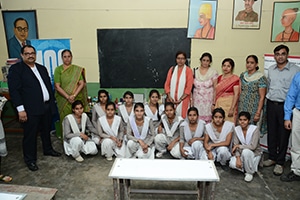
Image 3_Winners of the science quiz along with school staff and Honeywell employees (1) In order to inspire the next generation of innovators, The Honeywell India Technology Center (HITC) has launched a School Outreach Initiative, under the aegis of Honeywell Hometown Solutions (HHS). This comes in a backdrop where India has lagged behind in STEM (Science, Technology, Engineering and Mathematics) education, investing just 0.88% of its GDP in science research compared to 7-8% in the U.S. and 3-4 per cent in South Korea. Of that, nearly a quarter is spent on basic research that has little to do with innovation. As a result, India is one of the countries with the most acute talent crisis globally. A 2014 survey by ManpowerGroup placed us at number three after Japan and Peru.  By 2020, our shortfall of engineers is expected to range between 1.5 and 2.2 million, putting our economy at grave risk.

Honeywell, as one of the world’s leading technology companies, supports the STEM initiative through Honeywell’s corporate citizenship initiative HHS. HITC is a state-of-the-art facility dedicated to developing and accelerating new technologies for the refining and petrochemicals, pharmaceuticals, and refrigeration industries. HITC’s workforce, comprising top technologists and engineers from Honeywell, conducted experiential learning programs for class IX students across multiple government schools to offer an early exposure to fundamentals of science and technology. With an initial funding of $10,000, the campaign aims to generate interest around science and have the students consider it as a career choice.

Project SEARCH for student entrepreneurs enters 7th year

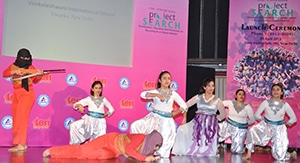
Pic 2 (1) Project SEARCH, a joint initiative by The Energy and Resources Institute (TERI) and Tetra Pak, which is helping students become social entrepreneurs through its ‘Vasundhra’ programme that promotes social entrepreneurship in schools, has entered the seventh year. The project has successfully reached out to 300,000 students to educate them about good waste management practices. An event was organized to mark the occasion.

The event also celebrated the success of winning schools in different categories as well as awarded SEARCH school of the year to three best performing schools:

UNESCO’s Senior Programme Specialist (Natural Sciences) Mitrasen Bhikajee, who was also the chief guest at the ceremony, said, “I would like to congratulate TERI and Tetra Pak for their relentless efforts towards educating young minds about sustainable development. These budding entrepreneurs have undertaken the pledge towards creating a green and healthy environment which is inspiring to all ages.”

Giving a Special Address on the occasion, Dr Leena Srivastava, Acting Director-General, TERI said, “We are privileged to have a partnership between TERI and Tetra Pak but the biggest partnership we have to recognise is the partnership with the young generation. I believe the young generation of India is the hope not only of our country but also of the world; you are the ones who have the power to bring about positive change. I would like to congratulate Tetra Pak and my colleagues at TERI for the 7th phase of Project SEARCH. This Project is about: creating an understanding for the kind of challenges we face; empowering students by giving them the tools and techniques to be able to address the challenges and finally it is about leadership on the basis of understanding and empowerment. I want to thank Tetra Pak for being a long term partner with TERI, especially since it is unique that a corporate comes forward for such a long term partnership.”

Ranjana Saikia, Director, Educating Youth for Sustainable Development, TERI, said, “During our sixth phase of Project SEARCH, we worked with schools across cities wherein we collected a total of 47 tons of waste. As a part of SEARCH programme we also trained school students in social entrepreneurship through our pilot initiative, Vasundhara. As we begin with seventh phase of Project SEARCH, we plan to expand our outreach and connect with over 300,000 students and teachers across locations through our newly launched website. Our partner, Tetra Pak’s unending support and commitment towards environment education drive us to achieve our goal. We are going to ensure that Phase 7 sets a new benchmark in school education programs on sustainability”.

Project SEARCH aims at effecting behavioral changes in the students and teachers and the response so far has been splendid. We are going to ensure that Phase 7 sets a new benchmark in school education programs on sustainability.

Jaideep Gokhale, Communication Director, Tetra Pak South Asia Markets, said, “We were successfully able to create young entrepreneurs who adopted an eco-friendly approach towards developing profitable, sustainable and innovative enterprises. These are values that resonate with what Tetra Pak stands for. We are extremely proud to see the conviction and dedication of the students and the teachers towards good waste management practices.”

Debate over UGC courses

The University Grants Commission issued a notification to universities and institutions to refrain from offering programmes, including engineering courses through open and distance learning mode.

According to the notification, no university/institution or deemed to be university/institution should offer diploma, bachelor’s or master’s level programme in engineering and technology, other than MBA and MCA, till the finalisation of UGC (Open and Distance Learning) Regulations 2014. Any violation could invite action.

The UGC has included programmes such as BE/B Tech, diploma, undergraduate and postgraduate courses in architecture; town planning; pharmacy; hotel management and catering technology; applied arts and crafts; and PG Diploma in management.

If an institution has the approval of the joint committee of the erstwhile Distance Education Council and the UGC and the recognition status is notified on the All India Council for Technical Education website, it can offer MBA and MCA programmes.

Anna University offers M Sc in Free and Open Source Software and M Sc Information Technology. SN Geetha, Distance Education Director says the institution admits students only in Chennai and not even in its constituent colleges. “We conduct M Sc in Computer Science as we have a full-fledged lab. The answer papers are evaluated by the University’s Controller of Examination,” she says.

State government universities abide by the norms by and large, but some institutions subvert the rules in innovative ways, says C. Pichaandy, vice-president of Association of University Teachers. Pointing out that Bharathiar University offers a course in Catering Science as opposed to Catering Technology, he says that the university has set up centres abroad, which is beyond its jurisdiction, and has also appointed an official agent.

C Subramanian, associate professor in Department of Political Science, Distance Education, Annamalai University, however, argues that universities should be allowed to run such programmes. With around 170 study centres across the country, the university set the trend before even the IGNOU and the Distance Education Council were established.

“If the Commission makes an adverse decision regarding study centres, it will affect the employees of our university. We have given a representation to the UGC vice-chairman H. Devaraj regarding this. We are almost a government university now and follow the norms. The government is inviting foreign universities to run programmes, but does not allow State and Central universities to offer such programmes,” he regrets.

India is a huge market for ICT education

There are 1.4 million schools in India, around 25% of which are private schools. That is a huge market waiting to be explored, says Seliha Muvva, Director, Edukul India, which provides an interactive Edukul app and platform for the schools

What motivated you to start Edukul India?

Rearing two kids, I came to realise the huge communication gap between the teachers and the parents. The parents are unaware of whatever is happening in the school. At the same time, the teachers are completely exhausted. The schedule in the school is punishing. Reining in 30 children in a class is not a joke! Kids don’t even have any secure platform to learn, connect and enjoy at the same time.

What are the various hurdles in doing business on the ground level?

The schools are our customers. These institutions are like forts where the principal is the king. Getting across to meet them is the toughest job.

What is the market size of the services offered by you in India at present?

There are 1.4 million schools in India, around 25% of which are private schools. That is a huge market waiting to be explored. We are targeting not only the desktop but also the smartphone users.

What is the major benefit for the organisations or individuals adopting your solutions?

Our solution takes teaching and learning experience to a higher level. The teachers can individually connect with every student. For the teachers, it reduces the workload by simplifying the everyday tasks and even delegates some tasks to the parents. We are also the mobile first platform in education which will make the SMS packages obsolete for the schools.

What is the vision of your company for next two years?

Getting every teacher in India to use the Edukul app, designed only for a teacher, is my avowed objective. It will be launched in May.

What are the various methods you are using to increase the visibility of your organisation?

Although a few-months-old start up, we have successfully got the product tested in two schools. Now, we will work on increasing our visibility through digital marketing and print media.

How do you differentiate your services from your competitors?

We are the only one in the market to provide an interactive app and platform for the schools.

How do you engage the customers? Can you cite any special case study?

We interact with the teachers and the students in the schools every week. A 10-year-old boy once came up to me during an interaction and told, “It is too slow. Fix it up faster as we get so much of work to do on Edukul”. It helped us move quickly and revamp the site.

What are the major stakeholders and sectors you are focusing on?

We are focussing on the education sector and reaching out to our stakeholders – parents, teachers and students through the schools.

What are the various initiatives taken by your organisation to emerge as a market leader?

Although we can’t disclose them as of now, yet we will certainly share the initiatives once we have emerged as the market leader in the education sector.

LATEST NEWS