



Home Blog Page 848

NAAC to decide on accreditation of deemed universities: Supreme Court

NAACThe National Assessment and Accreditation Council (NAAC) has been allowed to decide on accreditation of deemed universities which are under its scrutiny for allegedly failing to fulfill various criteria required for getting recognition by the Supreme Court.

A bench headed by Justice Dipak Misra, however, said accreditation given to universities would be subject to its final order. It said admission for the new academic session was approaching and the universities should not suffer because of lack of accreditation by the council.

It may be mentioned that India has one of the largest and diverse education systems worldwide, with a lot of private players. In this backdrop, maintaining the quality of education becomes a challenge. Every year, iniversities in India get the grades based on overall Performance of the individual universities by National Assessment and Accreditation Council (NAAC), New Delhi. Around 612 universities are present in the country, out of which 172 universities are accredited by NAAC.

Maharashtra to link school admission numbers with Aadhaar card

Aadhaar In an effort to effectively implement the Right to Education Act, the Maharashtra government has decided to link school students’ admission registration numbers to Aadhar card.  According to a government resolution (GR), a campaign to prepare Aadhaar cards for school children will be undertaken from April 27 to June 26.

To execute the plan, the state government has asked the local administration to ensure that school children at the taluka and village levels are issued Aadhaar cards within 60 days and the UID numbers are linked to their school admission numbers.

The GR said that linking of students’ admission registration number to Adhaar card will facilitate tracking of the child in the education system. The government clarified this was being done to ensure the Right to Education Act (RTE) was implemented properly. It will help government verify whether students are enrolled in schools and parents can also be kept in the loop over their child’s educational progress.

Furthermore, block education officers have been asked to compile data relating the number of children with Aadhaar cards and forward it to respective district collectorates. The government has also asked the local administration to publicise the campaign.

The GR said the biggest challenge to ensure success of the RTE Act is to bring non-school going children in the education fold. It may be mentioned that the Constitution (Eighty-sixth Amendment) Act, 2002 inserted Article 21-A in the Constitution of India to provide free and compulsory education of all children in the age group of six to fourteen years as a Fundamental Right in such a manner as the State may, by law, determine. Article 21-A and the RTE Act came into effect on 1 April 2010.

Awards recognise efforts to strengthen reading skills

read To recognise organisations promoting the habit of reading skills among school going children, The United States Agency for International Development (USAID) and the Center for Knowledge Societies (CKS), today, announced the three winners of the READ Alliance’s Early Grade Reading Innovation Challenge 2014.

The awards took place during the ‘Read Connect 2015: Invest in Children’ event.

Speaking on the occasion, USAID/India Mission Director John A. Beed. Beed said that this initiative will help in the mission of enhancing reading skills of children. “If children are looked after right from a tender age, they are bound to be strong in their reading skills, which will help the society in a large way.

Dr. Aditya Dev Sood, CEO, CKS said, “I’m really proud of the winners this year, but this is just the beginning. We’re looking forward to some really breakthrough educational innovations and technologies coming out of the READ Alliance in the coming year.”

The Centre for Learning Resources, which supports improving language skills for 36000 children from tribal communities, was the first winner. Their programme uses bilingual-home and school languages-audio-visual materials; it requires less teacher input and aims at reaching even higher number of children in coming future. The second winner was Quality Education Support Trust, which aims at improving the language skills of 7000 children from tribal communities, and train them in Marathi. Karadi Path Education Company, which works on the English language skills of more than 30000 urban poor children from predominantly non-English speaking background, was the third winner.

The Read-Engage-Achieve-Dream (READ) is a $3.2 million initiative to help improve the reading skills of millions of primary school age children in India.

Court stays MBA admissions in Maharashtra’s private colleges

Maha CET In an interim order, the Bombay high court has stayed admissions to MBA courses. After hearing petitions filed by MBA aspirants complaining about irregularities in the MBA Common Entrance Test 2015, a division bench of Justice V M Kanade and Justice M Sonak asked private colleges not to go ahead with admitting students. The MBA-CET for admissions to B-schools across Maharashtra this year was conducted across four batches. Over 60,000 students appeared for the MBA-CET for admissions to B-schools across the state, which was conducted across four batches last month on March 14 and March 15, 2015.

This year’s CET was clouded with problems as students complained of mass copying, technical glitches and attendance chaos. The DTE had reportedly admitted to 59 questions across four batches of the exams that were void. The students also said that the various problems had affected their scores.

The state department of technical education had on its own stayed admissions to MBA courses in its colleges after the students approached the high court. The HC has scheduled the hearing of the matter filed before different benches of the court in Mumbai, Nagpur and Aurangabad on April 28, 2015.

MHRD lays emphasis on classical languages in schools

smriti_iraniA new language policy for the education sector is on an anvil by the Ministry of Human Resource Development (MHRD). The ministry has set up a committee to look into the matter and submit the report in a year’s time.

A controversy over the three language formula and replacing German with Sanskrit in Kendriya Vidyalayas in schools begin last October. The three-language formula has been described by the NCERT in the national curriculum framework.

As per the curriculum framework the first language is English, second language is Hindi and third language could be any modern Indian languages. The committee is now looking at ways to promote classical languages like Tamil, Sanskrit etc as the third language.

In 2004 Tamil, Sanskrit, Kannada, and Telgu and in 2014 Malayalam and Oriya were given the status of classical languages.

The three language formula prescribed by NCERT in 1986 was a replication of what was enshrined in the country’s first education policy in 1968. According to three language formula, students of classes 6-8th in Hindi speaking states study a south Indian language apart from Hindi and English.

According to MHRD, language being the most important medium of communication and education, its development occupies an important place in the National Policy on Education and Programme of Action. Therefore, promotion and development of Hindi and other 21 languages listed in the schedule VIII of the Constitution including Sanskrit and Urdu has received due attention.

MC Schools teachers to shift in education department: Ludhiana State Govt.

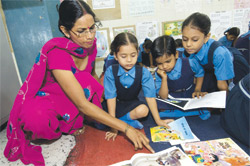
teacher-studentThe state government in Ludhiana has recently directed the Municipal Corporation to shift its schools and 28 ETT teachers to the education department. It is noted that seven schools are running under Municipal Corporation.

The MC schools at Chet Singh Nagar, Ishar Nagar, Janta Nagar, Basti Jodhewal, Iqbal Ganj and Subhash Nagar are running under Ludhiana MC.  MC Joint Commissioner from Ludhiana, Amarjit Singh Sekhon said, “State government has sent an order to shift the teachers. The process is started and the teachers will be shifted to education department and the schools will also come under education department.”

Nine years ago these schools were given to MC to look after the repair work of the schools. The schools do not have a playground for children, have less staff to take care of the children, lack of infrastructure, benches and classrooms, which has lead the government to take this step.

Municipal Corporation came into existence in 1978. First time elections of Municipal Corporation Ludhiana were held in year 1992.

100% placement at IIM-Trichy, average salary escalates

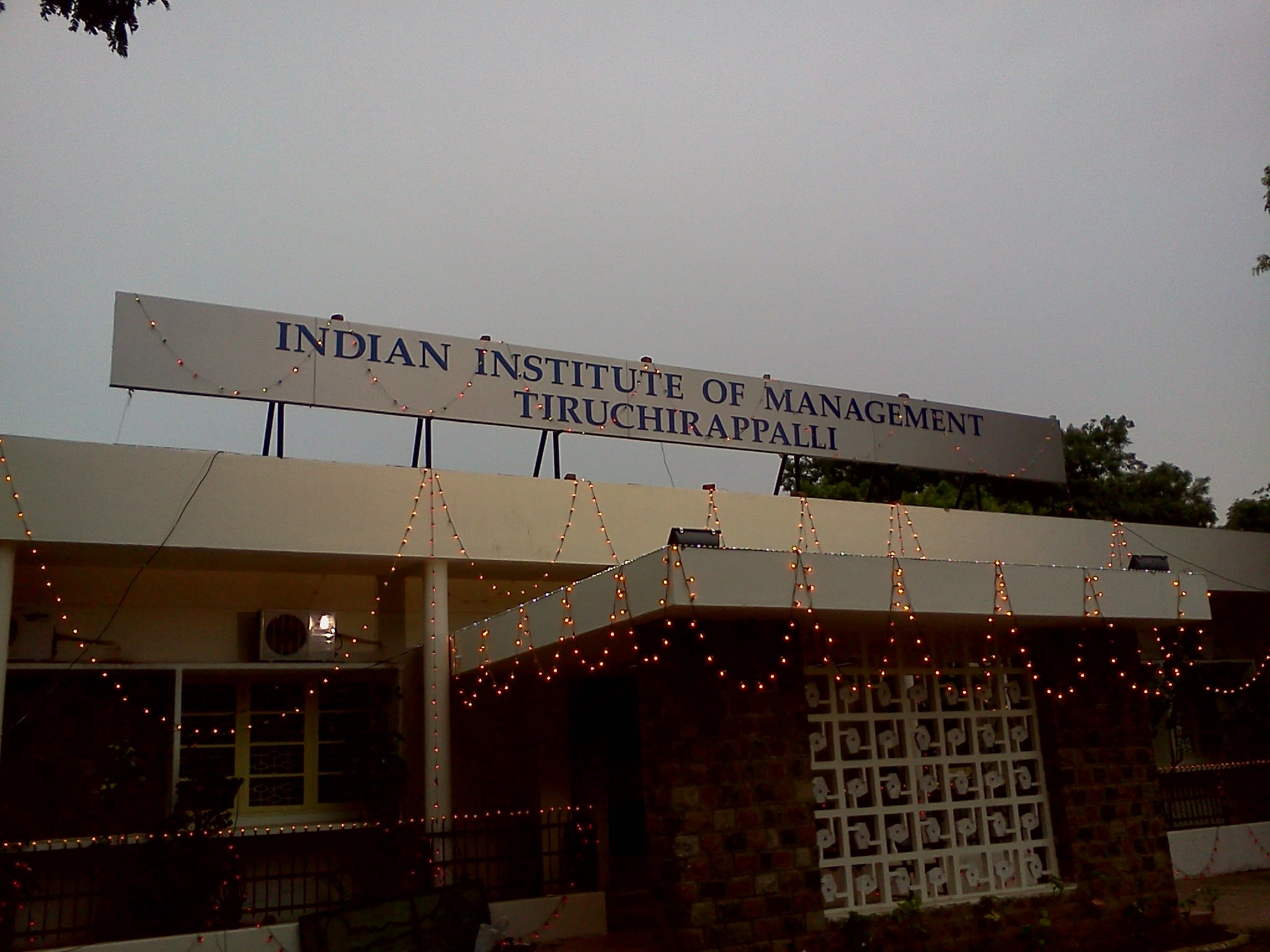
IIM-TiruchirappalliIn the present scenario, not just the major IIM’s, but also the newer ones, are setting excellent placement records. IIM’s have always set benchmarks for academic excellence and this year, IIM-Tiruchirappalli (IIM-T) has recorded 100 per cent placement, with marginally higher average salaries than last year.

It may be mentioned here that sometime back, Prof Saral Mukherjee, who served as Chairperson of the Placement Committee at IIM Ahmedabad during 2008-12 and as Member of the Placement Committee (2012-13) had said that placements at IIMs are not an entitlement, determined by mood in corporate India.

IIM-T has informed that out of the total 106 students belonging to the batch of 2013-15, 103 registered for placements and all were placed. In all, 103 recruiters visited the campus as against 76 companies last year. 106 offers were made, with students getting multiple offers, compared to 86 offers last year.

The highest salary offer this year was Rs 19.50 lakhs, marginally higher from Rs 19.25 lakh offered last year. The institute said that the number of offers at the higher band exceeded last year’s numbers. At the lower end, the minimum salary package witnessed a 20% increase from last year and ended at Rs 7.5 lakh. The median annual compensation levels continued to be around Rs 11 lakh.

Abhishek Totawar, chairperson, placement & external relations at IIM-T said, “Our biggest efforts this time was to match students’ interests with the recruiters and job profiles and we have been able to satisfy majority of our students”.

Tamil Nadu has max autonomous educational institutes in country

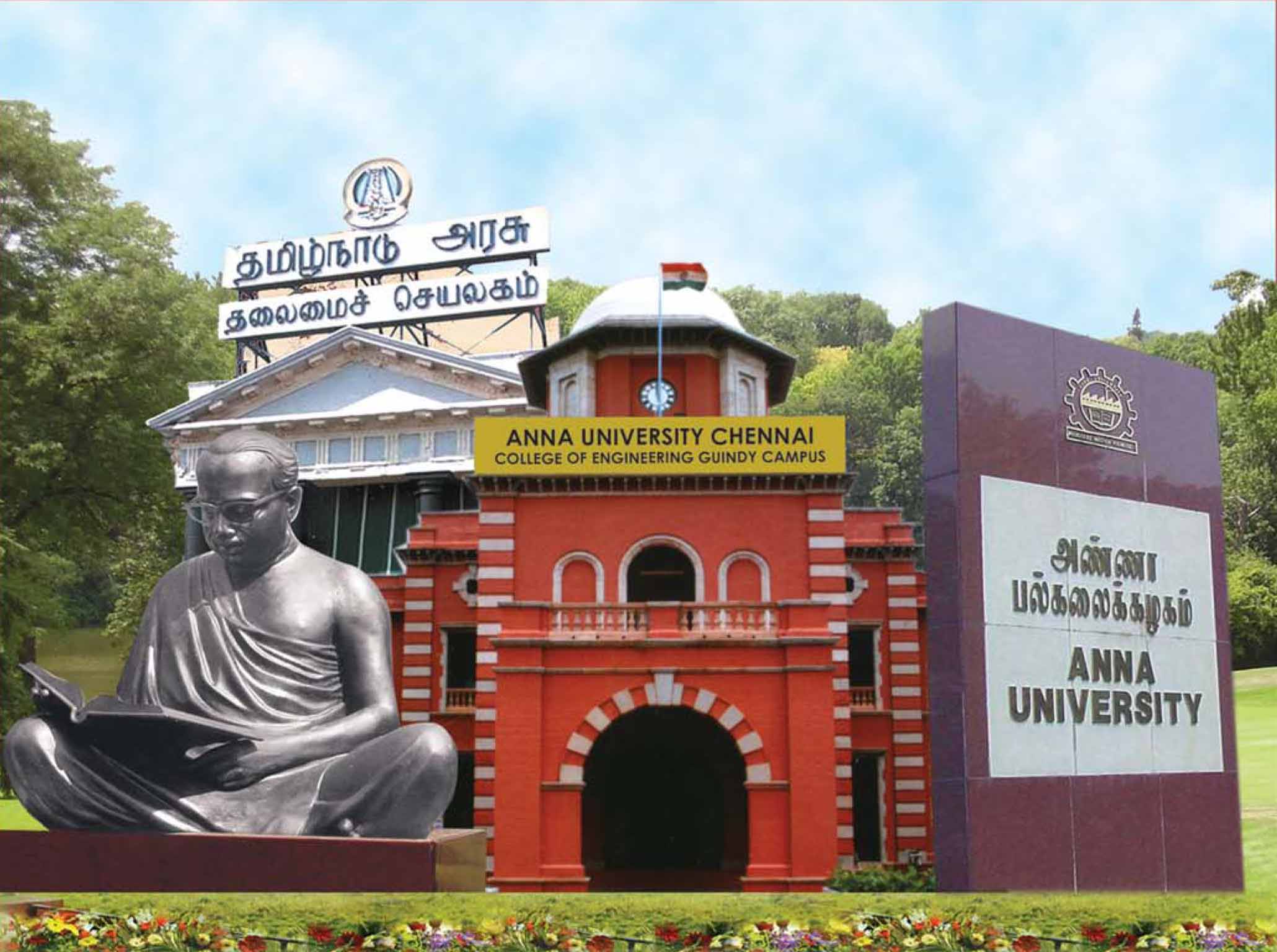
tnea 09 wrapper 06.psdTamil Nadu has close to one-third of all the autonomous educational institutions in the country and the numbers are escalating. Of the 155 colleges with autonomy in the state, only 27 are engineering or architecture institutions, with most offering courses in arts, pure sciences, humanities and management.

Experts say that there are around 80 autonomous arts and science colleges in the state, with the most independent institutions in the Coimbatore region.

“When Anna University, Coimbatore, was given jurisdiction over engineering colleges in the region in 2009, many colleges were awarded the status of autonomous institutions,” education consultant J P Gandhi said.”There was hesitation initially from universities to award autonomous status to colleges affiliated to them but that gradually changed.”

“Autonomy gives colleges the freedom to frame their own syllabus based on market needs,” Sri Krishna Institutions chief executive officer K Sundararaman said. “It also allows them to opt for innovative courses that may be added to the curriculum with approval from the university to which they are affiliated.”

Open investment cell to attract foreign investments in education

Foreign-students-Indian-CollegesThe Human Resourse Development (HRD) Ministry is being pushed by the Department of Industrial Policy and Promotion (DIPP) to open an investment cell to attract foreign investments in the education sector. This comes in the backdrop where the Foreign Education Providers Bill that could have resulted in setting up of campuses of foreign universities remains shelved.

DIPP secretary has asked departments of school education and higher education to set up their own investment cells. The proposed cell will provide necessary information on a vast range of subjects, such as policies of the ministries, and state governments, various incentive schemes and opportunities available to make it convenient for investors to take decisions.

Foreign education provider (FEP’s India) is the initiative of the Government of India to allow the foreign universities set up their educational campus (colleges and universities) in India. The foreign institutions must have to clear certain parameters financially and academically, before they can establish education in India.

HRD Minister Smriti Irani has decided to focus on a legal framework for allowing foreign universities to set up campuses in India and curb unfair practices by education institutions as part of the human resources ministry’s legislative agenda.

It may be mentioned that as a policy decision, education in India is considered ‘not-for-profit’. In fact, the issue of profit in education is one of the components of the proposed new education policy currently being discussed. The HRD ministry wants the issue of profit in education to be settled before the new education policy is finalized.

“Successive governments have played safe on profit in education. While the private sector investment in higher education has increased with clear profit motive, the government is still holding on to the Supreme Court order that said education is not for profit. Clarity is needed for the idea of investment cell to work,” a media report said.

June 21: Universities to observe International Yoga Day

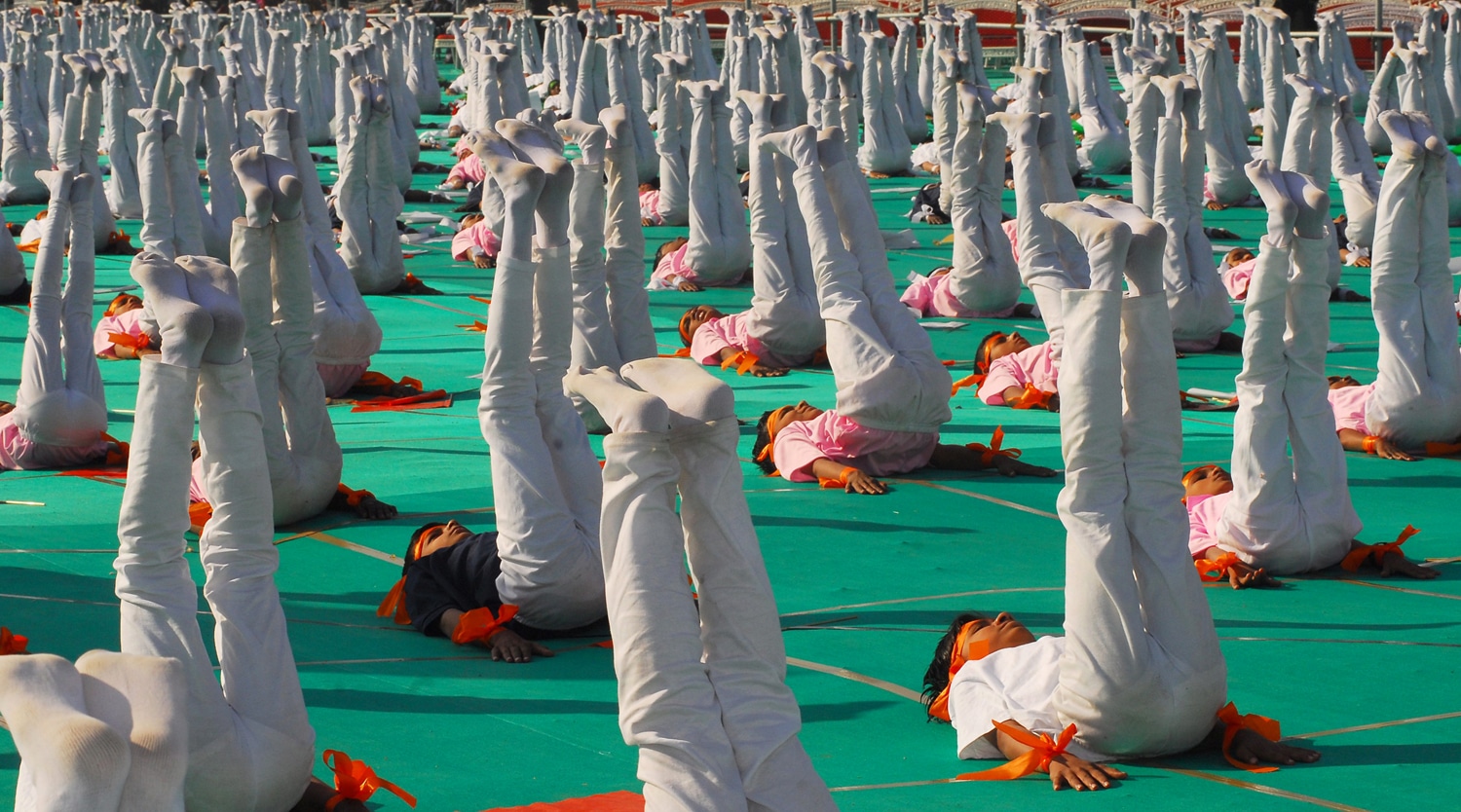
Image: School children participate in a mass yoga session during the third day of 21st International Kite Festival at Sabarmati Riverfront in Ahmedabad.The University Grants Commission (UGC) has asked all universities to observe June 21 as International Yoga Day, an official statement said has said. Secretary Jaspal S. Sandhu, in a letter dated April 17, said the idea of declaring an International Yoga Day was formally proposed by the prime minister in his maiden address to the 69th UN General Assembly on September 27. In a letter was shared on the UGC website.

The secretary added that the government has decided to give ‘practical effect’ to the resolution by ensuring that the first International Yoga Day is “commemorated in a befitting manner”.

“You are, therefore, requested to kindly observe International Day of Yoga on 21st June, 2015 in your esteemed university and colleges affiliated to your university,” the letter said. “You may also ensure that the promotional films and other Information, Education and Communication (IEC) material on yoga should be distributed,” it added.

The UN General Assembly adopted a resolution last year to observe International Yoga Day on June 21 every year.

It may be mentioned that Prime Minister Narendra Modi had sometime back invited suggestions to mark the first International Yoga Day June 21.

“Share your ideas and inputs on marking the first ever International Day of Yoga, on this MyGov Open Forum. http://mygov.in/groupissue/celebration-of-international-day-of-yoga/show,” he said.

LATEST NEWS