Social Media is more than a buzzword in education. With students constantly connected with each other and the world at large, educational institutes often end up playing catch up with them. Rajesh K Sharma of ENN tracks the role of social media in the changing educational landscape

Before there was social media, there was a social media. People talked on mobile phones, sent SMSes and MMSes to each other, went to Internet cafés and chatted for hours on Yahoo Messenger and ICQ. They were aware of dangers of talking to strangers on the net, but on the whole, as nostalgists will say, it was an innocent time.
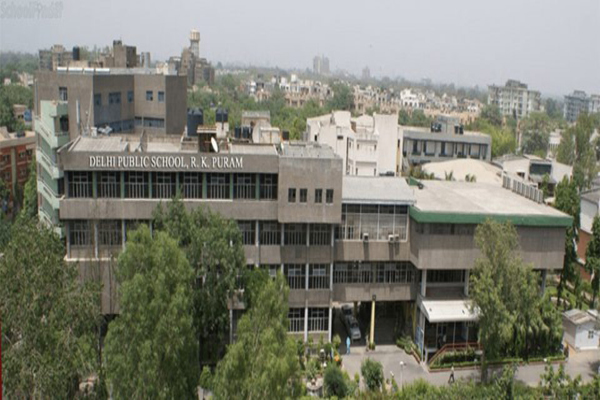
The innocence ended in late 2004 when news surfaced of a short video clip featuring two students of Delhi Public School (DPS), RK Puram, indulging in a sexual act going viral. The clip was shared among the students of DPS, R K Puram, and their friends, and some enterprising individuals tried selling it on an e-commerce website. India reacted by arresting the students, those attempting to sell the MMS clips as well as the owners of the e-commerce website. The entire episode came to be known as the infamous DPS MMS Scandal.
A decade has passed since then, but its shadow still looms on the Indian society. People are wary of new technologies that are seeping in the society, but its adoption has not slowed. People no longer send each other MMSes, and Yahoo Messenger and ICQ have given way to Whatsapp and FB Chat. The disjointed social media of 2004 has given way to the integrated social media of 2014 with behemoths like Facebook, Twitter and Whatsapp holding sway over the youth.
Social media is touted as the future, where everyone is always connected to each other via their mobile phones. Big corporations have made their presence on social networking sites like Facebook, Twitter and LinkedIn to try and reach out to customers directly. But the education sector has been slow in the uptake.
A look at social media’s presence in the educational sector shows the chasm between the educators and the educated. While educational institutions look for ways to adopt social media tools, the students are far ahead, using social media to connect to each other and to the world at large. This is largely due to the differing definitions of social media between the two groups. Educational institutions define a social media in terms of the technology used, and how it connects them to their intended targets, namely, students. Students, on the other hand, define it as a series of websites and tools that help them connect with each other. While a school or a college may set up a hi-tech computer lab for holding virtual classrooms and call it a social media tool, a student exchanging text messages with his/her friends on a mobile phone will call it social media.
When N V Sarat, Manager, Doon Public School, talks of how the school uses social media, he talks of the computer labs that have been set up. “We use Educomp for teaching. Plus, we have our own system, where we have provided our teachers with tablets so that they can send messages to the parents and students. Also, all our labs are connected with broadband 24X7. These are the main three systems how we communicate with the parents and students,” he says. So, while schools and colleges mean their immediate circle of students and teachers when they talk of being social, for students, being social means talking to people near and far.
“While educational institutions look for ways to adopt social media tools, the students are far ahead, using social media to connect with each other and the world at large”
While students use sites like Facebook, Twitter, LinkedIn, del.ico.us, Pinterest, Instagram and others to connect with friends and the world at large, most educational institutes have largely limited themselves to building a website and opening accounts on Facebook and Twitter. When it comes to interacting with the students, they are still struggling on the social media.
But to say that educational institutions have not adopted technology in teaching is inaccurate. Online education, which uses social media tools for teaching, is fast becoming entrenched in the sector, with many universities starting to offer their courses online as well. The online courses by Symbiosis University, Sikkim Manipal University, Manipal University, Karnataka State Open University and many others have found favour with students and young professionals alike and Massive Online Open Courses (MOOCs) are a business category unto themselves. These courses use the power of social media tools like Youtube videos and Skype calls to hold lectures. Teachers and students can connect with each other through video conferencing. In 2013, Microsoft announced a pilot project in collaboration with Karnataka-based Visvesvaraya Technological University (VTU) for a MOOC-like platform that blended online education with classroom learning. Commenting on the initiative, P Anandan, MD, Microsoft Research, India, had said, “Technology has made students the centre of learning as opposed to constrained by a classroom.”
Educational institutes are also promoting themselves and reaching out to new students through websites and social media accounts. A look at the social media handle of most educational institutes reveals a diary of events related to schools as postings. But these postings tend to be sporadic, and show minimal interaction between students and the institutions. In spite of such a dismal outlook, the educators are upbeat about embracing social media. “Social media plays an important role to publicise education,” feels Dr Nitin Rakesh, Head, CRC, Associate Professor, Department of Computer Science, Amity University. “Previously, we had libraries, where students went to read books and make notes. But now, we have resources on the cloud which the students can share. This reduces the time required by the students to find appropriate study material, and also increases the teacher’s ability to tailor the study material according to the student’s needs.”
Dr Nitin is not averse to the downsides of social media. “Students communicate primarily through Facebook. Also, they don’t use proper English while communicating with each other on social media. This has reduced their grammar and communication skills,” he says. “Earlier there were more face-to-face conversations,” he says. But he still remains upbeat about the role of social media in the modern students’ lives. Social media, he says, allows students to connect with persons who share similar interests no matter where they are. He himself uses his Facebook page to communicate with his students, informing them of any organisation that may be visiting the campus for placements. He likes the fact that social media allows him to relay useful information that reaches the intended audience instantly. “Any student wishing to join an institute,” he says, “will look at the reviews for the institute online. An institute that has good reviews will definitely attract more students than one that is not favourably reviewed. In fact, the impact of such reviews on the admission prospects of a school needs to be studied.” As a social media supporter, Dr Nitin is dismissive about the DPS MMS scandal casting a shadow in 2014. He says technology, if it comes with good results, is accepted immediately, but if it accompanies a bad news, is dismissed immediately. Though there are some negative aspects to the increasing role of technology, and particularly social media, in education, on the whole it has had a positive impact. He says the policies for fighting social crimes are being developed to deter the misuse of social media, which will make it more acceptable to educationists.
Such cautiously optimistic views are also echoed by N V Sarat, when he talks of the growing use of websites like Facebook and Twitter, “If is it rightly used, social media can be good. There should always be a watch and control over what they are doing, because it can also be misused by students. If it is done by parents at home and teachers in schools, I think it can really help out in teaching.” Doon Public School conducts several sessions with parents on how to regulate their child’s social media use and how to control it. Sarat says he never rejects the friend requests sent by his students on Facebook, and looks forward to interacting with them on social media as well.
While Dr Nitin is optimistic about the role of social media in education, he is not blind to its downsides, when he says how students tend to communicate primarily through social media. A research scholar from a prominent university has studied how social media was used by students in a small town. She says on the condition of anonymity that students use social media only to connect with their friends. Education is the last thing on their mind when they use networking sites, she has found. Students use it mainly for fun purposes, she says. With Facebook being the number one social media website, she found that students used it to create pages to promote themselves and be popular among friends. It was peer pressure taken online. The students do not connect with their professors or teachers, preferring to form cliques of like-minded persons. Another observation was that most students had two profiles, one real and another fake. While the real profile is used to project a clean image of the student, the fake profile is used by them for all other purposes.The multiple profiles are used to connect to different domains, she says, like one profile for family, one for school teachers, and another for media.
“Most students had two profiles – one real and another fake…the multiple profiles are used to connect to different domains, like one for family, one for school teachers and another for media”
What she also found was that they were unaware of the security aspects and how social media sites track their site usages and share this information with advertisers and other sellers. This is a worrying trend, she noted, as potentially sensitive information may be leaked to the websites. The use of social media by students for frivolous purposes has resulted in some colleges banning Facebook and Twitter. If students start using these sites for educational purposes, the colleges may be more accepting, she says.
But if it is security of personal information, the users are not worried. Akash Aggrawal, a final year computer science student at Amity University is active on Facebook, Twitter, LinkedIn, WhatsApp and many more. He is connected with his teachers and assistant professors on these sites, and regularly interacts with them for academic purposes. The down downside of having teachers on one’s friend list, he feels, is that he has to be cautious when posting a picture or an update, since his posts can be seen by the teacher as well. But on the whole, he feels that sites like Facebook and technologies like WhatsApp provide a good opportunity to interact with teachers on a new platform.
In the ten years since the DPS MMS scandal, technology has advanced and has been adopted by the old and young alike. It will be a fool’s argument to limit its use, since it binds us together. Students today are hyper-connected with each other through social media and mobiles. They communicate at the speed of thought, and the pace won’t slow down. Schools have been largely playing a catch up to the students. While sites like Facebook and Twitter enable them to communicate directly with students, technologies like WhatsApp remind them that they are behind the curve as far as technology is concerned.
The future of education, in many ways, will lie in educational institutes becoming more social and using social media tools not just for promotion and advertising purposes, but for connecting with the existing students and learning how they function. It is not a steep slope, and as today’s students become tomorrow’s educators, the gap will surely narrow down. The sooner that happens, the better it is.