

Home Blog Page 903

Education for Empowerment

Freda Wolfenden
Freda Wolfenden, Department of Education, Faculty of Education and Language Studies, The Open University, UK
An eminent panel of government and academic luminaries got together at the World Education Summit 2014 to brainstorm the way ahead for education in India. From access and quality of education to the importance of technology enabled learning, the thought leaders’ panel set the tone for extensive deliberations that were to follow at the summit in the next two days
Freda Wolfenden
Freda Wolfenden, Department of Education, Faculty of Education and Language Studies, The Open University, UK

India boasts of being the largest higher education sector in the world. It has around 610 universities set up under the state and central legislation, and around 36,000 colleges are affiliated to these universities. Under these circumstances, it is nothing short of an irony that the Gross Enrollment Ratio (GER) at the higher education level is just 15 per cent, much lower than the world average of 26 per cent. The fundamental problem faced by the Indian education sector as a whole is lack of suitably qualified and appropriately trained teachers in adequate numbers. Apart from access to education, which has also been an issue that is now being addressed partially with the rise in the number of schools and private universities, there is also a need of technology enabled learning to keep it abreast with the developments globally and also keep education relevant to today’s techsavvy generation. It was with this view that the ‘Thought Leaders Panel’ at the World Education Summit (WES) 2014 got together to discuss their views and discuss the way forward to enrich the education sector in India and ensure quality education.

Speaking about the initiatives taken by the government in this regard, Praveen Prakash, Joint Secretary, Technology Enabled Learning, Department of Higher Education, Union Ministry of Human Resource Development (MHRD) said, “There is a renewed focus on im parting technology-enabled education which is as important as other disciplines of education. To ensure that technology enabled learning takes centre stage, the mission of education through ICT needs to be carried out by everyone – government-run institutions, private institutions, state institutions, companies, NGOs, voluntary institutions and the media as well,” he said. The outcome of these initiatives needs to be such that ensures quality education.

Quality of education should be such that it prepares and moulds the students with skills that make them employable. In this dynamic world, the expectations of the employers, either state or private, are also changing. It is important that these expectations are incorporated in the teaching learning process. The problems that India faces with regard to higher education are common to other developing nations as well. Talking about the problem of employment in Sri Lanka, Vishakha Nayanakara, representative of the Ministry of Higher Education, Sri Lanka said, “In an employability census done in Sri Lanka, it was observed that out of every 100 graduates that it produces, 76 are unemployed. So, one of the main objectives of the Sri Lanka higher education ministry is to ensure that we do provide outcome-based education at the universities. Identifying the graduates that we need to produce, identifying the attributes that should be in those graduates, we try to develop the curricula and make sure that the teaching learning processes and assessments map the outcome,” she said. Stressing on the importance of private partnership in fuelling the growth of the education sector, Vishakha said, “Sri Lanka did not have a full-fledged private participation in higher education. But the government is now encouraging transnational education allowing private players to have branch campuses in Sri Lanka, which is doing well and has a long way to go.”
Unni Krishnan Koroth,  CEO,  Foradian Technologies
Unni Krishnan Koroth,
CEO,
Foradian Technologies

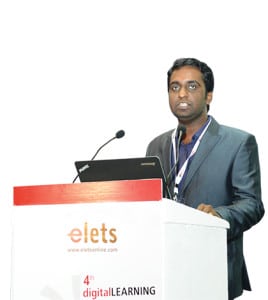
Rapid advancement in the technology space has resulted in the availability of a plethora of software and technologies in the market to digitise education and make it easy, quick and advanced. “Software should actually add value in the teaching and learning process, teachers should be comfortable using it and the school should benefit out of it,” said Unni Krishnan Koroth, CEO, Foradian Technologies. Fedena, a product of Foradian, is a complete student information system in cloud and has been widely implemented across schools of Kerala under the state government’s project Sampoorna.

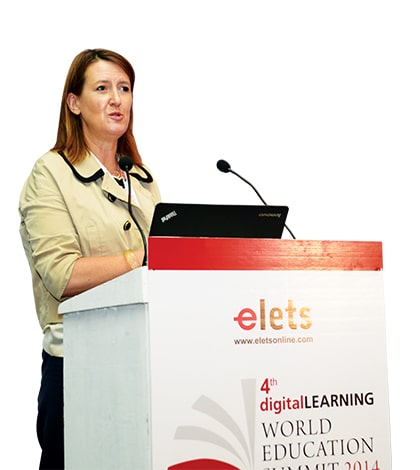
Quality in education is what schools across the world are looking for today. No education system can be better than the quality of its teachers. Schools today need to pay more attention to the quality of teachers and teachers’ training. “We are doing many collaborative projects in different states of India,” said Freda Wolfenden, Department of Education, Faculty of Education and Language Studies, The Open University, UK. “At the heart of our programme is to take the policy, which has been elegantly expressed in the international policy documents, and move them into practice at the classroom level – both in rural and urban areas,” she added. There is also a requirement of teacher educators to support their own professional learning, building their capacity etc.

In essence, the views aired during this gathering of leaders in education in India and abroad set the tone for discussions that were to follow in parallel sessions on school and higher education during the summit. More importantly, it provided insights on how to harness technology to enhance the teaching learning process in the classroom and also touched upon the importance of quality leaders and edu- cators in the process of creating quality students.

Time to Turn the Tide

Dr Ravi GuptaEven after 67 years of Independence, India is yet to achieve cent-per-cent literacy, possibly because the Indian education system still reeks of command and control of yesteryear, with students reduced to being shadows of passive knowledge receivers. But as the country heads for a digital tomorrow riding the ambitious ‘Digital India’ programme, it is time to set right all that has plagued the education system since decades.

It was in this backdrop that Prime Minister Narendra Modi, in his Teacher’s Day address to millions of children, teachers and parents, spoke of the need to harness technology for taking education to the farthest corners of the country. The remarks couldn’t have been better-timed, as there is a growing stress on spread of literacy, with special focus on education of girl children. After all, the process of nation building has its roots in education and skill development.
Continuing with its eight-year exercise of tracking emerging trends, challenges and competition in education and ICT sector, digitalLearning organised the 4th World Education Summit 2014 on 6th-7th August. The event saw high-level of participation of decision makers, educationists, practitioners, heads of educational institutions, eduprenuers and corporates across the country and abroad.
Several noted personalities in the education sector presented their perspective on the current education scenario and the vision for the future. The common goal seemed to echo across boundaries the need for a universal effort to move closer towards a world of inclusive, collaborative and quality education.
A remarkable high point of the fourth edition of WES was the special inauguration by Union Minister for Minority Affairs Dr Najma Heptulla and her address to WES delegates. The inaugural session, held in association with the National Commission for Minority Educational Institutions, highlighted the opportunities, challenges and achievements in the field of minority education. This was first-ever conference on minority education in the recent years.
The World Education Summit is a beginning of our endless journey towards building a platform for exchange of excellence and innovation in the knowledge sphere. I take this opportunity to thank all our participants, speakers, supporters, sponsors, exhibitors, and delegates for helping us make this Summit a memorable and an enriching experience.
This edition of digital Learning also features the challenges of IT enabled learning in higher educational institutions as the lead feature. We have engaged some leading vice- chancellors across the country for their viewpoint.
In a few days from now, India will celebrate the festival of Navaratra. This time round, while paying obeisance to Goddess Durga, let’s not forget to pledge for the empowerment our ‘little Durgas’ – the girls. For, an educated boy takes care of his family, while an educated girl takes care of the generations to come by educating them.

Mahindra Group to invest 1 per cent profit in Education

Anand-Mahindra
Mumbai based Mahindra Group plans to invest one percent of the group’s net profit in educational initiatives as part of the group’s corporate social responsibility initiatives.
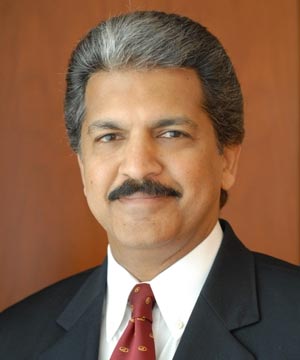
This was announced by Ananda Mahindra, Chairman and Managing Director of Mahindra Group. He said with companies required to spend two per cent of their net profit on corporate social responsibility (CSR) initiatives, the amount the group invests in education activities will go up substantially.
“The amount we invest in education would go up substantially as the law requires us to set aside two per cent for CSR activities and this is the first year in which we are now deciding how to allocate these funds,” Mahindra said.
The spending on education initiatives from the group would amount to around 47 crore a year considering the group’s consolidated profit after tax (after deducting minority interests) for 2013-14 is Rs 4667 crore as compared to Rs 4099.2 crore in the previous year– a growth of 13.8 per cent.

Cambridge University to help India plan to improve primary education

Cambridge_University
A comprehensive plan will be developed jointly by the University of Cambridge and Indian government to improve the standards of primary education in India.
The University of Cambridge will help frame programmes that will help in enhance the quality of faculty, learning modes and assessments.
The Cambridge-India partnership will help create a strong base for Indian education system, as recommended by the United Nations Educational, Scientific and Cultural Organization (UNESCO).
The Cambridge University is currently engaged in 270 projects with Indian science institutions, plans are on way for collaborations in Humanities and Arts too.

Infosys Foundation commits Rs30 cr corpus for Chennai Mathematical Institute

Infosys Foundation, the corporate social responsibility (CSR) arm of India’s second largest IT exporter Infosys has constituted a corpus of Rs 30 crore for Chennai Mathematical Institute (CMI).
The corpus will be used to enhance faculty compensation and support fellowship requirements for research students. Further, the grant from the foundation will enable the mathematical institute to invite distinguished mathematicians from across the world to mentor students and boost the quality of research.
Founded in 1989, CMI has an impressive track record in the field of mathematics and computer science. Its programmes are rated among the top in India.
As part of its efforts to support research and increase public awareness of mathematics as an intellectual discipline, Infosys has undertaken various other initiatives. These are aimed at building a strong talent pool of mathematicians and prepare them for exciting career opportunities in research and data analytics.

MHRD asks central univ to go digital

HRD minister Smriti Irani has asked vice chancellors of central universities (CU) to encourage digital initiatives to facilitate higher education.
This includes free online courses to citizens under the Digital India initiative of SWAYAM (Study Webs of Active Learning for Young Aspiring Minds). This is set out to be carried through the MOOCs platform created by IIT Mumbai.
The direction came at the end of the two day meeting in Chandigarh chaired by Union Human Resource Development Minister Smriti Irani.
In other measure conceptualised at the two day meet, the Campus Connect Program has been launched to ensure Wi-fi-enabled higher educational institutions. All CUs have been asked to ensure that their campuses and constituent colleges become fully wi-fi enabled as soon as possible.
Additionally, the central universities have been asked to display on their website, within a period of one month, all relevant information such as profile of teachers, calendar of activity of university, academic calendar, names of members of all statutory bodies alongwith their tenure, research output, information on budget, vacancy, tenure of Registrar, Finance  Officer etc.
The universities have also been asked to actively participate in National E-Library project.
eom

IGNOU VC returns safely

Prof Mohd Aslam, vice-chancellor of Indira Gandhi National Open University (IGNOU), who was trapped in the Kashmir floods for six days, is back in Delhi.
Prof Aslam, his wife and daughter reached Delhi safely on Saturday.
Prof Aslam and his family had gone to Kashmir to attend a wedding ceremony.

IGNOU Vice Chancellor Missing in Kashmir

aslam

There is no trace of Mohammed Aslam, vice-chancellor of the Indira Gandhi National Open University (IGNOU) who went to Kashmir and his wife to attend a wedding ceremony.

“There is still no news of him at this point,” an official in the office of the vice chancellor told digital Learning. The office of the Registrar too has no news of his whereabouts or well-being. According to university officials, the last they spoke to him was on September 7.

Aslam and his wife had left for Kashmir for a marriage ceremony and were expected to be back on Sunday morning. The university administration has since been in touch with the state government officials and the defence personnel posted there.

TalentSprint eyes Education Foray

talents-sprint


TalentSprint, the IT skill development firm, is planning to launch a new vertical for training teachers.


In this regard, it has submitted a proposal to the National Skill Development Corporation (NSDC) for an initial financial assistance of Rs 10 crore.


The new vertical would begin with training of 1000 teachers for CBSE stream in the first phase. The firm has already tied up with some schools in top cities for absorption of the candidates.
So far, the firm has been offering bridge courses for engineering graduates and those who seek jobs in banking, financial services and insurance industry.
The entry of TalentSprint into education vertical is significant as there is a huge demand for quality teachers in the country.

India Least Expensive Destination for University Education

Foreign students - Indian Colleges


India has emerged as the least expensive foreign destination for university undergraduate students among 15 countries in a global survey conducted by banking giant HSBC.


The survey titled ‘The Value of Education: Springboard for success’ has found that at $42,093 per annum, Australia is the most expensive destination for foreign education globally, followed by Singapore at $39,229 and USA at $36,564.


In India, the average cost, including university fees and the cost of living, of an undergraduate foreign student is $5,642. Out of this amount, $581 constitutes university fees.


However, only 5 per cent of the total respondents put India in their top three preferred destinations.


According to the survey, Indian parents believe that USA provides the best education. USA was followed by UK (54 per cent)and Australia (47 per cent) in terms of the quality of education.


The report, which surveyed over 4,500 parents in 15 countries and territories, examines parents’ attitudes and behaviour towards children’s education around the world.

LATEST NEWS